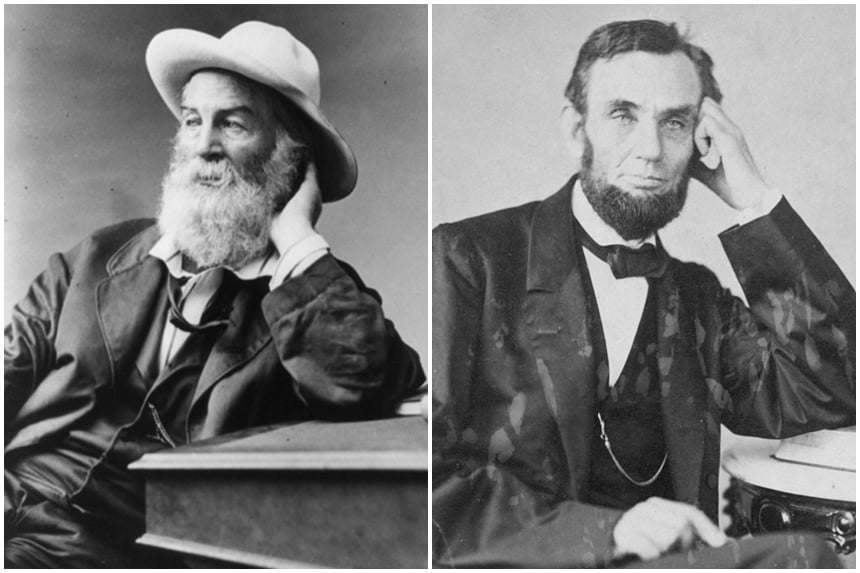
“The United States are destined either to surmount the gorgeous history of Feudalism, or else prove the most tremendous failure of time,” wrote American poet Walt Whitman in his 1871 work, Democratic Vistas. Despite writing in the wake of a brutal civil war and a failing Reconstruction Era, Whitman remained optimistic. “Not the least doubtful am I on any prospects of their material success.”
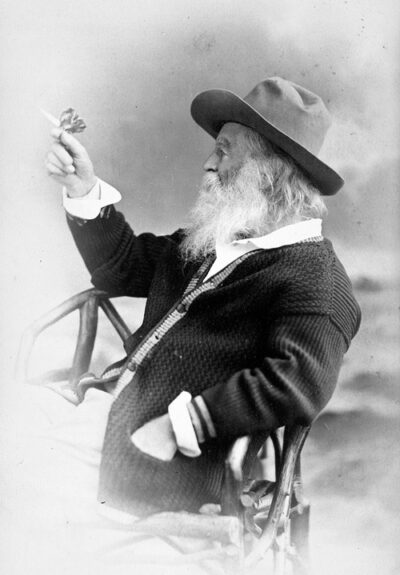
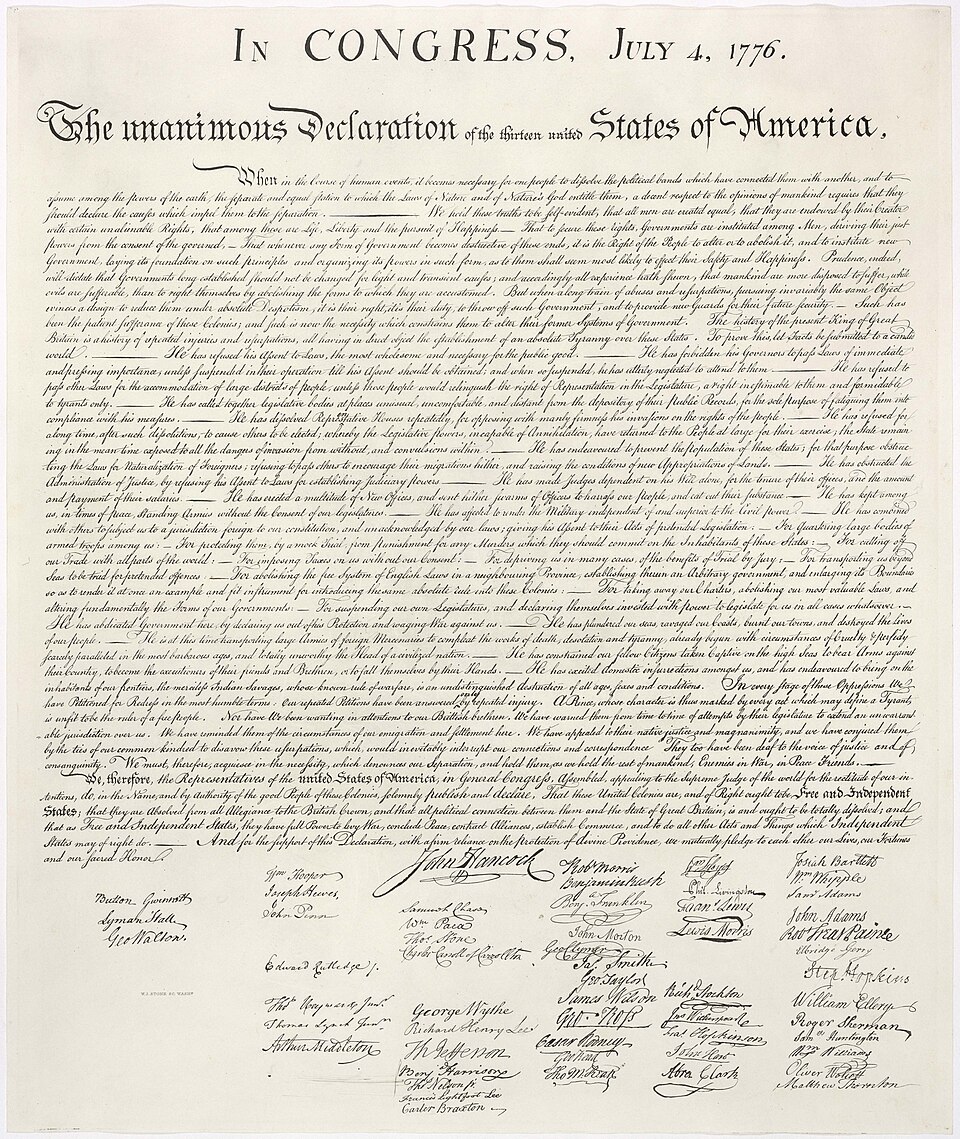
Known more for his poetry, exemplified by Leaves of Grass (1855), Whitman’s dark 1871 treatise on the nation remains a harsh but ultimately optimistic appraisal of the American experiment. It serves as a useful tool for thinking about the nation’s current state on the 250th anniversary of the Declaration of Independence.
Whitman’s revolutionary patriotism had long been part of his worldview. He celebrated the Declaration of Independence and the Revolution in the preface to Leaves of Grass, noting that a poet must “enter the essences of the real things and past and present events,” among them “the haughty defiance of ’76, and the war and peace and formation of the constitution.”
But for all his celebration of the Declaration and the nation’s founding, he did not mince words regarding the nation’s failings. He wrote of a “hollowness” at the center of American life at the time, calling the business classes depraved and the government saturated in corruption.
Whitman thought that the best answer to such corruption and malfeasance was the Democratic process itself. “I know nothing grander, better exercise, better digestion, more positive proof of the past, the triumphant result of faith in humankind, than a well contested American national election.”
However, Whitman did not necessarily point to institutions or political parties as the nation’s salvation. He believed that the actions of individual Americans defined and redeemed the nation, and that we should ignore “the antics of the parties and their leaders, these half-brain’d nominees, the many ignorant ballots, and many elected failures and blatherers.” As New York’s Al Smith put it over fifty years later, “All the ills of democracy can be cured by more democracy.”
Critically, Whitman wrote several years after Abraham Lincoln’s Gettysburg Address reshaped how America thought about the Declaration of Independence, and Whitman’s writings were heavily influenced by Lincoln’s faith in the nearly forgotten document. Despite the Declaration’s centrality to American life today, for much of the first two decades following the revolution, it fell into some level of obscurity. “In the years immediately after 1776, the Declaration did not enjoy special reverence in American culture,” observes historian Michael Hattam in his 2024 work, The Memory of ’76: The Revolution in American History. It took the advent of political parties in the 1790s for it to reemerge when it became a “weapon of partisan warfare,” observed early Americanist Robert M.S. McDonald.
But from the outset of his political career, Lincoln honored the Declaration. As historian Douglas S. Wilson observes in Lincoln’s Sword, “Lincoln’s attachment to the Declaration was neither temporary nor merely expedient.” During an exuberant 1858 speech in Chicago, Lincoln argued that the Declaration functioned as an electric cord that linked “the hearts of patriotic and liberty loving men together.” He then called on Americans to “discard all this quibbling about…this race and that race and the other race being inferior…and unite as one people throughout the land, until we shall…stand up declaring that all men are created equal.” Lincoln believed that the Declaration was fundamentally opposed to slavery, which he made clear in his most famous speech on November 19, 1863.
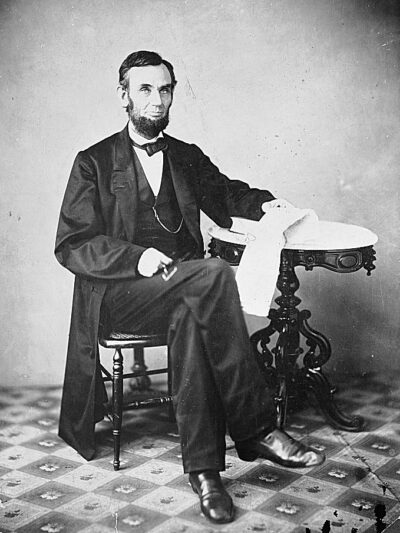
At Gettysburg, Lincoln referenced the Declaration of Independence when he spoke of “a new nation, conceived in Liberty, and dedicated to the proposition that all men are created equal.” He had uttered such rhetoric before, but the circumstances of the war and the significance of Gettysburg itself gave his words a new level of solemnity.
Historian Garry F. Wills wrote in his 1992 book, Lincoln at Gettysburg: The Words that Remade America, that Lincoln, “not only presented the Declaration of Independence in a new light, as a matter of founding law, but its central proposition equality, in a newly favored position as a principle of the Constitution.” The American people had accepted as “its great assignment what was addressed in the Declaration.”
Though the Confederacy called upon the Declaration’s assertion the people’s right to abolish a tyrannical government, the South largely defined itself in opposition to the Declaration, choosing to emphasize the Constitution, which pointedly did not privilege equality before the addition of the Fourteenth Amendment.
Lincoln critics of the day, such as the Chicago Tribune, recognized immediately Lincoln’s rhetorical maneuver. “Abraham Lincoln and, in considerable degree the authors of the post-civil war amendments, attempted a new act of founding, involving…a startling new interpretation of that principle of the founders which declares that ‘All men are created equal,” the newspaper observed shortly after the speech at Gettysburg. He had reinvoked “the spirit and emotional resonance of Jefferson’s own aspiring words,” writes Wilson, and placed equality at its center in a time when critics assailed the principle that “all men are created equal…as a self-evident lie.”
Lincoln’s famous address remained an important touch point for Whitman. “Few probably are the minds…that fully comprehend the aptness of the phrase, ‘the government of the people, by the people, for the people,’ which we inherit from the lips of Abraham Lincoln,” he wrote in Democratic Vistas.
Obviously, Whitman recognized the potential perils of democratic rule. “The People! Like our huge earth itself…is full of vulgar contradictions and offense,” he wrote. Democracy is hard, even dangerous, which is why he portrayed “life in a democratic culture as heroic.”
Such heroism was on display in the Civil War. As Bill Kristol recently wrote in the Bulwark, at the time Minnesota was the newest addition to the United States and the first state to volunteer a regiment for the war, the 1st Minnesota Volunteer Infantry Regiment. “Why did the Minnesotans volunteer? For what were they fighting? Their own security wasn’t endangered by Southern secession,” writes Kristol. “They weren’t at risk of being conquered by a foreign people or culture.” Yet they did fight, and suffered dire casualties, over 80 percent by some estimations, in securing the Union’s position on the Battle of Gettysburg’s second day. It’s a sacrifice that ultimately enabled Union victory. Some have argued that Americans won’t fight for abstractions, yet that is exactly what Minnesotans fought for over 160 years ago.
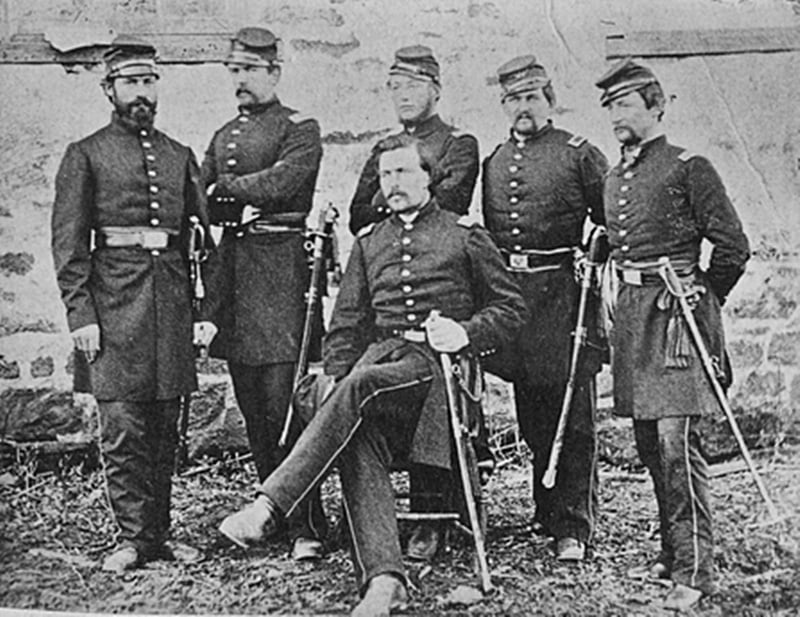
Despite our collective dedication to the Declaration and its ideas, the nation has not always lived up to them, as evidenced by the persistence of slavery, the eradication of Native Americans, and the need for a suffrage movement. The responsibility for achieving the Declaration’s ideals falls to all of us, but such a task requires of its citizens real work, or as Whitman argues: “The founders have passed to other spheres – but what are these terrible duties they have left us?” Minnesota demonstrated such dedication in 1863.
As America turns 250 this year, many of Whitman’s observations remain as true today as they did in 1871. The ideals of the Declaration of Independence can be achieved. If Whitman could see a future after a horrific Civil War and a Reconstruction that failed to deliver true equality, so too can we find a way through whatever divisions continue to afflict us.
But such “terrible duties” require real commitment. Political parties, as Whitman notes, are not always the answer, but individual action, in concert with others, can deliver change. We must not lose the “haughty defiance of ’76” but rather embrace it all the more.
Become a Saturday Evening Post member and enjoy unlimited access. Subscribe now



Comments
Read your history Margaret. Prod, poke, move by force, eradicate and murder are just a few things our government and people have done to our indigenous natives since we came upon them.
It is a vital piece for today. Yet, “Eradicate” Native Americans??? Their tribes out west still have jurisdiction over federal standards.
The word is too misleading in today’s politically divided nation.
This is a thoughtful and vital piece, Ryan. I’m honored to have my new Considering History column drop on the same day, as collective movements–whether labor, Civil Rights, #NoKings, or others–are another way we can be part of those terrible duties.
Thanks,
Ben