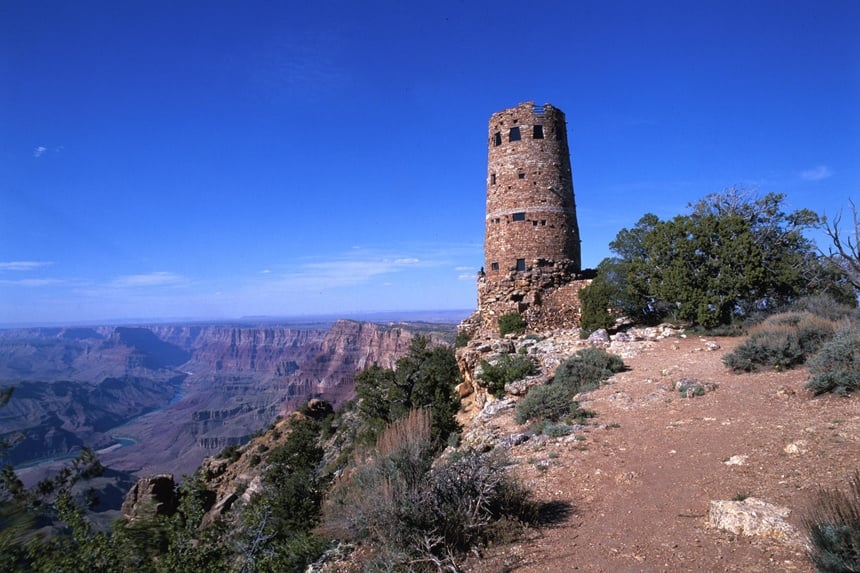
National parks in the United States have their own architectural style, National Park Rustic, and whether you call it by its formal name or its nickname, parkitecture, Mary Elizabeth Jane Colter set the standard for what it could be. Her buildings at Grand Canyon National Park don’t merely blend into the landscape — they welcome, entertain, and educate visitors.
Colter’s Early Career
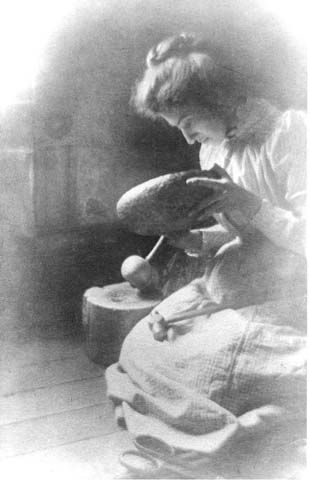
Mary Colter was a month shy of her third birthday when Congress established Yellowstone National Park, the world’s first national park, on March 1, 1872. Eighteen years later, Sequoia and Yosemite joined Yellowstone. At the time, Colter was in San Francisco studying art and design at the California School of Design (today, the San Francisco Art Institute). Although she worked in a local architectural firm to help pay for school, she wanted to be an artist.
After graduating in 1891, Colter returned to St. Paul, Minnesota, to teach high school drawing classes and create her own art in her spare time. She also expertly organized art exhibitions, a skill that, along with her interest in Native American art, brought her to the attention of the Fred Harvey Company. In 1902, the hospitality company hired her short-term to help arrange indigenous crafts for sale in the Alvarado Hotel’s retail space in Albuquerque.
Her interior design was so successful that the company reached out to her again in December 1904 to work on a similar project, Hopi House.
Foray into Parkitecture
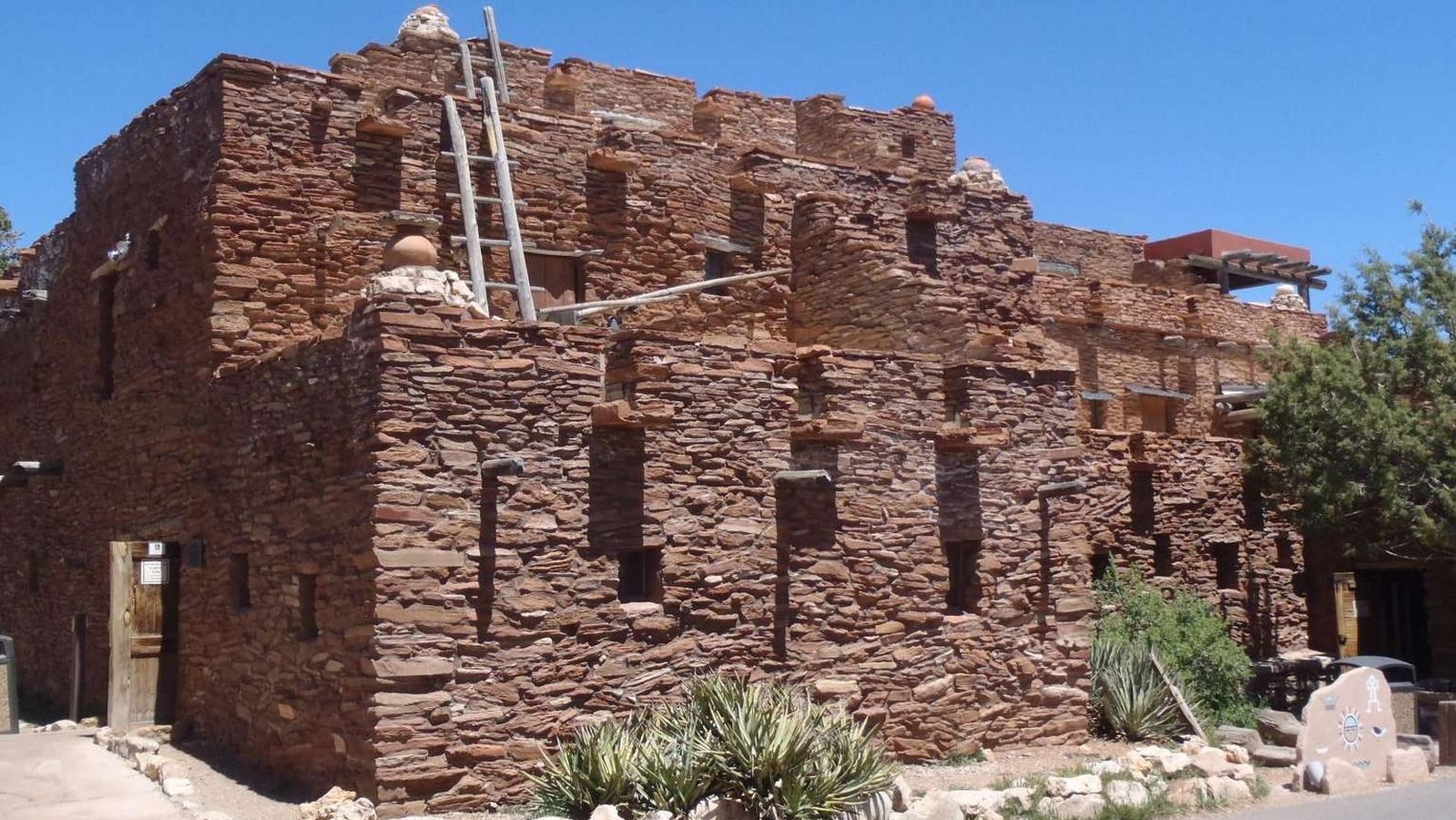
The Fred Harvey Company built Hopi House to serve as the retail space for Native American arts and crafts on the South Rim of the Grand Canyon and hired Colter to decorate its interior. To make her contributions as authentic as possible, she traveled to the Hopi village of Oraibi, Arizona, to study the pueblos there. Her efforts paid off, making Hopi House one of the most popular buildings in the park.
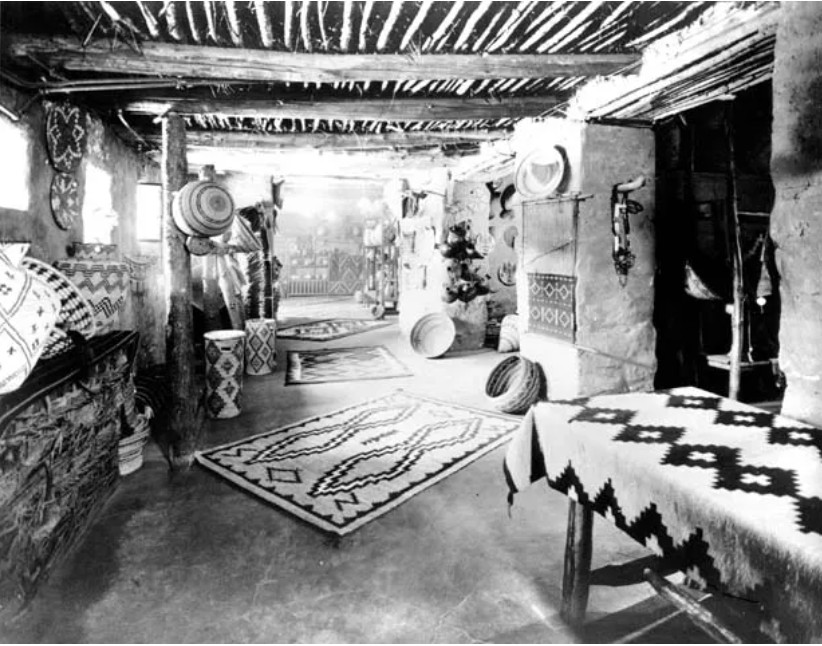
In a National Park Service (NPS) study nominating park buildings for National Historic Landmark status, Laura Soullière Harrison wrote, “Instead of bringing the tourists out to the pueblo, she brought a sense of the pueblo to the tourists. She even included some elements that tourists would be forbidden from viewing in a pueblo: a sacred sand painting and another ceremonial altar.”
Before Hopi House, buildings in national parks or places destined to become national parks either resembled log cabins or emulated European styles, such as Grand Canyon National Park’s El Tovar Hotel. Colter took her cue from what she saw and experienced around her.
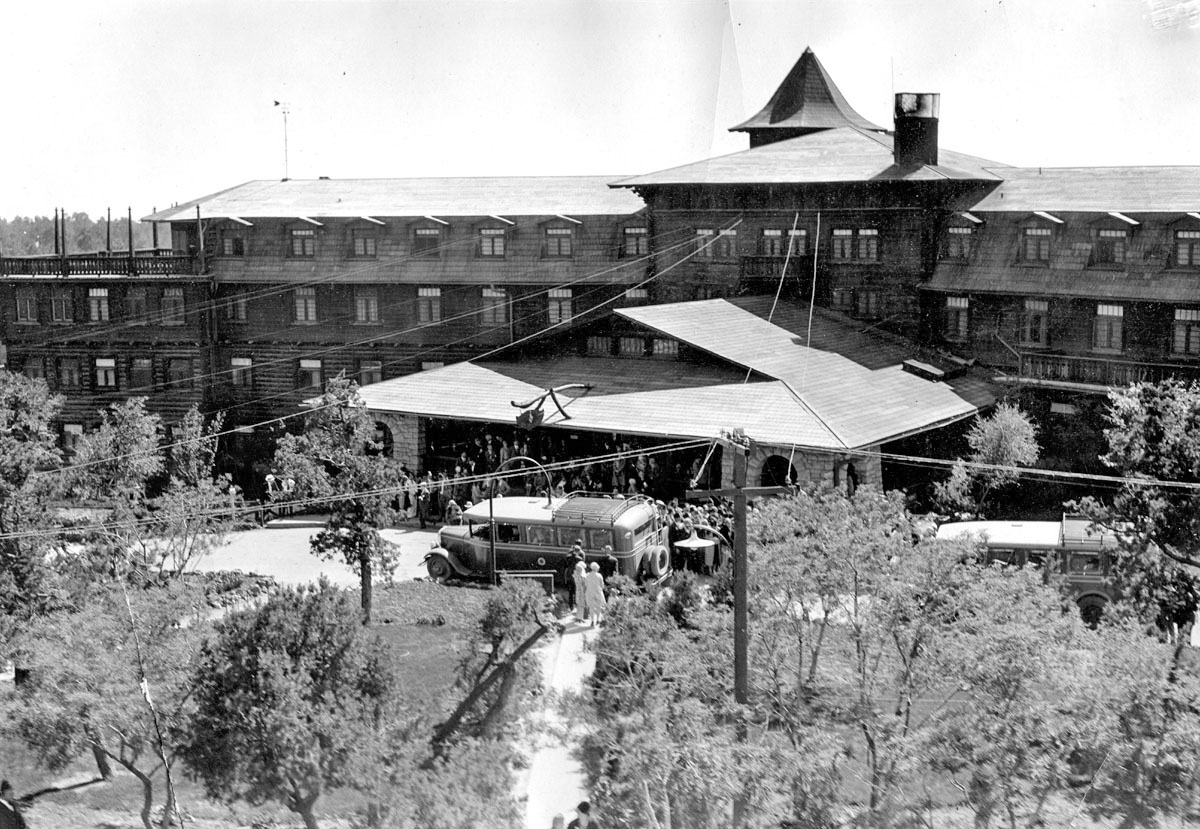
“Colter’s designs were unique to their place,” says architect Linda Reeder, a professor at Central Connecticut State University who writes about female architects. “They reflected the region’s culture and were sited with extreme sensitivity. She made her buildings look timeless, as if they had always been there.”
The Fred Harvey Company knew they had something special in Colter and hired her full-time as their chief architect in 1910.
Building on the Concept
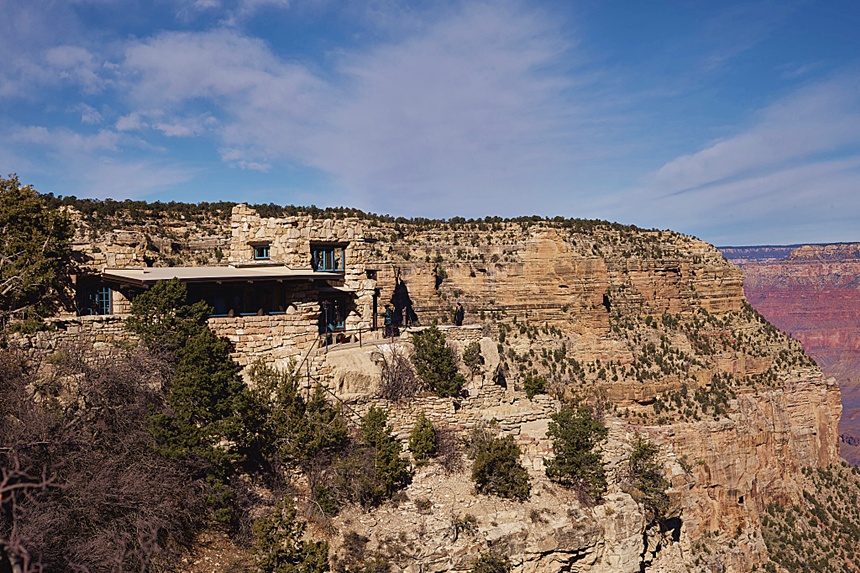
Four years later, Colter returned to the Grand Canyon to design Lookout Studio, a combination scenic lookout and photography studio. Rather than building a cabin-like structure, she used roughhewn stones quarried on the spot to construct a building that appears to be an extension of the canyon wall.
She followed Lookout Studio later that year with Hermit’s Rest, a rest stop along the rim designed to look like an old miner’s cabin with a fireplace and front porch. Again, she used roughhewn stones, but inside, she created a sense of place by adding rustic furnishings, bear traps, and other frontier items.
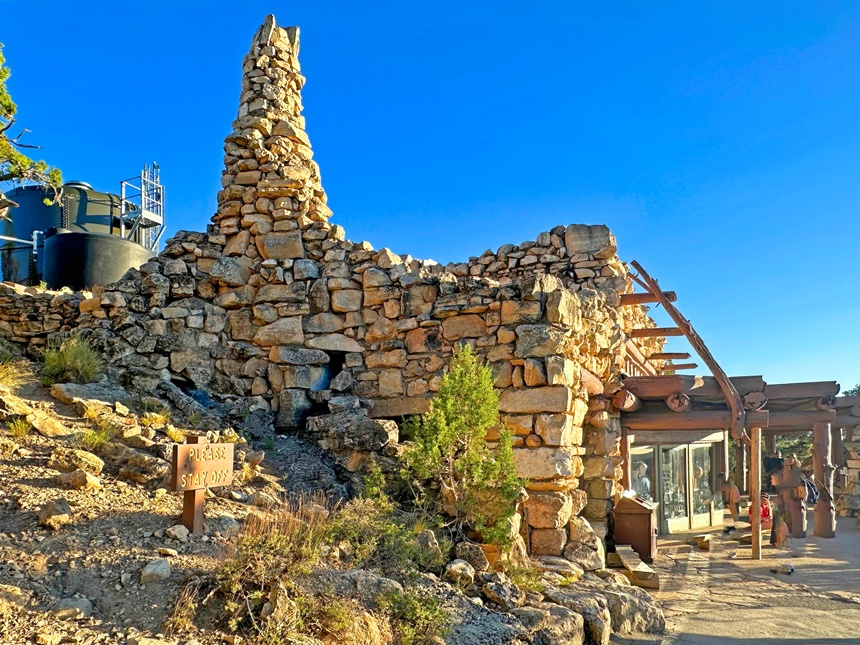
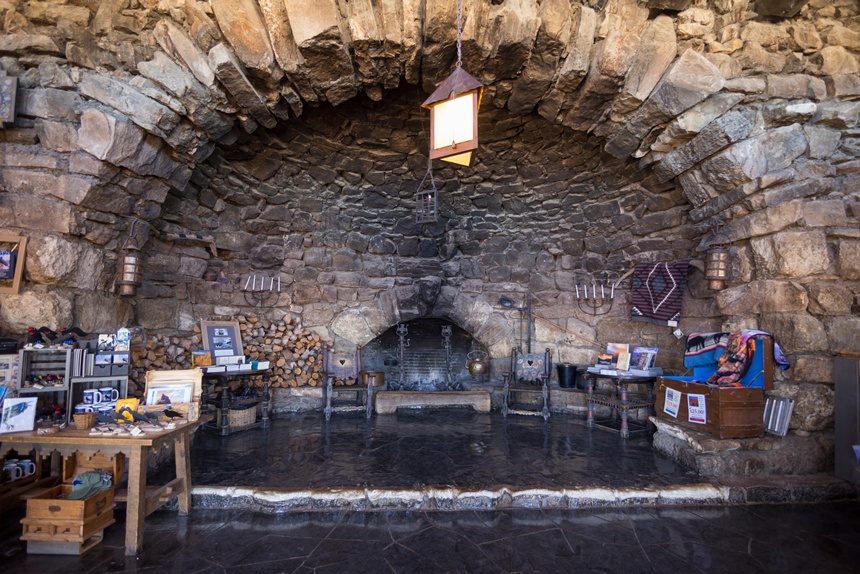
Harrison wrote in her NPS study that these two buildings were more important than Colter’s Hopi House or subsequent Desert View Watchtower because she let the natural landscape shape the buildings. “She became a pioneer in the aesthetics of an architecture appropriate to a natural setting,” Harrison noted.
Colter moved on to other Fred Harvey Company projects, but monument and park administrators took note of her work at the Grand Canyon. When Congress established the National Park Service in 1916, administrators began consulting her on how to design park buildings that wouldn’t detract from their natural surroundings.
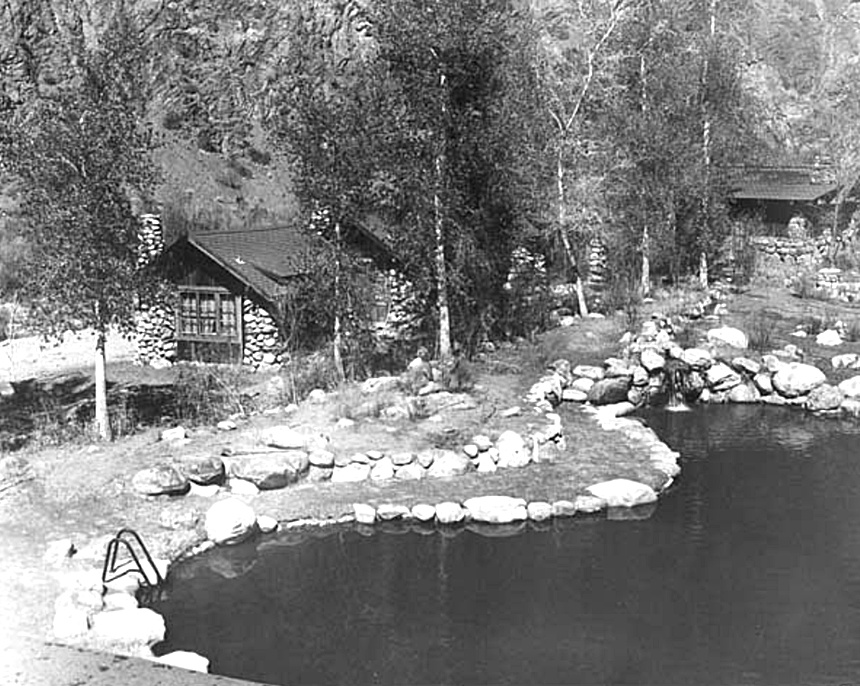
In 1922, she returned to what was now Grand Canyon National Park to design a lodge at the bottom of the canyon. Marjorie “Slim” Woodruff, a Grand Canyon Field Institute instructor who teaches a class on the legendary female architect, says Colter had extreme challenges to overcome in its construction, and that’s why Phantom Ranch is her favorite Colter design.
“What people don’t realize is everything had to be brought in by pack mule,” she says. “No board is longer than eight feet because that’s the longest board a mule could carry.”
Perfecting Her Craft
Over the next decade, Colter continued as the Fred Harvey Company’s chief architect, designing the El Navajo Hotel in Gallup, New Mexico, La Posada Hotel in Winslow, Arizona, and other hospitality-related buildings. In 1932, she headed back to the Grand Canyon to begin work on what would become her crowning achievement there, Desert View Watchtower.
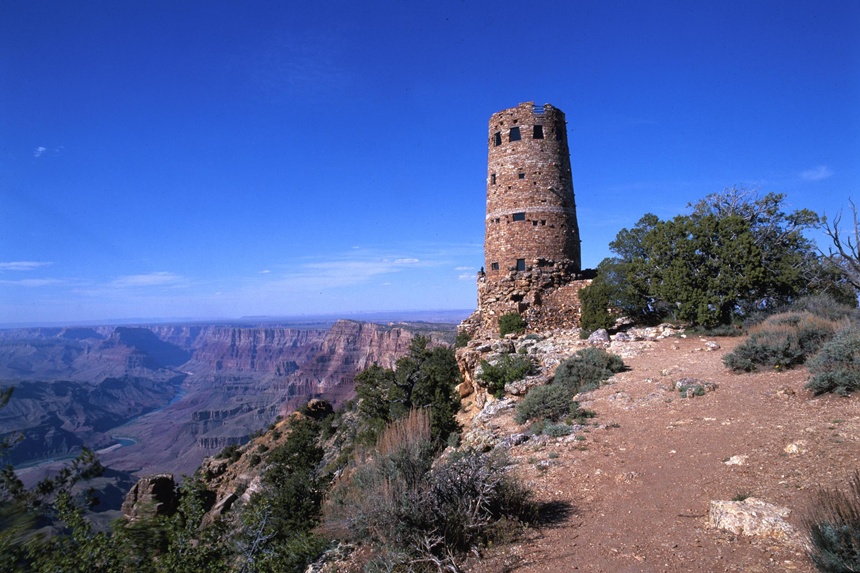
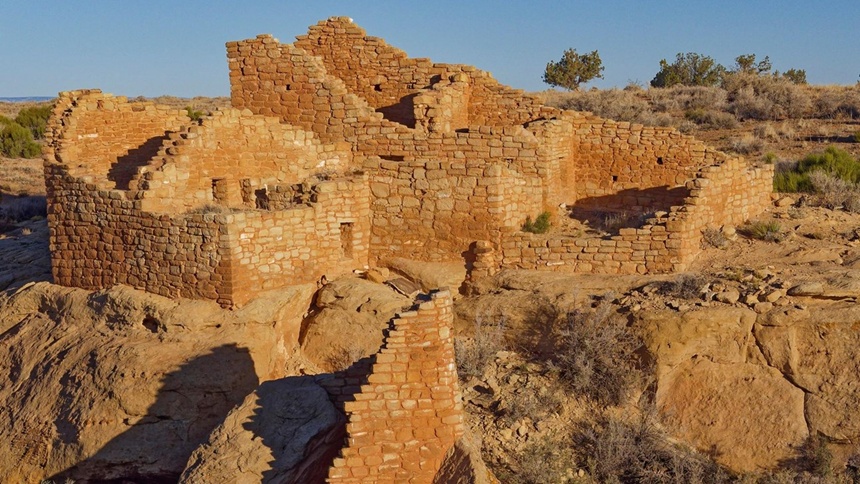
As she had with Hopi House, Colter first sought inspiration at Ancestral Puebloan sites. This time, she traveled to Hovenweep National Monument and studied the ruins there and the construction techniques used to build them. Based on this, she designed an observation tower that looked like it had perched on the canyon’s edge for thousands of years.
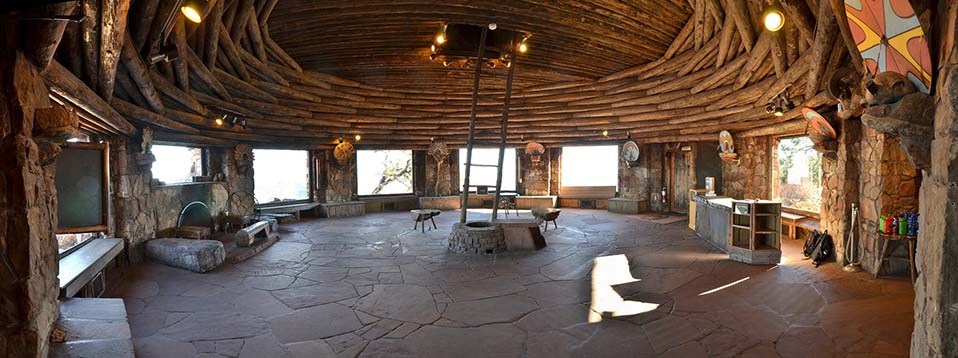
The illusion of timelessness carried over inside, where the circular space felt like a long-forgotten kiva that Ancient Puebloans might have used religious ceremonies. Adding to the ambiance was a mural of the Snake Legend painted on the walls and ceiling by Hopi artist Fred Kabotie.
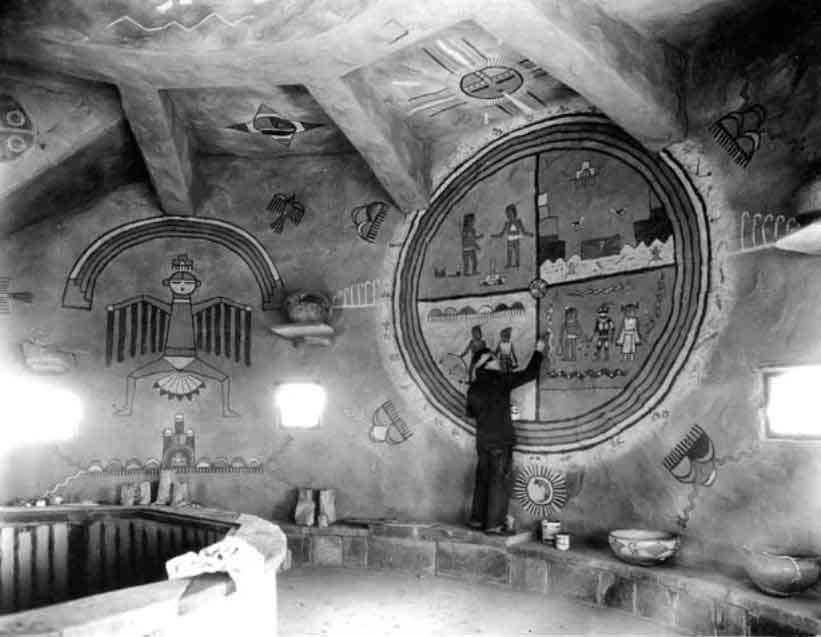
In a blog post from her website, The Architectress, Reeder acknowledges that Colter did appropriate Native American culture in the design of Desert View Watchtower and Hopi House before it. However, she quotes philosopher James O. Young who says that artists constantly borrow from each other. The question is whether that appropriation caused harm, and to avoid that, the borrowing must be done respectfully and well.
Reeder argues Colter succeeds on both counts, citing her desire to educate visitors on Hopi and Ancient Puebloan culture. Colter was so dedicated to sharing her appreciation for these cultures that she wrote an 83-page manual for Fred Harvey tour guides detailing the relationship between the real ruins and Desert View Watchtower. She also assembled four albums of annotated research photographs for visitors to peruse on their own.
Colter’s Legacy
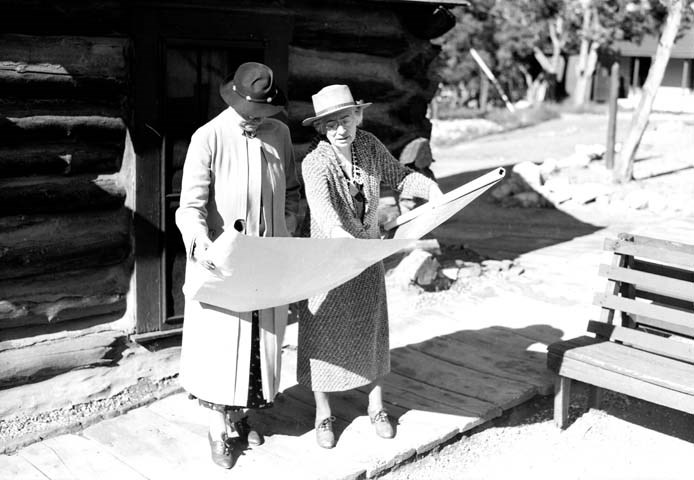
In 1935, Colter oversaw one final Grand Canyon project, Bright Angel Lodge, where she replicated the strata of the canyon in the main fireplace using rocks from below the rim. Her last contribution to parkitecture came in 1947 when she reunited with Kabotie to renovate the Painted Desert Inn in the Petrified Forest, then a national monument, in Arizona. She retired the following year.
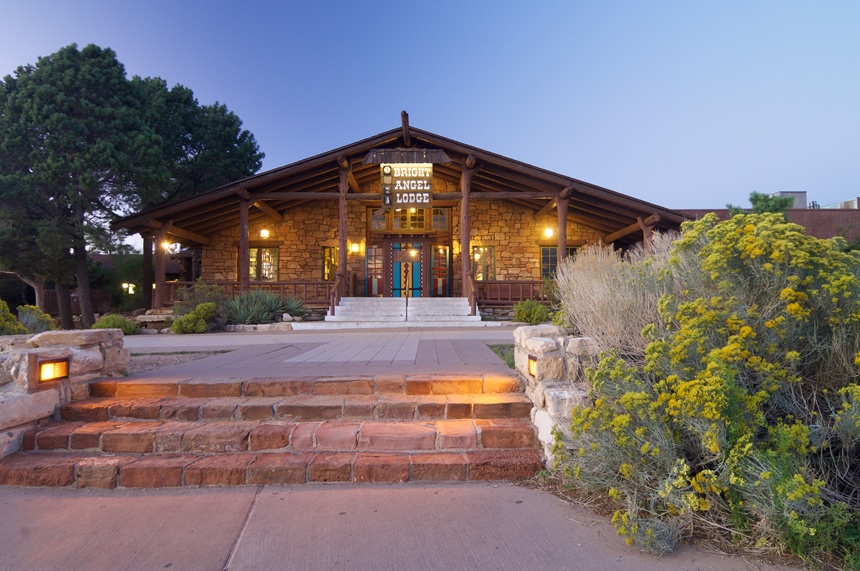
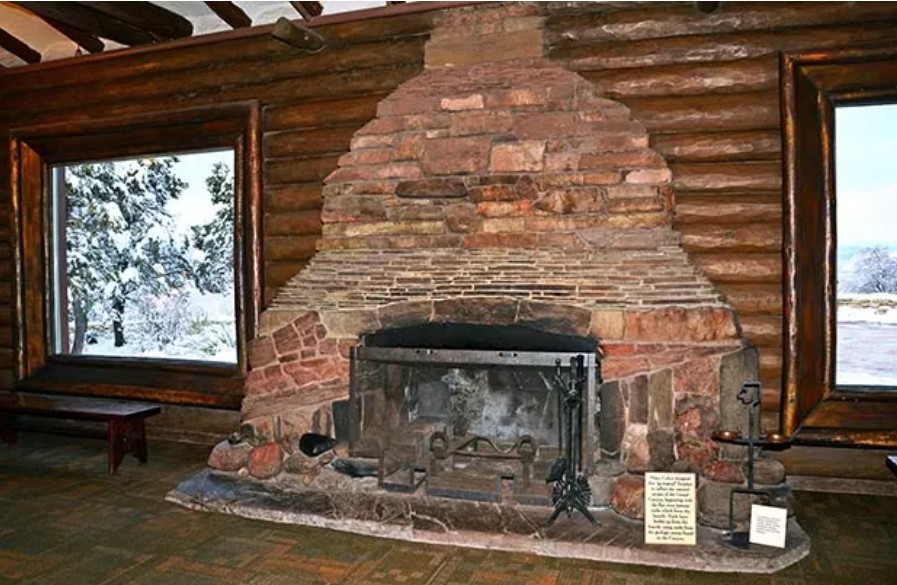
Her impact on our national parks continues to this day. Reeder says her obvious contributions are the buildings she designed at the Grand Canyon, which visitors can still experience. She also set a precedent for preserving existing historic buildings when she incorporated the former post office and the Buckey O’Neill Cabin at Bright Angel Lodge.
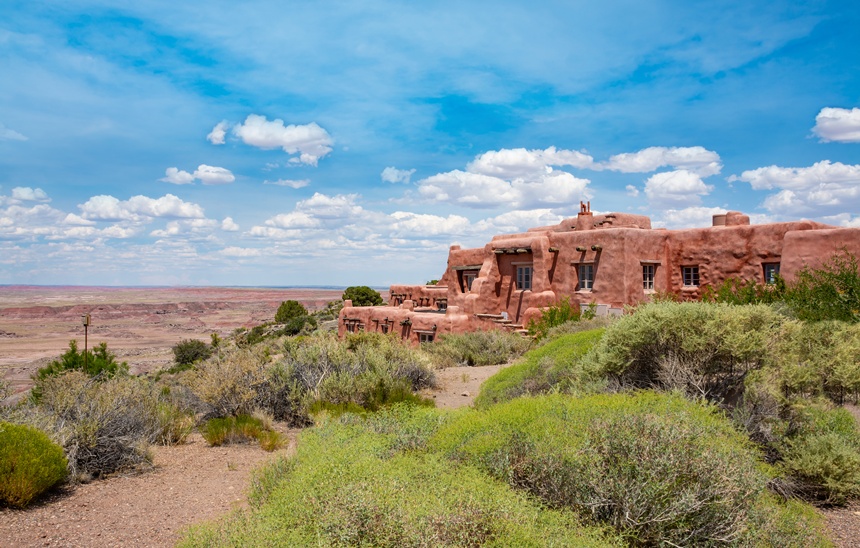
Woodruff believes Colter’s legacy is her dedication to her job and attention to detail. “Everything had to be just right, and if it wasn’t, she’d just do it herself,” Woodruff says.
But her greatest achievement may be that when you enter a building in a national park, it has a familiar feeling. On the walls made of local timber or stone, you’ll likely see art, cultural items, and archaeological finds. Step outside, and the building doesn’t compete with the landscape in front of you for your attention. That’s parkitecture, and you have Colter largely to thank for it.
Become a Saturday Evening Post member and enjoy unlimited access. Subscribe now

Comments
This architecture and interior design is impressive and much similar to the buildings of Dubai. I wish I can go there along with my family.