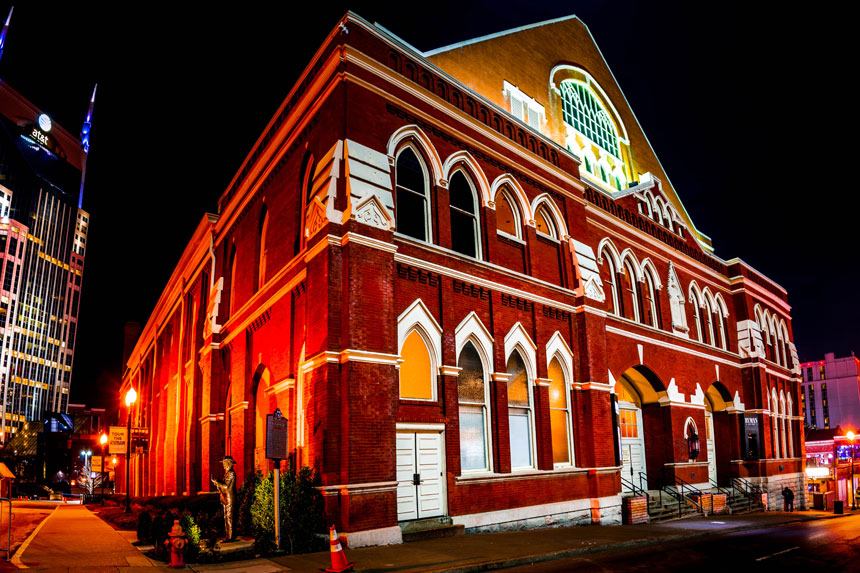
It was October 1925, and the National Life and Accident Insurance Company had just taken a bold chance on a new business venture, launching a new radio station from within their Nashville headquarters. Intrigued by America’s new technology, which had been introduced commercially just five years prior, and fans of radio broadcasts themselves, the company’s founders pioneered WSM Radio, choosing call letters to represent their corporate motto: “We Shield Millions.”
A few weeks later, National Life lured top-tier radio announcer George D. Hay from station WLS in Chicago, bringing the broadcaster and his popular National Barn Dance musical show to Nashville. On November 28, Hay set Uncle Jimmy Thompson at the mic, where the 77-year-old white-bearded fiddler regaled listeners with a toe-tapping performance of “Tennessee Wagoner.”
WSM’s program, which would soon change its name to the Grand Ole Opry, hooked American listeners immediately. And while the program launched as a means of entertaining a mass audience, it also set in motion a century-long movement toward bringing American roots music from the nation’s hinterlands to the forefront of contemporary culture.
The Opry’s musical lineup began with live performances by Uncle Jimmy Thompson and bands with quirky-sounding names like the Possum Hunters, the Dixie Clodhoppers, the Fruit Jar Drinkers, and the Gully Jumpers. While often promoted as country bumpkins who had been discovered picking and strumming in Tennessee’s hills and hollers, the musicians were in fact talented Nashville amateurs that Hay assembled and dubbed with hokey names — sometimes even dressed in hillbilly costume — for entertainment purposes.
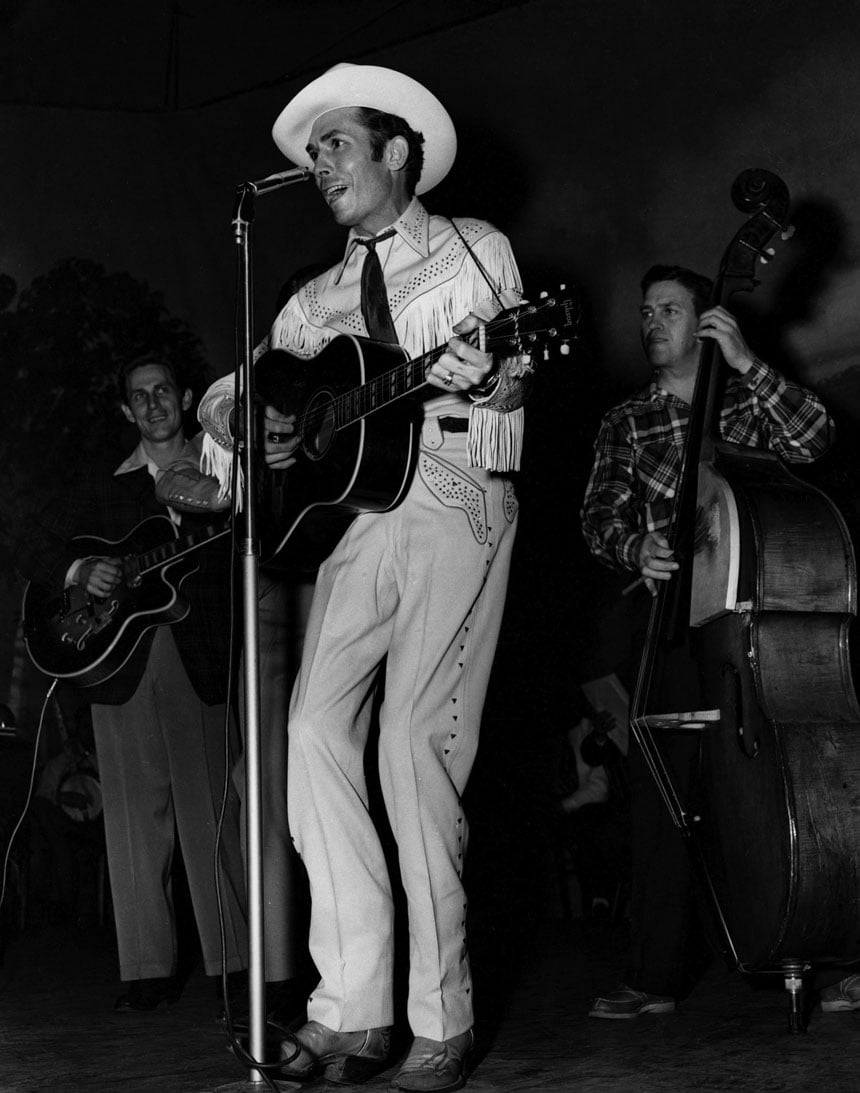
Tim Davis, archives manager for the Grand Ole Opry, describes the early radio program as one intent on creating music for the everyman and in forming a new American mythos.
“I think what set the Opry apart from a lot of the other Barn Dances of the time was George D. Hay’s adherence to showmanship,” Davis says of the broadcaster’s early shtick. “He wasn’t just presenting a purely authentic look at local folk music culture. From day one, the Grand Ole Opry was created as a popular music show.”
And despite their peculiar names and costumes, the bands produced rich and beautiful music. “If you listen to the music, it’s got Scots Irish influences, African, German, Native American, Latin American influences. It’s not just Southern. All of America is there. And with the radio, suddenly you have this cutting-edge tool to spread that music to listeners from coast to coast.”
In the next few decades, the Grand Ole Opry expanded to include a more varied and polished schedule of performers, and the show added more and more seating to accommodate the fans who began to show up at live broadcasts. The program outgrew ever larger digs until 1943, when the Opry took up residence at the 2,362-seat Ryman Auditorium.
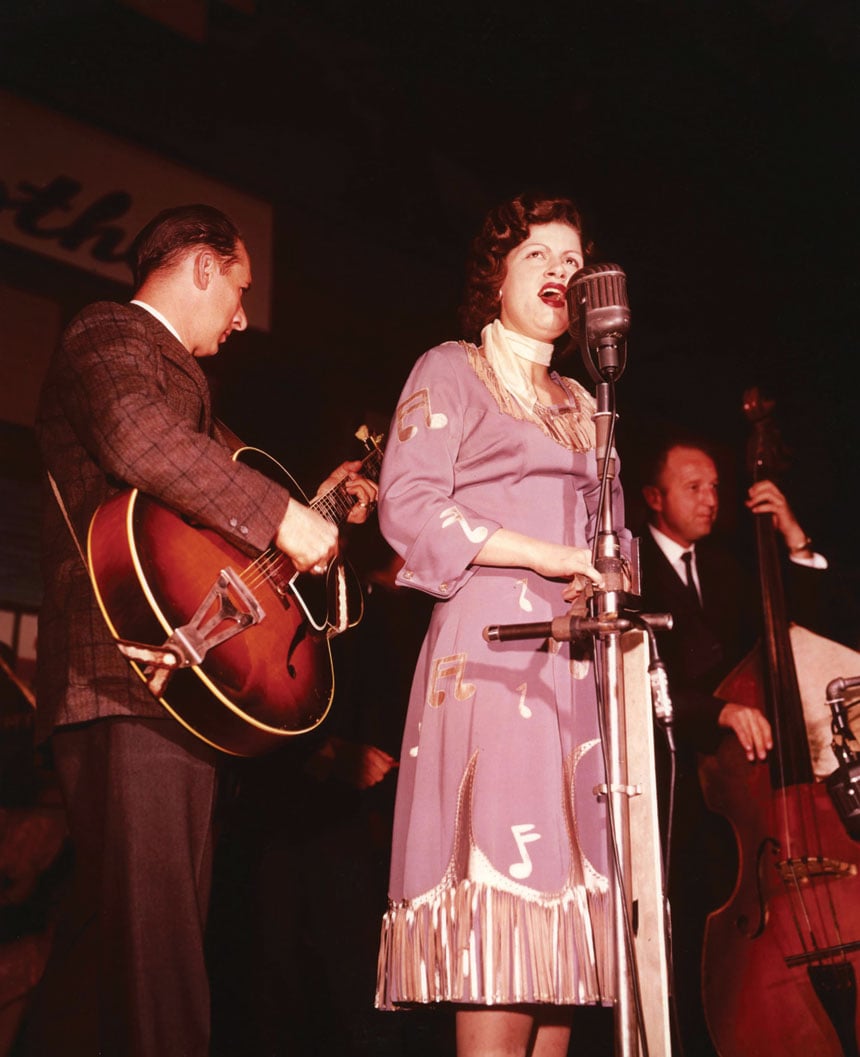
Constructed in 1892 as a venue for large religious revivals, the Union Gospel Tabernacle takes its current name from founder Thomas Ryman, who passed away in 1904. In addition to hosting religious gatherings, the tabernacle featured celebrity lectures and concerts, theatrical performances, popular music acts, and even boxing competitions that audience members watched from church pews. When the auditorium inked an agreement to host the Grand Ole Opry, the Ryman became synonymous with America’s most famous musical broadcast and took on the moniker of the Mother Church of Country Music.
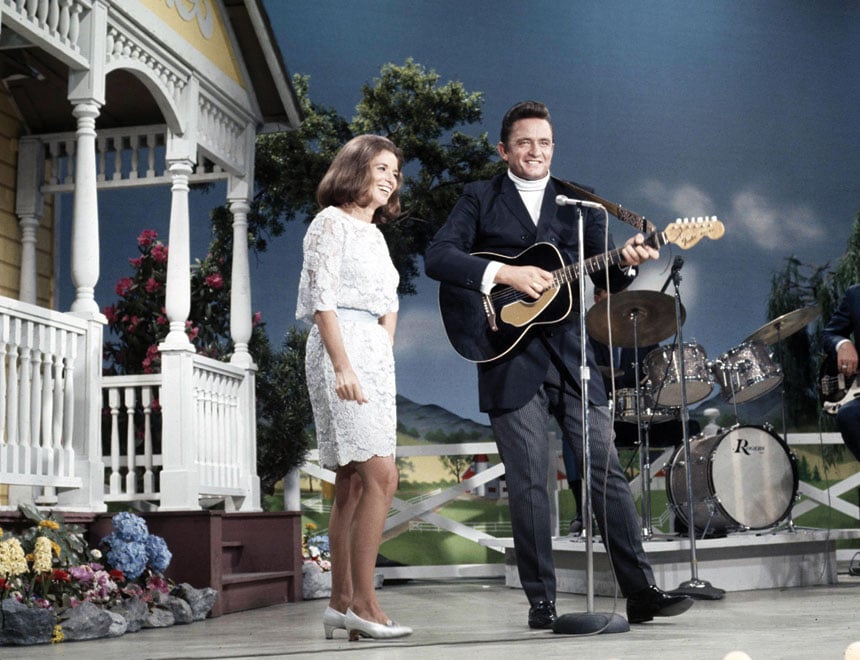
Many of the Grand Ole Opry’s most memorable moments — indeed, some of the most noteworthy developments in country music — occurred at Ryman Auditorium. In 1945, Bill Monroe, who had already landed a regular spot on the Opry stage, teamed up on mandolin with Earl Scruggs on banjo and Lester Flatt on guitar. Augmented by players on fiddle and bass, the team is credited with creating a new musical genre known as bluegrass.
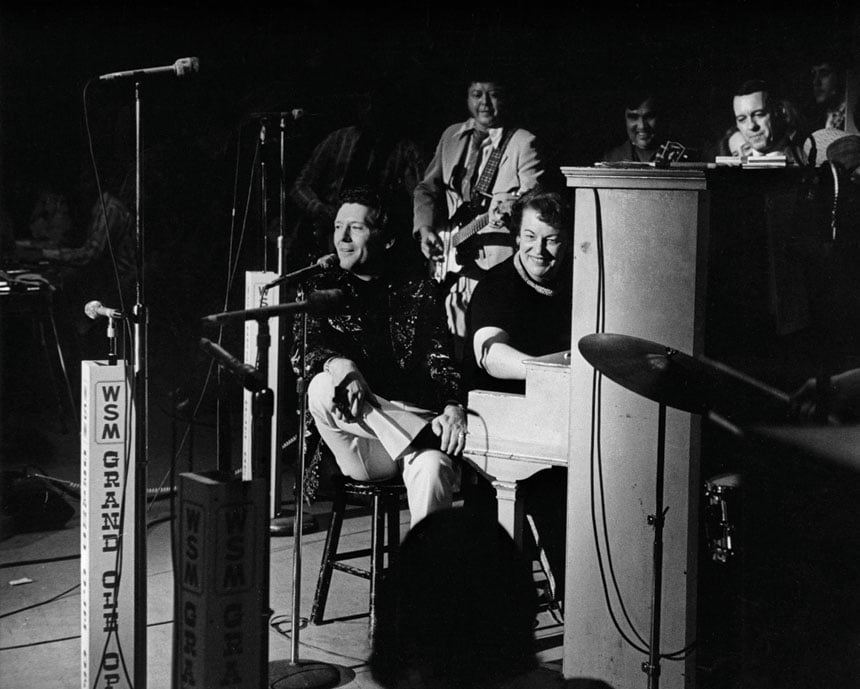
In 1949, a 25-year-old Hank Williams debuted at the Opry and was so well received, he was called back for six encores, a Grand Ole Opry record. Elvis Presley made his first and only Opry appearance at the Ryman in 1954, and in 1956 Johnny Cash not only made his Opry debut, but he met the love of his life, June Carter, backstage.
If some of the Opry’s most indelible moments occurred at the Ryman, some of its most notorious occurrences took place there as well. In 1965, an intoxicated Johnny Cash performed onstage, smashed out all the lights in the front of the stage with his microphone stand, and was banned from future performances until he got sober. In 1968, The Byrds were invited to take the stage only to be heckled and insulted by the audience for their long hair. And in 1973, Jerry Lee Lewis incensed Opry management when he broke the show’s rules forbidding rock’n’roll music and vulgar language, the latter considered particularly egregious for a live radio performance.
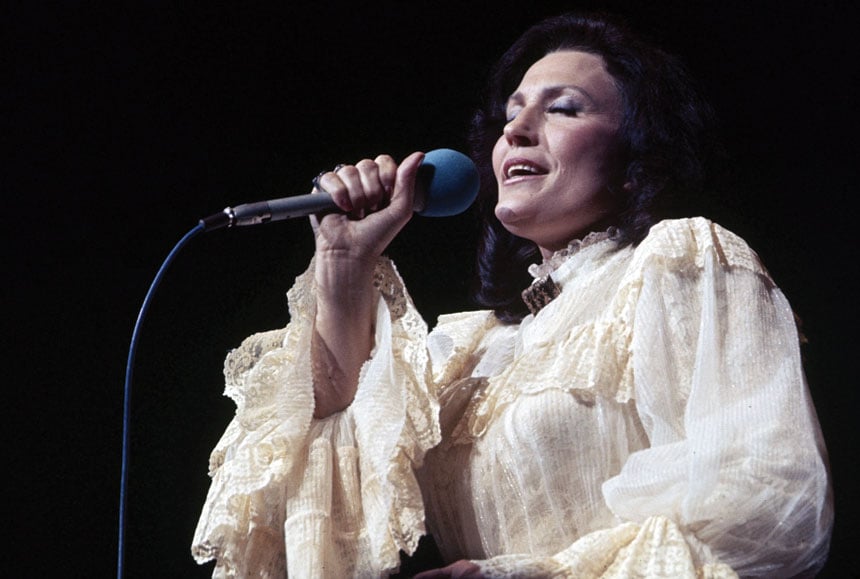
On March 15, 1974, the Grand Ole Opry left Ryman Auditorium for a new, custom-built theater in the Nashville suburbs, where the Opry resides today. On March 16, the show unveiled its new 4,400-seat Grand Ole Opry House with Roy Acuff offering a performance of “The Wabash Cannonball.” President Nixon was on hand to dedicate the new venue, the first president ever to appear on the Opry stage. He even took part in the show. The president played “My Wild Irish Rose” and “God Bless America” on the piano and led the audience in singing “Happy Birthday” to First Lady Patricia. In 1978, the Opry was televised for the first time.
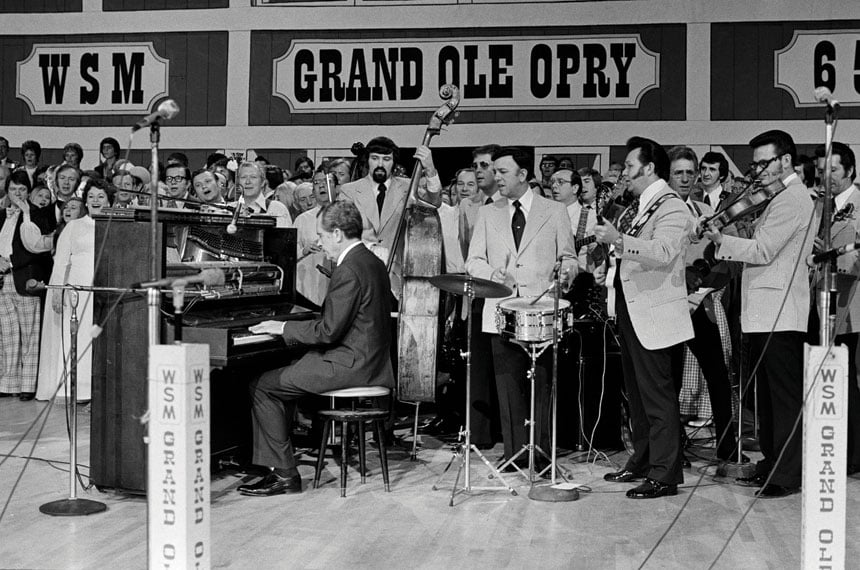
While fans surely loved the larger, more comfortable Opry House, venue designers took care to build a new space that offered a nod to the design elements in the beloved Ryman Auditorium. Members of the audience still sit on long upholstered benches reminiscent of the Ryman’s church pews. The venue’s backdrop is still adorned with a Grand Ole Opry barn. And the centerpiece of the Opry House stage is a 6-foot circle of wood taken from a portion of the Ryman stage, a physical tie to the Mother Church which was home to the Opry for 31 years.
For select performances, the Grand Ole Opry continues to offer concerts at the Ryman throughout the year. Singer Kathy Mattea, who debuted at the Opry in 1988, ranks opportunities to sing at the Ryman among her favorite.
“There’s no place like it,” says Mattea. “To stand where Hank Williams stood. To perform where the Opry began. Maybe it’s because it was once a church,” she muses, “but there is still something visceral, something spiritual about the Ryman.”
As the Grand Ole Opry upped its performance capacity, the show also expanded its musical scope from one focused primarily on Tennessee musicians. Performers like Doug Kershaw brought music from the Louisiana Bayou Country to the stage. Bob Wills and Ernest Tubb injected the sounds of Texas country music to the Opry, and Patsy Cline introduced sounds from her native Virginia into her music. A musical line-up originally billed and even promoted as old-time country music transformed into a show not primitive but polished, one not strictly Appalachian but universal. And for the artists who were invited, playing the Opry became a mark of professional distinction.
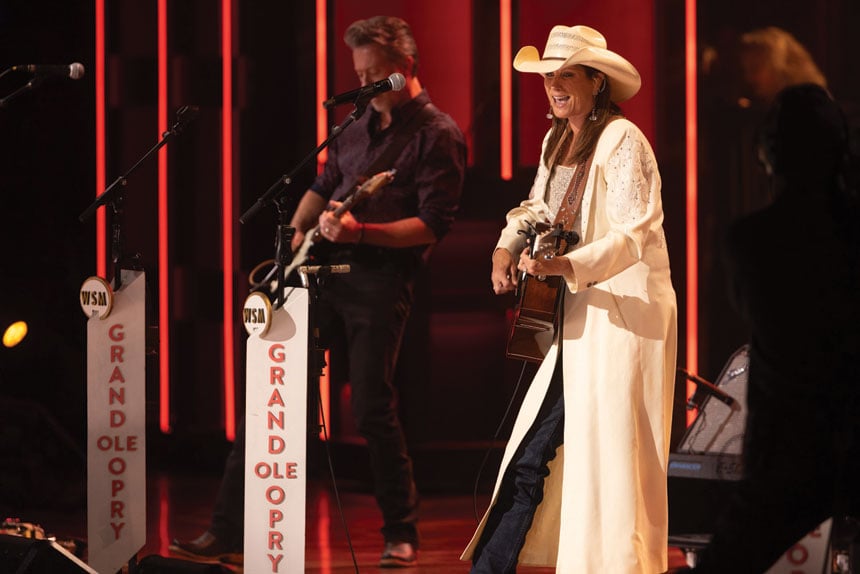
Montreal-based Ray and Betty Gauthier, esteemed professional musicians on the Canadian country music circuit, became aware of the Grand Ole Opry not through radio or television broadcasts, but through live concerts by visiting Opry stars. The Gauthiers were often hired to open for or accompany performers like Little Jimmy Dickens, George Morgan, Johnny Cash, and George Jones when they traveled to Montreal or Quebec City.
The Gauthiers’ experiences made them deeply enamored of the Grand Ole Opry despite their never having heard the broadcast, and they passed that love — and a tradition of quality musicianship — to their granddaughter, country music singer-songwriter Terri Clark. Today, Clark is the only female Canadian member of the Grand Ole Opry.
Clark not only studied music in Montreal and later in Alberta, she read every book she could find, burying herself in the biographies of Reba McEntire, Loretta Lynn, and Patsy Cline.
“The Opry was sort of the holy grail of country music to all these people that I admired,” says Clark, “and so playing there became a goal for me.”
It wasn’t until Clark moved to Nashville at age 18 that she saw her first performance of the Grand Ole Opry, babysitting the neighbors’ kids for free in order to catch the show on TNN. Soon, Clark was playing for tips at Tootsie’s Orchid Lounge, which shares an alleyway with the Ryman. In 1996, her dream of playing the Opry came true.
“Oh, yeah, I remember getting the call,” says Clark. “It was a huge deal. I had family fly down for the show, lots of friends in the audience.” Now, having performed at the Opry hundreds of times and become an official Opry member — “It was June 12, 2004, that I was inducted, a day I’ll never forget” — the thrill and anxiety of playing her music on the storied Opry stage remains. “The butterflies never go away.”
Not only has the Grand Ole Opry’s musical lineup expanded geographically, but the program has become much more diverse in style as well. On any given evening, attendees might hear Rhonda Vincent picking a bluegrass number on her mandolin, Carrie Underwood singing a polished contemporary country mix, the house band performing a tribute to Hank Williams’ honky-tonk sounds, and Gary Mule Deer delivering a comedy sketch — all in a single show.
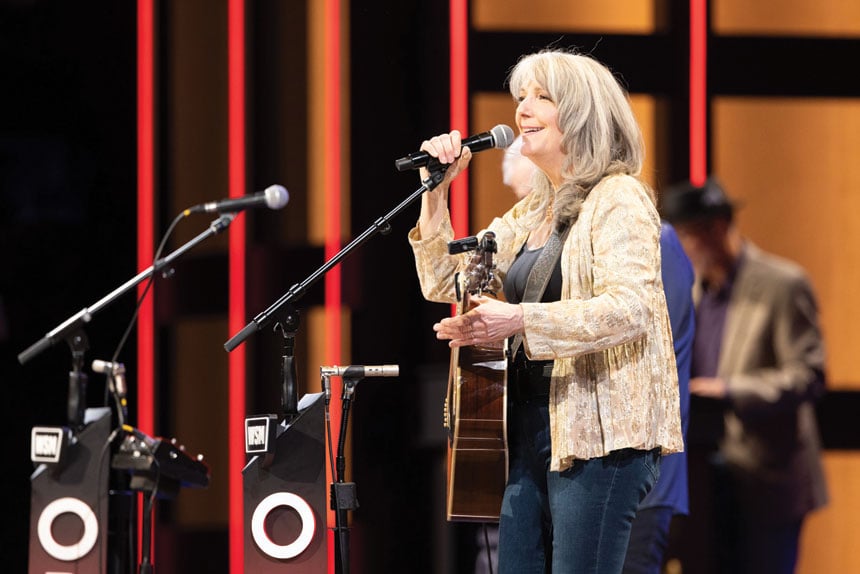
That blend of artists, across genres and across generations, is a big draw to Kathy Mattea, who performs at the Opry about a dozen times a year, and it’s part of what she sees as key to keeping the show interesting, both for the audience and for the entertainers.
“It’s a hard tightrope to walk, holding respect for the traditional music even as they modernize with contemporary country music and comedy,” says Mattea. “But the Opry has always done that, going way back to Minnie Pearl. It’s amazing, if you think about it.”
And because Grand Ole Opry members are expected to perform a minimum number of shows on the Opry stage every year, the musicians see one another often and build relationships. It’s not uncommon for jam sessions to pop up in the Opry’s backstage and in the artists’ dressing rooms: a 50-year country music veteran riffing with a country rock newbie here, a mandolin prodigy strumming with a contemporary Christian crooner there, two fiddlers improvising on a century-old melody in the hallway, and lifelong musician friends picking up where they left off the last time they played the Opry. That collaboration combined with short musical sets makes for a powerful mix.
“When you play the Opry, you’re asked to play three or four songs in an evening,” says Mattea. “You’re not playing a full concert to a house packed with people who came to see only you. All of this, and then the sense of family, you feel you’re part of something bigger at the Opry. It’s not about you.”
If milestone birthdays provide opportunities to look back at what has been, they also offer a chance to look toward the next chapter. As the Grand Ole Opry celebrates its centennial — and its position as the nation’s longest-running radio program — what comes next for the show?
For Dan Rogers, vice president and executive producer of the Grand Ole Opry, the show’s anniversary is not merely about honoring the century of tradition that is behind him, as momentous as it may be. It’s also about finding ways to meld that history with the contemporary elements that will attract and attain a new generation.
“The future of the Opry is one of inclusivity,” says Rogers, “of always being a showcase of country music, but also of being open to different styles of country music. We need to be aware that fans, especially fans younger than me, don’t think of music with genre boundaries anymore.”
One hundred years ago, music lovers had to make an effort to listen to the Opry, to turn their radio dials to WSM’s frequency at the prescribed time or risk missing the show entirely. At the same time, there were far fewer distractions to a show like the Opry a century ago. Now a listener can stream the Opry whenever and wherever they like from their phone … and set it aside whenever they choose. It’s up to Rogers and others at the helm to keep the show relevant today.
“There are a lot of ways you can spend your evenings, and listening to the Opry is one of them,” says Rogers. “But we have to stay current, to make sure that we’re on our A game, to make sure that the superstars of tomorrow want to come see us. And to make the big fans of tomorrow want to come see us, too.”
From the Post Archive
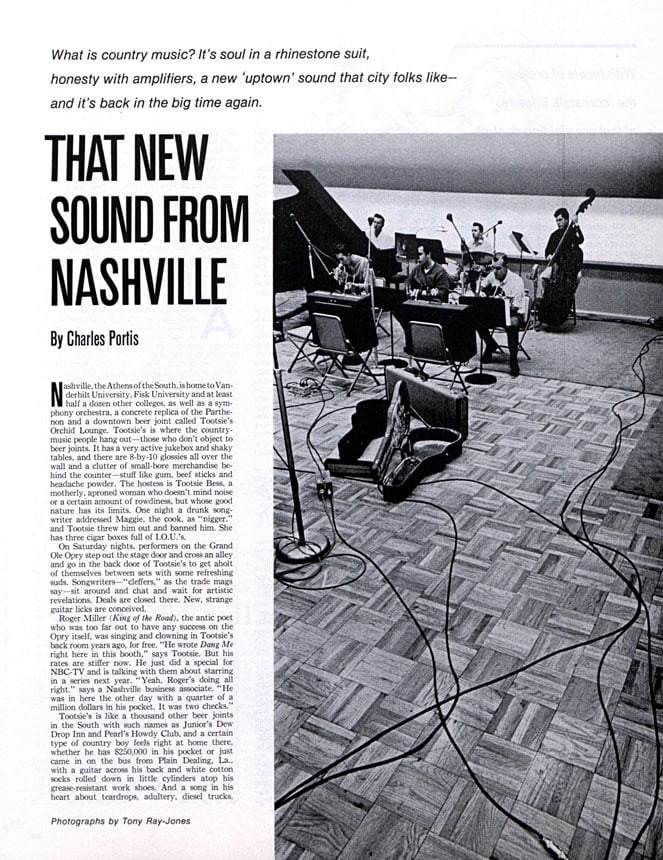
Read our 1966 feature “That New Sound from Nashville” about the Grand Ole Opry
Amy S. Eckert is a freelance travel writer and photographer whose work has appeared in numerous publications, including The New York Times, National Geographic Traveler, Condé Nast Traveler, and AFAR. Visit amyeckert.com.
This article is featured in the September/October 2025 issue of The Saturday Evening Post. Subscribe to the magazine for more art, inspiring stories, fiction, humor, and features from our archives.
Become a Saturday Evening Post member and enjoy unlimited access. Subscribe now
Comments
How about the Louisiana Hayride which was broadcast live from Shreveport?
Being a rural Tennessee resident, I’ve witnessed many changes to the Grand Ole Opry. Some good. Some not so good. True Opry originates from the Ryman Auditorium. It’s really not the same anywhere else.
I remember when the first ‘Grand Ole Opry’ was in Rockcastle County, Kentucky before it moved to Nashville