This series by American studies professor Ben Railton explores the connections between America’s past and present
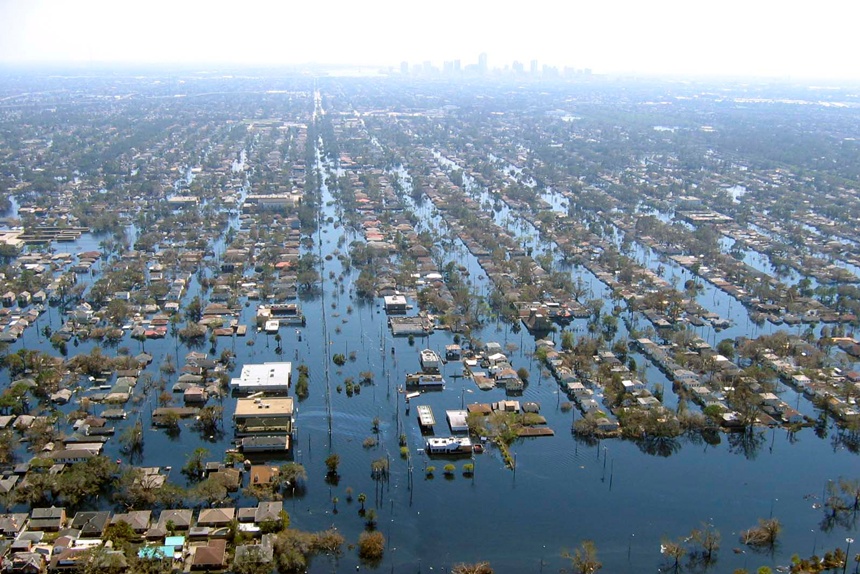
It’s been 20 years since Hurricane Katrina made its destructive landfall, striking across the Gulf Coast and reserving its most terrible force for the great city of New Orleans. That tragic anniversary offers an opportunity for a variety of reflections and commemorations, mournings and celebrations, warnings and inspirations. And more exactly, the storm’s aftermaths in New Orleans provide both a bracing and inspiring lens on our current moment, and on the worst and best of American politics, culture, and communities across the 21st century’s first decades and into our shared future.
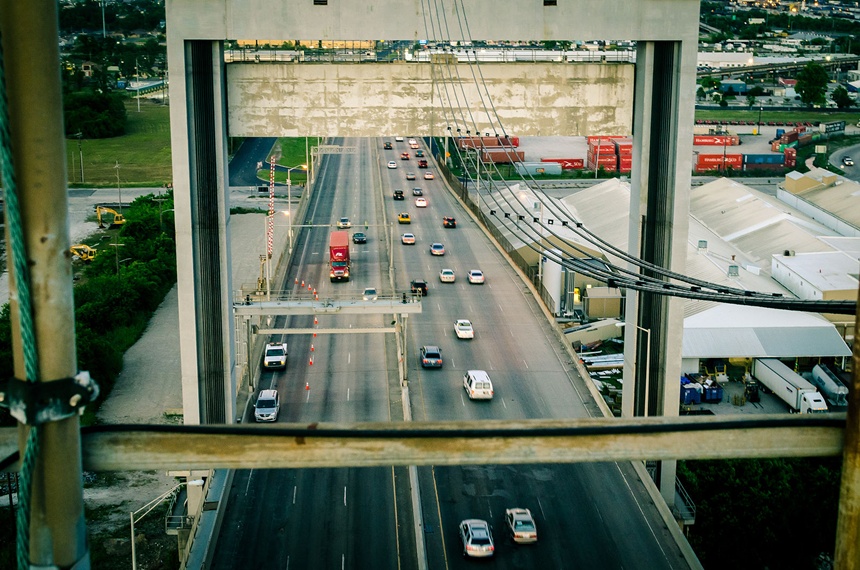
One of the most significant issues to gain attention over the 20 years since Katrina has been police brutality, especially toward African Americans. Nearly a decade before Michael Brown, Ferguson, and the origins of the #BlackLivesMatter movement, the aftermath of Katrina in New Orleans saw striking instances of police violence toward the city’s Black residents. No incident was more disturbing than the Danziger Bridge shooting: On September 4th, 2005, a week after Katrina had struck, members of the New Orleans Police Department (NOPD) fired into a crowd of civilians seeking refuge from the flooding on a highway overpass; two of the civilians were killed (one, a mentally disabled man named Ronald Madison, was shot in the back) and four others seriously wounded, all six of them African American. Almost as bad as the shooting was the NOPD cover-up, which used false reports to seek to place the blame on the unarmed civilians.
As we’ve seen repeatedly over the subsequent decades, such violent incidents are almost always based on stereotypical images of Black Americans (even if they’re teens or pre-teens) as dangerous and criminal. And the immediate aftermath of Katrina in New Orleans provided one of the most overt illustrations in recent American history of the construction of such stereotypes. Take for instance the divergent captions for two nearly identical Associated Press images of New Orleans residents wading through flood waters carrying supplies. The caption for an image of two white residents described them as “finding bread and soda from a local grocery store,” while the caption for an image of a Black resident said that he had been “looting a grocery store.” The two photographers and news agencies offered divergent explanations for their choices and words, but to my mind no contexts can elide the stark hypocrisy and prejudice captured by these captions.
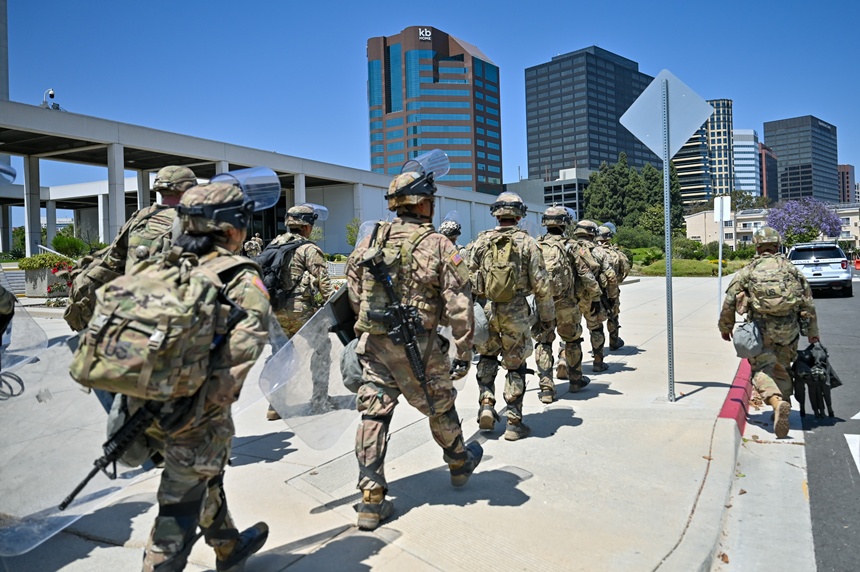
Both the Danziger shooting and the photo captions occurred in the immediate days after Katrina, but the story that most disturbingly connects to an ongoing issue in 2025 America unfolded in the months after. The National Guard were deployed to New Orleans for more than four months; while the initial deployment could be framed as part of the (also highly controversial) federal emergency response, it quickly morphed into a military occupation. As highlighted by that hyperlinked Mother Jones investigative report, Army Times described the Guard’s role as fighting “the insurgency in the city,” and Brigadier General Gary Jones went further still: “This place is going to look like little Somalia. We’re going to go out and take this city back. This will be a combat operation to get this city under control.” This language sounds very much like the justifications we’re hearing for National Guard and military deployments to American cities in the summer and fall of 2025.

The first such city occupied by U.S. troops this year was Los Angeles in June and July. But at the start of 2025, that same city witnessed a far more communal and inspiring response to a natural disaster, one that echoes other post-Katrina events.
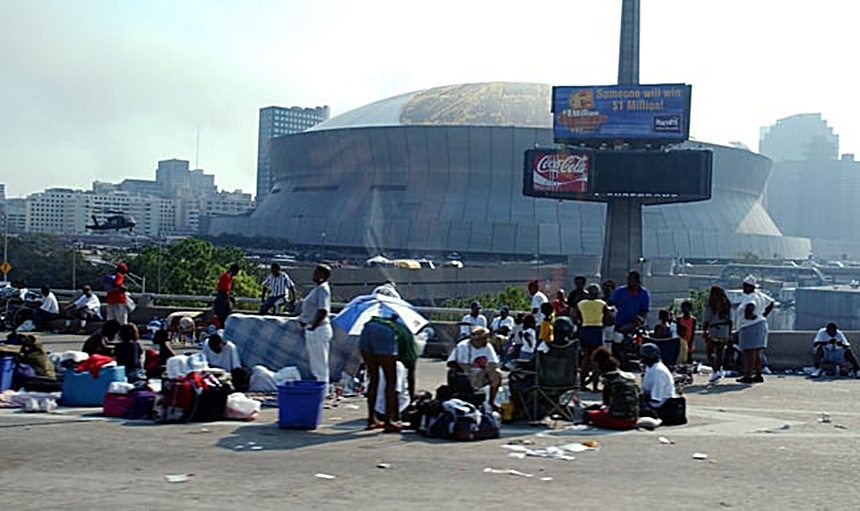
As horrific wildfires devastated LA and Southern California this January, communities around the country chipped in to help residents affected by the disaster; that list included the Arizona Cardinals NFL team, who generously donated their stadium, team planes, and other support when the Los Angeles Rams were not able to host a playoff game in their own stadium. Similarly, in post-Katrina New Orleans, the New Orleans Saints provided their own important relief and support for the city’s devastated community: they did so immediately by offering their stadium, the Superdome, for necessary shelter (a situation that extended for far longer and more painfully than was initially expected); and subsequently with symbolic triumphs like their city-uniting Super Bowl victory (in their first appearance in the big game) in February 2010.
Cultural figures and works provided their own inspiring responses to the horrors of Katrina and its aftermaths, with perhaps the most striking example being the story of rock and roll legend Antoine “Fats” Domino during and after the storm. Domino was known to be one of the most grounded rockers, and despite his half-century of stardom, he and his wife Rosemary remained in their modest home in New Orleans’ Lower Ninth Ward in the first decade of the 21st century. Because of Rosemary’s ailing health they did not evacuate in the days before Hurricane Katrina hit the city, and in the storm’s chaotic aftermath their home was flooded and Fats and Rosemary were feared dead for a couple long days. But it turned out they had been rescued and evacuated by a Coast Guard helicopter, and in 2006-07 Fats Domino made triumphant returns to the city and the music world: first with his 2006 album Alive and Kickin’, the proceeds of which benefitted Tipitina’s Tip-It Foundation for relief for the city’s musicians and culture bearers; and then with his last public performance (and first in many years), a legendary .

This past weekend, my wife and I attended a timely and moving event at New York’s Museum of Modern Art (MOMA) focused on another cultural representation of Katrina and its aftermaths. Part of MOMA’s monthlong retrospective film series When the World Broke Open: Katrina and Its Afterlives, the event featured a screening of the pilot episode of the TV show Treme (2010-13). The screening was followed by a conversation between film scholar and MOMA curator Maya Cade, Treme’s co-creator David Simon, and one of the show’s stars, Wendell Pierce, who is also the author of the beautiful post-Katrina family memoir The Wind in the Reeds: A Storm, a Play, and the City That Would Not Be Broken (2015). The conversation touched on a wide variety of topics but consistently came back to the same themes at the heart of both the show and Pierce’s book: Katrina’s horrific devastation and frustrating aftermaths, the resilience that New Orleans found and modeled in its ingrained and iconic cultural heritages, and the ways that all those stories offer warning and inspiration alike for 21st century America.

Here in 2025 those timely themes are particularly enriched by putting Treme and Pierce’s book in conversation with two other, excellent recent books: Jesmyn Ward’s Salvage the Bones (2011), a novel that turns surviving the storm into a moving metaphor for Black families navigating the most painful periods of American history; and Sarah Broom’s The Yellow House (2020), a multi-generational family memoir that builds to Katrina and its aftermath and reminds us of how fully and vitally New Orleans — “our city,” as Pierce movingly called it in his inscription in my copy of his book — has always embodied both the worst and best of America.
Become a Saturday Evening Post member and enjoy unlimited access. Subscribe now