This series by American studies professor Ben Railton explores the connections between America’s past and present.
As it did throughout the summer of 2020, Minnesota once again finds itself at the center of American social and political debate here in early 2026. What began as a series of remarks and actions against the state’s Somali American community has expanded into a multi-week interconnected web of ICE and DHS raids, community protests and activism in response, and the killing of two local residents by federal officers. In both specific and overarching ways, Minnesota reflects our nation in this fraught and pivotal moment.
Many of these unfolding events might feel strikingly contemporary, driven by changing realities that have led us to where we are in February 2026. But as we begin this year’s Black History Month, the 100th such celebration in our history, Minnesota’s African American history highlights how much the state has always embodied both America’s defining diversity and the ongoing challenge of living up to our ideals of equality and justice for all.
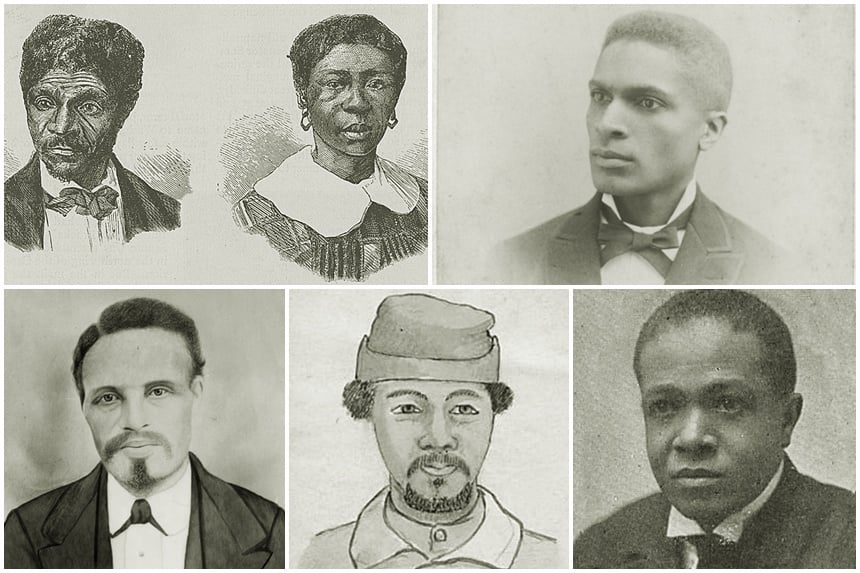
Minnesota gained statehood in May 1858, and by that time the territory had been home to a number of prominent Black Americans, both enslaved and free. Twenty years before statehood, Minnesota’s Fort Snelling was home to one of the most famous enslaved people in American history, Dred Scott, as well as his future wife, Harriet Robinson. Scott was owned by army surgeon John Emerson, Robinson by Indian Agent Lawrence Taliaferro, and the two enslaved people met, married, and had their first child at the Fort. But they remained enslaved, and through the Supreme Court’s decision in Dred Scott v. Sandford (1857) that defined him as legal property rather than a person, Dred Scott would come to reflect slavery’s inescapably dehumanizing effects.

In the same year as that Supreme Court decision, however, Minnesota banned slavery in its first Constitution, and the iconic experiences of three enslaved people in the state reflect the complex effects of that shift. Eliza Winston was brought to the state from Mississippi in the summer of 1860, and while there met members of the free Black community, including the early settlers Ralph and Emily Goodridge Grey. With the help of white abolitionist allies, the Greys brought Winston’s case to court, suing for her freedom under the state constitution. She won her freedom, but an angry white supremacist mob forced her to go into hiding and eventually to flee the state entirely.
Just two years after that court case, enslaved man Joseph Godfrey fought for his freedom in a strikingly distinct way. Godfrey was born at Fort Snelling to a French-Canadian explorer and an enslaved mother, meaning that he too was enslaved. He was later purchased by Henry Sibley, a trader and military leader who would become the state’s first governor. A virulent white supremacist, Sibley played a key role in the build-up to the brutal U.S.-Dakota War of 1862, during which Godfrey escaped enslavement and joined the Dakota in their fight for independence. At the war’s end Godfrey was captured with other Dakota warriors and sentenced to hang as part of the largest mass execution in U.S. history; but in exchange for his testimony Godfrey was pardoned by President Lincoln, and would spent his final decades of life on Nebraska’s Santee Reservation.

Ironically enough, a steamboat sent to St. Paul, Minnesota in early 1863 with reinforcements and provisions for the army during that Dakota War also brought a community of escaped enslaved people who would become local legends. Led by a preacher named Robert T. Hickman, these 76 enslaved people had escaped Missouri during the Civil War; calling themselves the “Pilgrims,” they built a raft and were eventually towed to Minnesota by the symbolically named steamboat the Northern. After more than 200 additional escaped enslaved people joined Hickman and the community, they founded St. Paul’s Pilgrim Baptist Church, which remains the state’s most enduring Black congregation.
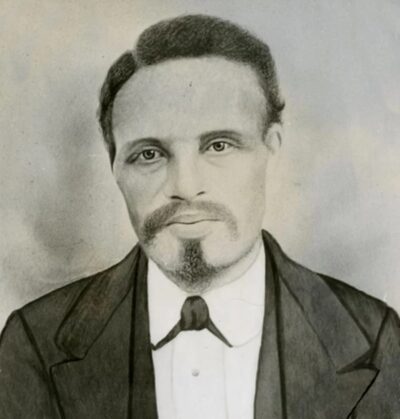
In the decades after the Civil War, members of the state’s expanding Black community would lead the fight for equality and justice. The accomplished architect and stained-glass artist William Hazel, who came to the state in 1887 as a salesman for Tiffany and Company and would later gain commissions for church windows in the area (and far beyond), was denied accommodation at a pair of St. Paul hotels and took them to court under the recently-passed Minnesota Equal Accommodations Act of 1885. His legal victory helped advanced the cause of desegregation in the state.
Furthering that cause was the state’s 1897 Civil Rights Act, which led to a successful test of its protections by a groundbreaking Black University of Minnesota Law School student. That student, McCants Stewart, was the son of a New York lawyer and had attended Tuskegee Institute before enrolling in the Minnesota Law School in 1897. In March 1898 Stewart was denied service at John Flangstad’s famous Central Avenue restaurant due to his race; Stewart brought his complaint to court under the 1897 Act, and the jury took only 15 minutes to decide in his favor.
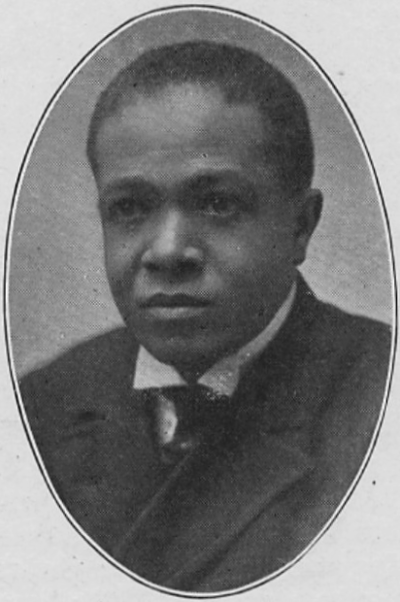
Stewart would graduate from law school in 1899, but he was far from the state’s first Black lawyer; that honor went to Fredrick McGhee, a Chicago lawyer who moved to St. Paul in 1889 and was admitted to the bar in June of that year. After helping build the local Black community for more than a decade, McGhee became a national leader at the turn of the century, serving as an officer for the National Afro-American Council and hosting its 1902 national convention in St. Paul. Through his national conventions McGhee became close to W.E.B. Du Bois, working with Du Bois to form the 1905 Niagara Movement that transformed in 1909 into the NAACP, the St. Paul branch of which McGhee established in 1911.

A pair of iconic Black women extended such community activism throughout the early 20th century. In the 1890s Nellie Griswold was an accomplished young orator and singer at Pilgrim Baptist Church, where she met her future husband and the state’s first Black diplomat, William T. Francis. With William’s partnership Nellie Francis would spearhead fights for countless civil rights issues, including women’s suffrage, housing equality, and, most famously and importantly, anti-lynching activism. After the 1920 lynching of three Black carnival workers in Duluth, Nellie drafted an anti-lynching bill and fought for its successful passage through the Minnesota legislature.

Just a year later, Lena Olive Smith would graduate from Northwestern College of Law and, upon returning to her home in Minneapolis, become the first Black woman licensed to practice law in Minnesota. As the only Black woman with a law practice in the area throughout the 1920s and 30s, Smith took on a number of significant cases and causes; she also helped found the Minneapolis Urban League in 1925 and was elected President of the Minneapolis NAACP branch in 1932. In that latter role she served as the lead attorney for Arthur A. Lee, who with his family bought a home in an all-white neighborhood but was threatened by angry white mobs. With Smith’s help the Lees kept their home and helped further the cause of desegregation and equality in the state.
As my friend and scholarly collaborator Walter D. Greason, himself a prominent scholar of African American History at Macalester College, wrote in this Minnesota Spokesman-Recorder column, all of these Minnesota Black histories remain with us and vital in the 21st century.
Become a Saturday Evening Post member and enjoy unlimited access. Subscribe now

Comments
Excellent in-depth article. I applaud having Black History Month. Their history should not be buried with time or unnecessary propaganda.
Equally, we should equally celebrate our Native American Indian Tribes/Nations with a month dedicated to their history and importance.
The same can be said for those who settled into our country from overseas and the importance of their legacy and history. I believe we should have a National Farmer & Rancher Appreciation Month.
Anyone else wish to chime in on this? As a lifelong resident of rural areas, remembrance of our ancestors history and legacy are long overdue. Period.
PS. It’s also worth noting that the earliest Black histories I share here feature Fort Snelling, where right now indigenous folks are being illegally detained by ICE. Which we likewise have to contextualize with another Minnesota history, the 1968 founding of AIM:
https://www.mnhs.org/mnopedia/search/index/group/american-indian-movement-aim