This series by American studies professor Ben Railton explores the connections between America’s past and present.
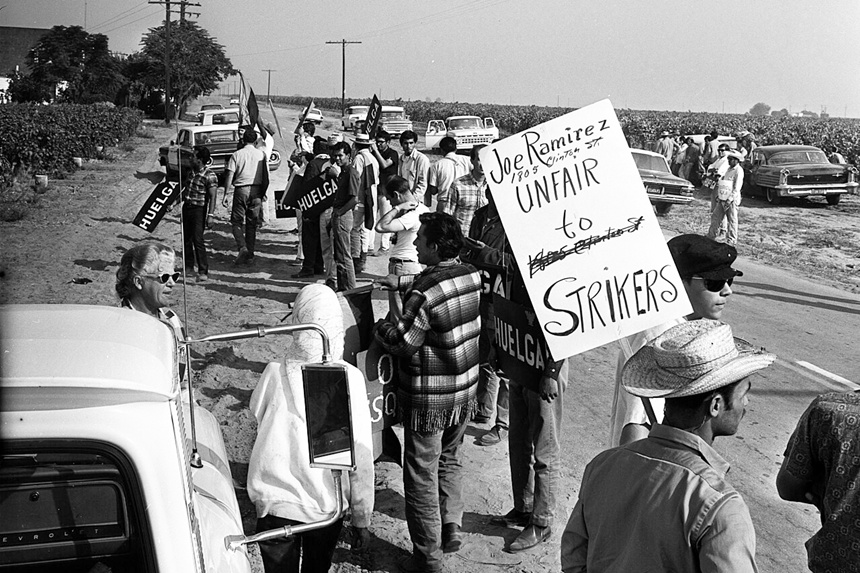
Since 2011, when President Obama issued a proclamation declaring it a federal commemorative holiday, March 31st has been celebrated in many communities as Cesar Chavez Day. The famous Mexican American labor leader and political activist was born on March 31, 1927, and the annual commemorations have provided an opportunity to celebrate both Chavez as an individual and the movements he helped lead.
But earlier this month, an explosive New York Times article detailed numerous allegations against Chavez of sexual assault, child molestation, and other horrific crimes, a report that was quickly followed up by both a social media post from and interviews with fellow labor leader Dolores Huerta telling the story of her own multiple sexual assaults by Chavez.
While Chavez himself passed away in 1993, it’s still vital to confront these allegations, not only so we can seek justice for the victims, but also to understand the systems that enabled and covered up Chavez’s decades of abuse. And when it comes to the holiday, we have an opportunity to move away from tributes to a single figure (however influential they may be) and toward memories of the farm worker movement as a whole. The history of that movement exemplifies the best of collective action, activism, and the communal battle for rights and justice for all Americans.
Many of the earliest moments of that farm worker movement came from Filipino American communities. In the early 20th century, aided in their migration by the islands’ status as a U.S. territory (if an occupied and conflicted one), a number of Filipinos journeyed to both Hawaii and the U.S. West Coast, and many found work in settings like Hawaii’s sugar plantations. There they found extremely difficult and dangerous conditions, and as the community became more sizeable and established, the workers began to push back on those conditions and to argue for more protections, better wages, and other rights. On August 31, 1919, the movement coalesced into an organization, the Filipino Labor Union (FLU), with Pablo Manlapit elected as its first president and Pedro Esqueras its first treasurer.
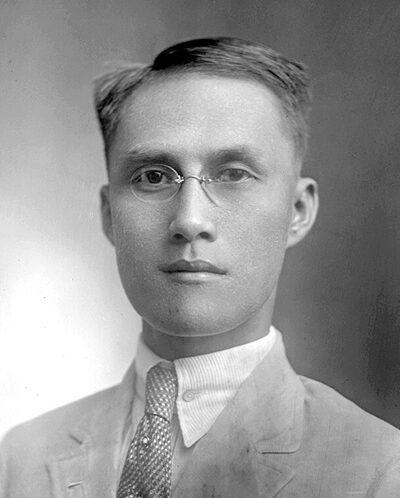
The FLU quickly organized collective actions, in the process bringing together not only Filipino American but also Japanese American workers from a number of island plantations. The first such strike took place on Oahu in January 1920, and was successful at gaining both higher wages and guaranteed breaks during the work day. A far more comprehensive and extended labor action was the plantation workers’ strike that began in April 1924, spread across all the Hawaiian islands, and lasted for more than five months, culminating in a far more violent and horrific way: Kauai’s September 1924 Hanapepe Massacre, in which police officers killed a number of workers and exiled others (including Manlapit) from the islands. We can’t tell the story of the farm worker movement without including such violence and oppression, but those periods of backlash have never stamped out the movement nor stopped its momentum.
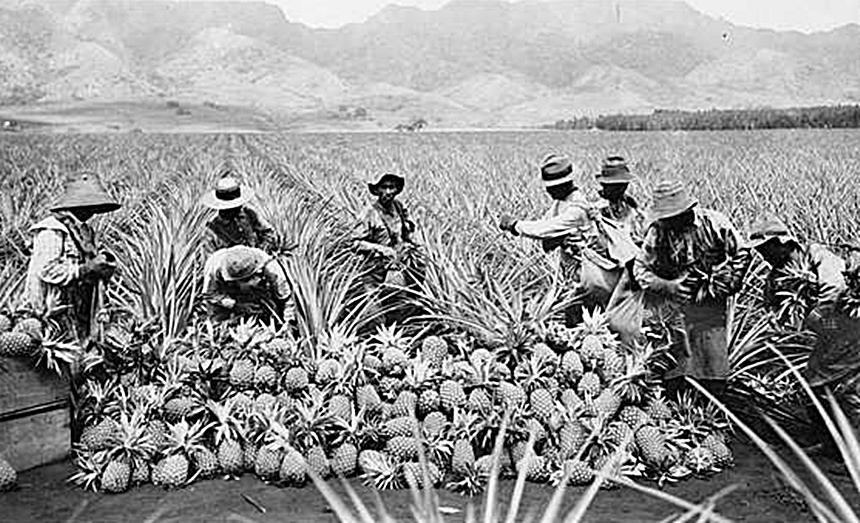
That building momentum brought individuals like Manlapit as well as communities like Filipino migrants to the mainland United States, and in the next couple decades they joined an increasingly multicultural movement fighting for farm and migrant workers. In January 1930, Filipino American, Mexican American, and white farm workers in California’s Imperial Valley joined together to organize the Agricultural Workers’ Industrial League (AWIL) and strike against oppressive conditions on lettuce farms; once again corporate and law enforcement forces collaborated to end the three-week strike, but the AWIL would endure for decades. Hawaii saw similar movements of multiethnic solidarity, such as the September 1946 longshoremen’s strike in which Japanese, Chinese, Filipino, Puerto Rican, Portuguese, and native Hawaiian workers struck for 79 days, shutting down 33 of the islands’ 34 plantations and earning concessions including higher wages and a 40-hour work week.
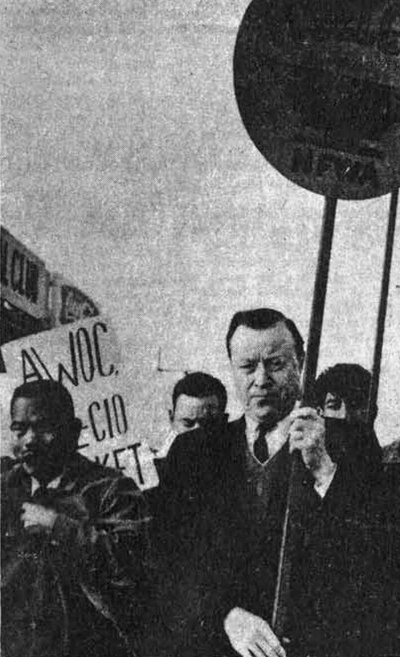
As I traced in this Considering History column, by the 1950s one of the main sources of farm and migrant labor throughout the United States was the controversial Bracero Program that brought Mexican laborers to the U.S. between 1942 and 1964. While both employers and the authorities worked hard to make it difficult for these hundreds of thousands of migrant workers to organize and to punish them if they tried, braceros did begin to take collective action nonetheless, often in solidarity with other workers like those in the Filipino-majority Agricultural Workers Organizing Committee (AWOC). Working in conjunction with AWOC organizers like Larry Itliong, bracero labor leaders and allies like the scholar and activist Ernesto Galarza pushed for organization and action for years, and between 1959 and 1962 a number of strikes across the Southwest and West brought together these multiple migrant worker communities as well as domestic farmworkers.
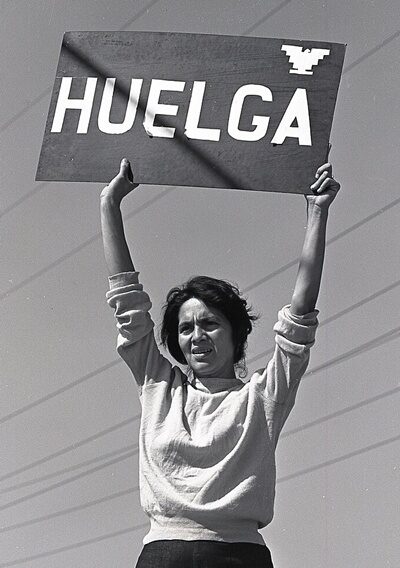
All of those efforts provided the inspiration for the September 1965 Delano (California) grape strike and boycott that truly launched the farm worker movement into the national consciousness. That strike was begun by Filipino farmworkers associated with AWOC, who were pushing for higher wages and other protections; it expanded to include the Mexican American migrant workers at the heart of the newly formed National Farm Workers Association (NFWA), which had been co-founded a few years earlier by Chavez, Huerta, and Gilbert Padilla; and the accompanying boycott that began in December 1965 was supported by activists from civil rights movement organizations like the Student Nonviolent Coordinating Committee (SNCC) and the Congress of Racial Equality (CORE).
The Delano strike and boycott would last for nearly five years, and would produce sweeping results and reforms far beyond that specific setting. Perhaps most importantly, the strike set the stage for the California Agricultural Labor Relations Act of 1975, a historic piece of legislation that for the first time established in law the right to collective bargaining for farmworkers. While migrant workers have continued to struggle with oppressive conditions and countless other fraught realities — never more so than in our current moment — the farm worker movement has across its more than a century of activism become one of the most defining American social movements.
Become a Saturday Evening Post member and enjoy unlimited access. Subscribe now



.jpg)
