This series by American studies professor Ben Railton explores the connections between America’s past and present.
The start of May brings with it a couple of month-long historic commemorations: Asian American and Pacific Islander Heritage Month, which began in the late 1970s as a weeklong celebration and became a full month of official commemoration in the early 1990s; and National Military Appreciation Month, which was added to the federal calendar in 1999. I’ve written in prior columns about a number of figures that bring together those two commemorations: the 19th century Chinese American educator & diplomat Yung Wing, who volunteered for the Union Army during the Civil War; Filipino American military heroes like Vicente Lim, who served with distinction in both World Wars; and the tens of thousands of Japanese Americans who during World War II become part of the most decorated unit in American military history.
For my most recent Considering History column I shared the story of one of those Japanese American World War II soldiers, Shig Takayama, who was the childhood friend and baseball teammate of Jackie Robinson’s. His is one of many inspiring stories I’ve discovered while researching Diamond in the Rough, the ongoing second season of my podcast Baseball, Bigotry, and the Battle for America. For the start of these two May commemorations, I wanted to share another such history that brings together Japanese American military service and baseball, an individual and team that exemplify the significance of these soldiers.
Joseph Shigeo “Joe” Takata was born in 1919 in the Hawaiian community of Waialua, located in Honolulu County near that capital city. His parents were first-generation Japanese immigrants (known as Issei) to the Islands, and like many of his second-generation peers (Nisei) in this era Joe became obsessed with baseball as he grew up. He became a star shortstop on the McKinley High School team, leading them to the Hawaii championship in his 1937 senior season (“I can still see Joe there at shortstop,” his coach Frank Hluboky remembered in 1953); after graduation while working as a stevedore, he also continued his baseball career as a centerpiece for two of the territory’s most famous semi-pro teams, Azuma and Asahi.
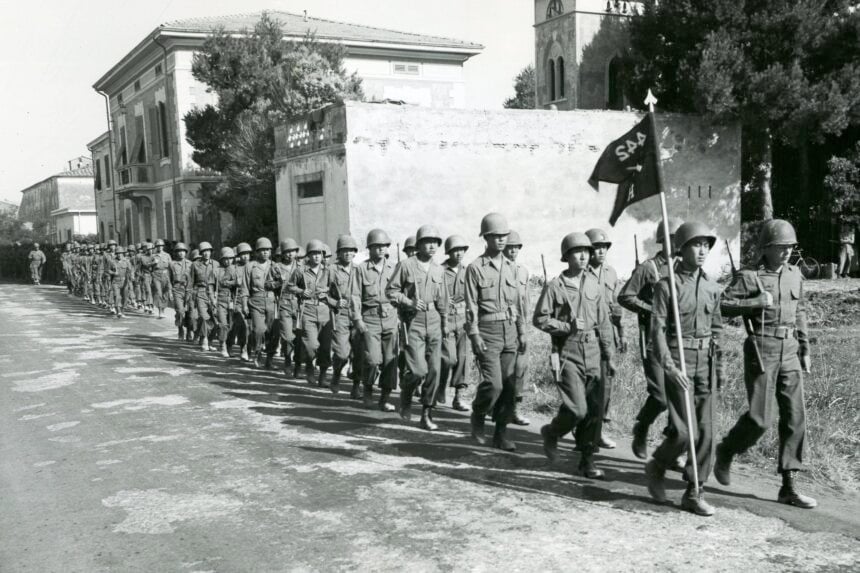
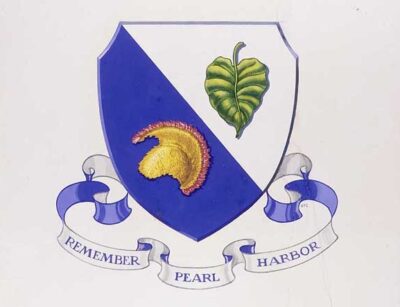
Takata joined the armed forces before the U.S. officially entered World War II, drafted into the Hawaii National Guard in November 1941. In this Considering History column I shared the story of the community of Japanese American young men from the Islands who were forced out of the Hawaii Territorial Guard after the Pearl Harbor attack but found an impressive way to continue to serve nonetheless, forming the Varsity Victory Volunteers (VVV). When the government changed its policy in mid-1942 to allow Japanese Americans to serve in the armed forces (but only in segregated units), much of the VVV, including Joe Takata, became part of the first Japanese American unit, the 100th Infantry Battalion.
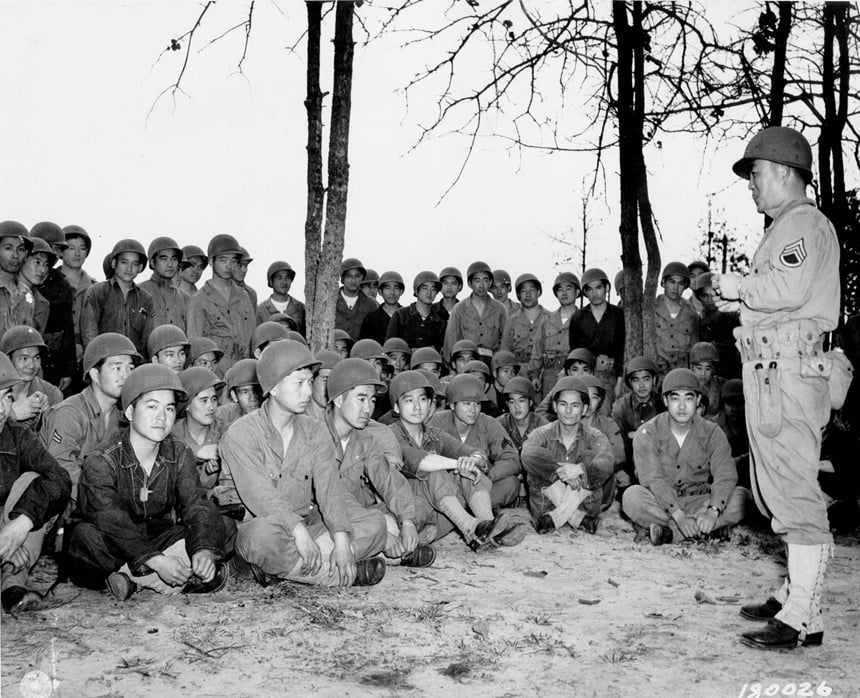
The 100th featured not only Takata but a number of other star baseball players, and when they arrived at Wisconsin’s Camp McCoy to start basic training, they quickly joined the camp’s existing, powerhouse baseball team. That team’s frequently shifting roster made it difficult to maintain a regular schedule, however, and so the Japanese American players soon formed their own team instead. They leaned into their Hawaiian roots, calling themselves the Aloha Team and competing with the accompaniment of musicians who played Hawaiian tunes and handed out leis before games. According to Mitsuru Omori’s history of the team compiled for its 30th reunion in June 1972, “the 100th Battalion’s Hawaiian entertainers were instrumental in drawing the crowds at our games.”
The musicians might have drawn the crowds, but the talent on the field kept those spectators entertained throughout the game. The team’s manager, Takashi “Ted” Hirayama, remembers a particular defensive play against a minor league team in Green Bay where Joe Takata, now playing center field, made a phenomenal relay throw to gun down a runner at home: “Joe’s throw to the second baseman was outstanding. I still remember the announcer saying that it would take a major league team to make a play like that, and these little guys from Hawaii just did it. They play like pros.”
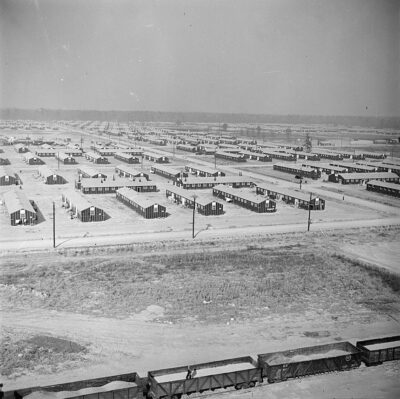
Thanks to such plays and players the Aloha Team won consistently: in Wisconsin; in Mississippi when they were sent to Fort Shelby for advanced training in February 1943; and even at the Jerome, Arkansas Japanese incarceration camp when they traveled there in July 1943 to play a series of July 4th exhibition games against the camp’s very talented all-star team. In one of those closely contested and highly symbolic contests, Takata hit what was believed to be the longest recorded home run at the Jerome diamond.
Just five weeks later, on August 11, 1943, the 100th were deemed combat ready and shipped to Algeria to join the war effort. The Aloha Team’s famed prowess on the diamond traveled with them, and not long after their arrival in North Africa a handful of their players, including Joe Takata, were invited to join the 133rd Regiment team in a game against the undefeated 168th Regiment. The Aloha players contributed greatly to a hard-fought victory for the 133rd (“It was close all the way to the 9th inning, Ted Hirayama recalls), but clearly felt that they still had more to prove on their own terms. So the full Aloha Team challenged the 133rd, now seen as the champions of armed forces baseball in North Africa, to a game; and the Japanese American players left no doubt, dominating the 133rd 26-0, with a long home run from Joe Takata helping set the tone.
Tragically, that would be Joe Takata’s final at-bat in any game. A few days later, on September 19, 1943, the 100th crossed the Mediterranean to join the fighting in Italy. During their first extended combat, part of the effort to take Monte Miletto, an artillery shell landed directly in front of Takata, who died just a few minutes later. His fellow Sergeant Tokuichi Koizumi later recalled, “I never forget that day. I never forget him. He was one of the best.” The military brass agreed, in 1944 posthumously awarding Takata the Distinguished Service Cross for “extraordinary gallantry in the face of enemy fire.” At a 1955 ceremony for the 100th, Takata’s commanding officer, Lieutenant Colonel Farrant L. Turner, went further: “He was a master soldier. A great athlete, a great leader. He would have gone on to great things if he had not died.”
There’s no better way to honor the sacrifices made by Joe Takata and all of the 100th, this month and all year long, than to share these stories of a highly decorated military unit, of their famous and talented baseball team, and of the best of American sports and service.
Become a Saturday Evening Post member and enjoy unlimited access. Subscribe now