Here at The Saturday Evening Post, we know a thing or two about documenting big events across the decades. We saw the Civil War and the completion of the Transcontinental Railroad. We’ve seen historical milemarkers like emancipation, suffrage, and Obergefell v. Hodges. And each time the calendar turns, we, like all of you, are wondering what will be the next era-defining event. With that in mind, we’re taking a look at the events that have defined each decade in the United States since 1900. You may have your own take, and we encourage you to share and engage in (friendly) debate.
You can read Part 1 here and Part 2 here.
1960s: The Kennedy Assassination

While the impact of the Vietnam War and its effect on the national psyche of the United States cannot ever truly be calculated, the deep national trauma triggered by the events in Dallas on November 22, 1963 and the fallout from Kennedy’s assassination reverberated throughout all of the important moments of the decade and found echoes in his brother, Robert’s, assassination just a few years later. Lyndon B. Johnson was sworn in as president in the aftermath, and his decisions on Vietnam, civil rights, and a number of other issues carried historic import. And while a pervasive sadness took hold on the country, the event would spark an unprecedented degree of lurid fascination built on decades of conspiracy theorizing. Some have suggested that the first appearance of The Beatles on The Ed Sullivan Show in February of 1964 finally shook America out of the funk that it had been in since that November, but the true character of the decade, despite later tidings of peace and love, was forever marked by the killings of not only the Kennedys, but also Malcolm X and Dr. Martin Luther King, Jr.
Note: For a comprehensive look at the Post’s coverage of the Vietnam War, take a look at our Heroes of Vietnam: Special Collector’s Edition. You can also peruse our substantial collection of articles covering the 1960s here.
1970s: Watergate
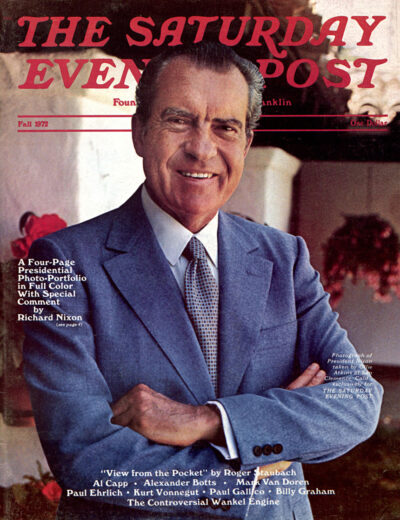
When people talk about the 1970s today, it’s usually in the context of style, music (the decade gave us hip-hop, funk, and punk), or film (the artistic boom, blockbusters, the horror explosion, etc.). But one event loomed larger than any other in the political and cultural landscape, and that was the Watergate scandal. It’s hard to overestimate its importance, given that it led to the only presidential resignation in the nation’s history. And for a country that had already been divided over the Vietnam War and deep rifts between the generations and cultures, Watergate shook the faith that people had in government institutions.
From the break-in on June 17, 1972, until Nixon’s resignation on August 8, 1974, the investigation, hearings, and fall-out almost completely consumed America’s attention. The political character of the rest of the decade was defined by what happened, including the installation of Vice President Gerald Ford and the voting swing that saw Jimmy Carter win the election in 1976. Following the Watergate scandal, Ford’s ascension was a reminder that the Constitution works; his assumption of office under the 25th Amendment served as a great reminder that the nation’s foundational adaptable document works when you let it.
1980s: The Reagan Era, aka The MTV Age
President Ronald Reagan’s January 20, 1981, Inaugural Address (Uploaded to YouTube by C-SPAN)
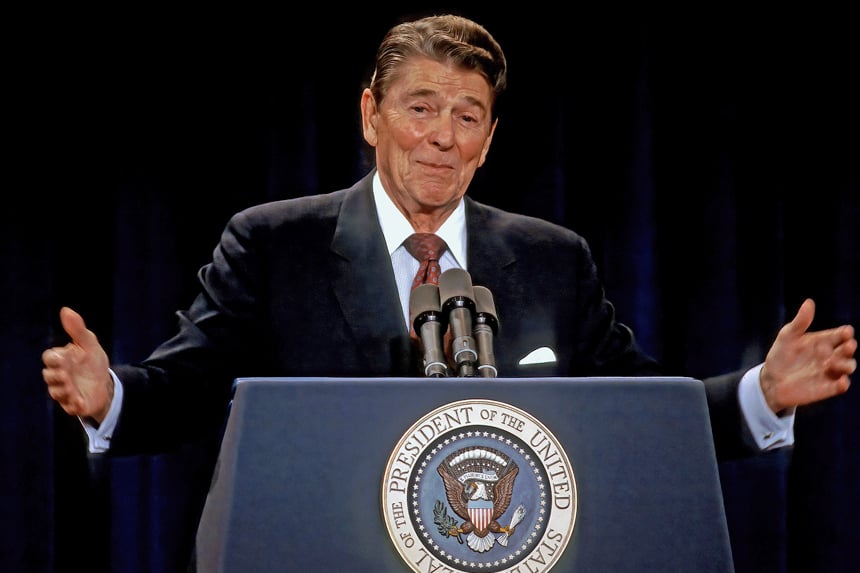
It’s easy to say that a particular decade is a time of transformational change; that’s because every decade is such a time. The election of Ronald Reagan in 1980 marked a new conservative administration, but even then, the 1980s contains a set of truly mind-boggling shifts and contradictions. The rapid proliferation of expansive cable television packages, video game systems, VCRs and VHS rentals, personal computers, and individual portable musical devices (the Walkman, etc.) totally altered the landscape of both entertainment and how people spent their time. MTV’s birth in August of 1981 introduced a musical reset that would open the floodgates for new wave, metal, and hip-hop before the end of the decade, while also giving license for video-savvy talents like Michael Jackson, Prince, Madonna, Phil Collins, and more to dominate the charts.
In terms of Regan himself, the actor turned politician was nicknamed “The Great Communicator.” The wildly popular president’s greatest achievement was arguably his increased engagement with Russia later in his presidency; in Mikhail Gorbachev, Reagan found a partner who was already creating reforms at home and eased the decades of tension brought on by the Cold War. On the political homefront, the decade leaned markedly more right-wing. Reagan’s various alliances emboldened factions like Jerry Falwell’s Moral Majority and triggered social movements like the Satanic Panic. The Parents Music Resource Center (ironically founded by Tipper Gore, wife of liberal eSnator Al Gore) led to hearings about music and spawned the “Parental Advisory: Explicit Lyrics” labels that actually potentially drove sales. Such social critics found an easy target in the booming horror genre, which experienced runaway success in bookstores, theaters, and on television. Horror’s favored atmosphere of looming dread also manifested itself in the U.S.’s ongoing Cold War with the Soviet Union, an unease articulated in the record-breaking viewership of the TV movie, The Day After (prior to the aforementioned progress made later in the decade)
Readers looking for their “Kennedy assassination/Where were you when” moment for the decade could probably find it on January 28, 1986. That was the day that the explosion and breakup of the Space Shuttle Challenger occurred on live television. Interest in the launch had been heightened by the presence of civilian teacher Christa McAuliffe, who had been selected from an applicant pool of over 11,000 via NASA’s Teacher in Space Project. As such, countless classrooms across the country had paused to watch the launch, only to witness the disaster unfold in real time.
Become a Saturday Evening Post member and enjoy unlimited access. Subscribe now