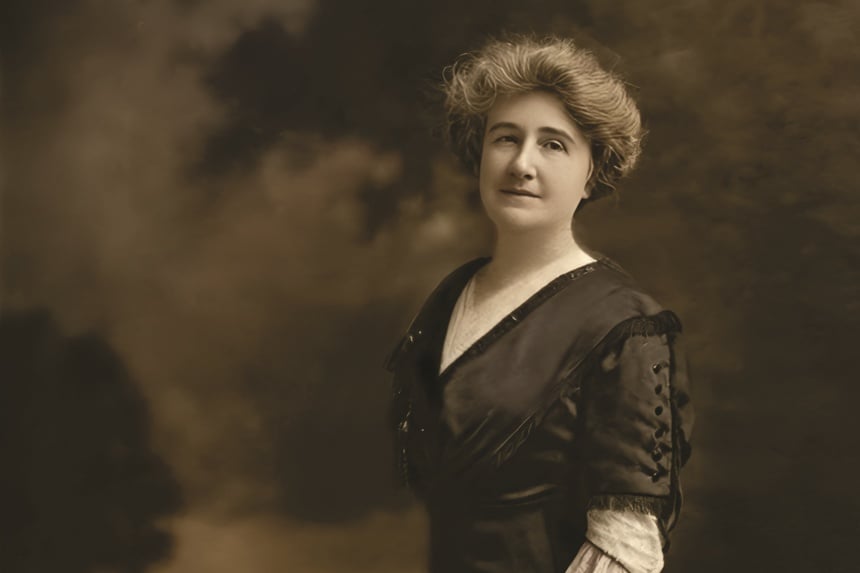
Elijah Craig, E.H. Taylor, Jimmy Russell, Julian “Pappy” Van Winkle, Sr. and Booker Noe are legendary figures in the bourbon world, but few people have heard of Mary Dowling, who ran a bourbon empire of her own. Not only did she manage to grow Waterfill and Frazier, the Dowling distillery, after her husband’s death, but she did so as an Irish Catholic woman in an industry run by white Protestant men at a time when women didn’t have the right to vote.
A Mind for Business
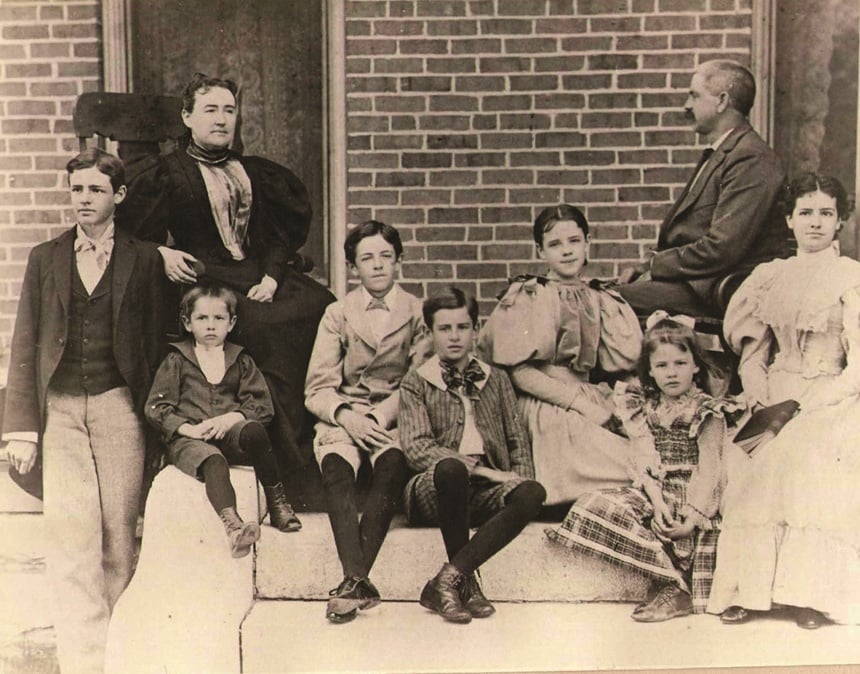
Born to a poor immigrant family, Dowling began working in her father’s dry goods store in Lexington when she was 8 years old and likely met her husband, John, there when he came to sell his bourbon. Despite their age difference — she was 15 and he was 33 — her parents encouraged their marriage since Dowling already owned a successful cooperage, and it meant one less mouth to feed. They were married in October 1874.
From the beginning, John recognized his wife’s business acumen and asked for her input when making decisions. He also had her keep the books, which she continued to do after the birth of their first child. In total, the Dowlings would have nine children four sons and four daughters although only eight made it to adulthood.
As their family grew, so did their wealth. In 1886, the Dowlings built one of the largest homes in Lawrenceburg — a 10,000-square-foot Queen Anne with a dozen bedrooms, two front parlors and stained-glass from Tiffany. It still sits on Southern Avenue across from the home built by T.B. Ripy, whose distillery would eventually become part of Wild Turkey.
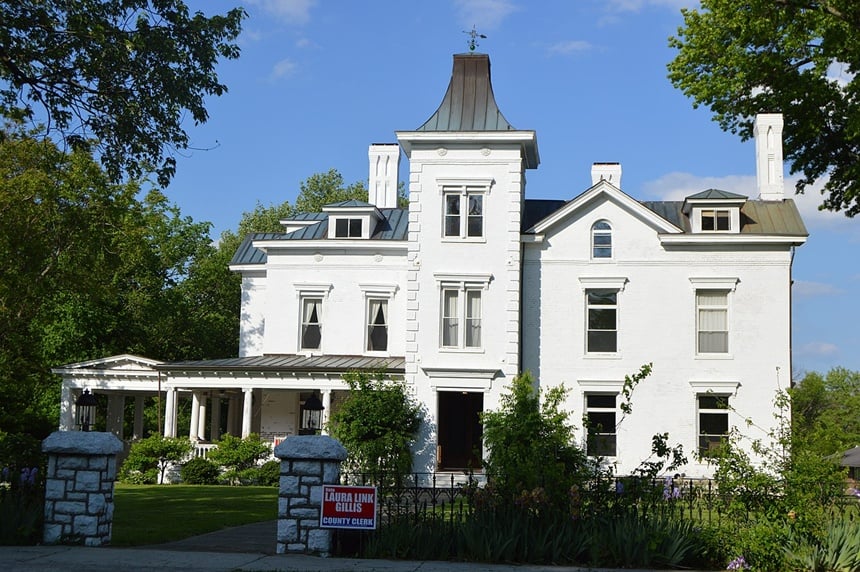
Today, Charlie and Maura Casciola own Dowling Hall, now an event space and Airbnb. Maura, who grew up admiring the home says she didn’t know about Dowling until she read Mother of Bourbon: The Greatest American Whiskey Story Never Told by Eric Goodman and Kaveh Zamanian. Now, they try to share it with their guests.
Picking Up the Pieces
In March 1903, John suffered a stroke and died 11 days later, making Mary Dowling a widow at the age of 44. Rather than liquidate their businesses and live off the proceeds, Dowling assumed control of them to the dismay of the white Protestant community, according to Goodman. (It was bad enough that John was Irish and Catholic, but Dowling was a woman on top of that.)
It didn’t take long for her to experience their opposition. Within two months of John’s death, the bank notified Dowling they were cutting the distillery’s line of credit. She negotiated a 30-day reprieve, used that time to help re-charter another bank, and moved her business and personal accounts to it.
Similarly, the distillery’s distributor dropped the Waterfill and Frazier label because a woman was running the business. Dowling found a new distributor, one that worked with her until Prohibition.
Despite these initial setbacks, Dowling prospered, and the family businesses became more profitable than they had been when John was alive. But Prohibition loomed on the horizon. Naturally, Dowling vehemently opposed the movement even though she was likely at teetotaler at this point in her life, according to Mother of Bourbon.
On October 28, 1919, Congress passed the Volstead Act, and Dowling moved to protect her interests, selling most of her reserve to Canada and Mexico. Much of the remaining bourbon went to W.L. Weller, one of six distilleries licensed to sell medicinal whiskey. Based on the advice of the Kentucky Prohibition director, she moved what she couldn’t sell to her basement before the act went into effect on January 17, 1920.
On Trial for Bootlegging
Her attempts to comply with the Volstead Act didn’t save her. In March 1923, federal agents demanded to search her house, alleging that Dowling had sold bourbon to a small-time bootlegger as part of a larger conspiracy to illegally profit off what remained in her basement. Despite her denials, they arrested Dowling for violating the Volstead Act along with her sons, Johnnie and Emmett, and her daughters, Mary and Ida, who lived in the house with her.
According to Goodman, authorities needed to make an example and targeted Dowling because the industry had wanted to get rid of her. However, Goodman admits this account comes from her descendants. Dowling didn’t correspond much or keep a diary, so few private records exist of what actually transpired at that time.
Regional newspapers covered the trials, the first of which ended in a hung jury. In the retrial, the jury found all five guilty of selling 24 bottles of bourbon. The daughters received a $100 fine while Dowling had to pay a more substantial $10,000 fine. Both sons were sentenced to one year and one day in prison.
The bourbon world debates whether the family actually did sell illegal alcohol. As evidence they did, some claim an underground tunnel used for bootlegging runs between Dowling Hall and the T.B. Ripy Home across the street. While Goodman didn’t see evidence of a tunnel when he toured the basement, Maura Casciola has since found what she thinks could be the tunnel’s sealed entrance.
Goodman speculates that Dowling’s youngest son, Emmett, a recent Harvard graduate, sometimes sold small quantities — like the 24 bottles allegedly sold to the bootlegger. If he did, Dowling probably didn’t know.
The Move to Mexico
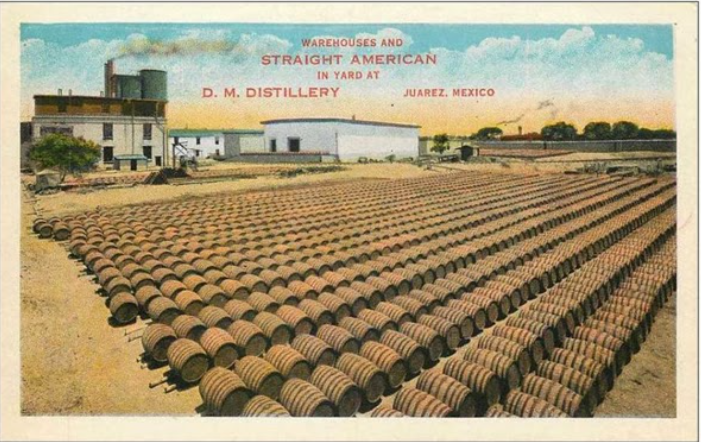
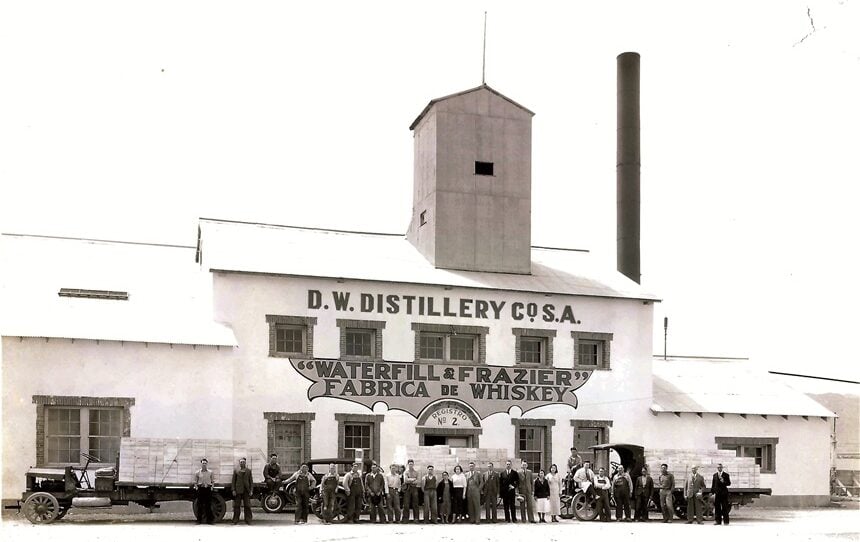
The bootlegging charges weren’t Dowling’s only concern, though. While she couldn’t make bourbon legally in the U.S., she realized she could make it legally in Mexico. And sell it.
To get started, she needed two things: a Mexican business partner and a bourbon maker willing to relocate to Juárez, just across the border from El Paso, Texas. She found the first in Antonio Bermúdez, who would later head the Mexican national oil company PEMEX. Joseph (Joe L.) Beam, the great grandson of Jacob Beam, agreed to make her bourbon.
Whenever she traveled to Mexico, Dowling brought her son Emmett. Not only could he translate for her, but she planned for him to take over the distillery and family affairs when she could no longer work. Unlike his older brothers, Emmett had an aptitude for business and wanted to take over.

In 1927, the Juárez distillery bottled its first bourbon, and Dowling quickly became the richest woman in Anderson County, Kentucky. Unfortunately, tragedy followed. In March 1928, Emmett and Johnnie began serving their prison sentences. Not long after, her daughter, Ida, died of pneumonia in January 1929, followed by her son, George, in June 1929.
Then, Dowling herself began having pain in her side and lower back that December. By January, she had a full-blown kidney infection, and on February 18, 1930, she died at the age of 71. Less than four years later, Congress repealed Prohibition.
Rediscovering Mary Dowling
The family’s misfortune didn’t end there. Emmett, whose health was never the same after prison, died in April 1930, a few months after his mother; Johnnie died six years later. In May 1940, Dowling’s eldest son, Will — an attorney who took over the family business after Emmett’s death — died.
Goodman says people don’t remember Dowling, in part, because she didn’t have anyone left to run her distillery. Instead, Bermúdez continued in his role until 1948 when he handed control to his brother-in-law. Over time, the distillery slowly declined and finally closed in 1964 when Congress passed a resolution that bourbon was a distinctly American product and had to be produced in the U.S.
Even before then, the Dowling name had been largely forgotten, but when Zamanian learned about her early in his bourbon career, he couldn’t forget about her. After some initial research, he reached out to Goodman, a published author, to help write the book about Dowling; in 2023, he opened Mary Dowling Whiskey Co. to honor her. The distillery, a joint venture with Pernod Ricard, sells three bourbons. One, aged in tequila casks, is a nod to her Juárez distillery.
Today, thanks to the book and the distillery, more people know about Dowling. Goodman anticipates that her legacy will only grow over time.
“She was a woman whose life spanned great changes in America and who started out really poor and rose to great prominence,” he says. “Her life contained great sorrow and triumph, and what shines through is the woman’s strength.”
Thank you to Eric Goodman and Kaveh Zamanian, authors of Mother of Bourbon: The Greatest American Whiskey Story Never Told, who provided most of the information in this article.
Become a Saturday Evening Post member and enjoy unlimited access. Subscribe now


Comments
This is indeed an outrageously fascinating story of triumph and tragedy of this Irish-American family all around; most of all Mary Dowling herself, of course. There’s way too much to really comment on.
She was quite the businesswoman, bucking a lot of odds for that reason alone; especially back then. The how and why she had to move to Mexico to produce and sell it in Mexico is whole story in itself.
I’m glad she’s receiving renewed attention, admiration and acknowledgement in the present decade. Her story really is absolutely mind-boggling, to say the least!