
The discovery of 14-year-old Mary Phagan in the basement of the National Pencil Company factory on April 27, 1913, set Atlanta on fire with indignation. Found choked to death with bruised eyes, cut cheeks, and a broken skull, Phagan was covered so deeply by soot that authorities were not immediately able to determine her race. The gruesome nature of her murder, her age, and the Southern ideals regarding womanhood resulted in a wildfire of rumor and innuendo.
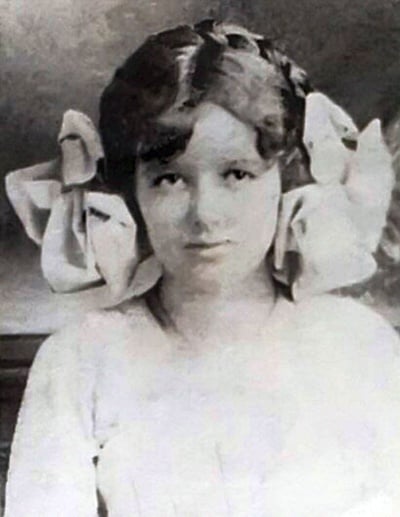
Once authorities settled on factory superintendent Leo Frank — a northern industrialist, former Brooklynite, and Jewish American — as the perpetrator, what followed remains one of the nation’s greatest miscarriages of justice. Although sentenced to death under questionable evidence, Frank’s capital punishment was eventually commuted by Governor John M. Slaton, but to no avail. Frank’s life ended when he was lynched by a mob that broke into the Milledgeville State Penitentiary on August 16, 1915. As one observer noted at the time, “This is the first time a Jew has ever been in serious trouble in Atlanta, and see how ready everyone is to believe the worst.”
From the original trial in 1913 to his appeals in the Georgia State and United States Supreme Court in 1914 and 1915 respectively, the public discourse around Frank’s trial, his death sentence, eventual commutation, and finally his lynching all serve as a window into the nation’s problematic history with anti-Semitism and has direct echoes to today. References to shadowy Jewish cabals, the threat of alien immigration, and their perceived connections to the ills of industrialization and urbanization thread their way throughout the story. The reporting and personal correspondence of Pulitzer Prize winning Kansas City Star journalist A.B. MacDonald, who covered the case for the newspaper in 1915, serve as reminder of the ability of prejudice and emotion facilitated by unscrupulous media coverage to obscure the truth and warp justice.
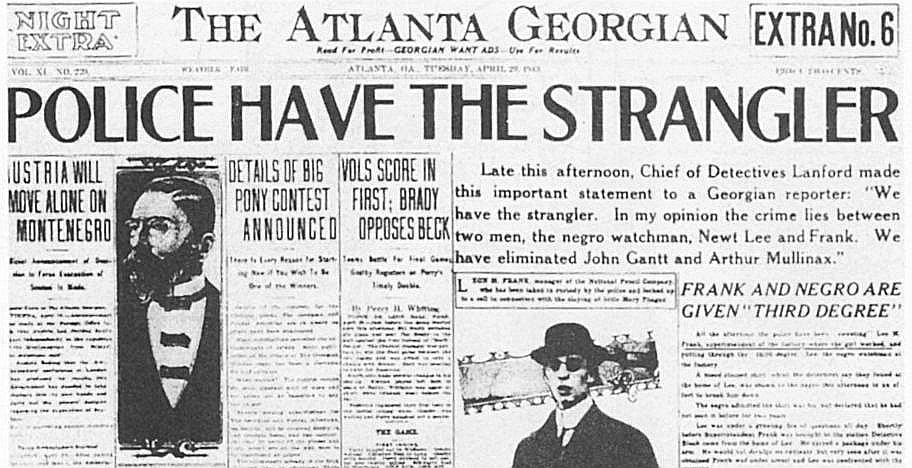
Frank’s trial took place July 28–August 25, 1913, with the guilty verdict rendered with Frank absent due to the presiding judge’s worry that an innocent ruling with Frank in attendance could possibly erupt into mob violence. A day later, the court sentenced Frank to death by hanging. After Frank’s failed 1914 challenges in the Georgia State Supreme Court, a movement pushing for his commutation grew in fall 1914. The combination of the commutation movement and the U.S. Supreme Court acceptance of his second appeal to be heard in 1915 reignited interest in the case, once again bringing national attention.
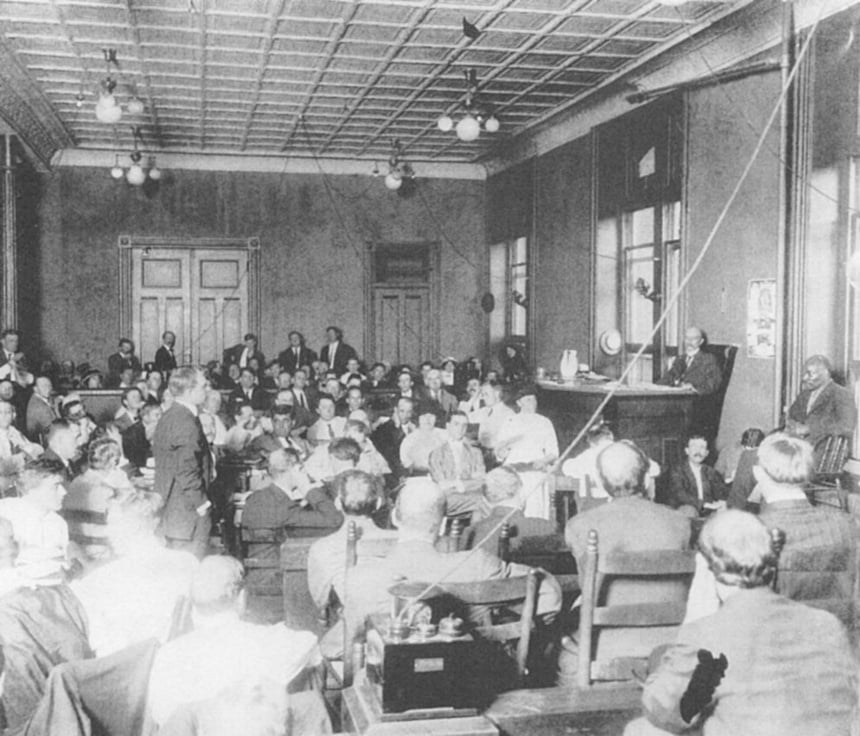
In 1913, the case ignited terrible passion in Atlanta and across the South, but it had largely gone unnoticed in the North until Frank’s conviction and movements to achieve justice for him gained momentum. MacDonald had been assigned to cover the case for the Kansas City Star. Arriving in Atlanta on January 6, 1915, to interview Frank, he was one of the first national journalists to sit down with the accused.
MacDonald’s January 17, 1915, article, along with a short book by Collier’s Weekly journalist C.P. Connolly, were integral in renewing public sympathies toward Frank.
MacDonald walked readers through the case’s complex history: A series of unsolved murders had preceded the Phagan killing in 1913. “There had been a ‘Jack the Ripper’ who went about at night slashing women with a sharp blade,” MacDonald wrote. “He was never discovered.” The gruesome nature of her murder only added to the pressure mounting on local law enforcement.
Authorities quickly made arrests, the most prominent of which were Leo Frank and the factory’s African American janitor, Jim Conley. After reviewing the trial and investigation, MacDonald described the investigative efforts as too narrow, focusing only on Frank at the expense of Conley, whom he believed to be guilty. MacDonald characterized the police investigation as “blundering and floundering.”
Despite the South’s established Jim Crow system, which discriminated against and subjugated Black people, the prosecutorial team relied on Conley’s testimony. Conley accused Frank of forcing him to dictate two notes in which Frank appeared to confess to the crime, while also helping Frank dispose of the body. He also testified that Frank had a habit of taking liberties with young women working at the factory.
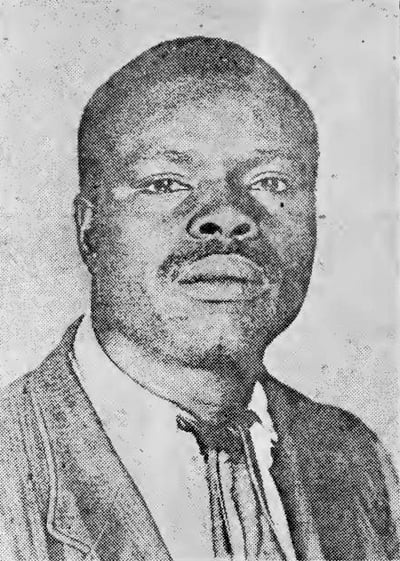
The veracity of Conley’s statements fell under immediate skepticism, but Atlanta authorities either believed him or believed his testimony was the best chance to attain a conviction. With pressure mounting, critics accused the police of trying to shift the blame to Conley because they had been bought by “Jew money from the North.” “This was the beginning of the cry about ‘Jew money.’ It has never ceased.…The public did not want Conley,” wrote MacDonald in 1915.
Conley underwent several interrogations and signed four affidavits, “changing and elaborating his tale each time,” notes historian Leonard Dinnerstein, who wrote the first comprehensive account of Leo Frank’s lynching in 1968. Nonetheless, Solicitor General Hugh Dorsey built the prosecution’s case on Conley’s narrative, especially Frank’s alleged “perversions” regarding young women.
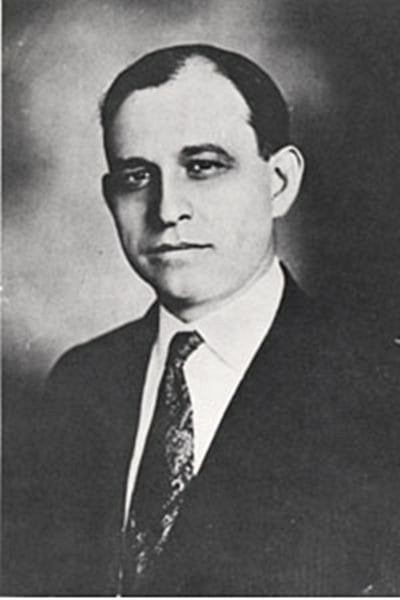
Unfounded rumors of his perversion were the cruelest of all, MacDonald argued: “This is believed everywhere to this day in Georgia, but there has never been a word of proof of it.” The prosecution, however, did offer evidence by drawing witnesses to testify to the fact, but nearly all these testimonies evaporated — several later recanted their testimony citing police coercion.
For example, newsboy George Epps had testified at the coroner’s inquest and trial that Phagan had confided in him that Frank flirted with her: “She told me she wanted me to come down to the factory when she got off as often as I could to escort her home and kinder [sic] protect her.” Epps’s testimony galvanized Atlantans who recoiled at the interests of a man like Frank in their daughter and more broadly resented the fact that young women were forced into industrial employment, forsaking “the stable, sexually constraining world of home for the fluid, sexually liberating – and menacing – world of employment,” notes writer Steven Oney, who revisited the Frank saga in And the Dead Shall Rise: The Murder of Mary Phagan and the Lynching of Leo Frank (2003). “Parents feel an inward fear that one of her bosses will take advantage of his position to mistreat her, especially if she repels his advances,” wrote Judge Arthur G. Powell years later in his memoir.
Yet Epps, like several other witnesses, recanted, stating both his testimony at the inquest and during the trial had been coerced by the police’s lead investigator. As Connolly wrote to MacDonald in January 1915, “There was plenty of perjury in the Frank case, and it was not all confined to non-professional witnesses.”
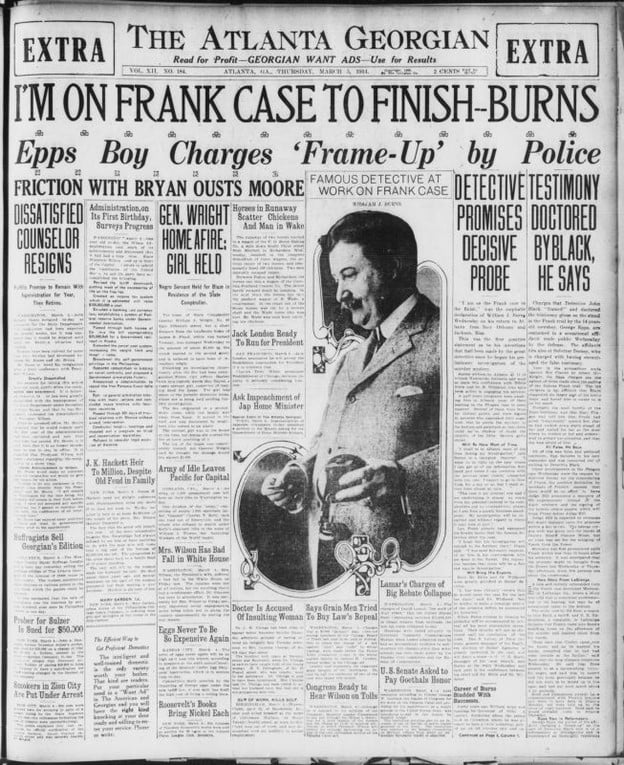
During the trial, Frank’s defense team attempted to break Conley on the stand, but their efforts failed. Though in his testimony Conley claimed he had removed the body from the basement via the elevator, evidence — floor markings and the lack of blood in the elevator among other examples — did not support Conley’s assertions. Yet Frank’s defense attorneys never exploited these discrepancies. When Conley made allegations regarding Frank’s propriety regarding the factory’s younger female workers, the defense attempted to have it stricken from the record, which made the questionable narrative seem true. Nor did they request a change of venue, which considering the venom of public discourse throughout, boggles the mind. MacDonald thought little of Conley’s testimony and described him in simple and brutal terms: “Conley is a dissolute, degraded, brutal person.”
“It was not evidence that convicted Frank,” MacDonald wrote. “It was the mob and [Solicitor General] Dorsey’s speech to the jury.” Dorsey’s closing statement lasted three days and drew plaudits even from critics. It was even reprinted in pamphlet form for mass distribution. Dorsey drew upon biblical and historical references to Jewish triumph and betrayal, the latter including Judas Iscariot and Benedict Arnold, summarizing Jewish contributions to civilization: “They rise to heights sublime, but they sink to the depths of degradation.”
He concluded on the third day telling the jury, “There can be but one verdict.…We the jury find the defendant, Leo M. Frank, guilty!” Bells at the nearby church rang out, enabling Dorsey to chime “Guilty! Guilty! Guilty!” with prosecutorial flourish.
Local observers gushed, but MacDonald remained unimpressed. “The speech was an appeal to the prejudices of the jurors and the mob….The mob dominated the trials. There can be no doubt about that.” Even presiding judge Leonard Roan had doubts. “If Christ and his angels came down here and showed this jury that Frank was innocent, it would bring him in guilty.”
Indeed, the jury found Frank guilty of murder. The following day, he was sentenced to death by hanging.
Editors and journalists around Georgia might have believed Frank’s trial unfair and his claim to a retrial the only just course of action, but they feared saying as much. “We dare not,” they told MacDonald. “We would be accused of being bought by Jew money.” As writer W.E. Thompson noted in 1914, “It was said the Jews had made up $50,000 to buy the court and the jury.…Slanders floated on every breeze. Ashes thrown to the four winds that could not be gathered again.” After the Atlanta Journal labeled the verdict “judicial murder,” the newspaper experienced a loss in circulation, and “never said a word since then about unfairness to Frank nor a new trial,” MacDonald wrote.
The greater the national coverage, the more Georgians dug in their heels. Demagogues like Thomas E. Watson, former Populist politician, member of Congress, vice presidential candidate, and publisher of The Jeffersonian and Watson’s Magazine, assailed such efforts. Watson had begun his career in politics opposing lynching and endorsing Black enfranchisement and had gained the support of Black voters in Georgia. In 1904, he reversed course, adopting not only anti-Black positions, but also anti-Catholic and anti-Semitic ones. The Frank case served as a distinct opportunity for Watson to further burnish such stances and defend the state’s honor. In one 1914 article he asked, “Does a Jew expect extraordinary favors and immunities, because of his race?” and in another asserted “We cannot have…one law for the Jew, and another for the Gentile.” An April 19, 1914, headline in The Jeffersonian stated it plainly: “The Leo Frank Case. Does the State of Georgia Deserve this Nation-Wide Abuse?”
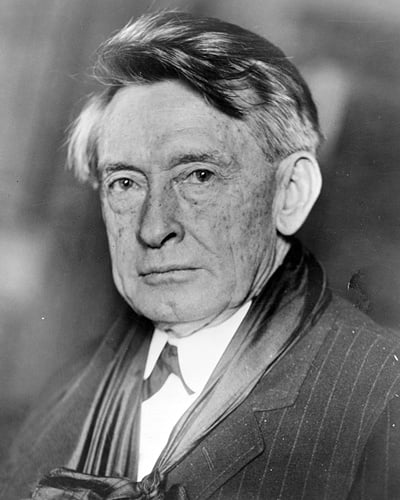
Watson’s publications were, for many Georgians, their only connection to the outside world. He weaved “fact and fantasy” into his journalism, thereby catering to his followers’ “need for vicarious excitement.” He reaffirmed their beliefs and prejudices by catering to the basest instincts of his “almost fanatical following,” argues Dinnerstein. Readers rewarded him: The Frank case proved the greatest sales bonanza in The Jeffersonian’s history. Even more reputable venues failed to police themselves. “The newspapers screamed. The most incredible stories were told, the city was in a delirium,” observed MacDonald.
Correspondence between MacDonald and his friend and fellow journalist O.B. Keeler better reveals these tensions. Keeler wrote MacDonald on January 22, 1915, first congratulating him on a “bully story,” but Keeler wasn’t buying it. He expressed skepticism regarding Frank’s innocence, discomfort with MacDonald’s accusations against Dorsey, and frustration over Georgia’s depiction in the media. “I dunno if the wretched State ever will get its side of the case so ably presented to the general populace of these U.S. as the defense has managed to do. I reckon not.” Keeler eschewed David v. Goliath narratives. “The popularity of the ‘under dog’ is great – especially away from his neighborhood. But is just as well to remember that in human-kind as well as canine, the under dog usually is the under dog because he deserves to be the under dog.”
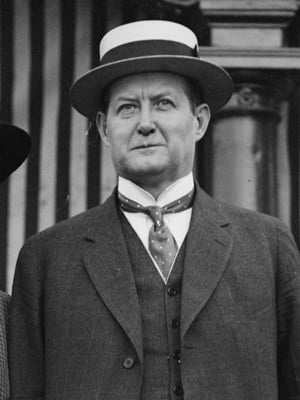
But by May of the following year, Frank’s possible commutation was on the lips of Georgians. In May 1915, Keeler informed MacDonald that passions were cooling and “one hears quite frequent expressions to the effect that the speaker wouldn’t mind seeing Frank’s sentence commuted to life imprisonment.” Yet Keeler still believed, whether by the current governor, John M. Slaton, or the incoming one, Nathaniel Harris, Frank would hang. “Leo’s chances of escaping the gallows at 1 in 1,000,000, but this may be a little scant.”
Slaton, after reviewing the case, commuted Frank’s sentence to life imprisonment in June 1915, sending him to the state prison in Milledgeville to live out his days. The public response was furious. A mob surrounded Slaton’s house. Watson pronounced in his June 24 issue of the Jeffersonian, “Our grand Empire State HAS BEEN RAPED…We have been violated, AND WE ARE ASHAMED…Jew money has debased us, bought us, and sold us – and laughs at us.”
Regardless, Frank landed at Milledgeville Prison where for a few weeks he enjoyed some personal respite until July 18, when another inmate attacked him slashing his throat. Frank survived.
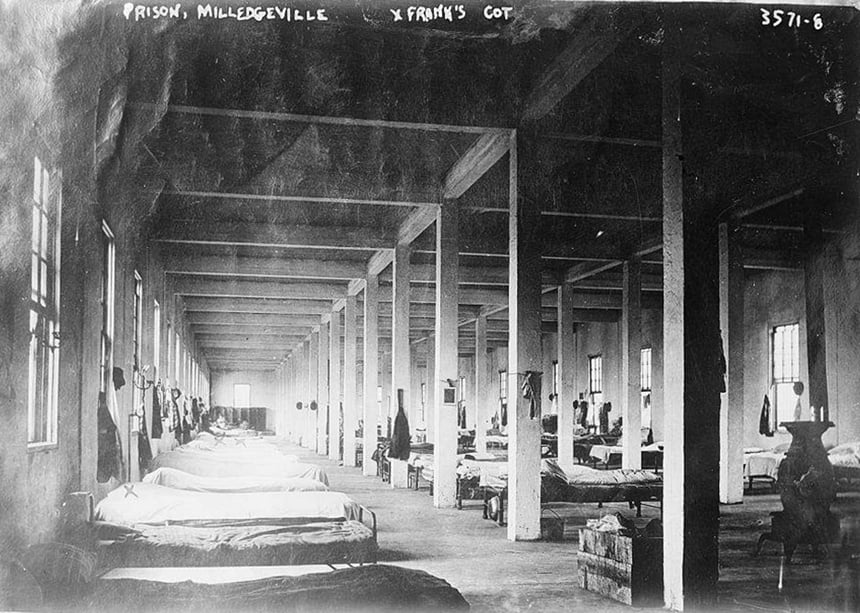
But on August 16, 1915, a carefully planned raid by 25 men on the prison resulted in Leo Frank’s lynching in Marietta, Georgia. Perversely, Frank’s dangling body drew an ever-expanding audience. By 8:30 am, over 1,000 people had gathered and “scores more were arriving each minute,” writes Oney.
According to his obituary, Keeler discovered Frank’s body an hour after the lynching. “In a terrible way it was like some religious rite,” he wrote in the August 17 edition of the Atlanta Georgian. “Watching the curiously reverent manner of those people, a manner of thankfulness and of grave satisfaction.…Among the men there was evident a grim and terrible satisfaction. ‘They did a good job,’ was the comment spoken in many tones, but with a curious inflection that was always the same.” The lynching party included two former Georgia Supreme Court justices, a clergyman, and an ex-sheriff.
Despite the lynching party’s efforts, Frank refused to confess to the murder, telling them, “I think more of my mother and my wife, than I do my own life.” According to correspondence between MacDonald and Keeler, one member of the mob had written to MacDonald, justifying the lynching. In the same letter, horrified and angry, MacDonald recounted his three-page response reprimanding the man in the harshest of terms. “I am glad it all occurred in the manner in which it did for in this way only could the whole world now how truly barbarous Georgia really is. It will hurt you to be despised of all people as you are. And I am glad of that. It will hurt you to know that your name is bye word and a reproach among all the people of the earth.” MacDonald concluded in biblical terms. “There is a law of compensation. There is a God, and you will feel his wrath. You are feeling it now in the contempt of the world for you.”

As for Keeler and MacDonald, a residue of resentment persisted, though the friendship remained. “In spite of the fact that your conduct recently has not been all that I would wish it to be, still I would not spar with your esteem for anything in the world,” MacDonald wrote. “In speaking to you chidingly and reprovingly, as I am going to do in this letter, you must take it as a wayward child would receive reproof from his father.”
In the end, MacDonald believed that in his lynching, perversely, Frank had attained some level of justice. “In his death at the last Frank had a terrible revenge upon the people and the state that persecuted him. The horrors of the murder, the condoning of it by a whole state, was Frank’s vindication, the proof of all his contentions, the proof that he was never tried for the murder of Mary Phagan, the proof that the mob dominated the court, the proof that he was as a mouse in the paws of a cruel cat, an animal without sympathy or pity the proof of his innocence.” An undoubtedly small consolation in a life destroyed by irresponsible media, demagoguery, and anti-Semitism.
Become a Saturday Evening Post member and enjoy unlimited access. Subscribe now





Comments
Southern Justice. Courtesy of the Milledgeville prisoners. In the South, we have a Code of Ethics that spills into the prisons. Drug dealers, murderers of children and the elderly, child abusers, and rapists of children are not safe. They are targets. They best keep to themselves and stay quiet or in return may never see the first day of any freedom.
When I look at this photo of Mary Phagan from over 110 years ago, I pick up from her eyes the real truth of what happened to her needs to be revealed, so she can finally find eternal rest. It would be wonderful if modern science could do this, and in the process clear Leo Frank’s name. As cold as the case is, it’s still worth looking into.