Movies might make you cry. Certain commercials can, too. Even a Hallmark card. But a museum? D.C.’s newest might get you — a few times, in fact — stirring something deep, perhaps something you thought was forever lost or broken.
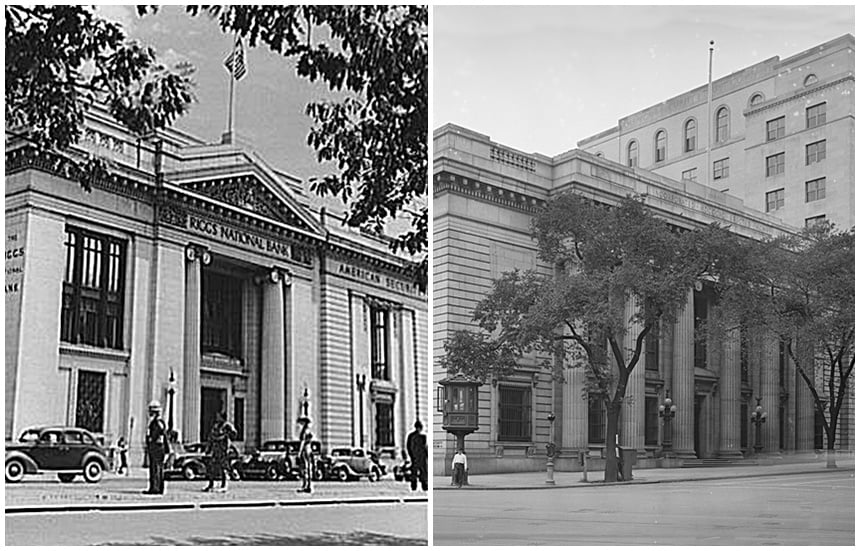
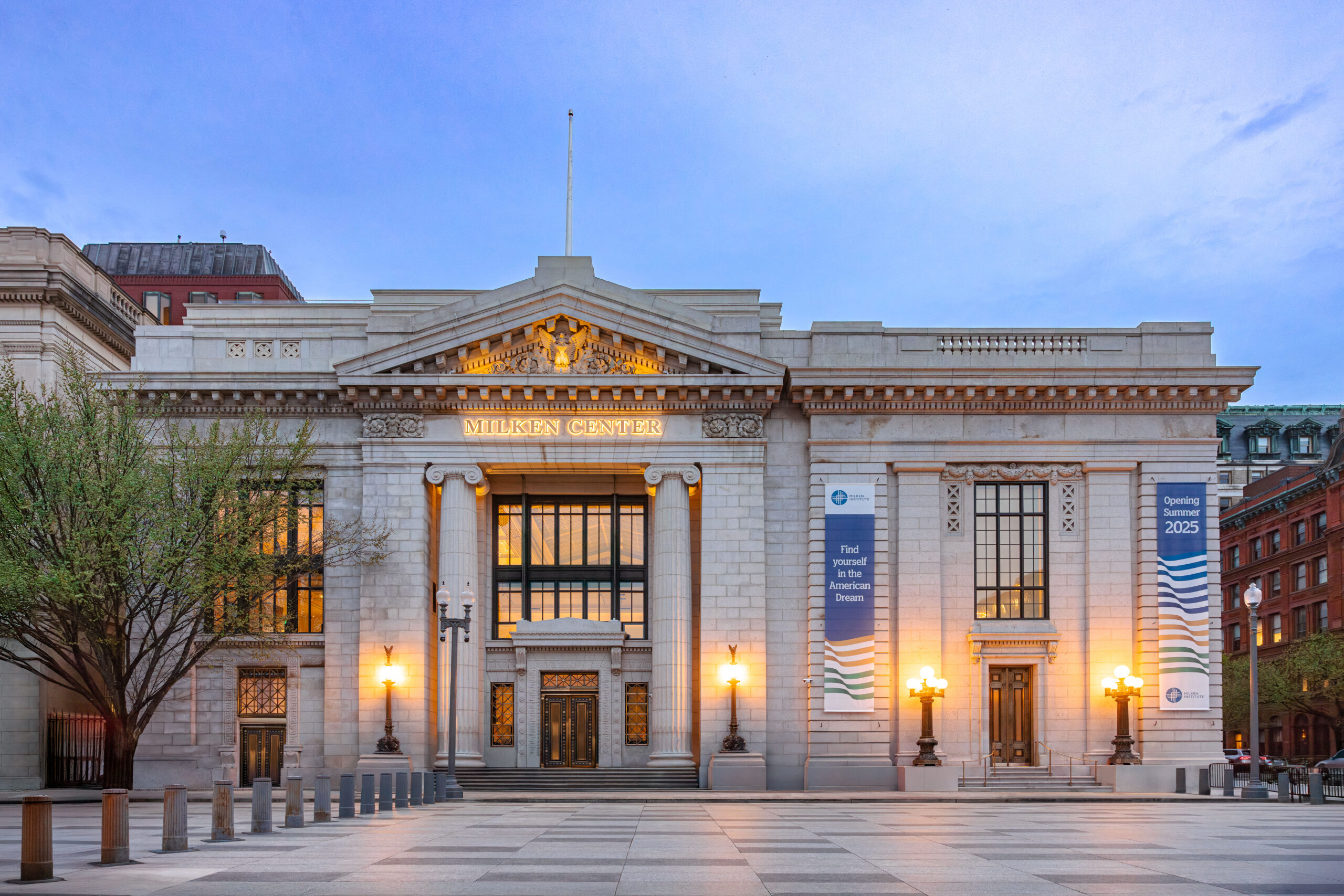
A project in the works for over a decade, the Milken Center for Advancing the American Dream opened mid-September in two meticulously restored landmark buildings — the former Riggs Bank known as “the Bank of Presidents” and the American Security & Trust Company — just steps from the White House. It’s an address that has always signaled power; now it champions possibility.
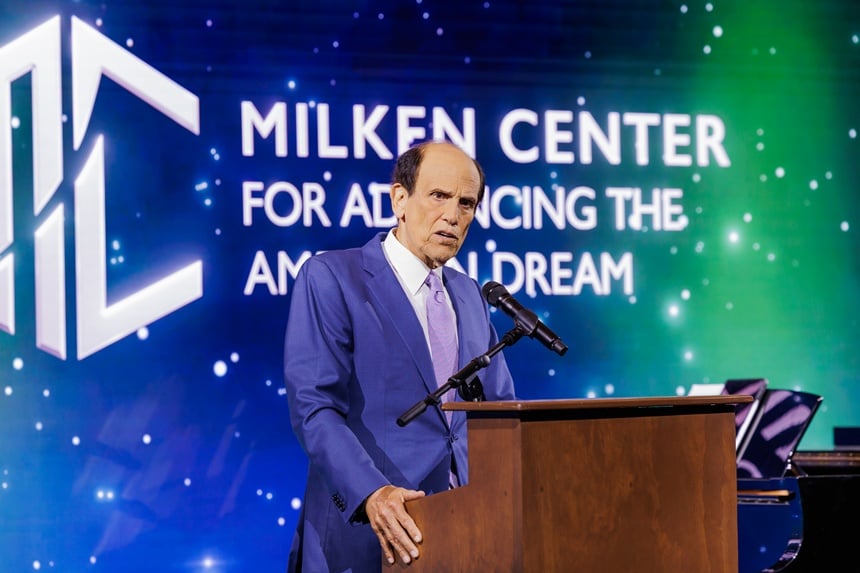
“For centuries, people from every background have pursued opportunity in America, and their stories have shaped what we call the American Dream,” explains museum founder Michael Milken. “Yet until now, there was no place where those stories could be gathered, preserved, and shared in a way that invites every visitor to see themselves in the Dream.”
Twice over, Michael Milken is an American dream case study. Picture a middle‑class kid from L.A.’s San Fernando Valley who struck it rich in the 1980s as a pioneer of the high-yield bond boom — only to end up pleading guilty to tax-related and securities offenses. After a 22-month stint in prison, he dedicated his life to philanthropy, finding solutions to global issues, from funding prostate cancer research and improving financial literacy to promoting entrepreneurship and bettering education.
Milken’s arc sets the tone, but the American Dream Museum doesn’t lecture — it lets you inhabit the experience through other people’s eyes. In every gallery, someone “like you” is waiting: an immigrant finding her footing, a teacher bent on making a difference, a woman with a rare disease fighting for a cure. “By opening the Center, we hope to remind visitors that the Dream is not fixed or guaranteed,” Milken says. “It must be continually renewed by each generation.”
The Tree of Generations
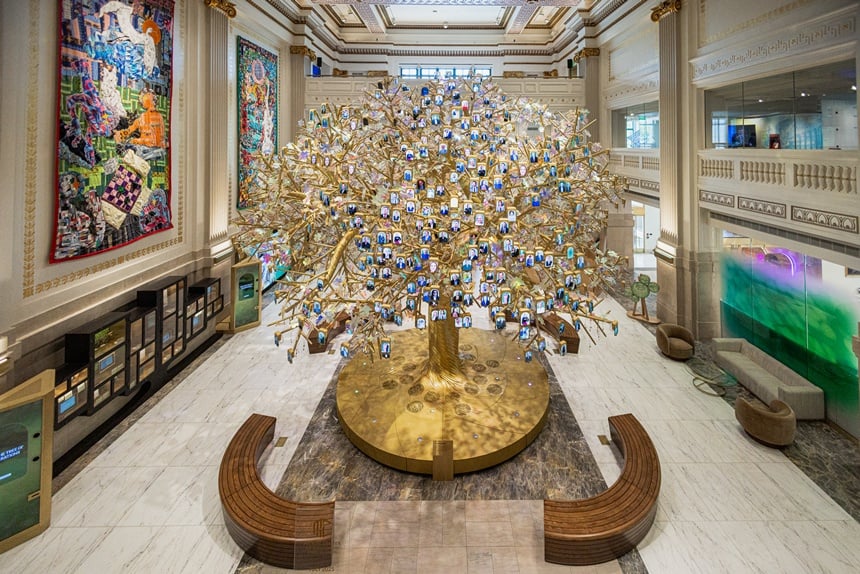
The doors swing open, and you step into sunlight — though you’re indoors. Light pours through vaulted 1920s-era stained-glass windows into the Hall of Generations, a grand space that once served as the main banking hall of Riggs Bank. The marble gleams underfoot, but your eyes can’t help but rise to the centerpiece: the Ambassador George L. Argyros Tree of Generations.
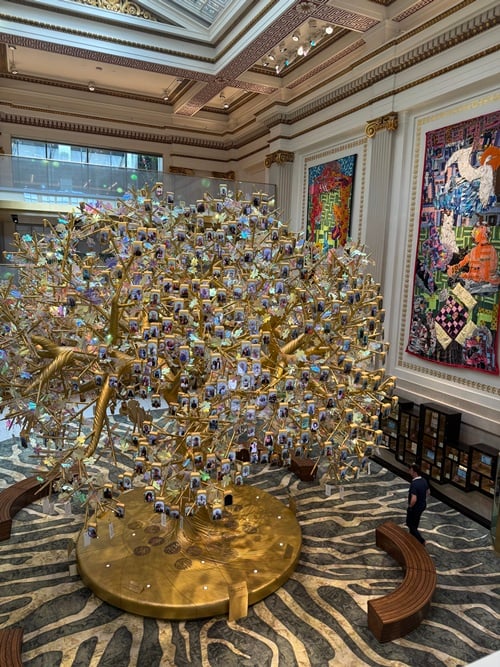
It’s not just a tree — it’s something you’d imagine the Biblical tree of life might have looked like. A golden sculpture that climbs two stories tall, the tree’s branches are alive with 1,000 OLED portraits of museum visitors who submitted their photographs at the nearby photo booth. Paper leaves dangle like ornaments from the tree’s limbs. Flip one over, and you’ll find a stranger’s handwritten definition of the American Dream. Some are hopeful, some heartbreaking.
“The most powerful aspect of the Center is that it allows people to experience the Dream through the eyes of others,” Milken explains.
Nearby, tables with pencils and blank leaves with the question “How is the American dream represented in your family?” beckon some quiet reflection.
Suddenly, this museum doesn’t feel abstract — it feels personal. A lump rises in your throat. What other museum offers the opportunity to be part of the art exhibit, sharing your legacy, story, or dream to inspire others?
“Bringing in your personal or family story in the first moment of engagement here was our goal,” says museum curator Emily Mitzner. And you do. Especially when perusing the cabinet of objects to the right of the tree; each one — from a beloved teddy bear to a Native American beaded stethoscope — tells the story of six different families. Your mind drifts, thinking about what everyday objects would best tell your family’s story.
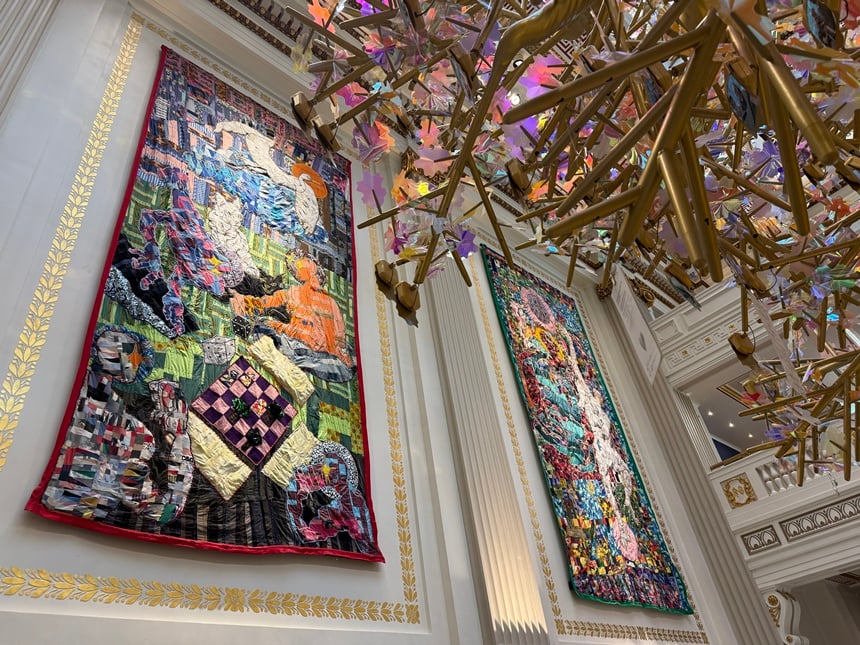
Above the keepsake cabinets, three 22-foot-tall quilts by Louisville-based artist Basil Kincaid billow like banners. Scraps reborn as story. Look closely: Dancers arc across a field of color; stars spark in their eyes; a cloud floats by with a shimmering gold lining. Kincaid, a seventh-generation quiltmaker, produces these works with a studio team in Ghana, piecing together fabrics gathered from St. Louis, Ghana, and far beyond. The effect is communal, not solitary. “No one’s dream can truly exist in isolation,” he says — and the purposely visible seams stitched together underscore his belief. It’s hard to stop staring; the more you look, the more is revealed, like a sly cat or a pair of dice.
When you finally pull yourself away from the triptych, you hear Elmo laughing. At the back of the hall is a video library of hundreds of notable personalities sharing their definition of the American Dream. The Sesame Street star chirps: “Dream big! You could be a teacher, a scientist…or even the first monster president!” You can’t help but smile.
Hall of Dreams
The journey continues into the Geffen Hall of Dreams. Overhead floats the Esrailian Family Word Cloud, a serpentine chandelier of 64 LED “fins.” Each panel glows with words submitted by visitors. “Opportunity, freedom, and family are the three most submitted words,” notes Mitzner. As you lounge on a sofa and tap through a short quiz on an iPad, you glance up: your words might be next, lit among thousands in a constantly evolving chorus.
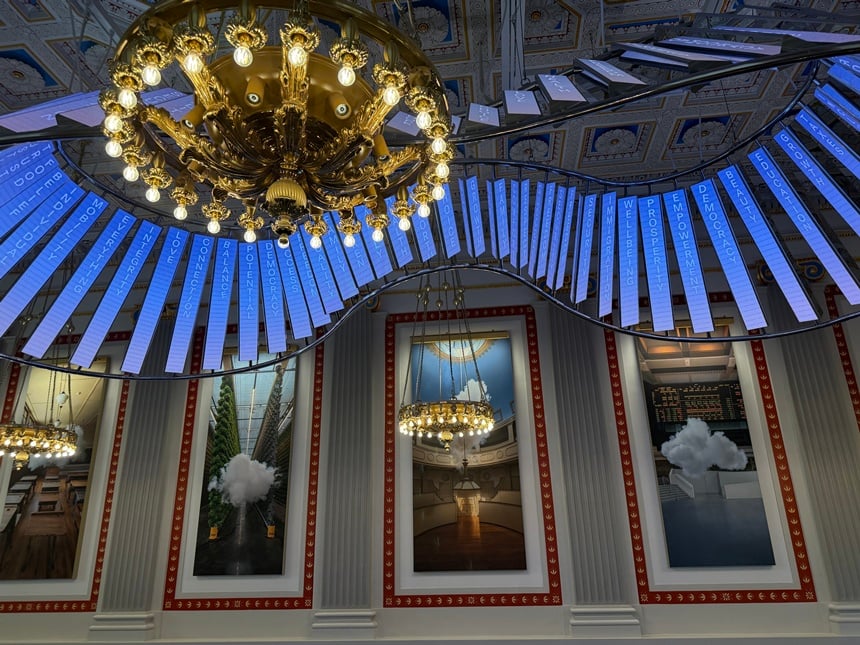
One wall bears the wisdom of dreamers past and present, such as Martin Luther King Jr., Arnold Schwarzenegger, and Maya Angelou. Another wall beams back Gallup Poll data, charting how Americans today define and pursue the Dream. Photographs of actual clouds created indoors by Dutch visual artist Berndnaut Smilde loom overhead; the photos were taken in in four different locations representing the MCAAD mission: education, health, finance, and innovation.
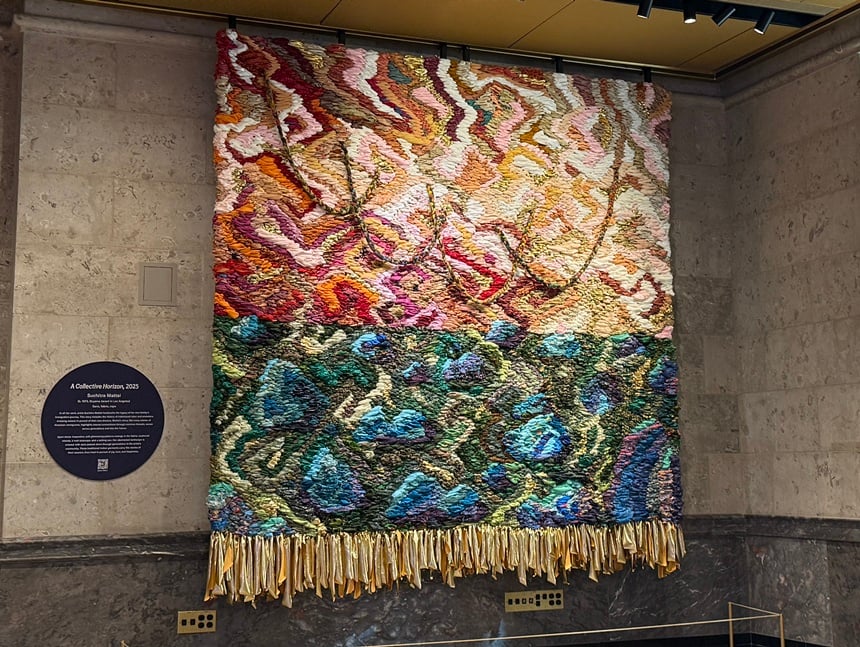
At the far end, two monumental tapestries by artist Suchitra Mattai ripple with color — woven from thousands of saris once worn by women across generations. Step close, and patterns of oceans, islands, and horizons emerge. Step back, and it becomes something larger: a collective imagining of past journeys weaving communities together.
Foundations of the Dream
On the bottom floor, the Foundations of the Dream Gallery champions the Milken Institute’s four pillars: education, health, finance, and entrepreneurship. One of the highlights are the A.I. holograms so lifelike you half expect Serena Williams to high-five you.
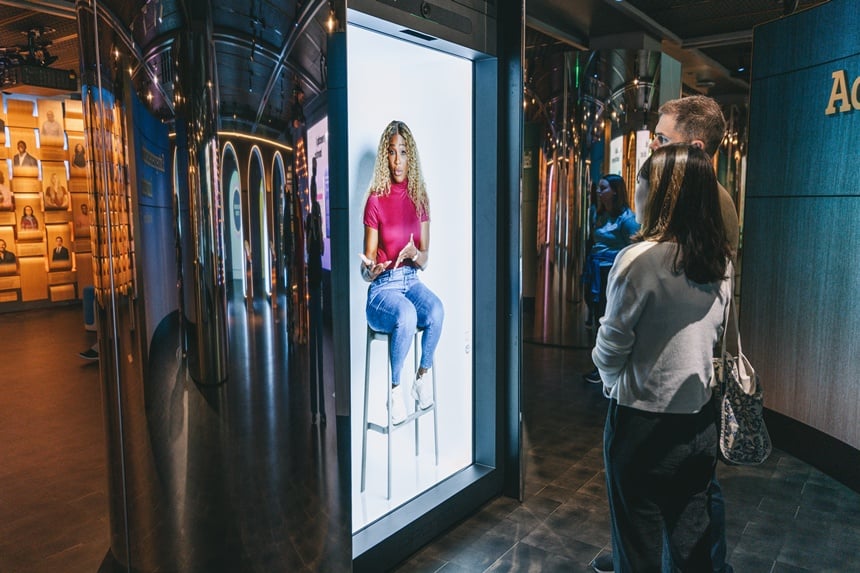
Ask a question and the hologram all-star tennis player reveals her ventures beyond the court and even tells you her favorite TV show. (Surprising spoiler alert: it’s The Golden Girls!) Sanjay Gupta appears too, musing about whether surgery or reporting is more demanding — and, with a grin, admitting whether he’s a cat or dog person. At the end, they even ask if you’d like a selfie. Why not? Gupta gives you bunny ears as you pose.
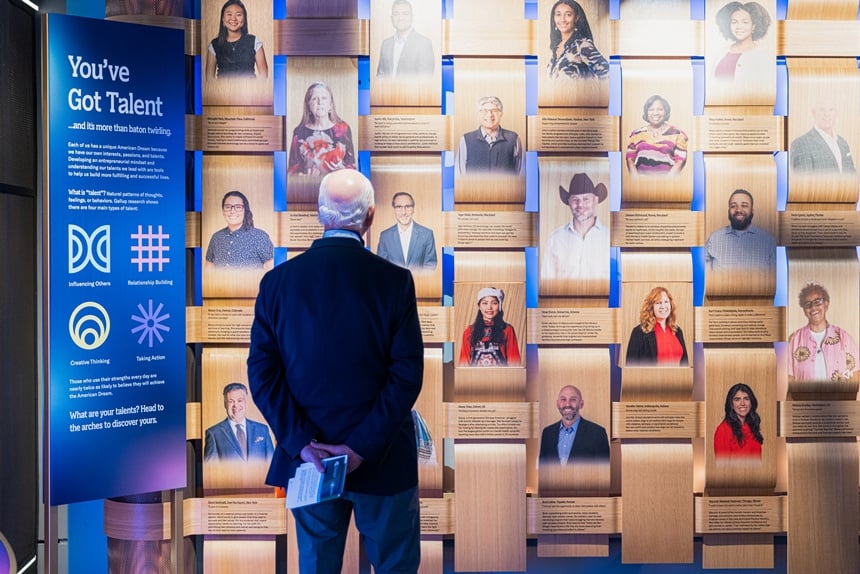
Nearby, the Tapestry of Dreams stretches across the gallery, alive with 100 stories of individual American resilience and achievement. Each thread feels like an invitation: Your dream belongs here, too.
Two Immersions: A Film and a “Holodeck”
The museum doesn’t just tell stories — it surrounds you with them.
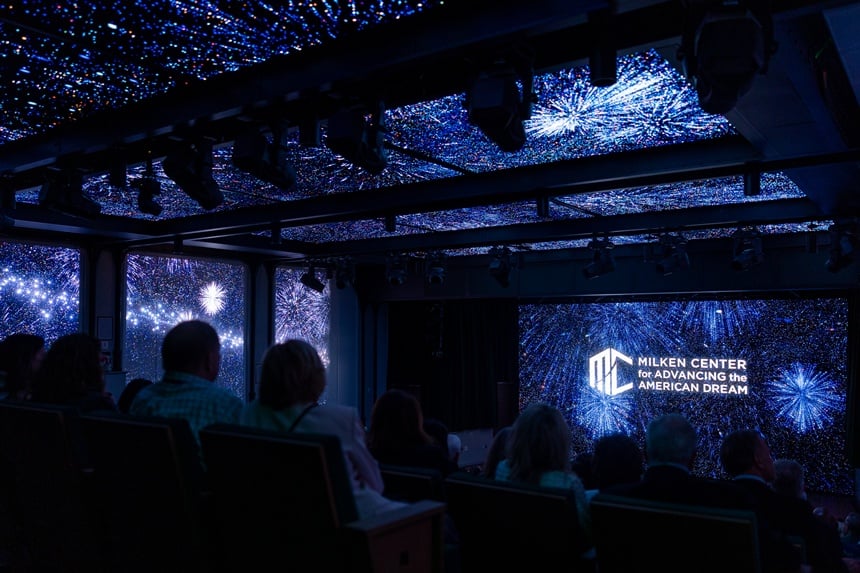
In the Stand Together Theater, a 270-degree cinematic experience, a short film, America: Built on Dreams, envelops you in the lives of five Americans, each pursuing their dream with grit and grace. For example, Virginia Ali, the 91-year-old restaurant owner of the iconic Ben’s Chili Bowl, talks about the joy of being a cornerstone of the D.C. community for more than 65 years.
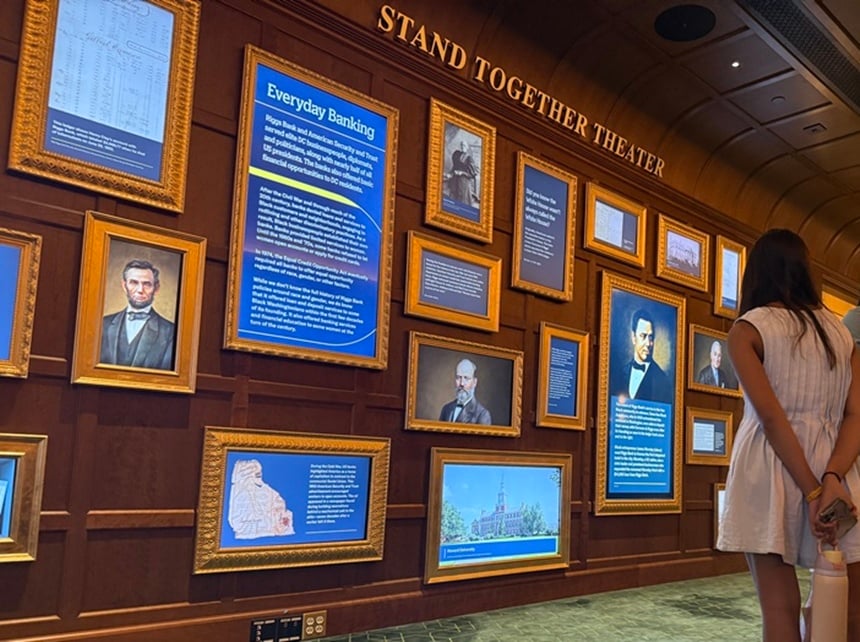
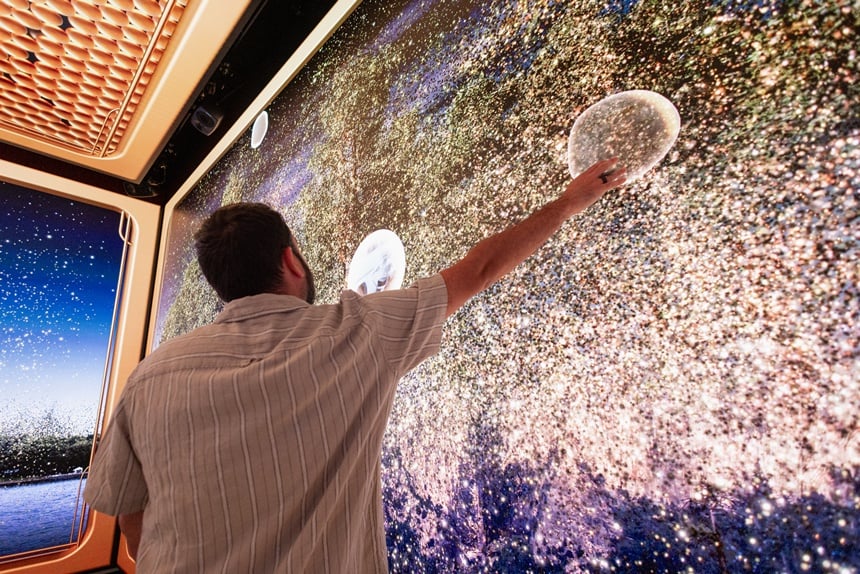
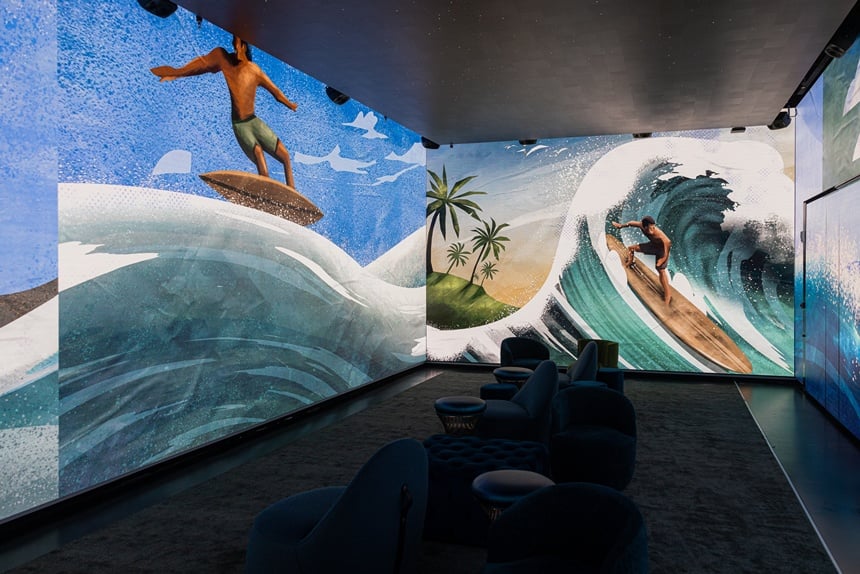
The Center’s only paid add-on ($15), the Kenneth C. Griffin Holodeck Experience raises the stakes. “It’s part escape room, part IMAX experience,” says Mitzner. “The density of pixels is nearly unmatched anywhere in the world.” Unlike most museums that are passive in the delivery of knowledge, the holodeck makes you roll up your sleeves and earn it. First, you fix a “broken machine,” solving puzzles on touchscreens; doors slide open to a speakeasy‑style lounge with animated tubes shuttling bubbles overhead. Think Disney’s Inside Out movie. You’re invited to “catch” them. Tap the bubbles and they burst into vignettes: a bride pinning on earrings; a kid extinguishing birthday candles; teens shrieking as they cliff dive. Depicted on all four walls and the ceiling of the room, the holodeck immersion highlights three American‑Dream arcs echoing the museum’s pillars: the teacher whose student reaches the moon; the female physician who breaks through gender barriers; the family business born as a weekend hobby that grows — board by board — into a livelihood.
“Those human connections are what make the Center meaningful,” says Milken. “The art, technology, and exhibits bring the stories to life, but the emotional power comes from the stories themselves and the way they resonate personally with each visitor.”
Corners of Connection
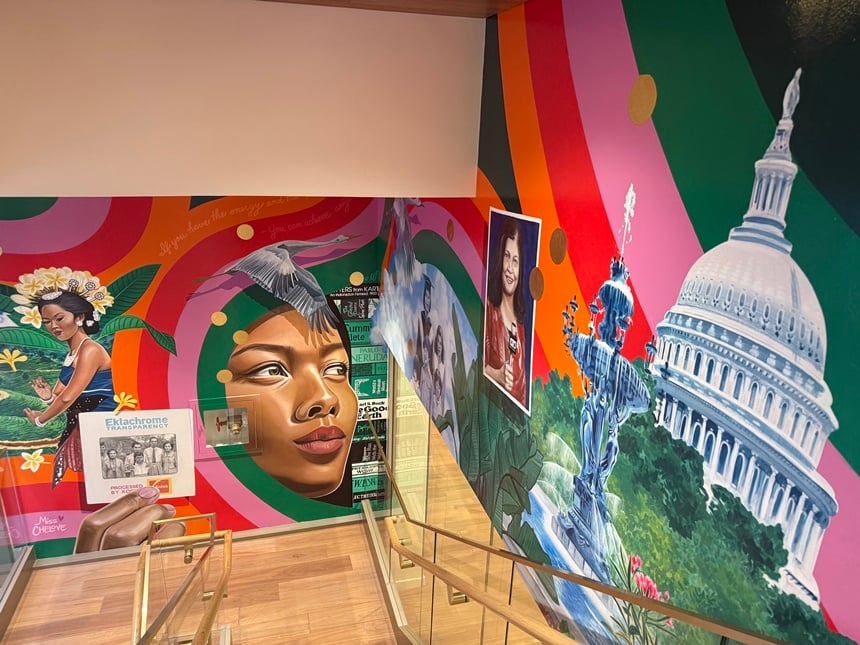
Even in quieter corners, inspiration abounds. A mural painted by local D.C. artist Cita Sadeli, known as MISS CHELOVE, wraps the stairwell and portrays in vivid color her family’s journey from Indonesia to America. On one of the balconies, a dandelion mural by New York artist Vextra comes to life, pappus floating in the air via augmented reality using your phone. And in the soon-to-open atrium café, sunlight pours down on three floors of walls covered with flora and massive digital screens flashing waterfalls, sunsets, and skylines.
Fresh Vision
By the time you step outside, the air feels different — lighter, electric almost, charged with possibility. This place reconnects you to your own story while connecting you with thousands more: families, artists, immigrants, leaders, dreamers. More than ever, the Milken Center for Advancing the American Dream is something we desperately need. It’s a reminder that the Dream endures because our freedoms — the same freedom the Founders fought for and enshrined long ago — still makes it possible.
In this current climate, when so many are asking how to make America great again, the answer is clear here at the Capitol’s newest museum. America doesn’t need to be made great again. It is great, however flawed and imperfect. On the heels of the nation’s 250th anniversary next year, perhaps we just need to be reminded of this…again.
The Milken Center for Advancing the American Dream is located at 1503 Pennsylvania Avenue NW, Washington, D.C. 20004. Entrance is free, reservations encouraged. The Holodeck is $15 per person. Visit www.mcaad.org for more information.
American Dream Theme: Stay, Play, Eat
Where to Stay
Conrad Washington, D.C.
The hotel is named for Conrad Hilton — the entrepreneur who built the Hilton hospitality empire and later devoted his fortune to philanthropy — so the story fits the theme before you even check in. Inside, it’s sleek and serene, with artful touches (don’t miss the central atrium on the third floor), hushed rooms, and a rooftop bar with big-sky city views. You’re also steps from CityCenterDC’s shops, a few blocks from a metro station and a 10-minute walk to the American Dream Museum and the National Mall. Service is polished without the stuffiness, and the place feels like a nod to its namesake: dream big, build well, give back.
950 New York Ave NW, Washington, D.C.
Where to Eat
Immigrant Food
Billed as America’s first “gastroadvocacy” restaurant, Immigrant Food serves border-hopping dishes — from Lomo Saltado to dim sum — while celebrating immigrant cultures, partnering with nonprofits, and educating diners on real issues. Come for the global flavors; leave with a fuller stomach — and a broadened view of what America tastes like. The original location on Pennsylvania Avenue is about a 3-minute walk from the White House.
1701 Pennsylvania Ave NW, Washington, D.C.
What to See
National Archive Museum*
The American Story and Discovery Center is slated to open in October 2025, featuring the first museum in Washington, D.C. to use AI to bring the nation’s story to life.
701 Constitution Ave NW, Washington, DC 20408
*Note the National Archives are currently closed due to the government shutdown.
Become a Saturday Evening Post member and enjoy unlimited access. Subscribe now