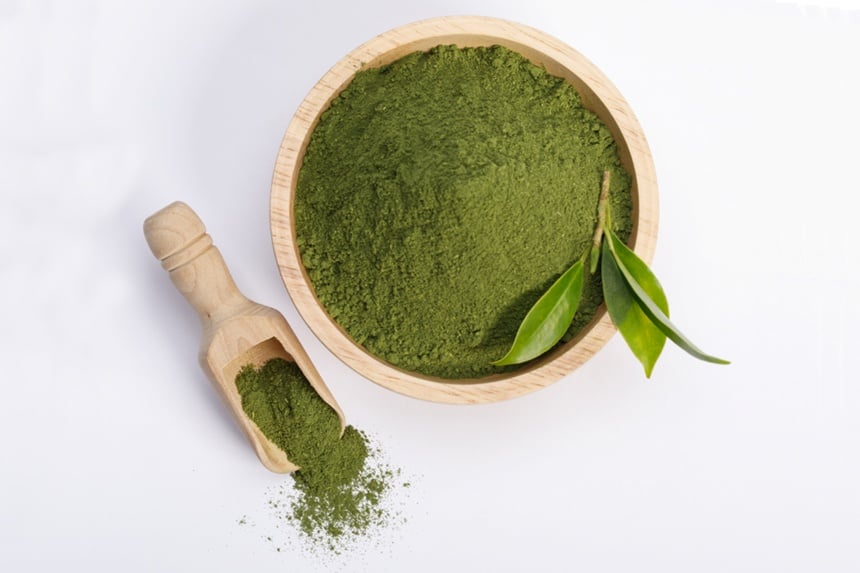
A new drink has replaced coffee.
Matcha — a ground powder of green tea processed from shade-grown leaves — began gaining popularity in the United States in 2015. While its online virality was instant, it has grown beyond a simple, short-lived trend, not only for its versatility and unique taste — a mix of umami, bitterness, and mellow sweetness — but also for its proven health benefits.
Some credit American actress Gwyneth Paltrow’s 2015 Instagram post for sparking this trend. Attracting the public’s attention with its vibrant green color, matcha continued to spread, becoming a dominant order across local and chain coffee shops. While matcha may be a newer phenomenon in the United States, its history and cultural significance go back centuries.
During China’s Tang Dynasty, the tea leaves were steamed, salted, ground into a powder, and compressed to make them easier to transport and trade. People would then use the powder to prepare a drink. The tea-making process evolved, with the powder being whisked into hot water, similar to the modern matcha-making method. The practice continued to gain popularity during the Song Dynasty.
Despite originating in China, Matcha’s influence is most evident in Japan, and for that, we have Eisai — a Zen Buddhist Monk — to thank. Returning from China after a pilgrimage, Eisai distributed the tea seeds he had carried home to others, who helped plant and cultivate them in the Uji region of Japan — an area that continues to produce high-quality matcha. Initially, the production of matcha was limited, making it an exclusive privilege for elites, but as Japan modernized and cultivation techniques evolved, matcha became a widely-enjoyed drink, rather than a symbol of social class.
Over time, matcha became more intertwined with Japanese culture, particularly in the ceremony known as Chadō, which directly translates to “the way of tea.” The tradition aimed to turn the process of preparing and drinking tea into a meditative and calming ritual, rather than a simple chore.
Chadō dates back to the Muromachi era (1336–1573) and was created by Murata Jukō, who wanted to make the matcha preparation process a calming, spiritual experience. The ceremony continued to be refined over time, primarily by Sen no Rikyū, who incorporated wabi-sabi — a Japanese philosophy concept that emphasizes the awareness of nature and its imperfection. Due to Rikyū’s principles and matcha’s calming qualities, Samurai warriors drank the tea before going to war in order to gain focus and mental strength.
Matcha’s introduction to the west began at 19th century world fairs and expositions in American and European cities. The main purpose of these exhibitions was to showcase the achievements of a nation for a wide and diverse audience, focusing on technology, art, and culture. In many of these events, Japanese representatives often demonstrated Chadō, highlighting many green teas, matcha included.
Even though Americans slowly began consuming Japanese green tea more — usually adding milk and sugar to suppress its bitterness — matcha didn’t initially suit Western taste buds. American journalist Eliza Ruhamah Scidmore wrote in her 1891 book Jinrikisha Days in Japan that matcha is “a bowl of green gruel more bitter than quinine.”
While there is no single turning point that turned skepticism into obsession, the variety of modern preparations — including milk, sugar, and even tapioca balls — has made it enjoyable for more palates. American favorites include the iced matcha latte, matcha lemonade, matcha bubble tea, and even matcha smoothies. The flavor has also expanded beyond liquid form, showing up in ice cream, cookies, pancakes, mousse, and more.
Today, matcha has grown into a worldwide sensation, particularly on social media. Forbes predicts the matcha market is expected to hit about $5 billion by 2028. However, feeding the global craving for the beverage gets more difficult as major manufacturers in Japan struggle to keep up. In July, the BBC reported that heat waves, farmer shortages, and other factors have led to a reduced supply, even as demand soars. The leaves are only harvested once a year, during a limited time frame that spans less than two months, which also contributes to the current scarcity of the product.
With its fascinating history, possible health benefits, and Instagram-worthy color, it seems America’s interest in matcha is here to stay.
Become a Saturday Evening Post member and enjoy unlimited access. Subscribe now