On November 19, 1863, Abraham Lincoln delivered a 272-word speech at Gettysburg, Pennsylvania, that lasted only a few minutes. Following it, he boarded a train and returned to Washington, D.C., spending less than 24 hours in the town.
Yet, because of the Gettysburg Address, Lincoln is forever tied to Gettysburg. What many people don’t realize is that another president, Dwight D. Eisenhower, owned a 14-room farmhouse in Gettysburg. Eisenhower not only invited world leaders to his farm, but also governed the nation from there while recuperating from a heart attack.
Today, you can tour the farmhouse, now Eisenhower National Historic Site, and visit the places Eisenhower and his wife, Mamie, frequented while in Gettysburg.
Early Years in Gettysburg
Because his parents couldn’t afford to send all seven of their sons to college, Eisenhower secured an appointment to the U.S. Military Academy at West Point, New York. Just before graduating in 1915, he first visited Gettysburg on an academy-sponsored trip to study Civil War tactics. A photograph shows the young Eisenhower posing with classmates in front of Christ Lutheran Church on Chambersburg Street.

His first assignment sent the newly commissioned second lieutenant in the United States Army to Fort Sam Houston near San Antonio, Texas, where he met Mamie Doud. The two married on July 1, 1916, roughly nine months before the U.S. entered World War I.
As soon as the nation declared war, Eisenhower requested a combat assignment in Europe. Instead, the Army kept him stateside training soldiers, much to Mamie’s relief. Then, in early 1918, Eisenhower received command of the nation’s first tank battalion and was ordered to train his recruits at Camp Colt in Gettysburg before taking them into battle.
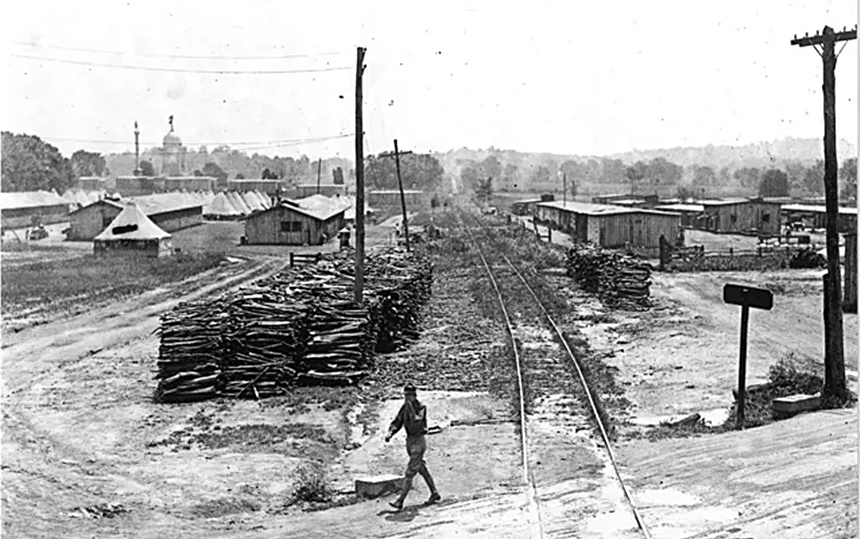

At the time, the U.S. War Department administered Gettysburg National Military Park, and because the tanks needed wide spaces, Camp Colt opened on the battlefield in 1918. The camp didn’t last long. On November 11, 1918, the war ended, and Eisenhower was reassigned to Fort Benning, Georgia.
But he never forgot Gettysburg. Neither did Mamie, who joined her husband with their son, Doud, for the roughly half year that he was stationed there.
The Eisenhower Farm
From Gettysburg, Eisenhower went on to one of the greatest U.S. military careers of all time. He worked as a staff officer in the War Department, served as Supreme Commander of the Allied Forces in Europe during World War II, and oversaw Operation Overlord (the D-Day invasion). At the end of the war, he commanded the American zone in occupied Germany before returning to Washington, D.C. to become Chief of Staff of the Army.

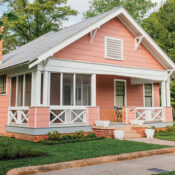
When he retired from the military in 1948, he spent two years as president of Columbia University, but both he and Mamie wanted a more rural life, and their thoughts returned to Gettysburg. They asked George and Mary Allen, friends who lived in Gettysburg, to look for a farm, and the Allens brought the Redding Farm to their attention. The Eisenhowers purchased the Redding Farm — the first and only home they ever owned — in 1951.

According to survey drawings, the 189-acre farm consisted of a seven-room brick house, a barn, several outbuildings, a dairy herd, and several hundred chickens. The house itself required extensive renovations, but Eisenhower delayed the work to focus instead on serving as the first commander of NATO and then campaigning for president. Only after he won the presidency did work begin.
During the renovations, the Eisenhowers constructed a new 14-room house around a salvaged section of the original structure. They also updated the other farm buildings, installed new landscaping, modified the barn to use as a garage and chauffeurs’ quarters, and constructed a helicopter pad. Knowing that Eisenhower loved to play golf, the Professional Golf Association donated the putting green on the east side of the house.
In a National Park Service article, Susan Eisenhower estimated her grandparents had moved 37 times in 38 years of marriage. The Gettysburg farm allowed Mamie to unpack all of her furniture and decorate the way she wanted to. Even more important, it offered the president a place to escape from Washington’s pressures.
The Presidency
Within two years of his swearing in as the 34th President of the United States, the renovations wrapped up, and the Eisenhowers began escaping Washington, D.C. to spend time in Gettysburg. Even though Mamie had a strict rule against working at the farm, Eisenhower would sign legislation or do light tasks like editing the State of the Union address while there.

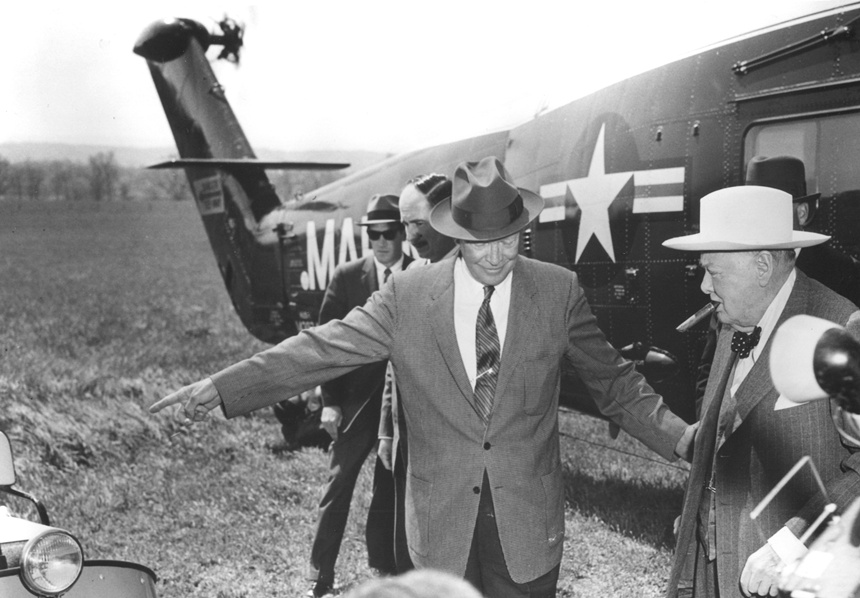
He also invited world leaders to the farm hoping that they might relax and talk more openly. Among those who visited during his two terms in office are Sir Winston Churchill, Soviet Premier Nikita Khrushchev, and French President Charles de Gaulle. Other famous visitors included Reverend Billy Graham, entertainer Bob Hope, and golfer Arnold Palmer.

In September 1955, Eisenhower suffered a major heart attack and spent several weeks in the hospital. Following his release, he returned to his farm instead of the White House and spent the next 36 days governing the nation from Gettysburg, according to Eisenhower’s Gettysburg Farm by Michael J. Birkner and Carol Hegeman.

While he conducted a lot of the nation’s business at his farm, he also took over an office in the Gettysburg Post Office and showed up every day so the press could photograph him going to work. Additionally, he made television and radio broadcasts from Glatfelter Hall on the Gettysburg College campus.
Eisenhower recovered, won reelection the following year, and served another four years. Then, on January 20, 1961, following the inauguration of John F. Kennedy, the Eisenhowers returned to their Gettysburg farm. He was 70 years old.
Retirement Years
The former president and first lady embraced life in Gettysburg, entertaining friends and attending Gettysburg Presbyterian Church regularly. However, he didn’t entirely leave public life. Eisenhower remained active in Republican politics and even attended the 100th anniversary of the Gettysburg Address when Kennedy chose to go to Dallas instead.
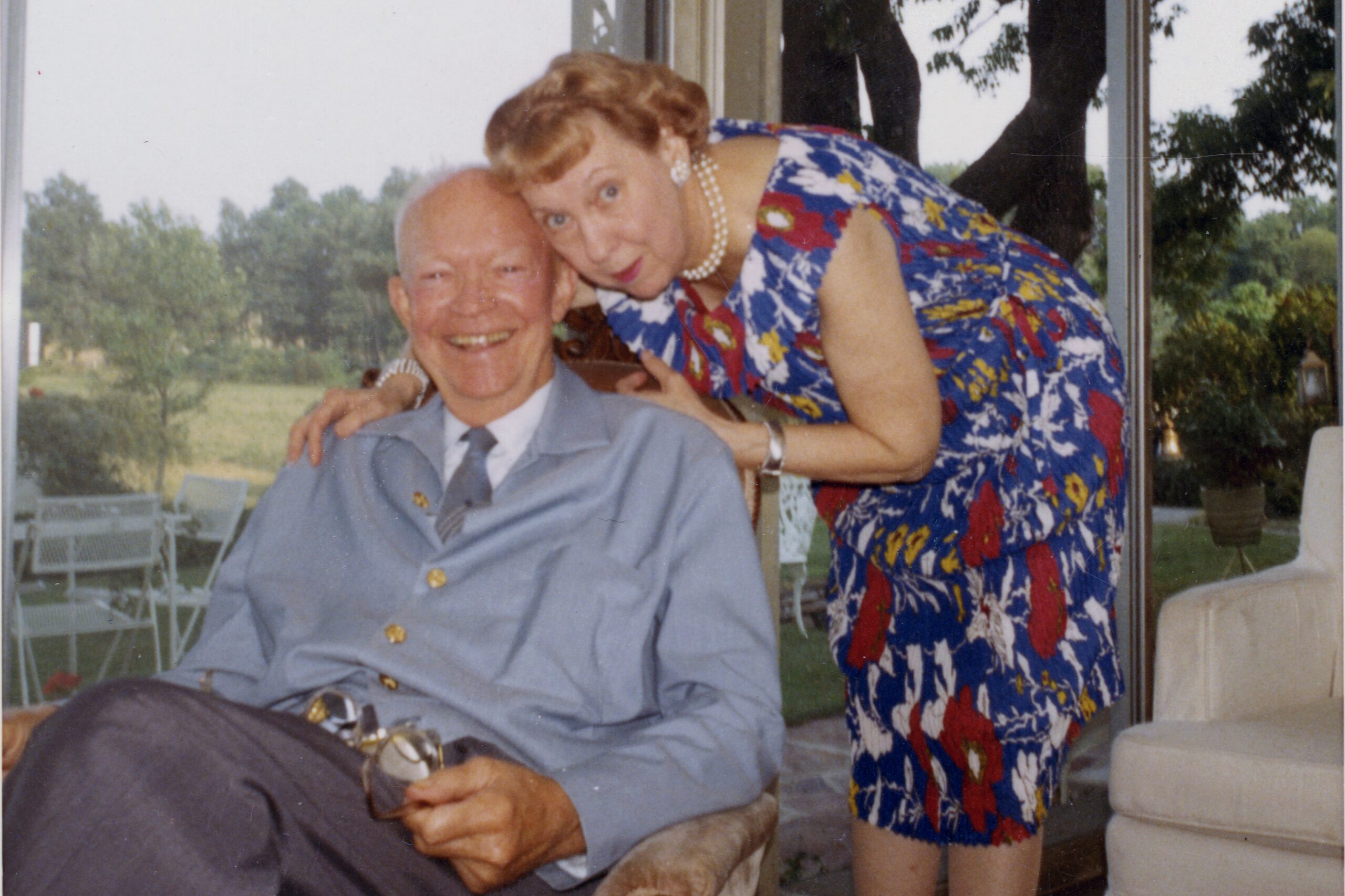
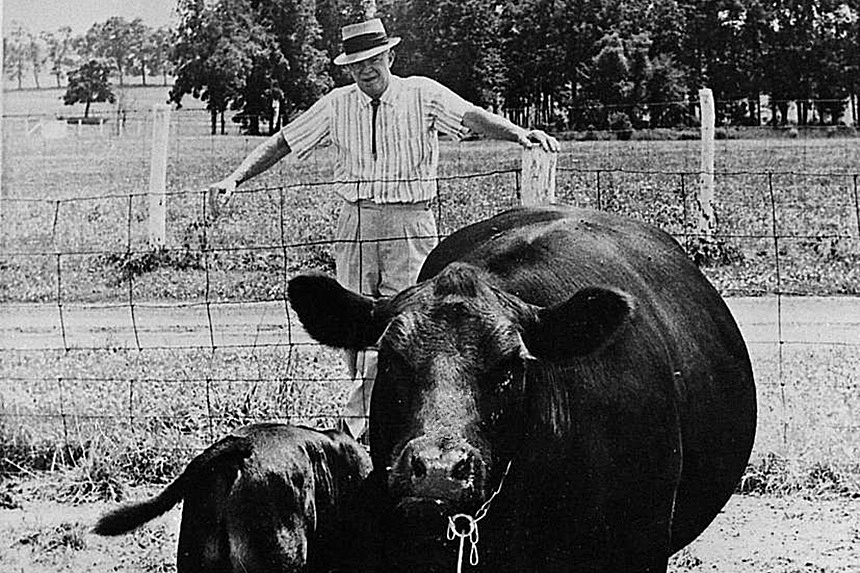
On the farm, Eisenhower painted, shot skeet, golfed, tended to his Angus cattle herd, and wrote memoirs and articles, but above all, he enjoyed spending time with family. In 1959, his second son, John, moved his family, including the Eisenhowers’ four grandchildren, into a renovated schoolhouse nearby.
By 1965, Eisenhower’s heart disease had caught up with him, and he grew weak. He sold his Angus herd, curtailed his public appearances, and in 1967, signed papers to donate the farm to the National Park Service when he died. (Mamie didn’t want to live there without him.)
Nearly two years later, on March 28, 1969, Eisenhower died of congestive heart failure, and Maime realized she couldn’t leave their home. The park service granted Mamie a special-use permit that allowed her to stay for the next decade until her own death in 1979.

Today, Eisenhower National Historic Site welcomes visitors from around the world to tour the former president’s home, barns, gardens, skeet range, and putting green for free. As a nod to Eisenhower’s World War II achievements, it also hosts a World War II weekend with living history displays on the third weekend of September.
Eisenhower’s Gettysburg
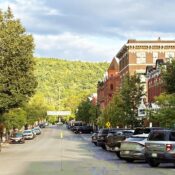
So many places in Gettysburg have connections to Eisenhower that visiting those sites could be a tour itself.
Gettysburg National Military Park: Eisenhower visited the park as a West Point cadet and offered world leaders tours of the battlefield.
Gettysburg Presbyterian Church: The Eisenhowers attended church here, and their pew is marked inside.
Adams County Library: This library on Baltimore Street is the former post office Eisenhower used as his federal office while recuperating from his 1955 heart attack.
Gettysburg College: Eisenhower had an office on campus where he worked following his heart attack, and he gave a speech on world peace at the college in 1959.
Hotel Gettysburg: The Eisenhowers dined at the hotel, and the president was friends with the hotel owner, Henry Scharf.
Majestic Theater: The Eisenhowers would have date nights at the theater when they lived in Gettysburg.
The Swope Manor Bed & Breakfast: This bed and breakfast used to be the home of friends with whom the Eisenhowers would play bridge.
Become a Saturday Evening Post member and enjoy unlimited access. Subscribe now
Comments
I was a 29 year old member of Congressional Country Club and playing golf in 1956 when Ike was behind us playing with our pro Wiffy Cox. I asked the President if he would like to play thru and of course he said yes. It was then I reminded him that if he did not want his ball to go in the rough where mine was he need to keep his head down. He said he did not want it to go there but it went there any way. It was the only advice I ever gave a president.
A neat new look at probably a much less known side of President Eisenhower’s life, outside the military, and the White House, before, during and after. The Gettysburg Farm would definitely be a great place to visit.
I was not yet born when Eisenhower was President but his way of living would have resonated well with other folks living in rural America at the time.
Mamie’s given name was Mamie, not Mary. Her name was Mamie Geneva Doud.