This series by American studies professor Ben Railton explores the connections between America’s past and present.
In December 2022, I dedicated a Considering History column to the forgotten meanings behind classic holiday songs. Despite its silly seasonal starting points, that column had a significant point to make: that even our most seemingly innocuous pop culture has a great deal to tell us about American history and identity, and the many topics I’ve written about in this column.
Recently, my wife Vaughn Joy published her first book, Selling Out Santa: Hollywood Christmas Films in the Age of McCarthy (De Gruyter, 2025), which offers an in-depth analysis of a parallel pop culture genre: Christmas films. Vaughn’s book begins with the post-World War II golden age for such films; she then looks at what happened when the federal government investigated those groundbreaking works and what was changed and lost in the aftermath of those attacks. That history can help us consider our own cultural moment, identifying the limits of today’s ubiquitous holiday films while celebrating what we can still learn from the genre’s best.
The immediate post-war years of 1946 and 1947 represent a true pinnacle for Hollywood Christmas films, featuring four enduring classics of the genre: It’s a Wonderful Life in 1946; and It Happened on Fifth Avenue, The Bishop’s Wife, and Miracle on 34th Street in 1947. Besides comprising iconic holiday stories portrayed by some of the period’s most prominent actors, these disparate films have a more important commonality: They all build on the approach modeled by the most famous Christmas cultural work, Charles Dickens’s 1843 novella A Christmas Carol, with the films’ protagonists and communities learning important lessons about social issues and shared values in their seasonal settings.
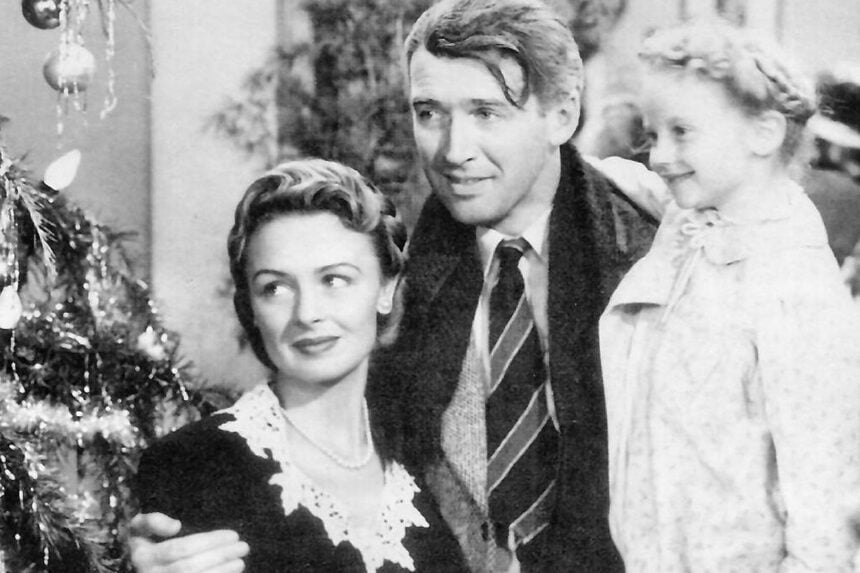
It Happened on Fifth Avenue tells the story of a World War II veteran who is about to be evicted, reflecting the post-war period’s housing and employment crises and making an overt case for legislation to combat these challenges. In The Bishop’s Wife, the titular religious leader is forced by Cary Grant’s charismatic angel to confront widespread poverty in his parish. In Miracle on 34th Street, the question of whether a Macy’s Santa Claus is really the Santa Claus becomes a referendum on whether and how we still believe in Santa’s generosity and good will in mid-20th century America. And in It’s a Wonderful Life, most famously, Jimmy Stewart’s small-town banker George Bailey triumphs over the greedy monopolist Mr. Potter through the culmination of his lifelong lessons in the importance of community and friendship.
At the conclusion of It’s a Wonderful Life, George Bailey learns that the whole town has contributed money to keep his bank from failing. (Uploaded to YouTube by Paramount Movies)
George Bailey’s exemplary lessons might be beloved now, but in their own era they were apparently controversial enough to merit an FBI investigation into whether the film featured a “malignant undercurrent” that reflected “two common tricks used by Communists to inject propaganda into the film.” Building on concepts from author and libertarian activist Ayn Rand’s report Communist Infiltration of the Motion Picture Industry (1947), this investigation, presented to FBI Director J. Edgar Hoover in a May 1947 memo, warned that “the film represented rather obvious attempts to discredit bankers by casting Lionel Barrymore as a ‘scrooge-type’ so that he would be the most hated man in the picture. This … is a common trick used by Communists.”
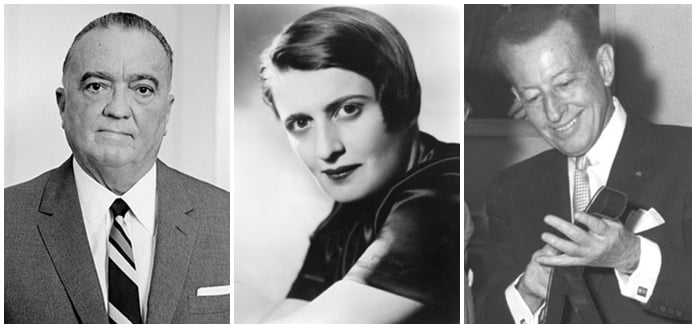
It’s a Wonderful Life was just the tip of the iceberg of the federal government’s investigations in this era. Building on Rand’s work in that report and her concurrent anti-Communist Screen Guide for Americans (1947), and paralleling the broader ongoing efforts of the House Committee on Un-American Activities (HUAC), Congress subpoenaed individual filmmakers, screenwriters, and actors to ask about alleged Communist affiliations, and jailed ten of them for contempt when they refused to cooperate with this censorial witch hunt. In an effort to stave off further attacks, in November 1947 Motion Picture Association of America (MPAA) President Eric Johnston instituted the infamous blacklist, banning the “Hollywood Ten” from working in the industry and promising HUAC that the MPAA “would never employ any proven or admitted Communist because they are just a disruptive force, and I don’t want them around.”
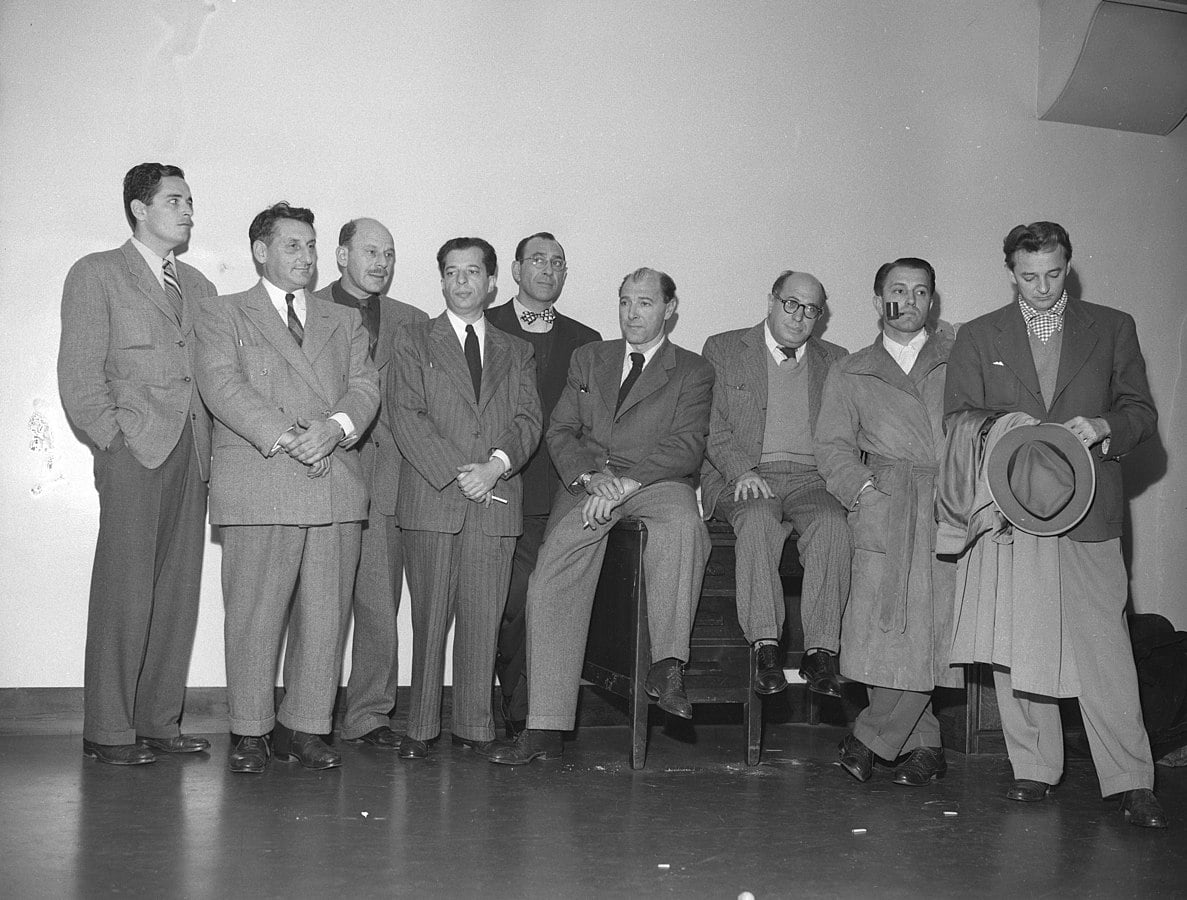
The film industry’s complicity in the HUAC and McCarthy anti-Communist witch hunts can be seen in that era’s Hollywood Christmas films, as they turned away from communal stories focused on social issues and growth and toward individual stories focused on romance and marriage. There’s no direct evidence that these filmmakers were overtly responding to governmental pressures, but the overall shift is a striking reflection of Hollywood’s increasing social conservatism in the 1950s.
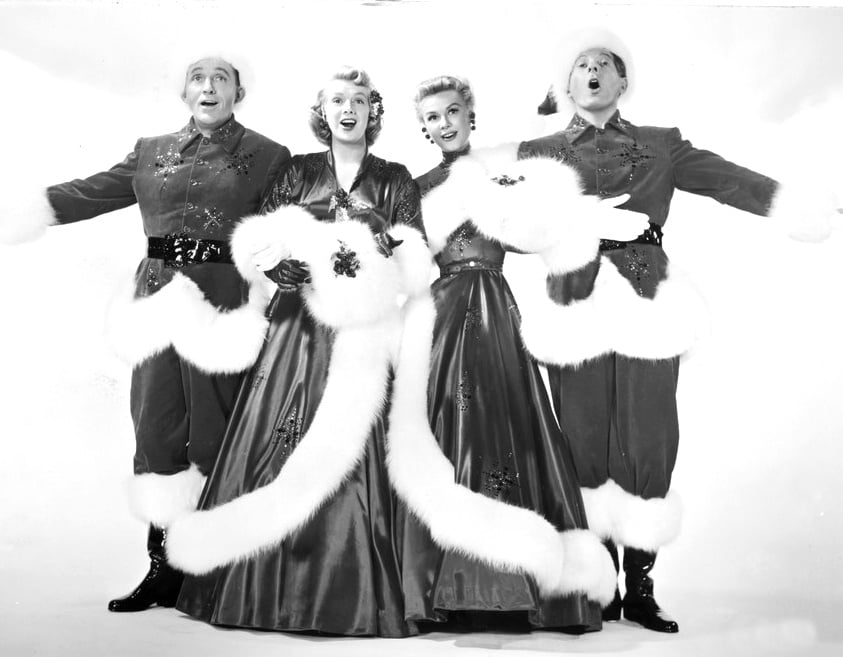
That shift is evident as early as 1949’s Holiday Affair, in which the plot’s conflict is that of a war widow and single mother deciding between her boring boyfriend and an exciting new man. And it becomes even more pronounced in 1950s Christmas films like Susan Slept Here (1954), which opens with a juvenile delinquent being arrested on Christmas Eve but becomes a romantic comedy about that teenage girl’s gradual seduction of the much older man who is forced to take her in; and White Christmas (also 1954), which uses nostalgia for the World War II military as a plot device to pair off its four leads into two romantic couples.
We can see the legacy of that 1950s shift in our most prominent and ubiquitous Christmas cultural works to this day, with the romantic comedy formula that has come to be known as the “Hallmark Christmas Film” (and that has now been copied by many other platforms, from Lifetime to Netflix).
But over the last few decades the genre has likewise featured alternatives, Christmas films that remind us of the collective ideals at the heart of American Christmas, from Dickensian adaptations like Scrooged (1988) to modern stories of communal belief like The Santa Clause (1994) to groundbreaking works like my wife’s favorite Christmas film, the unique animated classic Klaus (2019).
This holiday season, check out Klaus to really carry forward the legacy of the most successful and inspiring Christmas films from Hollywood history.
Become a Saturday Evening Post member and enjoy unlimited access. Subscribe now



.jpg)

Comments
Hysteria and censorship are never a good combination.
My sentiments are similar to Carl’s here. I honestly did not know Christmas films of the Forties were caught up in the McCarthy era as well, but realized EVERYTHING was under a microscope for nearly a decade back then, unfortunately.
“It’s a Wonderful Life” is still a marvelous film that’s stood the test of time. I saw it so many times in the ’90s, it may take quite a while still to want to see it again. My go-to film is “Four Christmases” (2008) with Vince Vaughn and Reese Witherspoon. It’s dark humor (my favorite) very funny, with lots of awkward, embarrassing, degrading moments this asinine life is full of. Just usually not in this brief concentration of time. You might even say “It’s a Terrible Life.”
Compare McCarthyism to Cancel Culture and Woke Culture.
Both had and have No Place in USA.
Control freak Hoover was a closeted homosexual and transvestite with a longtime male companion, Clyde.
Great article, had never considered this aspect. It’s a Wonderful Life is one of my favorite movies of all time.
The best ideas can easily be thought evil when pursued by the inept. Ambiguous enough?
McCarthy was diverted and played.