The 1970s were the “Decade of the Live Album.” Some of the biggest and best-selling releases of that 10-year span showcased exactly what a great act can do in front of an audience. In several cases, those live discs turned around the fortunes of the artists, elevating them from also-rans to global superstars. Here are the biggest live albums of the era, ranked by their U.S. sales.
The Biggest Album Under 1 Million
Alive! – Kiss (1975)
Kiss playing “Rock and Roll Nite” on MTV, 1996 (Uploaded to YouTube by Rock, Metal and Punk)
Kiss was well-known for their tunes and theatrical shows, but they weren’t quite superstars. Alive! changed all that. The album managed to capture what the earlier discs didn’t: the thrill of seeing the Starchild, Demon, Space Ace, and Catman live. Going gold in the U.S. with sales of 500,000, Alive!, and in particular its version of “Rock and Roll All Nite,” catapulted the band to the next level of fame.
1 Million
All the World’s A Stage – Rush (1976)
At Fillmore East – The Allman Brothers Band (1971)
Made in Japan – Deep Purple (1972)
“Smoke on the Water” by Deep Purple (Uploaded to YouTube by Deep Purple Official)
For Rush, All the World’s a Stage came on the heels of their successful 2112 album, and side two of the double-live set features five tunes from that record. In fact, frontman/bassist/keys Geddy Lee acknowledged that the live release was something of a holding action as they focused on making a proper follow-up to 2112. The album demonstrated that the band was just as capable of delivering their complex tunes on stage as they were in the studio.
At Fillmore East turned out to be the first platinum disc for The Allman Brothers Band. Fillmore is noted for capturing the jam aspect of the band. This is especially evident on side four, which is completely dedicated to a 22-minute-and-40-second version of their classic, “Whipping Post.” Also notable are a 19-minute-plus take on “You Don’t Love Me” and a 12:46 rendition of “In Memory of Elizabeth Reed.” Interestingly, the album does not include the very popular “Midnight Rider,” which the band released as a single during the same month that Fillmore was recorded.
As for Deep Purple, they actually intended for Made in Japan to only be released in Japan. The label had other ideas, and it benefited the band to the tune of 1.2 million sold in the U.S. It also allowed the band to pull the double-trick of releasing their new studio album single “Smoke on the Water” backed with the live version from Japan. Needless to note, “Smoke on the Water” was so huge that it’s become the standard first riff that nascent guitar players learn.
2 Million
Live at Leeds – The Who (1970)
Gold: Recorded Live at the Troubadour – Neil Diamond (1970)
Hot August Night – Neil Diamond (1972)
Love at the Greek – Neil Diamond (1977)
“Cherry Cherry” by Neil Diamond (Uploaded to YouTube by Neil Diamond)
Live at Leeds is special for two reasons: It was The Who’s first live album, and it’s their only live album to feature that classic lineup of Roger Daltrey (vocals), Pete Townshend (guitar), John Entwistle (bass), and Keith Moon (drums). Critics routinely list Leeds among the greatest live records of all time, which is pretty amazing, considering that the original pressing contained only six songs split between three covers and three Who classics (“Substitute;” “My Generation;” and “Magic Bus”). The 1995 reissue contains 14, and the 2001 Deluxe Edition pumps it up to a whopping 33 tracks, including several numbers from Tommy.
As for Neil Diamond’s dominance, what can you say? He’s Neil Diamond. He routinely cranked out hit albums and live discs in the ’70s. Of the three, it’s Hot August Night that has the best reputation; it was a massive hit in other countries, notably Australia. The four sides showcase Diamond at the height of his power, and are loaded with familiar hits like “Cherry, Cherry,” “Red Red Wine,” “Girl, You’ll Be a Woman Soon,” “Song Sung Blue,” “Cracklin’ Rosie,” and “I Am… I Said.”
Three Million
Gratitude – Earth, Wind & Fire (1975)
An Evening with John Denver – John Denver (1975)
One More from the Road – Lynyrd Skynyrd (1976)
Cheap Trick at Budokan – Cheap Trick (1978)
“I Want You to Want Me” by Cheap Trick (from Budokan) (Uploaded to YouTube by Cheap Trick)
Released three years before their indisputably most popular song, “September,” Earth, Wind & Fire’s Gratitude captures them at a jazz-funk fusion peak. Hit songs like “Shining Star” are in evidence, but the album really thrives on the sense of inventiveness and stone cold musicianship that the band had on stage. It’s also concrete proof that the band exists on many other planes than the disco genre that some fans and critics believe was their only field.
An Evening with John Denver occasionally functions as a “greatest hits” set, with a setlist that includes “Annie’s Song,” “Thank God I’m a Country Boy,” “Take Me Home, Country Roads,” and “Rocky Mountain High.” But with 23 songs and nearly 90 minutes of orchestra-backed tunes, the double-album really attests to Denver’s range.
Another one that comes close to “greatest hits” territory, One More from the Road finds Lynyrd Skynyrd at peak power before the devastating 1977 plane crash that took the lives of lead singer Ronnie Van Zant, guitarist Steve Gaines, and his sister and backing vocalist Cassie Gaines. The most widely praised track is the 11-plus minute take of “Free Bird,” but there’s a lot to take in here. “Gimme Three Steps” is always a good time, and of course “Tuesday’s Gone” and “Sweet Home Alabama” are classics. The 14 tracks also include some well-considered covers, like Robert Johnson’s “Crossroads” and J.J. Cale’s “Call Me the Breeze.”
Much like “Rock and Roll All Nite,” it’s the live version of “I Want You to Want Me” that you most often hear on the radio. And that’s a testament to how much fun Cheap Trick packs into At Budokan. In fact, across all live albums, it’s really hard to beat the one-two punch of “I Want You to Want Me” and “Surrender” in the middle of side two. Cheap Trick remains a terrific live band almost 50 years later, but this record really nails their sound at an exuberant, youthful peak.
Four Million
4 Way Street – Crosby, Stills, Nash & Young (1971)
The Song Remains the Same – Led Zeppelin (1976)
Wings Over America – Wings (1976)
“Ohio” by Crosby, Stills, Nash, and Young (Uploaded to YouTube by Crosby, Stills & Nash)
Despite their famous infighting on the 1970 tour, David Crosby, Stephen Stills, Graham Nash, and Neil Young managed to put together a legendary live album. In fact, the group fragmented for a time around the record’s release. For CSNY devotees, there’s a lot to mine here, from opener “Suite: Judy Blue Eyes” to “Teach Your Children” to a blistering version of protest anthem “Ohio.”
It’s well-known that Led Zeppelin was not happy with the initial sound of their live album (and concert film soundtrack), The Song Remains the Same. That didn’t, however, prevent them from selling four million copies of it. It’s a testament to how Zeppelin “live” operated in the 1970s, particularly the nearly 27-minute version of “Dazed and Confused” that takes up the entirety of side two of the double-disc. That expansive feel is also leant to “Moby Dick,” which stretches to almost 13 minutes on the strength of John Bonham’s drumming and a 14+ minute take on riff masterpiece “Whole Lotta Love.”
At this point, people have forgotten just how huge Wings was in the ’70s. The 28-song triple album contains five Beatles songs (it was Paul McCartney’s band, after all). Unquestionably, the biggest track is “Maybe I’m Amazed,” which hit #10 in the U.S. and remains a staple of classic rock radio. This writer (who wrote X-Men for Dummies) also whole-heartedly approves of the inclusion of “Magneto and Titanium Man” from the Venus and Mars album.
Five Million
Aloha from Hawaii via Satellite – Elvis Presley (1973)
Live Bullet – Bob Seger and the Silver Bullet Band (1976)
“Burning Love” by Elvis Presley (Uploaded to YouTube by Elvis Presley)
It’s not really much a surprise that Elvis Presley could move five million copies of a live album. It’s a little bit of a surprise that he was still doing it in 1973. The #1 record, released during his white-jumpsuit phase, was recorded as part of a live TV broadcast. An interesting mix of Elvis tunes and covers, it includes later hits like “Suspicious Minds” and “Burning Love” while nodding at early hits like “Hound Dog” and “Blue Suede Shoes.” There’s also a Beatles cover (“Something”) and, of course, the epic take on Sinatra’s “My Way.”
Seger was rolling in 1976, but Live Bullet marked an explosion in popularity for the singer and the Silver Bullet Band. The foundational track here is “Turn the Page” in a version that still gets huge airplay on album-oriented-rock and classic rock stations. In terms of the other tracks, there’s a great cover of Tina Turner’s “Nutbush City Limits” and an absolutely ripping take on Seger’s original “Katmandu.”
8 Million
Frampton Comes Alive! – Peter Frampton (1976)
“Show Me the Way” by Peter Frampton (Uploaded to YouTube by Southern Rocker)
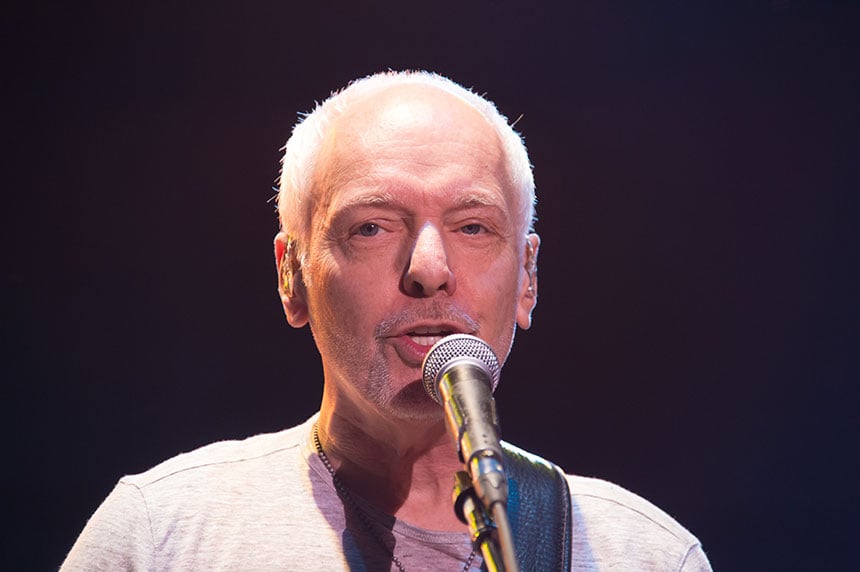
Turning 50 this month and marking the beginning of an amazing year in live albums, Frampton Comes Alive was a phenomenon. Peter Frampton had been a member of Humble Pie before going solo. Four albums into his career, he dropped this live set that blew away everyone’s expectations. Combining his natural guitar heroics with tech like the “talk box,” Frampton created a live sound that resulted in three songs becoming major hits: “Baby, I Love Your Way,” “Show Me the Way,” and “Do You Feel Like We Do.” Spending 10 weeks (non-consecutive) at #1 on the album chart, it was the best-selling record of 1976 and popular enough to hit #14 for 1977. Though its place as the best-selling live album of all time would be eclipsed twice in the 1990s (once by Eric Clapton’s Unplugged, at 10.5 million, and Garth Brooks’s Double Live, at 11.5 million), Frampton Comes Alive! remains the high-water mark of Frampton’s career and an ongoing staple of radio to this day.
Become a Saturday Evening Post member and enjoy unlimited access. Subscribe now
Comments
I have been reading articles similar to this one all day long. My goal was to clarify some murky sales data concerning Kiss: Alive. Unfortunately, this effort has actually deepened my confusion. The experience of collating the data has served to project more mixed messaging than a drunken prom queen. How inexplicably bad is it? This article and the actual Wikipedia article assure me that Alive has in no way backed up it’s legendary rep with hard sales figures and in fact, the album has failed to achieve Platinum Certification even in the many decades of availability stretching from the seventies until now. To put this into perspective, this legendary album has failed to reach the sales figures of early thrash metal albums by Metallica and Slayer! Seriously. However, in other curated lists from spaces like Best Selling Albums.org, Alive is credited with sales of 9x Platinum. What?!?! Seriously?!?! I’ve also noticed that the long whispered rumors about Alive being extensively glamed up with both guitar overdubs as well as layering the intensity of the crowds response, which the band have always insisted were fake news are in fact absolutely true. So if these laughable sales figures are accurate then Alive is in fact the single most overrated live album ever. Lame.
Some really noteworthy ‘Live’ albums and sales figures here, to be sure. I might be one of the few people that didn’t have ‘Frampton Comes Alive’ back then. The Eagles Live from ’80 being one of the very few. The radio played (and overplayed) many, that there was no need.
Also, I liked the perfect sound of the studio album over the ‘Live’ versions, because it was what I was used to. Eagles, ELO, Deep Purple and Styx are 4 that sounded as good in concert as on their studio albums.
Thanks for YT links here; especially ‘Made In Japan’. I bought Purple’s greatest hits studio LP years ago. ‘Smoke’ is a fave, but there ain’t nothin’ like ‘Highway Star’. The way it goes and flows seamlessly from the main tune to exotic instrumental excursions then right back to it again without missing a beat is a musical perfection thrill ride.