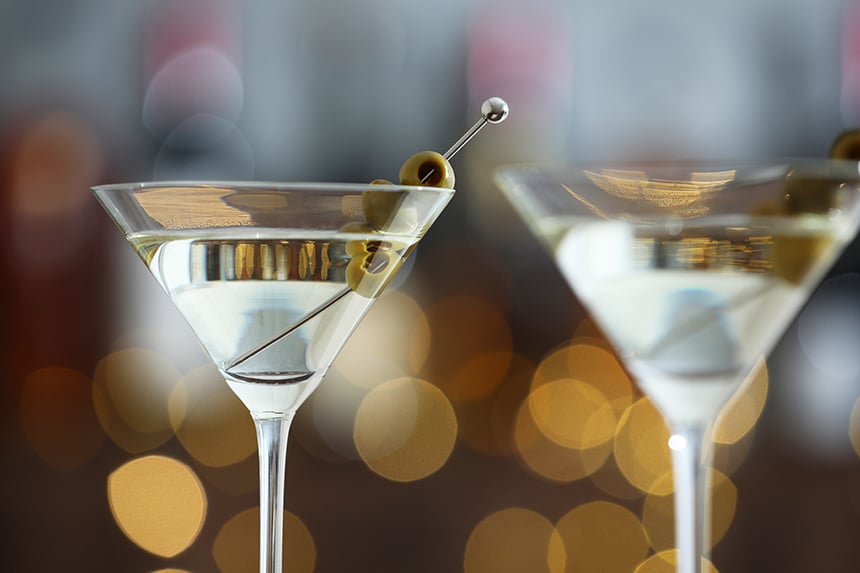
There are no seats left at Lobstah!’s bar, so Will and Sandra settle at a high-top. Belle, who already knows what they want, comes out to ask what they want. The car is packed, and they will start the long drive back to suburban Philadelphia right after breakfast the next morning. The journey didn’t seem so burdensome when they first came to Rhode Island, but that was in the years before they began to get tired for no reason at all, before Sandra’s lower back began to ache from sitting in the car for more than a couple of hours, before the glare of the sun and reflections from the asphalt defeated Will’s polarized lenses. All those things will happen. But not until tomorrow.
Tonight they get to have martinis and dinner at Lobstah! They get to watch the waters of Narragansett Bay from their table. Nostalgia used to be considered an illness, and maybe it ought to be once again — grieving for here as they gird themselves for their nostos, their homecoming. They will be happy to be home, they know, but only after the suitcases are put away, the laundry done, the pile of accumulated mail sorted.
Sandra and Will sit in one of their shared silences, the kind that end more times than not with their making simultaneous identical remarks. This is what happens after four decades of marriage. It simplifies communication. Deep comfort, predictability, companionship — rewards for the loss of youth.
Brakes screech outside, and Sandra reflexively twists her neck away from the bay to look out the curtained window. It has gotten much darker since they parked, just a few minutes ago. A woman at the next high-top says, “An animal darted across the road, maybe a fox. The car just missed it.”
“That sounded really bad,” says Sandra.
The woman says, tentatively, “You know, if it’s okay to say this, we were just talking about you.”
Sandra does not know what to expect. Will is now listening.
The woman’s tablemate is a slightly younger woman. They are both dressed in fitted tank tops and jeans and have about them a tired but contented air of uncontrived shabby chic, as though they’d spent the afternoon in their yard sanding a beautiful piece of furniture they found at a consignment shop. The toothpicks of olives in their drinks look like mini shish kebabs.
The woman continues. “We were just saying that you and your husband tick off all the boxes for the cutest couple in the place!”
In martini veritas, apparently, Sandra thinks.
The younger woman adds, “Martinis — ding! Holding hands — ding!” She makes check marks in the air with her forefinger. “Ding for the pocket square. Ding, ding, ding! You win!”
Sandra and Will look at each other. She is touched that this is how the world sees them. Maybe dressing up a little for drinks and dinner doesn’t always evoke inner eye rolls from a generation that wears shorts and flip-flops to all but the most formal restaurants. She is nonplussed, a little embarrassed, that her and Will’s minor PDA broadcasts at full volume.
Sandra and Will start to chat with the two women. They have just moved here, the town where the younger woman was born, leaving city sorts of occupations — investment banking for the one, human relations for the other. (“What was wrong with ‘personnel’?” Will always asks.) The chat ends as Belle brings the women bowls of chowder and then a lobster salad that they share before they have to leave to pick up the son of the younger woman.
Will watches them walk out of the bar before he says, “Well, that was strange. Nice, but strange.”
“Do you realize this means that we are officially geezers?” Sandra says. “I mean, they didn’t intend to insult us, but they were saying that even though we don’t look like the stereotype they expected, we are definitely old. We’re supposed to look … what? Boring? Dead already? Badly dressed? They probably are shocked that I’m not frumpy and that you’re not wearing white patent-leather shoes.”
A geezer and a geezerette; that’s what it’s come to. The next compliment might have included the word spry. Will doesn’t appear to be bothered by the encounter. Sandra is shaken beyond what she might ordinarily brush off as a minor denigration. Her drink is nearly at room temperature, so she adds a few pieces of ice from the little glass of partially melted cubes.
Will anybody tell her if she comes to exude the sour and unclean sillage of aging? She remembers one particular visit to her mother-in-law’s apartment a couple of years before her death. The odor — far exceeding the normal signature aroma of every household — made her gag. She chills at the thought that she has crossed unwittingly into the territory of Old. She takes a swig of martini, and drops of condensation from the glass fall on her leg. Her skirt is a couple of inches above her knee, and it has ridden up over her crossed legs. Is that too short? She’s always thought it unseemly for women past a certain age to show too much leg, even if hers are lean and shapely still.
Belle tells them their table is ready. Will dismounts the barstool and offers Sandra his arm. Her sense of well-being slips away as casually as the napkin does from her lap. By the time she bends to pick it up, it is twisted under the foot of a lithe young man in plaid madras shorts who is beckoning to his girlfriend or wife to take the newly available high-top. She feels self-conscious as she passes under the ceiling spotlights. In certain types of lighting, the natural silver swaths of her hair can appear just gray — flat, dull, distinctly unflattering. That would look ridiculous with her sky-blue silk dress, short and body-skimming, with a floaty hem.
They are seated at their favorite table, next to the bank of picture windows in the far corner of the lounge, orchestra seats to the pas de deux of the sunset and Narragansett Bay. But in the last few minutes, ominous clouds have begun to roll in from Newport, drawing a curtain that obscures the apricot-and-lemon finale — there will be no gazing at the full moon from their favorite spot on the jetty tonight. New whitecaps form atop steel-blue waves, and seagulls resting from their day bob up and down. The natural world will not assist Sandra in quelling her intrusive, depressive thoughts. The number of summers she and Will have together is dwindling.
Their waitress, Anna, offers them another round, which they decline. Will says they don’t need menus: he’ll have the iceberg wedge, Sandra the roasted beet salad, and then they’ll share the grand seafood tower, their traditional last-night-of-vacation feast. And maybe two glasses of the Muscadet.
“No, a bottle,” says Sandra. Will gives her a look but nods yes to Anna, who leaves to put in the order.
Sandra is afraid she’ll drop a beet or some cocktail sauce on her dress without noticing, afraid she will become undignified. She wants her life to be over before she becomes an object of pity, if only in her own eyes. Before she can be cognizant that she has traversed into that territory. “Cute” is a warning: The bus is speeding ahead, and she has forgotten to pull the cord for her stop. How many more times will they be able to get off at the Lobstah! stop before the bus reaches the terminal? Ding, ding — everybody off.
They sit in silence as Frank, the owner, adjusts a small spotlight for the live entertainment — a man at an electronic keyboard and a chanteuse. But the weather suddenly takes center stage, gusts of wind audible indoors and a dramatic spear of lightning visible across the harbor. Frank rushes out to the covered patio and hurriedly lowers plastic curtains to protect what looks like a small wedding party from blowing rain. The seagulls are in disarray. Suddenly several of them fly directly at the picture window and smash into it. A woman shrieks, “Why are they doing this?” One of the gulls, apparently unhurt, retreats a few yards and repeats the collision — the entire room gasps. It then falls to the flagstones. Its beak has left a mark on the glass. Frank hurries over and then suddenly ducks; the bird barely misses his head as it swoops away with its companions to wherever gulls go during a storm. The show is over, but easy chitchat is slow to resume.
Anna brings crusty bread and salt-sprinkled butter with the Muscadet, which she pours into LOBSTAH!–etched wineglasses. Will and Sandra sip and nibble, subdued and silent, as the singer readies the microphone.
“Good evening, everybody! Happy to be with you at Lobstah! tonight.”
They begin with a creditable Van Morrison cover. Frank knows his clientele — stuff from the geezers’ youth that millennials and Gen Z-ers regard as retro classics. The sky is as dark as October now, and there are no stars shining from Sandra’s eyes. Can I just have this one more dance with you, my love?
Will pushes back from the table and extends his hand to Sandra. He sees the doubt in her eyes: Can we do this here? He shrugs, and she understands that nobody is going to kick them out for dancing. They are family at Lobstah! They can treat this as their living room. She can put her self-consciousness aside. She takes his hand, so warm that she believes someday he will reach from his grave to hers to dispel the chill.
There’s enough room between the tables, even though there is no dance floor. They rise together, move in the space between the ancient, rough-hewn wooden posts that separate the lounge from the cherrywood bar. They begin gently — slow, slow, quick-quick — their bodies touching, separating, rejoining more closely than their former instructor would have condoned, but he’s not watching now, and this is not a performance. They smile at each other, and there are matching smiles at the tables and a few handclaps when the song ends.
Before they reach their table and their salads, the next chords begin, accompanying the next command: Shake it up, baby. Half the diners stand, as though a preacher were inviting his congregation to rise in praise. The crowd shakes and spins and twists and shouts. The excitement mirrors the lightning outside, but there is no longer any remnant of a chill in the room.
The band, if that’s what you call a duo, doesn’t know the Roy Orbison song Sandra requests, so instead they do “Pretty Woman,” and Sandra begins to feel like one again. When the song ends, Will glances pointedly across the room at his pale green iceberg wedge dripping with blue cheese, and she relents. With reluctance.
By the time they finish their salads, the band is taking a break. The shellfish tower arrives, and in the haze of enjoyment and regret and wine, the oysters and clams seem endless. Will is happy to be seated; he had not planned on an evening workout after the exertion of carrying suitcases and boxes downstairs and solving the puzzle of fitting them all into the car. When Sandra starts shimmying in her chair as the singer begins the story of meeting a gin-soaked barroom queen in Memphis, Will does not mind at all that a man from two tables away asks him if he may tempt Sandra to dance.
This otherwise unremarkable man an in an almost-Hawaiian shirt is an superb dancer, a skilled leader who whispers cues to Sandra that she struggles to follow because she, too, is gin- and wine-soaked. “On the next turn, run your hand down my back and grab my hand.” But she feels spry enough. This is dancing at a new level — seductive — and it is strange to be in sync, or nearly, with a man who is not Will. But they are smiling at each other as the music ends. He escorts her back to the table, where she discovers that Will has recorded the dance on his phone.
“You looked great,” he says.
They pick all the bits of lobster out of the claws. Anna removes the detritus, and they order decaf cappuccinos. No, they have no room for dessert.
As they sip the last of the wine, the singer begins again to croon: She’s left a good job in the city. Sandra’s body rises, as though with a will of its own, and she joins the women of all ages who also rise to dance in honor of Tina Turner’s death, the week before. Table neighbors, acquainted not at all, slither by one another in the maybe-still-virus-infused-but-screw-it indoor air on this clammy evening. They grasp hands to swing and swirl, reach out for the hand of a stranger, confident that, in communal celebration and mourning, the reach will be returned.
They turn and roll and burn, and their heat pushes the vocalist to new intensity as the song turns from nice and easy to nice and rough and the dancers forget there is anything other than the beat. Anna the waitress deposits two highball glasses on the table that holds the keyboard, and the liquid trembles as though the dancers’ feet are shaking the earth itself. A twentysomething girl in white leather sneakers comes face-to-face with Sandra mid-swirl and says, “You’re so cool,” and on the next rotation Sandra returns, “I’m old enough to be your mother.”
And the girl stops the swirl and begins to twirl Sandra in the opposite direction, fast, fast, and Sandra’s silken dress rises and falls as she moves her hips, and she brushes against that dancing girl, who says, “Your legs are as fabulous as Tina’s!” And Sandra’s blues fade to white-hot relief. She feels cool now, and she is not ready for the grave. Not yet.
Become a Saturday Evening Post member and enjoy unlimited access. Subscribe now



Comments
I really enjoyed your story, Susan, AND got a big kick out of it too; this short time I spent at Lobstah! You write with a lot of depth and investment in your characters, blending worry with relief, the serious with the comical, all in a touching manner.
The last three paragraphs bring it all together for Sandra, in (at first) a sad moment, but leave it to Tina Turner to turn that around in a flash, rollin’ on a river, with the help of a stranger. Sandra’s whole outlook on life just changed for the better. I think so. Priceless, Ms. Levine!