
This series by American studies professor Ben Railton explores the connections between America’s past and present.
Like Cinco de Mayo, the Chinese Lunar New Year, and a number of other holidays with international origins, St. Patrick’s Day has become significantly more prominent in the United States than it is in the nation on which it ostensibly focuses. That discrepancy, as well as the stereotypes that come with the holiday, is understandably frustrating to many Irish people, a perspective we should certainly hear and respect. And one way to respond to those realities would be to recognize that St. Patrick’s Day has become a holiday dedicated to the Irish American community, both historically and in our present moment.
Commemorating St. Patrick’s Day as an Irish American holiday also allows us to recognize a striking duality at the heart of the community’s American story in two lives: Denis Kearney’s white supremacist violence; and Mary Doyle Curran’s thoughtful reflections.
No setting better illustrates the painful shift in the Irish American story from oppression to white supremacy better than mid-19th century New York City. In the 1840s and early 1850s, as millions of Irish immigrants fleeing the Irish famine arrived in the U.S., New York became an epicenter of the period’s anti-Irish prejudices, from the workplace and housing discriminations captured by “Irish need not apply” signs to the rise of the national political party known as the Know-Nothings (and also, tellingly, as the American Party) that made anti-Irish xenophobia a central tenet of its platform.

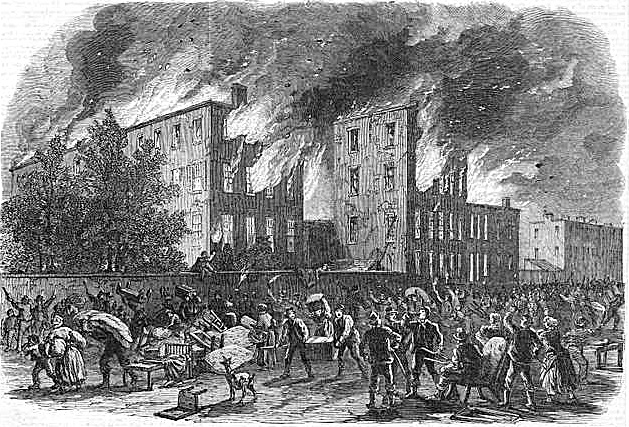
But in July 1863, less than 10 years after the height of that period of anti-Irish discrimination, the New York Irish American community would be the driving force behind one of the 19th century’s most destructive moments of white supremacist racial terrorism, the so-called “Draft Riots.” Also known as the “Irish Civil War,” the riots did begin as a protest against the expanded and inequitable draft for the U.S. Army, but quickly became instead a multi-day orgy of racial violence, as thousands of the city’s white residents, led by the Irish American community, attacked African Americans and their abolitionist allies, lynching numerous residents and burning down an African American orphanage.
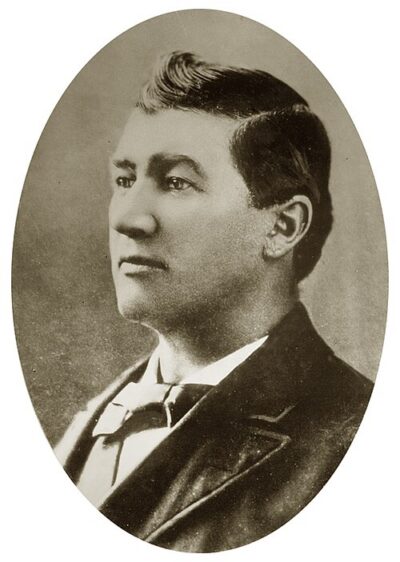
Five years after that horrific event, an Irish immigrant arrived in New York who, over the next decade, would come to embody the community’s embrace of white supremacy, Denis Kearney. (I wrote at length about Kearney (ca. 1847-1907) in this Considering History post on the Celestials baseball team.*) There’s no more frustrating embodiment of the prominence of Irish Americans in white supremacist movements than this dockworker turned labor activist becoming the most visible and vocal advocate for the xenophobic and racist anti-Chinese sentiments that led directly to the Chinese Exclusion Act, countless acts of racial terrorism, and a century of discriminatory national immigration laws.
There’s no way to tell the story of the Irish in America without including events like the Draft Riots and figures like Denis Kearney. But that’s far from the whole story; representing the far more reflective and inclusive end of the spectrum is the influential 20th century poet, novelist, and professor Mary Doyle Curran (1917-1981). The granddaughter of Irish immigrants, Mary Doyle grew up in poverty in the sizeable Irish American community in Holyoke, Massachusetts. She attended Massachusetts State College (now the University of Massachusetts), becoming her family’s first college graduate, and then earned her PhD in English from the University of Iowa. She married her college sweetheart George Curran and they had a family together, but she also continued her professorial and scholarly career, teaching first at Wellesley, then New York’s Queens College, and finally as a key early member of the groundbreaking Irish Studies department at the University of Massachusetts Boston.
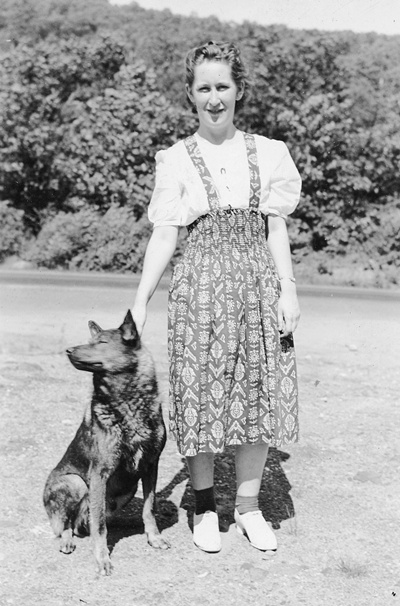
Curran would most powerfully reflect on her own identity and story, her family and heritage, and the Irish American experience in her one published novel, The Parish and the Hill (1948). Through the perspective of its autobiographical narrator, Mary O’Connor, Curran’s novel tells the story of three generations of an Irish American family in an unnamed New England mill town clearly inspired by Holyoke. She creates chapters that focus on the experiences and identities of Mary’s 19th century immigrant grandparents, her mother and father, her uncles (who served in the U.S. Army during WWI) and aunts, and her brothers. As the family becomes more wealthy and powerful Curran traces their embrace of white supremacy among other painful shifts (such as one of Mary’s brother’s connections to Depression-era organized crime), but Mary keeps central to her own perspective the voice of her late grandfather, who resisted such narratives and argued for solidarity with other immigrant and minority communities.
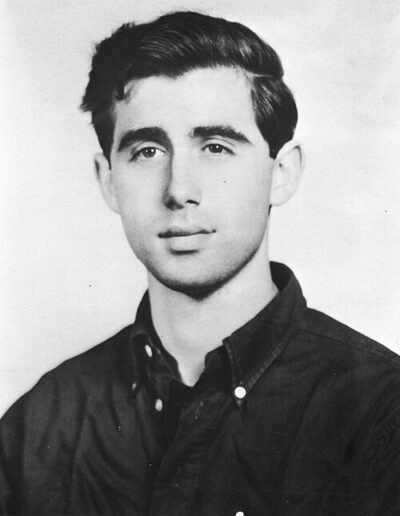
Curran didn’t just express that inclusive perspective in her novel—she clearly inculcated it in her students throughout her long and successful teaching career. That’s illustrated with particular power by her work at Queens College in the early 1960s with Andrew Goodman (1943-1964), the young Civil Rights activist who in June 1964 would be lynched along with two fellow activists while registering Black voters as a Congress of Racial Equality (CORE) Freedom Summer volunteer. After Goodman’s murder Curran found a poem that he had written for her class, entitled “A Corollary to a Poem by A.E. Housman” that focused on racial violence targeting young African Americans. She received the permission of Goodman’s parents to have this moving poem published, and it appeared in the Winter 1964 issue of The Massachusetts Review, a journal published at the University of Massachusetts, where Curran had received her own degree decades before.
This St. Patrick’s Day, we have to remember the Draft Riots, Denis Kearney, and the worst of Irish American white supremacy. But we also must commemorate Mary Doyle Curran, Mary O’Connor’s grandfather, and the Irish American voices who have exemplified and carried forward the best of their community and our collective ideals.
*The Celestials were the 1870s semi-pro team composed of Chinese American students who were, along with Denis Kearney, the focus of the first season of my podcast Baseball, Bigotry, and the Battle for America (season two begins on Opening Day, March 25).
Become a Saturday Evening Post member and enjoy unlimited access. Subscribe now


.jpg)