This story begins with an interruption: Look away from this sentence and take a gander at your surroundings with an eye toward the colors around you. The color of the walls; the color of your chair; the color of your laptop; the color of your desk, the implements on your desk, the containers to hold those implements; the color of your shirt. We are used to such a riot of color, but America wasn’t always so colorful. In fact, during World War I, America faced the prospect of a dangerously dull future — one that might sink the American economy, threaten American security, and imperil world peace. It was a future that the U.S. managed to avoid using legislation, technology, and a little spycraft. It begins with your shirt.
The commercial dyestuffs industry took off in the mid-1800s when the burgeoning field of chemistry, an Industrial Revolution, and a chemical accident led to William Henry Perkin’s discovery of the first synthetic aniline dye, mauve. Synthetic dyes had several advantages over natural dyes: They were more consistent from batch to batch, more colorfast and lightfast than natural dyes, and produced brilliant hues that consumers couldn’t get enough of. Mauve was a moneymaker; French and German chemists immediately set to work synthesizing dyes.
German chemists had a leg up: Industrial chemistry had more cachet in Germany than it did in Britain, where universities didn’t train chemists for industry, or France, where academic research was considered a more worthy use of one’s time. The cooperation between German industry and academia led to better processes, better dyes, and more efficient production. By the 1910s, the global commercial dyestuff industry belonged almost wholly to Germany.
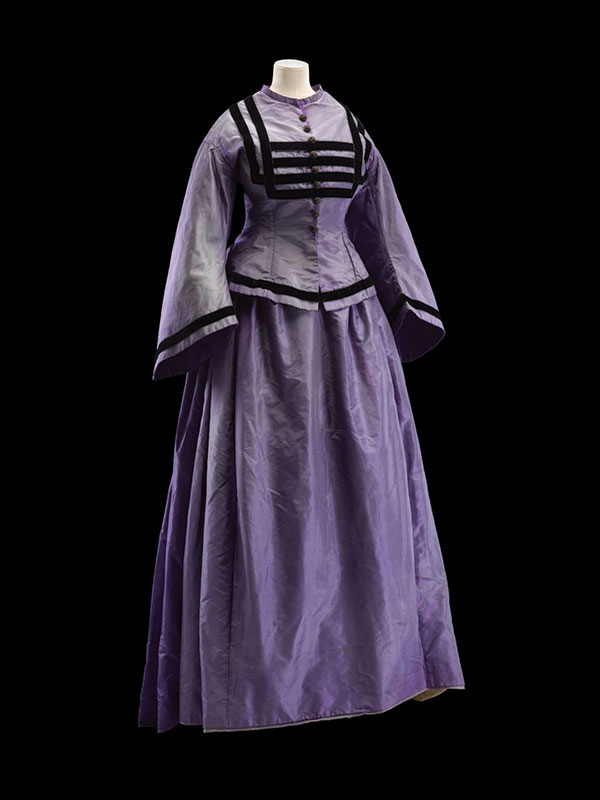
The Great War changed that. Shortly after Britain entered the war, it enacted a naval blockade that, while ostensibly allowing neutral parties through, essentially ground trade with Germany (and potential aid to Germany) to a halt. By 1915, the British Navy considered nearly everything bound to or from Germany to be contraband. This greatly displeased America, which imported nearly $170 million of goods from Germany, including 90 percent of our annual consumption of dyestuffs. Germany had hoped America’s insatiability for color would lure it into politically breaking the blockade. It did not. What it did, instead, was throw America into what is known as “the dye famine.”
It may seem ridiculous that a lack of dyes pitched America headlong into turmoil, but it did. Dyes were used everywhere: to print money, to dye cloth, to treat materials for buttons, in commercial stains and paints, in photographic processes, and in pharmaceuticals. In a widely syndicated 1916 article, the journalist Frederic Haskin summed up the problem facing America: “The dye shortage affects every one of the two million workmen who manufacture annually products valued at five billion dollars, as well as all the people depending on them, and the immense amount of capital invested in factories and plants.” The dye famine created catastrophically high prices for good dyes. Prior to the blockade, a widely used dye called sulfur black was selling for 20 cents a pound. A year later, it was selling for up to $3 a pound. Try passing that increase along to the customer, who is already under straits, and see how quickly your business is run out of town. Forget natural-colored overalls and white buttons on black shirts: The real risk is that our industries, which cater to consumers who have become accustomed to color, will collapse.
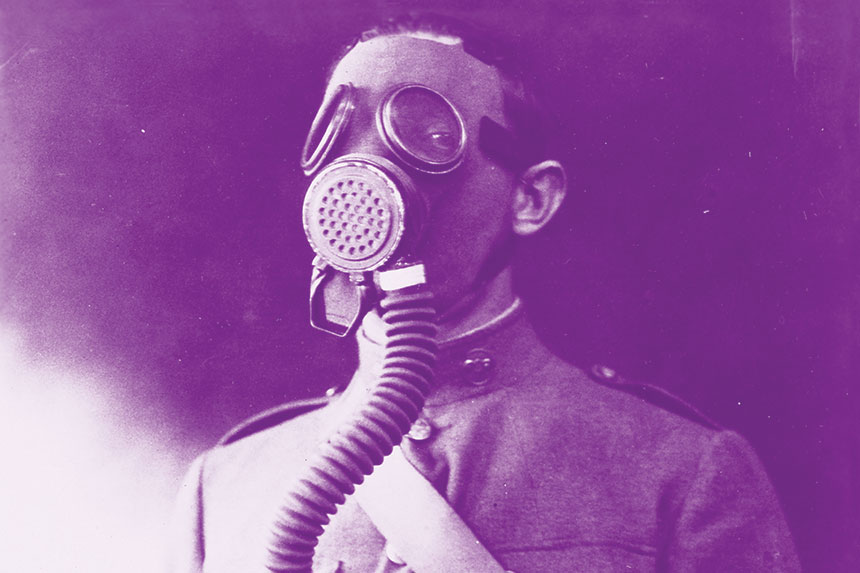
While Haskin was playing Cassandra about the economy, the Allied forces had their eyes on another, more pressing, concern. Many of the chemicals used to create synthetic dyes were also used in the manufacture of pharmaceuticals (much needed on the battlefield) and explosives. Suddenly, color became a national security concern. If German dyestuffs factories were no longer producing dyes from their ammonia, toluol, and phenol, would they instead turn them to making explosives? The German Supreme Command exceeded the Allies’ fears. Realizing that they didn’t have the raw materials to keep producing munitions, they instead turned to a common byproduct of manufacture, liquid chlorine, and used it to develop the first lethal chemical weapon of World War I: chlorine gas. The German dye industry was the supplier. Color and its manufacture were literally now a matter of life and death.
It goes without saying that the U.S. is a very large country that is much farther away from places like France and Germany than the United Kingdom is; therefore, many European companies that had exported to the U.S. established manufacturing facilities stateside. It saved shipping delays and costs and put some manufacturers closer to American sources of raw materials. It also became an uncomfortable problem when America began supporting the Allies in World War I. German-owned companies did their best to tread lightly, but after America declared war against Germany in 1917, all bets were off. The U.S. could no longer allow enemy companies to operate within her shores — but the country also couldn’t afford, frankly, to let these companies slink back to Germany. Wars are expensive, after all.
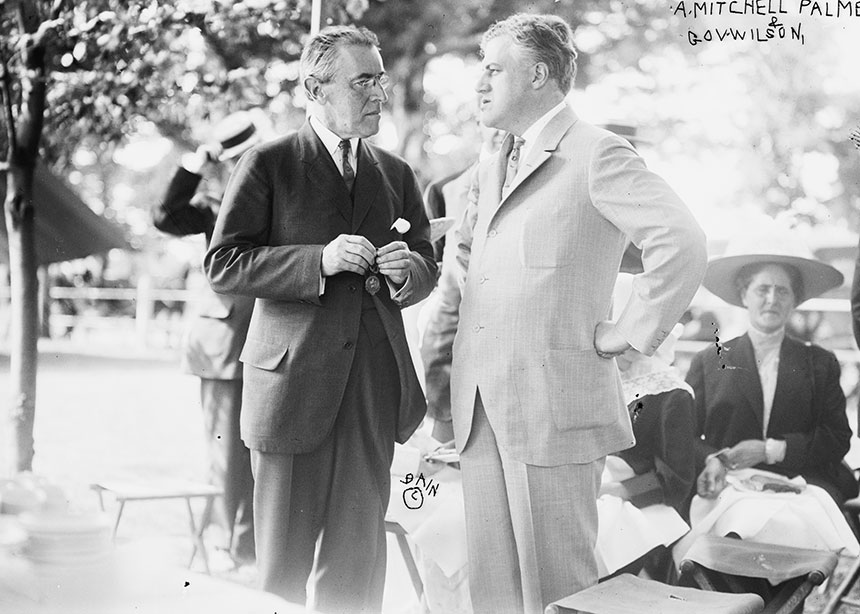
Six months after America went to war, President Woodrow Wilson proposed, and Congress approved, what came to be called the Trading with the Enemy Act. Today we think of the Trading with the Enemy Act as the point at which America became a sanctioning state, using the act as a lever to exert political influence, but its original mechanism was fairly direct. The act was intended to prohibit commerce with businesses owned by nations or citizens of nations that had been deemed enemies of the state — no sense in letting Germany make use of American resources — and, critically, to “conscript” any enemy property for the U.S. war effort. Wilson appointed A. Mitchell Palmer, a former Pennsylvania representative, as the Alien Property Custodian and gave him wide-ranging powers to seize enemy property, defined broadly.
Palmer went straight to Bayer. Bayer, of aspirin fame, was an established manufacturer pumping both drugs and dyes out of its Rensselaer, New York, factory, and one of the largest German companies doing business on American shores. Palmer’s agents seized the plant itself — and, critically, the German patents for all Bayer’s products.
But Palmer was after bigger game than the rights to aspirin and sulfur black. In 1919, he wrote a three-article series for The Saturday Evening Post about his time as the Alien Property Custodian. The articles contain quite a bit of patriotic hyperbole and Hun-hating rhetoric, but buried in the second article (published July 19, 1919) is Palmer’s explanation of why these seized patents, and especially the dye patents, were so important to national security. It wasn’t the financial importance of dyestuffs to the American economy that moved him; it was the talent and scientific know-how that those patents represented for applied chemistry. “No other industry in the world offers a livelihood to any such number of highly trained scientists or any such incentive to continuous and extended research,” he wrote. The patents, then, were a means to an end. Palmer campaigned successfully to have his powers expanded to include the redistribution of the seized German patents to American companies. Whole buildings and their stocks were auctioned off to the highest bidder, and the American dye industry began its stuttering ascent.
Why stuttering? American companies may have had the Germany patents, but they still didn’t possess the knowledge needed to produce the dyes recorded on those patents. The German patents were less step-by-step recipes and more general overviews that assumed a certain amount of knowledge of chemical processes that had been created and perfected by German chemists. In order to reach the utopian vision of an America free of German industrial dominance, American industries had to recruit and depend on the engineers of that German industrial dominance. In short, U.S. manufacturing needed German chemists.
Fortunately, there were plenty of them stateside. Some smaller American dyeworks had recruited chemists from Germany as early as 1915 to help them meet the demand for dyes, and German-owned companies had German chemists working at them. But those chemists, under scrutiny before America entered the war, suddenly became potential double agents as soon as the U.S. entered the war. Some of them, it turned out, were.
In July 1917, police arrested Louis Hihn — an American-born, German-heritage, German-trained dyer at Martin Dyeing and Finishing in New Jersey — after over 300 dye formulas, valued at more than $1 million, went missing. Martin Dyeing supplied khaki tents and uniforms for the U.S. military, and the disappearance of the formulas led to the plant’s temporary shuttering — and the loss of valuable time and supplies for U.S. forces. Police were tipped off that Hihn, head dyer at Martin Dyeing, had planned an open-ended trip to Mexico; police searched his home and found the missing formulas and dyed cloth samples stuffed inside a clothes press in his bedroom. Though Hihn never spoke about why he stole the formulas, it was broadly assumed it was to aid Germany. The relative value of the dye formulas to both the U.S. and Germany could not be overstated: The economic success of each country was now tied up in colors. Hihn was convicted of larceny just 23 days after the Trading with the Enemy Act was enacted in late October 1917.
Palmer and his successor Francis Garvan went rooting for spies with all the industrious eagerness of two truffle hogs in an autumnal forest. Summer 1918: Palmer seized the stock of Berlin Aniline Works outside of Boston and jailed two top executives as enemy aliens. Fall 1918: Five Bayer officials in the U.S. were arrested for setting up a shell company in Rhode Island and diverting Bayer profits to ensure that Bayer could resume operations in the U.S. after the war ended. Early winter 1918: Williamsburg Chemical Company, a Brooklyn dyeworks, was auctioned off for pennies on the dollar after it was seized by Palmer, who claimed that Germans controlled 56 percent of the company. The two company owners were arrested and interned. The December 6, 1918, edition of the Official U.S. Bulletin, put out weekly, listed 324 individuals who had been charged with violating the Trading with the Enemy Act; roughly one-quarter of them were connected with the dye industry.
The end of the war only saw an increased commitment to destroying any possibility of German mastery of dyestuffs manufacture. In 1919, Garvan testified before Congress that he had uncovered a plot by the German ambassador to the U.S. that had started as far back as 1915 to use the dye famine to turn Americans against the Allies. (It didn’t work — not only was American sentiment tipped more toward the Allies, but the fashion industry, ever resourceful, had already spun the dye famine into a new elegant craze for black-and-white design.) The former president of the American Chemical Society, Charles Herty, claimed in a 1919 address to the ACS that he had visited German dyeworks after the war as a member of the Reparations Committee, and that they were ready to step back into position as America’s chief dyestuffs manufacturer. Scientists and politicians made a compelling case that the American dye industry needed to be protected — national security depended on it. Newspapers took a slightly less restrained approach: “THE GERMANS STILL FIGHTING,” blared one headline from the December 20, 1919, edition of The Watchman and Southron from South Carolina.
But not all Americans were convinced. American dyes didn’t improve overnight, and the difference in quality was noticeable. Newspapers and magazines, still very much in wartime censorship mode, were happy to do their part. They ran soft-focus patriotic pieces aimed at the women in the house, the fashion-makers and fashion-keepers, warning them that longing for the good ol’ days of German dyes was not just “treasonous,” but “helping to crush out one of the greatest industries that the war has brought forth,” as one August 1919 scold put it. Good Housekeeping even extracted pro-American-dye statements from fashion houses in Paris — who were, to be sure, relying on their own chemists in France to create adequate substitutes for German dyes.
The industry was certainly fighting … for market share. The end of the war did not bring a flood of German scientists back to America; being interned as enemies of the state didn’t exactly give them warm fuzzies toward their jailers. Companies that had previously convinced German scientists to help them decipher their patents were now struggling to find qualified chemists in the States who could help. So they engaged in their own counter-espionage. In 1920, a DuPont representative in Switzerland quietly convinced four chemists who worked for Bayer in Germany to pack their bags and come to America. Each chemist was offered a salary of $25,000 a year, or about $450,000 in 2026 cash. And if those chemists wanted to, say, bring their bench notes from Bayer with them, well, who was the DuPont representative to argue? The five men attempted to cross the German-Dutch border; the trunks were searched and then seized by the Dutch, who alerted the Germans. Authorities in Cologne issued warrants for the arrest of the four scientists; two of them managed to slip aboard a Dutch ship that was setting sail to America, though they were not allowed to disembark once they arrived because the Dutch had heard about the warrants. After some negotiations in which a DuPont security officer pretended to be a police officer, and after Washington got involved, the two chemists were allowed to enter the U.S. and begin work for DuPont. The two chemists who remained in Germany were, a year later, escorted by a group of American soldiers and the chief of the U.S. Military Secret Police in Coblenz, Germany, out of unoccupied German territory and into the American sector — despite the fact that they were under heavy surveillance by the German police. The chemists arrived in Hoboken in 1921 and headed to DuPont despite the protestations of the German government (and DuPont’s insistence that they had done nothing wrong). The gambit paid off: In short order, DuPont became the leading dye manufacturer in the U.S. and remained so until it stopped producing dyes in 1980.
Thanks in part to an unprecedented expansion of executive power in World War I, America continues to be a Technicolor dreamland. And as long as color proliferates, so too will color-related spycraft. In the 1990s, DuPont claimed that the Chinese government had engaged in some corporate espionage and stolen a proprietary formula for producing titanium dioxide, a bright white pigment whose ubiquitous use nets DuPont over $2.6 billion a year; two engineers were tried and convicted of economic espionage in 2014. Companies also take part in preemptive strikes and feverishly protect the colors associated with their brands from being co-opted, whether intentionally or not, through cease-and-desist actions and lawsuits. For example, John Deere (green and yellow), Tiffany & Co. (their distinctive sky blue), T-Mobile (magenta), and Mattel (Pantone 219 C, or “Barbie Pink”) have all gone on the offensive at some point, and U-Haul has sued the company Public Storage over its attempt to file trademark registrations for all things orange (a U-Haul color since 1945).
As for the seized patents, there was a legal fix, but it barely changed anything: Though the 1928 Settlement of War Claims Act opened the way for seized property to be returned to German owners, the only property that was eligible for return was that still in the custody of the Alien Property Custodian — the very Custodian who had handed out seized patents like presents at Christmas. There was one recovery, however, 75 years later: In 1994, Bayer A.G. acquired the North American portion of Sterling Winthrop, an over-the-counter medication business, from another pharmaceutical giant. Turnabout is fair play: In 1918, Sterling Winthrop had bought the assets seized from Bayer using the Trading with the Enemy Act, including the Bayer patent for aspirin.
Kory Stamper is an author and former dictionary writer whose latest book, True Color, charts the intersection of history, color, and the dictionary. Her first book, Word by Word: The Secret Life of Dictionaries, was a 2017 Amazon Best Book of the Year.
This article is featured in the March/April 2026 issue of The Saturday Evening Post. Subscribe to the magazine for more art, inspiring stories, fiction, humor, and features from our archives.
Become a Saturday Evening Post member and enjoy unlimited access. Subscribe now


Comments
Fascinating and frightening article. It truly is an early 20th century horror story regarding something deceivingly simple sounding as colors and dyes. To what level the American public was (or wasn’t) aware of the specifics of this Word War I international deep dive, I have no way of knowing.
There’s no question this ugly piece of history is filled with a witches’ brew level of deception, covert actions/missions, lies, bribes, politics, payoffs, midnight plots, corporate espionage, betrayed friends, scandals, ruined careers, and many deaths from toxic chemicals. Money and power at the center of it all, as always.