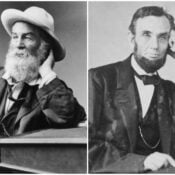
Resistance to Law” reads the headline of a short article written by a Massachusetts Unitarian minister in the November 19, 1850, edition of a newspaper. Next, a bold summoning.
“Should the U.S. Marshall or any other person visit Worcester for the purpose of making an arrest of any person or persons claimed as fugitives from labor, it should be the duty of the committee of vigilance, to alarm the whole population by the ringing of bells, so as to resist the law officers,” wrote Theodore Parker for the Western Citizen, an abolitionist newspaper printed in Chicago.
“Do it peaceable if they can, forcible if they must, but by all means to do it,” Parker concluded.
The article, and many others of its time, were in response to the Fugitive Slave Act, a federal law passed in September 1850 in order to appease the demands of slave-holding states. The law imposed a $1,000 fine — more than $40,000 in today’s valuation — plus six months in jail for impeding the recapture of an enslaved person seeking freedom.
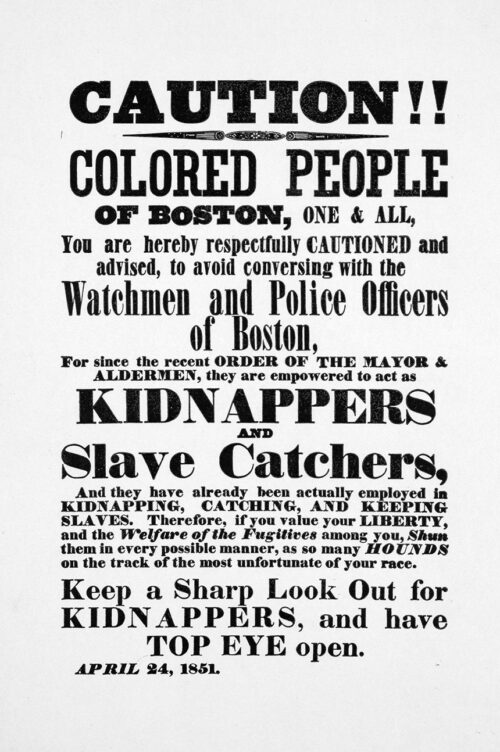
As formerly enslaved people and even free Black families questioned how safe they would be in the north due to the newly passed law, many fled to Canada. Abolitionists in cities like Worcester, Boston, and Chicago responded by forming vigilance committees, organizations that operated both publicly and covertly to help protect free Black people from capture. They also helped people self-emancipate.
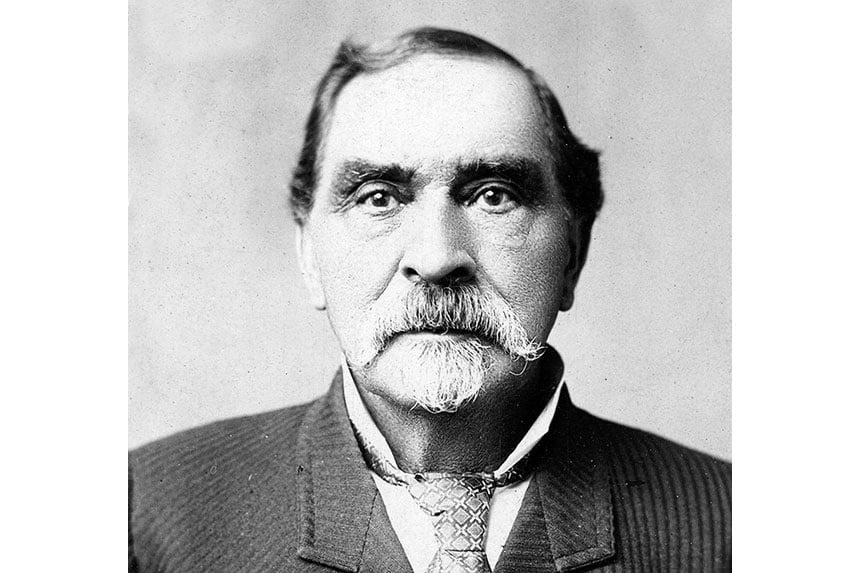
Barney Ford was a formerly enslaved man living in Chicago. He came to the city after writing a letter to his enslaver informing him of his intention to self-emancipate. He left behind a life in which he herded hogs and toiled on a cotton boat for the promised freedom of the North. Ford cofounded Chicago’s vigilance committee in September, the same month Congress enacted the Fugitive Slave Law, with six other African-American men, both free and formerly enslaved.
The Barney Ford Museum in Breckenridge, Colorado, tells the life story of Ford, from his enslavement in Virginia to his activism in Chicago and his time spent in the gold towns of Colorado.
“The Chicago vigilance committee set up patrols to keep an eye on the city and warn others if there were slave-nappers coming into the area,” said Leigh Girvin, interpreter at the Barney Ford museum. “They formed seven divisions to correspond with seven [police] districts. Each division included six men to survey their section of the city.”
On one occasion, a privately hired slave catcher was told to leave Chicago immediately, or prepare to meet the coat of tar and feathers being prepared for him.
The history of vigilance committees in the United States seems to have largely been lost to time. According to Girvin, most museum visitors are not familiar with these organizations or Barney Ford’s activism in Chicago’s committee. But the history is clear: This was important work during a pivotal time leading up to the U.S. Civil War.
The work of the 19th-century vigilance committees stood in direct opposition to federal law, but at times, in cases of freedmen who were illegally detained and enslaved, it upheld the rights of free people. Neighbors saw the conflict this created in their communities and took it upon themselves to take action.
“The Vigilance Committee is really kind of pushing abolitionists in a more and more radical and indeed more violent direction — in the sense that violence in defense of people who are fighting for their freedom is just,” said Andrew Diemer, professor of history at Temple University.
Diemer details the life of William Still, a Philadelphia abolitionist and civil rights activist, in his book Vigilance: The Life of William Still, Father of the Underground Railroad. Philadelphia’s committee was active as early as the 1830s; the city’s position just miles away from the closest slave-holding state of Delaware put it at the center of the boundary-battle for freedom.
“It may seem like vigilance committee members are among the most radical, but they were actually people most interested in protecting their neighborhoods and communities, not necessarily working to disarm slavery as a whole,” said Diemer. “It draws in people who maybe don’t like slavery, but also don’t see it as their problem. They do see fugitive slaves being recaptured in their cities and towns, [or] free Black neighbors being kidnapped as a problem that is immediate to them.”
In Chicago, Ford and his cofounders were likely aware of the work of vigilance committees in other cities, according to Girvin, due in part to the Western Citizen and other newspapers sharing what was happening across the country.
When Ford and his cofounders created the Chicago vigilance committee, they quoted the nation’s Founding Fathers to justify their work: “We who have tasted of freedom, are ready to exclaim in the language of the brave Patrick Henry,” they wrote. “‘Give us liberty or give us death’… [and] in the language of the father of his country, Gen. Washington, resistance to tyrants is obedience to God.”
Whether they knew it or not, the work of vigilance committees extends back to the 18th century, according to Donald Johnson, associate professor of history at North Dakota State University.
“There’s this idea that when the legitimate government falters for whatever reason, it’s incumbent upon these natural leaders of the community to step up and into that void and govern their small towns or their rural counties until that void can be fixed,” he said about the role vigilance committees played during the Revolutionary War period.
Johnson says revolutionary committees emerged in the mid-1770s from local groups that initially protested the British government, then evolved into ad hoc governments in favor of the rebellion. In some cases, they taxed their neighbors in order to raise money for gunpowder and other supplies needed by the colonists’ army.
“It’s not this anti-government position,” Johnson clarifies. “It’s this position of our government has gone so far beyond the pale that we no longer owe it allegiance, that it is actively violating these fundamental tenets of the social contract. Therefore, we’re going to step into the breach. It’s very much a burden. This isn’t something they want to be doing. This isn’t something they’re doing because they’re power hungry. This is something they’re doing because it’s necessary.”
In both cases, the 18th- and 19th-century vigilance committees dissipated once peace settled after war. Some committee leaders became elected officials in the new governments, but many more went back to their private lives.
For Johnson, the existence of vigilance committees in both eras speaks to an important American tradition: stepping in to fill the gaps of unjust government.
Whether by ringing bells, patrolling communities, or stocking gunpowder, Americans have a history of using their means to protect their neighbors in the name of doing what’s right and fair.
Sheeka Sanahori is a freelance journalist and video producer specializing in travel, food, and history. Her work has appeared in National Geographic, Southern Living, The Washington Post, Lonely Planet, and USA Today. For more, visit www.sheekasanahori.com.
This article is featured in the May/June 2026 issue of The Saturday Evening Post. Subscribe to the magazine for more art, inspiring stories, fiction, humor, and features from our archives.
Become a Saturday Evening Post member and enjoy unlimited access. Subscribe now