Unabridged
by Stefan Fatsis
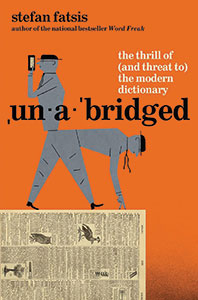
After establishing himself as a top sports journalist, Stefan Fatsis is quietly building a name amongst the word nerds, starting with his 2001 bestseller Word Freak, about competitive Scrabble tournaments. His latest effort takes readers on a deep dive into that bastion of English language, the dictionary. Fatsis didn’t just interview lexicographers to write this book; he went all-in, embedding himself as a lexicographer-in-training at Merriam-Webster. Funny, smart, and well-researched, Unabridged explores not only the history of dictionaries, but the business of it, the politics that surround it, and the oh-so-many controversies that arise when people think the lexicographers have gotten it wrong. You don’t have to be a logophile to enjoy the insights and anecdotes in Unabridged, which, just like a dictionary, holds much to be discovered.
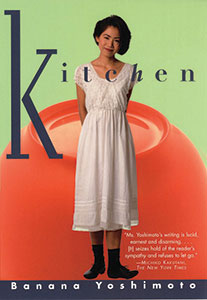 Kitchen
by Banana Yoshimoto
Kitchens can reveal the intricacies of our lives and preserve traces of our existence — from the way we stack the dishes in our cabinets to the layout of our countertops. And for Mikage Sakurai, the kitchen is a perfect distraction from life’s tragedies. Published in 1988 and translated into English in 1993, Banana Yoshimoto’s Kitchen tells the story of a young Japanese woman grieving the recent loss of her grandmother and last family member. No longer able to stay in her own home, Mikage moves in with one of her grandmother’s acquaintances, a young man named Yuichi who works part-time at a local flower shop. In the kinship Mikage develops with Yuichi and his mother, she rediscovers the value of family and finds a new appreciation for cooking. This novella is a painfully vivid and honest representation of loss that explores the role memory plays in mourning.
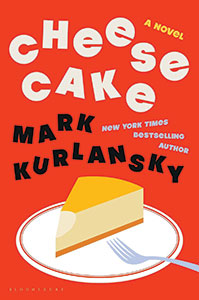 Cheesecake
by Mark Kurlansky
Mark Kurlansky is primarily known for his nonfiction, which often focuses on culinary history. (He penned, among others, Salt: A World History.) His character-driven novel Cheesecake, set on NYC’s West 86th Street in the 1980s and ’90s, doesn’t stray far from that field. Central to the story is the world’s oldest recorded cheesecake recipe, by ancient Roman statesman Cato the Elder. After one Greek family’s version of his recipe wins a food critic’s praise, reproducing “Cato’s cheesecake” becomes a neighborhood obsession. Each chapter reveals the community through the eyes of a different person, and their separate but linked stories come together like a jigsaw puzzle into a fuller picture of NYC’s Upper West Side as it undergoes a cultural shift.
This article is featured in the May/June 2026 issue of The Saturday Evening Post. Subscribe to the magazine for more art, inspiring stories, fiction, humor, and features from our archives.
Become a Saturday Evening Post member and enjoy unlimited access. Subscribe now