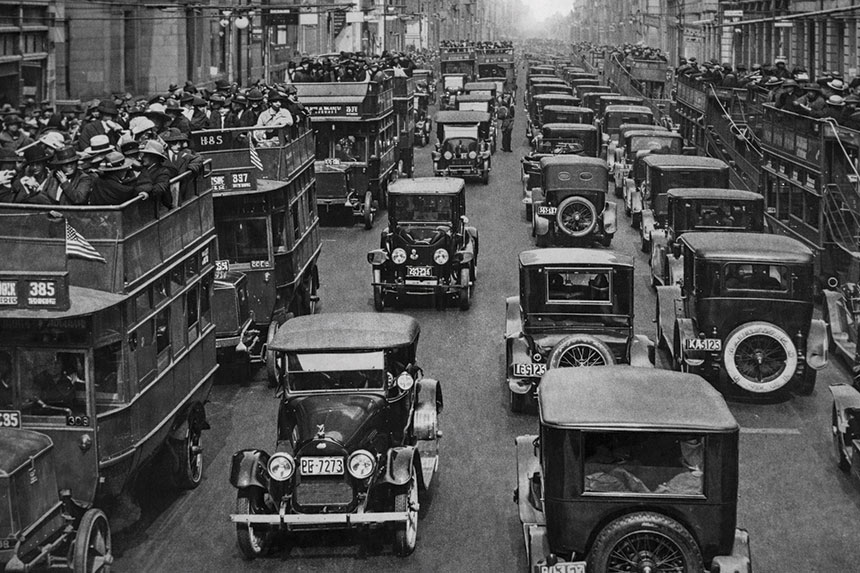
A Glimpse of the Future
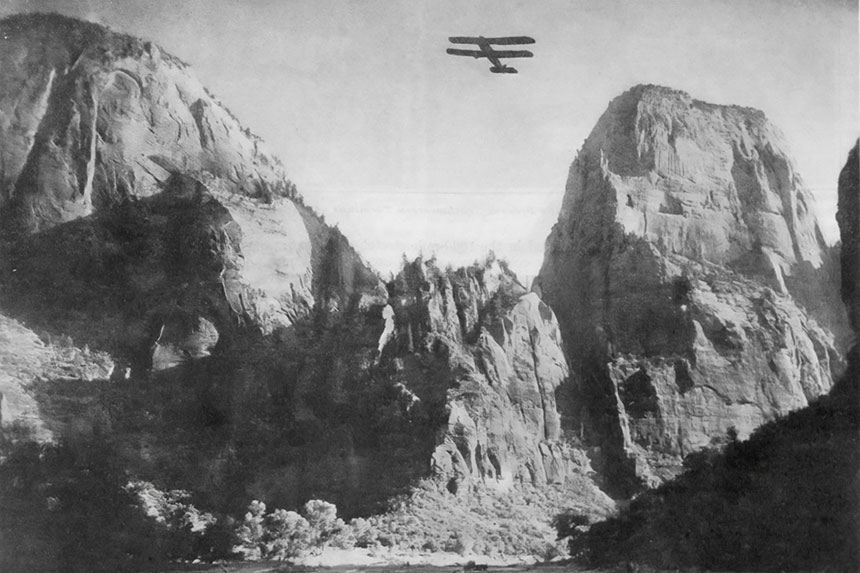
By 1926, the Post Office Department had established ten air-mail routes covering almost 5,000 miles. Regular postage cost two cents. To fly a letter to your destination would cost ten cents, the equivalent of $1.82. In this shot from May 8, 1926, a Western Air Express Mail plane passes over Zion National Park en route from Los Angeles to Salt Lake City.
Bridging the Gap
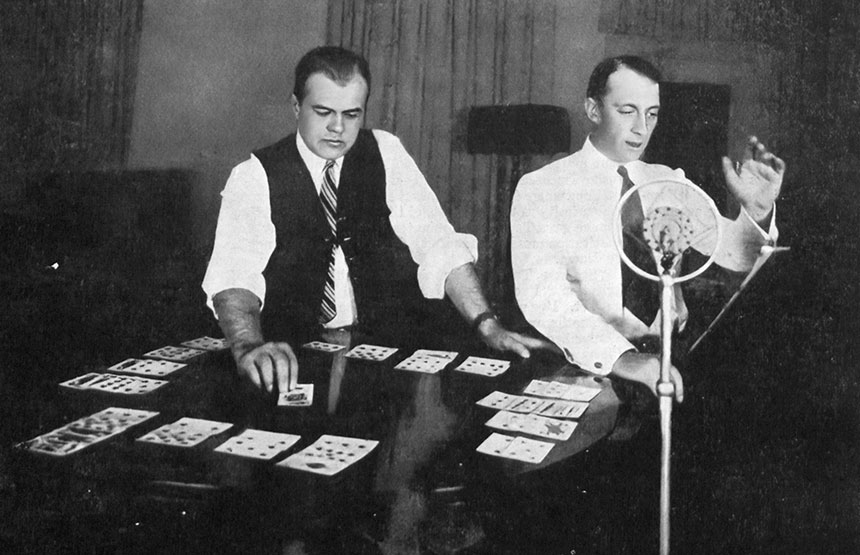
In the days before talk radio and Top 40 programming, radio stations had to be creative to fill air time. Here, broadcasters Phillips Carlin and Graham McNamee deliver their Tuesday Night bridge lesson on station WEAF in New York in 1926.
Changing Lanes
In 1926, New York was just beginning to build roads that could handle modern traffic, like what’s shown here on Fifth Avenue. Over on Sixth Avenue, residents and shop owners were scrambling to find new locations as the city got set to lengthen and widen the street; over 160 buildings would soon be knocked down. It was a major undertaking that would solve some of the traffic congestion. Temporarily.
This article is featured in the May/June 2026 issue of The Saturday Evening Post. Subscribe to the magazine for more art, inspiring stories, fiction, humor, and features from our archives.
Become a Saturday Evening Post member and enjoy unlimited access. Subscribe now
Comments
It’s pretty evident that ties to the 19th century were quickly vanishing. Depending on how quickly one needed to get mail out of state, 10 cents ($1.82) would have been worth it. I have a feeling the two radio broadcasters were waiting for something better to come along, but a paycheck was still a paycheck until then.
I feel badly for the 160 (!) businesses on Fifth Avenue that had to be knocked down/razed to accommodate the traffic from the cars, buses and trucks of the time. 100 years later many of the same problems persist, with a lot more added since.