No one can pinpoint the exact time when life on Earth appeared. That’s because billions of years ago, Mother Nature stored data on IBM punched cards, which all turned to dust when that giant asteroid struck and seared the planet surface, wiping out the dinosaurs. Or so I read somewhere. Too bad those archives weren’t uploaded to the clouds, which have survived to this day.
A recent study suggests that life on Earth could date back as far as 4.2 billion years, much earlier than previous estimates, and just 250 million years after the Earth formed. The so-called primordial soup, a nutrient-filled broth that is believed to have given rise to primitive life, apparently cooked faster than we thought.
But for the first roughly two billion years of evolution, Mother Nature must have been terribly bored, as all she had to work with were single-celled organisms. And it didn’t get much better when multicellular life came on the scene, mainly filamentous algae, which were hardly a barrel of monkeys to play with. I’m sure she was much relieved when the Cambrian Explosion hit around 530 million years ago, ushering in a great diversity of marine life.
More recently — that is in the last 400-ish million years since land animals appeared — Mother Nature seems to have made up for lost time by having fun with the evolutionary process. Take platypuses. I have to wonder if she ordered animal parts in bulk, and after everything on her list had been assembled, there was a little pile of bolts and animal parts left on the workbench. It probably seemed a shame to waste them, so with a little force, and maybe a stapler, she fashioned an adorable, egg-laying muskrat-duck combo.
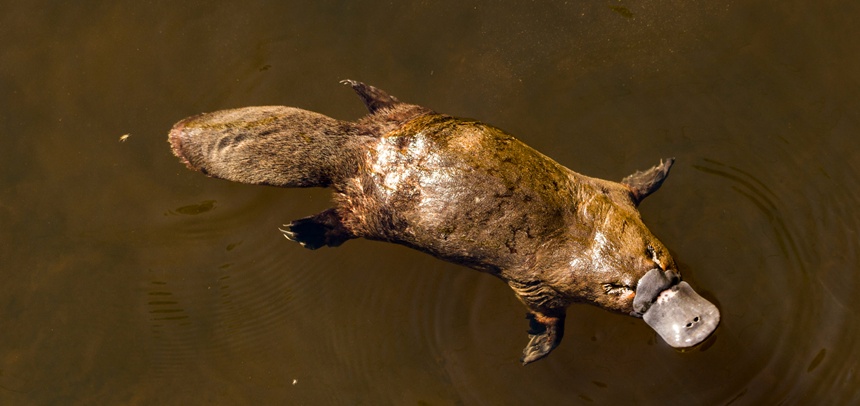
And these docile-looking, toothless creatures are venomous. It’s like author Beatrix Potter giving sweet, lovable Peter Rabbit poison fangs. Male platypuses have leg spurs with a cysteine-rich protein cocktail potent enough to kill a dog. They also use electricity to hunt. And perhaps evolution had interns working on platypus design, because while the female has a matched set of ovaries, only the left one works. This left-ovary issue makes sense, given that the beast was likely made from leftovers.
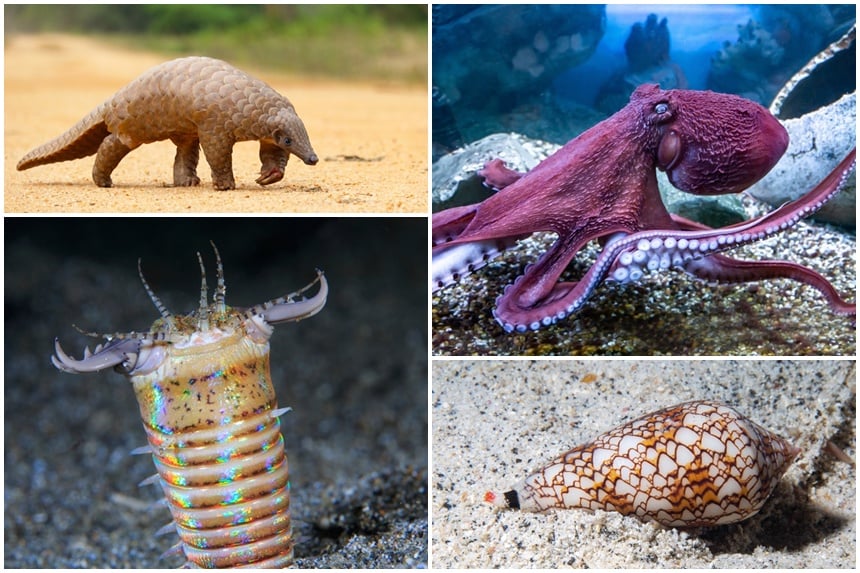
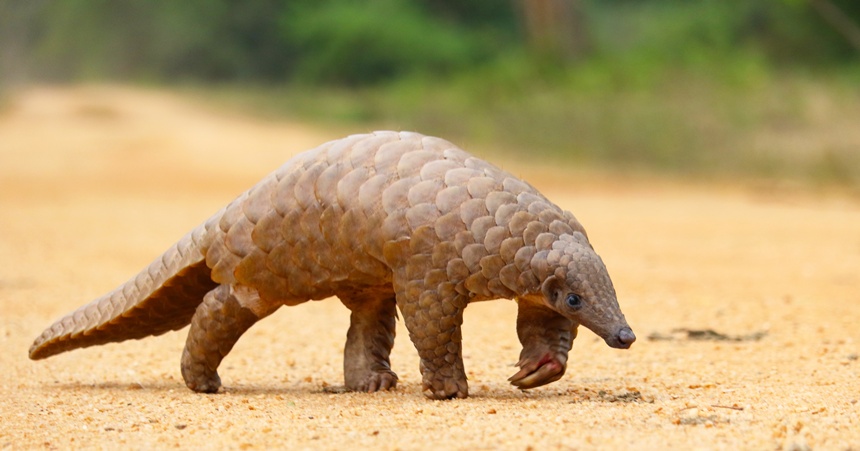
Ma Nature must have needed a visual gag when the pangolin, a golden-brown, armor-plated insectivore native to parts of Africa and Asia, got invented. It’s like she got an aardvark to mate with a globe artichoke to produce this scaly, thick-tailed creature. Pangolins also have a defensive skunk-like spray, and the ability to ball themselves up like pill bugs when threatened. While it resembles armadillos and anteaters, not to mention dragons, DNA testing indicates it may be more closely related to dogs and cats. If the dragon genome ever gets mapped, I’m sure it will prove dragons are related to pangolins as well.
Then you have marine life, which is deeply bizarre, as the planet got more than a billion-year head start experimenting with making slimy stuff. Really, it’s remarkable that people actually swim in oceans stocked with glow-in-the-dark anglerfish and vampire squid. And those are the benign ones.
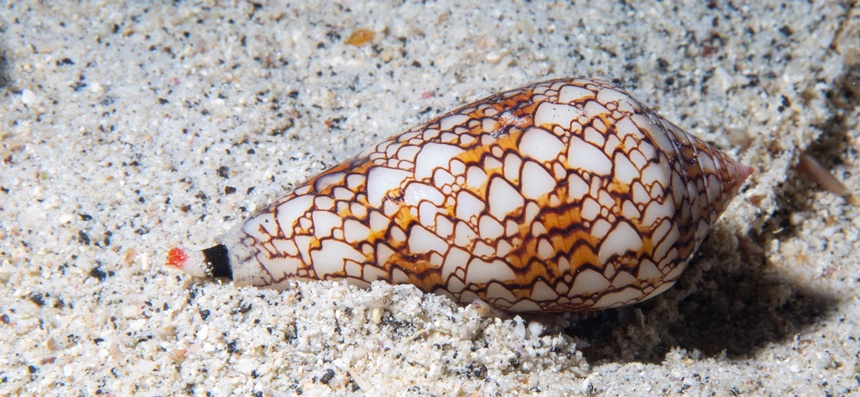
Let’s start with cone snails, whose exquisite shells are often sold in seaside gift shops. Found in semitropical waters, including southern California and Florida, cone snails can deliver a tiny sting that you often don’t feel until a few days later, just before you die. Well, it might feel like you’re going to. Deadly box jellyfish, lethal stonefish, Portuguese man-o-war — if you ask me, the sea is a watery version of the La Brea Tar Pits.
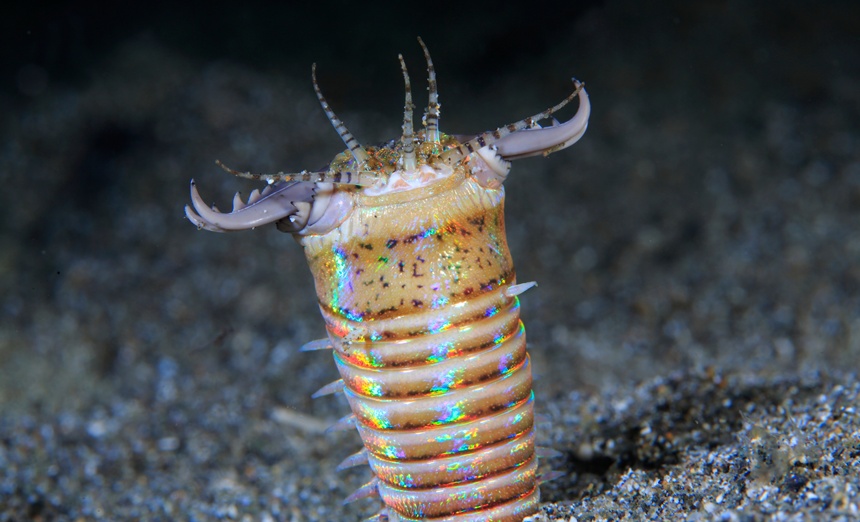
A sea worm called Eunice aphroditois is outfitted with lightning reflexes and razor-sharp scissors for jaws. Affectionately dubbed the Bobbit worm, this lovely gets almost ten feet long and can slice corals and fish clean in half. For large prey, it injects a powerful toxin that can reportedly numb a human permanently. How that’s known, I’ve no clue, though I’ve met people who appeared so afflicted.
Octopuses are the envy of Cirque du Soleil with their ability to change shape, color, and texture at will, and even shed an arm-tip if gets caught in an elevator door. Their 1,600 suction cups are adapted to escape from aquariums, but also to smell and store memories of recently explored terrain. Not long ago, octopuses were seen using tools, which is great because we know who to hire for home repairs. They’re adept at building shelters from coconut shells now, but maybe they’ll get the hang of impact drivers and belt sanders if we give them a chance.
An Octopus’ Coconut Home (Uploaded to YouTube by Nature on PBS)
Honestly, I think it could be that the forces of nature just want a good laugh sometimes.
Become a Saturday Evening Post member and enjoy unlimited access. Subscribe now


Comments
Mother Nature’s all over the place here. The octopus’ coconut home has to be the only mobile home of its kind. To have just been able to capture the process (per the video) is rather astounding in itself.
The platypuses are fascinating and terrifying. Poison fangs and electricity, together? And the pangolin is closely related DNA-wise to cats and dogs. Then there’s the angler fish and vampire squid. The rest of this gang as well will keep me out of the ocean, and in the pool, Paul!