To most of us, minnows are the dainty little fish darting about near the edges of lakes, ponds, and streams. Anglers can buy minnows at bait shops to put on their hooks in hopes of catching bigger fish. Hardly anyone thinks of minnows as dangerous.
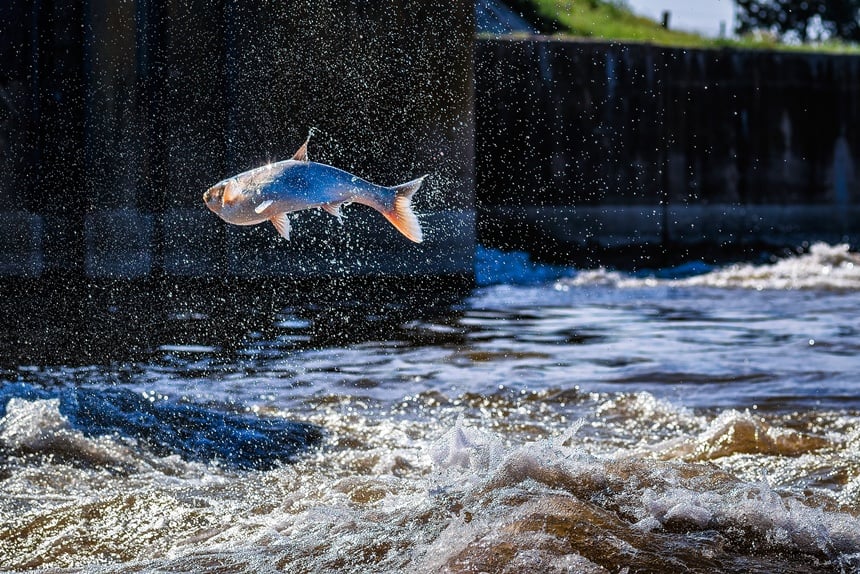
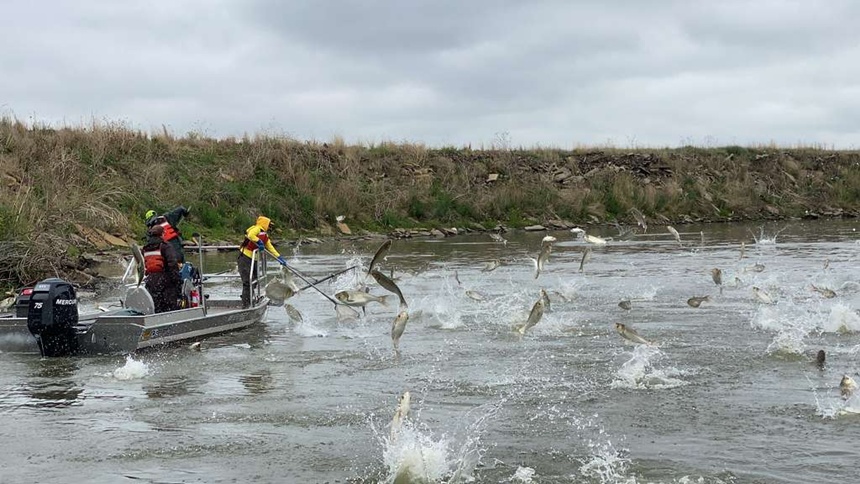
It turns out that not all minnows are dainty and harmless. Invasive Asian carp, found in at least 30 states, are card-carrying members of the Cyprinidae or minnow family as well. In the Mississippi River and its tributaries such as the Ohio, Illinois, and Missouri Rivers, carp routinely leap up to 10 feet out of the water and injure boaters, leading to black eyes, broken jaws, fractured ribs, concussions, and more. These “flying carp” are typically in the 20 to 30-pound range, but some Asian carp can weigh over 100 pounds.
They also cause environmental harm, destroying spawning grounds and reducing water quality. They out-compete native fish for food to the point that in the Missouri River, carp account for 95 percent of the fish biomass there.
Four species of Asian carp cause the most trouble: the bighead, black, grass, and silver carp, the latter being mostly responsible for leaping into boats. They were brought here in the late 1960s and early 1970s to control algae overgrowth and eat snails on fish farms and in recreational ponds and sewage lagoons. Periodic flooding, though, allowed them to escape into the wild, and they did go wild, winning prizes (not really) for baby-making and food consumption.
Each Asian carp female lays between one and two million eggs per year, the number varying slightly between species. Carp also eat ravenously, consuming 20 to 100 percent of their body weight each day, stripping their environment of plankton, aquatic plants, and invertebrates. They have to eat a lot because they grow fast: Young Asian carp can gain 12 pounds in a single year, which quickly places them out of range of most predators. And while carp might improve water quality in sewage lagoons, they make clear water turbid and less suitable for native fish.
Unlike in their native range where Asian carp populations are kept in check by parasites and predators, here in North America they have no natural controls, which is why they can overwhelm aquatic systems. To quote Dan Stephenson, former chief of fisheries for the Illinois Department of Natural Resources: “There are more Asian carp in Illinois than in China.” Apparently, it’s not hyperbole. Like the Old Lady Who Swallowed a Fly, we created today’s gigantic problems by importing Asian carp decades ago to try and solve a few small ones.
In addition to the fact silver carp enjoy rocketing up to thrash boaters, they can in some cases increase the severity of toxic algae blooms. This is ironic, given they were imported to remove excess plankton from water. Silver carp and the closely related, but larger, bighead carp are filter-feeders with specialized gills that constantly direct plankton to the mouth. Because they lack true stomachs, nearly half the nutrients they take in are excreted. Certain toxic blue-green algae not only pass through intact, but they exit in better shape than they came in.
Black and grass carp are close cousins, and both feed on solid food, not algae and plankton. Brought to the southern U.S. in 1963 as a farmed fish, grass carp may eat their body weight each day, devouring native aquatic plants and increasing the water’s nutrient load in the process. Black carp, which can get nearly six feet long, are the largest of the four Asian species, although at the moment, they’re the least numerous. Black carp feed primarily on snails and mussels, but also aquatic insects and worms.
It’s not the fault of these carp that they’re out of control here. Silver carp are a threatened species in their eastern Siberian homeland. And worldwide, carp are an important food source. According to the United Nations Farm and Agriculture Organization, aquaculture produces more grass carp – five million tons annually – than any other fish species.
Of the gang of four, only the grass carp is confirmed in the Great Lakes – Michigan, Erie, and Ontario. The other three species have made their way up from the Mississippi River to the doorstep of Lake Michigan, thanks to the Chicago Sanitary and Ship Canal, built in the 1800s to send Chicago’s poo down South rather than into Lake Michigan. This canal is the only connection between the Mississippi River and the Great Lakes, and has been dubbed a superhighway for invasive species.
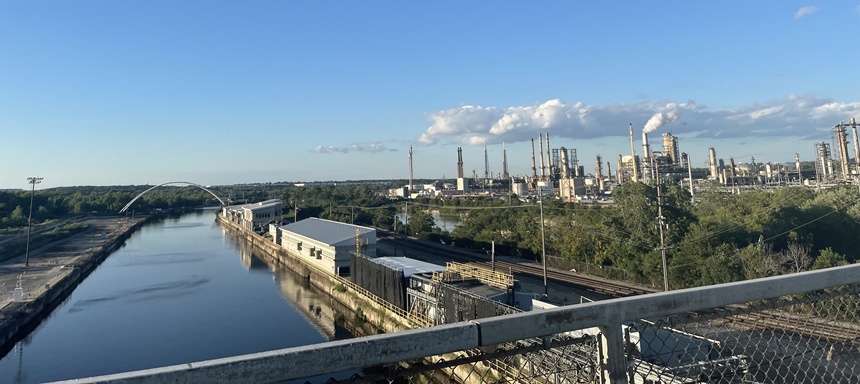
Due to opposition from various business interests to closing the canal, an “electric fence” barrier was set up in 1996 to deter invasive species from migrating into the Great Lakes. Clearly it was not enough, because in June 2017 an adult silver carp was caught beyond the barrier, just 9 miles from Lake Michigan. Currently, plans are underway for a better electric fence.
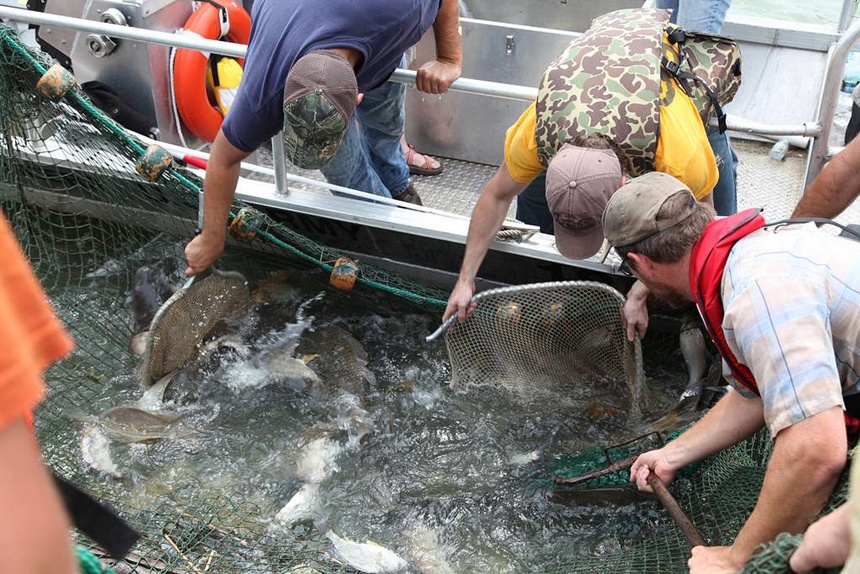
On the bright side, carp-fishing tournaments abound in the U.S., boosting local economies and in many cases bringing anglers from around the world. In the past, carp were often considered a “trash” fish, and were not sought-after as a game species. The truth is that they are not only palatable, but also highly nutritious, with a nutrient profile that exceeds many of the fish species we commonly eat.
One of the issues with eating carp is that they’re bonier than other fish. They have myriad Y-shaped bones throughout their flesh that make it a bit more time-consuming to eat them. However, thanks to gene editing, it may soon be possible to edit the Y-shaped bones out of grass carp. When that happens, perhaps I’ll see about catching some boneless carp. Might as well try – carpe diem, as they say.
Become a Saturday Evening Post member and enjoy unlimited access. Subscribe now