Humans have long been intrigued by the ability of certain animals to regenerate lost body parts. The follow-on question that generally comes to mind is how come a few critters can replace limbs while other species like mammals apparently lack such powers. Even as far back as 2,000 years ago, the Greek philosopher Aristotle puzzled over this very question. In a strange confluence of events this year, one team of scientists says they may be close to unlocking the secret of human limb regeneration, while another group of biologists found that the severed limbs of one regenerative species might live on indefinitely.
To escape predators, geckos and other lizards can shed tail segments that wriggle independently as “decoy offerings” while they retreat to the safety of their living rooms, where they hang out until they grow new tails. Starfish can also replace an arm that gets caught in a car door, or is intentionally shed to elude predators. But the gold standard for regeneration may be planaria, free-living (non-parasitic) flatworms.
We have about 200 native species of freshwater flatworms throughout the U.S., plus a handful of terrestrial species like the terrifying but harmless giant hammerhead flatworms found in the eastern half of the country. A flatworm can be cut into tiny bits, and each fragment will grow new brains, guts, eyespots, toenails, or whatever they’re missing. Sure, maybe they end up traumatized, but otherwise they become normal worms.
The secret to regeneration in flatworms, as well as in other regenerative species, is an abundance of stem cells, which can differentiate into many kinds of tissue from one cell. Our skin cells know how to make more skin cells, an important trick, but they won’t create new bones or muscles for us the way stem cells can. Although the use of embryonic stem cells is controversial because they are sourced from human embryos, we also have adult stem cells, although they’re harder to isolate, and usually grow just one type of tissue, for example bone marrow.
Our main problem is that if a human loses a finger or a whole limb, our bodies prioritize not bleeding to death or dying of infection. Okay, so that’s not really a problem. But the process of blood clotting and covering a wound with skin and scar tissue closes the door on limb regeneration. I guess evolution had the right idea in keeping us alive, but still, it would be handy to grow a new hand if the need arose.
However, it might be that human limb regeneration is a hidden ability rather than a lost one, and that it can be triggered with the right treatments. In June 2026, researchers from the Texas A&M College of Veterinary Medicine and Biomedical Sciences announced that they had induced limb regeneration in a mouse. They treated the amputated stump with two growth-regulating proteins called FGF2 and BMP2, which shift the body’s response away from normal healing and toward regeneration.
To be fair, it was the end of a mouse’s toe segment that regrew, and the scientists admitted the results were “imperfect,” but bone, tendon, and muscle tissues all regenerated from latent stem cells – they did not have to introduce foreign stem cells. Imperfect or not, this is a major breakthrough, and a stepping-stone to expanding the technology to humans.
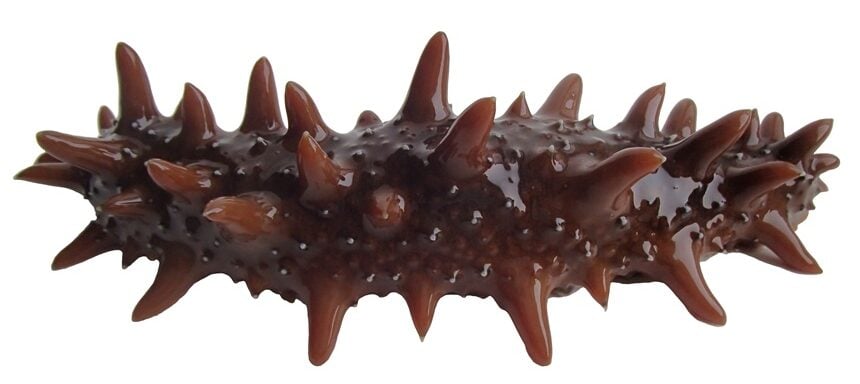
In May of 2026, biologists from Memorial University in Newfoundland, Canada published a study that suggests both the Frankenstein monster and “Thing,” the sentient, severed-hand character from the Addams Family TV series, could potentially exist. The study focused on sea cucumbers, bottom-dwelling scavengers found worldwide on the ocean floor. They’re related to starfish and sea urchins, and are known for two things: extremely good regeneration of lost parts, and the ability to rocket internal organs out their butt-holes at predators. Okay, no one said they were cute.
The discovery came about when sea cucumbers in an aquarium had to be moved from one tank to another. As they were pulled from their perches on the glass sides, some of the creatures’ tube feet, small appendages used for locomotion, broke off and remained on the glass. This was unremarkable, as tube feet are known to be lost and regrow on a regular basis in the wild. The difference here was that the biologists noticed the broken-off feet clinging to the glass had not decayed after several months.
As an experiment, researchers cut off some tube feet from a sea cucumber and observed them over time. A long time – three years and counting at this point. Not only have the feet stayed fresh, they apparently show signs of immune response, and have even grown in size. It is believed the severed legs absorb amino acids from the water as a means of nourishment. Researchers aren’t sure whether to characterize the “zombie feet,” as they call them, as alive or not.
To test whether the severed feet could potentially live forever, scientists will be measuring the length of their telomeres over time. Telomeres are like shoelace tips for DNA segments, hardened caps that protect DNA from errors during replication. Normally, telomeres shrink with age as well as the result of stress. But if the zombie legs’ telomeres remain constant or lengthen, it’s a clue that we might have discovered real immortality. At least for tiny aquatic feet.
Become a Saturday Evening Post member and enjoy unlimited access. Subscribe now