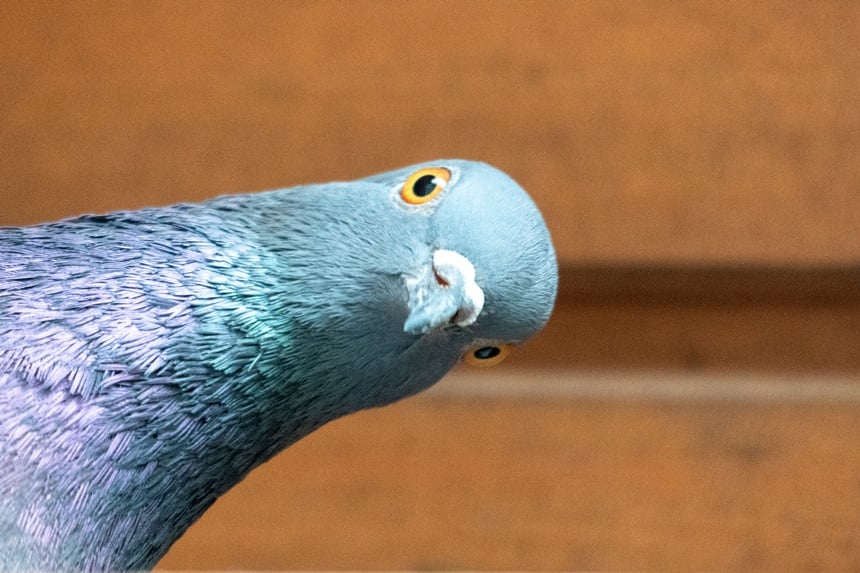
Although pigeons are best known for their expertise in whitewashing statues, window ledges, and other outdoor structures they roost upon, these common birds have some uncommon talents that few know about. Pigeons can do stuff like hear earthquakes before they can be felt and accurately locate signs of cancer in medical imaging. They can also look at a painting and tell if it’s a Monet or a Picasso, which is more than I can say. Now pigeons are being studied to see if they can teach drones how to fly better.

The sort we tend to encounter are rock pigeons, a domestic species first brought over from Europe in the early 1600s as a source of fresh meat and eggs, and to carry messages. Had windshields been invented back then, people might have thought twice before doing so, but they couldn’t imagine what kinds of messes these birds were going to make. Rock pigeons soon escaped captivity, and have now spread through all of Central America, South America, North America, and southern Canada. They also took advantage of milder conditions along the Pacific Ocean, moving up the coast to southern Alaska.
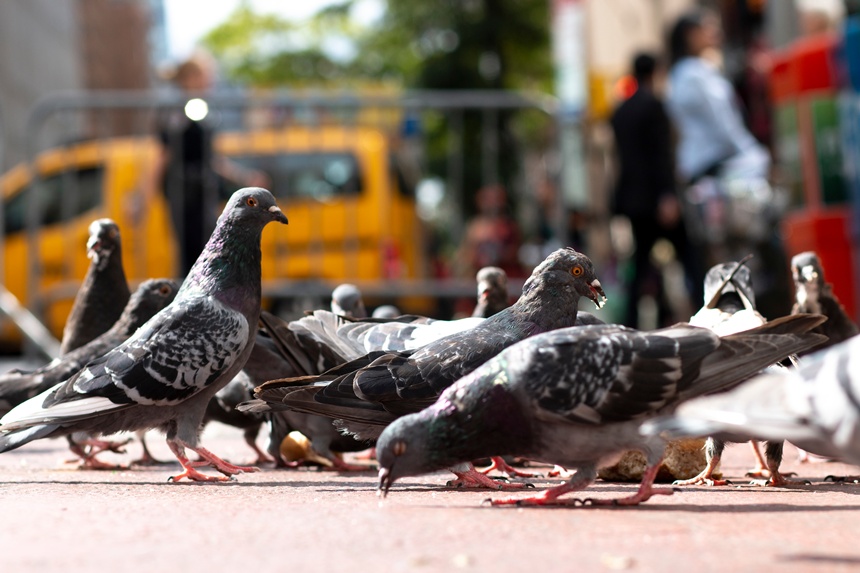
Pigeons feel at home in cities because multi-story buildings mimic the rock ledges where these birds like to nest in the wild, which is why urban dwellers cross paths with pigeons on a daily basis. But in the hinterlands you’ll find plenty of pigeons as well. Having grown up in farm country, I can attest that they love roosting in barns and outbuildings. On the plus side, they eat spilled grain and feed on insect pests that damage crops. The downside is that they decorate tractors and other equipment with their droppings.
We do have pigeons that are native to the contiguous United States. The most numerous is the mourning dove, named for its melancholy song. As a kid I thought they were “morning doves,” which made sense to me since early morning was when I usually heard them.
Mourning dove call (Uploaded to YouTube by Critter Cam)
It turns out the only difference between pigeons and doves is a name. In fact, Picasso’s iconic Dove of Peace painting, a global symbol of peace and unity that he created for the 1949 Paris Peace Conference, was based on a pigeon he had. But “the pigeon of peace” was deemed less apt to inspire lovey-dovey-ness in folks. Marketing is impressive.
Three other pigeon species originated here, though they verge on rarity: Red-billed pigeons live at the southern tip of Texas along the Mexico border, while the Florida Keys shelter an enclave of white-crowned pigeons. Band-tailed pigeons are slightly more numerous, making their homes in mountainous forests along the Pacific coast.

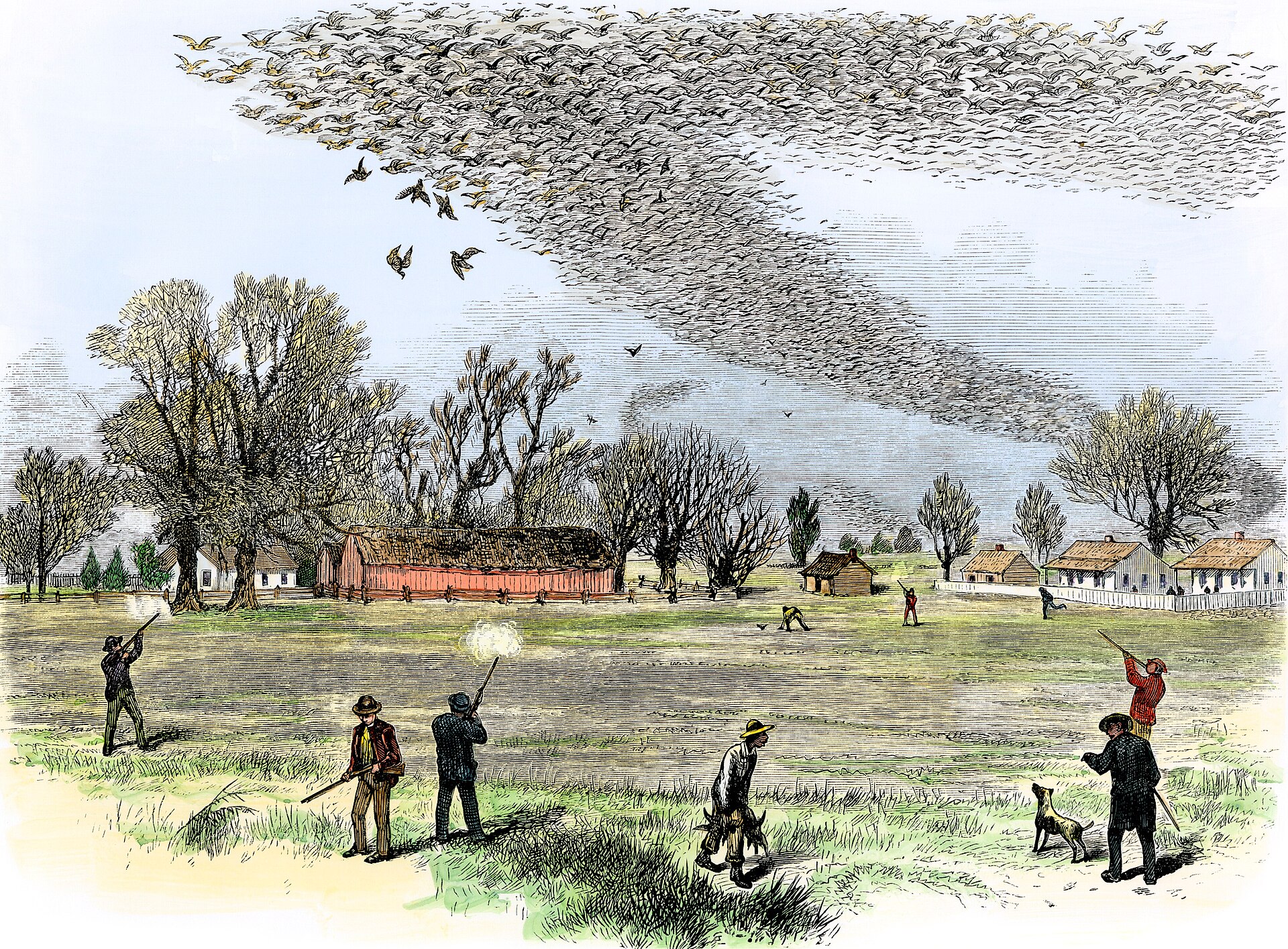
However, our most famous (or infamous) native pigeon no longer exists. Passenger pigeons, a species whose estimated population was three to five billion in 1800, were hunted to extinction by 1914. This might explain why their Old World cousins the rock pigeons continue to mete out their sloppy revenge on our statuary, cars, and park benches. (Please note that excessive buildup of bird droppings can cause illness. Young children and the elderly are most at risk of infection. Find out more here.)
Getting back to the neat feats that pigeons are capable of, they’re as good at counting as monkeys are, and have a knack for word recognition. And as we all know from Home Alone 2, pigeons can help fend off home invaders. Especially if you have 300 trained pigeons on hand and inept burglars who are coated with grain.
The pigeon scene in Home Alone 2 (Uploaded to YouTube by Don G. Corleone)
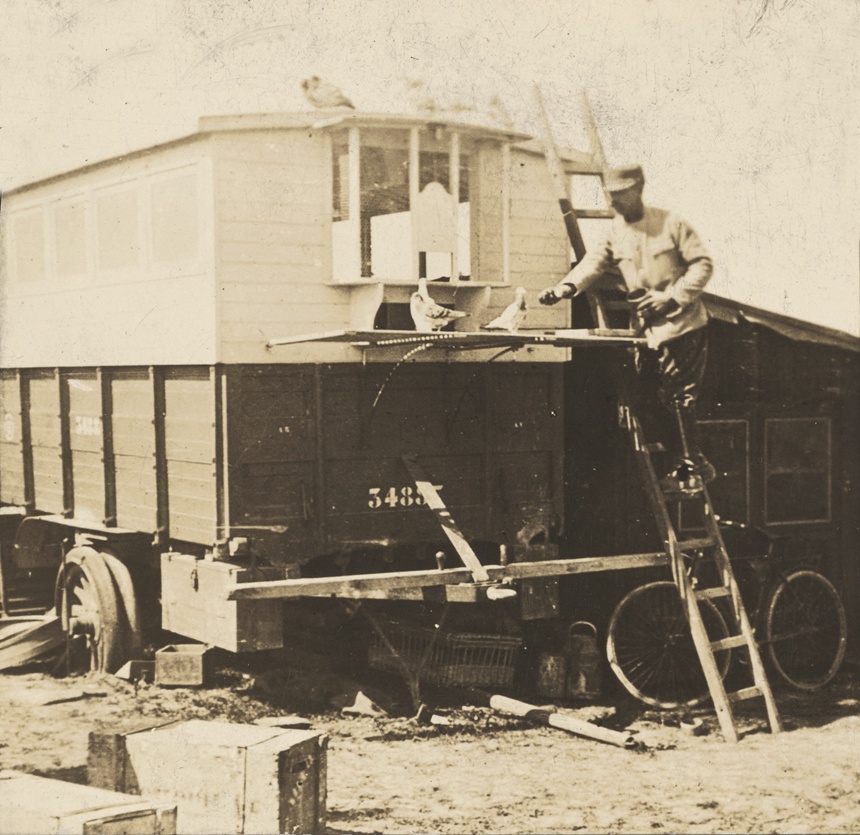
Plus, they have some of the strongest homing abilities of any animal on Earth. During World War I in particular, but also in the second World War, Allied armies used carrier pigeons to send messages, even under heavy fire near the front lines. In the civilian world, pigeons delivered “pigeongram” mail in New Zealand for a decade. By the way, carrier (homing) pigeons are rock pigeons that have been trained to reliably get from point A to point B and back again – they’re not a separate species.
Two studies published in the summer of 2026, one from the California Institute of Technology (CIT) and one from the University of British Columbia (UBC) in Canada, focused on pigeon flight. The studies’ purpose was to challenge a longstanding assumption that birds lock their eyes during flight. If this proved false, then a roving camera angle could improve autonomous drone flight, which would require tweaks to the AI algorithm. If the assumption was true, then the current algorithm could stand.
In an awkward twist, the two studies directly contradicted one another. You’re probably wondering who was right, the American team or the Canadian one. Strangely enough, they were both right. It’s not often that honesty and diplomacy overlap so nicely, but there you go. Here are the details:
Both teams outfitted a group of pigeons with high-tech gear (some of it oddly fashionable) that monitored the birds’ head position at all times, while recording flight parameters like height, speed, altitude, and distance. The difference was that the UBC team tracked how pigeons flew on longer, higher altitude flight paths such as a surveillance drone might take. They noted that the birds changed head positions often, and sometimes appeared to be looking at various landmarks on the terrain below.
On the other hand, the CIT study measured how pigeons flew at lower altitudes on shorter trips, the kind of paths that delivery drones might take. Their data showed the birds essentially locked their eyes during flight. Taken together, the two studies appear to suggest that for the greatest flight efficiency, AI-based drones might need different algorithms depending on what their mission is. If pigeon research leads to a bilateral confluence of events happens again, maybe we can add international relations to the pigeons’ list of skills.
Become a Saturday Evening Post member and enjoy unlimited access. Subscribe now




Comments
Dear Editor:
Amazing what one note can provoke !!
I have had a blistering on my first note about my bad “arithmetic….probably the same person who got annoyed with my accidental mis-spelling of the Bouvier des Flanders dog being used to take note from the second spotter being airdropped about/approximately 5000yards to the west of the spotter with the crate of pigeons. That crate had 8 pigeons, 6 for the needed three mandatory reports and 2 spares….in case something happened to the 6 pigeons.
I wish that the person blistering me had taken time to use a bit of logic as to the note saying 8 were dropped with SOE spotter, before the verbal flamethrower was
sent.
Trust this explanation having the 8, when six were only needed.
Military photos usually show crates with six “nest boxes”, but, the 8 were used in WW-1, when the action was much more fluid, despite the “stand-to” of “Static” trench warfare. Its equally logical, that the German snipers were much more effective in knocking down the “Messenger Pigeons” and of course the forward spotters in WW-1 were N O T air dropped as in WW-2, that is direct logic, however, its remarkable that the spotters in both wars were able to keep their pigoens quite enogh to get the much needed rports back to headqquarters in a timely fashion.
The birds require some for “heroes medals” for being able to fly directly the military posts that they had been assigned to.
Makes us humans look perfectly stupid as the trained Labradors/German Sheperds &-etc. as guide dogs, show huge intelligence that we humans lack, for the blind and other major uses.
Thanks for patient consideration of this additional note,
Sincerely.
Gord Young – Peterbboro ON
BTW: I am using the “railway spelling” of the city…in case my “flamethrower writer” takes me to task about my spelling on the city.
Thanks for the cool history lesson!
Dear Editor:
In my note about pigeons being used to fly reports on German army movements by the SOE specialists being air dropped. One with the pigeons on his back, 8 of them.6 for the reports, and two “spares”.
But, I have been yelled at for the accidental mis-spelling of the breed., the
https://en.wikipedia.org › wiki › Bouvier_des_Flandres
Bouvier des Flandres – Wikipedia
I apologize to whomever, is spun out about this accidental typing mistake.
AND, D O hope that the breeder’s of these amazing dogs will be pleased and
happy to know what heroes these dogs were in both major wars.
Sincerely.
Gord Young – Peterboro Ont
Editors:
I still can’t quite imagine some guy “air dropping” behind German lines in WW-2 with a crate of 8 pigeons to send reports on German movement[s]. Two for the “breakfast report” two for the “lunchtime report” and two for the “evening report”.
One pigeon flying back to the Allied HQ on or near the beaches, the other all the way to mainland Uk’s “Bletchley Park [spy center/decoding center] Not only would it have been an awkward landing with the crate on your back, but, how did he keep those pigoen from making an identifiable noise [aka: cooing].
Just remarkable.
But, that, is a very small part, is how WW-2 was won.
BTW: There was a second chap from the SOE who was “air dropped” as well.
He had a cradle holding a Boubie deFlanders dog…a “cannister” with a note was hidden in the dog’s collar.
Why that breed ?
Well it would have been very familiar to the Germans, who would then, presumably, ignore the running “farm dog”; just as they had in WW-1.
Apart from the “air drop” from the “double door” Dakota, this was a text=book operation from WW-1.
Sincerely.
Gord Young – Peterboro ON