As cooler weather sets in, home invasions become more common. the kind of home invaders I’m thinking of may be a nuisance, but they don’t break any laws.
When fall rolls around, you might notice a few bugs indoors on your windows and windowsills or congregating in ceiling corners. There are a host of insects that look for rent-free accommodations where they can spend the winter. If heat is included, so much the better. They seek shelter outside in places like under loose tree bark as well as in garages and outbuildings. But sometimes, especially in older homes, they follow warm air that escapes through vents, loose weatherstripping, and places where utilities pass through exterior walls, and end up indoors. Often they are content to hang out in attics and wall cavities where we don’t notice them, but they can also find their way into living spaces. Here’s a rundown on the most common invaders, as well as tips on how to manage them.
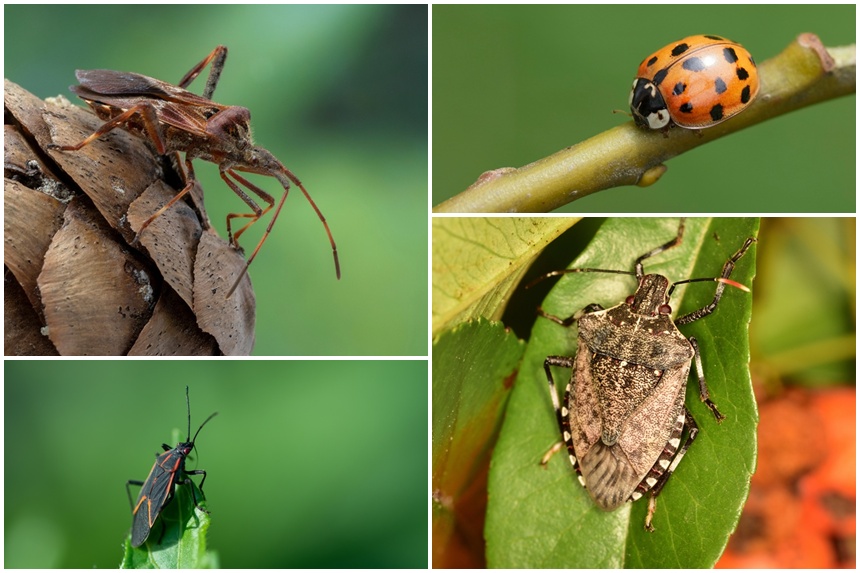
Asian multicolored lady beetles (more often called ladybugs) look much like the native ladybugs that kids love, though they tend to be orange-red and are more oval as compared to the native types, which are usually red, and generally more round. That said, the Asian types can have a broad range of color variations from yellow to nearly black.
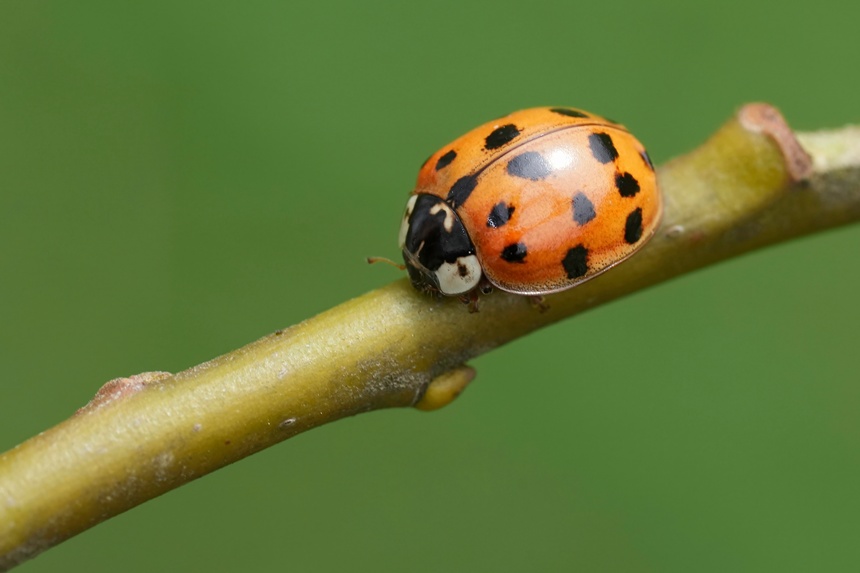
While a nuisance to many of us, these “mixed blessings” critters were first imported to the U.S. in 1916, and many times thereafter, as a way to help farmers. Ladybug larvae eat farm and garden pests such as aphids and thrips. The reason they were imported so often is that their populations would peter out within a few years. That all changed around 1988, when large wild populations were found near New Orleans. By the late the 1990s, they had spread throughout the U.S. and into Canada.
Even though Asian ladybugs don’t carry diseases, get into our food, breed indoors, or damage structures, no one wants to be overrun by hordes of beetles, cute or not. They are able to inflict a small bite, though they are not aggressive, and they release a bad-smelling fluid from their leg joints (called “reflex bleeding”) when disturbed, which leaves a tough orange stain. They leave an even bigger stain if they’re crushed.
Ladybugs like to congregate on light-colored exterior walls with southern or western exposures on sunny afternoons, and once they find a way inside, they’ll just keep coming. This is why insecticide use indoors is not recommended. In addition to risks associated with these products, there will be an endless supply of bugs unless the entry points are addressed.
There are over 200 species of stink bugs in the U.S., so called because they release a foul odor when disturbed or killed. These shield-shaped, slow-moving bugs are usually some shade of brown or tan, though a few are green. Nearly all of them feed on plant juices, but a couple of species, such as the spined soldier bug, feed on garden pests, including other kinds of stink bugs.
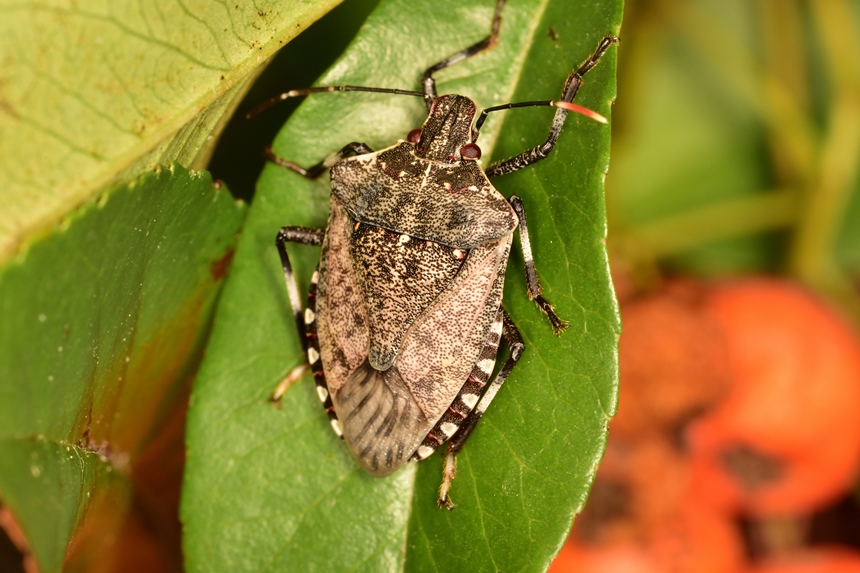
In general, you won’t find stink bugs in very large numbers. There is one invasive stink bug, however, that bucks this trend: the brown marmorated stink bug. First discovered near Allentown, Pennsylvania in 1998, it has now spread to much of the eastern half of the country, as well as the far western states. It feeds on plant juices, targeting fruit crops, and due to its high reproductive rate, can cause tremendous damage to orchards. If you see large numbers of stink bugs in the fall, there’s a good chance these are the culprits.
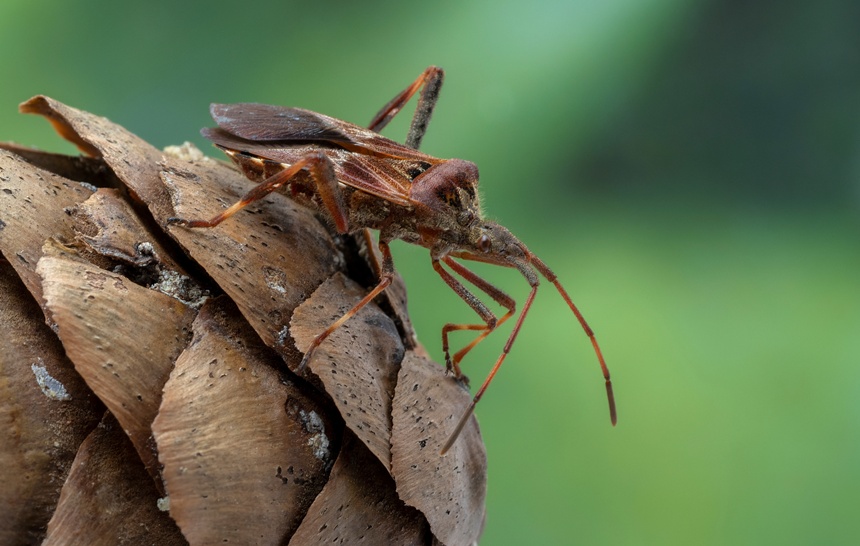
While not technically a stink bug, the western conifer seed bug will stink you up if you handle them. In spite of their name, they can be found in every state. It’s easy to identify by its lumbering, John Wayne-like gait as well as its flattened (“leaf footed”) legs. I’ve only ever seen these in small numbers, and generally grab them in a tissue and flush them.
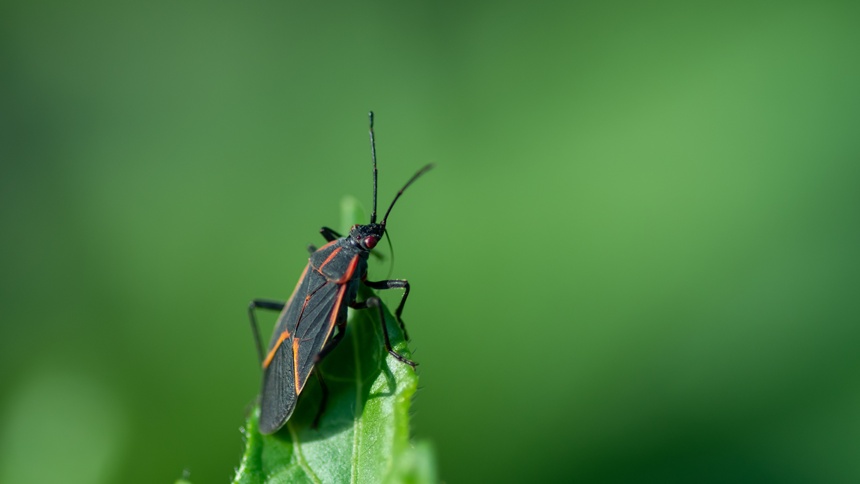
Boxelder bugs only feed on maple trees, and their all-time favorite is the boxelder, also known as the Manitoba maple, California maple, or ash-leafed maple, a fast-growing “weed tree” that seeds itself in urban and rural settings, often after a site disturbance. The bugs themselves have a certain charm, sporting a dark gray paint job that’s cross-hatched with bright red stripes in a harlequin-like design.
Their numbers fluctuate, so you might not see them every year, but they tend to be most abundant following a hot, dry summer. If you have one or more boxelder trees in your yard and the bugs remain a problem after exclusion measures and outdoor repellent sprays, there is one last resort: have the tree(s) removed and replaced with non-host species like bur oak, Kentucky coffeetree, or any conifer.
The first line of defense against any insect pest in the home is to replace worn-out door sweeps, window gaskets, and weatherstripping and ensure that attic and crawl-space vents are properly screened. A common entry point is where any pipes or wires pass through a wall or foundation. This includes power, water, and cable utilities. If you’ve recently installed a high-efficiency heat pump, these units require large-diameter holes through the wall that should be checked. Caulking can help a lot, too.
If home invaders keep arriving after you’ve sealed all visible entry points, you might need professional help. For the bugs, I mean. An exterminator can apply products having a long residual action to exterior walls, and around entry doors where critters can get in each time you go in or out.
A vacuum is a great way to deal with home invaders on indoor windows and walls, but beware: Most bugs live through this experience and will crawl back out overnight. You should remove the vacuum bag and either put tape over the hole, or place it in a plastic bag and pop it in the freezer for a few hours.
If you’re beset with insect invaders, take heart. At least you don’t have to count the silverware, and come spring, they’ll go back outdoors to mate and get some breakfast.
Become a Saturday Evening Post member and enjoy unlimited access. Subscribe now