When I was a natural-resources educator for Cornell Cooperative Extension, I had to cover a wide range of subjects. Though well-versed in many topics, I had to “teach from the book” when it came to others. There was so much to know. For example, in my first week, a gentleman informed me that environmentalists made moss.
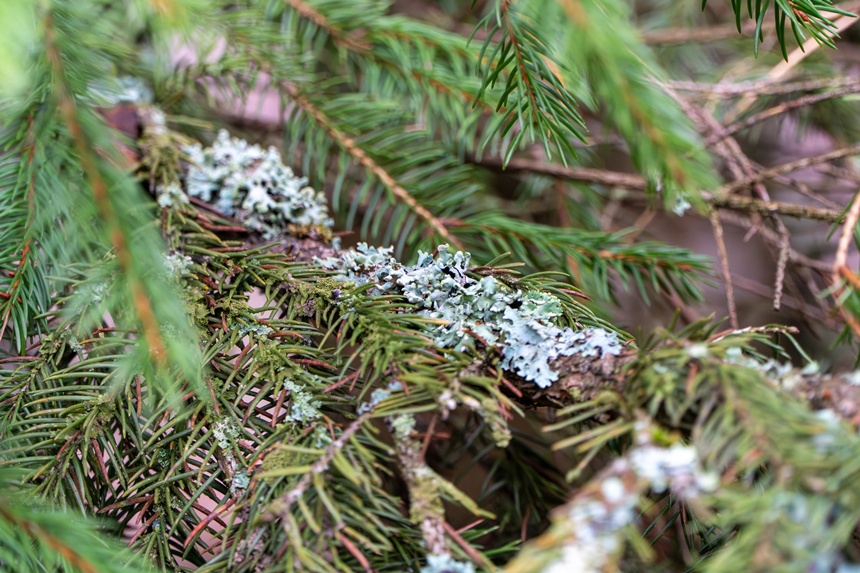
He actually called to say his Colorado blue spruce tree was dying, which he attributed to moss on its branches. However, what he described wasn’t moss, but rather lichens, a symbiotic relationship between fungus and algae. Freddie Fungus, I think his name is, supplies structure that holds water and protects Alice Algae, while she furnishes food (carbohydrates) through photosynthesis. It’s no wonder they took a lichen to each other.
It’s also why they’re found on rocks, soil, tree bark, and other substrates. Lichens grow in all climates, from frigid Point Barrow, Alaska to the blistering heat of Death Valley. Lichens don’t kill tree branches, or rocks for that matter.
But when I tried to tell the caller about lichens, he cut me off.
“You know why we have so much of this moss these days, don’t you?” he asked, and then continued, “Of course it’s environmentalists what caused all this moss.”
I paused, split between a respectful reply saying his hypothesis was unlikely, and waiting to see if the story got better. I’d been on the job four whole days as the natural resources educator for our county, a fair-sized piece of real estate partly bordering the St. Lawrence River, with Canada (Ontario and Québec) to the north and the Mohawk Nation at Akwesasne on the east.
Saint Lawrence County, New York is bigger than the state of Delaware, but you could round up its entire population and everyone would fit into Michigan Stadium in Ann Arbor. Except that about half of us wouldn’t go because who would milk the cows and get the hay in. Plus, not everyone there is a Wolverines fan.
So when this guy rang up and informed me that people concerned about the ecosystem are responsible for the existence of lichens, I wondered if it was a joke. “Oh?” I said, hoping the bemusement I felt didn’t inform my voice.
“Well yes,” the man emphasized, as if the relationship were common knowledge. “We never used to have beavers.”
His non-sequitur confirmed it was a worthy tale. I wanted to know how beavers figured into the environmentalists-equal-moss story. “Oh.” I hoped my vague affirmation was enough to keep the momentum. It seemed to be.
“But then in the ’70s they flew beavers over from Europe in special chartered jets.”
An image popped into my head of beavers reclining in plush first-class airline seats, ignoring their mixed drinks and chewing on the tiny toothpick cocktail-umbrellas. I placed my hand over the receiver in case I started laughing. I really didn’t know what to say. With the weekly hijackings back then, perhaps this airline flight just didn’t make the news. He apparently suspected I wasn’t convinced of the 1970s trans-Atlantic beaver trade, because he reiterated that point.
“That’s right, special chartered jets,” he repeated, with emphasis on special and chartered. “And they flew all over the country dropping off beavers, and since then we’ve had more of them every year.”
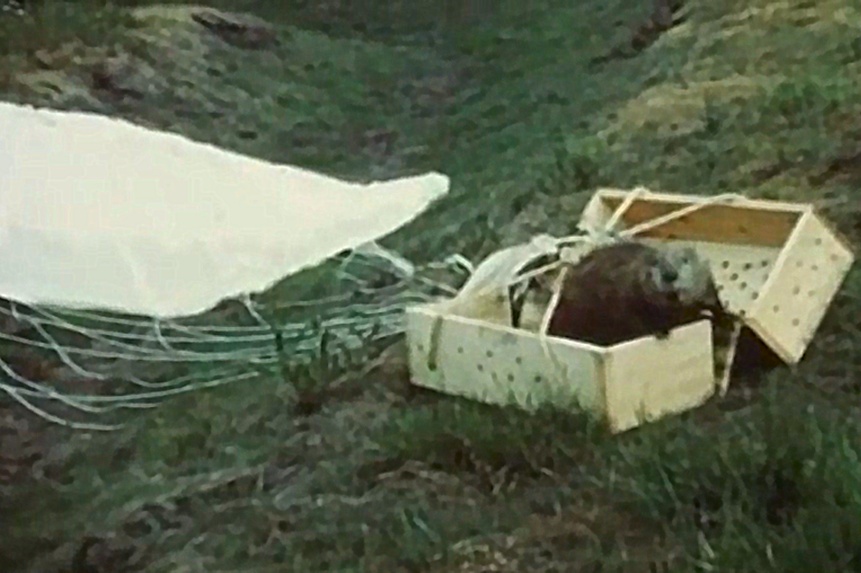
That brought to mind a scene of beavers parachuting down like an invading force. I have since learned that in 1948, the Idaho Fish and Game Department did in fact relocate 75 nuisance beavers into wilderness areas by dropping the caged animals, affixed to surplus World War II parachutes, out of a plane. The cages were designed to open as they hit the ground, and all but one beaver survived. The lone casualty was due to a problem with a cage fastener that allowed the animal to get out before the parachute touched down.
“Right,” I agreed, although the beaver population had been stable for decades.
“And the beavers built all these ponds and swamps, and that made the air more humid, which is why we have all this moss growing now. We never used to have that.”
Ahhh, yes. His logic was impeccable. Facts, not so much, but I understood how, in his world, environmentalists caused moss. I tried to steer us back to why he called.
“Right. Well, about the moss, sir. It’s known as lichen, and doesn’t really harm trees. You notice it more because as the tree needles drop off, lichens get more sun and they expand.” Given his opinion of environmentalists, I didn’t bother to mention climate change and the way our new weather patterns — particularly the long extended wet periods — have been really hard on foliage.
Several previous years had registered close to four weeks of consecutive measurable rainfall. When plants don’t dry out for that long, it’s paradise for fungal and bacterial pathogens. We had begun to see an explosion of needle diseases like the Rhizosphaera needlecast, which was likely what was killing his Colorado spruce.
I then asked If I could send him a fact sheet on lichens.
He was quiet for a beat. “Yeah, you could do that,” he allowed, as if it had been my idea to talk about “moss.” As soon as he’d given me his contact information, he abandoned the original topic and made a hard right turn. “It’s getting so I can hardly afford to mow my lawn any more. D’you know why gas prices are so high?”
I ignored the question and said something like it had been a pleasure to serve you and please don’t hesitate to call with further questions. I figured the answer was either environmentalists or beavers.
Become a Saturday Evening Post member and enjoy unlimited access. Subscribe now



Comments
Thank you for your kind words, Mark! I’m so glad you enjoyed it. And my apologies for not seeing your comment before.
Thanks, Mark!
Paul, what a charming and informative article you had published in the SEP. I enjoyed how you wove humor into your article as I was as puzzled as you at first in connecting the dots between moss, lichens and beavers. The way you concluded the article was brilliant too. Who is really knows why the price of ⛽ has is so high? Hope to see more of your articles get published.