The following is an abridged excerpt from Bill Newcott’s new book, Divided We Stand: A Road Trip in Search of the Ties That Bind Ordinary Americans No Matter What (Compass Rose Publishing, © Bill Newcott, All Rights Reserved)
Do you confuse Michigan and Wisconsin? I am so, so ashamed to admit this, but even as my editor read this manuscript, he kept leaving me notes: “Don’t you mean Michigan?” “Aren’t you supposed to be in Wisconsin?”
I could explain that both states are shaped like mittens, and that’s the source of my issue, but the reality is I suffer from a most common form of Coastal Dementia. For me, and for a long time, Michigan and Wisconsin — let alone Nebraska and Iowa — existed as fantasy lands akin to Narnia and Terabithia; vaguely familiar, somewhat undefined realms populated by a few notable characters behind whom milled vast, faceless, supporting casts of subjects and enablers.
Well, I recently discovered that not only is Wisconsin right next door to Michigan, but like their mitten-y neighbors, Wisconsinites have a true heart for finding common ground, even in the face of intractable differences.
Take what may well be the defining divisive issue of our time: abortion. Unavoidably, I’ve been told all my adult life, when you try to strike a balance on abortion you are foiled by the intransigent barrier of two discrete groups that not only hold fiercely felt personal convictions — but who also harbor similarly strident opinions about those who disagree with them.
Abortion rights supporters, the culture at large tells us, insist they are protecting the health and rights of women…and that those who feel otherwise are primarily intent on subjugating women, rendering them little more than human incubators, à la The Handmaid’s Tale.
Abortion opponents, on the other hand, are said to be adamant that their only concern is saving the lives of unborn children, who they hold are every bit as human at the moment of conception as they will be the day they get their driver’s licenses. Those who disagree, they generally believe, are selfishly sacrificing the lives of children for personal convenience.
I must hasten to add we often hear of wide agreement between the two groups regarding abortion to save the life of a mother: President Ronald Reagan himself, whose “Abortion and the Conscience of a Nation” remains required reading among pro-life activists, cited the Biblical right to self-defense as a rationale for life-saving abortions. But many abortion abolitionists oppose even that level of latitude, and among those who accept it there remain disagreements when it comes to defining just when a mother’s life is endangered by a pregnancy.
Overall, I was convinced, pro-life and pro-choice people have a difficult enough time living in the same country, much less sitting down in the same room.
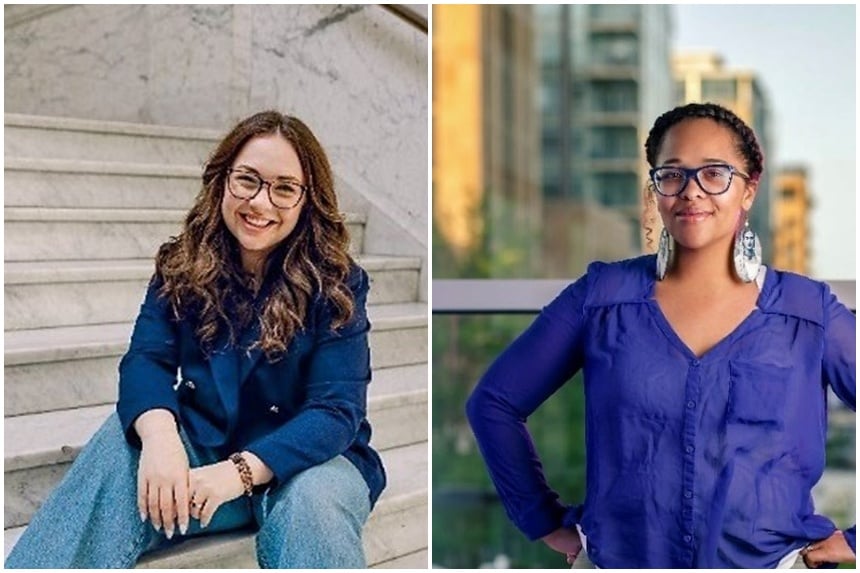
I’ve never been so glad to be proven wrong by two extraordinary young women who, according to most current cultural norms, should absolutely, positively hate each other.
Ali Mudrow lives in Madison, Wisconsin’s state capital. She became pregnant as a teenager and, navigating the medical bureaucracy on her own, obtained an abortion — a decision she found empowering. Today she’s executive director of a women’s health foundation and treasurer of the Madison Board of Education.
Kateri Klingele Pinell also grew up in Madison, one of eleven children. She became pregnant as a teen, kept the baby and married the father — and after having another child with him left the marriage under a cloud of domestic violence. A single mom through graduate school, she’s now happily remarried and a clinical mental health professional who believes people should live free of violence from the start of their lives, which she views as the moment of conception. (In keeping with that philosophy, she also opposes capital punishment.) The dominant present-day narrative — indeed, the narrative that had me despairing over ever being able to write a chapter about abortion — would pit these two women at each other’s throats. But on Mother’s Day 2025, the pair launched a joint campaign across the state of Wisconsin, calling for enhanced government-sponsored postpartum care for new mothers.
They called the initiative “Medicaid for Mother’s Day.” The hashtag read: #betterthanabouquet.
“This Mother’s Day,” Ali wrote on the local news site Madison360, “Mothers from the left, the right, and everywhere in between are coming together to call for an extension of post-partum Medicaid coverage. This display of collaboration across political differences is a reminder that — even in these polarized times — we must refuse to be enemies.”
At the top of the article is a photo of Ali and Kateri, standing together on the state house steps, holding a cardboard sign reading “Medicaid for Mother’s Day.”
Now the two are paired up in an intensive lobbying campaign, trying to get reluctant state representatives to extend Medicaid benefits for new mothers.
On the day I catch up with Kateri and Ali via teleconferencing, Ali is at home in Madison and Kateri is visiting Washington, D.C., with her family.
“Ali is fiery, just like me,” laughs Kateri. “We certainly have different views of things. But she’s a phenomenal woman who passionately cares about doing what she believes is good.”
Ali is equally magnanimous toward her political opposite.
“We’re both moms of multiple children, people who have lived in poverty and survived domestic violence,” she tells me. “The things we have in common are just as profound as the things that make us different. If you let yourself see someone holistically, you realize your lives intersect in a thousand ways.”
It helps enormously that Ali and Kateri are the types of people who don’t mind plunging head-first into an encounter with an other-thinking individual — not with a chip on their shoulder, but in a spirit of possible collaboration.
“I harbor no ill will for those who hold a different position than myself,” says Kateri. “I may believe they’re wrong. I may believe their position on abortion causes harm and violence. But they’re individuals who are loved, and who have inherent dignity and worth. And I hope I can work with people from all backgrounds.”
Speaking with these two women, I am struck by their shared penumbra of serenity. How, I wonder, can people who hold such unshakably different positions on a life-and-death subject nevertheless collaborate on a project that flits dangerously close to the white-hot flame that separates them?
The answer seems to come down to the pair’s inherent willingness — and perhaps irresistible impulse — to relate to others.
Ali notes, for example, that even when others have a less-than-charitable attitude toward her, that’s no reason to write them off.
“My favorite thing to do when someone insults me online,” she says, leaning forward, “is to ask them if they want to go get coffee together.”
And so, if you happen to spot Ali huddled over java at Madison’s Lakeside Street Coffee House, it’s entirely likely she’s deep in conversation with someone who she was, just hours before, at odds with on social media.
Take the Facebook guy who, one morning, called Ali “ignorant.”
I, of course, would have responded with a paralyzing, Noel Coward-class riposte like, “Not as Ignorant as…your MAMA!” Ali, on the other hand, took the high road.
“If you want me to learn more about the things you think I should learn more about,” she wrote, “then let’s get together.”
At eleven a.m. that same morning, she recalls, “We were at Lakeside for coffee. We sat there for two hours talking about our views. And now he’s one of my dearest friends.”
Significantly, neither participant in the impromptu coffee klatch won the other over to their perspective.
“It wasn’t a kumbaya moment,” she says. “But he did come to understand that my perspective was valid, that my experiences were valid, that he had misunderstood where I was coming from.”
When Ali’s new friend had called her “ignorant,” she came to understand, he wasn’t trying to be cruel.
“He was just upset that I wasn’t understanding something that was important to him.”
You can see why Kateri and Ali were perfect candidates for a 2024 project aimed at finding some common ground — no matter how sparsely vegetated — among people with varied positions on abortion.
The effort was launched by Builders, a national coalition cofounded by Daniel Lubetzky, founder of the Kind snack bar company, and Lonnie Ali, founder of the Muhammed Ali Center and widow of Muhammad Ali. A catalyst for open discussions among people of disparate viewpoints, Builders declares its intention is not necessarily to solve the conflicts that launch debate, but instead to chip away at the anger-inducing polarization that dogs those differences.
In early 2024, Builders enlisted people from across Wisconsin to participate in a workshop aimed at finding common ground regarding abortion. The resulting group — nine people supporting abortion rights; five firmly anti-abortion — spent their first day or so together explaining their positions and how they came to hold them. The next three days were roll-up-the-sleeves affairs, with the participants hashing out areas of agreement and finally fashioning possible legislation that would reflect their common ground.
Spoiler Alert: The group found no agreement whatsoever when it came to the base issue of abortion. But they did find common cause in ways to help prevent unwanted pregnancies and support mothers and children.
Perhaps most importantly, the two groups of people who many might offhandedly describe as “enemies” not only found areas of agreement — but also ended up, like Ali and Kateri, regarding each other as friends.
In the course of our teleconference, Ali, Kateri and I are joined by Jake VandenPlas, who lives up in the farmland of Door County, the thumb of Wisconsin’s “mitten” projecting into the waters of Lake Michigan. A political conservative with a full, graying beard, he runs Door County Farm for Vets, which provides education and services for military veterans entering the field of agriculture.
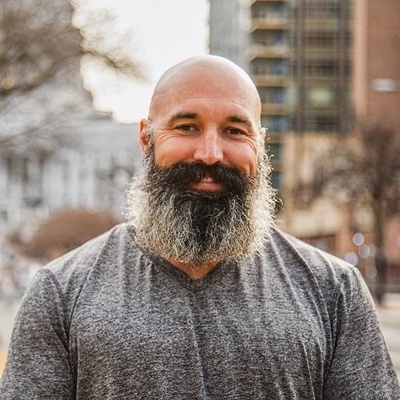
Formerly, VandenPlas held moderately conservative views regarding abortion. Those positions have been somewhat softened, he confesses, through the influence of his wife, who obtained an abortion while in a previous, abusive relationship. Now when it comes to the issue, his focus is on finding ways to reduce the need for abortion by battling economic hardships, seeking harsher penalties for abusive partners, and providing greater access to birth control.
“Women need to have more choices regarding what’s best for them,” he says.
Long ago, I learned the hard way that a guy in the presence of many women discussing a hot-button issue that primarily involves women best serves the discussion by fading into the wallpaper. But this was not an option for Jake, and as I see him in a corner of my computer screen — his faithful farm dog lolling on a couch behind him — I express my condolences.
“Yeah,” he says, scratching at his brow, “there’s a lot of times when it’s not really the proper position of a man to even have an opinion on things.”
He brightens up a bit.
“But I did have some points to make about family planning, and the role that fathers play in the raising of kids and the support that we should be providing.”
He harkens back to his first marriage, when his wife wanted to obtain an abortion and he opposed the idea.
“I knew I didn’t have a choice in this whatsoever,” he recalls softly. “But, you know, that was still my child. So, there are complexities to that argument. As a father, you want to at least have a seat at the table in the discussion.”
Ali and Kateri, I can’t help but notice, smile encouragingly, but do not weigh in on this particular observation.
How long, I wonder, did it take for the members of the group to get beyond their irreconcilable differences regarding abortion?
“I love that question,” says Ali. “If you’re asking how long it would take for me and Jake to dissect everything that makes us different, I’d say you’re talking about a lifetime. Maybe two lifetimes! I mean, our differences aren’t even restricted to reproductive health.”
But the two share one essential value, she adds: a desire, through honest conversations, to devise solutions to common concerns. From Jake’s perspective, that sometimes meant pushing the conversation ahead with concrete suggestions that were clearly non-starters for many in the group.
“I remember,” Ali laughs, “when Jake announced, ‘Why don’t we just ban abortion after fifteen weeks?’ And the people like me went, ‘Absolutely not!’ And Jake said, ‘Okay, let’s move on.’”
“All I wanted to do,” Jake recalls, “was to just throw something on the table so we could keep the conversation moving forward.”
“Right!” says Ali. “Jake was encouraging us to use that muscle; that muscle you use when you challenge an idea and keep trying something else.”
At the heart of Jake’s participation, she says, was his absolute refusal to give up. “He just kept chipping away at the conversation while listening to everyone in the room. We had so many of those challenging moments when people would push back. But not in a defensive way. They wouldn’t get upset. They would just move on to, ‘So what’s an idea that would work for everybody?’”
Kateri, the firm abortion opponent, smiles when I ask her if she was afraid she’d be pressured to compromise her deeply held convictions.
“Well, I knew I would be,” she says. “And I was. And that was difficult for me, because I frankly do care about what people think of me.”
“I said ‘yes’ to this project because I believe there is truth,” she says. “And as deeply as I desire peace and goodness for others, I also believe so do the people who are sitting across the table from me. I wanted to be there for that.”
It will come as no surprise to you that the Wisconsin group did not reach any consensus regarding abortion itself. The inherent values attached to each side of the issue are too deeply held; too viscerally embedded to allow even a whisper of compromise.
They did, however, reach strong agreement on five peripheral solutions that they believe could help reduce the demand for abortions:
- Require human development education in schools.
- Require notification of all options for pregnant women at pregnancy centers, abortion clinics, and prenatal care providers.
- Extend postpartum Medicaid from the current 60 days to 12 months.
- Provide a refundable state child tax credit.
- Enact paid family leave, including for foster and adoptive parents.
Once the group’s proposals were finalized, Builders posted them online, inviting anyone with a Wisconsin ZIP code to weigh in, approving or disapproving of each one. Some 20,000 Wisconsinites voted, and all five received overwhelming support: none less than seventy-two percent approval. With no clear front-running issue emerging, the group chose to focus on their twelve-month Medicaid proposal. Somewhat miraculously, in late February the proposal was signed into law.
The Wisconsin Builders project was a rare moment of conviviality between the two sides of the abortion debate, but it was not the first. As recently as 2022, the nationwide reconciliation group Braver Angels sponsored a similar discussion group in Jessamine County, Kentucky. Those participants produced a proposal that looked a lot like the Wisconsin group’s call for age-appropriate sex education—but also suggested a remarkably bold program of free, long-acting reversible contraception for Kentucky residents. That proposal was based on a Colorado program that reportedly slashed abortion rates by sixty percent — and teen birth rates by fifty-nine percent.
No current issue cuts more deeply to the heart of the American soul than abortion, a matter of irreconcilable differences that all too easily erupts into open conflict. Heading for my next stop, watching the lake-dotted landscape of Wisconsin slide beneath my airliner window, I breathe a prayer of thanks for those who embark on the seemingly thankless endeavor of finding a fragment of common cause and then moving on, occasionally glancing at those across the divide, smiling faintly, and wrapping each other in a compassionate embrace.
Become a Saturday Evening Post member and enjoy unlimited access. Subscribe now