In a Word: 5 English Words of Russian Origin
Managing editor and logophile Andy Hollandbeck reveals the sometimes surprising roots of common English words and phrases. Remember: Etymology tells us where a word comes from, but not what it means today.
The United Nations has six official languages that all documents are translated into — Arabic, Chinese, English, French, Russian, and Spanish — and each year, it sets aside one day to celebrate each of those languages. Today, June 6, is Russian Language Day at the U.N., and I thought we could mark the occasion by highlighting some common words in English that were derived from Russian.
But, for historical and geopolitical reasons, it turns out that English doesn’t borrow much from Russian. While there are hundreds or even thousands of common English words borrowed from, say, French, German, and Native American languages, words borrowed from Russian are numbered in the dozens, and most of them either don’t get widespread use (agitprop, politburo, samizdat) or are so obviously Russian that they aren’t worth exploring in more depth (vodka, borscht, babushka).
But still, there are a handful of common English words that you might not know derive from Russian.
Beluga
One of the most expensive foods on the planet by weight is beluga caviar, the roe (eggs) of the beluga sturgeon, a large white fish found in the Caspian and Black Seas and their tributaries. Early Russian fishers named the fish beluga based entirely on its appearance: The word comes from belyĭ “white” plus -uga, a suffix that augments the base word, like the prefix super- in superstar or mega- in megastore. Beluga essentially translates to “great white.”
The term was later applied to a species of white Arctic whale. A beluga whale is literally a “great white whale,” which I imagine causes problems for translators preparing Russian editions of Moby-Dick. That title character, often referred to in the novel as the White Whale, was a sperm whale, not a beluga.
Czar/Tsar
Okay, I lied a little bit. It’s obvious that czar is Russian — until 1917, it was the title of the ruler of Russia — but I include it here because the word comes with an interesting etymology.
Czar ultimately comes from the word Caesar. After Julius Caesar was murdered in the Senate, civil wars broke out all over Rome. Eventually, Julius’s great nephew and adopted son Augustus Caesar defeated his enemies and became emperor of the Roman Empire. Augustus was the only one of those early Roman emperors to live to old age, and after he died, future emperors took the name Caesar as a title.
As the Roman Empire expanded — at its height, it stretched from the Iberian peninsula in the west to the Caspian Sea and Persian Gulf in the east — it took its language with it. The title Caesar not only found its way to becoming czar in Russian, but Kaiser in German.
A common question about the word czar is why we sometimes see it spelled tsar or even tzar. It’s because the word is a transliteration from the Cyrillic alphabet, in which the word is spelled царь. A mid-16th-century tome and primary source about Russia in Western Europe transliterated the word into the Latin alphabet as czar. But during the 19th century — perhaps dealing more directly with Russian texts — the French transliterated the word as tsar. It’s also the spelling picked up by The Times in the U.K., and even now, the British publications Guardian and Observer still prefer the spelling tsar. In the U.S., though, we largely stuck with czar, and so the separate spellings exist simultaneously in English.
Mammoth
Mammoth appears to have taken a journey through Dutch before arriving in English, but there is some controversy over exactly what route it took. Dutch merchants and ambassadors at the end of the 17th century learned that, along coasts and rivers in northern Asia, gigantic tusks were sometimes uncovered. In their reports, they noted that the tusks were called mammouttekoos, koos meaning “bone” and mammout meaning “a large, terrible beast.”
Again, because this is a transliteration (of a language that itself has shifted, no less), the word can be found written, in various places and at various times, as mamant, mamont, mammout, mammut, and mammuth, the last of which found its way into English translations, ultimately becoming mammoth.
From the early 18th century, the word was only a noun — the name of a large woolly beast. It wasn’t until the early 19th century that mammoth’s use as an adjective meaning “very large” became common.
Merriam-Webster Online offers a more detailed and technical discussion of mammoth’s origins.
Parka
This name for a hooded coat, often lined with fur and designed for particularly frigid weather, comes from Nenets, the name of both an ethnic group from Arctic Russia and the language they speak. The word literally translates as “skin coat” because parkas were traditionally made from animal skins and lined with animal fur. The ones you buy from The North Face or L.L. Bean are more likely to use synthetic fabrics and faux fur.
Vigorish
If you’re not much of a gambler, this word might not seem very common to you. The vigorish, often abbreviated as the vig, is the charge that a bookie or gambling house takes for placing a bet for you. It comes from either the Ukrainian vygrash or Russian vyigrysh, both of which mean “winnings, profit.” And from a bookie’s point of view, that’s exactly what it is — the profit they make whether your bet wins or loses.
Featured image: Shutterstock
In a Word: To Japan and Back with Karaoke
Managing editor and logophile Andy Hollandbeck reveals the sometimes surprising roots of common English words and phrases. Remember: Etymology tells us where a word comes from, but not what it means today.
If you can sing well, reality TV shows like America’s Got Talent, The Voice, and American Idol could launch you to musical superstardom. But if you’ve got a voice like a chain-smoking chimpanzee with a mouth full of marbles, you shouldn’t let that stop you! Although you won’t be signing a recording contract anytime soon, you can, thanks to Daisuke Inoue, still find your audience. Inoue is widely regarded as the inventor of karaoke.
Though karaoke — both the word and the activity — came to us from Japan, the word isn’t entirely of Japanese origin. The meaning of karaoke is pretty well known, especially among its (often inebriated) practitioners: It literally means “empty orchestra.” The kara is Japanese for “empty.” The oke comes from a shortened form of the Japanese word for “orchestra,” ōkesutora.
You’re probably noticing that the words orchestra and ōkesutora look a lot alike. That’s no accident. Ōkesutora is a Japanese loanword based on the English orchestra.
That means that when karaoke was adopted into English in the late 1970s, it marked the culmination of an etymological round trip to Japan and back — a partial reborrowing into English of a Japanese word that was originally borrowed from English.
Many would have preferred the vocal pastime remain isolated in the Land of the Rising Sun. After all, when you sing karaoke, you’re allowed to be bad — expected to be bad even. But that’s also a major part of its allure: Karaoke lets you slough off your inhibitions and become a singing fool in a safe space. The audience will cheer your half-drunk, off-key rendition of “Born to Run” as if you were Springsteen himself regardless of your lack of talent, so you have nothing to prove.
It was karaoke’s ability to bring people together to not only tolerate but celebrate our musical mediocrity that earned Daisuke Inoue the 2004 Ig Nobel Peace Prize and that solidified karaoke’s place as the ear-splitting and unapologetic joy it is in both the U.S. and Japan.
Featured image: Shutterstock
In a Word: You’ll Never Think of Vanilla the Same Way Again
Managing editor and logophile Andy Hollandbeck reveals the sometimes surprising roots of common English words and phrases. Remember: Etymology tells us where a word comes from, but not what it means today.
In 1521, Spanish conquistador Hernán Cortés and his men were tromping through Central America, and they came upon a plant they had never seen before. It was a vining orchid, and its white flower bloomed for only a day. It also bore roughly six-inch-long pods inside of which were a mess of tiny seeds in an oily substance. Most importantly, though, is that the substance inside the pod smelled amazing.
They took the plant back to Europe, where chefs and perfumers found myriad ways to incorporate it into their wares.
In Spanish, the word for pod (or sheath) is vaina. Because the plant’s pods were small, they added the diminutive suffix –illa to it and called the plant vainilla. English dropped that first i to give us vanilla, literally “little sheath.”
If we take the etymology back further, it gets a little weird — so of course we’ll go there. Spanish vaina derives from the Latin word vagina, meaning “covering,” specifically a sheath or scabbard for a sword or the husk surrounding a grain. Medical professionals didn’t start using that word in the anatomical sense until the mid-17th century — more than 100 years after vanilla began proliferating across Europe.
Some people like to claim that vanilla actually means “little vagina,” which is true only if you view the second word as being Latin. Still the flavoring and the body part are closely related etymologically.
And since we’ve already dipped our toe in the waters of anatomical vocabulary, so why not wade out a bit farther?
I noted before that the vanilla plant is a type of orchid. The word orchid derives from the Greek orkhis — literally “testicle” — and was so called because the shape of its roots resembled … well, I think you can figure that out.
Calling an orchid vanilla is etymologically fitting, though, considering that vanilla flowers are hermaphroditic — containing both the male (anther) and female (stigma) reproductive organs.
Featured image: Shutterstock
In a Word: The Canary, from Woofer to Tweeter
Managing editor and logophile Andy Hollandbeck reveals the sometimes surprising roots of common English words and phrases. Remember: Etymology tells us where a word comes from, but not what it means today.
The word canary gets a decent amount of use in the English language. Not only is it domesticated bird, it’s the name of a shade of yellow and of an island group in the Atlantic. All three of these canaries are linked etymologically, but there’s a fourth link missing here you might not know about: dogs.
In his encyclopedic Natural History, first-century A.D. author and philosopher Pliny the Elder wrote about King Juba of Mauritania exploring the largest of a group of islands off the west coast of Africa. The island was home to a great number of large wild dogs, so he named it Insula Canaria — “Island of Dogs,” from the Latin word for “dog,” canis. (Juba took two of those doggos with him, too, because who doesn’t love a puppy?) Over time, the entire island group took on the name of that largest island (just like Hawaii!); today, they’re called the Canary Islands.
Later visitors to the islands became enchanted by the small yellow-green finches that filled the islands’ air with their song. Through no great feat of etymological contortion, these birds came to be called canary-birds, and eventually just canaries.
By the mid-16th century, after Spain conquered and claimed the Canary Islands, Spanish bird lovers — especially in the monasteries — began breeding canaries on the mainland. It was Italian traders, though, who used selective breeding to produce more marketable domesticated birds, favoring solid brighter colors over the brown- and black-streaked wild canaries. Selective breeding continued for centuries (and continues now) to create canaries in a wide variety of colors.
But the yellow canaries were the most popular by far. By the 19th century, yellow canaries had so become the norm that people started referring to their particular color as canary yellow. In 1941, the world was introduced to its most famous canary to date (a yellow one, of course): Tweety Bird.
With Sylvester the Cat prowling around, Tweety might have been better off living in the land of his ancestors, named for its packs of wild dogs.
Featured image: Shutterstock
In a Word: What Is a Subpoena?
Managing editor and logophile Andy Hollandbeck reveals the sometimes surprising roots of common English words and phrases. Remember: Etymology tells us where a word comes from, but not what it means today.
After the 2018 mid-term elections, Democrats came away with a majority of the seats in the House of Representatives. The House — and therefore the Democratic Party following the swearing-in ceremony — now had the power to subpoena individuals.
This week, we’ve seen that power exercised: Not only did the House Intelligence Committee subpoena Donald Trump Jr. about Trump Tower Moscow, but in a rare cross-aisle joint request, Democratic Intelligence Chair Adam Schiff and his Republican counterpart Devin Nunes subpoenaed the Justice Department for the full, unredacted Mueller report.
Subpoenas are in the air and on the news constantly these days, but what exactly is a subpoena, and — more on point for this column — where does the word come from?
A subpoena is a government writ, usually from a court, demanding that a particular person named in the writ either appear and testify (a subpoena ad testificandum) or offer evidence (a subpoena duces tecum) on a particular subject.
As for the word itself, you’ll recognize the sub-prefix, meaning “under,” from words like submarine, subliminal,and subprime mortgages. Poena is the Latin word for “penalty” — it’s also the root of the words punish and pain. Subpoena, then, literally means “under penalty,” and the documents were first called subpoenas because, in the early 17th century, that was the phrase that began the document.
A subpoena is not a request; it’s a demand. And the idea that someone failing to respond to a subpoena risks punishment is embedded right in the name. Exactly what the penalty should be is a matter of law, though, not etymology. While there are some ways to avoid what is demanded in a subpoena (the Fifth Amendment outlines some special cases), they are legal documents that should be taken seriously. Failure to do so could result in fines, prison time, or both.
Featured image: Shutterstock
In a Word: Plumbers’ Heavy Metal Past
Managing editor and logophile Andy Hollandbeck reveals the sometimes surprising roots of common English words and phrases. Remember: Etymology tells us where a word comes from, but not what it means today.
If you’ve got a horribly clogged drain or need to install a new toilet, you call a plumber — at least today. If you had called the original plumbers for such a job, they would have thought you daft, and probably would still have charged you for the house call.
Plumber arrived in the English language during the 1400s, a century or more before the invention of the first flush toilet. Before lead pipes began moving water into and out of buildings, plumbers were called upon to craft weights, bullets, miniatures, and a hundred other things made of lead.
The fun-to-say plumbum is the Latin word for the heavy metal lead. (This is why, on the periodic table of elements, the symbol for lead is Pb.) From plumbum came plumbarius “a worker in lead,” a meaning that held up through Old French plomier, which became, in the 15th century, the English word plumber.
Original plumbers were not experts in the flow of water and waste; they were simply people who worked in lead.
In modern Romance languages, the word for “lead” is still easily traceable to the Latin plumbum. In French, for example, it’s plomb. But English speakers have been calling the metal lead for more than a millennium, and those who worked in lead might have been known as something like lead-smiths.
But the Norman conquest of England in 1066 eventually changed that. The French-speaking ruling class considered consider English a language of lower status, so they didn’t use it. English speakers with dreams of moving up socially, then, also adopted and adapted this other language. So while a laborer working in lead might consider himself a lead-smith at home, to the wealthy upper class that hired him to work, he was a plomier — and eventually a plumber.
(The effect of the Norman conquest on the English language is far-reaching. The same shifts in language are also the reason English cows and hogs become Latinate beef andpork when they’re cooked.)
It wasn’t until the early 20th century — as indoor plumbing became the rule and not the exception in Great Britain and the United States — that plumber became more strictly associated with waterworks and sewage. Because of what we’ve learned about the toxic effects of lead, plumbers these days spend much of their time around pipes made of copper or PVC, not to mention all the porcelain and steel fixtures, further distancing the trade from its heavy metal history.
Featured image: Shutterstock.com
In a Word: An Anthology of Spring Flowers
Managing editor and logophile Andy Hollandbeck reveals the sometimes surprising roots of common English words and phrases. Remember: Etymology tells us where a word comes from, but not what it means today.
The warming spring means Mother Nature is bursting with new color from buds and blooms. Many of these flowering plants get their names from pretty unremarkable sources. For example, some were named after people, like the magnolia (after French botanist Pierre Magnol), freesia (German physician Friedrich H.T. Freese), and forsythia (British botanist William Forsyth). Others were named simply for the way they look: Bluebells, for example, are so called because their blooms are blue and bell-shaped.
But many of the flowers you’ll see this spring bear names of more surprising origins, some that go back millennia. Read on for a short anthology of the stories behind the names of some of the plants you might see blooming this spring.
Why an anthology? The word comes from Greek roots that mean “flower gathering.”
Daffodil
The Middle English affodill stretches back to the Greek asphodelos, a flower said to bloom eternally in the Elysian Fields, where the blessed reside after death in ancient Greek myth. Exactly where the word asphodelos came from, no one is sure.
During the 16th century, daffodil bulbs came to Britain from the Netherlands, and the flower likely got its modern name from the contraction of the Dutch de affodil.
Hyacinth
In ancient Greece, hyakinthos was the name of both a blue gemstone and a purple or red flower — though we’re not sure exactly which one. The creation of the flower, though, is explained in Greek mythology: Hyakinthos (or Hyacinthus) was a Spartan prince who was much loved by the god Apollo. One day, the two were throwing the discus around. Apollo gave it a really hard throw, and Hyakinthos, laughing, chased after it, but the discus struck him in the head and killed him. To honor him, a distraught Apollo caused a flower — the hyacinth —to spring up from the boy’s blood.
In another version of the story, the death isn’t accidental: Zephyr, the west wind, was also quite fond of Hyakinthos. In this story, he was jealous of Apollo’s relationship with the boy, and so Zephyr intentionally blew the discus off course, causing it to strike Hyakinthos in the head.
Hyakinthos entered Latin as hyacinthus, but in Medieval Latin became jacintus, and in Old French jacinte — which gave us the name of the reddish-orange gem called jacinth. But in the mid-16th century, the word was “re-Greeked” to become hyacinth for the name of the flower. However, the flower we call hyacinth today very likely not to be the same flower the ancient Greeks called hyakinthos.

Pansy
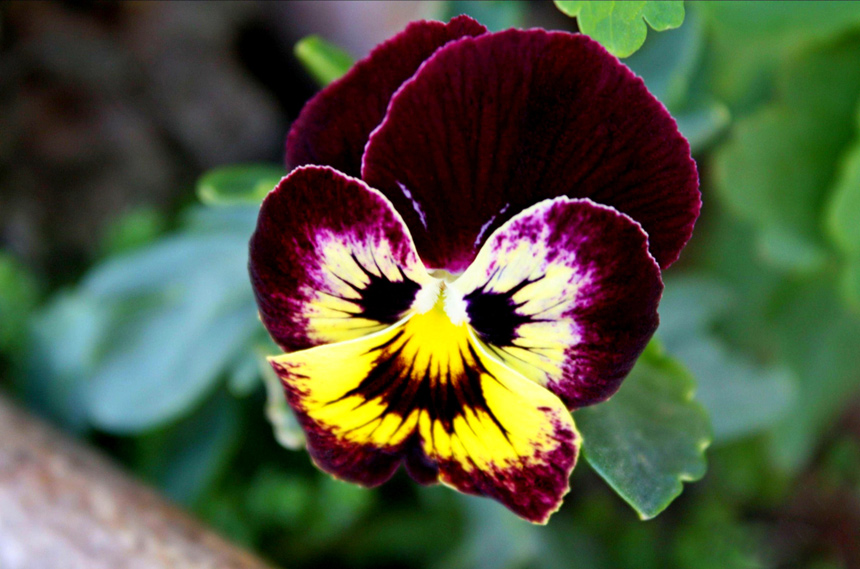
At the end of Act IV of Hamlet, Ophelia, who is losing her mind, comes in singing and handing out various plants she has collected outdoors: “There’s rosemary, that’s for remembrance; pray you, love, remember: and there is pansies, that’s for thoughts,” she says. Shakespeare’s connecting pansies and thoughts isn’t capricious; the word pansy comes from the French word for “thought,” pensée.
In Victorian England, where public displays of affection were taboo, pansies were exchanged as a secret sign of attraction. A young man might sneak a pansy in to a woman to indicate that he is thinking of her — in a romantic way. Some types of pansies are also called heart’s ease or love-in-idleness, calling to mind the idea of a young man pining away with thoughts of his love.
In German, on the other hand, the pansy is called Stiefmütterchen, meaning “little stepmother.”
Peony
People have long recognized the medicinal value of the peony and have used its roots, flowers, and seeds to ease pain. It made sense, then, to name the plant after the physician of the gods, Paean (or Paieon or Paion). Does it seem odd that the supposedly immortal and impervious Greek gods would need a physician? While your average human is no threat to the deities, they do occasionally injure one another. In the Iliad, Ares is wounded by the mortal Diomedes — with Athena’s help — and Paean is called upon to salve his divine wounds.
From this root came the Old North French name pione, which in the 16th century merged with the Middle English pyony to become the modern peony.
Tulip
Many of these flowering plant names come from Greek mythology. Tulips, both the flower and the name, come from the Mediterranean too, but a little farther east. This favorite flower of the Netherlands was introduced into Europe from Turkey, and it takes its name from the (Latinized) Turkish word for “turban,” tülbent, because of the flower’s resemblance to the headdress.
In Latin, the flower became tulipa. The word kept its full form when it entered Spanish (tulipan) and Italian (tulipano), but in English, the -an was dropped, probably under the assumption that it was a suffix, and so today we tiptoe through the tulips.

In a Word: What Is a Cathedral?
Managing editor and logophile Andy Hollandbeck reveals the sometimes surprising roots of common English words and phrases. Remember: Etymology tells us where a word comes from, but not what it means today.
The horrific fire that damaged the Notre Dame Cathedral in Paris this week has left a lot of us thinking about cathedrals. While many associate these churches with the flying buttresses, towering spires, and gaping gargoyles that make Notre Dame a lasting artistic achievement, what actually makes a cathedral a cathedral is organizational, not architectural.
In the Roman Catholic Church, a cathedral is the seat of a diocese, from which a bishop presides over his parishioners. That’s that same type of “seat” that appears in the phrase county seat, the governmental center of a county — though a Catholic diocese often encompasses multiple counties. You might think of a cathedral, then, as being roughly analogous to a county courthouse.
Like courthouses, cathedrals can incorporate all sorts of architectural styles. At one end, you have the intricate stonework of a Notre Dame Cathedral that rises above the surrounding landscape. At the other end, you have, for example, the cathedral for the diocese of Gaylord, Michigan: St. Mary, Our Lady of Mount Carmel. This low-slung building with an orange roof resembles more the utilitarian style of a modern elementary school than the grandeur of Rome.


Just to look at them, Notre Dame and Our Lady of Mount Carmel have little in common. But they’re both cathedrals because they are both the seat of the diocesan bishop — a concept embedded in the word cathedral itself.
Centuries ago, the Greek kathedra entered Latin as cathedra; both words mean “chair” or “seat.” (The word chair is also derived from cathedra.) As the Roman Catholic Church organized, it used cathedra to refer specifically to a bishop’s seat, both physically and organizationally. It still does.
Cathedral entered English as an adjective, not a noun. Until sometime in the 16th century, Notre Dame would have been referred to as a cathedral church, a translation of the Latin ecclesia cathedralis “church of the bishop’s seat.” But gradually, English speakers dropped the church.
Cathedral became so well established as a noun that, according to Etymonline, some writers have attempted to reengineer new adjectival forms, including cathedraical, cathedratic, and cathedratical. The words failed to catch on, though, and to this day, cathedral appears as both a noun and an adjective.
However, because people have long associated the word cathedral with immense, awe-inspiring architecture, it has found a new home in metaphorical use, as when one reporter referred to Minneapolis’s newly built U.S. Bank Stadium (home of Super Bowl LII) as an “NFL Cathedral,” implying not only the building’s size and style but also the almost religious fervor of some Vikings fans.
Featured image: Shutterstock
In a Word: Jesus Was Born in a Penthouse
Managing editor and logophile Andy Hollandbeck reveals the sometimes surprising roots of common English words and phrases. Remember: Etymology tells us where a word comes from, but not what it means today.
Every Christmas, Christians around the world retell — and often reenact — the story of Jesus’ birth in a stable in Bethlehem. But during the 15th century, the Christmas story was just as likely to have Jesus born in a penthouse as in a stable.
Today we think of a penthouse as a place of luxury, a suite that sits at the top of a tall apartment building, offering the best views and commanding the highest rent. But skyscrapers didn’t start appearing in cities until the 1880s, and by then, the word penthouse had been around for nearly four centuries.
In Old French, the word apentis meant “attached building” or “appendage.” This goes back to the Latin verb appendere “to cause to hang from something,” which derives from pendere “to hang” or “weight.” (The words appendix, pendant, and stipend were grown from the same roots.)
In the 1300s, apentis entered Middle English as pentis to describe a small structure with a sloping roof that was attached to a larger building, what today we might call a lean-to. It was the type of structure where you’d keep tools, animals, or hay, not celebrities.
The word pentis evolved, by the early 16th century, into penthouse through folk etymology — the process by which lesser-known or misunderstood parts of a word are replaced by something more common. (For example, folk etymology changed the Old English suffix –lac into the –lock in wedlock.) The updated spelling makes sense, too: A small shed attached to one’s house could still be considered part of the house, so having –house in the name just seems natural.
For more than 300 years, a penthouse continued to be a smaller structure attached to the side of a larger building. There are even Middle English Christmas homilies that place Jesus’ birth in a penthouse. (Manger, which for many of us is a word used only during Christmas, is a trough from which animals are fed. It describes the makeshift cradle in which Jesus was lain, not the building that surrounded him.)
It wasn’t until after World War I — when cities began building upward as much as outward — that the penthouse moved from the side of the building to the top, and we began to use it to describe a posh, top-level apartment. The word’s original meaning is now little more than a relic.
Featured image: Shutterstock
In a Word: Loafing Around in Good Company
Managing editor and logophile Andy Hollandbeck reveals the sometimes surprising roots of common English words and phrases. Remember: Etymology tells us where a word comes from, but not what it means today.
Whether it’s in a noisy restaurant or around a kitchen table, food is often a focal point around which friends and family gather. This isn’t a modern development: Meals have been bringing friends together for generations, so much so that the link between food and companionship has been baked into the language.
Though we might use the words company and companion to describe the people we enjoy spending time with no matter where we are, their etymological origins take us straight to mealtime. Both words trace their roots to the prefix com- “with” plus the Latin word panis, meaning bread or food. The original companion was a person one regularly broke bread with — that is, a messmate.
So the next time you find yourself sitting down for a meal in good company — perhaps to enjoy an Italian panini or French pain au chocolat — take a moment to reflect on how a long tradition of cementing friendships around the supper table keeps rolling along, and how that tradition has been embedded into our language, hiding in plain sight.
Featured image: Shutterstock
In a Word: Marinades and Marinara, Sauces from the Sea
Managing editor and logophile Andy Hollandbeck reveals the sometimes surprising roots of common English words and phrases. Remember: Etymology tells us where a word comes from, but not what it means today.
If lemonade is a tasty lemon-flavored soft drink, and orangeade is a tasty orange-flavored soft drink, then what exactly, I asked myself this weekend while preparing dinner, is marinade? So while my chicken breasts swam in a tangy soup of oil, balsamic vinegar, herbs, and spices, I did some digging to find out.
Like much of our culinary vocabulary, marinate (v.) and marinade (n.) came to English through French, in this case during the 17th century from mariner “to pickle in brine,” especially in sea brine. That reference to the sea isn’t trivial: Mariner traces its roots back to the Latin mare “the sea,” which is also the root of marine, marina, and submarine.
So if marinade were a soft drink, it would be a tall cold glass of salty seawater. (But I don’t recommend adding this to your menu.)
A similar word that is related etymologically — but not gastronomically — is marinara. It too traces its roots to the Latin mare, but instead of coming through French, it came to English through (obviously) Italian.
Don’t expect some surprising story about Old World Italians cooking their pasta in seawater. No, marinara refers not to the sea itself, but to the people who work upon it. It’s a shortened form of alla marinara, meaning “in sailor style.”
One story of the origin of this simple but tasty tomato sauce is that sailors’ wives, seeing their husbands’ ships coming into harbor after many days at sea, created marinara from what they had on hand in a rush to pull together a hot dinner to have ready when their husbands got home. I find this story entirely too romantic to be true.
More likely, the sailors themselves created the first marinara sauces. Tomatoes, olive oil, garlic, and dried herbs — the ingredients of a traditional marinara sauce — can all keep for a long time without spoiling, making them great foods to stock for long sea voyages. Plus, it takes about the same amount of time to create marinara as it does to cook pasta, so it would be a compact, time-efficient meal aboard a working ship.
Regardless of who made it first, marinara originated in the coastal towns of Southern Italy, and it isn’t very old. Tomatoes, remember, were a fruit of the New World; they probably didn’t reach Italy until the 16th century, and marinara was developed during the 17th.
Italian emigrants took their marinara with them around the world during the 19th and early 20th centuries. According to Merriam-Webster Dictionaries, the word marinara wasn’t adopted into English until 1948. As common as marinara is now, some of our readers may still remember a time when spaghetti alla marinara seemed like some exotic foreign dish.
These days, though, it’s pretty mundane fare. But it still pairs great with marinated chicken breast and a nice Chianti.
Featured image: Shutterstock
In a Word: The First Boycott
Managing editor and logophile Andy Hollandbeck reveals the sometimes surprising roots of common English words and phrases. Remember: Etymology tells us where a word comes from, but not what it means today.
For some, the Irish have a reputation for hostility and even violence. This reputation is largely undeserved. Consider, for example, that it was Irish farmers in the 19th century who, through their actions, gave our language the word for one of the most effective forms of peaceful protest: boycotting.
In the mid-1800s, Irish tenant farmers had few rights to the land they worked and were often expected to pay exorbitant (and growing) rents to their aristocratic landlords. The Irish National Land League was founded in 1878 to help secure better working conditions, fairer rents, and more property rights for poor farmers from wealthy landowners, and especially absentee ones.
A famine hit Ireland in 1879, taking a toll not only on farmers’ crops but on their ability to pay their rent. This famine wasn’t nearly as devastating as the Great Famine of 1845-1849 (called the Irish Potato Famine outside of the Emerald Isle), but the memory of that difficult time and the fear of its return haunted Ireland’s farmers.
Into these uncertain and quarrelsome times stepped a man named Charles Cunningham Boycott. In 1880, he was the land agent left in charge of the estate of John Crichton, Lord Erne, in Ireland’s County Mayo. When it came to collecting rents and keeping his tenants in order, Boycott wasn’t a lenient man, and in autumn of that year, he attempted to evict 11 tenants.
But the Irish National Land League wasn’t going to stand for it.
Boycott’s employees and tenants were urged — in some cases possibly forced — to isolate Boycott by withdrawing their labor. All business with Boycott was to stop, from the care of his stables to his laundry to the delivery of his post to, yes, the reaping of crops.
Boycott needed help, but he made a mistake in his choice of savior: He pleaded to the press. In a letter to The Times, he wrote, in part, “I can get no workmen to do anything, and my ruin is openly avowed as the object of the Land League.”
The story became international news. Newspapermen swarmed the county as troops were roused to protect volunteers from the north who stepped in to bring in the harvest, but the damage was done. According to Niall O’Dowd, founder of IrishCentral.com, “the episode cost at least £10,000 to harvest about £500 worth of crops.”
What’s more, the Irish National Land League established itself as a powerful grassroots force, the “Boycott treatment” was proven an effective nonviolent means of protest, and the word boycott entered the English language.
That boycott stems from the name of a particular man is not surprising — English contains many eponyms. What is surprising is how quickly the word caught on, spread, and became a common word in English. Less than half a year after the original boycott — on February 12, 1881 — Saturday Evening Post readers found this announcement in the News Notes column:
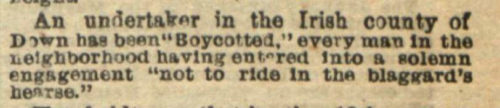
An undertaker in the Irish county of Down has been “Boycotted,” every man in the neighborhood having entered into a solemn engagement “not to ride in the blaggard’s hearse.”
The quotation marks and capitalization mark it as a new word, if not a new idea, for readers. But by just a year and a half later, the quotation marks had fallen away and the capitalization was dropped, and the word was used without any indication that readers might not understand its meaning. The following announcement appeared in the December 16, 1882, issue of the Post:
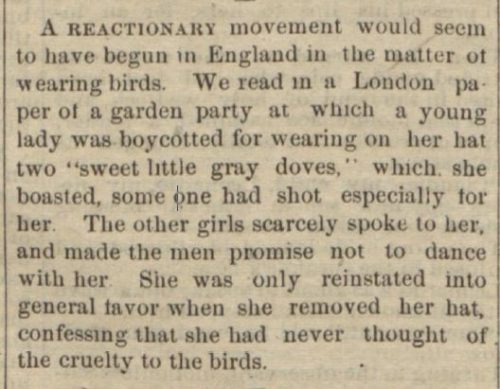
A REACTIONARY movement would seem to have begun in England in the matter of wearing birds. We read in a London paper of a garden party at which a young lady was boycotted for wearing on her hat two “sweet little gray doves,” which, she boasted, some one had shot especially for her. The other girls scarcely spoke to her, and made the men promise not to dance with her. She was only reinstated into general favor when she removed her hat, confessing that she had never thought of the cruelty to the birds.
And it didn’t spread only into English. The word found its way into German as der Boykott, French as le boycottage, and Italian as boicottare, to name but a few. Even more than St. Patrick’s Day, boycotting is an Irish legacy recognized the world over.
Featured image: Shutterstock
In a Word: How English Got Intoxicated
Managing editor and logophile Andy Hollandbeck reveals the sometimes surprising roots of common English words and phrases. Remember: Etymology tells us where a word comes from, but not what it means today.
It’s no feat of mystical divination to predict that a lot of people will find themselves intoxicated this weekend, many of them on green beer. St. Patrick’s Day is this Sunday, and many will use the commemoration of the Irish saint — whether they are Irish or not — as an excuse to lift a pint or nine.
But while Catholicism gave us St. Patrick, and Irish Americans honed his feast day to the celebration it is now, the intoxication that results from that celebration comes, at least etymologically, from warring Greeks.
The ancient Greek archer’s tool of war was the toxon, a word for both bow and arrow. To make their weapon deadlier, archers dipped their arrow tips in poison. Toxikon was the word for a poison-tipped arrow, but over time, the word came to refer to the poison itself. By the time the word was adopted into Latin as toxicum, it had shrugged off its ballistic origins and just meant “poison.”
Fast-forwarding through the Middle Ages, the word entered French and eventually evolved, in the 17th century, into the English word toxic. But while this word was wending its way through lexical evolution, English wasn’t just sitting around waiting to get poisoned. Surprisingly, the word intoxicate appears in English written records a century before toxic does. English speakers, it seems, sought a larger vocabulary for getting drunk than for ingesting toxins.
Perhaps unsurprisingly, Shakespeare used intoxicate (though he certainly didn’t invent the word), in The Life of King Henry V (Act IV, Scene vii), believed to have been written in 1599:
Alexander, … in his rages, and all his furies, and his wraths, and his cholers, and his moods, and his displeasures, and his indignations, and also being a little intoxicates in his prains, did, in his ales and his angers, look you, kill his pest friend, Cleitus.
[Captain Fluellen, the Welshman who provides much if this play’s comic relief, often pronounces his bs as ps, so prains and pest are brains and best deliberately mispronounced for effect.]
The verb intoxicate and its adjective form, intoxicated, derive from the Latin intoxicare “to poison,” which itself traces back to the same Greek toxon. There is some evidence that intoxicate, in its earliest use, literally meant “to poison,” but it didn’t take long before the more metaphorical meaning “to make drunk” took hold.
So if you are among the imbibers during this weekend’s St. Patrick’s Day celebrations, relish in the etymological poignancy of that old bartender’s question, “What’s your poison?” And if you’re doing shots of good Irish whiskey, take a moment to remember the type of shots Greek archers took centuries ago that ultimately led to your ability to become intoxicated.
Featured image: Shutterstock
In a Word: Dord, the Word That Wasn’t
In 1631, a new printing of the Bible contained an egregious mistake. At Exodus 20:14, the Sixth Commandment read, “Thou shalt commit adultery.” Roughly 1,000 of these so-called Wicked Bibles were printed before that missing not was discovered and the printing halted. For some, the existence of the Wicked Bible is a laughable reminder of our fallibility; to others, it’s a disturbing example of how even the most sacred things are not immune to humankind’s imperfections.
There are certain resources that are the secular equivalent of sacred, too. We turn to them for authoritative guidance in our personal and professional lives, rarely questioning the wisdom they hold. Psychiatrists, for example, have the DSM. Congress has the U.S. Code. And frantic, procrastinating middle school students have Wikipedia. For copy editors and proofreaders, the dictionary is such an authoritative resource — a editorial sacred text if ever there was one. Yet it, too, can be subject to human error.
Consider the entry for dord.
In the early 1930s, the editors at G. & C. Merriam Company (now Merriam-Webster, Inc.) were working hard to produce a new unabridged dictionary. One change from the previous edition that was being implemented was the transfer of abbreviation entries from the main part of the dictionary to a separate section immediately following the entries under Z.
A chemistry consultant doing work for the dictionary submitted a handwritten index card — that’s how definitions cycled through the workflow back then — dated July 31, 1931, with an entry for “D or d.” What the consultant was trying to indicate was that either an uppercase D or a lowercase d could be used as an abbreviation for density in physics and chemistry.
Somehow, this card didn’t make it into the stack destined for the new Abbreviations section, but ended up being filed with the unabbreviated words. Furthermore, those spaces around or looked different to the editors than they do to us: Space was routinely added between letters on cards like these to allow room for stress marks and syllable breaks. So to the lexicographer who examined this card, it seemed the consultant had inadvertently omitted the space between the o and the r in the entry for Dord.
So Dord (“corrected” to the lowercase dord to follow house style) made it past the definer, was given a pronunciation, somehow escaped notice of the etymologist, and went unquestioned by the proofreader. When Webster’s New International Dictionary, Second Edition (called W2 for short) was published in 1934, it contained an entry for dord — a “ghost word” that wasn’t really a word — between Dorcopsis and doré.
The error was discovered in 1939, but somehow wasn’t actually corrected in print until 1947.
When the missing not in the Wicked Bible came to light, the men who printed it — Robert Barker and Martin Lucas — were brought to court, fined heavily, and had their printing licenses revoked. King Charles I had even wanted them executed. What copies of the Wicked Bible authorities could get their hands on were incinerated, making them extremely rare today.
The makers of W2 got off easy by comparison. G. & C. Merriam Company wasn’t dragged before some tribunal, and copies of the erroneous dictionary — more than a dozen years’ worth — weren’t rounded up and burned. They aren’t rare, but to dictionary aficionados, they are collector’s items that serve as a constant reminder that nothing is beyond the reach of human error.
Featured image credit: Andy Hollandbeck
In a Word: A Fruit, a Place, a Color, and a Symbol: Orange
Managing editor and logophile Andy Hollandbeck reveals the sometimes surprising roots of common English words and phrases. Remember: Etymology tells us where a word comes from, but not what it means today.
Orange. It’s a fruit, and it’s a color, and many a curious logophile has wondered which came first.
The short answer: the fruit. The fruit came first.
But here’s the more interesting long answer:
Oranges originated in East Asia, probably in northern India, where the orange tree was called, in Sanskrit, naranga. This became the Arabic naranja as the fruit was brought to the West. In Old Occitan, a French dialect spoken in southern France between approximately 1100 and 1400, the orange was called auranja — the beginning n sound was dropped through the process of metanalysis. (You’ll note that the word didn’t undergo metanalysis in Spanish, where the fruit is naranja and the color is anaranjado.)
Now it just so happened that a common trade route between Marseilles in the south and Paris in the north passed through an area the Romans had called Arausio, a name which over time had been corrupted to Auranche. Whether the name of the fruit passing through the area influenced the geographical name or vice versa is unclear; regardless, both came to be called orange in both French and English by the mid-13th century.
Orange wasn’t commonly used as the name of the color until around 1540; before then, the color was described by English speakers with words like citrine and saffron or, farther back into Old English, something akin to “yellowish-red” or “reddish-yellow.”
In the 17th century, that French principality of Orange was ruled over by a sovereign prince. In 1650, that sovereignty was passed to a newborn whose father had died a week before the boy’s birth. The child’s name was William III, but he would become more commonly known as William of Orange.
William was a staunch Protestant, which often put him at odds with France’s Catholic King Louis XIV. England was also being ruled by a Catholic monarch, James II, and many in England and abroad worried about an alliance between England and France backed by the Catholic Church. So William of Orange had a lot of support among the English aristocracy when he landed with a large fleet on the southern shore of Britain in 1688. In what came to be called the Glorious Revolution, William deposed James (who, it should be noted, was both William’s uncle and his father-in-law) and became King of England, Ireland, and Scotland.
While the change in management was generally welcomed in England, it was a different story in Ireland. Clashes between Protestant Williamite and Catholic Jacobite forces continued until 1691, when James was finally forced to flee to France. This meant that the majority-Catholic Ireland had fallen under the rule of a Protestant king. The historical ramifications of this were widespread, long lasting, and irrelevant to the history of the word orange.
What is pertinent, though, is that because he was William of (the principality of) Orange, the color orange naturally became a symbol of the man and his forces. And this relationship — from the fruit to the principality to the color — is why the flag of Ireland to this day includes an orange bar: It symbolizes William of Orange and his supporters.
Featured image: Shutterstock
In a Word: Disaster Is in the Stars
Managing editor and logophile Andy Hollandbeck reveals the sometimes surprising roots of common English words and phrases. Remember: Etymology tells us where a word comes from, but not what it means today.
When Shakespeare referred to Romeo and Juliet as “a pair of star-cross’d lovers,” he wasn’t just exercising poetic license; he was hinting at the disaster that was written in their stars.
But then, all disasters were once confined to the stars.
In Shakespeare’s time, disaster was astrological, referring not to an earthbound event but to an unfavorable aspect of a star or planet. That astrological essence is contained in the word: Disaster comes from the prefix dis- (well-known from words like discomfort, disorder, and disregard) plus the Latin astro “star.” Etymologically, something that’s disastrous is “ill-starred.”
An astrologer of old might have warned Juliet of a disaster in her stars that indicated a disastrous event was heading her way. No doubt after the pair’s tragic end, some other soothsayer “discovered” that their fate had been obvious in their star charts if anyone had bothered to look.
Over time, disaster came to describe not an astrological signal of a calamitous event, but the calamity itself. These days, most people don’t believe their fate is controlled by the positions of stars and planets, but that doesn’t stop disasters from happening.
Featured image: Shutterstock