WPA Poster Project: Promoting Our Parks
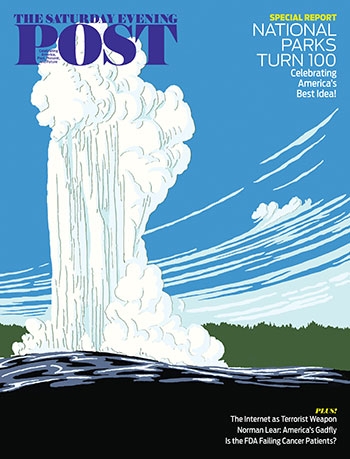
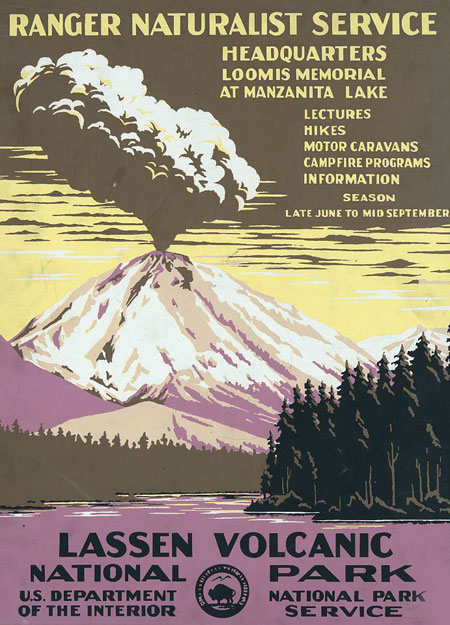
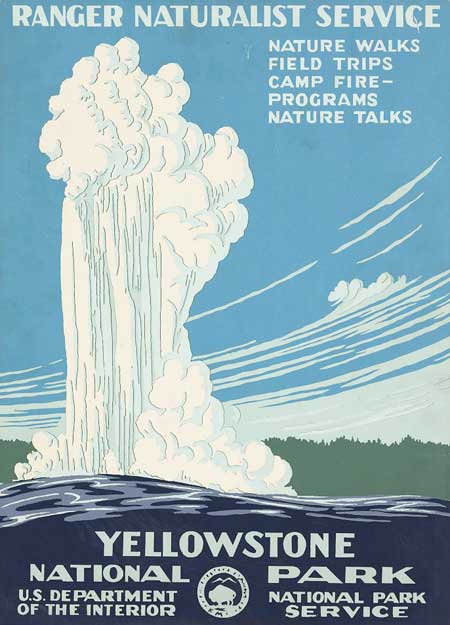
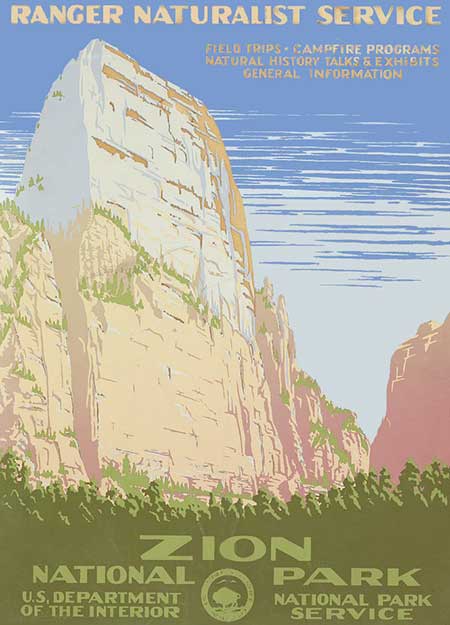
Created in the mid-1930s in response to the Great Depression, the Works Progress Administration (WPA) and its Federal Art Project (FAP) employed more than 5,000 artists who created 225,000 works of art for the American people. From 1938 to 1941, the National Park Service employed WPA-FAP artists to create silk-screen promotional posters for national parks. Only 14 designs were created before the project was suspended with the onset of World War II. Of the 14 parks posters produced, few survived — until Doug Leen, a former park ranger, happened upon one at Grand Teton National Park in the early 1970s. Fascinated with the artwork and the history behind it, Leen embarked on a mission to find, restore, and eventually reproduce the vintage NPS posters. (For more on Leen and his quest, visit rangerdoug.com.) Just over 40 of these rare, original national park posters have since resurfaced and are now in National Park archives, the Library of Congress, and with private collectors.
The Artists
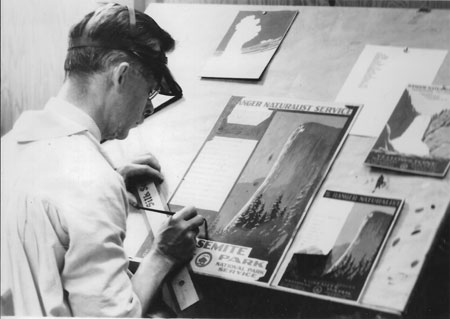
Relatively little is known about the individual artists who created the national park designs; the posters do not bear any artist’s signatures. Yet a National Park Service informational display produced in 1939 contains several photographs of one artist in particular, later identified as C. (Chester) Don Powell.
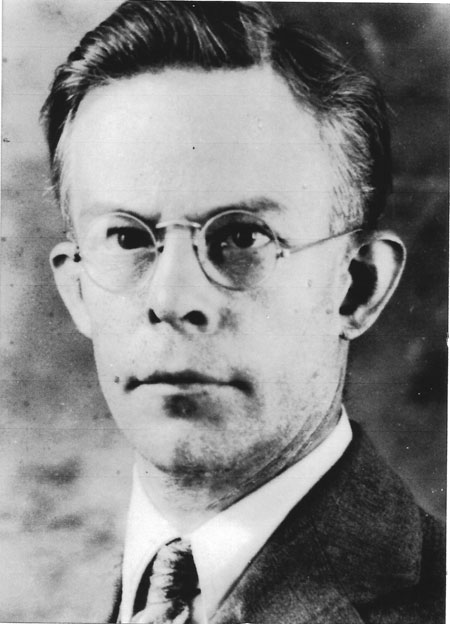
Born in 1896, Powell grew up in Kansas but studied art in Chicago where he also did commercial work for companies such as Wurlitzer. In 1927, Powell and his wife moved to San Francisco, where he set up a studio until the stock market crash of 1929. Out of work as an artist, he went to work for the WPA, first as a flagman on a road crew. But when his creative talents came to light, Powell was transferred to the National Park Service. Powell is believed to be the primary artist for the Yosemite, Yellowstone, and Zion serigraphs.
The poster project was closed down in 1941, with the onset of Word War II. When his assignment for NPS ended, Powell took a course in marine drafting and went to work as a modeler at Kaiser Shipyards in nearby Richmond, California. After World War II, Powell taught Adult Education courses in silk screening for Oakland City Schools and continued to pick up freelance jobs. His post-war work was mostly architectural — designing churches, schools, gymnasia, and houses — although he also did sign making, magazine and book illustration, set design, painting restoration, and commercial artwork. The last nine years of his life were spent as a draftsman with the 6th Army Engineers. He died virtually penniless in 1964 and is buried in Hayward, California.
The Art
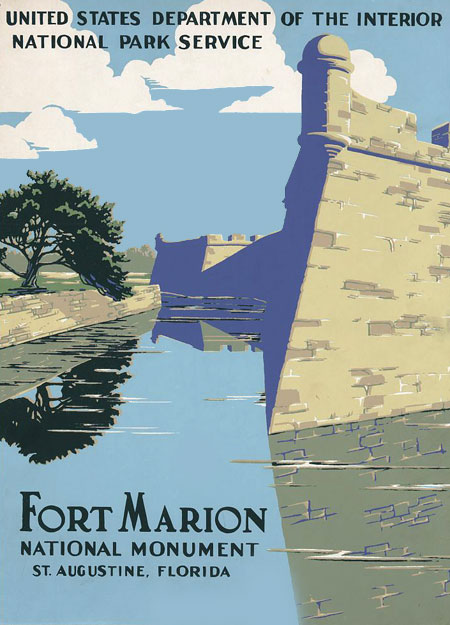
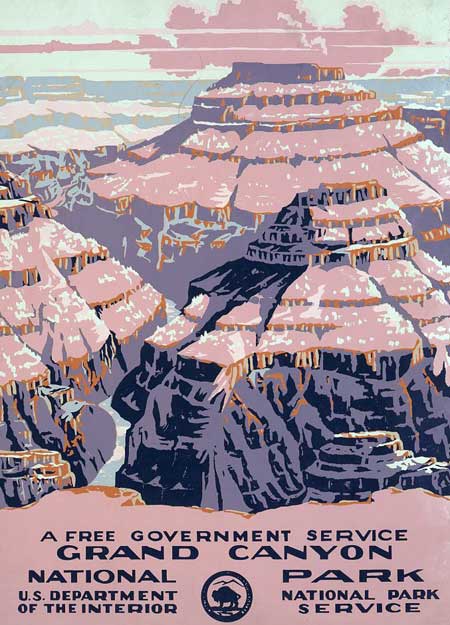
WPA-FAP artists created 14 original designs between 1938 and 1941 for these 13 national parks — Fort Marion (now known as Castillo de San Marcos), Glacier, Grand Canyon, Grand Teton, Great Smoky Mountains, Lassen, Mount Rainier, Petrified Forest, Wind Cave, Yellowstone (2 designs: Old Faithful and Yellowstone Falls), Yosemite, and Zion.
Click the gallery images below to expand.
Ads You’ll Never See Again: The Way We Ate
Continuing our tribute to vintage ads, we look this week at food advertising.
To judge from this sampling, food ads often focused less on the products themselves and more on happy family members. Advertisers appealed to the consumer — a (presumably) female homemaker — through images of well-fed kids and gratified husbands.
And some of these ads … well, we can’t even imagine what the advertiser was thinking.
Stuffed
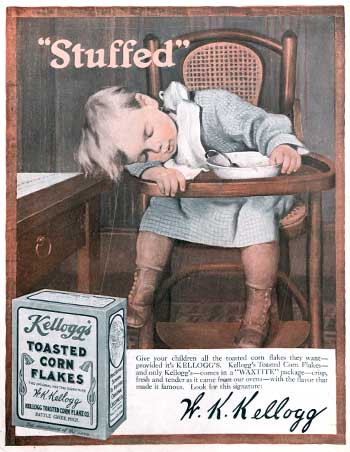
The Saturday Evening Post
July 18, 1914
Judging from this ad, mothers of 1914 didn’t worry too much about childhood obesity.
Orange Juice
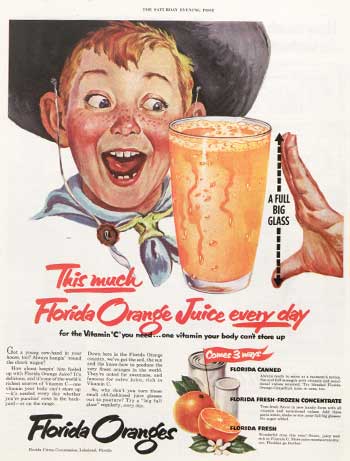
The Saturday Evening Post
March 29, 1952
Drink even more orange juice, advised the Florida Citrus Commission. “Turn those small old-fashioned juice glasses out to pasture.”
Fully Nutritious
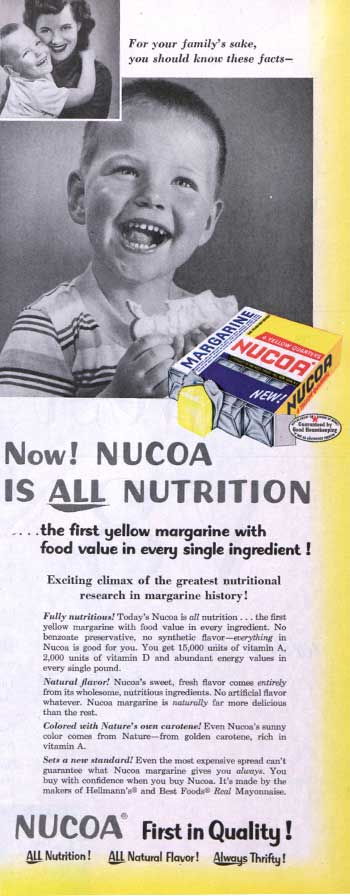
The Saturday Evening Post
January 17, 1953
Americans began using margarine during World War II, when rationing reduced the availability of butter. However, margarine in its natural state had a white, lard-like color. Dairy farmers succeeded in getting laws passed that prohibited margarine makers from dyeing their product an appetizing, buttery yellow. Eventually, these laws were set aside, and margarine makers could promote their product in a natural “sunny color.”
My Feet
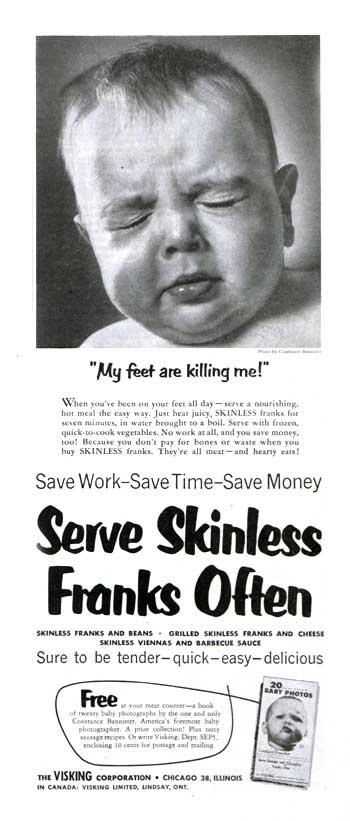
The Saturday Evening Post
May 16, 1953
Cute baby photos were popular among advertisers in the 1950s. They appeared in ads for all sorts of products, including cigarettes. While the photo in this ad was the work of “the one and only Constance Bannister, America’s foremost baby photographer,” it’s hard to see how it sold “skinless” hot dogs.
Wife Beaters
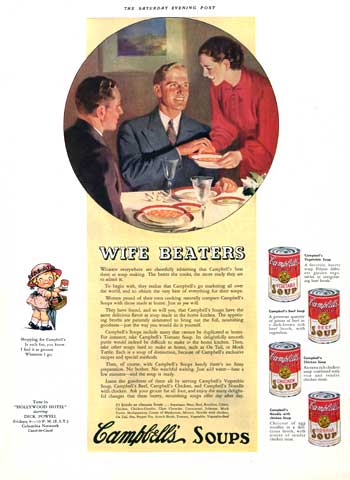
The Saturday Evening Post
February 22, 1936
“Women everywhere are cheerfully admitting that Campbell’s beat them at soup making.” Why? What did you think they meant?
“Got a good man? Keep him happy.”
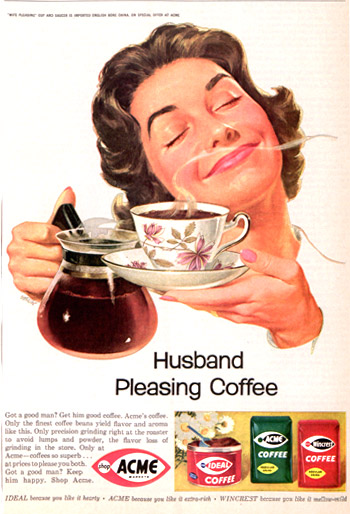
The Saturday Evening Post
February 2, 1963
The small print in the upper corner explained that the very ’60s-looking “wife pleasing” cup and saucer were sold at Acme, back in the days when supermarkets competed by selling place settings, cookware, and encyclopedias.
No Time To Be Frail
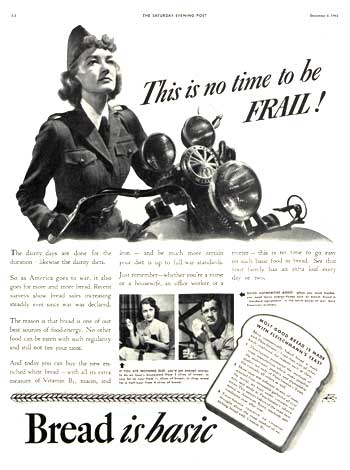
The Saturday Evening Post
December 5, 1942
Lastly, we offer this wartime bulletin to homemakers: “The dainty days are done for the duration.” Whether you were a housewife or a riveter, World War II was “no time to go easy on such basic food as bread,” according to the makers of Fleischmann’s Yeast. Just three slices would give you enough energy to do an hour’s housework. Four slices would power 30 minutes of wood chopping. Bread would help us win the war.
Coming Soon from The Saturday Evening Post: Ads You’ll Never See Again
A special collector’s edition of The Saturday Evening Post filled with ads from the past that will delight, entertain — and sometimes shock — with images and concepts that are thoroughly inappropriate today. You’ll cringe when you see babies wrapped in then-brand-new cellophane. You’ll laugh out loud at Santa promoting a cigarette brand. You’ll wince at an ad that threatens housewives with a spanking for failing to complete their domestic chores. More than just an entertainment, the special issue offers a snapshot of attitudes about gender, childrearing, and marketing in an era that most readers will remember all too well.
It’s too early to order, but if you might be interested in purchasing this product, please click here and we’ll send you a notice when the special issue is available.
Vintage Advertising: Chew on This!
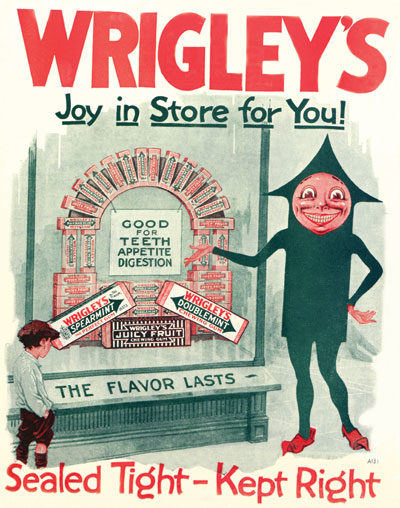
Mention Wrigley and you think gum, right? William Wrigley Jr. counted on just that. Son of a soap manufacturer, Wrigley was born in 1862 Philadelphia. A prankster who was expelled from school, Wrigley, at 13, began selling Wrigley’s Scouring Soap on the streets. Later he traveled from town to town, convincing merchants to stock his father’s soap. At 29, he struck out on his own heading to Chicago with $32 and a dream of running his own business. First, he sold soap, offering a free can of baking powder with every sale. Trouble was, baking powder outstripped demand for soap, so Wrigley went into the baking powder business. To spur sales, he again offered an incentive — chewing gum. The strategy worked. But again chewing gum proved more popular than the product he was selling. Wrigley saw an opportunity. In 1893, he introduced two now-iconic brands — Wrigley’s Spearmint® and Juicy Fruit®. What set him apart from other gum makers at the time was his use of advertising. Through newspaper and magazine ads, highway billboards, and other venues, he built public acceptance and awareness of the Wrigley’s brand. More and more consumers began asking for Wrigley’s gums. By 1908, sales of Wrigley’s Spearmint topped $1 million a year. In 1915, he organized the first-ever national direct-marketing campaign, shipping sticks of gum to every address listed in U.S. phone books. When he retired in 1925, Wrigley had transformed a small business selling soap into the top chewing gum manufacturer in the world. “Anyone can make gum,” he once said. “The trick is to sell it.”
Ads You’ll Never See Again: 19th Century Snake Oil
Prior to the Pure Food and Drug Act of 1906, entrepreneurs could make any claim they wanted for their special medicines, herb tonics, electric belts, and hair restorers. Not only did these remedies usually not work, they sometimes caused more harm than good.
Many of these elixirs, remedies, and “vegetable restoratives” were heavily laced with alcohol, codeine, or opium. While the ads for patent medicines made all sort of promises, none was more fantastic than the promise of “satisfaction guaranteed.”
The makers of patent medicine might have actually believed in their product’s ability to cure, but they definitely believed in the power of advertising. Periodicals of the 19th century were filled with ads for patent medicines. The Post and of the 19th century seems to have avoided some of the more outrageous patent-medicine ads. Even so, we’ve found a few interesting examples.
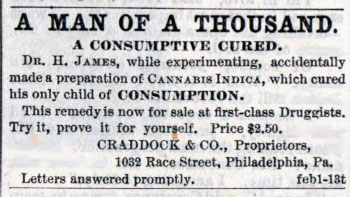
The Saturday Evening Post
February 15, 1873
Medical marijuana: A doctor cures his only child of tuberculosis with cannabis.
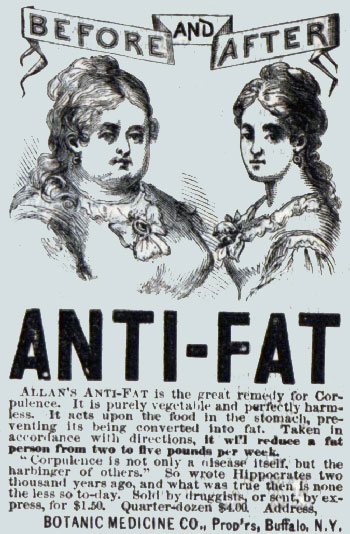
The Saturday Evening Post
July 6, 1878
How many people jumped at the chance to lose “from two to five pounds per week”?
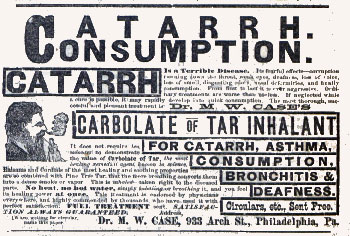
The Saturday Evening Post
October 4, 1879
Dr. Case warned that catarrh (a buildup of phlegm or mucus) could lead to tuberculosis (then the leading cause of death in America) but could be remedied by breathing fumes of wood tar.
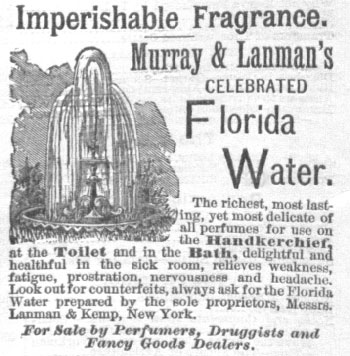
The Country Gentleman
September 11, 1879
Florida Water was a cologne using orange scent. The fountain in the ad refers to the Fountain of Youth, which Ponce de Leon presumably found in Florida. Florida Water is still being sold (lanman-and-kemp.com) but without claims of health benefits.
The Country Gentleman
March 25, 1880
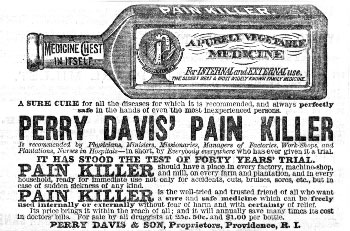
Today, we might wonder how a painkiller could be “always perfectly safe in the hands of even the most inexperienced persons.”
The Saturday Evening Post
January 29, 1881
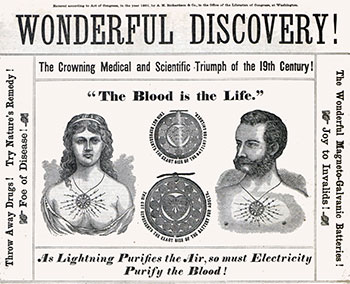
This illustration appeared above a full-page ad for A.M. Richardson’s Wonderful Magneto-Galvanic Battery, which was claimed to revitalize and strengthen organs—without actually specifying which ones. The company recommended it for 56 different ailments, including meningitis, diabetes, heartburn, and “hysteria or fits.”
The Saturday Evening Post
January 30, 1883
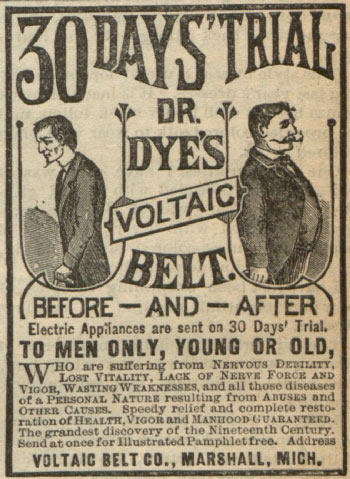
“Speedy relief and complete restoration of Health, Vigor and Manhood guaranteed.” How could anyone not be satisfied with a promise like that?
The Saturday Evening Post
January 13, 2016
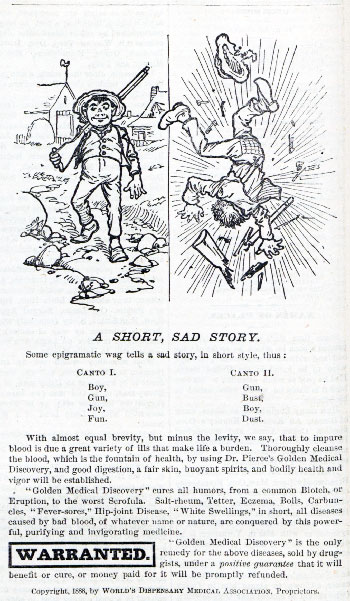
It’s only after you’ve read most of the ad for “Golden Medical Discovery” that you realize the grisly cartoon has nothing to do with the product.
Coming Soon from The Saturday Evening Post: Ads You’ll Never See Again
A special collector’s edition of The Saturday Evening Post filled with ads from the past that will delight, entertain — and sometimes shock — with images and concepts that are thoroughly inappropriate today. You’ll cringe when you see babies wrapped in then-brand-new cellophane. You’ll laugh out loud at Santa promoting a cigarette brand. You’ll wince at an ad that threatens housewives with a spanking for failing to complete their domestic chores. More than just an entertainment, the special issue offers a snapshot of attitudes about gender, childrearing, and marketing in an era that most readers will remember all too well.
It’s too early to order, but if you might be interested in purchasing this product, please click here and we’ll send you a notice when the special issue is available.
Holiday Silliness
Comedy is often found in the unexpected, a contrast between the serious and the frivolous, the modern and the old fashioned. Or, it may be discovered in the all-too-familiar. Such as here – the more accurate account of the holiday season. Specifically for those of us who don’t wrap presents like mall workers, have a Christmas photo with everyone smiling and can’t make it through the tree-decorating process without dad throwing out his back.
All Wrapped Up in Christmas—Richard Sargent
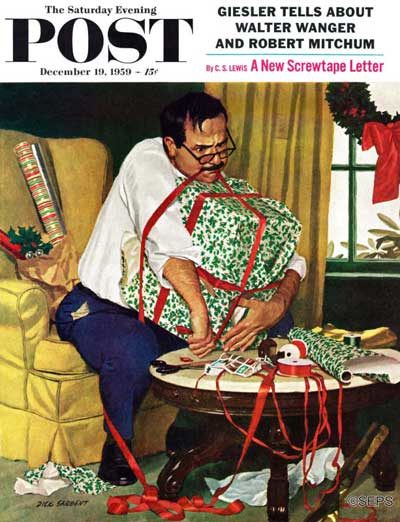
Richard Sargent
December 19, 1959
This dad is about to vanquished by his Christmas Eve wrapping project. Maybe he should have delegated this task to someone else…
Doggy Basket—Charles Kaiser
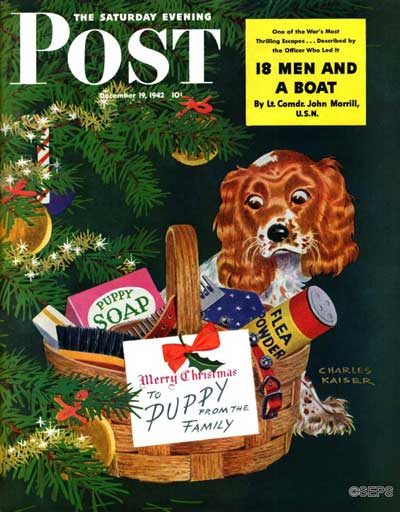
Charles Kaiser
December 19, 1942
Christmas, candy canes, and a puppy! There’s nothing not to love about this classic Post cover. Unless, of course you’re the dog who will be receiving a flee treatment and bath.
Santa’s Helper—Norman Rockwell
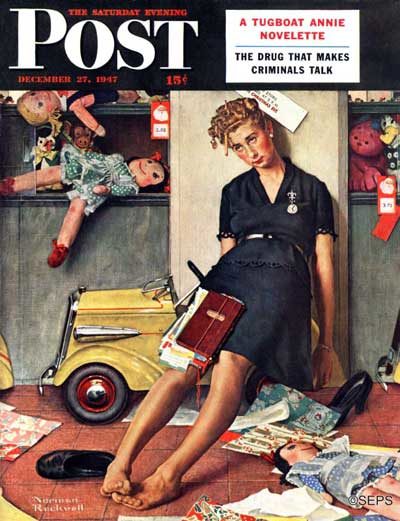
Norman Rockwell
December 27, 1947
This retail worker is done with the holiday season and, by the looks of it, so is the store. Instead of working in the studio for this cover, Norman Rockwell setup shop in Chicago’s Marshall Field’s department store. The store happily provided the setting and toys for the scene but Rockwell felt the picture needed more dolls so he went out and purchased a large number of them. He joked with the Post editors that he owned more dolls than any other 53-year-old kid.
Hidden Gifts—Constantin Alajalov
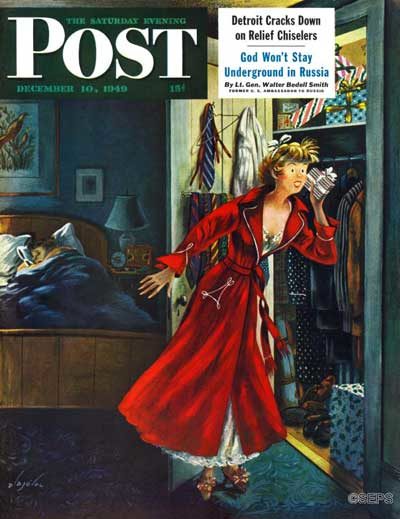
Constantin Alajalov
December 10, 1949
A cover revealing the difficulty even adults face when compelled to investigate their presents. Depicted by Russia-born artist Constantin Alajalov who specialized in illustrations gently pointing out human frailty. Though, it’s hard to fault this lady when the temptation lays less than five feet from her bed.
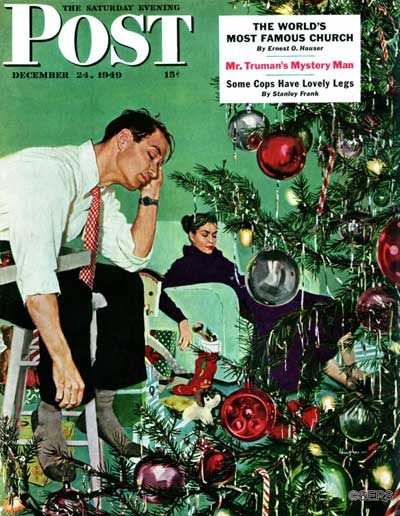
Trimming the Tree—George Hughes
George Hughes
Can’t we all relate to the exhaustion after the Christmas decorating has ended? This man couldn’t even make it to a couch. In reality though, Hughes set the scene for this painting in June of 1949 after he ventured into the Vermont woods, chopped down a pine tree, took it home, and decked it with holiday cheer. He was forced to finish his work quickly, as the summer heat was causing the tree to drop needles and his 2-year-old daughter kept pulling off the ornaments.
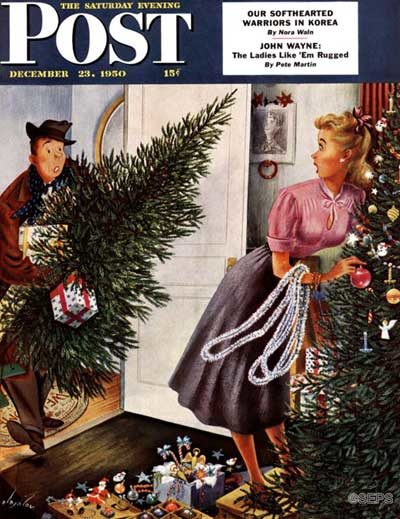
Tree Love—Constantin Alajalov
Constantin Alajalov
December 23, 1950
As if one tree wasn’t difficult enough! Alajalov’s art can often be located at the intersection of cartoonish and realistic. His ability to combine a fashionable, clean stlye with warm-hearted satire was not only perfect for the Post but also for The New Yorker. He is the only artist to work for both magazines (each normally demanded exclusivity).
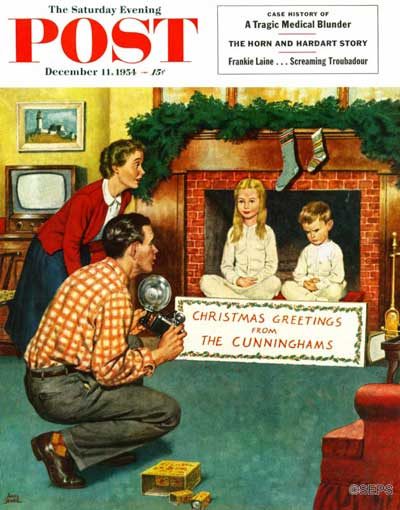
Christmas Photograph—Amos Sewell
Amos Sewell
December 11, 1954
As the camera became ubiquitous, so did the family Christmas card. The only problem? Getting everyone to cooperate.
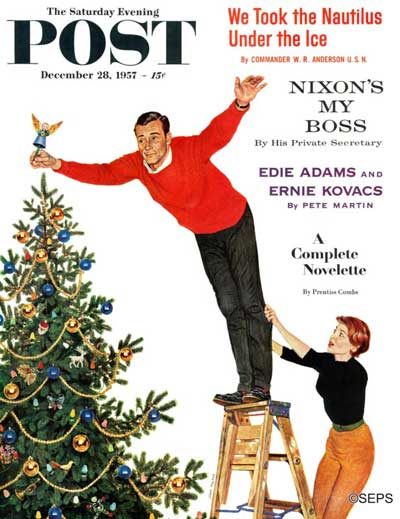
Topping the Tree—John Falter
John Falter
December 28, 1957
Tipping point? Falter specialized in capturing the comedy in family life, often delivering a small, humorous moral. We’d proposed, for this one, the lesson: “Behind every holiday-decorating hero is a woman firmly holding him upright.”
Christmas Morning—Ben Kimberly Prins
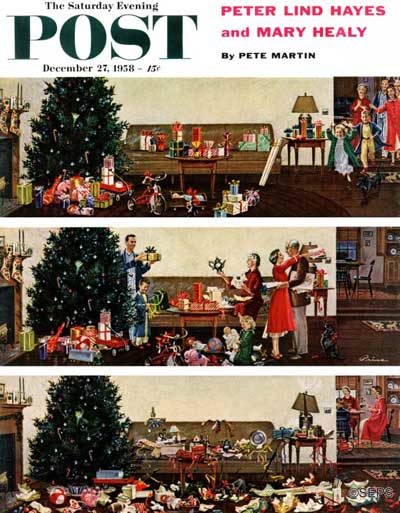
Ben Kimberly Prins
December 27, 1958
Prins artfully unveiled Christmas morning. This sweetly humorous illustration also has a wistful quality: All those weeks of preparation-the buying of gifts, the careful wrapping—then suddenly we’re left with a roomful of shredded paper.
Merry Christmas from the IRS—Ben Kimberly Prins
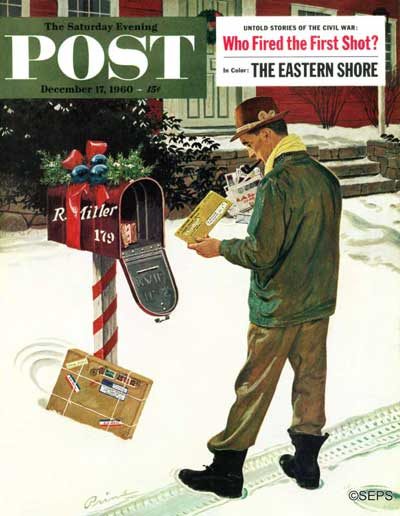
Ben Kimberly Prins
December 17, 1960
How nice to be remembered with cards and packages bursting from one’s cheerfully decorated mailbox! But Christmas might be ending early for this man after receiving a notice from the U.S. Treasury Department.
Turkey Time!
Nestled between a month of shopping for the perfect Halloween costumes and a month of fielding kids’ pleas for PS5 Pros, iPhone7s, and personal drones, sits Thanksgiving. These classic covers revolving around food, family, and togetherness illustrate the funny and sweet moments in the middle of America’s busiest holiday season.
Turkey Dreams
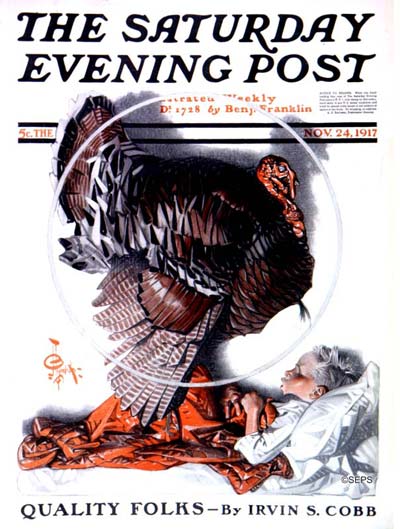
J.C. Leyendecker
November 24, 1917
On the night before Thanksgiving, visions of turkeys danced in their heads. Sugarplums come next month.
Pilgrim Stalking Tom
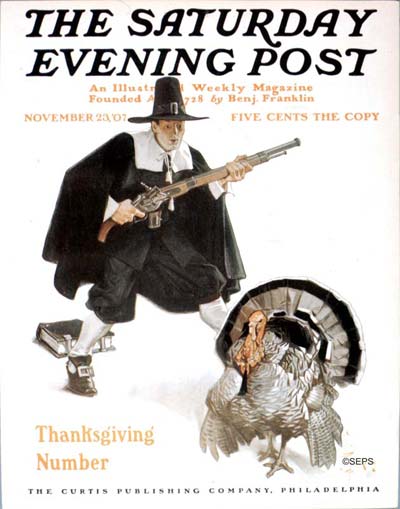
J.C. Leyendecker
November 23, 1907
Ready, steady, aim! This stealthy pilgrim is doing his best to bring home the turkey bacon.
Boy Watching Grandmother Trim Pie
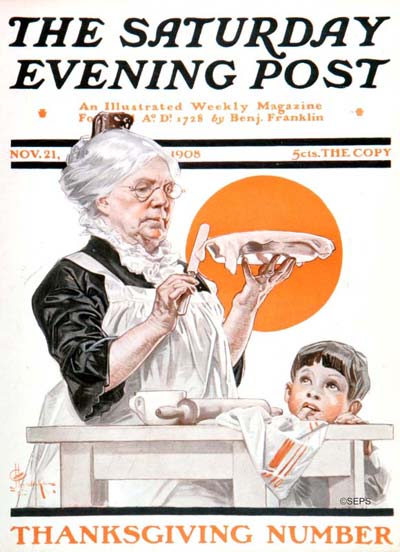
J.C. Leyendecker
November, 21, 1908
Grandma’s hope is to pass down the art of pie making, but her grandson seems to be leaning more toward flavor taster than baker.
Thanksgiving Prayer
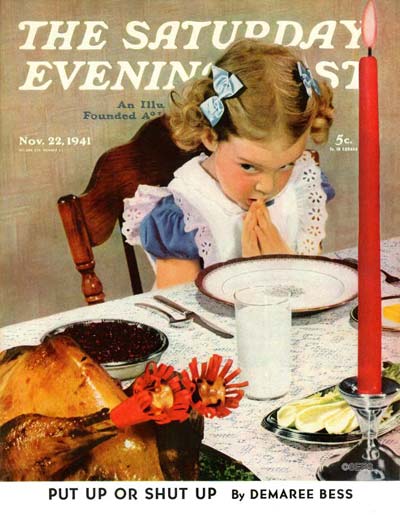
R.E. Miller
November 22, 1941
It’s hard to focus on the Thanksgiving prayer when the food is within an arm’s reach.
Thanksgiving Cherub Sharpening Knife
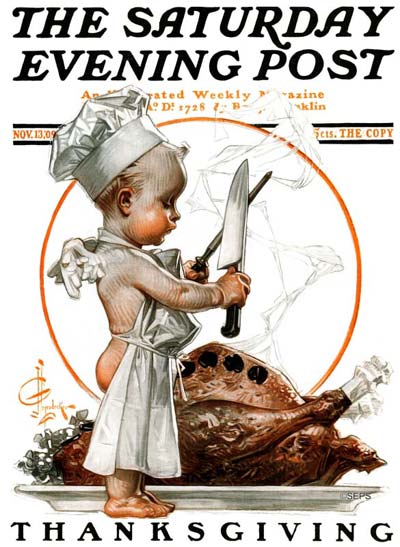
J.C. Leyendecker
November 13, 1909
Who gets to carve the still-steaming tom? Apparently this year, the honor goes to whoever looks best in an apron.
Thanksgiving Dinner 1919
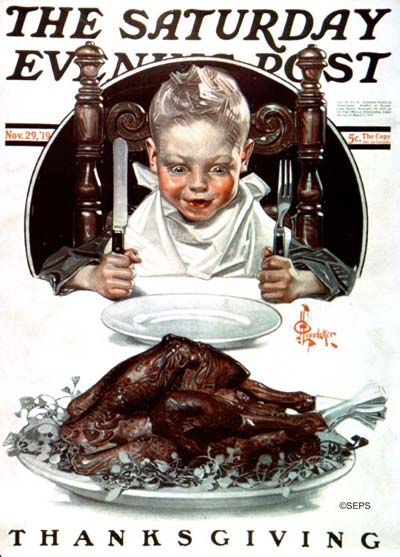
J.C. Leyendecker
November 29, 1919
This young man’s eyes might actually be as big as his stomach.
Pilgrim Boy Carving Turkey
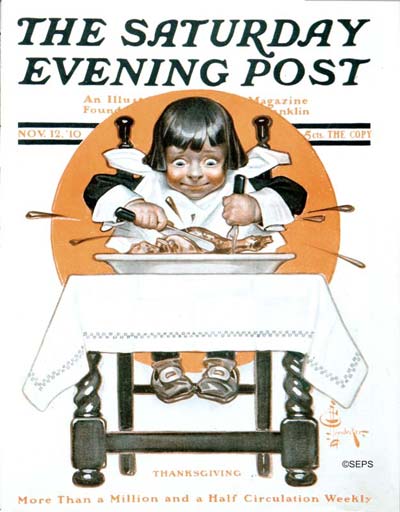
J.C. Leyendecker
November 12, 1910
Artist Leyendecker has done it again! Capturing the elation in that first bite of Thanksgiving dinner.
Prayer Before Cake
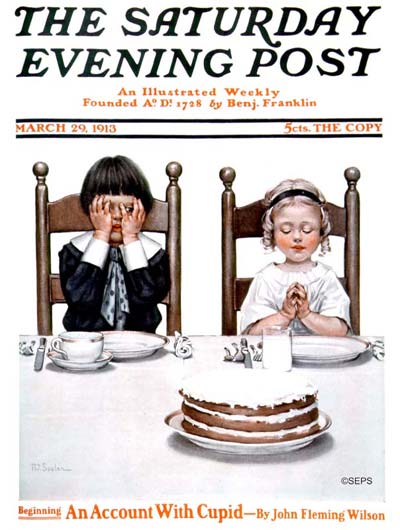
Henry J. Soulen
March 29, 1913
You can guess what he’s thinking: “Didn’t the prayer before dinner cover dessert?”
After Turkey Nap
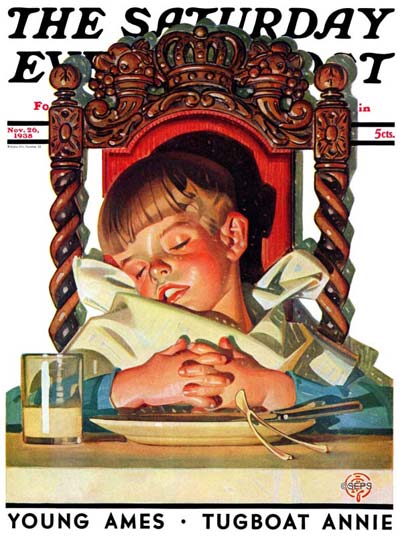
J.C. Leyendecker
November 26, 1938
Ahhh, yes. The moment we all look forward to … the nap. This kid’s doing it right — tuckering out at the table.
Prayer
In “The Power of Prayer” from the November/December 2015 issue, author Ellen Michaud describes how communal worship is a joyous experience that can take us to higher ground. Prayer and worship are common threads in the United States, and one Post artists have illustrated throughout the years. Below is a small collection.
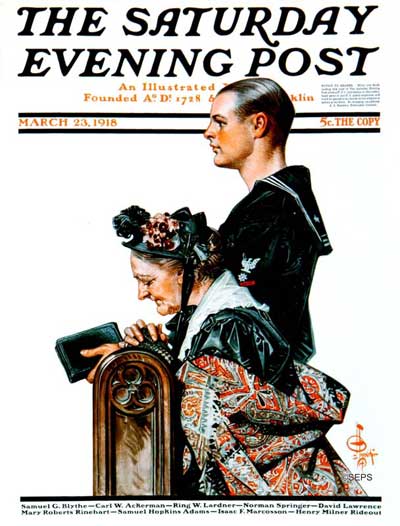
J.C. Leyendecker
March 23, 1918
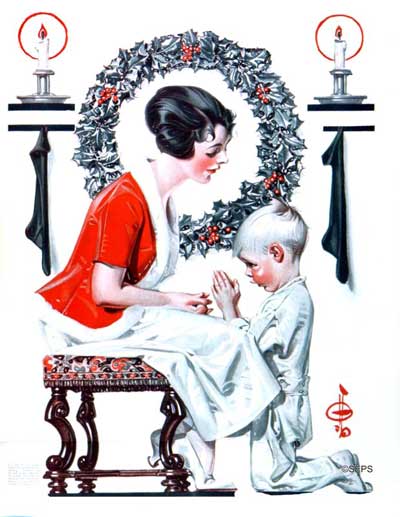
J.C. Leyendecker
December 24, 1921
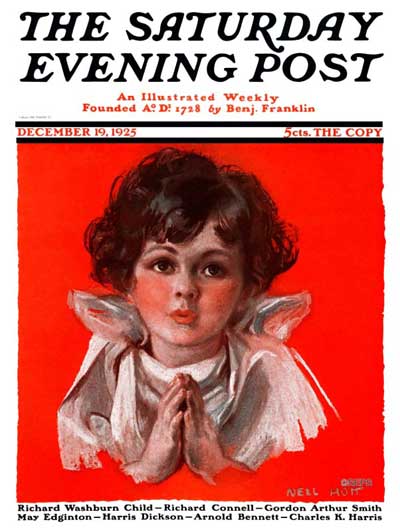
Neil Hott
December 19, 1925
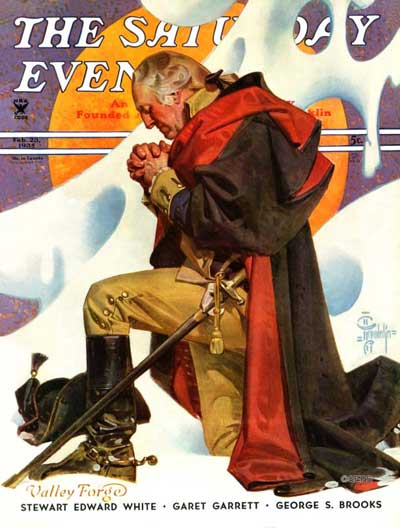
J.C. Leyendecker
February 23, 1935
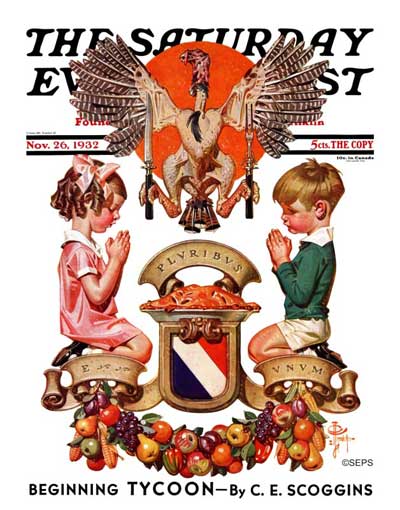
J.C. Leyendecker
November 26, 1932
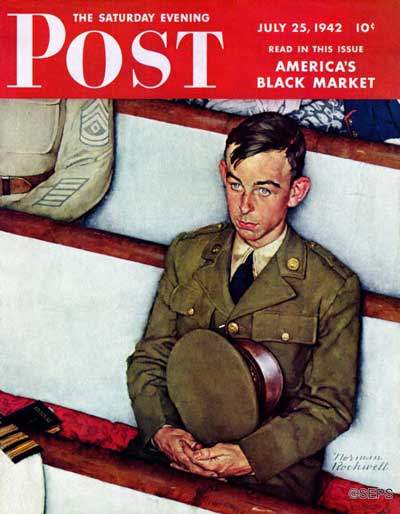
Norman Rockwell
July 25, 1942
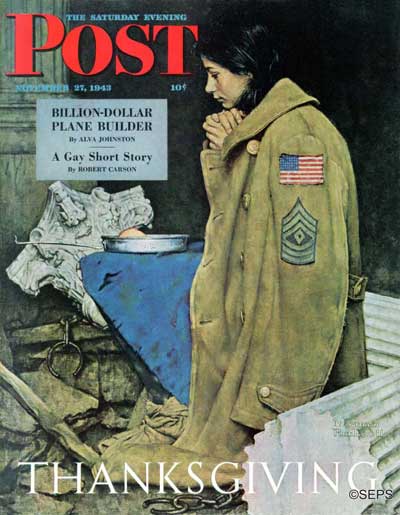
Norman Rockwell
November 27, 1943
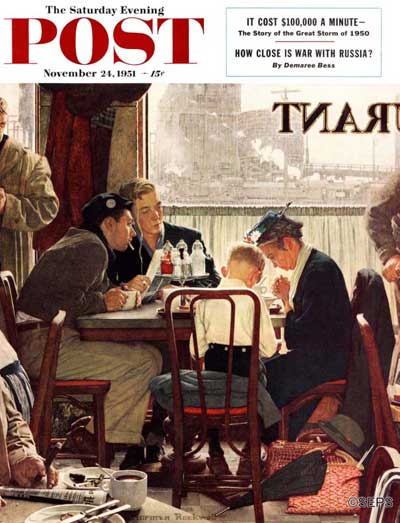
Norman Rockwell
November 24, 1951
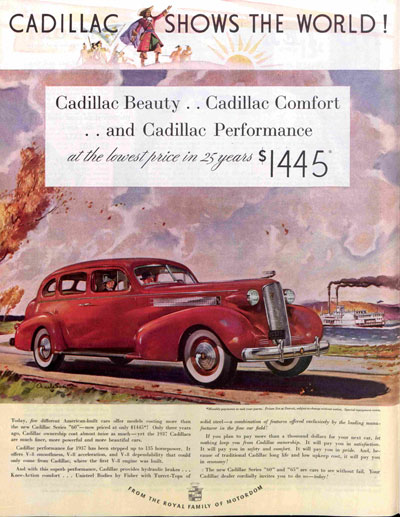
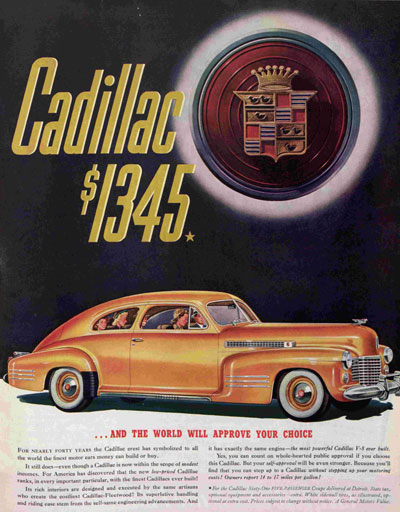
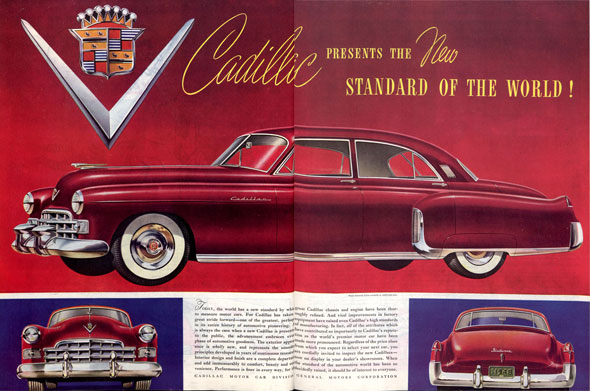
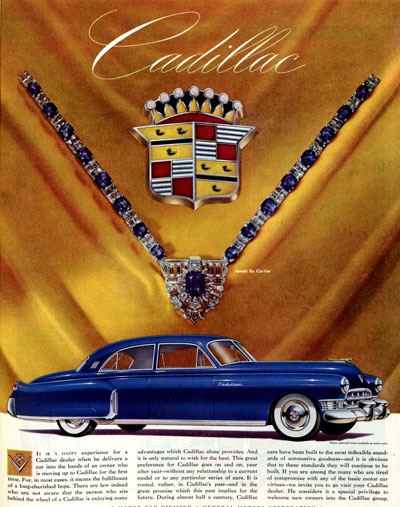
Vintage Auto Ads: Cadillac
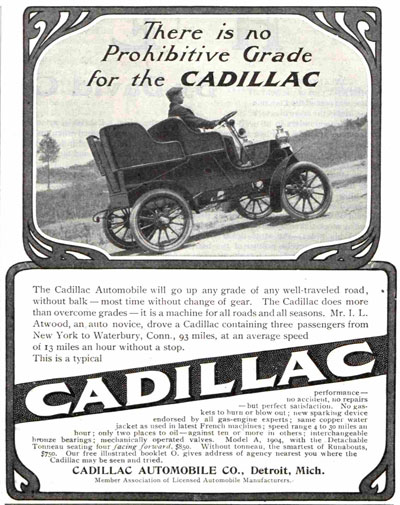
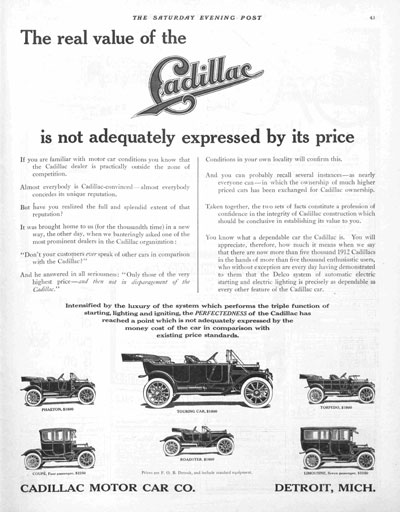
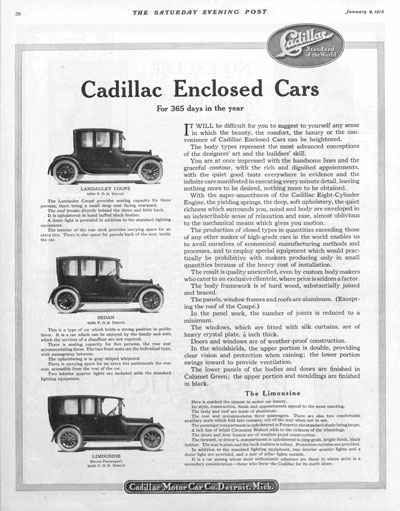
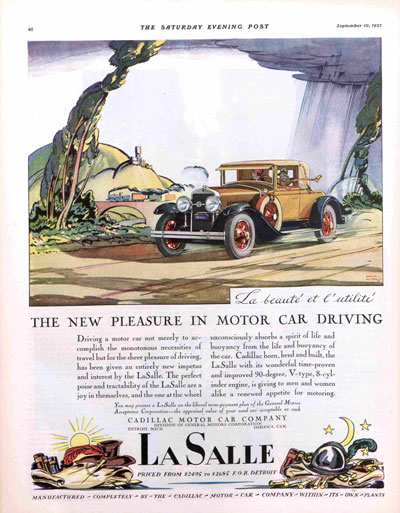
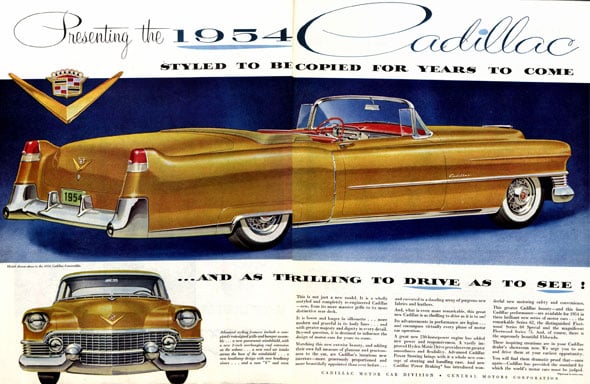
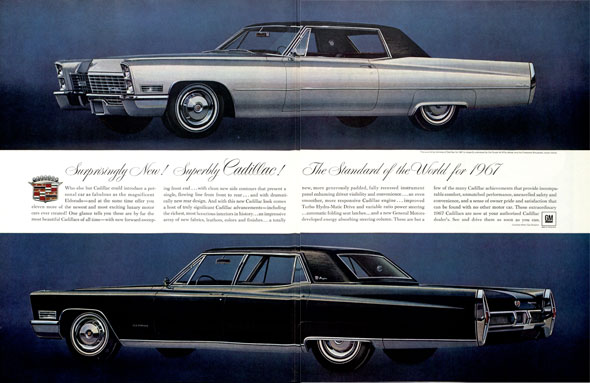
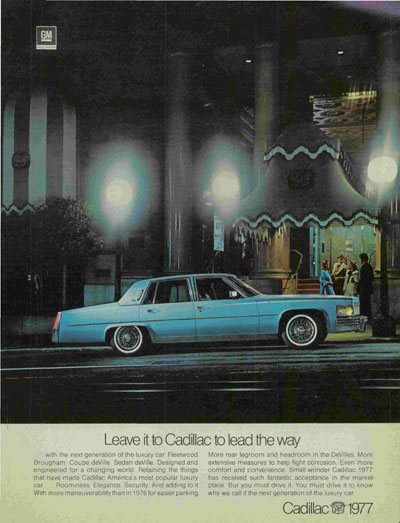
Long before the Cadillac Motor Company was known for making the luxury cars that embodied American opulence, the company was known for its exceptional engineering.
That engineering was proven, to British satisfaction at least, when Cadillac competed for the Dewar Trophy in 1908. As part of that contest, three Cadillacs were completely disassembled and all the parts were mixed together, along with a lot of spare Cadillac parts. Mechanics then assembled three new vehicles out of the pile. (For more on the auto industry’s early years, check out Post‘s new special collector’s edition, Automobiles in America!)
Each of the cars started immediately and ran 500 miles without major problems.
This might seem unremarkable today, but in the years before precision machining, auto components were rarely produced to the exact specifications. Each part might need to be filed or ground to fit where it should.
But Henry M. Leland, the founder and inventor of the Cadillac, insisted on producing parts that could be fully interchangeable. He’d learned about precision machining while working for Colt Firearms, before opening a machining shop in Detroit. In 1902, he was asked to appraise the failing Henry Ford Company (not to be confused with the Ford Motor Company), which was then headed to bankruptcy after Henry Ford left it. Rather than assess the company’s assets, Leland convinced investors to allow him to revive the company using a motor that he’d designed.
The company took on the Cadillac name and began making automobiles with a single-cylinder, 10-horsepower engine. When Cadillac Runabout and Tonneau models were shown at the 1903 New York Auto Show, they drew large crowds and 2,000 orders.
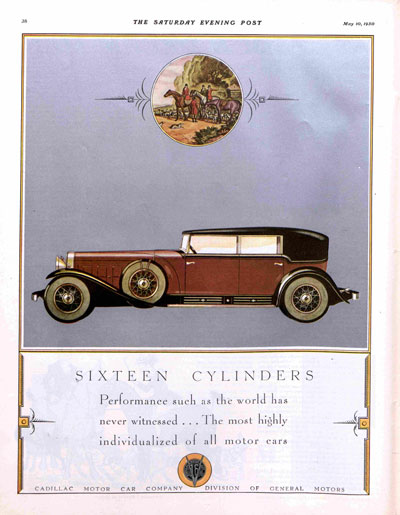
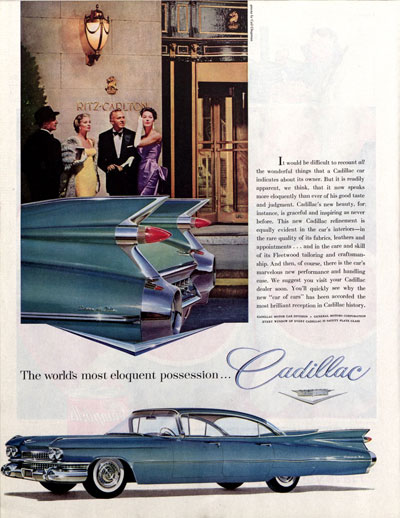
Leland made sure his company remained at the edge of innovation. He was the first to offer a modern electrical system, which meant improved ignition, dependable headlights, and most important, a starter motor that eliminated the need to hand-crank the engine. In later years, Cadillac pioneered automatic transmission, power steering, V-8 and V-16 engines, the Philips screw, and enormous tailfins.
In 1908, Will Durant purchased Cadillac to add a luxury line of cars to his General Motors lineup. He paid Henry Leland $4.5 million for the company on the condition that Leland remained to oversee production. At age 74, Leland left GM to establish the Lincoln Motor Company and build Liberty aircraft engines for the Army in World War I. In 1922, about four years after the war ended, Leland sold the company to Ford.
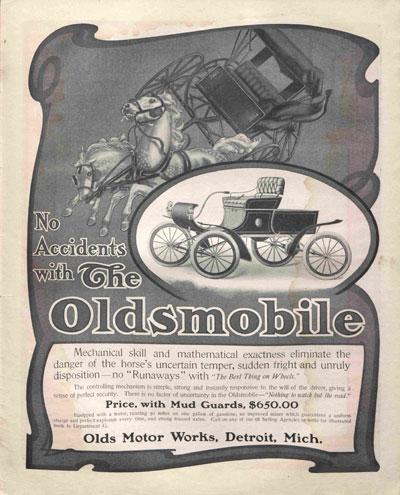
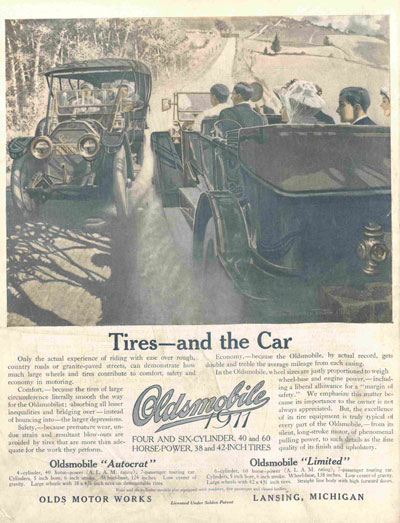
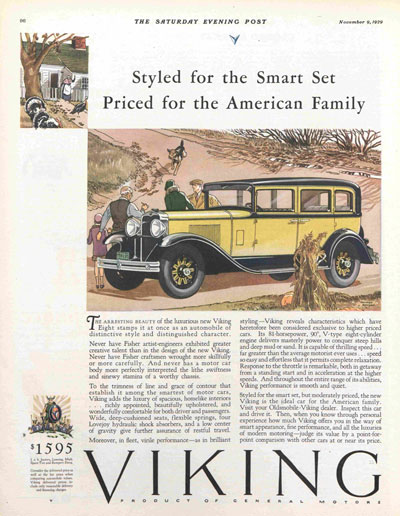
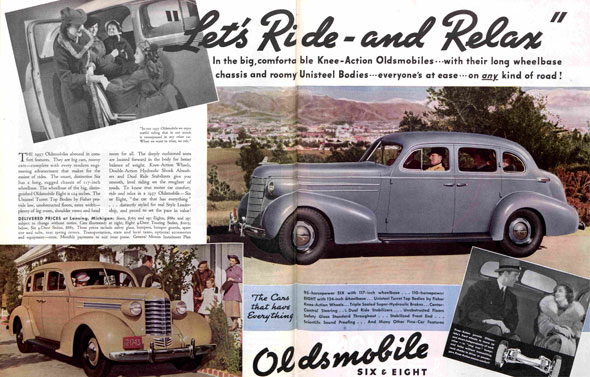
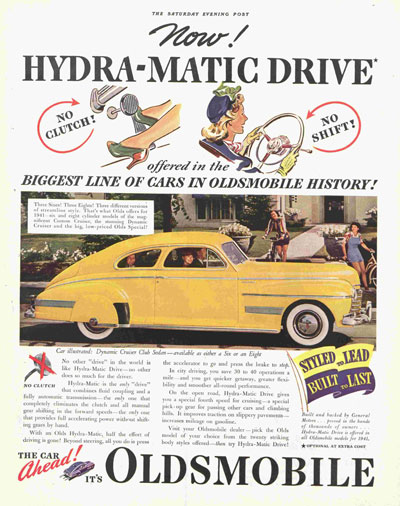
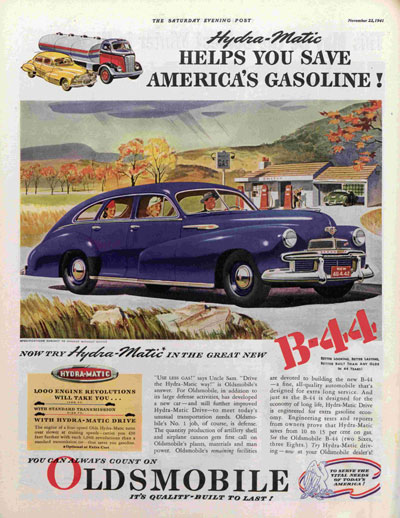
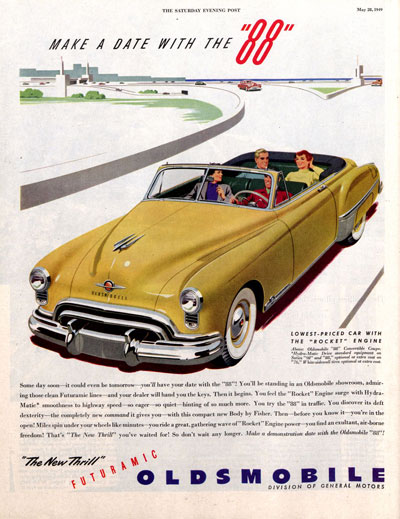
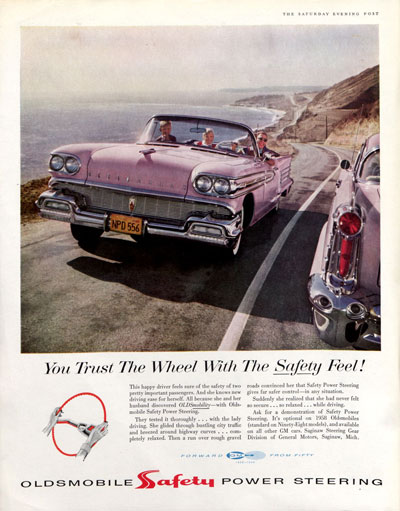
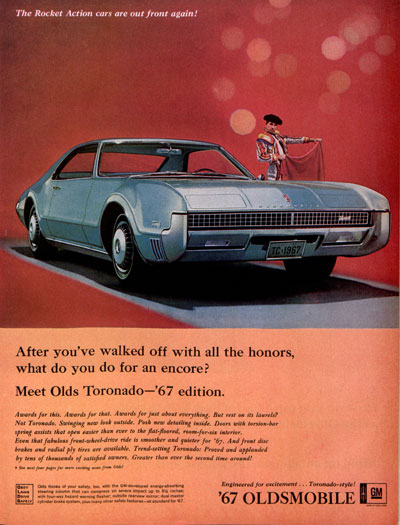
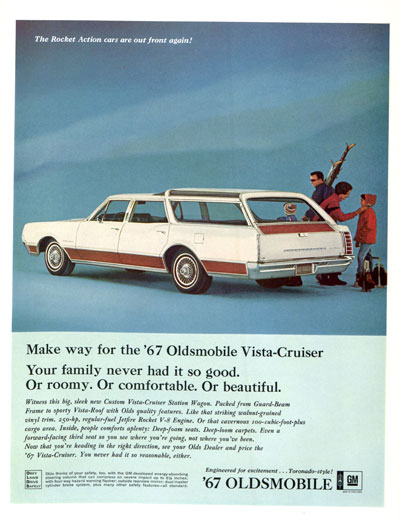
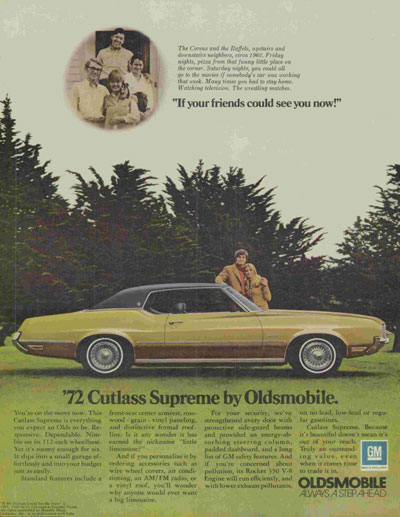
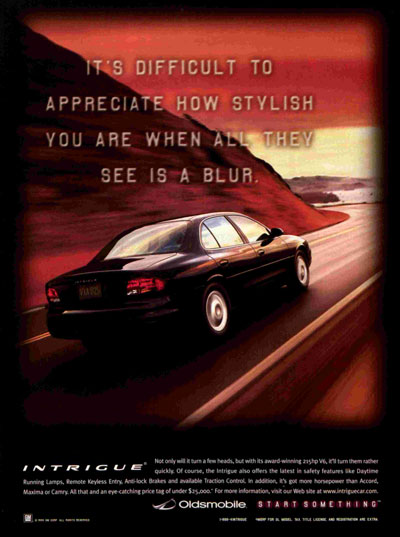
Vintage Auto Ads: Oldsmobile
Like David Buick and Louis Chevrolet, Ransom Olds was fated to launch a car company that left him behind on its way to becoming a leading brand.
Olds was one of the originals, starting his company in 1897. The first automaker to use mass production, he produced 425 vehicles in 1901, which made him the country’s leading car manufacturer. But in 1904, the company’s board of directors wanted to move the line toward larger, more expensive cars. Olds wanted to continue producing his small, affordable models. In the end, he left Olds Motor Vehicle company to start over. Unable to use his name on a new brand, he chose his initials instead, and Ransom Eli Olds launched the REO Motor Car Company. (For more on the auto industry’s early years, check out Post‘s new special collector’s edition, Automobiles in America!)
His old company was acquired by General Motors in 1908, which positioned the Oldsmobile as a mid-priced brand.
In the decades that followed, the company introduced several innovations in its engine and transmission design. By the 1970s, it was producing America’s best-selling car. Yet within a few years, the Oldsmobile brand had lost its popularity, and in 2004 General Motors closed the Oldsmobile line.
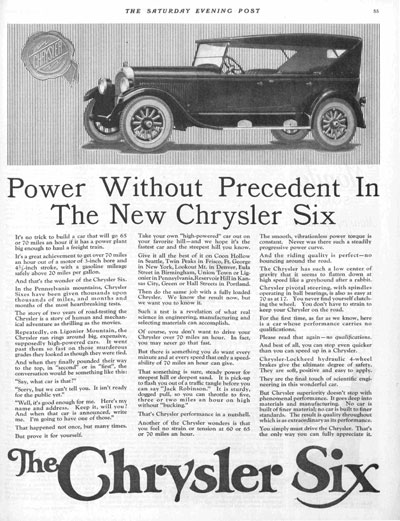
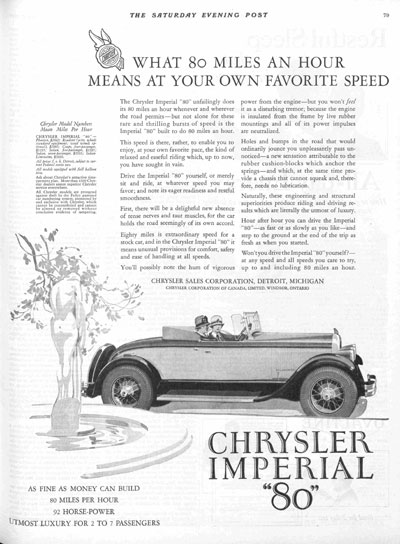
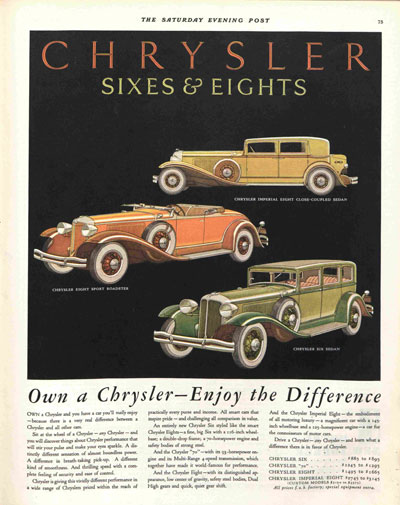
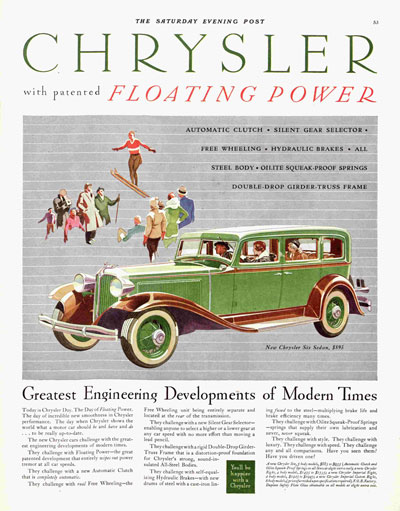
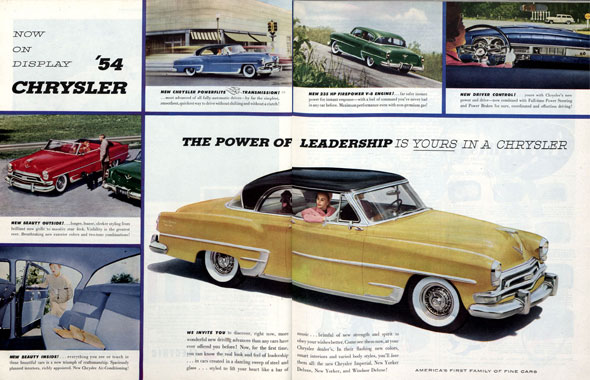
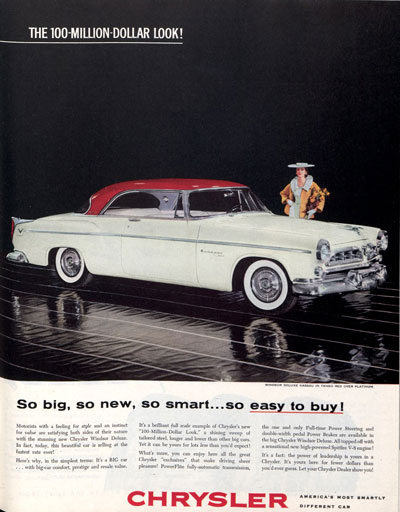
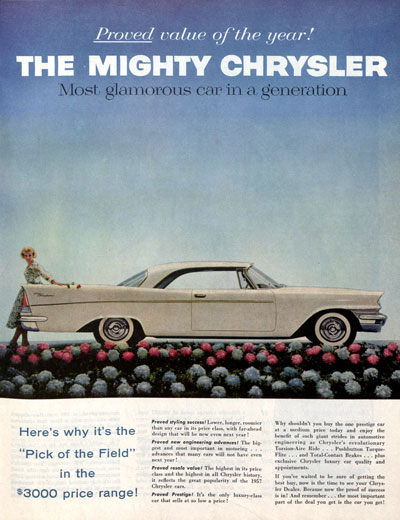
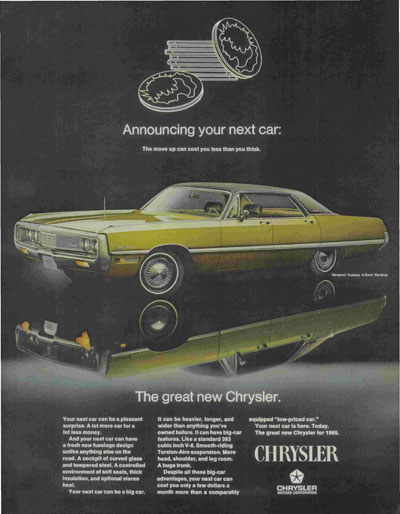
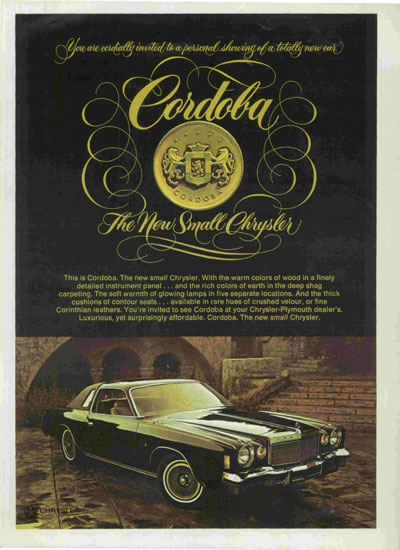
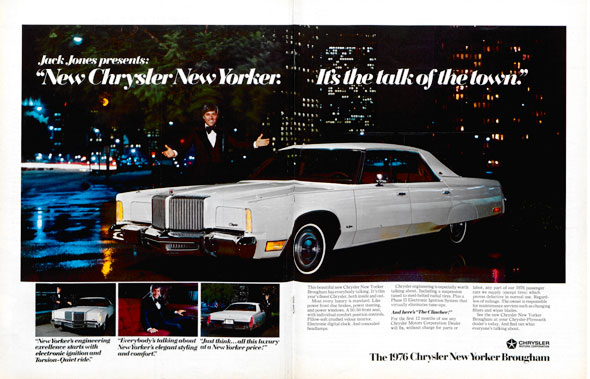
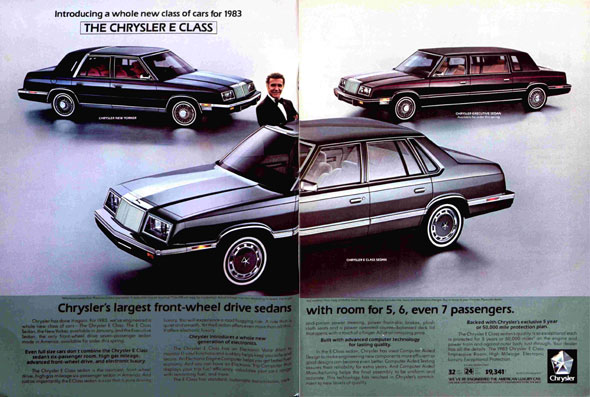
Vintage Auto Ads: Chrysler
Walter P. Chrysler started his career at 17 as a railroad mechanic whose engineering skills enabled him to rise through the ranks at several railroad companies. In 1912, an interest in automobiles led him to accept a job with General Motors as Buick’s production manager at age 36.
Eight years later, fed up with General Motors’ management, Chrysler quit Buick. He acquired a controlling interest in the ailing Maxwell Motor Company and, within a few years, had repositioned the company, given it his own name, and produced his first model.
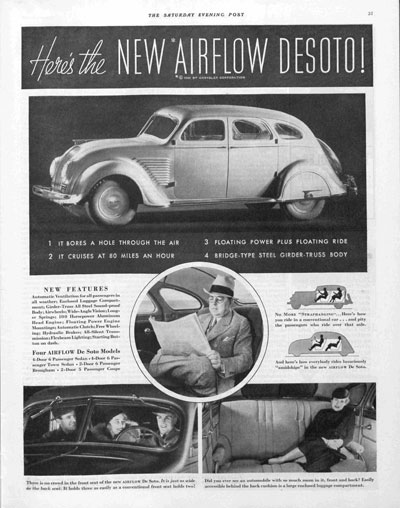
Recognizing the wisdom of offering models in several price ranges, he soon launched the mid-priced DeSoto division and the economy-model Plymouth. And in 1928, he made his company one of the industry leaders by purchasing the Dodge Brothers operation. (For more on the auto industry’s early years, check out Post‘s new special collector’s edition, Automobiles in America!)
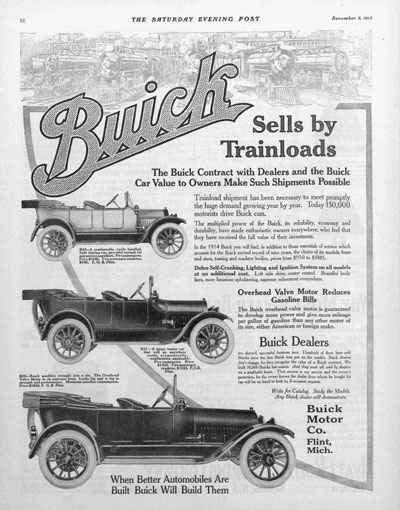
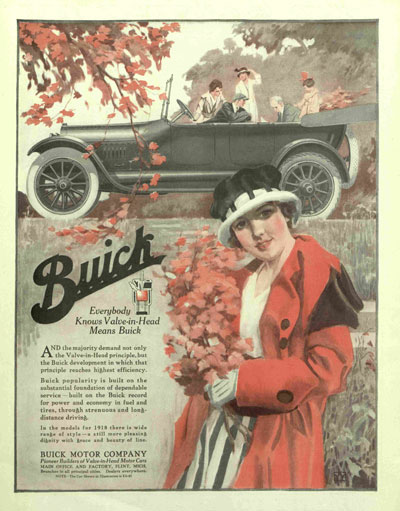
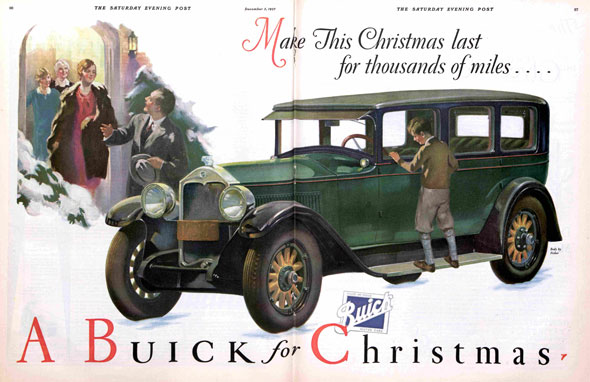
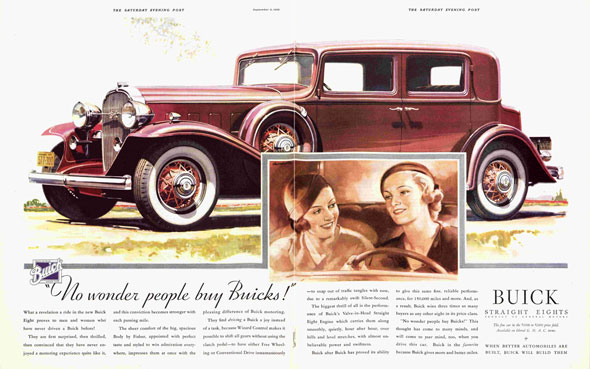
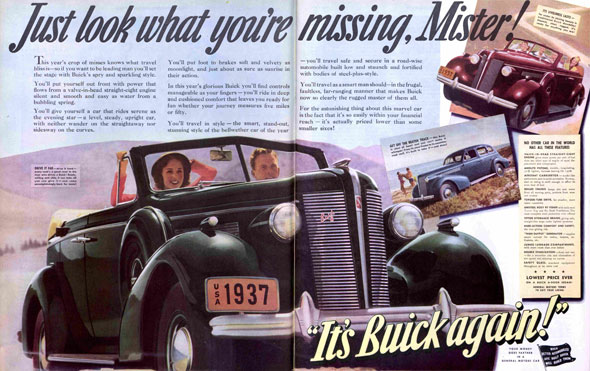
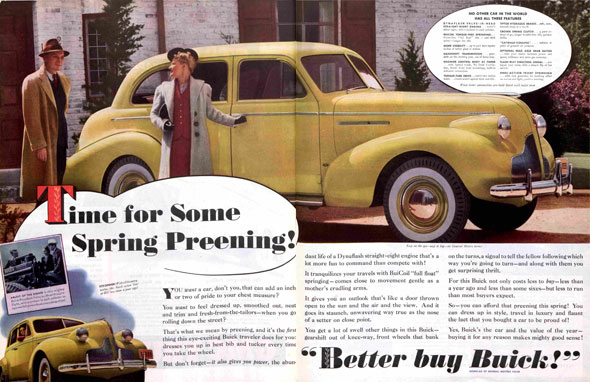
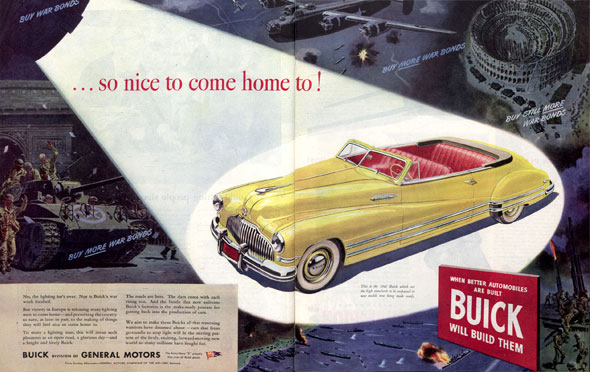
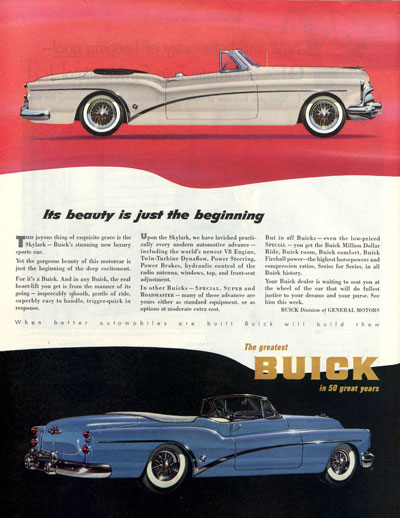
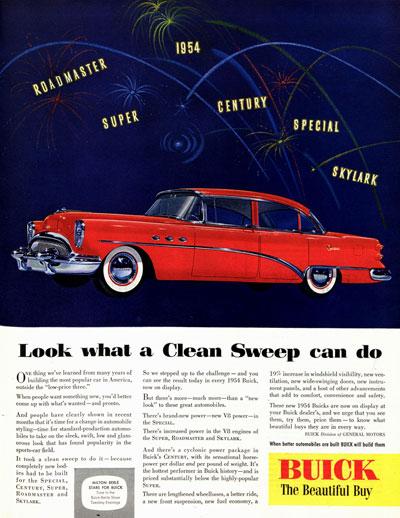
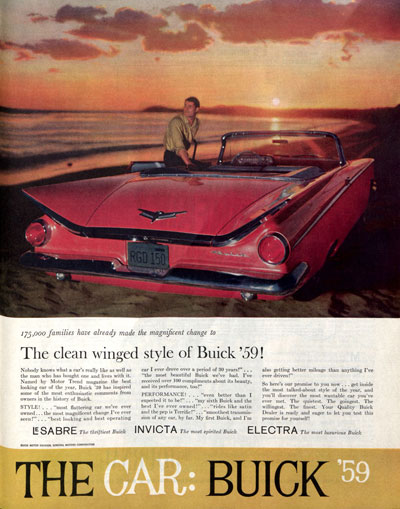
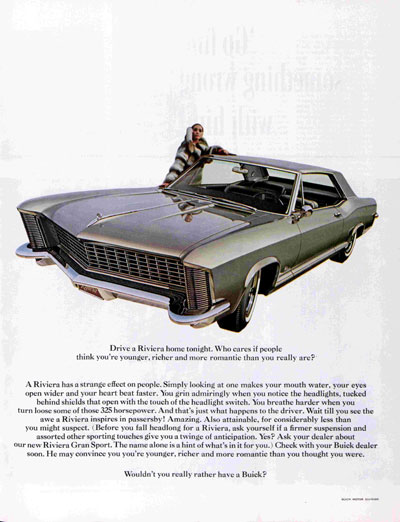
Vintage Auto Ads: Buick
David Dunbar Buick was running a successful plumbing-supply business in the 1880s when he became interested in automobiles and gasoline engines. He sold his business and sank his money into a new company: Buick Auto-Vim and Power Company. Although a gifted designer, Buick was never a great businessman. He repeatedly ran into cash shortages and was always looking for more investors.
After his first company folded, Buick started another on May 19, 1903, and named it the Buick Motor Car Company.
Shortly after the company moved to Flint, Michigan, it signed on William Durant as general manager and director. Durant provided the business skills that Buick lacked, and eventually built the company into automotive giant, General Motors.
Buick retired from the company in 1908, never finding the success he had hoped his automobile would give him. Durant, though, was a born salesman with valuable connections in the horse-carriage business, which he used to distribute his automobiles. By 1908, Buick was outselling every other automobile in America. (For more on the auto industry’s early years, check out Post‘s new special collector’s edition, Automobiles in America!)
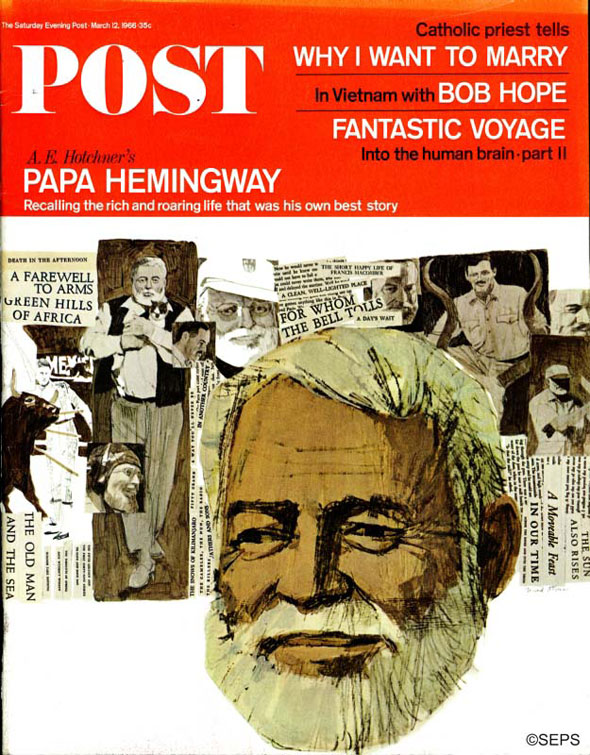
Fred Otnes
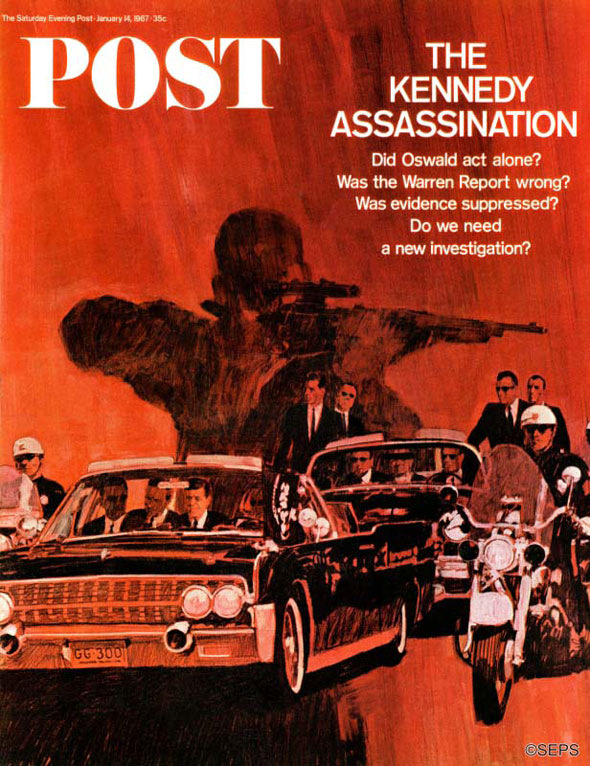
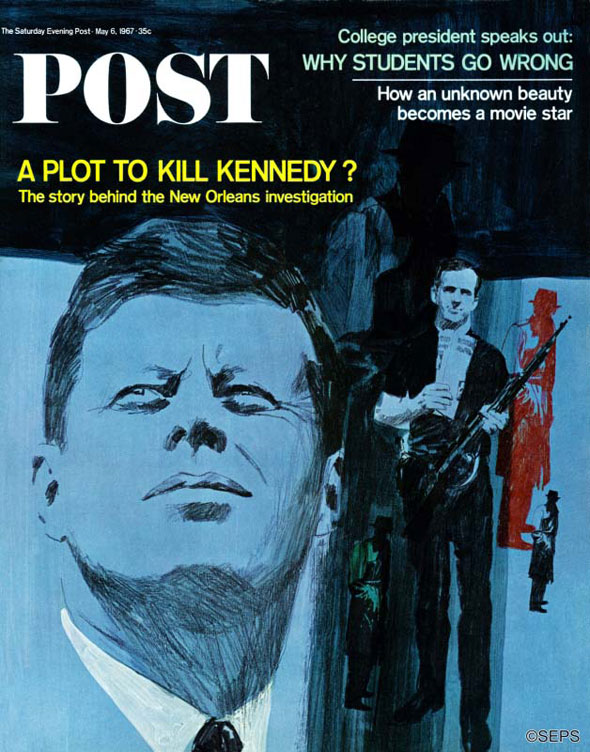
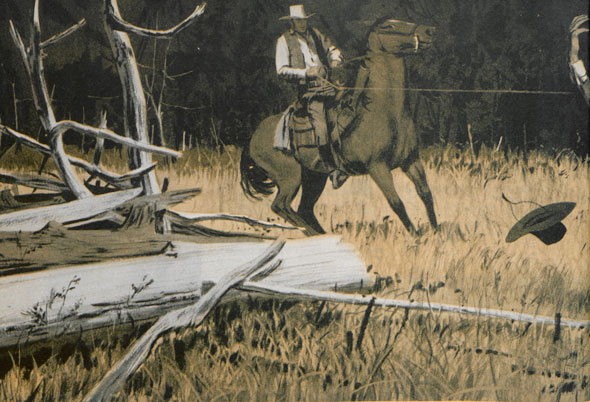
Fred Otnes, who passed away Tuesday, July 28, at age 89, brought abstract art to The Saturday Evening Post cover in 1966. As popular taste began to shift slowly away from illustration toward photography and television in the 1960s, Otnes abandoned the narrative style he employed to illustrate Post fiction such as “Kiowa Moon” by Alan LeMay. The move set him apart from other commercial artists of his time, and his willingness to embrace the abstract and chaotic nature of collage put him in high demand during one of the most turbulent decades of American history, an era of Civil Rights, the Vietnam War, and the Kennedys’ assassinations. As an illustrator and fine artist, Otnes won more than 200 awards in his lifetime.
March 23, 1957
Vintage Auto Ads: Chevrolet
Though Ford would start the 1920s as the invincible market leader, it was General Motors’ Chevrolet sales that finally pushed Ford out of the No. 1 spot in 1927. Due in part to its advertising in magazines like The Saturday Evening Post, General Motors would continue to hold the top slot in all but 5 of the next 50 years.
For more on the auto industry’s early years, check out Post‘s new special collector’s edition, Automobiles in America!
When William Durant and Louis Chevrolet’s Classic Six rolled out in 1912, it was selling for $2,150. But by 1925, Durant was offering models for $695 to lure buyers away from Ford’s inexpensive Model T.
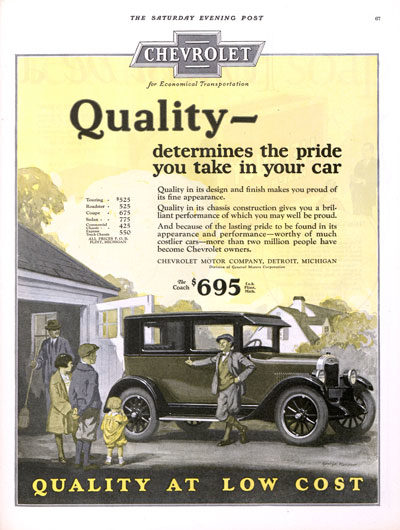
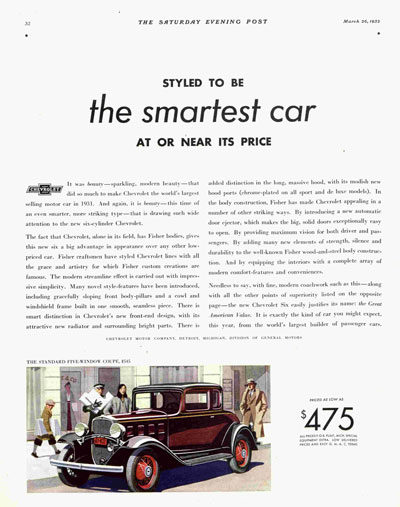
By 1927, Chevrolet had overtaken Ford in sales. Determined to hold onto its lead, the company developed new car features throughout the 1930s, including a new cast-iron, straight-six cylinder engine, hydraulic brakes, V-grilles, and hydraulic brakes.
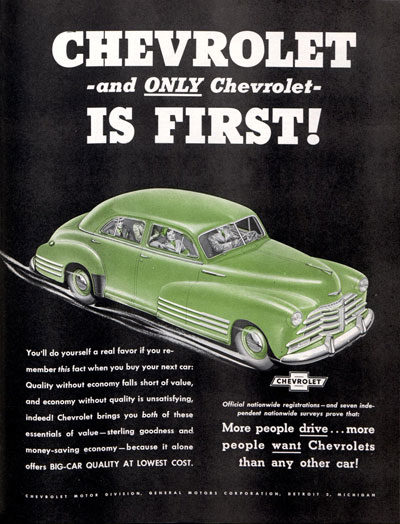
When the company resumed auto production after World War II, Chevy’s new Fleetmaster series seemed little different from its prewar models.
Several new models were introduced in the 1950s: the Nomad, El Morocco, 210, 150, Impala, El Camino, and this classic, the Bel Air with its “zippy, thrifty automatic transmission.”
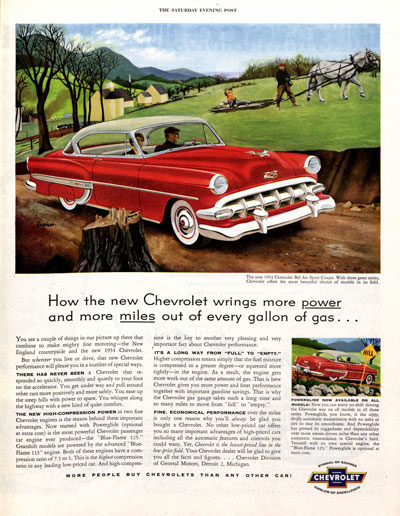
Chevrolet had developed a new “small-block” 162 hp V-8 engine, which could take the Bel Air from 0 to 60 mph in … 12.9 seconds.
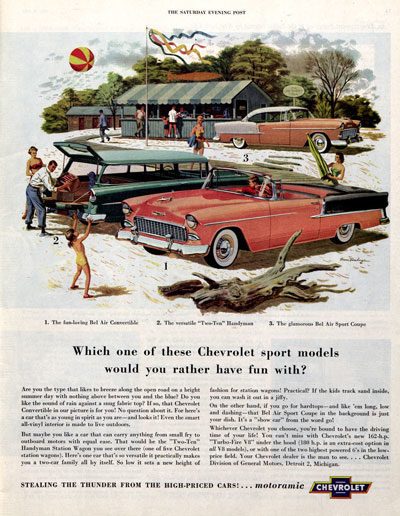
The 1956 Bel Air became even more extravagant with chrome details, including trim that ran from the rear to the front of the car and back again.
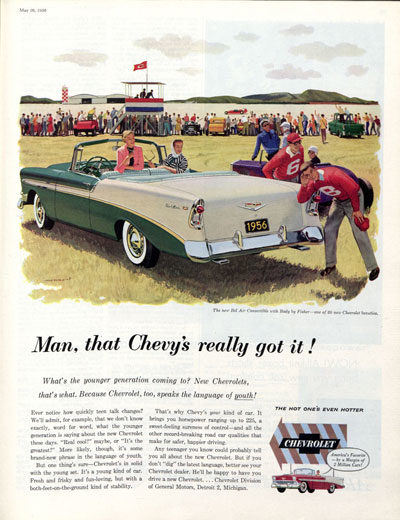
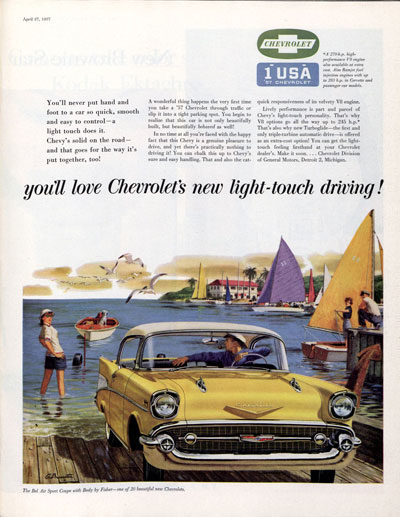
The 1957 Bel Air was destined to become one of the classic American automobiles, highly prized by collectors.
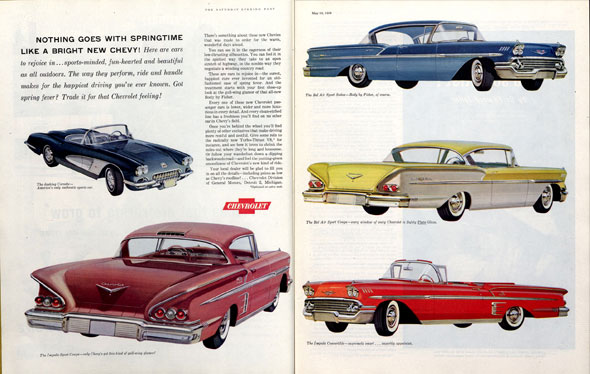
In 1959, Chevrolet needed two pages to show off their new models. They included the Corvette, now in its fifth year of production, and the Imapala — with a longer, lower, wider body.
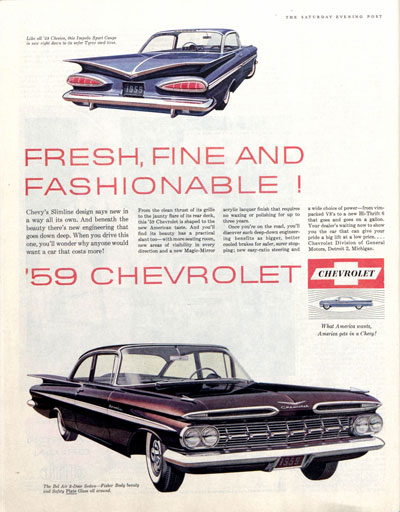
The jutting tailfins of the 1957 Bel Air relaxed into the flattened gullwing by 1959.
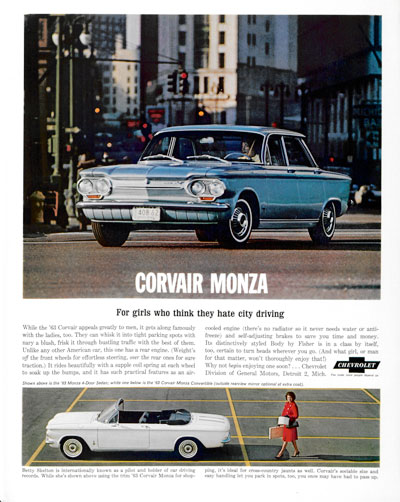
Introduced in 1960, the Corvair featured an air-cooled rear-mounted engine. In his critique of the auto industry published in 1965, Ralph Nader charged that the design made the vehicle unsafe, though subsequent studies have not supported his claims.
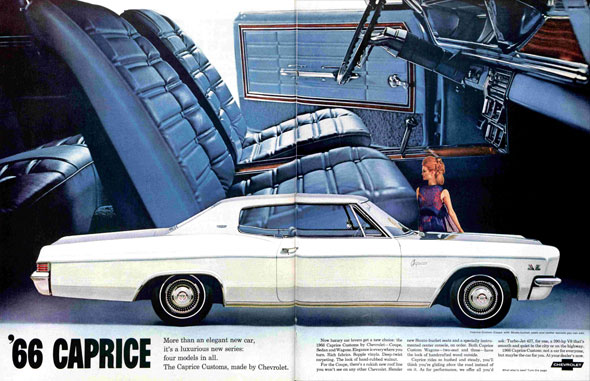
Originally part of the Impala line, Carpice was developed into a full line of models in 1966. With an elegant interior and 325 hp engine, it proved to be a popular model in the luxury car market.
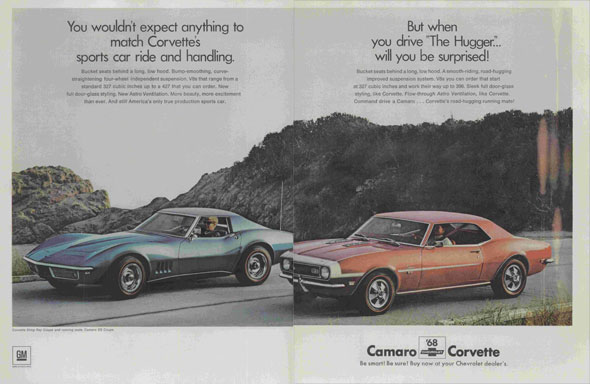
In 1967, Chevrolet introduced the Camaro, one of the first high-performance vehicles subsequently termed “muscle cars.” Marketed as an affordable sports car, the Camaro was Chevy’s response to Ford’s surprisingly popular Mustang.
Vintage Auto Ads: Ford
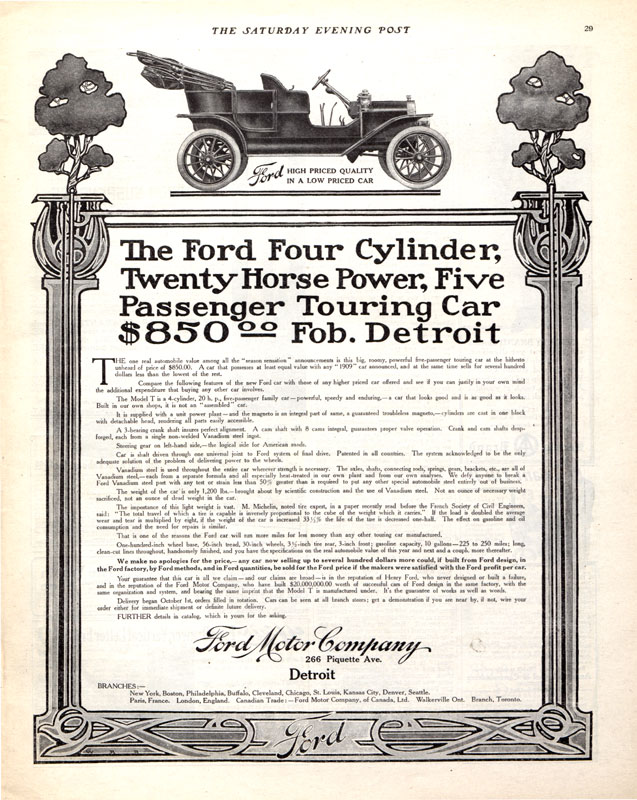
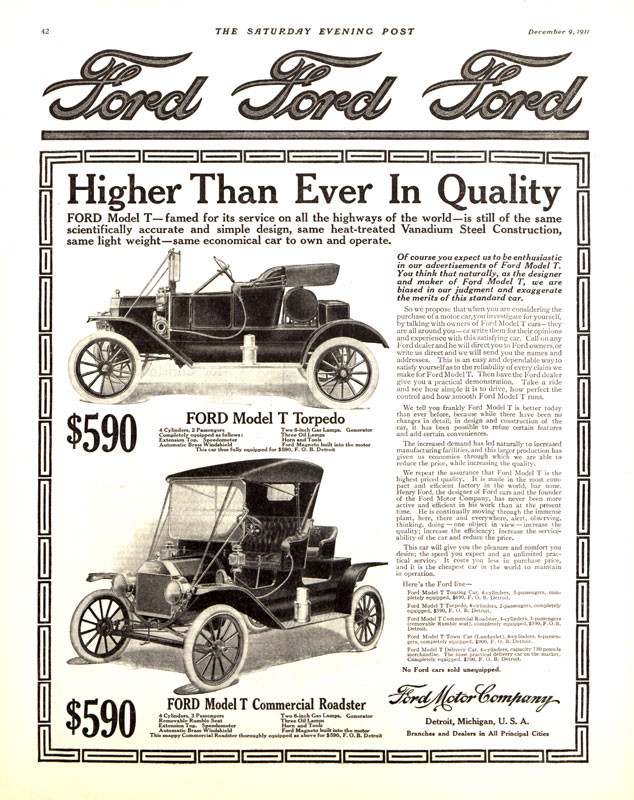
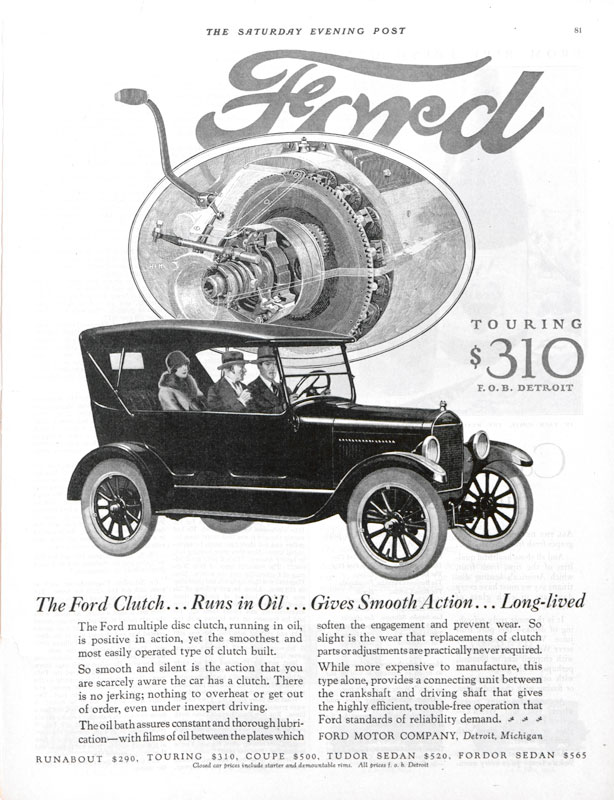
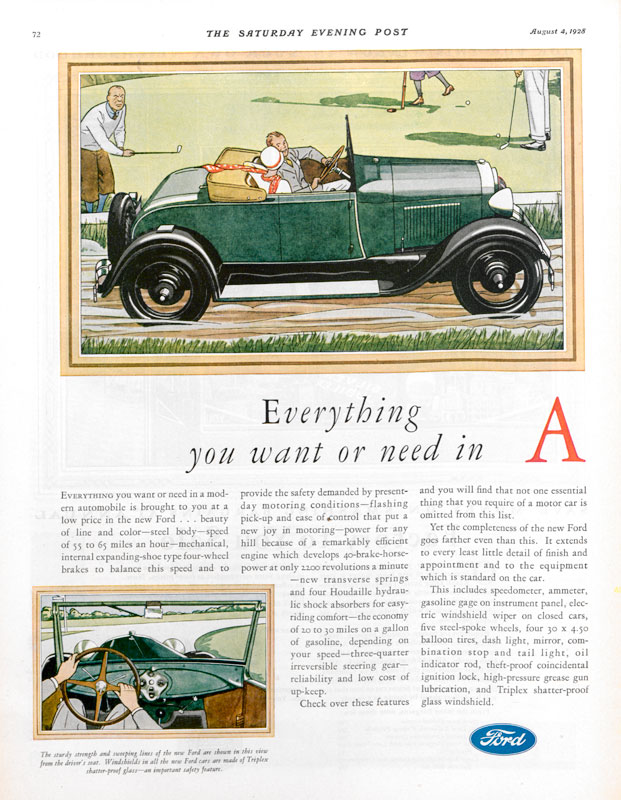
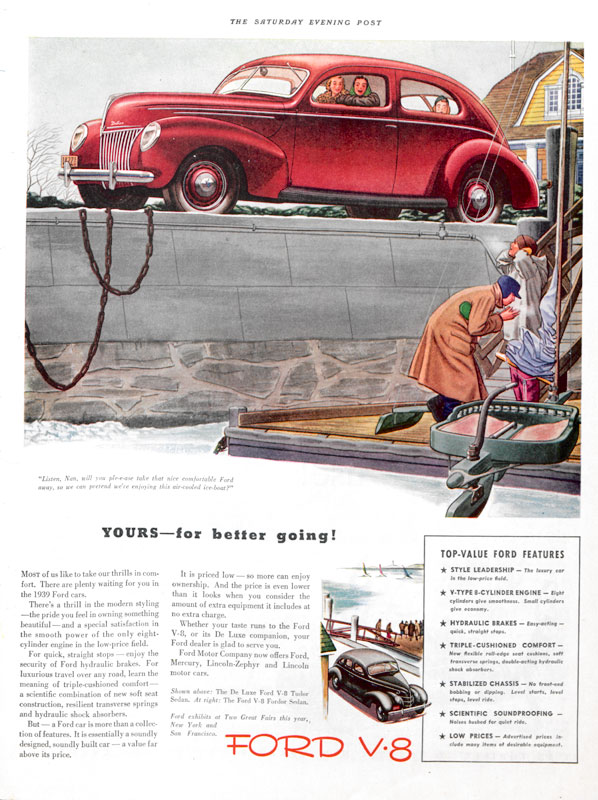
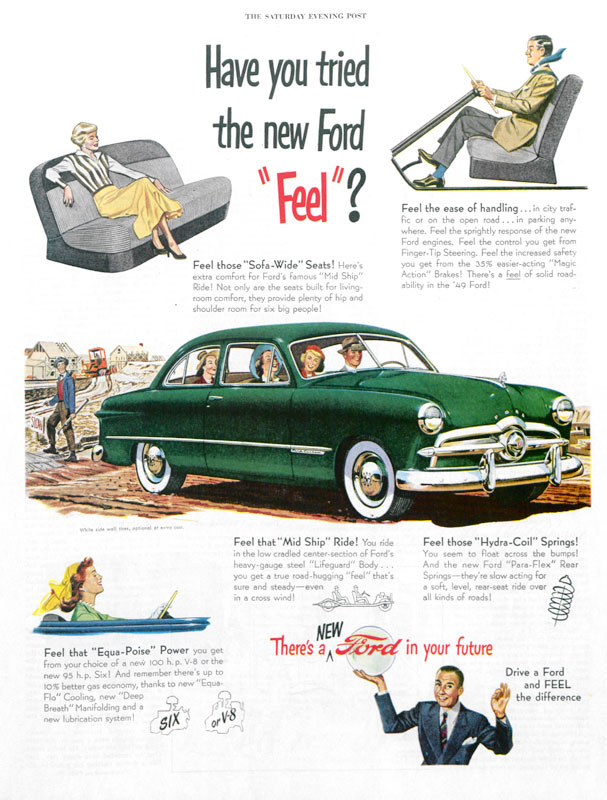
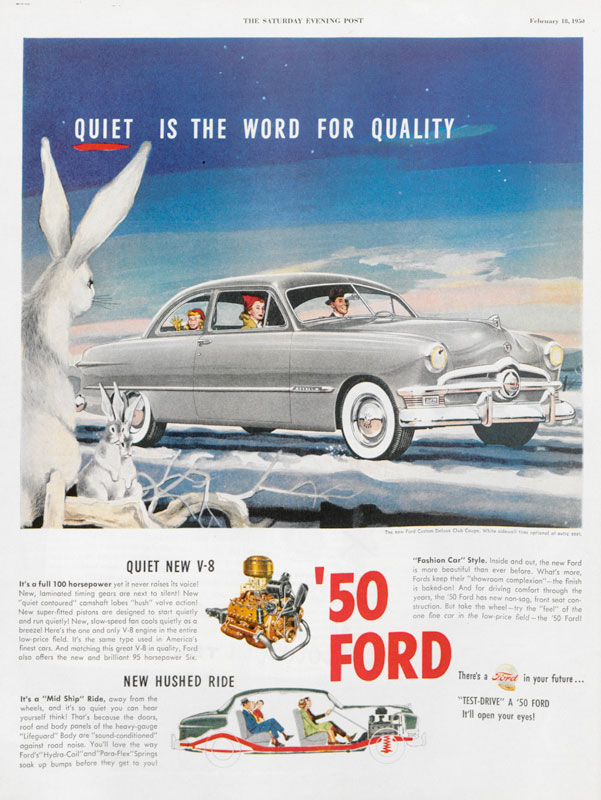
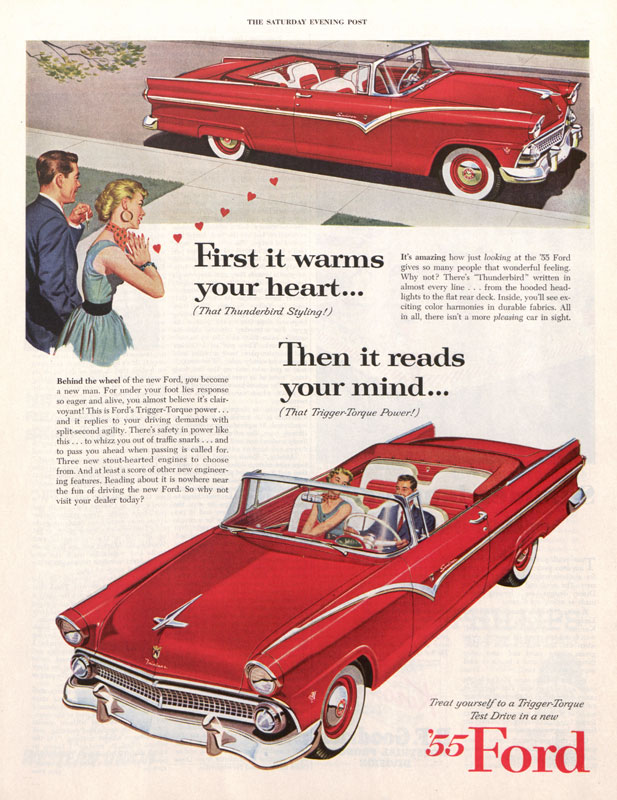
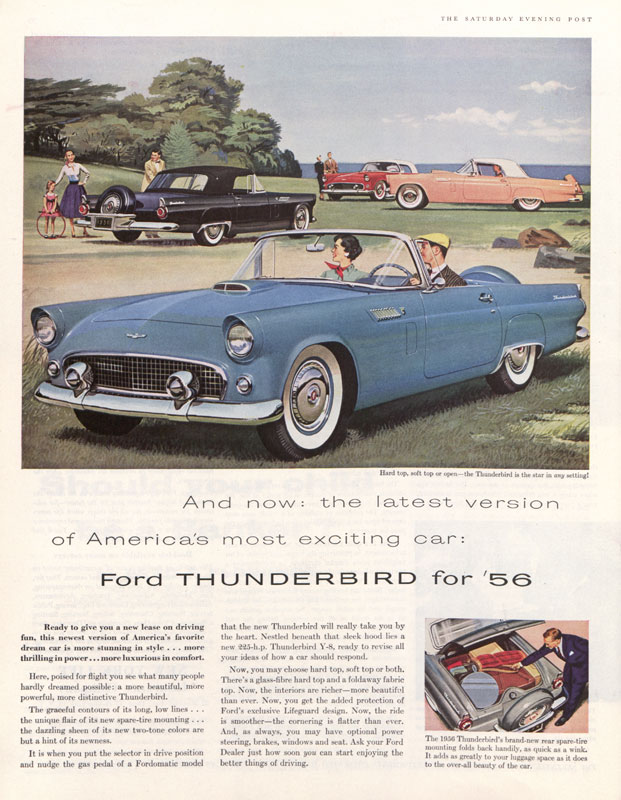
In the early 20th century, The Saturday Evening Post would consistently carry more automobile advertising than any other publication. Perhaps this was why Henry Ford chose its pages to introduce his wonder car, the Model T, which would go on to become one of the most successfully sold automobiles of all time.
Take a look at the evolution of Ford automobiles from the early years through the 1960s, as advertised in The Saturday Evening Post. (For more on the auto industry’s early years, check out Post‘s new special collector’s edition, Automobiles in America!)
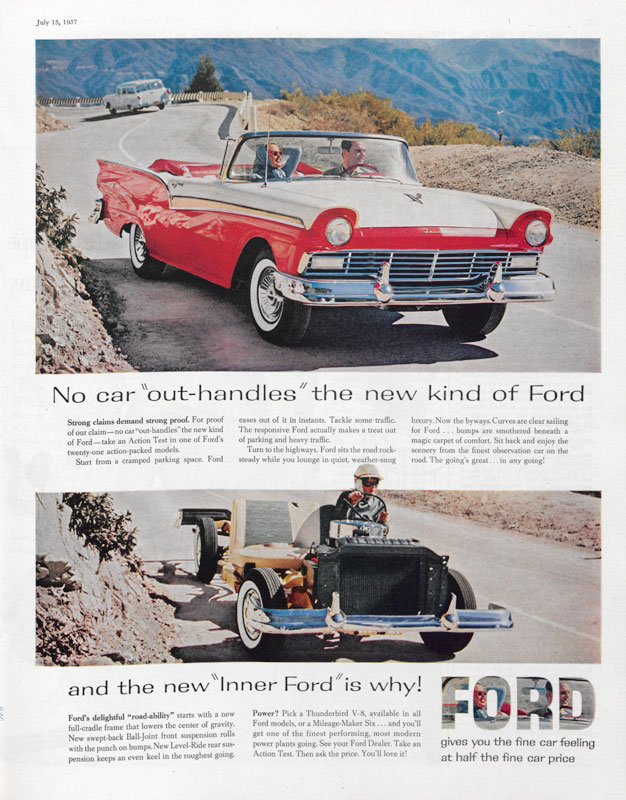
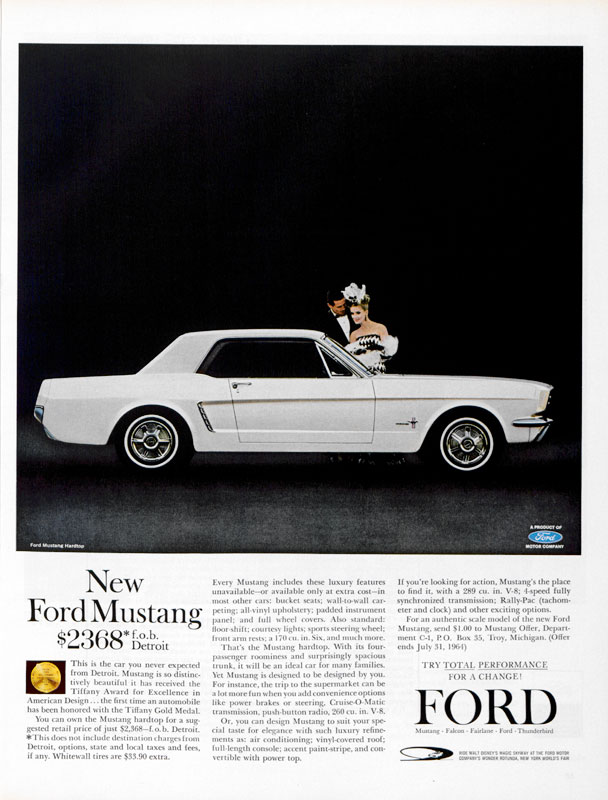
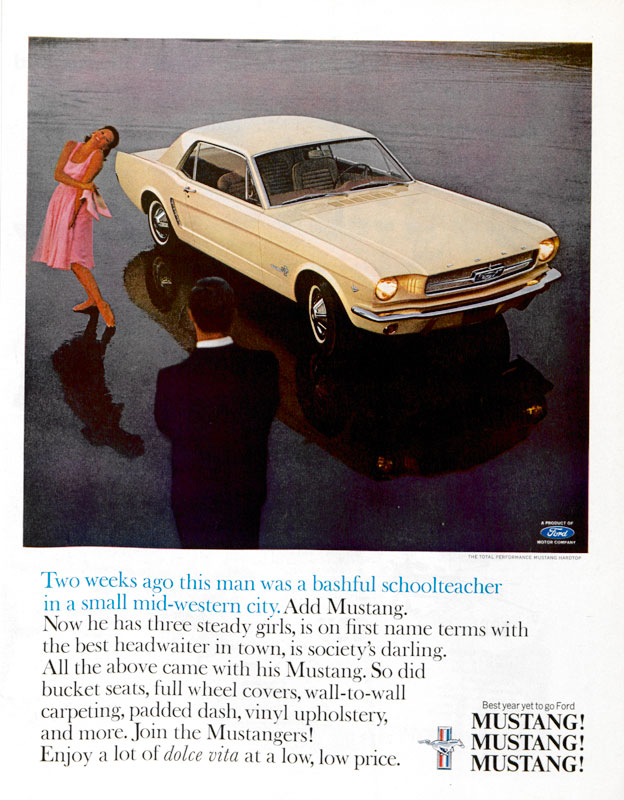
Coby Whitmore
Even before graduating from Steele High School in his Midwestern hometown, Dayton, Ohio, Coby Whitmore grew up knowing he wanted to be an artist. Over the course of a professional career spanning more than three decades, his reformations in the illustrative medium changed design concepts forever, earning him an induction into the Society of Illustrators’ Hall of Fame in 1978.
Whitmore began his art education at the Dayton Art Institute, later migrating to an apprenticeship in Chicago. Coby’s experiences in the Midwestern metropolis shaped his redefining style as well as the future of his career. He apprenticed in the studio of Haddon Sandblom[link], worked for the Chicago Herald Examiner, and enrolled in night classes at the Chicago Art Institute. Whitmore’s move to Chicago introduced him to a circle of young artists, most notably his future compatriots, Ben Stahl and Thornton Utz. Together the artistic trio became known as the Chicago Gang.
Covers by Coby Whitmore
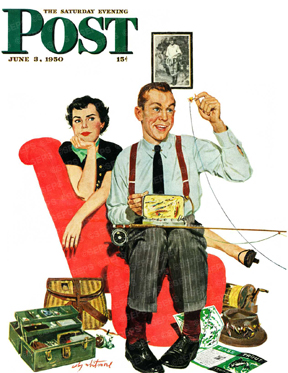
Fishing Season
Coby Whitmore
June 3, 1950
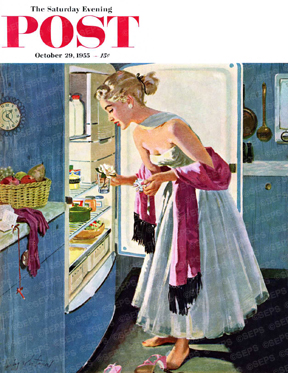
Prom Momento
Coby Whitmore
October 29, 1955
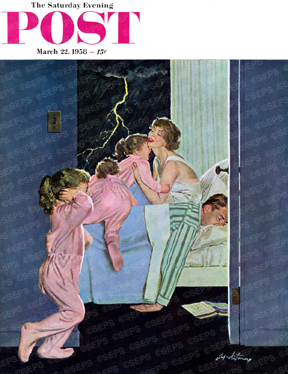
Lighting Storm
Coby Whitmore
March 22, 1958
Purchase prints of Coby Whitmore’s work at Art.com.
They did away with excess clutter and lighting, minimizing a model’s surroundings. Whitmore described the evolution of his artistic process as recognition of excess controlling, subjugating, and defining his characters. During a photo shoot in an old heirloom-filled house, he explained, “Then, as I worked along, I discovered that the furniture subordinated the characters. A process of elimination began, and in the finished drawing, all that remains of the beautiful old house is the lamp, the sofa, and a piece of silverware.” The Chicago Gang was partial to illuminating the subtle complexities of human relationships exposed in familiar, if not everyday, circumstances. Whitmore stripped away the overabundance surrounding his models and focused the work on intimate moments between people. Additions were selected with intent. Any objects present either conveyed the illustrator’s message or constructed a comprehensible scene incorporating as few props as possible.
The illustrator eventually headed back east to apprentice again in Ohio, at the studio of Carl Jensen in Cincinnati. He married his high school sweetheart, Virginia Comer, from Dayton and set out for New York City. In 1942, Whitmore joined the prestigious art studio of Charles E. Cooper on West 57th Street.
Much of Whitmore’s work depicts post-war American families, centered around a maternal figure who exudes happiness in the normalcy of everyday life. Coby Whitmore’s popular illustrations were featured on both the covers and in stories of The Saturday Evening Post, McCall’s, Ladies Home Journal, Cosmopolitan, Good Housekeeping, and several corporate advertising campaigns. Accusations of tawdry material (a woman stretching in bed, for example) forced some of his illustrations off magazine covers and into the magazine’s pages. In an interesting twist of fate, Whitmore further advanced his artistic career by combining his sleek lines and minimalist design with his fascination for racing cars. In the early 1950s, he designed the Fitch-Whitmore Le Mans Special with racecar driver John Fitch.
Toward the end of Whitmore’s career, illustration was used less and less. And many artists had to find work illustrating novel covers or headed back to the classroom as teachers. Whitmore eventually retired to Hilton Head, South Carolina. Today, his illustrations are held in both private and permanent collections at institutions such as the Pentagon, the United States Air Force Academy, the New Britain Museum of American Art, and Syracuse University.
Guy Hoff
Born in Rochester, New York, Guy Hoff trained at the Art School of the Albright Gallery in Buffalo. According to the June 1913 issue of Arts and Decorations, Hoff won a scholarship to the Art Students’ League in New York City for his life drawings’ “masterly draughtsmanship and feeling for planes.” He used that talent to create seven figures for The Saturday Evening Post cover. Hoff also illustrated advertisements for Procter & Gamble and program covers for New York’s Shubert Theater and then sold his first magazine cover to Smart Set, which put him on the national scene.
Covers by Guy Hoff
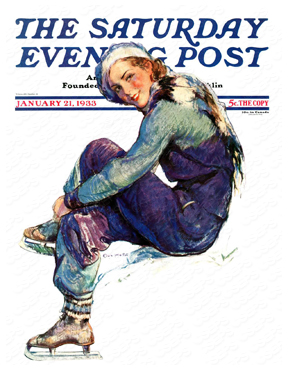
Woman Skater
Guy Hoff
January 21, 1933
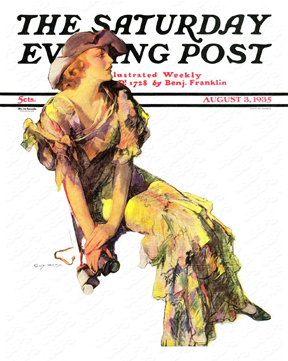
Summer Frock
Guy Hoff
August 3, 1935
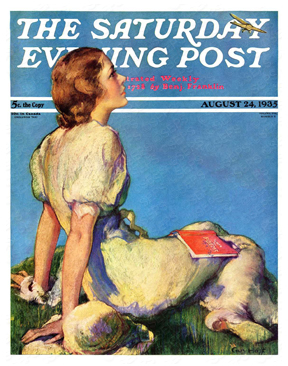
Inspired by Poetry
Guy Hoff
August 24, 1935