Rosie the Riveter
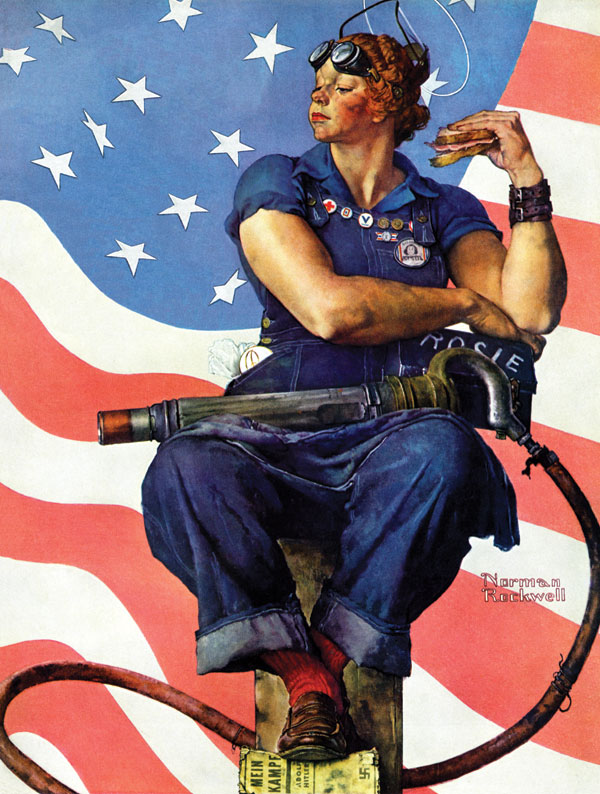
(Norman Rockwell © 1943 SEPS)
On the evening of June 6, 1994, the 50-year anniversary of D-Day, Jay Leno did a special tribute on The Tonight Show. He introduced several World War II veterans who were sitting in the audience before he presented his next guest, Mary Doyle Keefe. Mary was the model for Rockwell’s May 29, 1943, cover Rosie the Riveter. As Vicki Randle, a member of The Tonight Show band, sang the song “Rosie the Riveter,” Mary drilled several screws into a board making the drill sound at the end of the song.
Mary was a 19-year-old phone operator in Arlington, Vermont, when Rockwell called and asked if she “wouldn’t mind posing for a painting.” She posed twice because the white blouse and shoes for the first sitting were not what he was looking for. Mary explains that yes, she did hold a ham sandwich while posing; she did have the white handkerchief that peeked from a pocket; she never saw Hitler’s book Mein Kampf; and the rivet gun was a lightweight fake. “I’ve had people come to me and say, ‘How did you ever hold that rivet machine?’ ‘Oh,’ I said, ‘it wasn’t too bad.’” Rockwell had transformed the petite, 110-pound Mary into a brawny, muscular woman for the painting. She says, “He called me and apologized for making me so large.”
During the war, Rosie the Riveter and Rockwell’s Four Freedoms toured the country raising money for the war bond drive. “I was very pleased that they could make all this money for the war.” She adds, “I am proud of this painting. It’s a symbol of what the women did for the war, to do their part, and to give up their nail polish.”
Mary was also a special guest at Sotheby’s when they auctioned Rosie the Riveter on May 23, 2002. The painting sold for $4.9 million to the Elliot Yeary Gallery in Colorado, and has since been sold to the Crystal Bridges Museum of American Art in Arkansas.
Even today, Mary autographs Rosie the Riveter posters for people, and happily reminisces about the time she danced with Leno on The Tonight Show.
3 Questions for Bob Barker
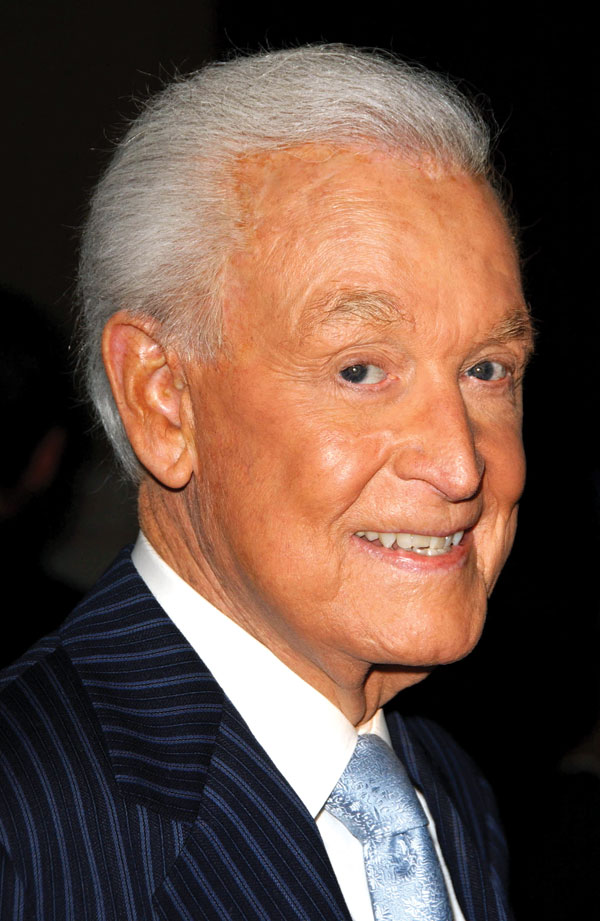
Bob Barker was 83 when he quit his day job hosting the enormously popular The Price Is Right, but it would be a mistake to call it retirement. Since leaving television, the 89-year-old has been consumed with animal rights. Barker has donated millions to help animals worldwide, working with leading organizations from Animal Defenders International to PETA. Little-known fact: Barker was a Post boy growing up in South Dakota.
“I sold a lot of magazines,” he says with a chuckle.
Q: You look great! How do you manage that?
BB: Old age is always 15 years later than your birthday. Bernard Baruch said that. I don’t think of myself as being old. I just think of myself as not being able to do some of the things I once did. I fight like hell to stay healthy. I work out regularly, and I eat properly. I’m never ashamed to take a drink, and I love candy, cake, and ice cream. I just indulge in them carefully.
Q: Retirement has the reputation of making people slow down. Why not you?
BB: I’m so busy now. I sometimes think maybe I’ll go back to television just to get a rest. These fellows who look forward to retirement and then just sit and stare into space, they’re the ones who aren’t happy.
Q: You are a fierce, outspoken crusader for animal rights. Where does that come from?
BB: When I was a kid I used to try and help injured animals, and I’d pick up strays. If you have an animal friend, you learn what loyalty means. They know how to love. They know how to be devoted. They know how to make you happy. What we need most to help animals is new legislation to protect them and to enforce the laws we already have. There’s going to be a time when people are going to look back and say, “That was the dark ages for animals. They kept them in cages that they called zoos. They did horrible experiments on them in laboratories. They beat them to make them entertain people.” Fortunately, people are learning. I don’t know when it will happen, but I see a future where all that is history.
Carrot Top Pesto


Photo by Anna Buss
Too many times I have seen people ask market venders to remove the tops from their carrots. What they don’t realize is the tops are delicious!
Carrots belong to the parsley family. And the green tops have a flavor very similar to parsley, making them an excellent ingredient in pesto. The most flavorful tops are found on young carrots, and blanching them allows for a smooth, beautifully vibrant green pesto. For this root-to-stem recipe, we used Nelson carrots from Happy Boy Farms in the Jack London Square Farmer’s Market of Oakland, California.
Carrot Top Pesto
(Serves 4–6)

Ingredients
- 1 bunch young carrots
- 1 cup arugula (optional)
- ¼ cup almonds in shell
- 1-2 teaspoons green garlic
- ½ cup olive oil
- Juice of ½ lemon
- Salt and pepper to taste
Directions
- Remove greens from carrots.
- Blanch greens in salted water until tender and bright green.
- Remove greens from water and shock in ice bath. Squeeze out water and set aside.
- Repeat steps 2 and 3 with arugula, and then with carrot bottoms.
- Blanch almonds until shells become loose. Remove almonds from water and allow to cool. Shell and set aside.
- Combine carrot greens, arugula, garlic, almonds, olive oil, and lemon in food processor. Blend until smooth, adding salt and pepper to taste.
- Toss pesto with blanched carrots, and serve. Pesto can also be tossed with your favorite spring salads, pasta, and veggies, or spread it on a sandwich.
Recipe created by Mario Hernandez, program coordinator and market chef for Cookin’ the Market
Americans United to Support the Civil War Troops
This is the third installment of our six-part series on the lead up to Gettysburg. To recap: In part one of this series, “The News from Gettysburg: A Hazardous Move,” we described how the Post covered the initial news of the invasion. In part two, “Scrambling for Soldiers,” we looked at the renewed attention to the draft.
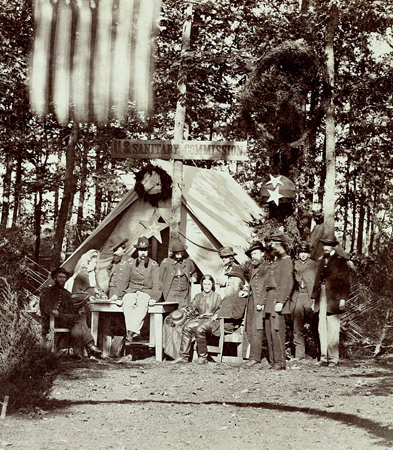
Photo courtesy Library of Congress.
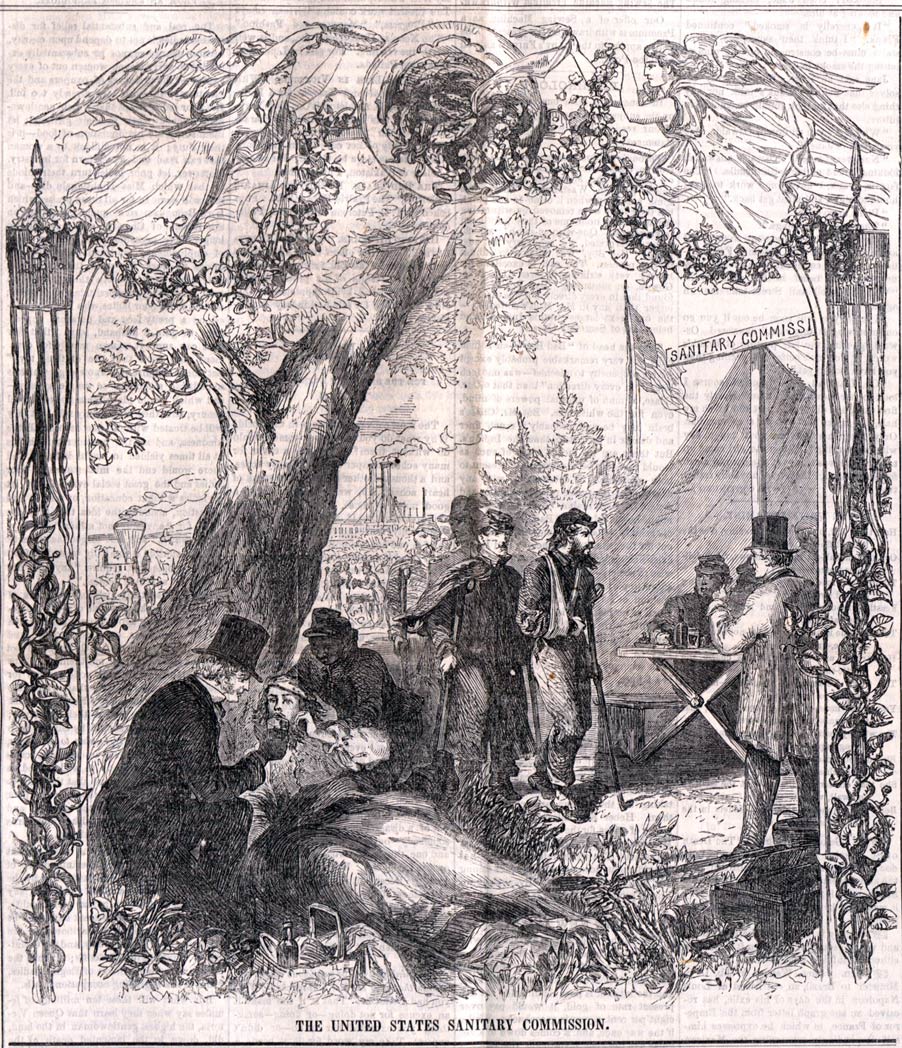
By late June of 1863, three forces were converging on the region around Gettysburg: the Confederate Army, the Union Army, and the United States Sanitary Commission.
The Sanitary Commission was the first large-scale volunteer organization, and it had come a long way in the two years since it was founded in response to widespread disease in Union Army camps. The living conditions in camps were so bad that, over the course of the war, two soldiers died from illness for every one soldier killed in combat.
The commission’s original goal was to keep army bases healthy and clean, and protect their drinking water from contamination. Later, it expanded the scope of its work and broadened its operation to 7,000 local chapters across the Northern states. The commission was based in the North and served the Union Army, but would also help wounded Confederate soldiers that had been captured.
Its army of women volunteers—numbering in the tens of thousands—gathered medical supplies, food, and clothing for the wounded soldiers, and sometimes provided aid to their families. Most important, perhaps, it began providing nursing services after the organization overcame the prejudice of the Army Medical Bureau.
When the commission heard the Confederate Army was marching north, it began gathering information from its agents with the Union Army, who reported the movement of troops and made estimates for the coming battle’s casualties. The Sanitary Commission’s general secretary, Frederick Law Olmsted, told Post readers that its officers used this information to estimate how big the upcoming battle would be and what supplies would be needed. The commission then began distributing supplies to sites in areas close to all the expected targets.
As soon as Olmsted knew the heavy fighting had begun at Gettysburg, he moved operations to a nearby railway junction near the town and obtained railroad cars to run medical supplies up to the front. The commission also sent supplies by wagon, which arrived just as Gen. James Longstreet began his attack on the Union left flank.
The wagons pulled up to the field hospital, just 500 yards from the shooting, where several hundred men were awaiting medical help. According to Olmsted’s account in the August 1 Post, “A surgeon was seen to throw up his arms, exclaiming ‘Thank God! Here comes the Sanitary Commission. Now we shall be able to do something.’ He had exhausted nearly all of his supplies; and the brandy, beef soup, sponges, chloroform, lint, and bandages, that were furnished him were undoubtedly the means of saving many lives.”
Later, wounded soldiers that could still walk made their way to an open field by the railway line and awaited transport to hospitals. They soon discovered the army had no provisions for sheltering them from the rain, or for feeding them as they waited for evacuation. The commission quickly put up tent shelters and set up a kitchen, which fed up to 2,000 wounded men each day.
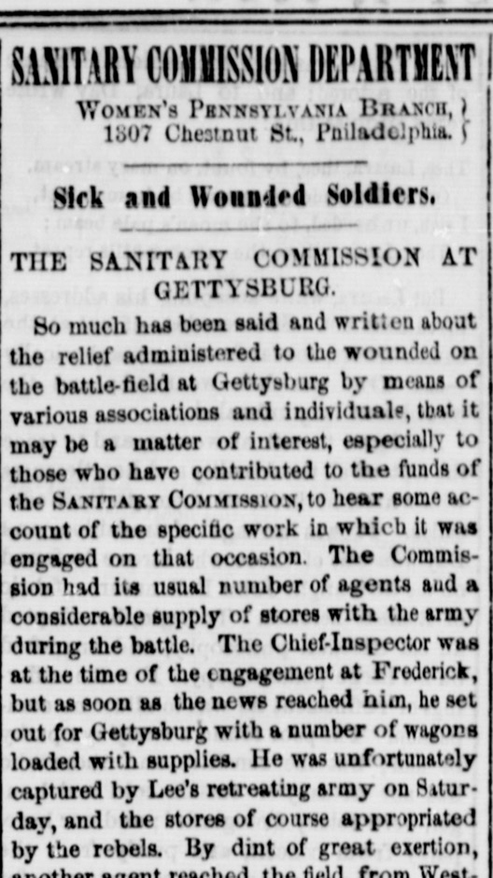
Throughout 1863, a regular Post column called “Sanitary Commission Department” featured news about the work of the commission. It also included requests for help, like these excerpts from June and July 1863:
We have lately received a letter from Washington, saying that pickles and domestic wines are needed, and that their storehouses have none.
[We have received] the pattern of a ‘Ration Bag,’ with the following remarks as to its usefulness: ‘The idea is to furnish each solider with two bags (one for sugar and one for coffee), to put inside the haversack, so as to keep the two articles from being spoiled, either by being wet from rain or in crossing streams, or by coming in contact with the greasy pork and bacon …’
We have received a requisition for arm-slings, with the following directions for making them: ‘They should be made to fit on the underside of the arm, from the elbow to the hand, and at equal intervals should be furnished with several tapes …’
Occasionally, this department received testimonials, like this letter from a wounded soldier to the “noble ladies” of the Women’s Soldier’s Aid Society of Northern Ohio.
I want to thank you. I was wounded at Stone River on the last day of December 1862, and since then I have run the gauntlet of the hospitals from Murfreesboro to Cleveland. At every stage of my painful progress I was the grateful recipient of your priceless gifts. I owe the preservation of my life to a bottle of blackberry wine, sent to me by Mr. Atwater, Agent of the United States Sanitary Commission at Murfreesboro. It came to me a time when I had scarcely any vitality left. It restored my appetite, which I had lost to the too free use of Morphine. That wine could not have been bought with money; it was the priceless gift of some great-hearted countrywoman—God bless her!
The Sanitary Commission was unique; for the first time, American civilians operated a large-scale, volunteer effort that provided direct help for soldiers. Women living too far from hospitals to nurse the wounded still had a unique opportunity to help the war effort. As one volunteer expressed it, “It is difficult to connect gray flannel and blue yarn with the thought of a great historical movement; yet our work is really in such connection, and each stocking or shirt we make for the soldiers is portion of a story that has never had its counterpart.”
The resources of the Sanitary Commission would be heavily taxed in the coming battle, in which 14,000 Union soldiers were wounded. In the days following the battle, the commission’s agents also provided help to 5,000 rebel casualties who remained behind in 11 Confederate hospitals.
Some of the commission’s hospital workers felt that, even amid the suffering, some of the best traits of humanity—humility, gratitude, compassion—would emerge. As one correspondent wrote, “There is no hospital which could not furnish in volume incidents that would do honor to human nature.”
Coming Next: The Post Reports the Battle of Gettysburg
Ultimate Barbecue
Barbecuing isn’t just about cooking. It’s about connection, family, smoke, joy, love, and the sacrament of the shared meal. Tending the fire, wearing the apron, roasting the meat and the vegetables, then divvying it all up with one’s clan—it just feels primal.
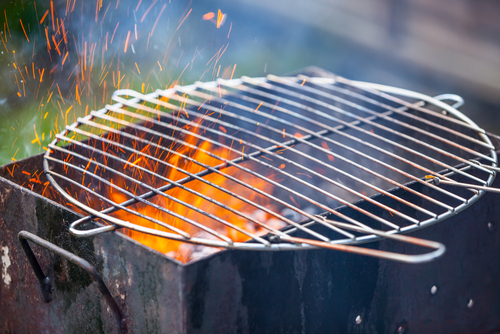
Possibly it is primal. When our distant cave-dwelling ancestors began scavenging the earth for sustenance—still lacking the means to create fire—all their food had to be eaten raw. These early ape-guys spent up to 12 hours a day gnawing on sinewy flesh and coarse plant matter. They were chewing machines!
Fire changed everything.
Roasted meat and roots were tender. Chewing declined to 45 minutes per day. Think of all the free time!
By some accounts, the brain surged in response to all the nonchewing stimuli humans were suddenly exposed to. In an evolutionary blink of an eye, we went from chewing alone to eating together. This led to dinner conversation, then cave drawing, the pyramids, the Great Wall of China, the printing press, space flight, and the Internet (so we can swap Lolcat photos with our BFFs).
So, why grill? Because it takes us from our harried present back through the generations to that moment when our ancestors sat around the fire, safe and sated, chewing on freshly cooked meat, while all around them the elements raged, volcanoes spewed, and wild things lurked. Is it any wonder that so many of us are passionate about open-fire cooking?
I’m a longtime barbecue guy, having been instructed in the black art by my father, who showed me how to peel loose bits of bark off hickory trees, soak them in water, then lay them on charcoal to produce a thick, blue smoke. It was a simple process, with quick and flavorful results.
Then, on a lark, I signed up for a three-day grilling workshop with Steven Raichlen, author of the classic The Barbecue! Bible
At the course, which took place at the lush Greenbrier resort in Sulphur Springs, West Virginia, we cooked not only chicken, pork, beef, shrimp, and fish but also cabbage, artichokes, corn—even pineapples and plums—searing up five-course meals from start to finish. We learned sauces and rubs. And we cooked on everything from a basic backyard charcoal grill to restaurant-grade gas grills, box-shaped grills, an egg-shaped grill, an infrared grill that cooks at 1,200°F (really!), and multiple variations on the smoker.
I learned that my former practice had been mere grilling. What Raichlen taught was barbecue, which is another thing entirely [see “Setting Up Your Grill”]. And, while the process can get as complex as you want, you don’t have to barbecue fancy to barbecue well. (When the course was all over, Raichlen admitted to me that his favorite dish of all was fresh swordfish, brushed with a bit of olive and seasoned with nothing more than sea salt and freshly ground pepper.)
The point being that open-fire cooking is always satisfying somehow, even when the result isn’t perfect. “It’s more art than science,” says Raichlen, “Every time you make a mistake, what you’ve actually done is come up with a new recipe.”
Watch as Post staffers share their best tips for grilling.
The Best of Barbecue from Emeril Lagasse, Curtis Stone, and Barton Seaver
- Emeril Lagasse’s Greek-Style Lamb Kebabs
- Curtis Stone’s Grilled Shrimp and Asparagus with Lemon-Shallot Vinaigrette
- Barton Seaver’s Grilled Corn with Sweet Pepper Butter
Save and share more of our favorite open-fire recipes by visiting our Grilling Recipe (Smorgas)Board on Pinterest!
Scrambling for Troops
This is the second installment of our six-part series on the lead up to Gettysburg. Click here to read part one, “The News from Gettysburg: A Hazardous Move.”
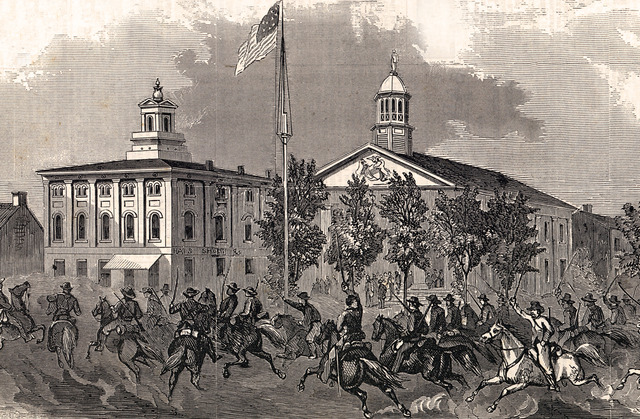
The news reached Philadelphia on a bright June morning in 1863; Gen. Robert E. Lee’s army had invaded Pennsylvania and was heading virtually unopposed to the state capitol. Suddenly, a Post correspondent wrote, the city was filled with a militant spirit.
“One could scarcely turn in any direction without meeting with a fife and drum. Recruiting officers were constantly marching up and down the streets. Large four-horse omnibuses, with bands of music and placards announcing various [assembly points], were driving about the city.
“The apathy, that for a time had seemed to taken possession of the community, was speedily dispelled. The possibility that the rebel horde might reach the Susquehanna, and even cross that stream and destroy our state capitol, was freely entertained yesterday; but there was also a firm resolve, ‘that many a banner should be torn, and many a knight to earth be borne’ before that disgraceful calamity should befall the state.”
In Harrisburg, Pennsylvania—100 miles closer to the approaching Confederate Army—the mood was quite different. There, residents had panicked after hearing that the rebel army had looted Chambersburg, Pennsylvania. Swarms of frantic passengers gathered at the railroad station, desperate to fit into any railway car they could find. The roads out of town were choked with wagons piled high with household effects, bearing families away from the enemy, and the inevitable battle.
The North’s confidence, which ran so high when the war began, was showing signs of collapse. There seemed to be little enthusiasm for fighting. The governor’s call for an emergency militia of 60,000 men was met with only 16,000 volunteers.
The Federal Army was also running low on its supply of soldiers. The eager recruits who had signed up at the war’s beginning were now approaching the end of their two-year enlistment. By the end of the month, more than 30,000 soldiers were due to leave the army. At the same time, enlistments of new recruits were falling behind goals. Men throughout the North were reluctant to sign up with an army that was so often defeated.
Faced with a drastic shortage, Congress passed the unpopular Enrollment Act, which set up the machinery for drafting 300,000 men. The Post editors disliked the idea of this conscription law, particularly its clause that allowed men to hire substitutes or buy exemptions.
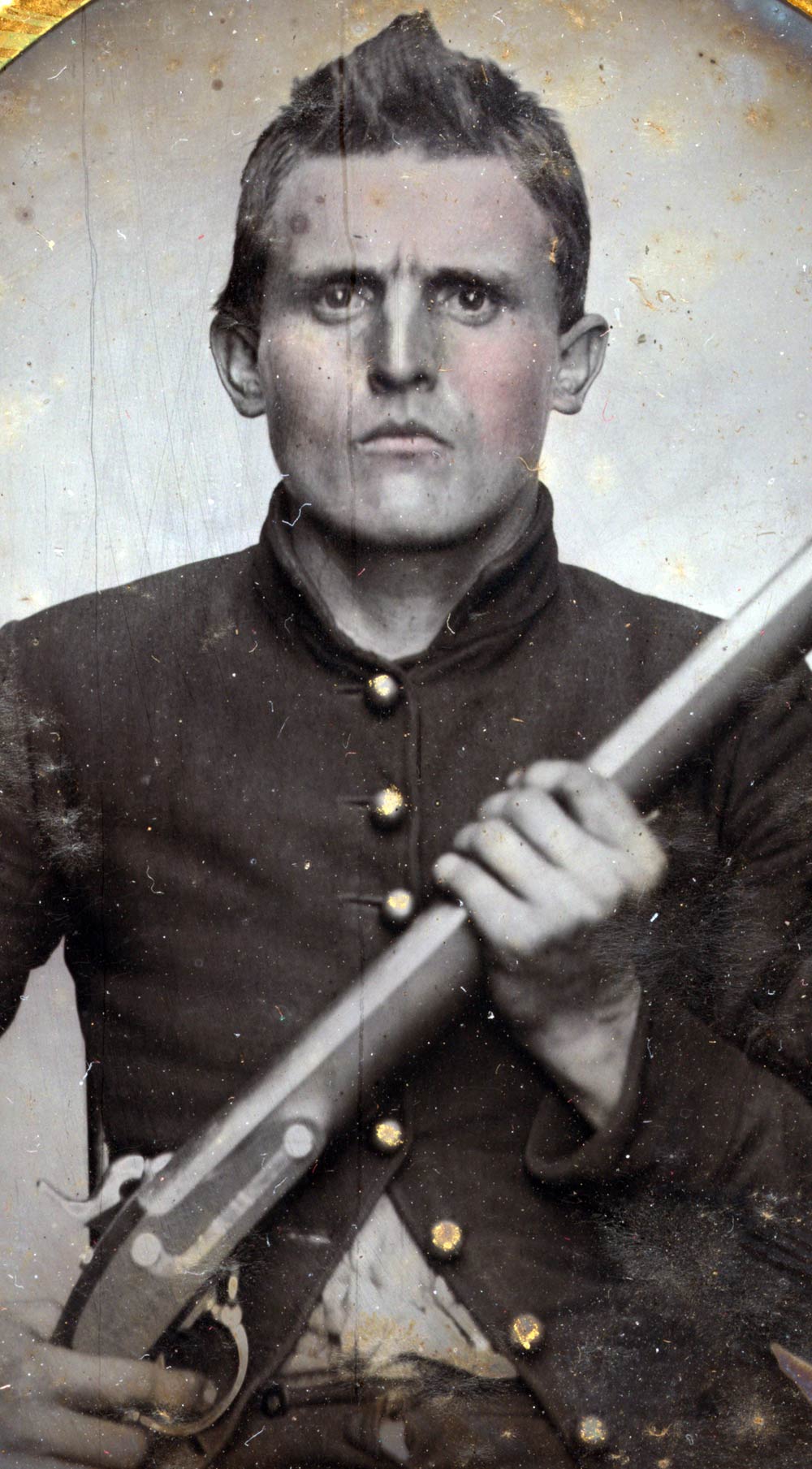
Faces of the American Civil War
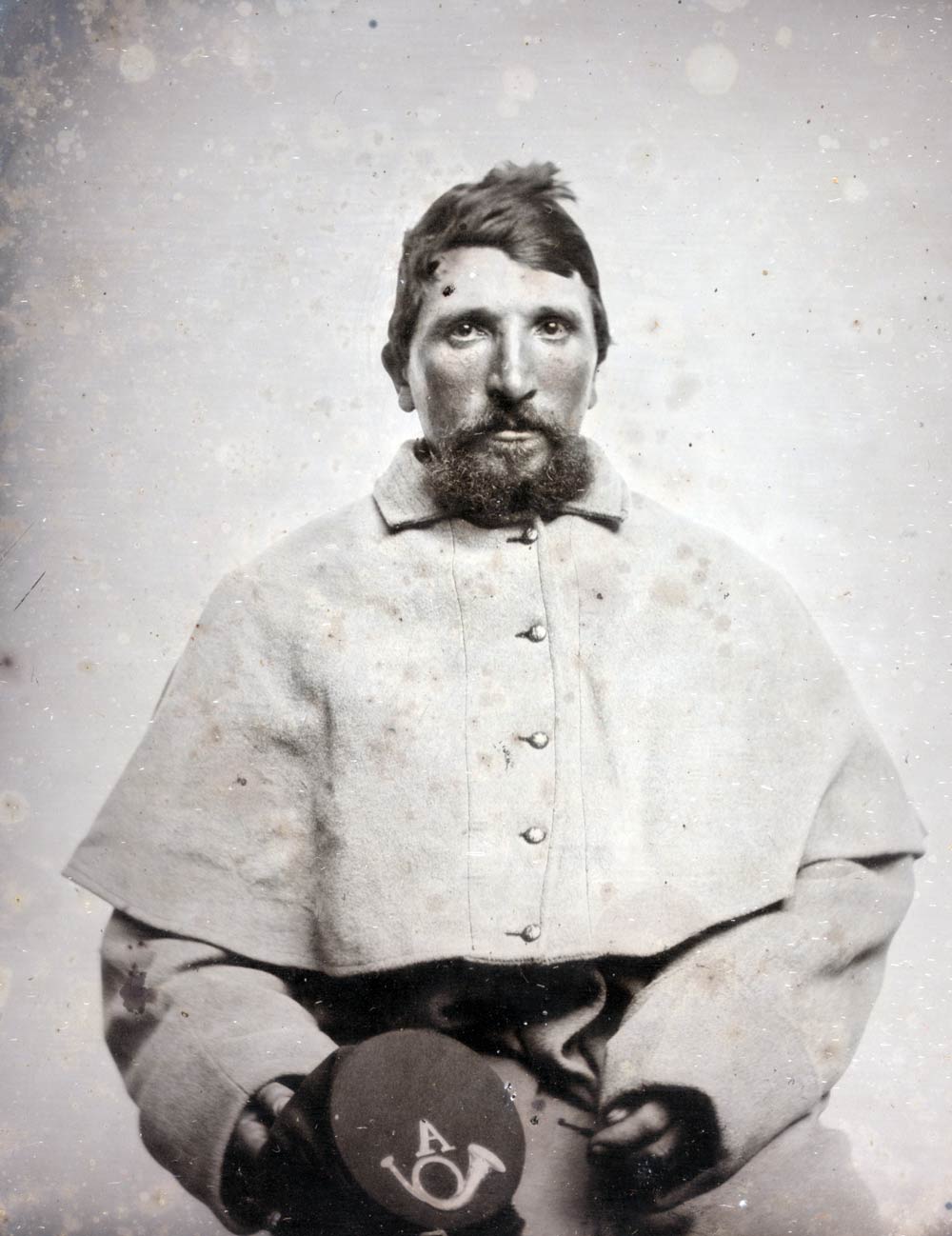
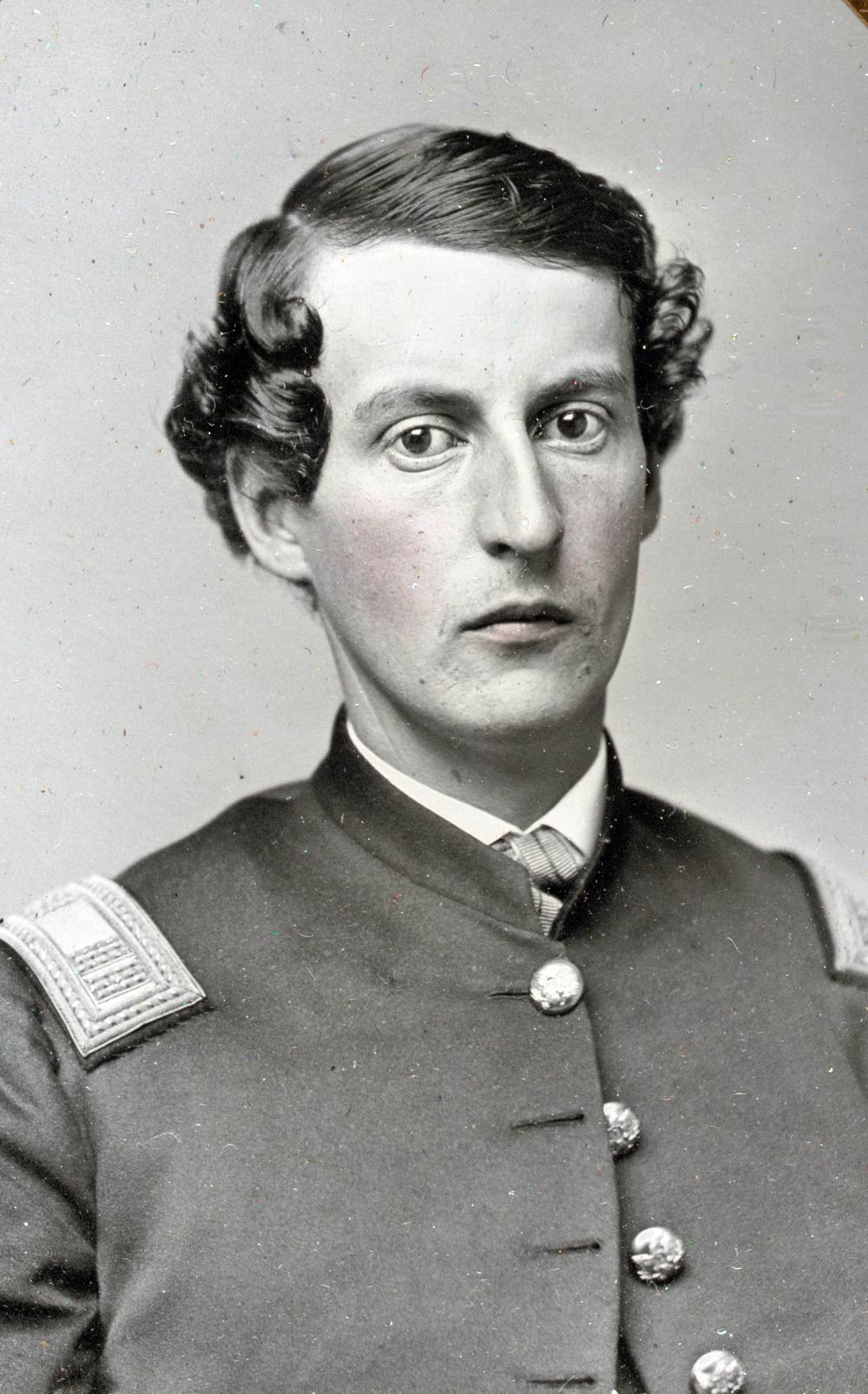

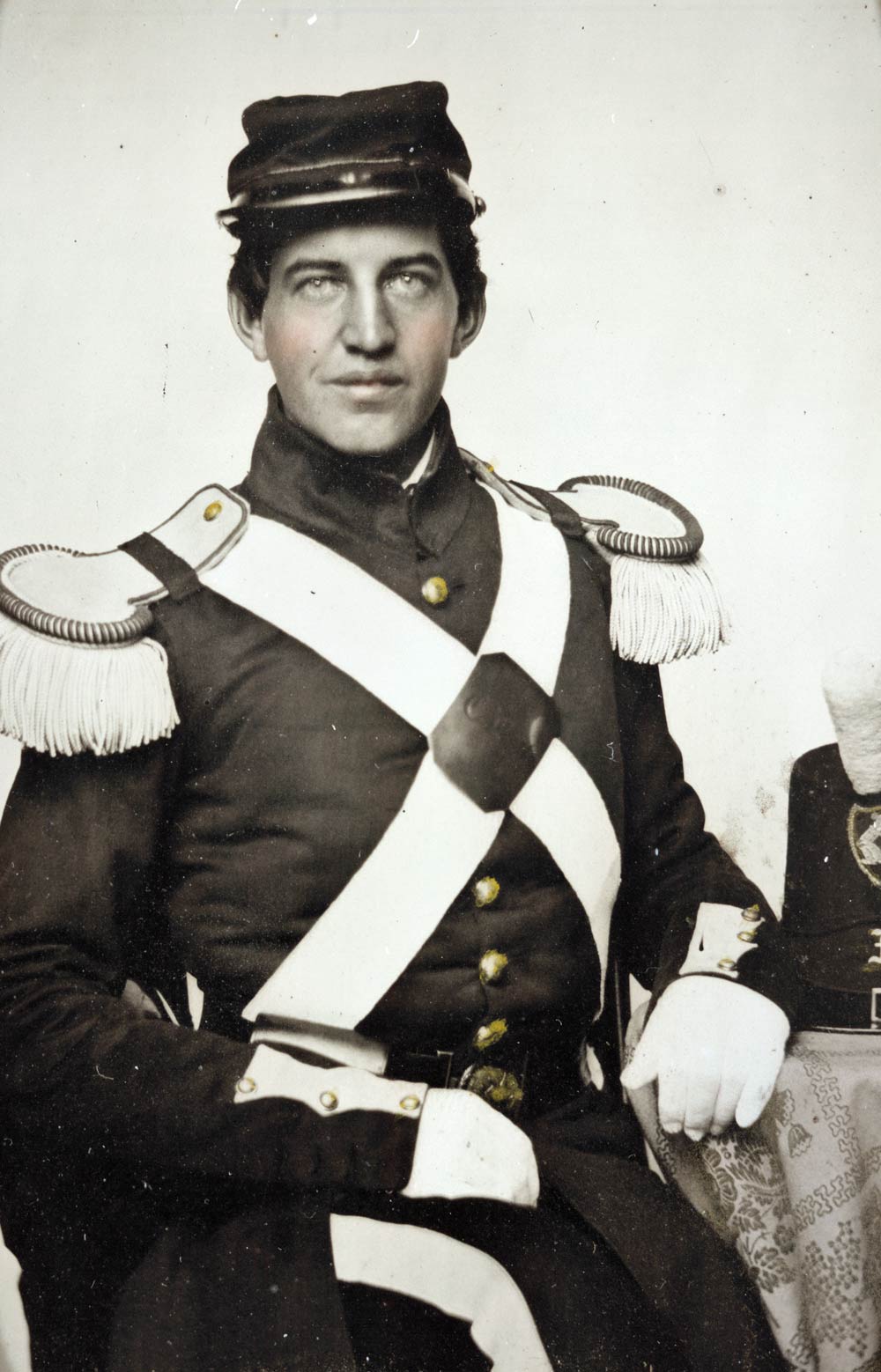
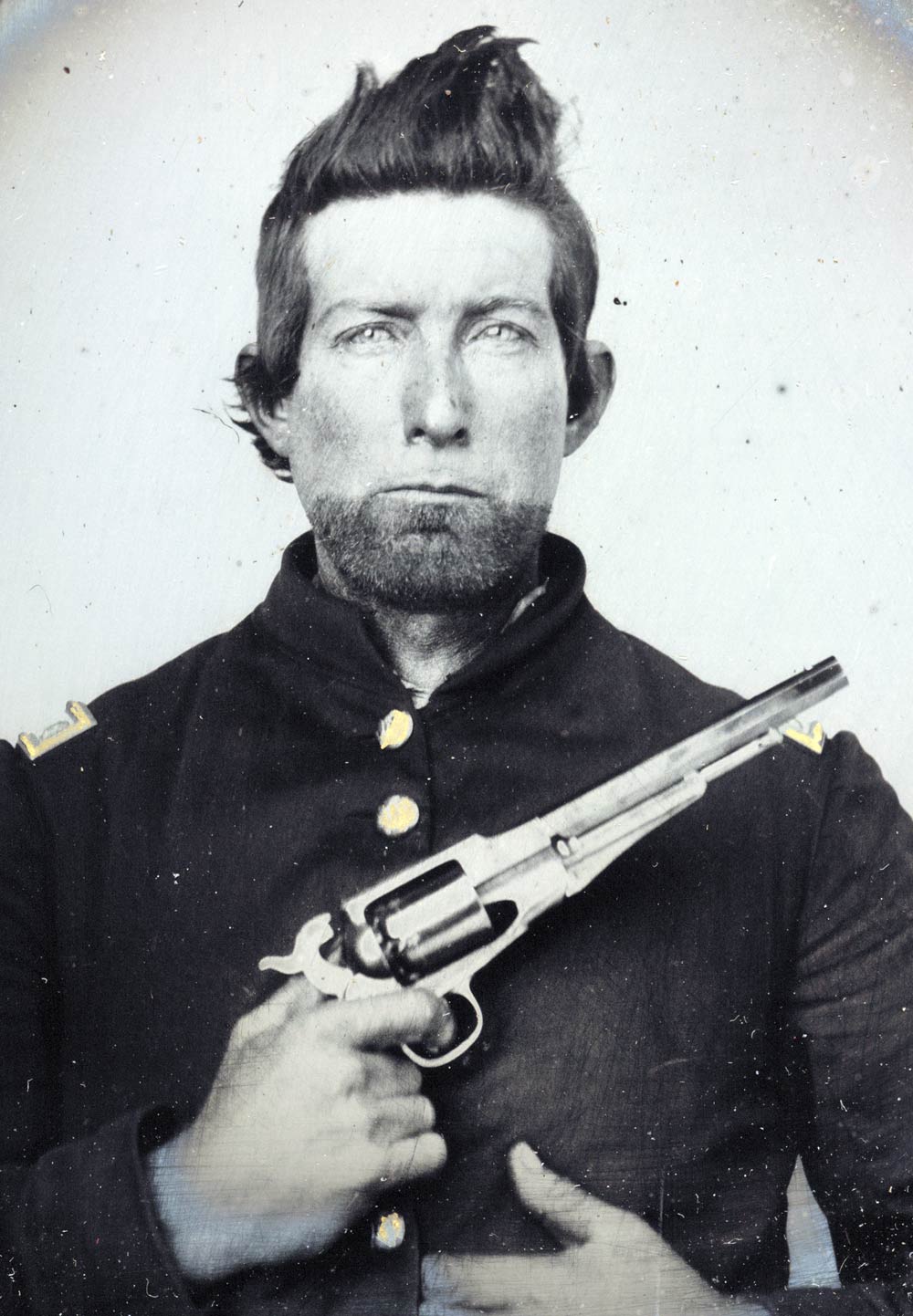
Photos courtesy The Library of Congress
A man who received a draft notice could hire another man to take his place in the fighting. If the substitute was found acceptable and duly sworn in, the draftee would be free of any obligation to serve, but only, the Post adds, for “the term for which he was drafted.” After the substitute had served the length of service, the original draftee would be again eligible for conscription.
If the draftee couldn’t find a substitute among poor citizens or struggling immigrants, he could simply buy a personal exemption for $300. (Congress set the amount at a level they felt would be affordable to working-class men. When you adjust that figure for 150 years of inflation, it comes close to $6,000 in 2013 money.)
Before the fighting had ended, the War Department had four separate draft calls, which drew the names of 776,000 American men. Few of these men ever saw military service. More than 20 percent never showed up. Another 60 percent were disqualified for physical or mental disability, or because they were the sole support of a motherless child, a widow, or an indigent parent.
Once sworn into service, recruits and draftees were rushed through basic training before being sent to the front. With only minimal instruction and poor leadership, a Post article claimed, it wasn’t surprising that Union troops had been repeatedly outfought by the Confederates. It quoted a Union army officer who had watched the unskilled Yankees at Chancellorsville:
“They have been taught to load and fire as rapidly as possible, three or four times a minute … they go into the business with all fury, every man vying with his neighbor as to the number of cartridges he can ram into his piece and spit out of it! The smoke arises in a minute or two so you can see nothing or where to aim. The trees in the vicinity suffer sorely, and the clouds a good deal. By-and-by, the guns get heated and won’t go off, and the cartridges begin to give out.
“Meanwhile, the enemy, lying quietly a hundred or two yards in front, crouching on the ground or behind trees … rise and advance upon us with one of their unearthly yells, as they see our fire slackens. Our boys, finding that the enemy has survived such an avalanche of fire we have as we have rolled upon them, conclude that he must be invincible, and, pretty much out of ammunition, retire.
The editors urged the army to abandon the practice of forcing men to load and fire in unison. “Accurate loading, and slow firing, at will, and only when the soldiers has an idea that his ball will tell, will do more execution than hasty loading, and rapid firing at something or nothing.”
It was well-intended advice, but would have been useless during the intense fighting at Gettysburg, where soldiers found themselves loading and firing “as rapidly as possible” simply to hold their ground.
By June 28, Lee learned the Union Army had pursued him across 120 miles in 10 days—a remarkable feat of marching at a time when 5 miles a day was a good speed for an army. He began gathering his forces for a massive blow against the Union army, which he hoped he could deliver at Gettysburg.
He couldn’t have known that a Union general, John F. Reynolds, was also hoping for a fight at Gettysburg because he’d already picked the best ground for his troops.
Next: Americans United to Support the Civil War Troops
Lincoln as Jokester
The most famous of all debates in American history are the seven between Abraham Lincoln and Stephen A. Douglas campaigning in Illinois in 1858 for a Senate seat. On one occasion, Douglas attempted to buffalo Lincoln by making allusions to his lowly start in life. He told a gathering that the first time he met Lincoln, it had been across the counter of a general store in which Lincoln was serving. “And an excellent bartender he was too,” Douglas concluded.
When the laughter died away, Lincoln got up and quietly riposted, “What Mr. Douglas has said, gentlemen, is true enough: I did keep a general store and sold cotton and candles and cigars and sometimes whiskey, but I particularly remember that Mr. Douglas was one of my best customers. Many a time I stood on one side of the counter and sold whiskey to Mr. Douglas on the other side. But now there’s a difference between us: I have left my side of the counter, but he sticks to his as tenaciously as ever!”
Today, not many are aware that Lincoln had a subtle, and sometimes biting, sense of humor. A contemporary wrote, “When Lincoln tells a joke in a fireside group, his face loses its melancholy mask, his eyes sparkle and his whole countenance lights up.” He referred to laughter as “the joyful, beautiful, universal evergreen of life.” Some other prime examples of Lincoln’s humor:
A guest at a reception told Lincoln that in his home state people said that the welfare of the nation depended on God and Abraham Lincoln. “You are half right,” said Lincoln.
While in office, he was asked about what it was like to be president. Lincoln answered, “I’m like the man who was tarred and feathered and ridden out of town on a rail. When they asked him how he felt about it, he said that if it weren’t for the honor of the thing, he would rather have walked.”
Lincoln could impale an opponent with a humorously turned phrase or analogy. “He can compress the most words into the smallest idea of any man I ever met,” said Lincoln of a political foe.
During one of the Lincoln-Douglas debates, Douglas accused Lincoln of being two-faced. Replied Lincoln calmly, “I leave it to my audience: If I had two faces, would I be wearing this one?”
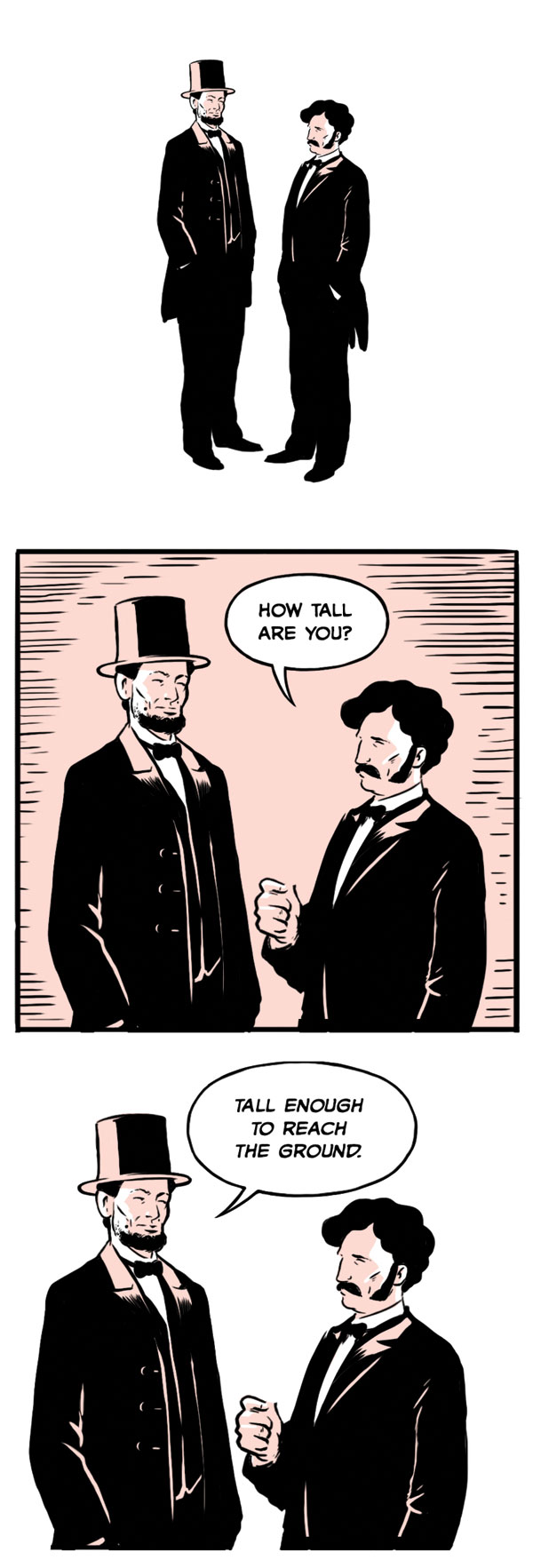
The president was a gangly man who topped out at six feet four inches. To the inevitable question “How tall are you?” Lincoln would reply, “Tall enough to reach the ground.”
Early in the Civil War, the president became angered by General George B. McClellan’s refusal to attack General Robert E. Lee in Richmond. He wrote the general a one-sentence letter: “If you don’t want to use the army, I should like to borrow it for a while. Yours respectfully, A. Lincoln.”
Later, a temperance committee visited the president and asked him to fire General Grant. Surprised, Lincoln asked why. “He drinks too much,” answered the spokesman for the group. “Well,” said Lincoln. “I wish some of you would tell me the brand of whiskey that Grant drinks. I would like to send a barrel of it to every one of my other generals.”
Setting Up Your Grill
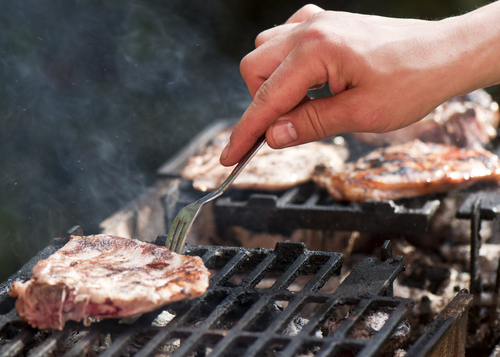
Some foods taste better when grilled over direct heat; others benefit from hours of slow roasting—here’s a primer.
- Direct grilling is ideal for tender, lean, thin cuts of meat or fish, such as steaks, pork chops, swordfish, and salmon fillets, or fast-cooking vegetables, such as zucchini, broccoli, and corn. The searing heat quickly causes the surface to become crispy and caramelized, producing a flavor and texture that’s impossible to duplicate in an oven.
- Two-zone direct grilling. When you build the fire, spread one layer of coals evenly across the bottom of the grill and a second layer of coals across half the first layer. Also leave a small area coal-free; this allows you to move items from high to medium or low heat as they become done.
- Indirect grilling (or barbecuing) is for thick, fatty, or tough pieces of meat, such as pork shoulders, legs of lamb, whole chickens, and brisket. Classic barbecue is quite slow (225°F to 275°F for 10 to 12 hours for an 18-pound brisket) and requires either a barbecue pit or a special smoker to maintain the steady low temperature. Most people don’t have either of these nor, frankly, the patience to cook all day. Fortunately, Raichlen teaches a less time-consuming method of barbecuing using a basic kettle-style charcoal grill with a good cover: First, carefully push the hot coals away from the center so they’re piled on either side of the firebox. (Add wet wood chips for added smoke.) Next, place a pan in the center to catch dripping fat. Finally, set the food on the grate and cover the grill. It will now function as a roasting oven, with all the heat and smoke swirling up and around the food. The ideal cooking temperature for this kind of barbecue is 325°F to 350°F. You’ll cook a whole brisket in 5 to 6 hours, a leg of lamb in 1 .5 to 2 hours, and a whole chicken in about 1.5 hours. You can wait that long, can’t you?
Six Rules of Open-Fire Cooking
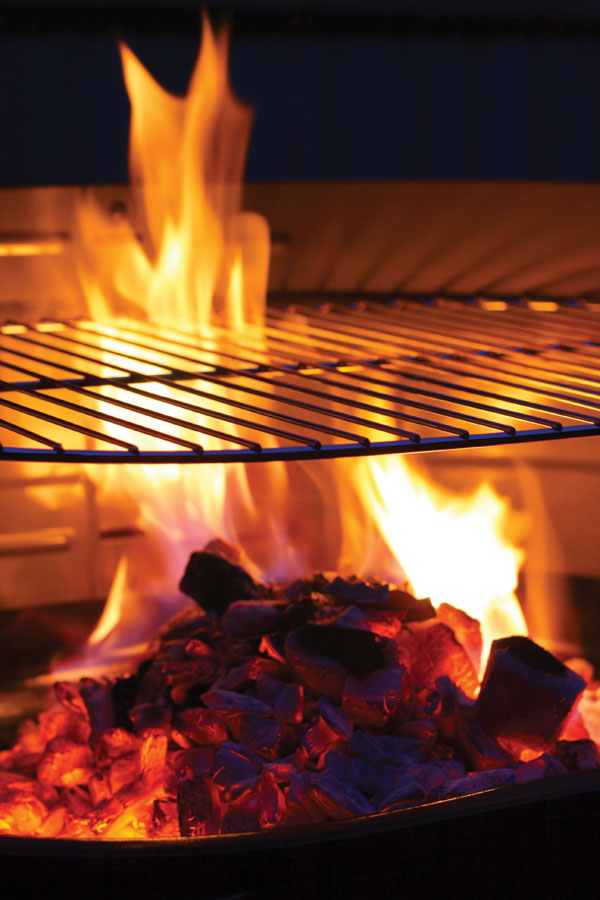
1. Clean up. Use a stiff wire brush to clean the grill before and after grilling.
2. Oil up. Before starting the fire, take a paper towel soaked in vegetable oil and swab it across the grill’s surface.
3. Heat up. Cooking on a cool grill will result in dull, gray, rubbery meat. Give it about 10-15 minutes to heat up before cooking, or use Raichlen’s finger test: It’s hot when you can hold your bare hand 6 inches over the grill for no more than three seconds.
4. Don’t poke. Always use tongs or a spatula to turn the meat. Puncturing with a fork drains precious juices.
5. Give it a rest. When the meat comes off the grill, let it stand for a few minutes before carving. “This allows juices to return to the surface,” says Raichlen.
6. Never desert your post. Do not answer the phone, run to grab a beer, change the oil in your car, or do anything else to distract yourself from the job at hand. In this, modern man can take a lesson from ape-guy: Walk away from the fire and dinner’s going to get tough. A person’s jaw can get sore just thinking about it!
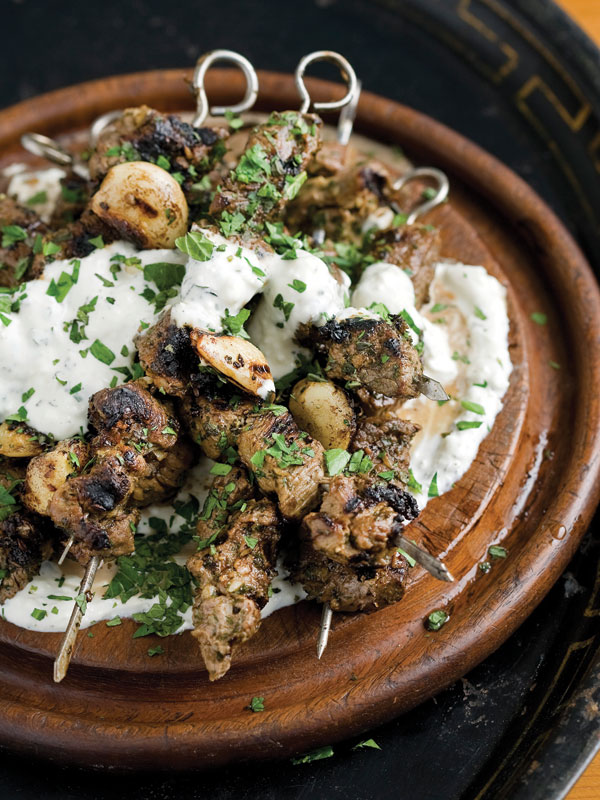
Emeril Lagasse’s Greek-Style Lamb Kebabs
Greek-Style Lamb Kebabs
(Makes 8 servings)
Ingredients
- 1 ½ cups finely chopped onion
- 1 tablespoon grated lemon zest
- ¼ cup freshly squeezed lemon juice
- ¼ cup chopped fresh parsley
- ¼ cup chopped fresh cilantro
- 3 tablespoons chopped fresh mint
- 2 teaspoons salt
- 1 teaspoon ground cumin
- 1 teaspoon sweet paprika
- 1 teaspoon freshly ground black pepper
- ¼ cup olive oil
- 2 pounds boneless leg or shoulder of lamb [lean], cut into 1-inch cubes
- 10 bamboo skewers
- 8 pita breads, warmed, for serving
- Feta spread, for serving
Directions
- In large bowl, combine onion, lemon zest, lemon juice, parsley, cilantro, mint, salt, cumin, paprika, pepper, and olive oil. Stir well.
- Add lamb and toss to coat with marinade.
- Cover with plastic wrap and refrigerate for 2 to 4 hours.
- Soak skewers in warm water for about 1 hour before assembling kebabs.
- Preheat grill to high, and lightly oil grate.
- Thread lamb onto soaked skewers, and place them on grill. Cook, turning frequently to promote even browning, for 12 to 14 minutes.
- Wrap pita bread around meat on skewer, and while holding bread firmly around meat, twist skewer out of meat.
- Drizzle meat with feta spread to your liking. Repeat with remaining pitas and skewers, and enjoy!
Nutrition Facts
Per Serving (pita bread not included)
Calories: 357
Total fat: 28 g
Saturated fat: 10 g
Sodium: 655 mg
Carbohydrate: 5 g
Fiber: 1.3 g
Protein: 20.2 g
Diabetic Exchanges: 3 medium-fat meat, 1 nonstarchy vegetable
Greek-Style Lamb Kabobs and Feta Spread by Emeril Lagasse, from Emeril at the Grill: A Cookbook for All Seasons
Emeril’s Feta Spread
This feta spread is perfect when paired with Greek-style lamb kebabs.
Feta Spread
(Makes 2 cups)

Ingredients
- 4 ounces feta cheese, crumbled
- 4 ounces cream cheese, at room temperature
- ½ cup Greek-style yogurt
- 2 tablespoons minced green onion tops
- 1 tablespoon minced fresh mint
- 2 teaspoons freshly squeezed lemon juice
- 1 ½ teaspoons minced garlic
- 1 teaspoon olive oil
- 1 teaspoon finely grated lemon zest
- ½ teaspoon salt, or more to taste (depending on the saltiness of the feta)
- ⅛ teaspoon cayenne pepper
Directions
- Combine all ingredients in bowl, and stir to blend well.
- Cover with plastic wrap and refrigerate for at least 1 hour or up to overnight to allow flavors to blend.
Nutrition Facts
Per Serving (¼ cup)
Calories: 104
Total fat: 8.8 g
Saturated fat: 5.5 g
Sodium: 353 mg
Carbohydrate: 1.8 g
Fiber: 0.1 g
Protein: 4.5 g
Diabetic Exchanges: 1 medium-fat meat, 1 fat
Greek-Style Lamb Kabobs and Feta Spread by Emeril Lagasse, from Emeril at the Grill: A Cookbook for All Seasons
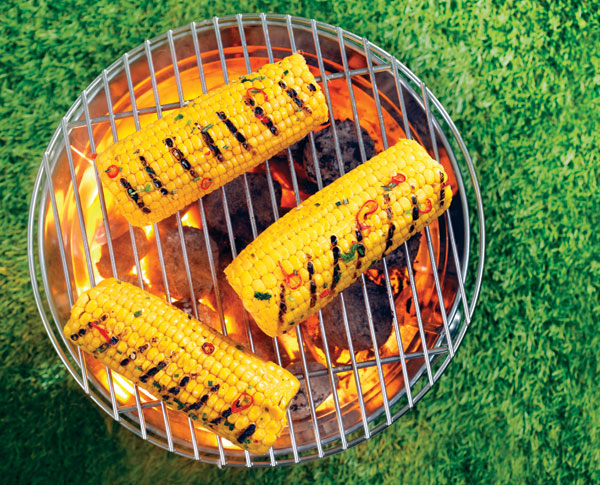
Barton Seaver’s Grilled Corn with Sweet Pepper Butter
Grilled Corn with Sweet Pepper Butter
(Makes 4 servings)
Ingredients
- 1 red bell pepper, seeded and cut into quarters
- 3 tablespoons unsalted butter, at room temperature
- Juice of 1 lime
- Kosher salt
- 4 ears fresh corn
Directions
- Using Microplane grater, grate bell pepper over medium bowl.
- Add butter and lime juice and whisk to combine. Season with pinch of salt and set aside.
- Shuck corn and steam or boil in salted water for 8 minutes.
- Transfer corn to the grill, setting ears directly over coals of medium fire. Grill until kernels begin to caramelize. Rotate ears constantly to cook evenly.
- Remove corn from grill and serve piping hot with pepper butter on the side.
Nutrition Facts
Per Serving:
Calories: 155
Total fat: 9.7 g
Saturated fat: 5.6 g
Carbohydrate: 17.4 g
Fiber: 2.8 g
Protein: 3 g
Diabetic Exchanges: ~1 starch, 2 fat
Grilled Corn Reprinted with permission from Where There’s Smoke: Simple, Sustainable, Delicious Grilling
Great Dame: Helen Mirren

Leave it to Bruce Willis to define Helen Mirren. “She’s a dame,” he says admiringly, “a real dame.” Willis, with whom she co-stars in this summer’s action comedy Red 2 (premiering July 19), isn’t talking about the “knighthood” bestowed by Queen Elizabeth II, an honor that literally made Mirren a Dame Commander of the Order of the British Empire. He’s zoning in on what makes the acclaimed actress—an Oscar winner for her performance in the 2006 classic The Queen—impossible to forget on and off the screen.
In person, she’s a beguiling blend of no-nonsense opinions and a quick wit that she’s always ready to turn on herself. Time hasn’t dimmed her cool beauty. The 67-year-old is at the top of her game.
Mirren has played an amazing range of roles, including several royals (more on that later), but none has surprised her fans more than her deliciously comic turn as a skilled assassin in the Red movies alongside Willis and co-stars including John Malkovich, Catherine Zeta-Jones, and for the sequel, Anthony Hopkins. Before Red, you probably wouldn’t have described Helen Mirren as “gun toting.” Whether elegantly dressed or done up in camo, she plays the former British intelligence agent with a dry humor, reflected in an on-screen confession: “I kill people, dear!”
And she does seem to have a way with firearms. “With that automatic gun, in a cocktail dress, she is the true definition of rock ‘n’ roll,” Willis laughs.
Malkovich deadpans, “After seeing Helen Mirren handling weapons, I was ready to depart this earth a happy man.”
Q: You’re always surprising us with your choice of roles, especially in Red and, now, Red 2. How did that happen? An action heroine? Was the chance to play with all those guns part of the attraction?
HM: Really, I’m not a fan of guns. In fact, I don’t even own a gun. I’m not too sure that guns nowadays are that useful. I’m certainly very ambivalent about them in civilian life. The guns I found the most horrifying are those small machine guns. They’re terrible because you can cause such havoc.
Q: Are you a good shot?
HM: I’m not bad. I like target practice, especially clay pigeon shooting, which is very difficult. That’s a great sport. So I’m up for shooting at a target, just not a human being.
Q: So what was the appeal of this part?
HM: I was getting a bit sick of people saying, “Oh, you’re so evil. You play all these queens.” Actually, I didn’t just play queens. For a long time I was a police detective, and then I transmogrified into the queen. You just want to always try and push the last thing out of people’s minds so they can look at you with an open mind. Also, it’s the cast. John Malkovich, Mary-Louise Parker, and, of course, our fearless leader Bruce Willis.
Q: You’re quite taken with Bruce Willis aren’t you?
HM: He’s so masterful. I think he’s one of the top 10 American actors. I would love to see him back in the theater. He has become this fantastic action hero but he’s just much cleverer. I think he’s brilliant. I kind of sit at his feet a bit on the set and watch him and learn from him.
Q: That sounds like a crush.
HM: Don’t let my husband [Oscar-winning director Taylor Hackford] know. I’m joking. My husband knows that I do have a crush on Bruce. Actually, I have two kinds: The classic fan crush and a more aesthetic one as an actress looking at an actor who I think is really wonderful, it’s the venal and the respectful.
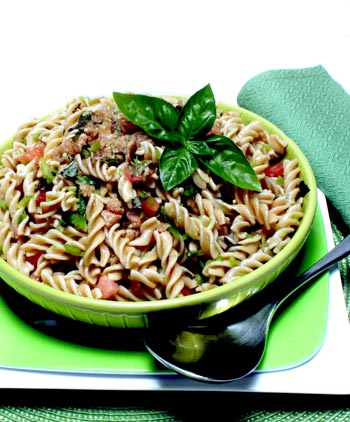
Pasta Salad with Tomatoes
Few things pair more perfectly than pasta and tomatoes, and few dishes capture the feeling of summer better than cool pasta salad. Best of all, along with its great taste, pasta salad with tomatoes has good nutritional value.
The recipe calls for Roma tomatoes, though any variety will do. Roma tomatoes, also known as Italian or Italian plum tomatoes, are pear or egg shaped tomatoes that are meatier and have fewer seeds, making them a great fit for salads. Tomatoes contain the cancer protective red pigment called lycopene. The green pepper, abundant in vitamin C, provides color and its flavor combines well with tomatoes.
Tip: Experiment with the red pepper to find the level of zesty bite that appeals to your taste.
Pasta Salad with Tomatoes
(Makes 8 servings)
Ingredients
- 8 ounces whole-wheat fusilli, farfalle, or other small pasta shape, cooked according to directions
- ¼ cup balsamic vinegar (red or white)*
- 4 tablespoons finely chopped fresh basil, divided
- 1 teaspoon turbinado sugar, optional
- Salt and freshly ground black pepper to taste
- ⅛ teaspoon crushed red pepper (or to taste)
- 3 tablespoons extra virgin olive oil, divided
- 4 cloves garlic, minced and divided
- 1 medium green bell pepper, finely chopped
- 4 plum or Roma tomatoes, coarsely chopped
- 1 slice whole-wheat bread (multigrain may be substituted)
Directions
- In bowl, cover and chill pasta.
- In large mixing bowl, combine vinegar, 2 tablespoons basil, sugar, salt, pepper, red pepper, 2 tablespoons oil, and half of minced garlic. Whisk to combine well. Add pasta, bell pepper, and tomatoes. Toss gently until well coated.
- In food processor or blender, place bread and pulse a few times to produce coarse crumbs. In a medium skillet, heat remaining oil over medium-high heat. Stir in breadcrumbs and garlic. Sauté about 1 ½–2 minutes until browned and crisp. Remove from heat and let cool.
- Top pasta with garlic crumbs and remaining basil. Serve.
Nutrition Facts
Per Serving:
Calories: 180
Total fat: 6 g
Saturated fat: 1 g
Carbohydrate: 27 g
Fiber: 4 g
Protein: 5 g
Sodium: 25 mg
*Note: True balsamic vinegar is aged in wood containers that infuse cooked grape juice with a hint of wood flavor and a dark color. The basic difference between the red and white is that the latter is often aged in a stainless steel container. The flavors of the two are very similar, although many chefs say that the dark balsamic is slightly sweeter and tends to be a little more syrupy. Some also believe the white has more of a clean aftertaste. The main reason one would use white balsamic, rather than regular, is mostly aesthetic. It can be used with lighter colored foods, dressings, or sauces without any discoloring.
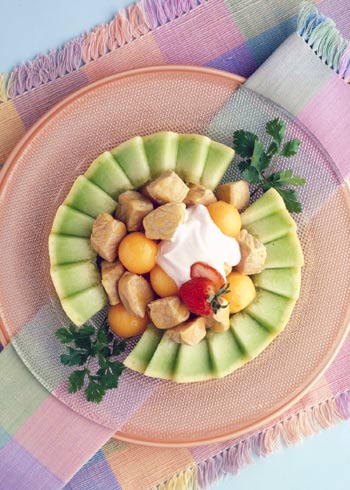
Gingered Pork and Melon Salad
Pork poached in ginger and orange juice is the center of this summer dinner salad. Serve with hot French bread.
Gingered Pork and Melon Salad
(Makes 4 servings)
Prep Time: 5 minutes
Cook Time: 15 minutes
Ingredients
- 1 pound boneless pork loin, cut into ½-inch cubes
- ½ cup orange juice
- 2 tablespoons ginger, grated
- 2 cups melon balls, cantaloupes, watermelon, honeydew or a mixture
- 1 papaya, peeled, seeded and cubed
- 2 tablespoons Grand Marnier or other orange liqueur
- 6 cups mixed salad greens
- ½ cup peach yogurt
Directions
- In medium saucepan combine orange juice and ginger; bring to a simmer and add pork cubes. Simmer for about 5 minutes, until pork is cooked. Remove pork and remaining liquid to bowl, refrigerate uncovered to cool slightly, about 5–10 minutes.
- In medium bowl gently toss together melon, papaya, Grand Marnier, pork cubes, and cooking liquid. On each of four plates place 1 ½ cups salad greens. Serve equal portions pork-melon mixture atop greens, topped with 2 tablespoons yogurt.
Nutrition Facts
Per serving
Calories: 310
Total fat: 9 g
Saturated fat: 3 g
Carbohydrate: 27 g
Fiber: 4 g
Protein: 28 g
Sodium: 85 mg
Recipe and photo courtesy of the National Pork Board.
Reader Shares Rockwell Letters from 1977
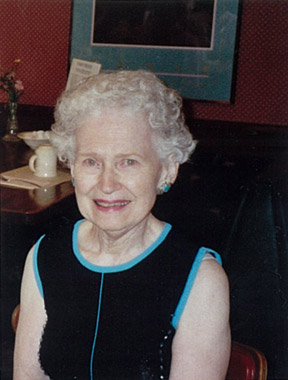
When the Post featured Rockwell’s Homecoming G.I. in the May/June 2013 issue, it reminded reader Margery Manville of a letter she wrote to the artist in 1977. What prompted the letter was an article in her local paper, The Sunday Plain Dealer, from December of that same year:
Over the years, the critics found Norman Rockwell simplistic, corny, and superficially photographic and refused to admit him to the world of “real art.” The fact that he delighted and touched millions did not bend the membership rules.
He, himself, never claimed to be anything more than an illustrator who made a lot of money. “I paint life as I would like it to be,” he said.
That Rockwell’s art meant so much to so many might not have mattered to art critics, but it meant a great deal to Margery, then an executive secretary. And so, she wrote to the 83-year-old artist, who was in declining health (Rockwell died November 8, 1978). Here is that letter:
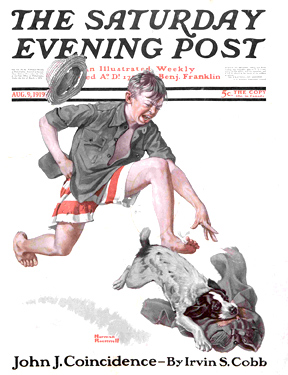
Norman Rockwell
August 9, 1919
© SEPS
Dear Mr. Rockwell:
I sincerely hope that you read this letter. An article in the December 18, 1977, issue of The Sunday Plain Dealer (Cleveland, Ohio) prompted me to write it.
What I wish is to set down in words the very thoughts and feelings that you and your work have produced for me and, without a doubt, most Americans.
The “Old Masters” had their day. However, most of their subjects were titled and/or wealthy persons who did not typify the average people of any country.
Many “Modern” artists create work which must be accompanied by an explanation of what we are supposed to “see” in it.
Your work, to me, is human and real, therefore, it conveys universal feelings. It is also typically American. Our history for two generations usually comes through—as the serviceman returning home. If this is a result of an idealistic attitude so be it. What is so wrong with wishing things were as they should be! It’s a rough road, though, as we all fall short of what we should do and be.
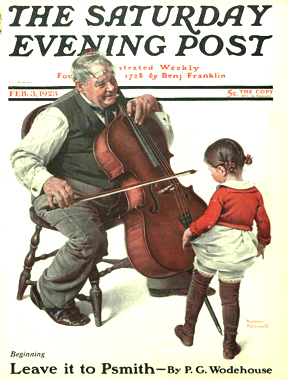
Norman Rockwell
February 3, 1923
© SEPS
You have been given a great gift, Mr. Rockwell. What is even greater is that you shared it with your countrymen, including amateur artists just like myself.
Critics, in my opinion, are just that—each just possessing his own criteria for whatever is at hand. I have never held much with their opinions. We Americans like to make our own decisions!
Personally, your pictures have caused me to smile, laugh, or get a lump in my throat, calling up an old, mellow memory. This, it would seem, is work which lives, and what could be more important.
To me, you are the artist of our day.
Sincerely,
(Miss) Margery A Manville
To Margery’s surprise and delight, she received the following response.
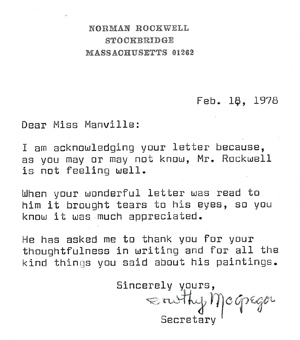
February 18, 1978
Dear Miss Manville:
I am acknowledging your letter because, as you may or may not know, Mr. Rockwell is not feeling well.
When your wonderful letter was read to him, it brought tears to his eyes, so you know it was much appreciated.
He has asked me to thank you for your thoughtfulness in writing it and for all the kind things you said about his paintings.
Sincerely yours,
Dorothy McGregor
Secretary
A special thank you to Miss Manville for sharing her remarkable letter that expresses so well what many of us would have loved to say to Norman Rockwell.
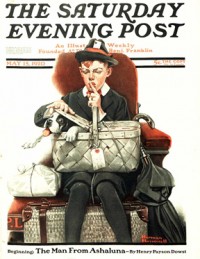
Norman Rockwell
May 15, 1920
© SEPS
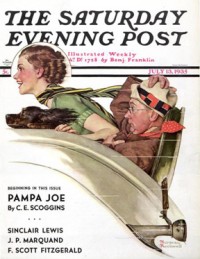
Norman Rockwell
July 13, 1935
© SEPS
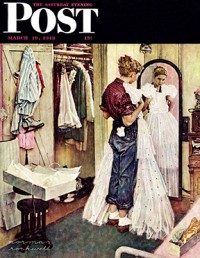
Norman Rockwell
March 19, 1949
© SEPS