Fertilizer Explosions: What Have We Learned From Past Disasters?

The devastating explosion at a fertilizer plant in West, Texas, on Wednesday, April 17, 2013, happened 66 years after one of the nation’s worst industrial disasters—also caused by a fertilizer explosion. On April 16, 1947, more than 500 people were killed and 3,000 injured as a series of violent explosions and fires demolished the Gulf Coast seaport of Texas City, Texas.
The Post reported on the events leading to the explosion of the S.S. Grandcamp vessel; the minute-by-minute account of the terrible blast; and the legal battle that followed.
As in West, Texas, many of the firefighters were killed, and there is speculation that the volunteer firemen may not have known how to fight a fertilizer fire. The Post noted that although they knew how to fight ship fires, oil, benzol and propane fires, there was no general current knowledge that ammonium nitrate would explode.
It is impossible to estimate the force of the Grandcamp explosion, but it is difficult to exaggerate it. Terminal buildings ceased to exist. Monsanto’s warehouse—a steel-and-brick structure—was flattened. The main power plant was similarly crushed, and, as the blast fanned out, walls of manufacturing buildings fell, partitions shredded, pipelines carrying flammable liquids were torn apart. Two sightseeing light planes, 1,500 feet above the Grandcamp, were blown out of the air, with the loss of four lives. Windows in Galveston and Freeport were shattered; the explosion was felt in Palestine, Texas, 200 miles away.
Read more in “Death on the Water Front” by Milton MacKaye (October 26, 1957).
Beet, Carrot, and Apple Salad
I particularly recommend this salad in the spring, since some consider beets, like Grandma’s old-fashioned tonic, good to eat to get our systems going after winter’s lethargy. This salad is so colorful and succulent that saying this is loaded with fiber, vitamins, minerals, and phytonutrients seems almost crass.
Beet, Carrot and Apple Salad
(Makes 4 servings)

Ingredients
- 1 medium beet (or 3/4 cup pre-shredded)
- 2 medium carrots (or 3/4 cup pre-shredded)
- 1 large peeled Granny Smith apple
- ¼ cup walnut halves, chopped
- 3 tablespoons chopped flat-leaf parsley or dill or combination
- 1 tablespoon fresh lemon juice
- ½ teaspoon salt
- Freshly ground black pepper
- 1 tablespoon extra virgin olive oil
Directions
- To shred beet, insert each hand in plastic sandwich bag to avoid staining hands. Peel beet using swivel blade vegetable peeler. Using coarse side of box grater, shred beet to get ¾ cup. Save remaining beet for another use.
- Shred carrots and apple.
- Place shredded beets, carrots, and apple in mixing bowl and mix to combine. Add walnuts and green herbs on top of mixed vegetables, and set bowl aside.
- For dressing, in small bowl whisk together lemon juice and salt until salt dissolves. Add 3-4 grinds of pepper. Whisk in oil. Pour dressing over salad and mix until well combined and evenly dressed.
- Serve salad within 1 hour of combining with herbs and dressing.
Nutrition Facts
Per serving
Calories: 112
Total fat: 8 g
Saturated fat: <1 g
Carbohydrate: 11 g
Fiber: 2 g
Protein: 2 g
Sodium: 330 mg
Bad Boys of Hollywood, 1962
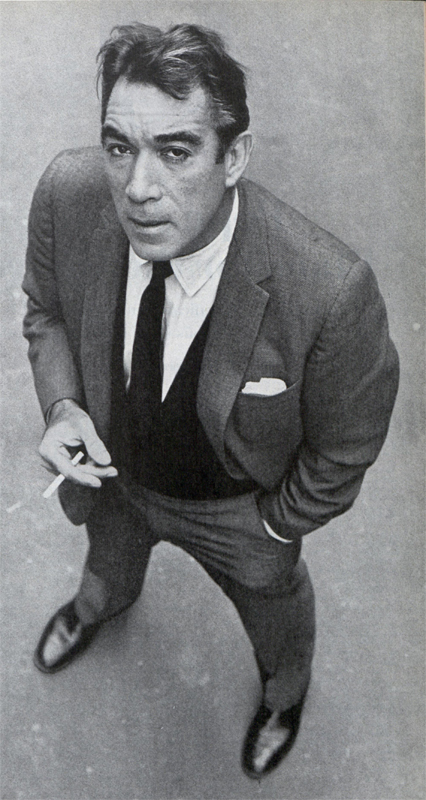
Fifty years ago, the Academy Awards ceremony was handing out its Oscars to a remarkable crop of films—including big winners such as Lawrence of Arabia, The Miracle Worker, and To Kill A Mockingbird. Although Hollywood’s big-name actors were noted for memorable performances, several 1962 Post articles also pointed out that they were showing a trend toward rebellious, temperamental, and selfish behavior.
Rising stars like Anthony Quinn, Marlon Brando, and Peter O’Toole were becoming increasingly hard to work with, and were threatening the survival of the studios.
For example, an article about Anthony Quinn often described the actor as “volatile, unpredictable,” alternately gracious or bitter. A director, who had recently worked with Quinn in the movie Requiem for a Heavyweight, said, “I found Tony has great selfishness as a performer. He thinks how each scene can best serve him. Of course, when he’s good, he’s brilliant. He just makes it hard as hell for everyone around him,” [“Anthony Quinn, Unsettled,” October 13, 1962].
An article about Peter O’Toole, star of Lawrence of Arabia, mentioned the rumors among actors that O’Toole was brash, irresponsible, a braggart, and a drinker. The producer of Lawrence of Arabia believed the rumors, O’Toole said. “It hardly helped matters when a fifth of whiskey tumbled from my pocket during our first meeting,” [“Oscar Winner,” March 9, 1963].
Fellow Brit Richard Burton was becoming well known for his wild rages. While filming The Robe, he deliberately ran his head into a wall after failing to perform a stunt called for by the script. The year before, while performing in the Shakespeare festival at Stratford, “he got so carried away during a fight scene that he lifted [Michael] Redgrave and hurled him against the scenery, nearly bringing the set crashing down,” [“Actor With Two Lives,” January 27, 1962].
Robert Mitchum, who had just finished Cape Fear with Gregory Peck, instinctively fought any type of authority. His impatience often led him to lose his temper. When a studio phone failed to work, he destroyed his dressing room and walked onto the set to announce, “If they treat me like an animal, I’ll behave like an animal,” [“The Many Moods of Robert Mitchum,” August 25, 1962].
Newcomer Warren Beatty had starred in only three movies by 1962, but he was already making demands on the studio. He insisted on complete silence on the set while he was acting. He also demanded, and was given, the best dressing room on the lot, normally reserved for Gregory Peck, [“Brash and Rumpled Star,” July 14, 1962].
But of all the troublesome actors, none was more difficult or demanding than Marlon Brando. Lewis Milestone, who had recently completed Mutiny On The Bounty, told Post contributor Bill Davidson that Brando’s attitude—argumentative, uncooperative, and easily offended—“cost the production at least $6 million and months of extra work.”
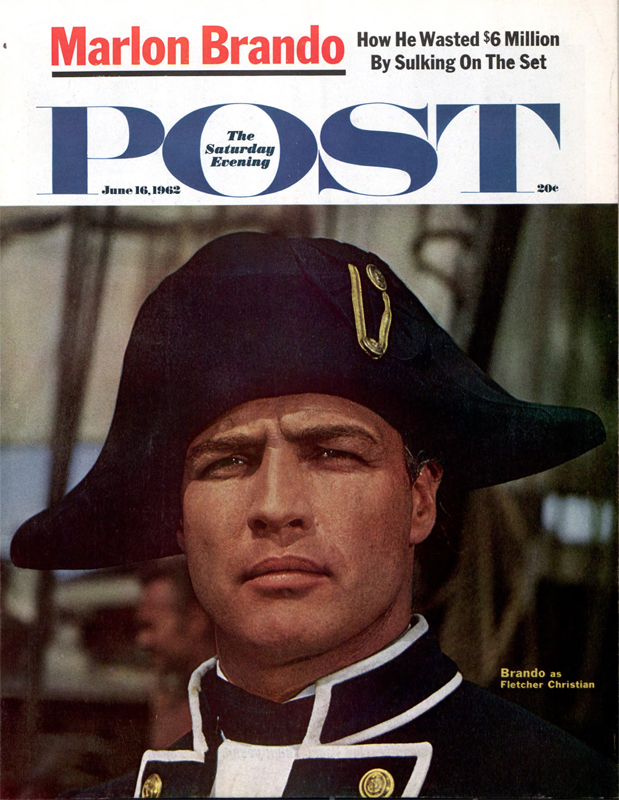
Co-star Trevor Howard said Brando’s behavior had been “unprofessional and absolutely ridiculous,” and Richard Harris said working with Brando had made “the whole picture a large dreadful nightmare.”
According to Milestone and other members of the cast, Brando rarely knew his lines and would fumble his way through as many as 30 takes of a single scene. He constantly used “idiot cards”—pieces of paper with his lines written on them—which he concealed on his person or somewhere on the set.
Says Director Milestone, “It wasn’t a movie production; it was a debating society. Brando would discuss for four hours, then we’d shoot for an hour to get in a two-minute scene because he’d be mumbling or blowing his lines. By now I wasn’t even directing Brando— just the other members of the cast. He was directing himself and ignoring everyone else.
“Did you ever hear of an actor who put plugs in his ears so he couldn’t listen to the director or the other actors? That’s what Brando did. … I’ve been in this business for 40 years, and I’ve never seen anything like it. … Whenever I’d try to direct him in a scene, he’d say, ‘Are you telling me, or are you asking my advice?’ [“The Mutiny of Marlon Brando,” June 16, 1962].
While Metro-Goldwyn-Mayer hoped to recoup the cost overruns of Mutiny on the Bounty, Twentieth Century Fox was starting to see similar budget problems on its production of Cleopatra.
Robert Wise, an Academy Award-winning director, predicted Hollywood would have to change to survive. Hollywood, he said, had built up its stars in order to compete with television. In the process, it had created monsters. “Brando’s behavior has made us realize how far out of hand the situation has gotten. More and more of us are saying. ‘The hell with the star. I’ll make little black-and-white pictures with good scripts and unknown actors.’ We must do that to survive. A few more mutinies by stars and we’ll all be out of business.”
Yet the Post editors seemed to expect actors to be demanding, difficult, and hard to work with. Movie stars had to be bigger than life in everything they did. The stars of Hollywood’s golden era, like Gable and Bogart, were “exciting personalities … every gesture and mannerism set them apart from ordinary men, creating about them the aura of a star.
“Each of these old-time stars was a vibrant personality with his own distinctive style. He snarled, fumed, raged, stormed, fought, loved, bled and died with a gusto that today’s pallid actors cannot match.” The editors compared the “glittering greats” of the past with the young stars of that year and concluded, “much of the excitement has gone out of the movies.”
Rockwells That Don’t Look Like Rockwells
Norman Rockwell painting a “wild woman”? Dabbling with abstract art? And where did that horse come from anyway?
Armor
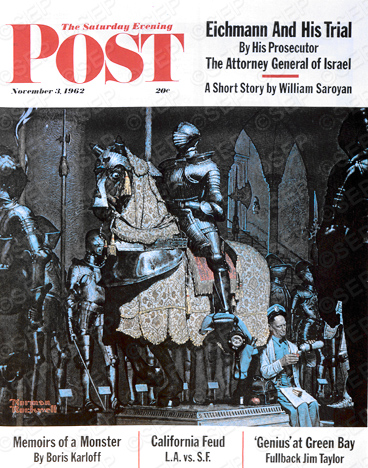
Armor
Norman Rockwell
November 3, 1962
Rockwell visited the Higgins Armory Museum in Worcester, Massachusetts, and came away with an idea for this 1962 Post cover. He recreates the setting with remarkable accuracy, except for two key elements: the guard eating his lunch and the hungry horse eyeballing him were strictly out of Rockwell famous imagination. Proof indeed that an artist’s mind can be a strange place, but it does show Rockwell thinking outside the box (or perhaps, outside the ol’ swimming hole). Additionally, the sumptuous display was an ideal setting for his passion for reproducing intricate details.
The Bridge Game
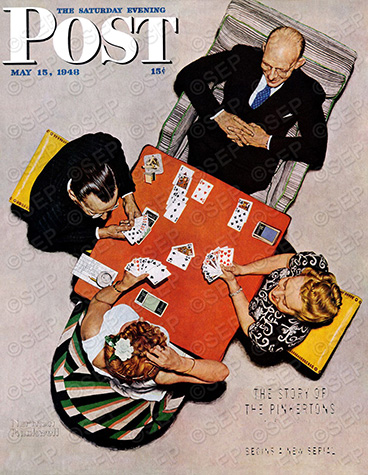
The Bridge Game
Norman Rockwell
May 15, 1948
“I have two radio bridge programs,” wrote a reader from Oregon in 1948, and “ever since the appearance of your May 15th issue, I’ve been swamped with mail asking what I think the redhead with the gardenia should do.” (note: in Letters to Editor July 3, 1948, page 8)
If you think Rockwell was a stickler for details, you should get a bridge player started! Many wrote in to say what the redhead should do, citing percentages and probabilities.
The idea for the painting had been fermenting in the artist’s brain for three years, with Post Art Editor Ken Stuart clipping and sending him bridge cartoons to prod him. Rockwell finally did deal the cards, with the assistance of a bridge expert, and produced this delightful painting done from a most difficult perspective.
Circus Artist
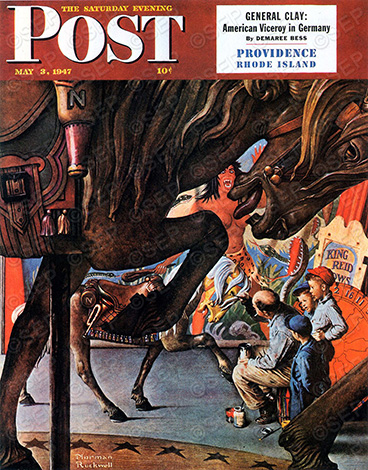
Circus Artist
Norman Rockwell
May 3, 1947
Borrowing the “wild-woman” banner for this carnival scene may not seem a big deal, but having two merry-go-round horses weighing in at 365 pounds each shipped to his Vermont studio was, well, for Rockwell, not that unusual, either. “If a convoy rolled into Arlington, Vermont,” claimed Post editors in this 1947 issue, “bearing a stuffed whale, a cast-iron deer and a grandfather clock,” townsfolk would simply point and say, “Rockwell’s house is up that way.” The artist didn’t let much stop him when it came to props, and indeed, the rest of the world was happy to fall in line. “We came home from church one Sunday and he was closing our front door,” former Rockwell model, Mary Whalen Leonard, recently told us. “He said, ‘Oh, I was hoping you wouldn’t catch me! I was up this morning early and I know I had seen this little picture and I thought it was in your house, so I just wandered around and looked through your cupboards.’” He described it to Mary’s mother who simply said, “Oh no, that’s at Ann Marsh’s.” Rockwell replied, “All right, I’ll go to the Marsh’s,” and bade them good day.
The Connoisseur
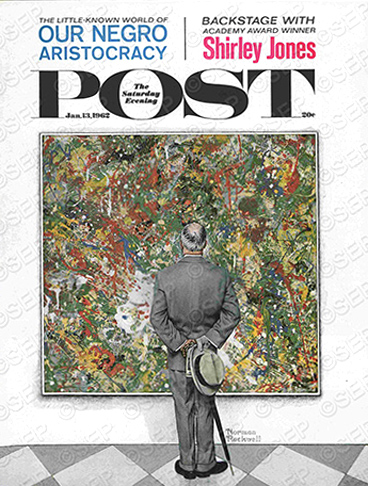
The Connoisseur
Norman Rockwell
January 13, 1962
Forty-six years after his first Post cover, Rockwell embraced modern art. “I attended some classes in modern art techniques. I learned a lot and loved it.”
And he had fun playing Jackson Pollock for this 1962 cover (the scrawled red “JP” in the upper right is a tribute to Pollock). He put the canvas on the floor, dipping into paints and splashing them far and wide. It happened that a worker was painting the windows of his studio, and the artist invited him to help. The man climbed to the top of a ladder and obligingly dumped a can of white paint on the canvas below. One can’t help but wonder whatever happened to the laborer who actually helped Norman Rockwell paint a Post cover! As for whatever happened to the original “Rockwell-Pollock,” it is in the private collection of a gentleman named Steven Spielberg.
The Post has a larger-than-life version of Rockwell’s The Connoisseur in our Indianapolis headquarters. Check it out here.
We would like to feature your favorite Rockwell cover! Drop us an email at [email protected] and include your name, along with the title and date or just a good description of your favorite piece. We’ll pick the five most popular for the upcoming Web feature, “Readers’ Favorite Rockwells.”
Masters’ Champs Nicklaus, Palmer, and Player

Legendary performers Jack Nicklaus, Arnold Palmer, and Gary Player teed off for the 77th Masters at Augusta National Golf Club as honorary starters.
Fifty years ago, the Post interviewed the big three: Palmer was noted as the game’s acknowledged master; Player, the small, sensational South African; and Nicklaus, forecasted to be golf’s next superstar. In the April 13, 1963, article, the golfers discussed how the travel was endless, the pressure was fierce, but the money was great.
On the topic of the Masters, Nicklaus said, “There has never been a golf course in the history of the game that has suited a man more than Augusta National suits Arnie. Never! He’s got a four-stroke bloody advantage before we tee off. Almost every hole is a dogleg left.”
Resources for Would-be Hermits

Are you thinking about unplugging yourself from today’s tech-heavy overload? Whether you’re looking to make small changes or you want to take the leap into full-fledged hermitage, check out the following resources to learn more about living a hermit’s life.
- Raven’s Bread, a newsletter for an international readership of self-declared hermits: ravensbreadministries.com/news.html
- Consider The Ravens: On Contemporary Hermit Life
by Paul A. and Karen Karper Fredette (iUniverse Books)
- Sister Laurel O’Neal’s blog, Notes from Stillsong Hermitage: notesfromstillsong.blogspot.com
- Thoughts In Solitude
by Thomas Merton (Farrar, Strauss, and Giroux)
Famous American Hermits
Want to know more about the hermits who have gone before you? Get to know these famous hermits who lived the simple life before it was en vogue.
- Robert Voorhis, a former slave, escaped bondage and chose to live in a small, secluded cave for nearly 14 years.
- Dorothy Molter, remembered fondly as “The Root Beer Lady,” has a museum dedicated to her life in the wilderness of Minnesota.
- Richard Proenneke, a woodworking genius, donated his hand-built log cabin to the Lake Clark National Park and Preserve in Alaska before his death in 2003.
- Daniel Suelo, who lives and travels entirely without money, writes a blog about his alternative lifestyle and updates it from libraries across the U.S. In 2012 Mark Sundeen wrote Suelo’s biography, The Man Who Quit Money
(Riverhead Books).
The Right to Write

Benjamin Franklin, founder of The Pennsylvania Gazette (predecessor of the Post), famously championed freedom of speech and an unbiased free press. He held that any man’s point of view, however unpopular, should be worthy of discourse. As he wrote in the May 27, 1731, edition of the Gazette:
“Printers are educated in the belief, that when men differ in opinion, both sides ought equally to have the advantage of being heard by the publick; and that when truth and error have fair play, the former is always an overmatch for the latter.”
Wise words. Over the years, Post editorials have continued to offer perspective on the subject of media bias and freedom of the press. Click on the blue headlines below to read related articles from our archive.
Free Speech
In April of 1934, the Post was concerned about the way President Franklin D. Roosevelt regarded the press’s right to freedom of expression. In the editorial “Free Speech,” the Post cautioned against an expansive, controlling administration and reasserted the prerogative of the press to safeguard the necessity of free speech and checks on government power.
Bias at the Top
“Today’s Press is ‘Freer’ Than Greeley’s,” written on August 14, 1947, argues that the notion of freedom of the press is not nearly what it seems, and that many media outlets are not as privy to that safeguard as they should be.
Fair and Balanced Reporting
On September 24, 1966, the Post ran an editorial titled “Beware of Self-Censorship,” analyzing the press’s role in covering courtroom cases and cautioning the media against inciting a perhaps undeserved trial by the court of public opinion.
The Impact of Television
On October 29, 1960, Pulitzer prize-winning journalist Harry Ashmore wrote in the editorial, “Has Our Free Press Failed Us?” that we don’t know, and haven’t known for a long time, where journalism ends and entertainment begins.
Wheat Berry Salad with Lemon-Cumin Grilled Chicken from Ellie Krieger
This hearty salad is bursting with harvest flavors and chock-full of exciting textures—chewy yet tender wheat berries, sweet-tart dried cherries, crunchy walnuts, and crisp celery. Served over leafy spinach and topped with cumin-scented chicken, this is a power lunch that will fill you up without slowing you down.
Wheat Berry Salad with Lemon-Cumin Grilled Chicken
(Makes 4 servings)

Ingredients
- 1 cup hard wheat berries
- ½ cup chopped walnuts
- 2 stalks celery, finely chopped
- ⅓ cup finely chopped parsley
- ⅓ cup tart dried cherries, chopped
- 1 small scallion (white and green parts), chopped
- 2 tablespoons olive oil
- 1 tablespoon plus 1 teaspoon fresh lemon juice, plus 4 lemon wedges for serving
- Salt and freshly ground black pepper to taste
- 4 cups lightly packed baby spinach leaves
- 1 recipe Lemon-Cumin Grilled Chicken Breast (recipe follows)
Directions
- In medium-size pot, combine wheat berries and enough water to come 2 inches above wheat berries. Bring to boil, then reduce heat to simmer. Cook, uncovered, until tender, about 1 hour. Drain and let cool.
- Meanwhile, toast walnuts in a medium-size dry skillet over medium-high heat, stirring occasionally, until fragrant, 2 to 3 minutes.
- In large bowl, combine wheat berries, toasted walnuts, celery, parsley, dried cherries, scallions, olive oil, and lemon juice. Season with salt and pepper. Salad will keep up to 5 days in airtight container in refrigerator.
- To serve, place 1 cup of spinach leaves on plate or in to-go containers. Mound ¾ cup of wheat berry salad on top of each serving. Top with slices of Lemon-Cumin Grilled Chicken. Place lemon wedge on side of each serving.
- Right before eating, squeeze lemon wedges on top.
Lemon-Cumin Grilled Chicken
(Makes 4 servings)
A touch of aromatic cumin and a citrus punch take basic grilled chicken to the next level. Pack it in your lunch box on top of the wheat berry salad.
Ingredients
- ¼ pounds skinless boneless chicken breasts
- 1 teaspoon ground cumin
- ½ teaspoon salt
- ¼ teaspoon freshly ground black pepper
- 2 teaspoons olive oil
- Cooking spray
- 2 tablespoons fresh lemon juice
Directions
- Put chicken between 2 pieces of plastic wrap. Pound slightly with mallet or rolling pin to even thickness of about ½ inch.
- In small bowl, combine cumin, salt, and pepper.
- Rub chicken breasts on both sides with olive oil. Then rub spice mixture on both sides.
- Spray grill or nonstick grill pan with cooking spray. Heat over medium-high heat.
- Grill chicken until grill marks have formed and chicken is cooked through, 3 to 4 minutes per side.
- Remove from heat, let rest for 5 minutes, then slice into ½-inch thick slices. Drizzle with lemon juice.
- Chicken will keep for up to 3 days in airtight container in refrigerator.
Nutrition Facts
Per Serving (¾ cup wheat berry salad, 1 cup spinach, 7 slices chicken)
Calories: 550
Total fat: 23 g
Carbohydrate: 48 g
Fiber: 8 g
Protein: 39 g
Sodium: 420 mg
Recipe and photo from So Easy: Luscious, Healthy Recipes for Every Meal of the Week, by Ellie Krieger. www.elliekrieger.com © 2009 by Ellie Krieger. Used with permission. All rights reserved.
The IRS Has a Secret Admirer

Ever since I was a kid and read that Al Capone was arrested for tax evasion, I have feared the Internal Revenue Service. Think of it, Al Capone had killed a zillion people, and while the police were trying to find proof to arrest him for murder, a skinny nerd with a green eyeshade nailed Capone for tax evasion. Insofar as it is possible, I try never to irritate the IRS.
In an effort to stay on the good side of the IRS, I’ve offered them several suggestions to keep them in the black. For starters, since I’m self-employed, I have to pay my income taxes four times a year. I always forget to pay until the day they’re due and end up paying with a credit card so I don’t get arrested and sent to Alcatraz like Al Capone. I use a Kroger credit card, but if the IRS had a credit card, I would use theirs. Credit card companies make $20 billion a year, give or take a few, and it’s time the IRS got a piece of the action. Using an IRS credit card could earn points toward a tax deduction. If you ratted out your tax delinquent neighbor with the barking dog that poops in your yard, you could get bonus points. It was a great idea, but the IRS hasn’t responded.
Or, consider a lottery play: Powerball recently hit $587.5 million. Two families split the money. Chances are good they’ll do something stupid with it and ruin their lives. Since the lottery and the IRS are both run by the government, it makes sense for the lottery to rig it so the IRS wins. For a $2 investment, the IRS could have made $587.5 million. Before long, the government would be awash in money, free of debt. I sent this suggestion to the IRS, but nothing came of it.
They also didn’t respond to my suggestion they buy metal detectors and hit the beaches on the weekend. There have been thousands of shipwrecks over the years, most of them involving ships filled to the brim with gold doubloons. Nic Davies of Shrewsbury, England, in his first venture out with a metal detector, found 10,000 ancient Roman coins buried in a clay pot. Officials estimate they’re worth a billion zillion dollars. Personally, I don’t care for treasure hunters because they dig holes, don’t bother to refill them, and I fall in them and break my legs. But if the IRS agents found enough buried money so we wouldn’t have to pay taxes anymore, I’d learn to cope.
In that same vein, the IRS could send its employees out to garage sales to buy Van Gogh paintings hidden underneath dogs-playing-poker pictures. A half dozen times a year I hear of someone doing this. It’s a great way to make some fast money, but when I wrote the IRS, there was no reply. Nothing. Nada. Zip. It’s no wonder our country’s coffers are empty.
To hear people talk, you’d think the IRS was invented by Adolf Hitler. In fact, it was created in 1862 by Abraham Lincoln to help pay for the Civil War. In nearly every presidential poll, Lincoln ranks as our favorite president. The Republicans refer to themselves as the Party of Lincoln, because, if they called themselves the Party of the IRS, they’d never win another office. Don’t get me wrong, I love and admire the IRS and wish them nothing but the best.
We are fast approaching another April 15, my favorite day of the year. Most people hate that day, but not me. (Did I mention my admiration for the IRS?) I’ll spend the weeks leading up to it carefully going over my financial records, making sure to report every dollar I’ve made in the past year, even the $50 my mom and dad gave me for Christmas. If you happen to work for the IRS, I know you’re busy checking everyone’s return. Save yourself the time and trouble, and don’t give mine a second glance.
Pre-Prime Minister Thatcher
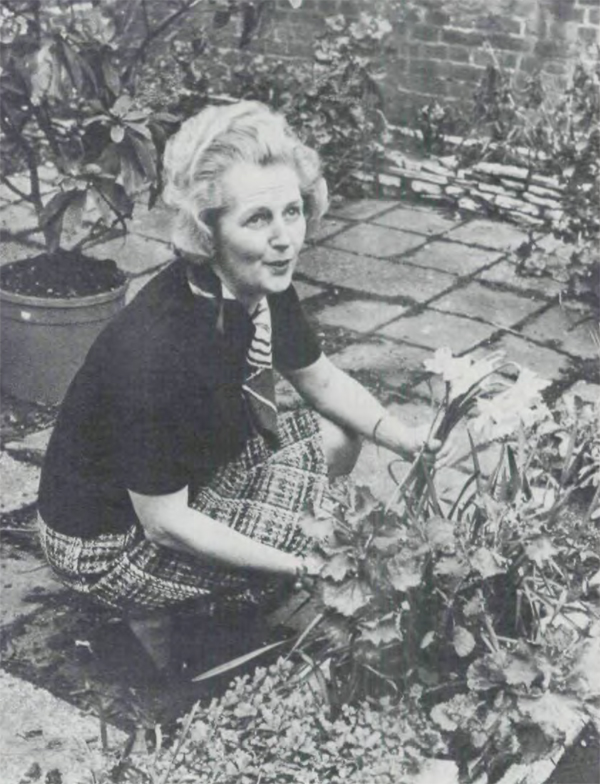
Back in 1975, four years before she became prime minister, Margaret Thatcher was profiled in a Post article, which was farsightedly titled “Britain’s First Lady Prime Minister?” At the time, Thatcher was a high-ranking member of Britain’s Tory party.
Those in her party who questioned whether a woman could lead the British government were startled to find her decisive and determined and, as the Russians soon dubbed her, the “Iron Lady.”
She held onto the prime ministership for 11 years and, like her friend Ronald Reagan, significantly reshaped British politics and society.
Click here to read “Margaret Thatcher—Britain’s First Lady Prime Minister?” in full.
Classic Covers: A Hint of Spring
We are over it! We’re through with snow and slush, and we’re seeking hints of spring from our finest cover artists: Rockwell, Leyendecker, Dohanos, Falter, Clymer, and more.
Shoveling Floral Shop Sidewalk
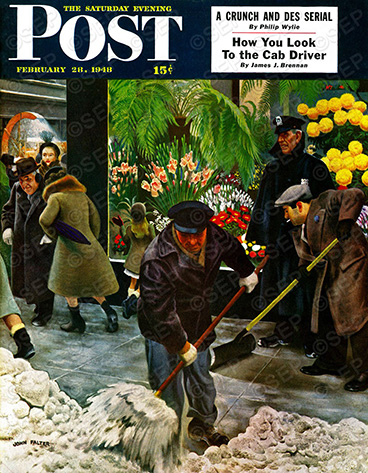
Shoveling Floral Shop Sidewalk
John Falter
February 28, 1948
“It was cold in New York,” Post editors say of this John Falter (1910-1982) cover, “and the cagey artist did most of his investigating behind glass, riding up and down on a Madison Avenue bus.” Painting the scene, Falter figured the frozen-faced workers would get an ironic chuckle from the fact that inside the flower shop window it is spring. Or perhaps not. Editors also had to note that Falter delivered his picture to the Post “just before the first of the winter’s oversize snowstorms hit New York. Then the artist hauled out for Arizona, where you may enjoy scenes like this in comfort.”
Springtime, 1935 Boy with Bunny
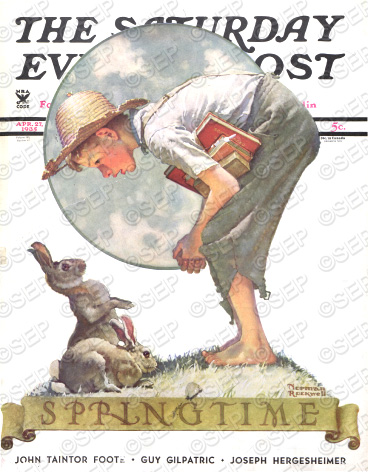
Springtime, 1935 Boy with Bunny
Norman Rockwell
April 27, 1935
“You can’t buy a straw hat and make it look old by rubbing dirt in it,” Norman Rockwell (1894-1978) wrote in My Adventures as an Illustrator. “A hat has to be worn in the sun and sweated in and sat on and rained on. Then it’ll be old. And look it.” In 1935 Rockwell was asked to illustrate Mark Twain’s The Adventures of Tom Sawyer and The Adventures of Huckleberry Finn, and he took the costuming very seriously. Desperately needing the right hat for Huck, he found just the thing in, appropriately, Hannibal, Missouri, Twain’s hometown. He spotted “a man walking along the road wearing a straw hat in a beautiful state of decay” and managed to buy it from him. Before long he ended up with a carload of clothes, “all old and rotten, battered, tattered, and splotched.”
Folks around Hannibal no doubt talked for a long time about that crazy guy who paid good money for their old duds, but the book illustrations were done to everyone’s satisfaction. And, like the boy greeting spring (left) with his worn hat and raggedy pants, some Post covers reflected the “Huck Finn look.”
Reading Among the Blossoms

Reading Among the Blossoms
F. Sands Brunner
Country Gentleman
May 1, 1936
Despite the fact that F. Sands Brunner (1886-1954) was very much a rugged outdoorsman who enjoyed camping, canoeing, and mountain climbing, most of his paintings reflect domesticity with adorable children and lovely women. This 1936 work from Post sister publication Country Gentleman is a case in point. The rich color and skillful use of lighting are typical of Brunner’s work. The Boyertown, Pennsylvania, native painted three Country Gentleman and two Post covers.
Appalachian Rhododendrons
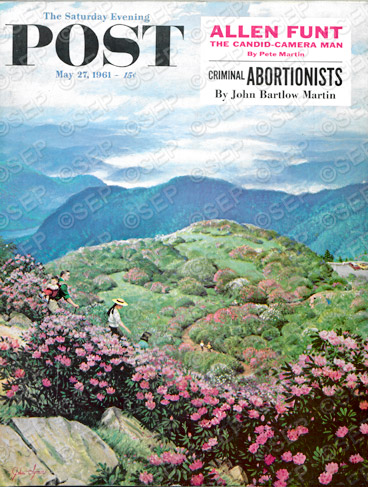
Appalachian Rhododendrons
John Clymer
May 27, 1961
Nature took over on a grand scale in most of John Clymer’s (1907-1989) 80 Post covers, and people were secondary. In fact, the viewer almost has to squint to see the family consisting of Dad with baby on his back, Mom in straw hat, and daughter leading them along the trail to Craggy Pinnacle near Asheville, North Carolina. Clymer told Post editors, “Sections of the trail wind through 10-foot-high rhododendrons, and the ground is carpeted with the rich pink petals of the flowers that have fallen.”
“These floriferous slopes look their best in mid-June,” editors noted in 1961, “as they did when the Catawba and the Cherokee held sway in the Carolinas. But if the scenery of the area has not changed much, the people have. What self-respecting Indian brave would have toted a papoose on his back?”
Hardware Store at Springtime
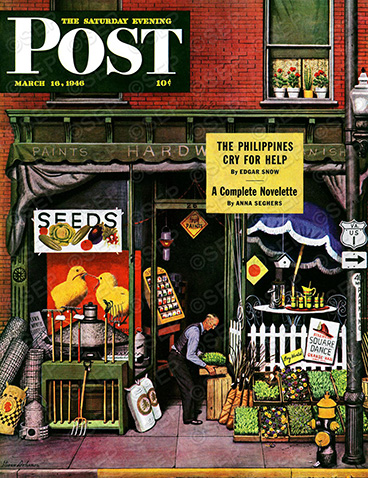
Hardware Store at Springtime
Stevan Dohanos
March 16, 1946
Artist Stevan Dohanos (1907-1994) loved hardware stores, and editors informed us that “the store he has painted affectionately for this week’s cover is a composite of many where Dohanos himself has obeyed the impulse, very strong in the spring, to buy a lot of new garden tools.” They warned, however, “this equipment buying is by all odds the most popular phase of gardening, for on a bland spring day there is nothing like the feel of a good rake or hoe in your hand—in the hardware store.”
Ready to Garden
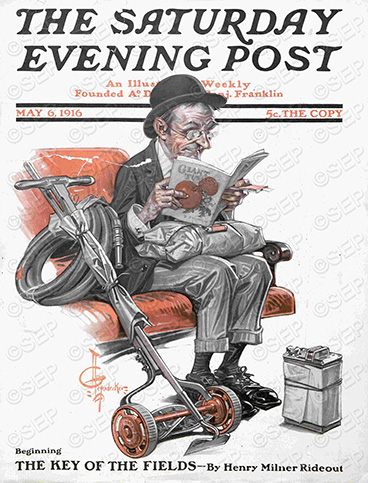
Ready to Garden
J.C. Leyendecker
May 6, 1916
This gentleman has made his trip to the hardware store and is hauling those spring purchases, lawn mower and all, back by public transportation. Perhaps more surprising is that the illustration is by the great J.C. Leyendecker, the man responsible for those chiseled Arrow Collar men who “haunted several generations of less fortunate-mankind,” according to David Rowland in a 1973 issue of the Post. In Leyendecker’s 40-plus years with The Saturday Evening Post, he showed amazing versatility as an illustrator, depicting subjects varying from elegant to comical in more than 300 covers.
Salmon and Wild Rice Stuffed Cabbage
“I serve the stuffed cabbage rolls with steamed edamame and a tarragon dipping sauce, to make a meal high in protein, fiber, and flavor while low in saturated fat, and without a fishy aftertaste,” says Registered Dietitian and CIA Associate Professor Jennifer Stack. “I designed this recipe for people like me, who are not fond of fish but want the health benefits it provides. These stuffed cabbage rolls look so good and are so tasty, they tempt even non-seafood lovers.”
A good time-saving practice for this recipe and other dishes like this one is to keep some wild rice handy and cooked barley in small portions in the freezer to just grab and use. You can also substitute rinsed, canned salmon in place of fresh salmon if you don’t have the chance to get to a fish market.
Salmon and Wild Rice Stuffed Cabbage Rolls
(Makes 4 servings)

Ingredients
- 1 cup water
- ½ cup dried shiitake or porcini mushrooms
- ¾ teaspoon kosher salt
- ½ cup pearled barley
- ¾ cup cooked wild rice
- 2 teaspoons olive oil
- 12 ounces salmon fillet
- ¼ teaspoon freshly ground black pepper, plus more if desired
- 8 ounces sliced fresh shiitake mushrooms
- ½ cup white wine
- ¾ cup chopped green onions
- ¼ teaspoons dried tarragon
- ½ teaspoons lemon zest
- 8 large cabbage leaves, blanched
- ½ cup low-sodium chicken broth
Directions
- Preheat oven to 350°F.
- Bring water to a boil and remove from heat. Steep dried mushrooms for 10 minutes. Strain mushrooms and reserve steeping liquid. Chop mushrooms and set aside.
- Add enough water to reserved mushroom liquid to make 1 cup. Add ⅛ teaspoon of salt and bring it to a boil. Stir in barley and reduce heat to simmer. Cover and cook until barley is soft, about 25 minutes.
- Stir chopped soaked mushrooms into barley. Mix cooked barley with wild rice and set aside.
- Heat olive oil in heavy skillet over medium-high heat. Season salmon fillet with ⅛ teaspoon each of salt and pepper. Sear salmon fillet just until cooked, about 2 minutes per side. Remove skin from salmon if still on and flake fish into barley mixture. Brown fresh mushrooms in same pan. Remove mushrooms and deglaze pan with ¼ cup of wine.
- Add skillet liquids and mushrooms to barley mixture. Add green onions, tarragon, remaining ½ teaspoon salt, pepper, and lemon zest.
- Fill cabbage leaves with barley mixture and roll leaves tightly. Place rolls seam side down in baking dish.
- Bring chicken broth and remaining ¼ cup wine to a boil and pour over cabbage rolls. Cover with foil and bake until cabbage is soft and the broth is steaming, 20 to 25 minutes.
Nutrition Facts
PER SERVING
Calories: 384
Total fat: 15 g
Saturated fat: 3 g
Carbohydrate: 24 g
Fiber: 8 g
Protein: 24 g
Sodium: 326 mg
Recipe, photo, and video courtesy The Culinary Institute of America. All rights reserved.
Steamed Edamame with Tarragon Dipping Sauce
Edamame are fresh green soybeans in their pods. They are popular in Asia, particularly in Japan where they are served as a snack. Introduce them to family and friends as a fun finger food.
“They can become rather addictive when dipped in a tarragon sauce,”says Registered Dietitian and CIA Associate Professor Jennifer Stack. Dip the bean in the sauce and then put the whole pod in your mouth. While holding on to the end of the pod, gently pull the pod through your teeth and the beans will pop out into your mouth. Discard the pod and move onto the next one. Try this side dish with Stack’s salmon and wild rice stuffed cabbage rolls for a delicious Asian-inspired meal.
The following recipes are from Jennifer Stack’s new book, The CIA’s The Diabetes-Friendly Kitchen (Wiley, 2012).
Steamed Edamame
(Makes 4 servings)

Ingredients
- 6 cups water
- ½ teaspoon kosher salt
- 4 cups edamame in pods (frozen or fresh)
- ½ cup Tarragon Dipping Sauce (recipe follows)
Directions
- Bring water to a boil and add salt.
- Boil edamame until beans are tender, 4 to 5 minutes. Drain and serve with dipping sauce.
Nutrition Facts
PER SERVING
Calories:238
Total fat: 10 g
Saturated fat: 0.5 g
Carbohydrate: 18 g
Fiber: 8 g
Protein: 16 g
Sodium: 154 mg
Tarragon Dipping Sauce
(Makes ¾ cup)
Ingredients
- ¾ teaspoon arrowroot
- ½ cup low-sodium chicken broth
- ¼ cup white wine vinegar
- ½ teaspoon Dijon mustard
- ¼ teaspoon kosher salt
- ¼ teaspoon freshly ground pepper
- 1 teaspoon minced tarragon
- 1 teaspoon minced shallot
- 1 teaspoon minced garlic
- ¼ cup olive oil
Directions
- Dissolve the arrowroot in 1 tablespoon of chicken broth to make paste. Bring remaining broth to a boil.
- Stir paste into broth and allow broth to thicken slightly. Remove from heat and add vinegar, mustard, salt, pepper, tarragon, shallot, and garlic.
- Whisk in olive oil.
Nutrition Facts
PER TABLESPOON
Calories: 38
Total fat: 4.5 g
Saturated fat: 0.5g
Carbohydrate: 0 g
Fiber: 0 g
Protein: 0 g
Sodium: 25 mg
Recipes and photo courtesy The Culinary Institute of America. All rights reserved.
Glucosamine Guide

Experts agree that a daily 1,500 mg dose of glucosamine sulfate is generally safe and well tolerated—the main exception being for pregnant and nursing mothers. Some studies show benefits in reducing joint pain and improving function, while others have failed to show any value. Stick with national brands when selecting a product, and make sure you’re buying glucosamine sulfate, rather than glucosamine hydrochloride. (The latter formula needs more clinical testing.)
As always, ask your doctor or pharmacist about potential interactions with prescription medicines before starting any new supplement.
Your Next Staycation
When was the last time you really got to know your hometown? Instead of traveling to far-flung places, try loca-tourism. Pack your next four-day weekend with special places to eat, learn, and play within 100 miles of home. “No airports, no TSA, no exchange rates, and huge savings,” points out travel writer Betsa Marsh. Here’s a travel plan from Marsh and Post staffers:

Day 1 Friday
Morning: Take a walking tour of the nearest city led by locals who know the best-kept secrets and scandals from a city’s past. Search online for “walking tours of [town].”
Afternoon: Enjoy tea at a specialty tea room or a posh hotel. It’s a surprisingly relaxing ritual, and so out of the ordinary that it’s romantic, too, says Marsh.
Evening: Check your newspaper’s calendar for gallery openings—a fun way to meet new artists and friends, says Marsh.
Day 2 Saturday
Morning: Explore an offbeat library, museum, or monument. Check local travel guides for ideas.
Afternoon: Go creative and try a craft at an arts center, maybe batik or even fused glass jewelry making. Or go shopping for ethnic food and housewares. “Every town has some strong immigrant roots that linger in their deli cases,” says Marsh.
Evening: After all that art, it’s time for fun: dinner and a movie. But not just anywhere. Watch in comfort at one of the new luxe theaters that boast full lounge chairs and wait service. (One option: ipictheaters.com) Alternative: “Brewery tours are always fun and interesting,” adds Assistant Editor Megan Rohrer. “Some cities even have buses that will shuttle you between multiple breweries so you can make an evening of it.”
Day 3 Sunday
Morning: Bicycle with friends to a favorite brunch spot, or put out an Italian-style spread of favorite cheeses and meats. “I like to spend my staycation catching up with friends,” says Post Comptroller Tamatha Crist.
Afternoon: Volunteer to plant trees or spruce up trails at a city or state park.
Evening: Experience a gourmet meal. To make it a fun and surprising choice, download the Urbanspoon app, enter your location, select $$$ or $$$$, and “shake.” Make a reservation at the first restaurant that comes up. Been there before? Spin again. Sure it’s a splurge, but think about all the money you’re saving on hotel and airfare.
Day 4 Monday
Morning: Enjoy a panoramic view. Every big city is proud of its highest building, and spring is
a great time to take in
a skyline, says Marsh.
Afternoon: Play classic board games (Farkle, dominoes, and Clue), or newer favorites from local retailers (Things, Ticket
to Ride, and Ruckus).
Evening: End the day with an in-home couples massage. Ask friends for recommendations or check out spafinder.com.
For more staycation ideas from Betsa Marsh click here.
Pranks for the Memories
Practical jokes have a bad reputation. We tend to think of them as unimaginative annoyances, like putting salt in the sugar bowl, making prank phone calls, or taping a “kick me” sign on someone’s back. But, as the Post reported, a good prank is of a different class altogether.
We’ll start with the case of Humorist Oliver Herford whose exceedingly clever gags arguably approached the level of high art, as Post Contributor Julian Street describes them in “More or Less Practical Jokes.”
In the 1890s, Herford announced to his friends that he had just been invited into a highly exclusive club. From his rapturous descriptions of the Farragut Club, many of his friends hoped they would also be chosen for membership. What they didn’t know was that Herford was the only member of the Farragut Club, which he’d dreamed up just to torment his good friend Richard Harding Davis, who was a bit of a social climber. For years, Davis repeatedly begged Herford to nominate him for membership. Again and again, though, Herford had to tell his friend, with sighs of deep regret, that one member had anonymously voted down his nomination. It’s possible Davis never learned who that one person was.
An Audience Of One
Professor Clyde Miller of Columbia University was another prankster who appreciated subtlety, as Author Fred C. Kelly described him in the Post article “He Sets Them Wondering.”
Whenever a publisher sent Miller a book to review that he found impossibly dull, he’d mail it to a friend along with a note, signed with the author’s name, saying, “I hope you will like the references in this little volume to yourself and that you will not mind the free use that I have made of your name.” Miller enjoyed imagining his friend wearily reading the entire book just to find where his name was mentioned.
Once, as part of a printer’s advertisement, he was sent a stack of sample Christmas cards left over from various jobs. On the inside were the names of complete strangers—a Dr. Montgomery, and a George and Helen McFarland. He mailed these cards to his friends with a brief personal note from Montgomery or the McFarlands, telling the recipient “Cousin Frank finally got the job. He would love to hear from you,” or “Ben and Sarah have a new baby. They are naming it after you.”
The Educational Joke
The Post stories of practical jokes also include a few that served an educational purpose, teaching a lesson to people who might not learn any other way.
Actor Rowland Buckstone, for example, taught fellow Actor E.H. Sothern, how it felt to have a practical joke sprung on him. For years, Sothern had played pranks on Buckstone, who had always accepted the joke with a good-natured laugh. Then, one night, Buckstone saw an educational opportunity for his friend.
It happened the night that Sothern announced to his fellow actors that he’d just become engaged to Virginia Harned, the leading lady in his current play.
Buckstone met Harned backstage while the play was in progress and congratulated her on the engagement. He added that Sothern was a brave man for telling her about the … um, sensitive issue. He knew it must have deeply pained Sothern to share with her the secret he kept from so many people.
“What are you talking about?” Harned asked.
Buckstone pretended to be shocked that Sothern hadn’t told her his great secret. The woman pleaded to know what her fiancé was hiding. At last, with a great show of reluctance, Buckstone said, “His glass eye.”
Harned couldn’t believe him. Buckstone offered to prove it. He told her that Sothern had plenty of spare eyeballs and kept them in several hiding places. He quickly led her to the dressing room of Sothern, who was then onstage. He opened the door and pointed to the dressing table, where a glass eye lay in a saucer, just where Buckstone had placed it minutes before.
Harned was aghast. Buckstone began digging through the pockets of Sothern’s clothes where he ‘chanced’ to find another glass eye. Just then, they heard Harned’s cue. She rushed through the wings and onto the stage with Buckstone strolling after her in a contented mood. Standing behind the curtain, he watched her play the love scene with her husband-to-be. He noticed that Harned seemed distracted that night, and spoke her lines haltingly. And, from where he stood, Buckstone could see that her gaze kept shifting back and forth between Sothern’s eyes, trying to figure out which was the glass one.
As soon as they got offstage, Sothern learned of the hoax and cleared up any doubt Harned had. They then began hunting through the theater for Buckstone, but never found him that night.
A Joke For Marital Equality
Julian Street also offered an example that shows a woman as capable as a man in the field of educational pranks.
When his friend, Art Editor Ray Brown, married, he and his wife agreed they would remain independent, and never demand to know where the other had been, or what he or she had been doing.
So on the first night they visited Paris, Mrs. Brown attended a concert and Mr. Brown went strolling alone through the artist’s district. Hours after she arrived back at the hotel, he came staggering in and collapsed on the bed. True to their code, she didn’t ask where he’d been.
The same thing happened for the next two nights. Mrs. Brown sat alone in their room under he would come stumbling to the door in the small hours.
On the fourth night, Mrs. Brown came to a decision. She put on her best evening gown and waited by the window overlooking the street. In the middle of the night, she saw a cab pull up to the hotel door and her husband step out. She immediately left the room and hurried upstairs to the floor above. There, she silently paced the corridor for a half hour before returning downstairs and knocking at the door of their room.
As Street describes it, Mr. Brown opened the door and Mrs. Brown sauntered in, cheerfully saying, “Oh, you got home first.” She yawned, slipped off her wrap and began to make ready for bed, aware, as she did so, of his anxious, questioning gaze.
“During the remainder of his stay in Paris, Ray Brown was given to fits of abstraction in which he would stare at his wife with brooding, speculative eyes. And she was always there to stare at, for he did not leave her any more.”
Years later, as Street was writing this article for the Post, he sent Mrs. Brown a letter asking permission to use the story. She wrote back with the permission and the news that, until her husband had read Street’s letter, he’d never known where she was that night.
Blowing Up in the Joker’s Face
Finally, we consider a category of practical jokes that are rarely reported: the ones that backfire.
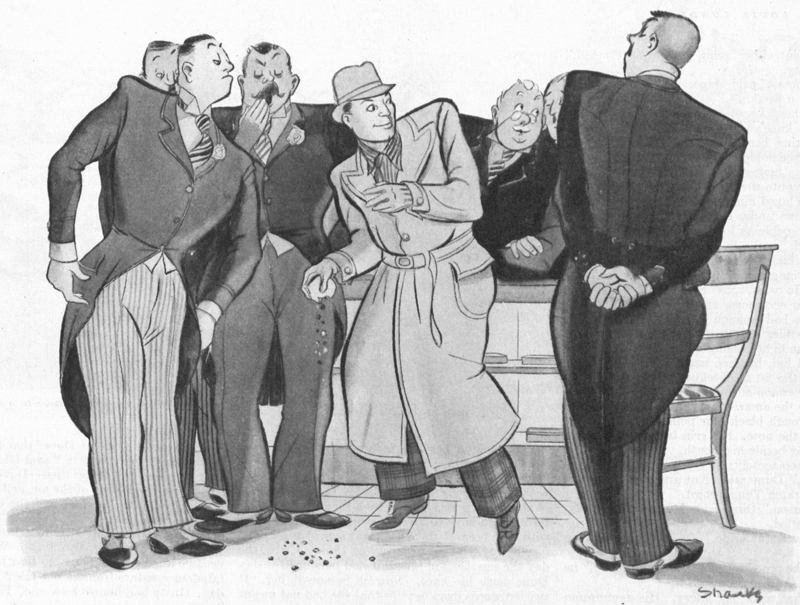
According to Alva Johnston’s 1938 article, “What Larks!” Harpo Marx once entered the Tiffany & Co. jewelry store to shop for some expensive jewelry. He was dressed in street clothes. Without his trademark wig and top hat, few would have recognized him. A salesman showed him several trays, but Marx said he saw nothing he wanted. He turned and was heading to the door when he ‘accidentally’ pulled an open bag from his pocket that spilled diamonds, rubies, and pearls across the showroom floor. Several salesmen started toward Marx, then stopped. Even from 60 feet away, they recognized the look and sound of costume jewelry hitting the tiles. They remained where they stood, fixing Marx with an icy stare. No one even helped him pick up the fake jewels.
Humiliated, Marx quickly rounded up the fake gems, handed them to the doorman, and darted outside.
He didn’t dare to show his face inside Tiffany’s again until he returned, ten years later, as a legitimate customer looking for a silverware pattern. Even though a decade had passed since his joke backfire, he had taken only a few steps into the store when a salesman stepped up and said, “No jokes, Mr. Marx.”