Your Weekly Checkup: Dealing with Hearing Loss
“Your Weekly Checkup” is our online column by Dr. Douglas Zipes, an internationally acclaimed cardiologist, professor, author, inventor, and authority on pacing and electrophysiology. Dr. Zipes is also a contributor to The Saturday Evening Post print magazine. Subscribe to receive thoughtful articles, new fiction, health and wellness advice, and gems from our archive.
At a movie last night, my wife and I traded queries several times. “What did he say?” we’d ask each other. We’d heard the spoken words but they were uninterpretable sounds, failing to register meaningfully in our brains.
Hearing loss is a major cause of disability in the U.S., especially as the population ages. Approximately half of persons older than 60, and 80% of those older than 85, experience hearing loss severe enough to impact daily life. Impaired hearing is associated with increased rates of hospitalization, falls, dementia, depression, unemployment, lower income, and death. Annual health care costs for hearing impaired persons are considerably higher than for those with normal hearing. Hearing loss is the fourth leading cause of disability globally.
Hearing impairment can be of two types: conductive and sensorineural. Conductive hearing loss can result from simple wax build up in the ear canal or from more extreme conditions such as middle ear infection or fixation of bones in the middle ear (otosclerosis.) Medical or surgical treatment of conductive hearing loss often restores full hearing.
Sensorineural hearing loss results from cochlea (inner ear) dysfunction or damage to the cochlea’s nerves, caused by degenerative processes associated with aging, genetics, noise exposure, and drugs toxic to the ear, such as some antibiotics, chemotherapeutic or anti-inflammatory agents. Hearing loss can also be genetic, affecting about 1 in 1000 live births.
Hearing impairment in the adult (presbycusis) most often results from age and genetic related degenerative changes in the cochlea and the accumulated effects of exposure to noise and ototoxic drugs. It is usually bilateral, impacts higher frequencies, and reduces the ability to understand spoken words even if the sound is loud. My wife and I have this type.
Approximately 25% of U.S. adults have hearing loss from chronic exposure to loud noise. I often think of this when a car pulls alongside at a stop light with the radio blasting so loud I can hear it with the windows shut; or when people attend a concert with the sound amplifiers exploding; or ride for hours on a noise-shattering motorcycle. The blare damages delicate sensory hair cells of the inner ear that convert sound to neural signals for the brain to interpret. The damage can be temporary or permanent, depending on the extent of the noise exposure.
Hearing loss is also associated with smoking, diabetes, and obesity, suggesting that changes in blood vessels may play a role. Sudden sensorineural hearing loss, perhaps due to viral infection or a vascular or autoimmune event, is considered an emergency since steroids can be helpful in some instances.
For the hearing impaired, hearing aids can be useful, but often make spoken words louder, not necessarily more understandable. Cochlear implants can be used to bypass the impaired hair cells and electrically stimulate the auditory nerve.
Hearing is one of life’s critical functions. Protect yours by reducing contributing factors such as noise pollution and smoking. Consult an otolaryngologist for an evaluation if you have decreased hearing. Treatment can change your life.
My Wood Stove
We bought our first house 20 years ago, still live there, and will die there if we have any say in the matter, which I suppose makes it our last house, too. It’s not a perfect house — the kitchen, where we spend all our time, is on the north side of the house and doesn’t get much sunlight — but the house is otherwise suitable and fits us well. The best feature is the kitchen woodstove, which we fire up in fall and keep burning through late winter or until we run out of firewood, whichever comes first. Like most purchases I’ve made, it was impulsive but has given us more pleasure per dollar than anything we’ve owned.
I haven’t yet discerned whether we own the stove or it owns us. A man who heats his home with a woodstove has unwittingly signed up for a full-time job: cutting, hauling, and stacking firewood seven months of the year to stay warm the other five. Except for this man, since I hire a woman named Kelly to bring me firewood each fall. Kelly drives a school bus in our town and cuts firewood the rest of the year. It would be selfish of me to cut my own firewood when Kelly so obviously wants the work.
This still leaves plenty of work for me, carrying the firewood in from the fence row to stack on the back porch, waking early each morning to load the stove, tending it through the day, staring at the fire each evening contemplating matters great and small. Devoting one’s life to reflection can be tiring, and many evenings I fall asleep while staring at the fire, exhausted by my labors.
One of my favorite things to think about while seated by the fire is how much better the world would be if everyone were seated by a fire. While gazing at a fire, I’ve never thought ill of someone else or wished them harm in any way. Indeed, just the opposite has happened. A man I didn’t care for once appeared at our door on a winter’s evening. I invited him in and ushered him to a chair in front of the fire. We sat for a pleasant hour, philosophizing, and by the time he left, we were thick as thieves. The United Nations should have a woodstove instead of a dais.
Our stove was made in Norway by a company named Jøtul, which has been making stoves since 1853. If our woodstove had been made in China, I probably wouldn’t have bought it, but I liked the idea of it being built by Norwegians. I’m sure Chinese workers do just as good a job as Norwegian workers, so I don’t know why I feel the way I do. I don’t like what it says about me that I automatically assume Chinese workers are less devoted to quality. The Forbidden City Imperial Palace in Beijing was built in the early 1400s and is still standing. I’m fairly certain it wasn’t built by Norwegians. If it had been built in America, we’d have torn it down and put up a Walmart. This is the kind of thing I think about while seated by the fire.
I should probably mention that we have a second home, my wife’s ancestral farmhouse in southern Indiana. We put a Jøtul woodstove in it last spring, so now I can think down there, which has thrown my whole life out of whack since I go there for the express purpose of not thinking. Lately, I’ve been thinking that owning two houses with woodstoves is wearing me out, and I should sell one and live in the other. Except now I am a prisoner, bound by cords of memory to the first house where our children were reared, tied by marriage to the second, where my wife was raised. And so, come winter, I own and am owned, captor and captive alike, lighting one fire while dousing another.
Philip Gulley is a Quaker pastor and the author of 22 books, including the Harmony and Hope series featuring Sam Gardner.
This article is featured in the January/February 2018 issue of The Saturday Evening Post. Subscribe to the magazine for more art, inspiring stories, fiction, humor, and features from our archives.
Heroes of Vietnam: My Son, the Soldier
 This article and other features about America in Vietnam can be found in the Post’s Special Collector’s Edition, The Heroes of Vietnam. This edition can be ordered here.
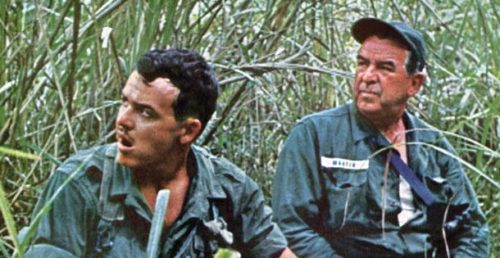
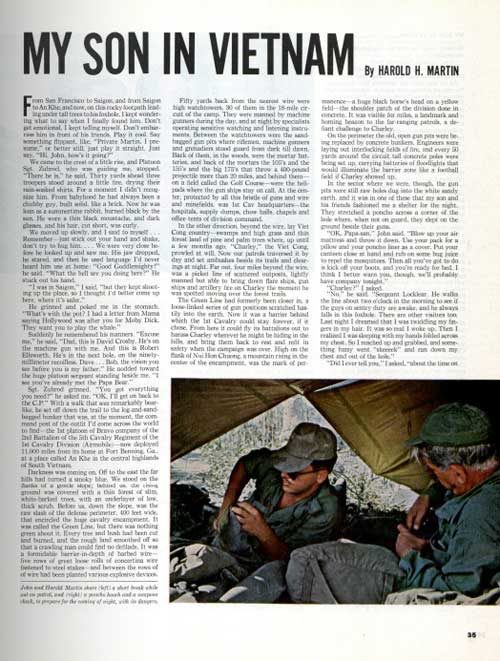
—This article is excerpted from “My Son in Vietnam” by Harold H. Martin, originally published July 16, 1966, in the Post. The complete story as it appears in the original magazine is available at the end of this article. —
From San Francisco to Saigon, and from Saigon to An Khê, and now, on this rocky footpath leading under tall trees to his foxhole, I kept wondering what to say when I finally found him. Don’t get emotional, I kept telling myself. Don’t embarrass him in front of his friends. Play it cool. Say something flippant, like, “Private Martin, I presume,” or better still, just play it straight. Just say, “Hi, John, how’s it going?”
We came to the crest of a little rise, and Platoon Sgt. Zubrod, who was guiding me, stopped. “There he is,” he said. Thirty yards ahead, three troopers stood around a little fire, drying their rain-soaked shirts. For a moment I didn’t recognize him. From babyhood he had always been a chubby guy, built solid, like a brick. Now he was lean as a summertime rabbit, burned black by the sun. He wore a thin black moustache and dark glasses, and his hair, cut short, was curly.
We were very close before he looked up and saw me. “Good Goddlemighty!” he said. “What the hell are you doing here?” He stuck out his hand.
“I was in Saigon,” I said, “but they kept shooting up the place, so I thought I’d better come up here, where it’s safer.”
He grinned and poked me in the stomach. “What’s with the pot? I had a letter from Mama saying Hollywood was after you for Moby-Dick. They want you to play the whale.”
Suddenly he remembered his manners. “Excuse me,” he said. “Dad, this is David Crosby. He’s on the machine gun with me. And this is Robert Ellsworth. He’s in the next hole, on the 90 mm recoilless. Dave … Bob, the vision you see before you is my father.” He nodded toward the huge platoon sergeant standing beside me. “I see you’ve already met the Papa Bear.”
Sgt. Zubrod grinned. “You got everything you need?” he asked me. “Okay, I’ll get on back to the C.P.” With a walk that was remarkably bearlike, he set off down the trail to the log-and-sand-bagged bunker that was, at the moment, the command post of the outfit I’d come across the world to find — the 1st Platoon of Bravo Company of the 2nd Battalion of the 5th Cavalry Regiment of the 1st Cavalry Division (Airmobile) — now deployed 11,000 miles from its home at Fort Benning, Georgia, at a place called An Khê in the central highlands of South Vietnam.
Darkness was coming. We stood on the flanks of a gentle slope; behind us, the rising ground was covered with a thin forest of slim, white-barked trees, with an underlayer of low, thick scrub. Before us, down the slope, was the raw slash of the defense perimeter, 400 feet wide, that encircled the huge cavalry encampment. It was called the Green Line, but there was nothing green about it. Every tree and bush had been cut and burned, and the rough land smoothed off so a crawling man could find no defilade. It was a formidable barrier-in-depth of barbed wire — five rows of great loose rolls of concertina wire fastened to stakes — and between the rows of wire had been planted various explosive devices.
Fifty yards back from the nearest wire were high watchtowers, 30 of them in the 18-mile circuit of the camp. They were manned by machine gunners during the day, and at night by specialists operating sensitive watching and listening instruments. Between the watchtowers were the sandbagged gun pits where riflemen, machine gunners, and grenadiers stood guard from dark till dawn. Back of them, in the woods, were the mortar batteries, and back of the mortars the 105s and the 155s and the big 175s that throw a 400-pound projectile more than 20 miles, and behind them — on a field called the Golf Course — were the helipads where the gun ships stay on call. At the center, protected by all this bristle of guns and wire and minefields, was 1st Cav headquarters — the hospitals, supply dumps, chow halls, chapels, and office tents of division command.
In the other direction, beyond the wire, lay Viet Cong country — swamps and high grass and thin forest land of pine and palm trees where, until a few months ago, “Charley,” the Viet Cong, prowled at will. Now our patrols traversed it by day and set ambushes beside its trails and clearings at night. Far out, 4 miles beyond the wire, was a picket line of scattered outposts, lightly manned but able to bring down flare ships, gun ships, and artillery fire on Charley the moment he was spotted.
The Green Line was a barrier behind which the 1st Cavalry could stay forever, if it chose. From here it could fly its battalions out to harass Charley wherever he might be hiding in the hills, and bring them back to rest and refit in safety. High on the flank of Nui Hon Chu’o’ng, a mountain rising in the center of the encampment, was the mark of permanence — a huge black horse’s head on a yellow field — the shoulder patch of the division done in concrete. It was visible for miles, a defiant challenge to Charley.
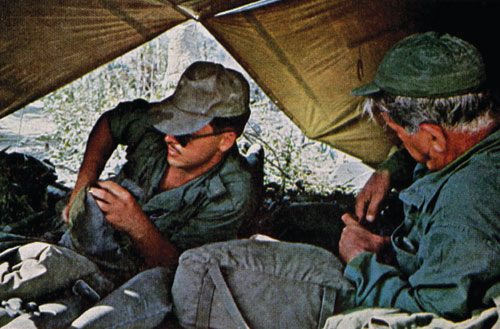
In the sector where we were, the gun pits were still raw holes dug into the white sandy earth, and it was in one of these that my son and his friends fashioned me a shelter for the night. They stretched a poncho across a corner of the hole where, when not on guard, they slept on the ground beside their guns.
“Okay, Papa-san,” John said. “Blow up your air mattress and throw it down. Use your pack for a pillow and your poncho liner as a cover. Put your canteen close at hand and rub on some bug juice to repel the mosquitoes. Then all you’ve got to do is kick off your boots, and you’re ready for bed. I think I better warn you, though, we’ll probably have company tonight.”
“Charley?” I asked.
“No,” he said, “Sergeant Locklear. He walks the line about two o’clock in the morning to see if the guys on sentry duty are awake, and he always falls in this foxhole. There are other visitors too. Last night I dreamed that I was twiddling my fingers in my hair. It was so real I woke up. Then I realized I was sleeping with my hands folded across my chest. So I reached up and grabbed, and something fuzzy went ‘skeeeek’ and ran down my chest and out of the hole.”
“Did I ever tell you,” I asked, “about the time on Okinawa when the rats ate Captain Buchanan’s moustache?”
“Yes,” he said, “you told me.”
“It just goes to show,” I said, “that down on the rifleman’s level, wars don’t change very much.”
All up and down the defensive line, though, as the platoon got ready for night, it was evident that this war had changed from anything I remembered. In a cleared place in front of the platoon C.P., helicopters were whirring in, dropping their loads of weary, sweat-soaked troopers. They’d been out all day, John explained, working out a new way of dropping men in rough terrain. Before, they had been going into clearings, or open paddies in the valleys. In forest country, these clearings were rare, and Charley had rigged them with booby traps and encircled them with guns.
“It makes for a pretty hairy operation,” John said. “The choppers go in low and flare out over the drop zone. If the drop zone’s full of logs and brush and downed trees, you have to jump from the chopper while it’s hovering maybe 6, 8 feet off the ground, and with all the gear you are carrying, you hit with a hell of a thump. Being the machine gunner, I’m the first out, and as I jump out, I feel the chopper begin to lift. Sometimes the ammo bearer, who is the third guy out, jumps from a chopper that’s already 12 feet in the air. He hits like a watermelon rolling off a kitchen table.
“Since there’s a good chance Charley’s got a welcoming committee waiting, there’s always a lot of shooting before we get there,” he said. “The artillery’s first. Then the gun ships go in with rockets to beat up the brush around the drop zone, and the gunners in the choppers are firing as they come in. Sometimes, when the landing zone is too rough, we go down rope ladders, but this takes longer and the chopper pilots sweat it. It keeps them in the area too long.”
The newest technique, he explained, gives an airmobile outfit a great deal more flexibility in its assault landings. The choppers now hover over the forested hilltops, and the troops slide down into and through the tree canopy on long nylon ropes, using the same rappelling technique which enables mountain climbers to bounce down the sides of steep cliffs. This frustrates Charley, who can’t guard every hilltop in the highlands.
It was nearly dark as the last helicopter landed. John brought his machine gun down from the tower to set it up for the night. A slow drizzle began to fall as he set up the gun. Fascinated, I watched him, a stranger to me now — a professional working at his trade.
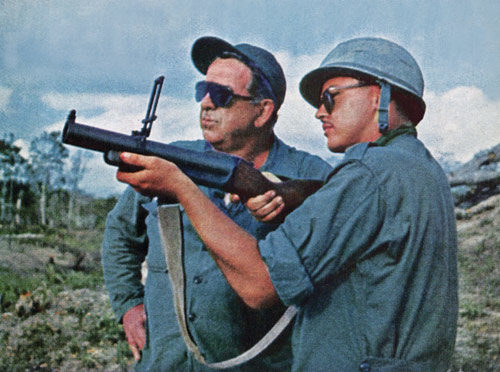
Through the drizzle a slim, blue-eyed sergeant appeared, trailing a thin wire behind him. Beside the gun he laid a rubber-covered device that looked like a hand stapler. John introduced us. “Sergeant Richardson has been out in the wire, arming the claymores,” he explained. Richardson reached into a sandbag and pulled out a putty-colored curved device, the size and shape of the back of a stenographer’s chair. “It’s a plastic explosive,” he said, “with little lead balls imbedded in it. You can burn it, shoot it, stomp it, or drop it and it won’t do anything. It takes an electric charge to set it off. That’s what this thing here is for. It’s the detonator. You attach it to this wire that leads to the claymore and squeeze it, and blam — old Charley gets his butt full of marbles.”
Off to the east, a bright star suddenly blazed in the sky, hung for a moment, and began a slow descent, silhouetting the distant hills.
“Flares,” John said. “Somebody out on the picket line thought he saw something, or heard something, so he asked for some light. You see that gap over there? The highway from here to Pleiku runs through it. Charley loves to set ambushes there. And we love to set ambushes for Charley there. So nearly every night there’s a lot of shooting in the pass.”
A shadow loomed above the hole.
“How many fillers you need?” a voice said.
“Three,” John said.
“You get two,” the voice said. Then, in a hoarse whisper, “the password’s ‘Coffee — Song.’”
The big shadow moved away, leaving two smaller shadows standing in its place. They were the “fillers” — clerk-typists from the artillery batteries who pulled guard duty on the barrier line with the shorthanded rifle platoons.
I stood the first watch with John. We talked in low tones, while behind us the mortars coughed and the howitzers banged, and the deep explosions shook the hills. I remembered the decision that had brought him here.
“I guess that answers a question I was supposed to ask you,” I said. “About how you’d feel about transferring out of this outfit. I know a guy …” I stopped, and there was a long silence.
“No,” he said. “Leave it alone. I appreciate it. But I trained with these guys, and I came over here with ’em, and I fought Charley with ’em. I was in the hospital with a bunch of them. So I think I’ll see this through … with these same guys … as long as I’ve got to stay over here.”
I asked him how long that was, and he said he didn’t know for sure. The tour was a year, and every man can tell you, to the day, how much of the year he still has to serve. But, John told me, there was a big fat rumor going around that, for the guys who had been in combat, it was going to be cut to 10 months. “If that’s true,” he said, and you could hear the hope in his voice, “I’ve got it made. My tour started the day I cleared San Francisco — November 28, 1965.”
The length of his tour is about the only facet of U.S. policy that profoundly concerns the foxhole soldier. He does not waste time philosophizing about whether this is a just war or not. He’s in it, and there’s nothing he can do about it but fight, and survive if possible.
“What do you think about when you are standing guard out here?” I asked.
“Home mostly,” he said. “Wondering if the reality of getting back will be anywhere near as good as the dream.”
We talked on. He seemed to feel not anger, but a pitying contempt for the anti-war demonstrators. “People say they ought to be drafted and sent over here,” he said. “We don’t want ’em. Nobody would want to go into combat having to depend on one of those guys.”
“Actually,” he said, “I’ve got more respect for Charley than I have for those people. At least Charley will fight, and when you think about what he’s got to fight with, you wonder how he keeps resisting. No air, no real artillery except anti-aircraft weapons, nothing but small arms and a few mortars. No way to get about except on his two flat feet, wrapped in old tire retreads.”
“The time your platoon got ambushed — was there anything you didn’t tell us?”
“Not much,” he said. “We came down off the ridge into a dry paddy, and Charley let loose. I got zapped in the leg and crawled down a ditch toward a big water-filled hole where old Papa Bear was assembling the wounded. I found another guy in the tall grass and pulled him along. We finally got air strikes in there, and they smashed Charley, and the medevac choppers came in and lifted us out.”
By now it was 11:15. John moved off in the black dark to wake the artilleryman who would take over the guard.
Dawn came like a Chinese painting, with a gray mist drifting in the hollows of the distant hills. David Crosby, who had the last watch, went out to disarm the claymores, and the men of the night patrol, their green fatigues black with rain, came home through the mists like tired ghosts.
At the end of the company street, John peeled off the muddy, sweat-stained greens he’d been sleeping in for a week and stepped under the thin warm trickle of the improvised shower. Just above the knee, on the side of his left leg, I saw the long, red scar where the bullet had gone in, traveling upward through the thigh muscle. Just below the hip joint was a longer scar where the doctors had cut the bullet out.
“Judas Priest!” I said. “You did get zapped.”
“Yeah,” he said. “Next time it’s my turn.” He soaped happily. “Don’t get the idea, though, that I’m thirsty for revenge. If I never see Charley again, it’ll suit me fine.”
Late that night the platoon got the word that it had been looking forward to, half in eagerness, half in dread. The safe, but boring, days were over. The 2nd Brigade, to which the battalion was attached, was leaving the Green Line. The next morning, Bravo Company would move out on a 10-day search- and-destroy operation in country somewhere north of Pleiku.
“‘Search and destroy’ is like killing sharks in the Gulf Stream,” a trooper from Florida said. “You chum some bait and throw it overboard, and when the shark comes around, you shoot him. But he usually gets a bite or two of the bait before you kill him.”
In these operations the infantry serves as bait. Since Charley is essentially a guerrilla, he will not do battle unless he is sure he has the advantage. To tempt him to show himself, therefore, the searching units are small. When he does reveal his position, the world falls in on him. Planes and helicopters roar in with napalm and rockets, and artillery pounds him mercilessly. The Viet Cong dead may number 40, 50, 100, or more. American losses will be described as “light” or “moderate,” which they well may be in terms of the division, the regiment, or the battalion engaged. But the squad or the platoon which ran into Charley in the first place may have been pretty well wiped out. The planes and choppers don’t always get there quick enough.
On the night before the operation, Capt. William A. Taylor, commander of Bravo Company, called his platoon leaders to his tent to brief them on their mission. The area the brigade would be going into, he said, was supposed to contain a corps headquarters, protected by at least a company — perhaps by a battalion — of Viet Cong. There were Montagnard villages throughout the area, he said. They were fortified and believed to be unfriendly.
“But,” he added, “remember this when you check out the villages — DO NOT FIRE UNLESS YOU ARE FIRED UPON. I repeat: Do not fire on any village unless you get fire from there.
“Another thing,” the captain went on. “There will be no fraternization. Nobody will go into a native hooch for any purpose except to check it out.”
It was almost midnight before the briefing ended. In the BOQ tent, Lt. Keith Sherman, age 23, commander of the 1st Platoon, sat down to write his wife a letter. Down the company street the word of the company’s mission had spread fast. From the squad tent where John slept came the sound of singing. As I came into the tent, John looked up and saw me. “Come in, Papa-san,” he said jovially, making room for me on the bunk. “Sit down.” He took the canteen cup from another trooper and handed it to me.
The gulf that lies between the generations betrayed me. “You better get yourself physically prepared,” I said. “Why don’t you guys knock off the yodeling and get some sleep?”
There was a sudden silence. In the dim light of the candle, they looked very young, but they were not children to be scolded and sent to bed. I tried to cover up. I stood up and pretended to yawn. “Sorry,” I said, “I keep forgetting that you guys are about 30 years younger than I am. At your age you don’t need sleep.”
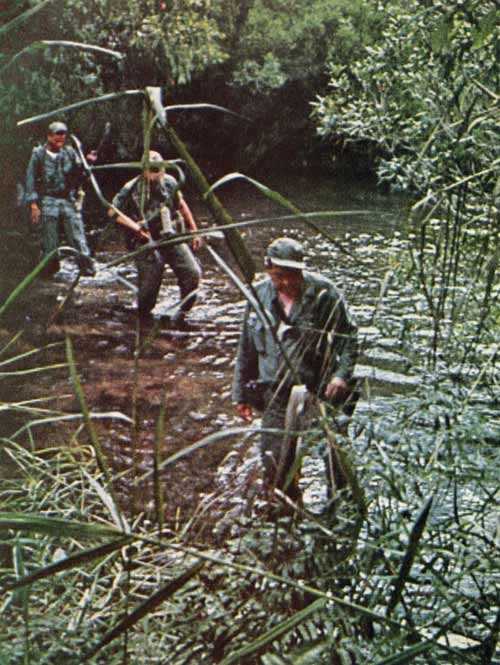
He followed me as I went out into the company street. We stood there for a moment in the dark. Finally, “Look, Dad — about tomorrow,” he said. “Patrolling off the Green Line is one thing — that country around there is pretty well secure. Tomorrow will be different. We’ll be in Viet Cong country. And if you get in tall grass and lose the man in front of you —”
“I get the message,” I said, “but don’t worry. I didn’t come out here to try to fight the war with you. I’m not that stupid. I wanted to try to tell the people back home how the plain old dog-faced, dragtailed, dead-eyed, bone-tired, foxhole soldier lives as he fights this war.
“So, about tomorrow — don’t sweat it. I’ll make the assault landing with you. Then I’ll stay in the landing zone while you guys strike out through the boondocks. And unless something comes up, I’ll leave you tomorrow night.”
I thought, when he said good night, that he sounded relieved.
Morning came early. To a chorus of birdsong, the company moved out along a rocky road to the field where the helicopters waited. Climbing aboard, the troopers fell strangely tense and silent. There was no wisecracking, no horseplay. For many of them this was their first operation. For others, including John, it was the first since the ambush at Bông So’n had decimated the 1st platoon. Out of 37 men, two had been killed and 24 wounded; of the wounded, John and eight others had returned to duty. Silently they climbed in, settled back against the bright-red nylon web of the backrests, dropped their chins on their chests, and went to sleep.
There was a roar and a blast of blessedly cool air as the choppers lifted. In the open ports, machine gunners hung on their safety straps, watching the ground below.
I stood up and peered over the chopper pilot’s shoulder. Soon below us we saw the gun ships swimming back to base. Ahead was the landing zone they had just finished pounding. Dust and smoke rose from it, and there was fire in the brush, for the preparation had been thorough. Artillery, fixed-wing planes, helicopters, each in turn had pounded it. Now, as the gun ships pulled away, the lift ships roared in. We flared out, touched down, and the troopers poured out the back of the Chinook and landed running, headed for the brush. The chopper lifted and was gone. And all at once I was alone in an open field, in an eerie silence.
I headed for the bushes to the east of the field. Soon I saw men with weapons moving ahead of me in the thicket. The battalion sergeant major came up. The colonel was asking about me, he said. I followed him to where Lt. Col. E.C. Myers, the battalion commander, was making a quick check of the area. Back with troops after a tour in the Pentagon, he had the look of a happy man. Nearby there was the muffled boom of an explosion and a billow of yellow smoke. The troops, moving through the brush, were tossing smoke bombs into the openings of a network of tunnels. When the smoke cleared, he said, men would go in to check them out. But they looked as if they had been abandoned. Everywhere, in the open field where we landed, there were square holes, hip-deep, dug in the red earth, and in the bottom of these holes, sharpened bamboo stakes had been set in place. But the holes had not been covered over with the thin covering of twigs, earth, grass, and leaves that would turn them into deadly traps. Charley, it was obvious, had recently been here, and in considerable numbers. But he had gone.
“Souvenir,” he said. “Take it home for me, please, and hang it on the wall in my room.”
Pretty soon there was nothing else for us to talk about.
“Well, so long,” I said. “I’ll be seeing you around Christmas, I guess.”
“I hope so,” he said. “Give mother my love.”
“I will.” I stood there a minute, trying to think of something else to say. “You guys take care of each other, David,” I told his friend.
“We’ve done it so far,” Crosby said. “We’ll keep on.”
As the chopper soared up, heading for Pleiku, I saw among the shattered trees below the raw earth of a new foxhole. A trooper was standing beside it. It might have been him. I couldn’t be sure, for it was getting dark and beginning to rain. He, or one of his buddies, it didn’t matter. They are all good men.
Postscript: John Martin made it home safely the following year and finished out his military career with distinction, training new recruits for their own tours in Vietnam.
—“My Son in Vietnam,” July 16, 1966
Goodbye to Beetle Bailey Creator Mort Walker
We were saddened today to read of the passing this weekend of Mort Walker, the creator of Beetle Bailey and Hi and Lois, among other comic strips.
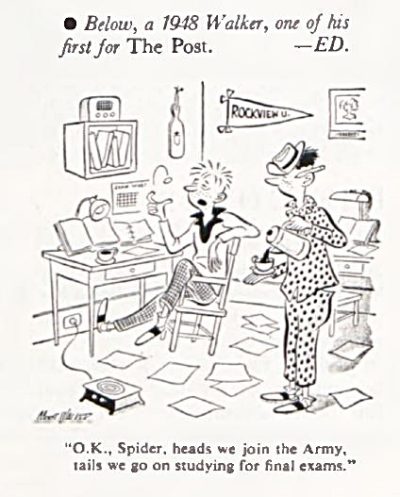
You can’t really say Mort Walker got his start at The Saturday Evening Post. After all, by the time he submitted his first cartoon to the Post, he had already sold cartoons to multiple magazines (his first at age 12), worked at Hallmark as chief editorial designer, and served as an intelligence officer in the Army during World War II.
But the progenitor of Beetle Bailey did made his first appearance in the Post. An editor here—John Bailey—encouraged Walker to create the lazy college student “Spider,” who eventually morphed into Beetle Bailey. The cartoon was eventually syndicated to 1,800 newspapers in more than 50 countries.
We are honored to have been even a small part of Mort Walker’s long and funny career.
The 5 Most Memorable State of the Union Addresses
Ever since George Washington, the American president has given an annual message every year. It’s how he complies with the Constitution’s order that “from time to time,” he report on the state of the union and make “necessary and expedient” recommendations.
Originally delivered orally by the president, the annual report was submitted to Congress as a written document between 1800 and 1913. But President Wilson revived the tradition of personally reading the address.
Since then, there have been only few years when the President sent a written report.
This year, millions will watch Donald Trump’s address to hear what he has to say. If this address is like most, he will talk in broad terms of policy and propose laws that support his priorities.
Few, if any of those laws will make it out of committee. Out of 94 spoken addresses, only a handful made a lasting impression on America or the world.
James Polk
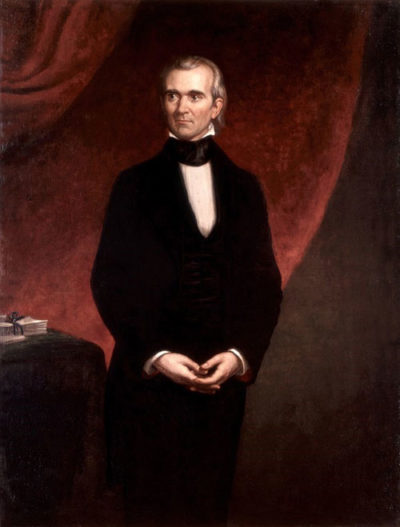
President Polk’s fourth state of the union address in 1848 launched a massive migration westward. In ten years, the white population of California rose from 80 to 300,000 — because the president reported that the rumors of gold in California were true.
Polk said, “The accounts of the abundance of gold in that territory are of such an extraordinary character as would scarcely command belief were they not corroborated by the authentic reports of officers in the public service who have visited the mineral district and derived the facts which they detail from personal observation.”
Abraham Lincoln

Abraham Lincoln’s 1862 address expressed the principles for which northern men would fight and die over the next three years. It also set the bar for state of the union address for what is arguably the best prose ever written by a president:
“The dogmas of the quiet past are inadequate to the stormy present. The occasion is piled high with difficulty, and we must rise with the occasion. As our case is new, so we must think anew, and act anew. We must disenthrall ourselves, and then we shall save our country.
“Fellow-citizens, we cannot escape history. We of this Congress and this administration will be remembered in spite of ourselves. No personal significance, or insignificance, can spare one or another of us. The fiery trial through which we pass, will light us down, in honor or dishonor, to the latest generation…In giving freedom to the slave, we assure freedom to the free. We shall nobly save, or meanly lose, the last best hope of earth.”
Franklin Roosevelt
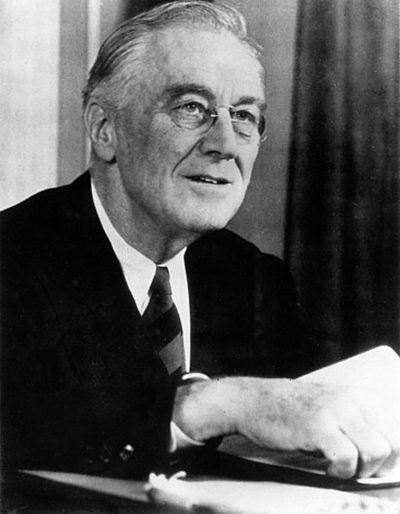
In 1942, President Roosevelt put the country’s wartime goals into words. Achieving these goals would be the full time job for 16 million Americans over the next three years. The U.S., Roosevelt said, was fighting to achieve four freedoms— not just the U.S. but for the entire world.
“Freedom of speech and expression…
“Freedom of every person to worship God in his own way…
“Freedom from want, which… means economic understandings which will secure to every nation a healthy peacetime life for its inhabitants…
“Freedom from fear… a world-wide reduction of armaments to such a point … that no nation will be in a position to commit an act of physical aggression against any neighbor—anywhere in the world.”
Lyndon Johnson
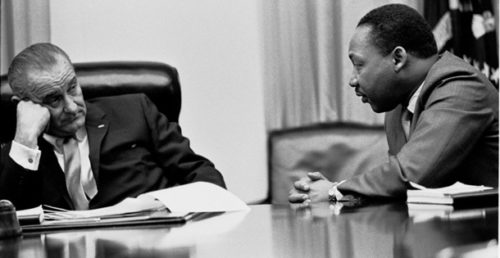
Few addresses touched as many American lives as the 1964 message from Lyndon Johnson, which launched his a highly ambitious “unconditional war on poverty.”
“Our aim,” he said, “is not only to relieve the symptom of poverty, but to cure it and, above all, to prevent it.”
In the months that followed, he pushed legislation that would expand the government’s role in civil rights, education, and health care. It would produce the Office of Economic Opportunity, Job Corps, VISTA, food stamp program, Medicare, and Medicaid.
Bill Clinton
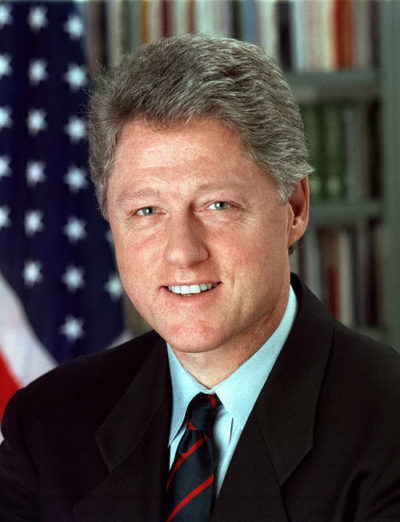
Bill Clinton stunned Congress in his 1996 address when he announced “the era of big government is over.” It was a startling turn-around for the head of a party that had long supported increased government programs to address social ills. In the coming months, Clinton introduced spending cuts that pared back programs and enabled him to announce, in his 1998 address, that the government had balanced its books and was expecting a surplus. “What should we do with this projected surplus? I have a simple four-word answer: Save Social Security first.”
We should also mention, in passing, a few addresses that may not have directly affected Americans’ lives, but contained lines that proved ironic or all too true.
George W. Bush, in his 2003 address, identified Iraq, Iran, and North Korea as an “axis of evil” whose regimes were seeking “weapons of mass destruction.” It was a claim that would come back to haunt the administration when no such weapons were found in Iraq.
In 1974, Richard Nixon was under pressure from the Congressional Committee looking into the Watergate break-in. He told America, “I believe the time has come to bring that investigation and other investigations of this matter to an end. One year of Watergate is enough.” But it wasn’t enough for Congress. Seven months later, Nixon resigned.
In 1975, President Gerald Ford broke with the long tradition of presidents declaring the state of the union was strong. Ford had the courage to honestly say, “I want to speak very bluntly. I’ve got bad news, and I don’t expect much, if any, applause… the state of the Union is not good: Millions of Americans are out of work. Recession and inflation are eroding the money of millions more. Prices are too high, and sales are too slow. This year’s Federal deficit will be about $30 billion; next year’s probably $45 billion. The national debt will rise to over $500 billion.” It was the opening to an address that presented measures he felt would “rebuild our political and economic strength.”
Finally, we should consider George Washington’s report from 1790, which some consider to be the ideal address. It was a concise: a thousand words long. (The longest address was given by President Clinton in 1995: 9,190 words. President Carter’s 1981 report, submitted in writing, exceeded 33,000 words.)
It offered practical advice, was short on flowery language or self praise, and concluded with this essential message that should inspire every president’s address to Congress:
“The welfare of our country is the great object to which our cares and efforts ought to be directed, and I shall derive great satisfaction from a cooperation with you in the pleasing though arduous task of insuring to our fellow citizens the blessings which they have a right to expect from a free, efficient, and equal government.”

Healthy Weight, Healthy Mind: The Difference Between Motivation and Desperation
We are pleased to bring you this regular column by Dr. David Creel, a licensed psychologist, certified clinical exercise physiologist and registered dietitian. He is also credentialed as a certified diabetes educator and the author of A Size That Fits: Lose Weight and Keep it off, One Thought at a Time (NorLightsPress, 2017). See all of David Creel’s articles here.
Do you have a weight loss question for Dr. Creel? Email him at [email protected]. He may answer your question in a future column.
When you’ve failed at weight loss many times, your desire to change can turn into something that seems like motivation but isn’t. Loretta’s story is a good example.
Loretta showed up 15 minutes late for her psychological evaluation for bariatric surgery. I knew little about her aside from the information in her medical records. In her chart, I found that Loretta weighed well over 400 pounds and had diabetes, sleep apnea, arthritis, and low back pain. She checked the African American box on her intake form, and I noticed her address was in the middle of a crime-ridden part of a nearby city. When I met her in the waiting room she rocked backward and then forward while pushing on the arms of the chair in order to get to her feet. She groaned and grimaced with pain while walking with me to my office, barely acknowledging my introduction. She didn’t apologize for being late and seemed uninterested in small talk about weather or traffic. After we sat down, I explained the purpose of the required evaluation was to make sure surgery was a good fit for her, and if so, determine what things she could do to best prepare for the operation.
As Loretta began telling me about herself, it was clear our lives were only similar in the sense that we were both raised without much direct influence from other cultures and races. Her urban speech patterns were unlike mine, and her life was riddled by poverty and family members incarcerated or addicted to drugs. She casually admitted to having a drug problem in the not-so-distant past. On the other hand, I grew up in a Mayberry-like small town insulated from most of the problems found in inner cities.
Although I’ve tried to educate myself about other cultures and interact with people different from me, I can’t change the color of my skin or how I grew up. I could not simply, without invitation, step into Loretta’s world and understand her life. Our differences were important to her and she didn’t want to talk about the thing that was most personal to her—her weight—with someone like me. How could I blame her? After all, it’s hard enough to talk about personal struggles with someone who understands where you come from. Revealing these things to a stranger from a different culture and race adds to the difficulty.
I listened intently to Loretta and paid close attention to her body language. Although I tried hard to connect, she spoke to me with distrust, answering my questions with curt frustration. She was holding her cards close to her chest, afraid if I got a glimpse I’d take advantage of her. She feared I would win the game and taunt her with condescending psychobabble. Like many patients in this situation, she probably believed I’d use her words against her when it came to deciding if she was an appropriate candidate for surgery.
My attempts to convince her we were “on the same team” and I wanted to help did not resonate. I had real concerns that her lack of a support system, combined with financial hardships, would cause problems for her after surgery. Would she be able to afford the vitamins she needed to take daily for the rest of her life? When she couldn’t use food to cope with life difficulties would she turn to drugs again? Although she couldn’t see it, surgery could make her life worse if she wasn’t ready and equipped to make the necessary changes. As I continued to probe about how she would manage various aspects of her life after surgery, she stopped me.
“I don’t like where this is going.”
I put down my pen and stopped taking notes. “What are you concerned about?”
“I want to change my life.”
“How do you want your life to be different?” I asked, as our eyes finally connected.
Her expression softened and her eyes welled with tears. Like the small movement from the torque on a lid of a never-opened jar, I could sense something was about to give way. At that moment I didn’t notice her body that 30 minutes earlier had fallen into the oversized chair, out of breath from walking to my office. I didn’t notice her skin tone or the fullness of her face. Our age difference and dissimilar upbringings were insignificant. I just looked into her eyes and felt the gap between us closing. In a strained, high-pitch voice required to delay an ensuing sob, she quickly exclaimed,
“I can’t even wipe my own ass anymore.”
I didn’t know what to say. There it was, one of the most personal and embarrassing aspects of her life, out in the open. In those few words, she ripped through the veil I’d been tugging at the entire session. But I wasn’t ready for it; I could no longer sustain eye contact. It was like I accidentally saw her naked and was sorry I embarrassed her. As I felt the weight of her troubles, compassion stole my words. I looked down, nodding my head.
“I can only imagine how that makes you feel,” I said, after a long pause.
Her size had robbed her of her dignity. She was angry. As we continued talking, I learned she had been this size for quite some time. She depended on her husband to prepare food and help her dress, bathe, and get into and out of her car. It seemed illogical that up to the point of seeking bariatric surgery, she had done little to change course. How could it be that Loretta, like many other people, hated her situation so much, wanted to change, yet seemingly did nothing about it for so long?
Clearly, Loretta wanted to lose weight. In fact, she told me she’d wanted to lose weight for a very long time. Despite her desire for a different life, I imagine she had misguided family members who said, “When she wants it bad enough, she’ll do it.”
But Loretta’s problem wasn’t lack of desire. She had a strong desire to lose weight, but she wasn’t motivated: Loretta was desperate. A simple comparison will help explain what I mean.
Imagine you’re stranded on an island by yourself. You have sources for food, water, and primitive shelter. You’re happy to be alive, but also desperate to leave the island, interact with other humans, and enjoy a hot shower. Month after grueling month you try everything to escape the island—sort of like the old TV show Gilligan’s Island. After years of failed attempts, you still want to leave, but you’ve given up hope. Deep down you believe nothing will work—and you’re losing motivation. Any new idea to get off the island leads to a half-hearted pursuit before giving up. You’re so demoralized that you can no longer tell the difference between good ideas and dead ends—they all seem alike.
This is the point Loretta reached with weight management. Someone told her about bariatric surgery and she felt so desperate she made an appointment. She wanted to lose weight, had many good reasons to change, but wasn’t motivated. Our conversation revealed that, to her, bariatric surgery was no different than the grapefruit diet, the cold shower and potato diet, or having her mouth wired shut. In her desperation she hadn’t considered how this procedure was different than everything else she had tried.
Because of her perspective, she wasn’t ready to do the work required to be successful with bariatric surgery. When we offered to help Loretta prepare for surgery by changing her diet and beginning a modest physical activity program, she seemingly lost interest. Maybe over time she became motivated and pursued help elsewhere. Perhaps she’s still on her island—I hope not.
Desperation occurs at the intersection of hopelessness and motivation. We want to change, but have lost hope. We consider drastic efforts without truly believing they’ll lead to success, and after a while the drive to change begins to fade away.
Desperation can lead to motivation, but not always. Desperation can also rob us of clear thinking and make us vulnerable to things that will harm us, while safer solutions rest quietly within our reach. Many times people repeat the old saying: “You have to hit rock bottom before you can change.” In other words, life has to get really bad before we’re desperate enough to make changes. This can be true for weight loss, and sometimes it works, but it only works if someone will help you out of the mire and offer a safe, realistic plan. Even then, you must accept the help, believe in the plan, and do your part to make it happen. Otherwise, desperation usually leads to taking whatever someone will give you and hoping things will miraculously work out.
Come back each week for more healthy weight loss advice from Dr. David Creel.
Strikes and Spares
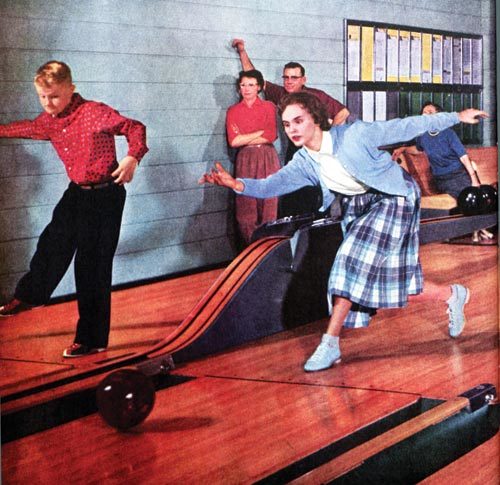
Bowling was invented by cavemen thousands of years ago, and it has been growing more popular ever since. One old story has it that Sir Francis Drake let the Spanish Armada wait while he finished a game. Rip Van Winkle took his long nap near a spooky Catskill bowling resort. Today, the American Bowling Congress estimates more than 22 million Americans bowl about 800 million games a year on 7,880 indoor alleys.
In 1841, gamblers made bowling so disreputable that New York outlawed it. Now it’s a family sport. Take the Lynbrook bowling alleys on Highway 100, in Minneapolis. Blair McKinley (left) came with his parents (leaning against the wall). Tona Erickson, the plaid-skirted teenager, had a bowling date with a boy.
Neon décor, luxury snack bars, and automation mark the bowling greens of today. Some of the fancier, million-dollar tenpin palaces look like nightclubs and maintain nurseries for children too young to bowl. Which all goes to show that man, the master of the universe, is still child enough to take his pleasure in a Stone Age game.
—Face of America,
May 24, 1958
This article is featured in the January/February 2018 issue of The Saturday Evening Post. Subscribe to the magazine for more art, inspiring stories, fiction, humor, and features from our archives.
The Unlikely Superhero of the Jungle
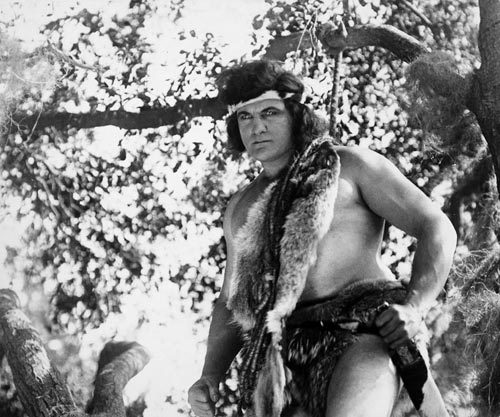
A century ago, the country’s hottest — and unlikeliest — action star was Elmo Lincoln in the role of Tarzan. Tarzan of the Apes premiered at New York’s Broadway Theatre 100 years ago on January 27, 1918.

To mimic the indeterminate African jungle of Edgar Rice Burroughs’ story, the film was shot in the swamps of Louisiana. Certain scenes were filmed in Brazil, such as the movie’s opening shots of lions, wild boars, snakes, and alligators. When it came to the apes responsible for raising the orphaned Tarzan, some extras were hired from the New Orleans Athletic Club to don monkey costumes and swing from the trees.
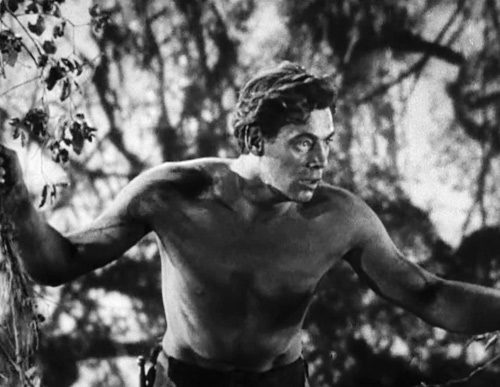
Turner Classic Movies’ Leonard Maltin called the film a “surprisingly watchable and straightforward telling of the Greystoke tale, though Lincoln looks like he’s about fifty years old, with a beer belly to boot.” Elmo Lincoln had a heftier physique than the 1930s and ’40s Tarzan played by Olympic swimmer Johnny Weissmuller, but he reprised his role in two more movies (The Romance of Tarzan and The Adventures of Tarzan). Lincoln was never again able to achieve film stardom, however, as he was thereafter relegated to small parts.
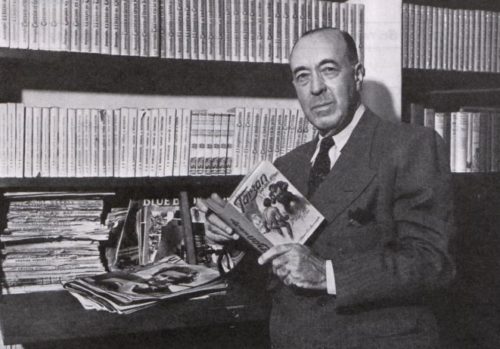
Edgar Rice Burroughs, the author of the wildly successful books, was an unlikely sensation himself. As our own Jeff Nilsson points out in “How Tarzan’s Author Did It All Wrong, and Got It Right,” Burroughs’ stories about the lord of the jungle broke countless literary and marketing rules, and they were filled with plot holes and leaps in logic. If Tarzan’s self-taught literacy is plausible, perhaps it follows that he could travel through time to fight medieval knights or Roman gladiators.
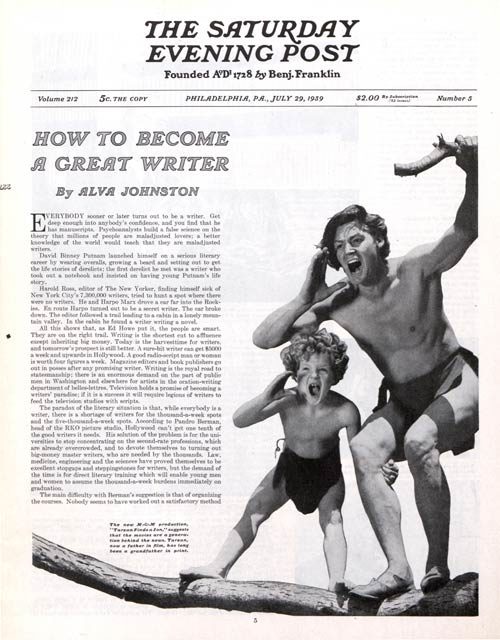
The 1939 profile of Burroughs in this magazine, “How to Become a Great Writer,” detailed Burroughs’ business failures that ultimately led him to sleepless evenings scrawling adventure stories in his apartment. The author’s imaginative writing seemed to benefit from its lack of accurate detail: “He had located his first novel on Mars because nobody knew the local color of that planet or the psychology of the Martians, and nobody could check up on him.” The same was true for Burroughs’ unspecified apes of the Tarzan series, although most have interpreted the anthropoids to be gorillas.
Burroughs seemed so ill-suited to his literary fortune that reporter Alva Johnston gave a revised list of tips for writers hoping to mimic the Tarzan-creator:
- Be a disappointed man.
- Achieve no success at anything you touch.
- Lead an unbearably drab and uninteresting life.
- Hate civilization.
- Learn no grammar.
- Read little.
- Write nothing.
- Have an ordinary mind and commonplace tastes, approximating those of the great reading public.
- Avoid subjects that you know about.
Even though he was no Oscar Wilde or Noel Coward, Burroughs created one of the most recognizable characters of the 20th century. Tarzan has appeared in movie theaters about 100 times, most recently in the form of Alexander Skarsgård in 2016. Given another century, the ape-raised warrior could grace the silver screen again and again, a far cry from his pulp fiction beginnings.
Movies for the Rest of Us with Bill Newcott: Flicks for a Cold Winter Night
Join our movie review video podcast, Movies for the Rest of Us with Bill Newcott. This week, Bill reviews movies that are worth curling up with on a cold winter night, including Hostiles starring Christian Bale, Wes Studi and Rosamund Pike; and The Clapper with Ed Helms, Amanda Seyfried, and Tracy Morgan. He also reviews his home video quick hits: The Killing of a Sacred Deer, Geostorm, Goodbye Christopher Robin, and The Long, Long Trailer.
Skyscrapers
Two seconds before Kate’s face smashed into the sidewalk, she closed her eyes and imagined she was flying. Maybe if she’d kept them open, she would’ve seen the pebbles on the path. She would’ve turned her handlebars in time.
Two hours before Kate’s face smashed into the sidewalk, she looked out the window of a restaurant on Broadway to see if her Schwinn and Amanda’s Trek were still chained to a bike stand. They were. Perhaps, after lunch, they should’ve gone Black Friday shopping instead.
Two weeks before Kate’s face smashed into the sidewalk, she and Amanda rehearsed The Nutcracker Suite on the golden stage of Carnegie Hall. She rested her chin on her violin and gazed out, imagined what she would see in a month: all those wine-colored seats filled, row upon row, tier upon tier. Imagined what she would hear: thousands of hands coming together in rattling applause.
The day after Thanksgiving, the weather turned unseasonably warm. Kate neglected to wear a bike helmet and she closed her eyes for two seconds. She couldn’t take any of that back now.
So there she was, her face pressed against craggy concrete, a fountain trickling nearby, lots of voices, a distant siren. It became louder, then cut off just as it was about to reach another crescendo.
A moment later, a man’s voice rose above the others: “Make room.” Kate rolled over and saw furrowed brows and gaping mouths and heard a gasp or two.
“I’m right here, Katie.” Amanda hovered over her right shoulder, a Trek leaning against one hip and a crumpled Schwinn against the other.
With blood gurgling through her lips, Kate said, “My teeth.”
“What about your teeth?”
“Are they still there?”
A paramedic pushed Amanda aside, a hot African American man with dreadlocks and a square jaw. He pointed a small flashlight at her eyes and asked if she knew her name. He had a deep, sexy voice. Kate might have flirted with him if she hadn’t been lying on a sidewalk with a smashed-up face.
#
Forty-three stories above the sidewalk, the white sky sent millions of snowflakes drifting downward. White sky. White snow. White tape erasing half of Kate’s reflection: her nose, cheeks, and forehead. A white Colonel Sanders beard, and — as if all that weren’t enough — a black mustache sewn above her upper lip. Purple smears encircled her eyes like applications of eyeshadow gone awry.
At least she’d kept all her teeth.
“You’re very lucky,” the attending in the E.R. had told her. “Your face took all the impact. No broken bones, other than your nose.”
“My elbow hurts.”
“It’s just sprained. It’ll feel much better in a day or two.”
“Then I’ll be able to play violin?”
“Sure. I don’t see why not.”
The following morning, while going over her discharge papers, the plastic surgeon had a different opinion. “You’ll need a month or two for that skin graft on your chin to take,” Dr. Klatsky said. “Give your violin a rest for a while. Just until you’re fully healed.”
Right now, Amanda and the rest of the orchestra were rehearsing at Carnegie Hall without her. New Yorkers were stomping through freshly fallen snow, oblivious to a waylaid violinist staring through a window 43 stories above them.
In the background, yet another radio newscaster was reporting on the weather. “… as an early December storm comes on the heels of a late November heatwave …”
Kate didn’t want to think about the late November heatwave that had landed her in this predicament in the first place. She rose to replace inane news coverage with a classical music station, then noticed a face in a window on the other side of Lexington Avenue. A bald child was staring at her.
So many questions, like so many snowflakes, fluttered into her head. Was the child a boy or girl? What devastating illness had taken this child’s hair?
That they were maintaining eye contact felt both wrong and right. Under normal circumstances, it might’ve seemed rude to stare, but these two had both been physically altered. They had that in common.
The child left the window, and Kate slipped into an unexpected and enduring guilt for having compared her temporary pain to that of a child who could very well be terminally ill.
#
In the morning, her cell phone rang. A recorded message came on: Due to the heavy snowfall, Dr. Klatsky’s office will be closed until Monday. Normally, she would’ve welcomed a canceled appointment, but she had been looking forward to having her stitches removed today.
With the cell phone still pressed to her ear, she went to her window and pushed aside her curtains. The cars parked along Lexington were packed in by snow, enough to cover their wheels. A plow was pushing the gray-and-white mess from the road to the curb, further stranding those who’d been unfortunate enough to park there. A yellow cab crept along in the plow’s tracks.
With a sigh, Kate lowered her phone and raised her gaze. That was when she noticed the bald child waving to her from the window across the avenue.
Kate waved back.
Immediately, a pink poster board filled the window, bearing a 10-digit number followed by TXT ME.
Reflexively, Kate lowered her cell phone to her hip, as if that would conceal its existence. Perhaps the child was waving to someone a floor or two below the 43rd, or a floor or two above, or …
No. The pink sign had been removed and even from the distance separating the two buildings, Kate detected a hopeful expression on the child’s face. She was being rude to someone young and sick and bored. She looked down at her phone, punched in the phone number, and texted:
••• Hi.
••• What happened to your face?
For a few seconds, Kate had forgotten all about her face.
••• Wrecked my bike.
She waited. No response. Should she say more about the accident? Or was it her turn to ask a question? And if so, how could she go about doing that? She couldn’t very well text What happened to your hair?
The child did not wait to be asked.
••• I have leukemia.
Trying to suppress tears made Kate’s upper lip and chin throb.
••• Can’t go out.
••• I’m sorry.
••• Thx. Sorry bout your bike.
••• & your face.
A tear landed on Kate’s fingertip. She rubbed it onto her shirt and typed.
•• I’m Kate.
••• I’m Chloe.
She had already come to the conclusion that she was communicating with a girl. Maybe because of the pink poster board.
••• How old are you, Chloe?
••• 12.
••• Hey, do you know where the biggest Xmas tree in the USA is?
••• NYC?
••• Wrong!!!!
A man wearing a surgical mask and cap appeared at Chloe’s side, bringing the exchange to an abrupt end. Kate ducked down, crept backward away from her window. She reread the conversation, saw nothing that could be considered predatory other than the fact that she’d sent the first text. Her heart rate galloped as she grabbed her keys and left her apartment, with no clear plan of where she was going.
For a week, she had hidden in her tiny efficiency; now that no longer provided adequate coverage. Her one venture out — last Friday, to check the mailbox on the first floor — had resulted in a little boy crying at the sight of her hideous face and a small girl burying her eyes against her mother’s skirt.
Kate’s mailbox was probably overflowing by now. She summoned the elevator, hoping not to have to share it with a young child whom she could frighten just by turning her head.
The elevator doors opened to reveal not one but two small children, a boy and a girl, bundled in snowsuits and mittens and colorful boots. The little girl glanced at Kate; the boy stared, but at least did not appear to be on the verge of tears. The mother, while pressing the lobby button, said, “You live on 43G, don’t you?”
“Yes.” Kate wondered how her neighbor knew this.
“I’m on 44G. I live directly above you. I hear you playing your violin sometimes, and I saw you leaving the building with a violin case the other day.”
Well, it couldn’t’ve been “the other day” because Kate hadn’t played her instrument since the day before Thanksgiving, but she confirmed that she was the musician in 43G.
“You play very well. Are you in an orchestra?”
“Well, yes.” No sense in going into all the details.
The doors opened on 39 and a middle-aged couple boarded. They looked at Kate and immediately down at the floor. At the back of the elevator, the little boy and his sister smiled at her, so she smiled back, forgetting that this would inflict pain above her lips. “Are you going out to play in the snow?” Kate said.
Nods from both children.
Maybe Chloe wished she could play in the snow. Maybe that was why she’d been staring out the window.
On the 28th floor, two old women wearing fur-trimmed boots boarded. One of them interrupted a conversation with the other and pointed to her own soft face. “That must’ve hurt quite a bit.”
“Yeah, quite a bit,” Kate said.
“You let us know if there’s anything we can do for you, young lady. I’m Lily. Rose and I, we live in 28E. Right across from the elevators.”
Kate flinched as another attempted smile tugged the stitches that should’ve been coming out this morning. “Thank you for the offer. That’s so nice.”
“We mean it. Don’t we, Rose? Anything at all. We’re just on our way to the market for cocoa. You can’t very well be stuck in a snowstorm without cocoa, can you? You want us to pick some up for you?”
Kate already had four expired boxes of Swiss Miss in her cabinet. She did need fresh milk, but was not about to ask two old women to carry a half gallon jug in the snow. “Thank you. No. I think I have everything I need.”
The middle-aged woman from 39 turned to Kate; her blonde curls mingled with the faux fur trim of her hood. “I broke my nose when I was a teenager. Hurt like the dickens for weeks. I hope you heal quickly.” She looked up at her husband as if he’d said something.
When the elevator reached the lobby, the children ran off with stiff, snowsuit-covered legs. Their mother followed, then the middle-aged couple, smiling at one another as if sharing a fond memory of when their own children were young. The two old women flanked Kate as she walked to the mailboxes, then left her alone with one more reminder that their apartment number was 28E and they would gladly help her any time at all.
As predicted, Kate’s metal mailbox was stuffed with bills and get-well cards. She shouldn’t have waited a week to check her mail. Maybe she wouldn’t have if she’d known she lived in a building with such kind neighbors.
#
Chloe’s next message appeared that evening, when Kate was eating dinner at her kitchen counter.
••• Well? Did you guess it yet?
Kate looked back at the last few sentences preceding this.
••• You mean the biggest Xmas tree in the USA?
••• Right.
••• Guess I should’ve googled that by now.
•• It’s in AZ, about 1 1/2 X as big as Rock Cntr.
••• And Rockefeller Center is second?
••• 3rd or 4th.
••• Have you seen the one at Rockefeller Center?
••• No but I’ve always wanted to.
Kate reread that sentence, written by a very sick girl confined to her apartment.
••• Back in Finzione, TN, the biggest tree we ever had was < 20 ft. Lame.
••• I can go to Rockefeller Center and take a pic for you.
Kate held her breath as she pressed Send. The last thing she wanted to do was go anywhere in the city with her mangled face. But it would be worth it if it could make a sick child smile.
••• Thx. My dad already did that for me.
••• It was nice of him but not the same as the real thing.
••• But thx.
Another pause. Kate flipped on her living room light and wandered to the window. Yellow light shone from Chloe’s apartment.
•• Have you been in NYC long?
••• Since Sept.
••• My mom’s idea.
••• She’s a doc. Knows the best oncologists here.
Kate stared at her screen for a while before typing:
••• Hope you get well.
She quickly added:
••• Soon.
••• Thx.
••• Wanna wave?
••• Sure. Already here.
Chloe appeared and waved from her illuminated window, unaware that the window below hers had been trimmed in white chasing lights, and that the one above had been decked out in lights that changed colors every few seconds.
Kate began to wonder if any decorations had been added to the windows of her own building in the two weeks since she’d last been outside.
#
The idea came to her on Monday, on her way home from the plastic surgeon’s office, as she was slip-sliding across Lexington Avenue. It did not hit her all at once, like the slush that splattered her parka when a bus passed by, but rather, developed over the course of the afternoon.
She’d spent an hour and a quarter on a waiting room chair, looking over some of the texts that Chloe had sent throughout the weekend. On Saturday, Chloe had asked:
••• Know how tall the Emp St Bldng is?
••• Over 100 stories?
••• I mean how tall! How many ft!
••• Then IDK
••• 1454 ft to the tip.
••• Wow!
••• My bldg is 650 ft tall
••• You climbed it and measured it?
••• Hahaha. I calc it.
••• So if the building I live in has 50 stories…
•• Then it’s almost 550 ft
••• That was fast!
••• I’m good at math.
On Sunday, Kate had given Chloe a pop quiz, just for fun:
••• Ok. The height of Mt. Everest is…
••• Too easy! > 29000 ft.
••• You are good. I can’t keep up with you.
••• 🙂
••• Tallest bldg in Finzione is 108 ft.
••• Lame.
••• So my building is 5X bigger than TN.
••• U R good!
The man with the surgeon’s mask appeared by Chloe’s side.
••• Your doctor?
••• LOL my dad.
The woman whom Kate presumed to be Chloe’s mother appeared at the window later that afternoon, also clad in surgeon’s mask and cap. She waved to Kate, looked down at her daughter, and a moment later, Chloe was texting:
••• GTG
At least it seemed that Kate’s communications with a 12-year-old had been sanctioned by her parents.
By the time she returned home from her appointment with Dr. Klatsky on Monday, the sun had already started to set. On the fourth floor of her 50-story apartment building, a candle burned in the window. Not an electric or battery-operated candle, but a real one, its flame shimmying from side to side.
With one boot in a slush puddle in the middle of Lexington, and the other seeking traction, and 12-11-10 seconds remaining to clear the crosswalk, the idea swooped into Kate’s head.
Upstairs, she dumped everything onto her bed — purse, coat, hat, and gloves — grabbed sheets of paper, a ruler, pen, and yellow highlighter, and set to work at the kitchen counter.
She worked through dinner and into the night, plotting on a grid, 15 squares across and 50 squares high. Twice she had to start over. One time she was interrupted by a text from Chloe:
••• Lemme see your face.
••• I still have a mustache.
••• Now it’s made of red scabs instead of black threads.
••• U can hardly tell from here.
••• When does the rest come off?
••• My new nose will be revealed on the 20th.
••• Just in time for Xmas.
Christmas was less than three weeks away. If only Chloe knew the surprise Kate had in store for her. After their text exchange, she started highlighting the squares on her grid. Each represented a window. She highlighted all the squares on the first five floors, all but the squares at either end of floors 6 through 10, all but two squares at either end of 11 through 15, and so forth in five-floor increments, until she had formed a yellow triangle. Or an eight-tiered wedding cake. Or, if she squinted just so, a Christmas tree. Maybe she could figure out a way to create a star above her window.
This might just work.
Or not.
She spent the night talking herself out of executing the idea, and the following morning coaxing herself back in.
When Amanda heard Kate’s plan, she wanted to be part of it.
“I’m thinking we should do it on the 21st,” Kate told her. “After that, a lot of people’ll be going away.”
“That’s opening night.”
An ache squeezed in behind the metal cast on Kate’s nose. How could she have forgotten?
“You’re coming, right?”
Her cast would be removed on the morning of the 20th; maybe she would look presentable the following evening. Or not. “Of course.” The ache spread to her upper lip. She would be listening to The Nutcracker from a seat, not the stage.
“We can do it on the evening of the 20th,” Amanda said. “I have rehearsal that morning.”
“Good. The 20th.”
“At seven o’clock.”
“Right.”
“This might just work.”
Or not.
They composed a letter together, instructing residents facing Lexington Avenue to shut their lights off and to center a lit tea candle in their windows at 7 o’clock on the 20th. They printed up enough copies of the letter to deplete Kate’s toner. A handwritten note explained the plan in more detail, that the intention was to create a 50-story Christmas tree for a child with leukemia, and that only designated residents would be asked to light a tea candle. They wrote several copies of this and taped them around the lobby. Those lighting candles would be contacted in person, the note said.
Easier said than done. Some neighbors had two windows facing Lexington Avenue, others three. Kate would need to knock on doors, ask questions. Or maybe she could leave the requisite number of candles outside the elevator on each floor, with a note, and let the residents work it all out.
“All I know is that I need to pick up 320 candles,” Kate told Amanda. “I checked online and found a place that has them for a good price. In SoHo. Guess I’ll just have to subject some more New Yorkers to my face tomorrow.”
“That’s all in your head, Katie.”
“Not really.”
“I thought you said your neighbors’ve been so nice whenever you go down to check the mail.”
“Yeah, well …” Amanda hadn’t seen the way half the passengers in her subway car had averted their eyes, before and after her appointment yesterday.
“Don’t worry,” Amanda said. “I’ll pick them up. Right after rehearsal. I’m done at noon. I’ll bring them over, and we’ll figure out a way to start distributing them.”
Amanda’s offer elicited a different sort of pain, this time in the center of Kate’s chest. If she hadn’t closed her eyes for those two seconds, then tomorrow, they would both emerge from Carnegie Hall at noon, a violin case in Kate’s hand and a cello case slung over Amanda’s shoulder, one or both of them humming “The Dance of the Sugar Plum Fairy.”
#
The door to Apartment 4K opened just as Kate thought she would clear the first five floors without having to endure any human contact. She picked up the paper she’d been about to slide beneath the door, and handed it to the woman standing in front of her.
“I saw your note in the lobby,” the woman said. “I want to light candles, but …”
Kate pointed to a bag of 15 candles hanging by the elevator.
“I was about to say, I want to light candles, but I’ll be out of town that week.”
Kate suppressed a sigh. How many other residents would be out of town on the 21st? This Christmas tree could very well bear no resemblance to a tree at all.
“You know what? I’ll just leave a key with my neighbor across the hall, and she’ll light the candles. Problem solved!”
The woman’s idea — for which she credited Kate, although Kate hadn’t opened her mouth once through its inception — solved similar dilemmas for the residents of Apartment 10C and 12G. By the time she’d reached the 15th landing of her building, Kate was done for the day. She felt both exhausted and exhilarated from climbing steps and speaking to neighbors, who unanimously responded with enthusiastic support. The bottom of her chart was quickly filling with smiley faces from those who’d committed to participate.
It was not until Kate had reached the 24th floor, the following day, that she encountered any resistance. A gruff man in 24I did not appreciate the intrusion, and no, he wasn’t sure if he’d be around on December 20, and maybe next time Kate would read his No Solicitors sign before knocking on his door. After he slammed his door, she shrugged and retreated to her apartment, where she opened a bottle of wine and placed a frowny face over the two squares representing his apartment. All that mattered was that many candles would be lit. Enough, it seemed, to provide Chloe with some sort of festive shape, be it tree-like or otherwise.
A handful of neighbors cringed at the sight of Kate’s face, or intentionally turned away while continuing to carry on a conversation; their reactions, in the end, were as inconsequential as that of the gruff man from 24I. In fact, those who were concerned for the sick child and eager to help far outnumbered those with negative reactions. As she ascended her building, Kate had fewer and fewer doors to knock on, but the stakes were rising. More people were depending on her to pull this off.
She was feeling fairly good about her mission — and its chances for success — when she knocked on the door to 28E and accepted an invitation from Rose and Lily to come in for a cup of cocoa.
“How is the child?” Rose said, while Kate swirled melted marshmallow through foamy chocolate.
The truth was that Kate had received few texts from Chloe in the past few days. And Chloe’s health had never entered into any exchanges after their first. Mostly, the pair compared facts and figures, expanded one another’s knowledge of trivia. Admittedly, there were few questions to which Chloe did not know the answer.
“I think she’s okay.” This based on Kate’s observation that, earlier in the week, she’d detected glints of blonde hair. And that even from 75 feet away — the width of Lexington Avenue, Chloe had informed Kate last week — the young girl’s smile radiated light.
Kate sent a text that evening:
••• How are U?
The “U”, she realized, implied casualness. Perhaps she’d been influenced by Chloe’s use of abbreviations.
No reply came for a few days. And even then, it did not answer the question, but instead, asked a new one:
••• Do you know where the world’s biggest nativity scene is?
Kate had no idea. It turned out to be in Manarola, Italy.
At least Chloe had texted. That had to be a good sign.
Kate remained focused on creating the tree and sent Amanda in search of battery-operated flashing lights that could configure a star in the windows of some of the apartments directly above hers.
#
When Kate returned from her doctor’s appointment on the 20th of December, Amanda was waiting for her in the lobby. “Katie! Your nose looks great!” she said with over-the-top enthusiasm, as if she’d been rehearsing.
The truth was that her nose did not look great at all. It was still swollen and bent in the center. Dr. Klatsky said the swelling would go down, but mentioned nothing about the bend. Kate would just need to get used to it, she supposed, as well as the blue scar on her chin and the way the skin behind her upper lip draped down over her teeth when she smiled. All of that would improve in time, she’d been told. In the end, none of that mattered. She’d been lucky. Her injuries could’ve been far worse.
Upstairs, they talked about the next night’s concert. Kate had pre-performance jitters, but she couldn’t quite understand why. “I’m more nervous about The Nutcracker than I was before the last concert, you know, the one I actually performed in.”
“Meanwhile, I’m almost as nervous about tonight as I am about tomorrow,” Amanda said.
One hour left.
Amanda told Kate to send a text already.
“You think? I was going to wait till the last minute, increase the drama level a little.”
“Text her.”
She texted:
••• Hi Chloe. Come to your window at 7.
She waited.
Three dots inside a bubble. Chloe was texting. The child might not even be home.
••• Ok.
Kate released a suspended breath.
Through the next hour, the pre-performance jitters all but vanished. There was nothing more she could do now but wait, and light one candle. The topmost candle of the Christmas tree. And with any luck, 12 neighbors upstairs would remember to turn on their flashing bulbs, and more than a hundred neighbors below would remember to strike a match.
Seven o’clock.
Showtime.
Like a conductor waving a baton, Amanda pointed to the window, and Kate lit the wick of her tea candle.
And waited.
There could be no doubt that Chloe had watched. She had texted “Ok.”
The only question was whether or not this coordinated effort looked like a Christmas tree, or a sparkly mess.
She continued to wait.
••• Hi Kate.
All that waiting for two words.
More typing from the other end.
••• This is Patti.
••• Chloe loves your tree.
••• She says to tell you ‘biggest tree in the USA’
••• And that I should add lots of exclamation points.
Amanda stood over Kate’s right shoulder, just as she had on the afternoon of the accident, wearing the same expression: furrowed brows, clenched jaw. Disbelief.
This couldn’t be happening.
••• She said 5 X bigger than AZ.
Kate didn’t know how to phrase the many questions ricocheting through her mind. She started with:
••• How is…
But before she could complete her sentence, another text came from Chloe’s phone.
••• Why don’t you come over? She says you have to see this.
••• Apartment 45B.
The two friends began to speak at once.
Kate: “Do you want to …?”
Amanda: “Go on, Katie.”
“But don’t you want to come with me?”
“I’ll go outside in a little bit. Go on. Chloe is waiting for you.”
Her heart hammered in her chest. The elevator doors opened; six neighbors stood inside. Kate recognized half of them; she had given them flashing lights. But they didn’t recognize her, maybe because she no longer had tape covering half her face.
The elevator continued to stop at several more floors; by the time it reached the lobby, it was at full capacity. And still no one recognized her, or perhaps they hadn’t looked carefully enough. They all seemed determined to get outside, to turn around and see what they had done.
Kate joined a crowd crossing Lexington Avenue, but when she reached the sidewalk on the other side, she did not turn around. She continued to face forward as she climbed two steps at the entrance of Chloe’s building. The temptation to look behind her was great. Overwhelming, in fact. But the need to see the Christmas tree from Chloe’s window — through Chloe’s eyes — far greater.
She opened the door.
News of the Week: Failed Resolutions, Big Asteroids, and the Right Way to Make Snow Cream
Lose Weight! Exercise! Save Money!
So here we are at the end of January. Dumped your New Year’s resolutions yet?
According to one study, 80 percent of all resolutions fail by February. If you assume that number is a little on the high side, even 60 percent would still be a big number. I would guess that a lot of the failure isn’t because people are weak and don’t have willpower; it’s because they make unrealistic, vague resolutions (“I’m going to lose weight!”) instead of smaller, more concrete ones (“I’m going to stop eating cupcakes for dinner!”). I also think a lot of people don’t actually make a decision to stop their resolutions; they just forget about them or organically fall into old habits.
I’m happy to say that I’m still holding firm with my resolutions, which will remain a secret, because when February rolls around and I’ve abandoned them I can deny everything.
2002 AJ129
I don’t want to alarm anyone, but there’s a 0.7-mile-long rock traveling 67,000 miles an hour and it’s heading toward Earth.
The asteroid, with the catchy name 2002 AJ129, is going to pass really close to us on February 4. It will come within 2.6 million miles of Earth, and NASA, which has declared the asteroid “potentially hazardous,” says that’s actually too close for comfort. Luckily, it’s not going to hit us or cause any other problems.
Here’s what NASA has for a plan if an asteroid is going to make a direct hit. It’s not incredibly comforting, but at least it doesn’t involve calling Bruce Willis.
Forgot Your Password? Click Here
In other near-apocalyptic news, remember a couple of weeks ago when the state of Hawaii sent out a false warning that missiles were headed toward the Aloha State? This week, it was revealed that the reason why it took Governor David Ige a while to correct the error on social media was because … he forgot his Twitter password. Other officials (and even ordinary citizens) had already tweeted a correction by that time, but it still took 38 minutes for an official correction to go out.
By the way, the lesson from this isn’t “Officials should remember their Twitter passwords,” it’s “Officials shouldn’t rely on Twitter to tell people of a possible nuclear war.”
RIP Bradford Dillman, Ursula K. Le Guin, Dorothy Malone, Naomi Parker Fraley, Hugh Masekela, and Connie Sawyer
Bradford Dillman was a veteran actor who appeared in movies like Compulsion and The Way We Were and many TV shows, such as Court Martial, Dr. Kildare, and Murder, She Wrote. He died last week at the age of 87.
Ursula K. Le Guin was an acclaimed fantasy and science fiction writer known for such works as The Left Hand of Darkness and the Earthsea series of books. She died Monday at the age of 88.
Dorothy Malone played the mother on Peyton Place and won an Oscar for her role in Written in the Wind. She also appeared in movies like The Big Sleep, the Dean Martin/Jerry Lewis comedy Artists and Models, and Basic Instinct. She died last Friday at the age of 92.
It was revealed in 2016 that Naomi Parker Fraley was the real model for Rosie the Riveter, the iconic, strong woman seen on WWII posters by artist J. Howard Miller, even though other women made the claim over the decades and confused everyone. She died Saturday at the age of 96.
Here’s the equally famous Norman Rockwell Rosie the Riveter cover from the Post, which featured another Rosie, a 19-year-old phone operator from Arlington, Vermont, named Mary Doyle Keefe. During the war, Rockwell’s painting and his “Four Freedoms” toured the country raising money for war bonds.
Hugh Masekela was an influential jazz musician and anti-apartheid activist from South Africa known for many solo albums, playing the Monterey Pop Festival in 1967, and touring with Paul Simon for Simon’s Graceland album. He died last week at the age of 78.
You’ve seen Connie Sawyer dozens of times on TV and in movies, even if you didn’t know her name. She didn’t start acting until she was in her 40s (she is often credited as “old lady”) and appeared in everything from The Andy Griffith Show, Seinfeld, and The Office to films like When Harry Met Sally, Out of Sight, and Dumb & Dumber. She died Sunday at the age of 105.
The Best and the Worst
The Best: My favorite story this week has to be about Clarence Purvis, who has lunch with his wife every single day. You say that doesn’t sound too special? Watch Steve Hartman’s On the Road segment below and you may think differently.
The Worst: Nielsen has stopped using paper diaries to gather its ratings information. Now, you may wonder why they didn’t stop using paper diaries a decade or more ago in this age of computers, but I was happy to see that they lasted this long. I’m sure no one else cares about this, but I’m a little sad that yet another paper thing is going away (paper can also be used to keep track of your Twitter password).
I’ve never met a Nielsen family before (and I bet you haven’t either), but my family was an Arbitron family for a week when I was a kid. They were another TV and radio ratings company. We got a paper diary in the mail and since I was the one who watched the most television, my mom told me to keep track of what we watched. I’m pretty sure I just put down all of my favorite shows, whether I watched them that week or not, because I didn’t want them to get canceled.
This Week in History
FDR Begins Fourth Term (January 20, 1945)
The inauguration for Roosevelt’s fourth term was a more low-key event than usual because of World War II. The ceremony took place on the White House’s South Portico lawn.
Roosevelt died just three months later and was succeeded by Harry Truman.
Apple’s “1984” Commercial Airs during Super Bowl (January 22, 1984)
Most people think the commercial that introduced the Macintosh computer aired only once, during the 1984 Super Bowl. However, it actually aired one other time, on a local TV station in Twin Falls, Idaho, a few weeks earlier — on December 31, 1983, so it would qualify for the year-end awards.
This Week in Saturday Evening Post History: Snowy Ambush (January 24, 1959)
John Falter
January 24, 1959
This cover by John Falter is one of my favorites, even if I didn’t understand what was going on until I saw the picture in a larger size (and even then it’s brilliantly subtle). There’s a reason the man with the briefcase is hesitating before going down the sidewalk, and it’s not fear of slipping.
How to Make Snow Cream
The Falter cover above features a lot of something you need to make the Southern and Canadian dessert known as Snow Cream: snow. No, not something that looks like snow or has the same consistency as snow; I mean actual snow that you probably have in your backyard or on your front stoop this very moment. This recipe includes sweetened condensed milk and vanilla.
I don’t know if I’m going to make it anytime soon, but you can’t help but love a recipe that includes as an ingredient “8-12 cups of fresh, white, new-fallen snow.”
Next Week’s Holidays and Events
60th Grammy Awards (January 28)
Neil Diamond, who this week announced that he was going to stop touring because he has been diagnosed with Parkinson’s disease, will receive this year’s Lifetime Achievement Award. It airs Sunday at 7:30 p.m. on CBS.
National Puzzle Day (January 29)
To celebrate the day, maybe you can try to crack these puzzles from the January 18, 1873, issue of the Post. Or maybe try to figure out copy editor Andy Hollandbeck’s Logophile Language Puzzlers. I just want to know why Diane stole a stereo.
Post Puzzlers: January 25, 1873
Each week, we’ll bring you a series of puzzles from our archives. This set is from our January 25, 1873, issue.
Note that the puzzles and their answers reflect the spellings and culture of the era.
BURIED RIVERS.
WRITTEN FOR THE SATURDAY EVENING POST
- No one should be disliked for honesty.
- Will Mr. Stobel be here to-day?
- The courier has arrived with a message.
- They are going to New Haven soon.
- The robbers were attacked and but few of the gang escaped.
- We cannot dismiss our industrious servant.
- There is snow on the top of the mountain.
- The cars will either stop at or near the city.
- Two negatives in the same sentence are equivalent to an affirmative.
- The engineer proceeded unaware of the danger ahead.
- The great fire destroyed many fine buildings.
- Do not fail to be here to-morrow.
- We started home as the steamboat arrived.
- Laura is in the house.
- After viewing the town I left for the country.
- In less than an hour the victory was gained.
Seaboard, N. C. EUGENE.
RIDDLER.
WRITTEN FOR THE SATURDAY EVENING POST
My first is in chestnut, but not in wood.
My 2d’s in righteous, but not in good.
My 3d is in crystal, but not in glass.
My 4th is in vanish, but not in pass.
My 5th is in chosen, but not in preferred.
My 6th is in spirit, but not in word.
My 7th is in blossom, but not in flower.
My 8th is in rain drop, but not in shower.
And my 9th is in the Saviour’s natal hour.
My whole is a spell word without alloy,
And its echoes are thankfulness, peace and joy.
Baltimore, Md. EMILY
REBUS.
A personage in heathen fable famed,
A rural poem by great Virgil named;
An instrument which shoemakers employ;
One-half of what all creatures here enjoy;
An ancient enemy of Israel’s race;
A canton which to Switzerland you trace;
A lovely female in verse paramount;
A story which our seamen oft recount.
Reader, observe the initials; they disclose
The demon of innumerable woes;
Oh, let him not approach your hearth, for he
Is the sure harbinger of misery.
The final letters of each word display
The finger-post which marks the only way
To heavenly regions of perpetual day.
ALGEBRAICAL PROBLEM.
WRITTEN FOR THE SATURDAY EVENING POST
A speculator bought a cow, an ox and a horse, paying $100 for all of them. He sold the cow for $30, and gained as much per cent on her as the horse cost him; the ox he sold for $36, and gained as much per cent on him as the cow cost him. Required—the price he paid for each.
ARTEMAS MARTIN. Erie, Erie Co., Pa.
NEIGHBORLY QUESTION.
WRITTEN FOR THE SATURDAY EVENING POST
Two neighbors were talking together of their respective ages. John said to William: “You know I am much the older. If the square of my age is added to the square of your age the sum of these squares will amount to 6,610; while the square of the difference between our ages is 676. By this tell me my own and your age.” How old was each?
PETER PLAIN.
CONUNDRUMS.
WRITTEN FOR THE SATURDAY EVENING POST
Why is a defeated man like wool? Because he is worsted.
What is the difference between accepted and rejected lovers? The accepted kisses the misses, and the rejected misses the kisses.
When does a lady drink music? When she has a pianoforte (piano for tea).
Why are conundrums like monkeys? Because they are troublesome.
When is wheat like a blunt knife? When it is sent to be ground.
ANSWERS
BURIED RIVERS
- Rhone; 2. Elbe; 3. Thames; 4. Ens; 5. Ganges; 6. Missouri; 7. Po; 8. Tornea; 9. Onega; 10. Duna; 11. Red; 12. Don-Obe; 13. East; 14. Raisin; 15. Nile; 16. Ourthe.
RIDDLE — Christmas.
REBUS—Jealousy—Religion:—JupiteR, EneidE, AwL, LI (fe), OG, UrI, SapphO, YarN.
ALGEBRAICAL PROBLEM—$20 for the cow. $30 for the ox, and $50 for the horse.
NEIGHBORLY QUESTION—John 69, and William 43 years.
7 Satiating (and Cheap) Bean Recipes from 1912
Whether you’re looking to lose weight, boost health, or reduce your grocery bill, beans might really be the “magical fruit.”
With a low glycemic index, beans can help you feel full longer. They contain chemicals that help reduce risk of heart disease (phytochemicals) and cancer (isoflavones and phytosterols) and lower LDL cholesterol (soluble fiber). Plus, a pound of dried beans costs somewhere around $2 — and that’s on the high end. So give meat a night or two off and serve dinners where the protein-rich bean is the star of the show. Here are seven ideas from our archive to help you get started:
—
Large Values in Low Food Cost
Originally published in The Country Gentleman, December 7, 1912
There are no vegetables that furnish so much real food value at so low a cost as beans. They can take the place of meat on your table to a very large extent.
Bean Prep
Many people think them indigestible. This is true of the outer skin, which may be easily removed, however, by pouring the washed beans into a kettle of boiling water, using a teaspoonful of baking soda to every quart of water and boiling them rapidly for 10 minutes. At the end of this time nearly all of the skins will be floating on the top. Pour the water and skins off, rinse the beans in clear, cold water and they are ready for cooking. Very little of the property of the soda is retained by the beans, and a person of normal health will digest them easily. They furnish more work for the digestive organs, however, than most other kinds of food, so if one’s digestion is in an impaired state beans should be avoided.
Mexican-Style Red Beans
Many kinds of beans are grown, but the varieties best known in this country are the small white navy bean and the Lima bean. Mexicans use the red and black beans more than any others. Their methods of cooking them are very unlike those generally used in the United States. They make some extremely palatable bean dishes and we should learn their methods, for it would lend a variety to our menus.
The most common way the red bean is prepared by our Southern neighbors is to take three or four slices of bacon cut into very small pieces and fried a golden brown. The grease and bacon are left in the frying pan to which are added four onions of medium size, sliced, and half a pepper, from which the seeds have been removed. Cook these slowly with the pan covered. Add to this mixture 2 cupfuls of dried red beans, which have been thoroughly washed and soaked in cold water at least six hours. Add 5 cupfuls of water, cover the pot closely, and simmer gently for 3 hours. Strain 1 can of tomatoes and add this to the beans together with sufficient salt to season, 1 bay leaf, and 2 or 3 peppercorns. Cook slowly for another hour. The beans should then be thoroughly softened.
Mushroom and Bean Stew
Another Mexican bean dish is prepared by slicing together three medium-sized onions and three green sweet peppers. Place in a stew pan 2 tablespoonfuls of butter and the sliced onions and peppers, turning them frequently until a very delicate brown. Pour into them 2 cupfuls of the red beans which have been thoroughly washed and soaked, 4 cupfuls of boiling water, cover the kettle and cook slowly for 3 or 4 hours. When the beans are tender, add 2 tablespoonfuls of ketchup, and 1 pint of small fresh mushrooms which have been peeled, or a can of mushrooms after they have been rinsed in cold water. These should cook about 20 minutes, according to the variety of the mushrooms. The fresh ones are by all odds the best, and should always be used in preference to the canned varieties. This is an excellent dish and may be served as the staple food for any one meal.
Ham and Navy Bean Soup
Bean soups are very wholesome and easily prepared and make a dish of which children are very fond. Wash 2 cupfuls of white navy beans thoroughly and soak in cold water for several hours. Place them in a kettle with a ham bone, 1 small onion sliced, 1 bead of garlic, 3 stalks of celery cut fine, and 3 leaves of parsley. Cover this all with cold water and simmer gently in a closed kettle until the beans mash easily between the fingers. Turn into a colander or sieve and mash everything possible through. This leaves practically nothing but the skins of the beans, which should be thrown away in any event, and the waste from the other vegetables. This puree should be put back into the kettle and seasoned with salt and pepper to taste, and sufficient boiling water added to make enough to serve five people liberally. The flavor of ham is especially good combined with beans. It is well to serve with this with squares of bread which have been toasted through and through in the oven. These are called croutons.
Creamed Navy Bean Soup
Another soup made of beans is especially good. Wash thoroughly and soak for several hours 2 cupfuls of white navy beans. Place these in a pan with 5 cupfuls of boiling water and 2 level teaspoonfuls of salt. When these are thoroughly cooked put them through a sieve. Return to the fire and add 1 quart of milk and bring just to the boiling point. Cream together 1 tablespoonful of flour and 1 tablespoonful of butter. Add these to the kettle and then put it over a gentle fire for 10 or 15 minutes. Add more salt if it is needed, together with 1/8 of a teaspoonful of paprika. When you take it from the fire and have placed it in the soup plates add to each a tiny bit of chopped parsley.
Layered Red Bean Loaf
A very good way to serve beans cold is to make them into a loaf. For this use the red variety. Take 3 cupfuls of beans, and, after they have been properly washed and soaked, cook slowly until they are tender. Put through a sieve. You should now have a puree which is practically free from water. To this add 1 cupful of stale breadcrumbs, grated, 2 tablespoonfuls of scraped onion, 1/2 green pepper chopped very fine, 3 tablespoonfuls of melted butter, and season with salt and pepper to taste. Have a greased baking dish ready. Place in the dish a layer of the seasoned puree and over it a layer of hard-boiled eggs sliced, over these sprinkle salt and pepper, and 1 tablespoonful of cheese. Alternate these layers, having the last of the puree. When the dish is filled, pour over it hald a cupful of sweet cream and bake in the oven for 15 or 20 minutes. This should be a good rich brown on the top and when it is thoroughly done it will pull away from the sides of the pan. Leave it in the pan until it is cold and then you can turn it out on a platter and serve.
Beef and Navy Bean Casserole
Beans make an excellent food cooked in the casserole. In fact they seem especially adapted for it. For one good recipe take 1/2 pound of beef cut into small pieces and browned thoroughly in beef suet. This should be done if possible in an iron kettle or skillet. Remove from the fire and add 2 onions sliced and 2 carrots chopped fine. The heat in the kettle and its contents should be sufficient to brown the two vegetables very delicately. Pour the meat, fat, and vegetables into a baking dish. Into it turn also 2 cupfuls of navy beans which have been thoroughly washed and soaked, 1/2 can of strained tomatoes and 4 cupfuls of water. Remove the seeds and white partitions from 2 green sweet peppers and chop fine. Add these to the baking dish, cover and bake slowly for 3 or 4 hours. Half an hour before ready to serve, take off the cover and increase the heat of the oven. This time should be sufficient, if the heat of the oven has been properly managed, to cook all the ingredients very thoroughly and make the dish palatable and digestible.
Boston’s Famous Beans
It would hardly do not to give you the recipe for the famous Boston baked beans. Wash a quart of white beans and soak them over night. The skins may be removed if necessary. Place the beans in a bean-pot, together with 1/2 pound of salt pork that has been thoroughly washed, the rind scraped and deeply scored. Season with 4 tablespoonfuls of New Orleans molasses, 1 medium-sized onion chopped fine, 3 level teaspoonfuls of salt, 1 level teaspoonful of dry mustard, and a 1/2 teaspoonful of paprika. Stir these all together with the beans and add 3 quarts of hot water. Bake in an oven of moderate heat for not less than 6 hours, eight hours being better. An hour before taking from the oven, remove the cover from the pot so that the beans may brown.
In the days when brick ovens were used the beans were baked many hours, 18 or 20 hours being the usual time. The methods of cooking have changed, however, and the housewife who now uses alcohol and oil for fuel would not feel that she could afford to cook any dish that length of time. If your house is heated by either a furnace or a base burner you have a very fair substitute for the brick oven in the ash pan of either one. Great care must be used in covering the bean-pot so that no ashes can reach the contents. If you wish to hasten the cooking of the beans and save the long baking, the beans and the pork should be boiled gently for 2 hours before being prepared for the oven.

Click to Enlarge
America’s Strangest Liquor Laws
Recently, the Indiana House and Senate voted to overturn the state’s long-standing law banning Sunday sales of alcohol, a statute that has been a thorn in the side of football game watchers and weekend wine sippers, as well as an unwelcome surprise for the thousands of out-of-town guests attending the always-on-a-Sunday Indianapolis 500.
The Indiana vote comes on the heels of the 85th anniversary of the twenty-first amendment, which was ratified in January 1933. It repealed the eighteenth amendment to the Constitution, which outlawed the production, transport, and sale of alcohol. But it also recognized the rights of states and municipalities to pass their own laws limiting alcohol use.
What has resulted is a wild assortment of laws that govern everything from signage to serving moose. Here are some of the more interesting state laws concerning alcohol.
Alabama
- No serving of alcohol to animals in Tuscaloosa’s public parks
- No sale of liquor bottle with labels showing “a person posed in an immoral or sensuous manner”
Alaska
- No intoxication is permitted in bars.
- No serving of liquor to moose in Fairbanks.
Arizona
- No intoxicated customer may remain in an establishment longer than 30 minutes.
Colorado
- No horseback riding while intoxicated.
Florida
- No 64-ounce growlers can be sold at craft breweries that produce more than 2,000 kegs a year.
Georgia
- No Ladies’ Nights in Columbus.
Indiana
- No sale of cold beer at grocery stores or gas stations.
Iowa
- No bar tabs unless covered by a credit card.
Massachusetts
- No happy hour.
- No signs in bars with the words “free” “discount” “unlimited” or “jumbo” before the word “drink.”
- No sale of more than two drinks to a customer at any one time.
- No encouragement of drinking games at bars.
Nebraska
- No sale of beer unless soup is being cooked.
- No physical contact between bar owners or bar employees and customers: no kissing, fondling, etc.
New Jersey
- No personalized license plate will be sold to drivers with a DUI on their record.
North Dakota
- No serving of beer with pretzels.
Ohio
- No free drinks from bartenders for your birthday, holiday or other celebration.
- No alcohol can be given to fish.
Oklahoma
- No sale of refrigerated (colder-than-room-temperature) beer above 3.2% alcohol by weight or 4% by volume.
Oregon
- No licensed establishment can serve liquor without also serving at last five different food items.
Pennsylvania
- No sale of liquor except in state-run liquor stores. Beer can be sold in privately owned stores, but only in cases. Bars, bottle shops, and grocery stores can sell 192 ounces or less of beer.
- No sale of more than two six packs at a time.
Texas
- No alcohol bottle labels with designs incorporating the U.S. flag, the Texas flag, or armed forces.
- No sale of cocktails at Houston’s drive-in cocktail bars unless a piece of tape is placed over the straw opening on the lid.
- No more than three sips of beer are allowed while the drinker is standing.
Utah
- No sale of double drinks.
Washington, D.C.
- No advertising of alcohol with references to Santa Claus, Easter, or Mother’s Day.
Wyoming
- No intoxicated skiing.
North Country Girl: Chapter 36 — Pracna on Main
For more about Gay Haubner’s life in the North Country, read the other chapters in her serialized memoir.
I started my junior year at the University of Minnesota in Minneapolis broker than ever and carrying a ridiculous load of demanding classes, classes that had not yet been paid for, as I was informed by the bursar’s office the first day of school.
I picked up our apartment’s newly installed phone and dialed my dad, resentful that I was going to have to pay for the long distance call.
“Hi Dad. Um, you know, the college hasn’t gotten my fall tuition yet.”
“Yeah, okay. I’ll guess I’ll send a check. But you need to change your major to nursing. That’s the only thing that makes sense. You’ll meet doctors.”
“Dad, I’m not going to college so I can marry a doctor.”
“Well, you’ll marry someone.”
My dad believed that the sole purpose any girl had for going to college was to find a husband. Even if I were unlucky enough to marry someone not in the medical profession, I could put a nursing degree to use tending my own kids through bouts of the stomach flu, pinworm infestations, and earaches.
I hung up, slightly sick to my stomach at this image he had put in my mind, of myself in curlers and an apron, applying a Bugs Bunny Band-Aid to a small disembodied knee.
Every hippie cell of my body revolted at a future as a housewife. I was going to travel to exotic places, have adventures, meet interesting men, and have someone pay me to do it. I could be an airline stewardess, basically a flying waitress, or I could be Margaret Mead and study fascinating sexual mores in tropical climes. I was not about to change my major from Anthropology to Nursing.
Every day after classes I checked the mailbox, which remained empty, except for letters from the University informing me that my fall tuition, $222, had not yet been paid.
I called Colorado, placing a person-to-person collect call to my mother’s dog, who I knew would not accept the call. A few seconds later, my mother called back.
“If I could help you I would. Your father is months behind on alimony. I’ll put a twenty in the mail.”
I went to talk to the bursar, a nice man who was sympathetic but could not really do anything for me. My teary eyes and pathetic sniffling won me a slight extension, but if tuition in full was not forthcoming, I would soon be an ex-coed.
Math was never my best subject, but a quick calculation showed that if I went back to the denim hell of Lancers, at $2.50 an hour, even if I gave up my sanity-preserving White Russian nightcaps and lived on carrot sticks, I would still have to work sixty hours a week to pay for tuition, rent, and books. Which would have been impossible anyway, as the store closed at seven and all day Sunday, not to mention leaving no time for class.
The Minnesota state legislature saved me. Ever since Wisconsin lowered its drinking age, hundreds of Minnesotan nineteen- and twenty-year-olds had smashed up their cars driving home drunk from the state line bars in Hudson and Superior and La Crosse. My on-and-off boyfriend Steve had driven me over to Wisconsin once; I decided that the pleasure of legally drinking in a bar did not make up for the hour of white-knuckled terror spent in a convoy of cars that swerved back and forth across the yellow lines, driven by cross-eyed drunk kids at two in the morning.
Between the desire to keep a generation of kids from killing themselves driving drunk across the state line and the appeal of the extra tax revenue, Minnesota saw the light and passed a law that nineteen year-olds could buy alcohol. And they could also serve it, which meant that instead of folding jeans or dishing out dormitory casserole I could work in a real restaurant, one that served cocktails before, with, and after dinner, and where tips would be folding money, not shiny quarters.
I applied for a waitress job at Henrici’s Steak House, famous for huge hunks of meat, oversized martinis, and according to my friend Sarah who worked there, big tipper businessmen. I was hired immediately and fired almost as quickly. It was a struggle to be my usual perky, overly friendly waitress self because I was so miserably uncomfortable in my Henrici uniform. I looked like a cross between a Playboy Bunny and a French maid from a Pink Panther movie. Starchy, scratchy white crinolines propped up my butt-length black satin skirt, and there was a wide gap between my lace-trimmed strapless top and my actual chest.
I blame that uniform for the fact that my steel trap of a mind could not memorize the mandatory script parroted by Henrici’s waitresses. I knew the dynasties of Egypt, the periodic table of the elements, and every state capitol, but I could not remember to greet people with “Welcome to Henrici’s Steak House, home of the twenty-four ounce filet!” While waiting on my first and last table of customers, I blanked out the entire script, pouring glasses of water, handing out menus, and taking drink orders as silently as Marcel Marceau while the manager glared at me. I finally recalled a single line, shouting out “Here is your piping hot loaf of freshly baked Henrici’s sourdough bread!” to my astonished customers. When I bent over to deliver the steaming loaf a big wad of Kleenex fell out of the top of my dress into the butter. The manager, steaming like a loaf of sourdough, ordered me to turn in my uniform and never come back. The time I had spent training was not on the clock and so I earned exactly nothing for three days’ work.
Waiting for me at home after this debacle was a final warning letter from the bursar, and of course, no check from my dad. I was flat broke. I should have stolen a loaf of bread from Henrici’s, like Jean Valjean.
I wept to my roommate Liz that I had no money and now no job. Liz, like the Minnesota state legislature, saved me.
“Listen, I just heard about a new restaurant opening. They’re looking for waitresses and it’s really close to campus.”
I dried my tears, reapplied my lipstick, hopped on my bike, and rode down to Pracna on Main.
As long as I could remember, when you went out to dinner in Minnesota you went to a “nice” restaurant, with white table clothes, a cut glass dish of celery and carrot sticks and olives set before you, a place where dinner came with a cup of soup du jour or tomato juice as a starter, and hash browns or French fries or baked potato as a side—a place like Henrici’s. Pracna on Main was unlike any other restaurant I had been to. You didn’t go to Pracna to eat a steak, you went there to have fun.
Pracna was an old speakeasy in the warehouse area near the Mississippi River that had been shuttered for years. The original bar had survived, a splendid carved oak specimen fully twenty feet long that was constantly filled with happy drinkers, who started with Bloody Marys and beer backs at eleven in the morning, and partied on until one a.m., when the bartenders told them, “You don’t have to go home, but you can’t stay here.” (Closing was midnight on Sundays; I guess people were tuckered out from church-going.)

Click to Enlarge
There were a handful of tables on an outdoor patio, where people pushed and shoved and acted in a definitely not Minnesota nice way to grab during the few months a year you could drink outside without a parka. Inside, the cocktail area filled up at five with hundreds of people waiting for a table: college students with money, sharp-eyed singles, couples on first dates, lovers who would wait even longer to score one of the two booths with curtains you could close and canoodle behind, young marrieds trying to recapture some fun in their lives. People waited for hours to eat, throwing back gin and tonics and seven and sevens and Harvey Wallbangers, while a vintage juke box blasted rock and roll at a level never heard before in a Minneapolis restaurant. Decades later, every time I hear “Crocodile Rock” I paste a cheery, welcoming, fun smile on my face and reach for my long-gone order pad.
No one went to Pracna for the food. There was a steak, a cheeseburger, chili, and maybe three other entrees, amusingly served on paper plates and bowls that were just sturdy enough to not collapse if you got them to the table quickly. There was an enticing selection of after dinner drinks—grasshoppers, pink ladies, golden cadillacs—but just one dessert: maple nut ice cream with caramel sauce and Beer Nuts, topped with whipped cream and a cherry, and which thankfully did not come in a paper bowl, but in a real sundae glass.
And in an era when grocery stores shut their doors at seven, Pracna served food till eleven o’clock at night. This was exhausting for the waitresses, but brilliant: the folks who were really drunk sobered up a bit over a bowl of chili and then, in true Minnesota style, went back to drinking.
The casually dressed wait staff, mostly cheerful U of M girls and a few cute guys, glowed with youth and good looks. There were a handful of older but still pretty veteran waitresses from fancier joints who were all gob-smacked that they were making so much money serving cheeseburgers on paper plates.
I showed up, filled out an application, was hired on the spot, and headed off to Donaldson’s department store to purchase my uniform: a couple of button down brown-checked gingham shirts to be worn with blue jeans. The gravel-voiced, craggy, alky manager who hired me said, “Make sure to wear your tightest jeans and most comfortable shoes.”
I signed up to work every possible shift at Pracna. In two weeks I had paid my past-due tuition, next month’s rent, and had $600 in one dollar bills stashed in a shoebox under my bed. And I had fun new friends, the other Pracna waitresses. At the one o’clock closing, after we had gently guided the last drunk customers out the door, gleefully counted up our tips, and paid off the bartenders and busboys, they always invited me along to a spot that was illegally serving drinks.
An after-hours bar sounded exotically illicit, a place to meet really, really bad boys. I was dying to go to one of these dens of iniquity, especially under the wings of my new friends. After spending the night perfectly remembering everyone’s cocktail order and making sure they always had a fresh one in front of them, rushing bowls of hot chili to tables before they started to leak all over my hands, and making those stupid sundaes, there was nothing I wanted more than to park my ass on a barstool and have someone bring me a drink.
But I always shook my head, thanked them, and headed off on my bike down the quiet autumn streets to my apartment, where I made myself a White Russian and tried to read at least one chapter of a text book before grasping a few hours of sleep, sleep that was interrupted by nightmares of being tossed out of college for not paying my tuition or of being surrounded by crying toddlers with bloody knees.
I knew a slippery slope when I saw one, and I knew that I was exactly the kind of person who would roll down that slope at warp speed. One late night out would be so much fun that soon it would be three or four, and then there would be missed morning classes and crappy, half-assed lab reports and essays, and no chance of getting the grades that would lead to graduate school and eventually to a career quizzing Maori teens about their sex lives, digging around in the dirt for artifacts, and hanging out with Kalahari bushmen. I was grateful for my job at Pracna, but if I did not want to spend my life with aching feet and hands that smelled like ketchup, I had to keep my pert nose clean and to the grindstone.
My life dwindled down to work and college. The letters from the bursar had frightened the bejesus out of me and the lack of response from my father made me realize that at nineteen, I was on my own. I comforted myself by peering into my overflowing shoebox and stroking my Kansas City roll: here was next month’s rent, next semester’s tuition. If I worked hard enough I would never again need to cry and beg on the phone with my father (not that it had done any good), or have to guilt-trip my mom into putting a twenty-dollar bill in the mail.
Every minute I wasn’t at work or in class I spent studying. As much as I liked them, I didn’t want to end up one of the thirty-year-old career waitresses, who already had faces as hard as their shellacked beehives, who smoked Virginia Slims in the changing room as they bemusedly counted up their tips.
So I said no to my hard-partying co-workers, no to Liz when she invited me to frat keggers, no even to invitations for a night of debauchery from Steve, who was still dealing drugs out of his dorm room. I couldn’t go out. I had translations due in French poetry the next morning. I had to find someone to help me make sense of my scribbled notes from organic chemistry that I may have being trying to read upside down. I had chapters in astronomy to read before I could peer through the University’s Tate telescope and get lost in the stars. I sighed in wonder at the canals of Mars, the rings of Saturn, the Horsehead Nebula, all looking exactly like the lurid illustrations from old sci-fi paperbacks, and pondered if I should change my major to the next one in the alphabet.
And best and worst, at eight o’clock in the morning, three days a week, I had to look as if I actually knew what was going on at a graduate seminar on pre-Columbian culture in North America that I had talked my way into. Professor Pearson, eminent in her field and impeccable in her tailored suits, elegant silver topknot, and pink polished fingernails, looked as if she spent her life playing bridge, not digging about in an ancient midden. I had a girl crush on her, and in class had to guard against falling into a daydream of the two of us on a windswept Arizona plateau, fooling around with trowels and dusting off pottery shards.
Unfortunately, the seminar did not just consist of me and nine MA candidates sitting around a table jawing about digging sticks and the earliest possible crossing of the Bering Strait; that was the fun part. Halfway through the semester Professor Pearson made us learn flint knapping. I was as successful at flint knapping as I was sewing invisible hems back in seventh grade home ec. Professor Pearson would cast her chilly blue eyes over my clumsy stone arrowheads and spear points, ignoring the deep and bloody cuts on my hands from flying flakes of rock, point out invisible-to-me flaws with a pink-tipped finger, and hand me another stone core to work on. Flint knapping killed our imaginary romance.
It was hard enough juggling drinks and overloaded paper plates with hands that looked as if they had been in a fight with a cat over a chainsaw; I cursed Professor Pearson through gritted teeth every time I had to dig down into the always half-empty vat of maple nut ice cream to make Pracna’s one and only dessert, trying not to scrape my hand on the crystal-sharded sides and carefully checking the scoops to make sure they were not streaked with blood. God, I hated those sundaes and did everything I could to discourage people from ordering them, even though they added another $1.49 to the tab. To this day, I cannot bear the sight of a can of Beer Nuts.
Considering History: The #MeToo Moment that Helped Start the Civil Rights Movement
This series by American studies professor Ben Railton explores the connections between America’s past and present.
As part of her acceptance speech for the 2018 Golden Globes’ Cecil B. DeMille Award, Oprah Winfrey highlighted the life and legacy of Recy Taylor. Taylor, who passed away on December 28 at the age of 97, was 24 years old and a new mother when she was abducted and raped by six white men in her hometown of Abbeville, Alabama, on the night of September 3, 1944. Although her rapists threatened to kill her if she spoke out, Taylor reported the crime anyway, and the Montgomery chapter of the NAACP sent a young investigator named Rosa Parks to Abbeville. Parks and others would subsequently start “The Committee for Equal Justice for Mrs. Recy Taylor,” working to draw national media and public attention to this brutal crime that was tragically representative of many African American women’s experiences.
Taylor’s story and life are well worth remembering for their own sake, but it was Taylor’s link to Rosa Parks that led to the Montgomery bus boycott and the early Civil Rights Movement. Long before hashtags and social media, Taylor and Parks were the creators of the original #MeToo movement.
Rosa Parks’ refusal to move to the back of the bus was not only the origin of a movement, but also, as historian Danielle McGuire has traced at length, a culmination of the campaign against sexual and racial violence that began in earnest with Taylor and continued to grow from there.
After helping Taylor, Parks began to fight back against systemic sexual and racial violence against African American women in Montgomery. On March 27, 1949, Gertrude Perkins was arrested for “public drunkenness” by two white police officers, who then raped her at gunpoint. When Montgomery mayor W.A. Gayle refused to take any action, arguing that “my policeman would not do a thing like that,” Parks and others formed a “Citizens Committee for Gertrude Perkins.” Although Perkins’ case did not get beyond a grand jury hearing, the Citizens Committee led lengthy protests that forced the two police officers out of the city.
Mayor Gayle was of course tragically mistaken about what white policeman would and did do to African American women. But there was another group who represented at least as much of a threat: the city’s bus drivers. They were granted the equivalent of police power in order to enforce segregation laws, and were allowed to carry blackjacks and guns. They used that power and those weapons far too often for awful purposes: Between 1953 and 1955, African American women filed more than thirty abuse complaints against white drivers with the Montgomery City Lines company, for charges ranging from sexual insults and inappropriate touching to abuse and rape.
Those complaints came to the attention of the African American Women’s Political Council, who began advocating for a boycott. Rosa Parks was actually the third activist arrested in 1955 as part of those efforts, following 15-year-old Claudette Colvin and 18-year-old Mary Louise Smith.
But it was Parks’ December 1 arrest that finally broke the dam and launched the boycott in earnest. Immediately after Parks’ arrest, WPC leader JoAnn Gibson Robinson called for a boycott of city buses on Monday, December 5. She asked “every Negro to stay off the buses Monday in protest of the arrest and trial,” distributing more than 50,000 flyers throughout the city.
The boycott would last for eleven challenging and crucial months. On that same day, Robinson and other women leaders founded the Montgomery Improvement Association to coordinate the boycott, publishing a newsletter, organizing volunteer transportation, and keeping the process running as smoothly and successfully as possible. Soon many other activists and organizations would join and amplify the cause, with a young minister named Martin Luther King Jr. (then preaching at Montgomery’s Dexter Avenue Baptist Church) prominent among them.
But it was Montgomery’s women—Robinson and the WPC, Parks and NAACP, and most especially citizens like Gertrude Perkins, Claudette Colvin, and Mary Louise Smith—who truly launched the boycott.
They did so as civil rights leaders, as social and political activists, and as community organizers. But they also did so in solidarity with one another, and with the countless African American women who were mistreated, abused, and violated. The Montgomery Bus Boycott and the Civil Rights Movement began with a potent #MeToo moment, an outraged expression of and impassioned resistance to shared experiences that cut across lines of gender and race, sexual and racial violence.