North Country Girl: Chapter 4 — 411 Lakeview Avenue
For more about Gay Haubner’s life in the North Country, read the other chapters in her serialized memoir. The Post will publish a new segment each week.
When I was 6, we moved out of the Woodland ranch into a fancier neighborhood, one with bigger, older houses and lots of trees. Our new home at 411 Lakeview Drive was a white, two-story house that looked like a child’s drawing: doors, windows, slanted green roof. Before moving in my mother remodeled the bathroom, tearing down the 50’s black and white wallpaper with cartoon-like drawings of people showering and shaving that I loved, as well as the kitchen, putting in a new-fangled garbage disposal, which terrified me — what if my hand got stuck! — and a very 60’s dropped ceiling of Styrofoam-like tiles. The week we moved in, I smuggled a bottle of Coca-Cola into the house, and put it in the freezer to get cold. When I popped it open an hour later the pop shot up all the way to the ceiling, splashing the brand new white tiles with never-to-be-removed Coke stains and sending my mother round the bend.

On one side of our Lakeview house were the McCauleys; they had built a little playhouse in their back yard for their granddaughters, who I never saw once. For some reason, the playhouse was locked, but I could gaze longingly through the windows at the tiny stove, sink, table and chairs. What wonderful grandparents to build a playhouse! I thought, resentful that my grandfather had only built a bomb shelter big enough to hold the entire population of Carlton.
On the other side of our house was a wooded lot, with a little creek that appeared magically in the spring, after the snow melted, just big enough to sail leaf boats down and get soaking wet up to the knees. In the summer there were interesting-looking mushrooms and tiny wild strawberries to collect. There were places in the lot where the trees were thick enough for me to pretend I was in a real forest, and that I was Red Riding Hood or Gretel.
The best part was the back yard, which ended in a five-foot scramble up an outcropping of granite. This was an excellent place to play pirates or princesses, with the huge Holy Rosary Cathedral looming behind standing in for a fortress or castle. On this rocky knoll grew blueberry bushes with tiny tart berries, and bushes with shiny red berries that looked tempting but were mouth-puckering inedible. The neighborhood kids called these “poison berries” and dared each other to eat them. There was one tree with low-slung branches that was excellent for climbing, that I once fell out of, landing flat on my back. I got the wind knocked out of me and then was frightened to death by Nancy Green, who watched me gasping for breath and cheerfully informed me that I had lockjaw and had to go get a shot.

I didn’t get my longed for playhouse, but my father put up a metal swing set that he didn’t bother to set deeply enough in the ground so it threatened to topple over every time we swung too high. If Lani and I got our swings in tandem we could watch the poles, front back, front back, being pulled all the way out of the grass. One winter my dad flooded the back yard to create our own ice rink, where I skated once or twice, before heading over to the big neighborhood rink, which had a warming shed with hot chocolate and Milk Duds and Sugar Babies, and kids to play Snap the Whip with, until the rink guy emerged from the shed to stop us from cracking our heads open. The final transformation of the back yard was into a kennel for two hunting dogs that slunk miserably back and forth for months before disappearing.
***
Grownups in Duluth had children and then immediately forgot about them, until they were required to all be some place, like dinner, or Sunday mass, or high school graduation. We were turned out of doors at an early age and expected to amuse ourselves. I stood in the street outside of our new house for about two minutes before being approached by a gang of grubby kids of assorted sizes asking if I wanted to play. They must have sniffed me out by my kid smell, a mélange of Cheerios, Crayolas, and new doll.
Nancy Green was the first friend I made when we moved into 411 Lakeview. She was a few years older than me, and all her clothes came from the unfortunately named Chubbettes department at The Glass Block, and she was an excellent organizer of spud, freeze tag, and all those other forgotten outside games. Immediately upon meeting me, Nancy eagerly broke the news that Santa wasn’t real and the Christmas presents under the tree came from my parents. I went weeping home to my mother who denied this calumny so vehemently and directed such hatred toward Nancy for telling me such a thing, that I ended up believing in Santa for several more years than I should have.
My mother decided a better friend for me was the older woman who lived across the street, an amateur naturalist. Her home did not have the usual manicured lawn. Her shadowy front yard was studded with massive pines, a scary miniature Black Forest I had to venture across to ring her bell. She was a stocky woman, with short dark hair and Germanic-looking walking shorts, who knew every tree and wildflower of northern Minnesota and insisted on pointing out all of them to me. After a day spent trailing her around, I would return home late in the afternoon, exhausted and dusty and dying of thirst, having trekking miles through the woods and along ice-cold brooks plashing down to Lake Superior. I don’t know if I was relieved or unhappy when the Amateur Naturalist moved away.
I much preferred exploring on my own. I would walk to the end of Lakeview Drive, cross Hawthorne Road, and trespass through an immense acreage of someone’s yard to reach Congdon Creek. Faint trails led up and down the banks of the creek; where they disappeared, I would hopscotch across the brook, usually falling in at least once. If I broke through the ice during a winter walk, I would have to head home immediately, before my two pairs of socks froze up inside my rubber boots and my feet turned blue. In the few months of balmy weather I could venture upstream as far as I liked, turning over rocks, collecting bits of birch bark and wildflowers, and watching water striders scoot across still pools.
Vermillion Road ran parallel to our street, I could get there by walking through the wooded lot beside our house and then the Hyleck’s side yard. Crime was so rare in Duluth that we never locked our house, but Mrs. Hyleck, who was a noted scold, was found clubbed to death in her basement one winter night, and her husband arrested for her murder. My mother attended every day of his trial, as it offered even more drama than her beloved As the World Turns soap opera. Mr. Hyleck was convicted of murdering his wife but always maintained he was innocent; he died in prison and in his will he asked that his ashes be scattered from a plane over the city that had so wronged him.
When I took the short cut across the wooded lot and the Hyleck’s yard, I was headed to the to the homes of two girls my age, Patty and Debbie, who lived next to each other and were best friends, and who graciously allowed me to play with them. Patty was thin and cute, Debbie was pie-faced and voracious; when I asked her what she wanted for her birthday, she said a jar of mayonnaise and a spoon, the idea of which sent me outside to throw up, which I did standing in one place. In September, I stopped playing with Debbie and Patty; good Catholic girls, they went to Holy Rosary’s parochial school. I started second grade in my new school, Congdon Park Elementary.
“A Ticket on Skoronski” by Nelson Algren
I don’t know what you have to do to have somebody buy you a drink in this neighborhood. In the old days, when the Logan Squares won, Owner poured a drink for everyone. When Hippo Vaughn pitched, he bought even if Hippo lost. Now it’s all changed. Now the good times are gone. Now Owner stops when he gets to me.
One night we were getting ready for four-handed poker — Owner, Fielder, Haircut Man and myself. Lottie-Behind-Bar was behind bar. Fielder kept shuffling a red deck.
“Last night I dreamed — ” Fielder began.
“No dreams,” Owner ordered him. “Deal.”
“I was leaning on the rail, I got a big ticket in my hand,” Fielder told, “only it don’t say what race. Don’t say what track. Don’t say Win. Don’t say Place. Don’t say Show.”
“For how much?” I asked.
“Don’t say for how much. Horses are in gate. Flag goes down.”
“What distance?” I asked.
“Don’t say what distance. My horse busts out in front. Cuts to rail. Two lengths out! Three! Pulling away!”
“How do you know it’s your horse?” Haircut Man wanted to know.
“In a dream,” Lottie called across the bar, “you don’t have to have all written down. When you want horse to pull away, horse pulls away.”
“Deal, deal,” Owner said.
“Skoronski is riding. Coming into backstretch, Skoronski stands up in the irons.” Fielder stood up and hollered. “Whip him in, boy! Whip him in!”
He slammed the red deck against the blue.
“Sit, Wenceslaus,” Lottie told him gently.
Fielder sat. And just sat — head down, holding the cards without knowing he held them, the red against the blue.
“You’re breaking the decks,” Haircut Man told him.
“Then stops,” Fielder said, like sorrowing. “Skoronski stops.”
“Stops?” Haircut Man asked, nervous like it had been his dream.
“No,” Lottie protested. “Not even Skoronski could get away with that.”
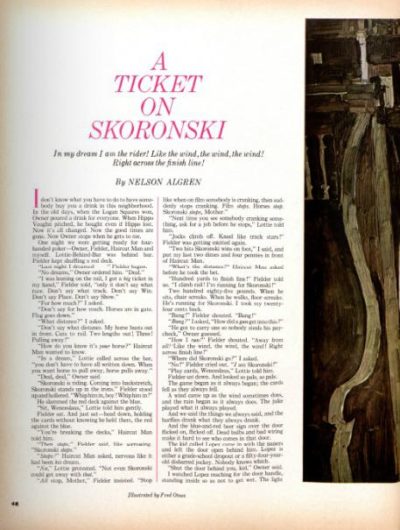
“All stop, Mother,” Fielder insisted. “Stop like when on film somebody is cranking, then suddenly stops cranking. Film stops. Horses stop. Skoronski stops, Mother.”
“Next time you see somebody cranking something, ask for a job before he stops,” Lottie told him.
“Jocks climb off. Kneel like track stars!” Fielder was getting excited again.
“Two bits Skoronski wins on foot,” I said, and put my last two dimes and four pennies in front of Haircut Man.
“What’s the distance?” Haircut Man asked before he took the bet.
“Hundred yards to finish line!” Fielder told us. “I climb rail! I’m running for Skoronski!”
Two hundred eighty-five pounds. When he sits, chair screaks. When he walks, floor screaks. He’s running for Skoronski. I took my 24 cents back.
“Bang!” Fielder shouted. “Bang!”
“Bang?” I asked, “How did a gun get into this?”
“He got to carry one so nobody steals his paycheck,” Owner guessed.
“How I run!” Fielder shouted. “Away from all! Like the wind, the wind, the wind! Right across finish line!”
“Where did Skoronski go?” I asked.
“No!” Fielder cried out. “I am Skoronski!”
“Play cards, Wenceslaus,” Lottie told him.
Fielder sat down. And looked so pale, so pale.
The game began as it always began; the cards fell as they always fell.
A wind came up as the wind sometimes does, and the rain began as it always does. The juke played what it always played.
And we said the things we always said, and the barflies drank what they always drank.
And the blue-and-red beer sign over the door flicked on, flicked off. Dead bulbs and bad wiring make it hard to see who comes in that door.
The kid called Lopez came in with the papers and left the door open behind him. Lopez is either a grade-school dropout or a 54-year-old disbarred jockey. Nobody knows which.
“Shut the door behind you, kid,” Owner said.
I watched Lopez reaching for the door handle, standing inside so as not to get wet. The light over the door flickered out, and somebody came in.
Came in without walking around Lopez, and stood in the shadow of the juke.
Lopez closed the door. “Race results?” he asked.
“No horse players in here,” I told him.
“Then buy a paper to put on your head,” Lopez said. “It’s raining outside.”
Nobody else had seen the one who came in. The blue-and-red light flickered on again.
“What are you going to do with your money? Be the richest guy in the cemetery?” Lottie asked Haircut Man when he won a hand.
“Mind the bar and shut the mouth,” Owner told her.
“Watch how you talk to my mother,” Fielder told Owner.
“You tell me how to talk when you can pay for your own drinks,” Owner said. “Don’t worry. I see all that goes on.”
“So do I,” Fielder said, like under his breath. “All.”
“You keep mouth shut,” Lottie called across the bar.
“When Haircut Man gives me a job,” Fielder let Owner know, “I won’t spend one dirty nickel in here.”
Haircut Man said nothing. But Fielder’s chance with him had come and gone.
“Fielder,” Haircut Man told him ten years ago, “come to shop at eight o’clock. I learn you haircut business.”
Fielder made it to the old man’s shop at two in the afternoon, so drunk he had to sleep it off in one of the chairs with his outfielder’s glove across his face. All he’s done since is sell gum at doubleheaders. Takes his mitt along in case of a foul.
Who remembers when Fielder played? Who remembers Fielder, a boy like a deer?
“Where you going, old man?” Owner asked when Haircut Man got up.
“To wash face,” the old man told him.
“To put his money in his shoe, he means,” Lottie said, after the old man had shut the washroom door. Haircut Man wears Ground Gripper shoes. If he would put shoe trees in them, they wouldn’t turn up at the toes.
I was dealing when he came back from the washroom. “You look bad, old man,” I told him when he sat down.
We all had our cards in hand before he picked his up. He picked them up and began squeezing one card at a time. When he got to the fourth, he let one card fall to the table. Then another, then another. The last two fell to the floor. His head went forward on his chest.
“Wake up, old man!” Fielder reached across the table, caught Haircut Man’s wrists, and began to rub them. “Old man! Wake up!”
Owner ran behind Haircut Man’s chair to take him under the shoulders.
“Telephone! Telephone doctor!” Fielder shouted, taking up the old man’s feet. “Keep head down!” he told Owner.
“Feet down!” Owner shouted at Fielder, but they went up, so Owner grabbed the ankles and pushed. Fielder yanked the body out of Owner’s grip.
He carried Haircut Man all the way to the pinball machine and stretched him out face down with his heels against the scoreboard. Then — so sudden, fast like a fish — Haircut Man flip-flopped so his face turned up. I thought he looked better that way myself.
I saw the one who’d come in standing behind the juke. He had his cap over his eyes.
Owner tried to get a fresh hold of the old man, but Fielder pushed him back.
“I think he is suppose to go the other way, Wenceslaus,” Lottie decided.
“Why do you always take his side, Mother?” Fielder asked, and began massaging Haircut Man’s chest.
I didn’t think the old man looked right myself, with his shoes against the GAME COMPLETED Sign, but I don’t like to take sides.
“Massage his feet, you,” Fielder ordered me.
I began rubbing fast, with both hands, taking care not to pinch the toes. The old man never done me harm.
“Not the shoes, dummy! The feet, the feet,” Fielder hollered right at me. I don’t mind being hollered, but not right at.
I unlaced one of the Ground Grippers. When I got it off, I looked inside. Then I took off the sock and held it up, but everybody was so busy watching Fielder massaging, nobody would even look at my work. I took the sock over to Lottie.
“What do I do with this?” I asked her.
“Don’t give me no dead stiff’s sock,” she told me.
“How do you know he’s dead?” I asked her, and up jumped Owner from the bar stool.
“Call a doctor!” he hollered. “Call a doctor! Maybe he ain’t!”
“Sit down,” Lottie told him. “I already called Croaker.”
“The old man owed me a drink,” I told her, hanging the sock on the bar rail in case somebody wanted to shine it someday. “You can give it to me out of his estate.”
“He didn’t have no estate,” Lottie decided.
“Not in his right shoe,” I said. “Do you think we should look in the left?”
“Here’s Croaker,” Lottie answered, and sure enough, some wax-moustache sport carrying a doctor bag was tipping the rain off the brim of his little felt hat into a spittoon beside the juke.
“Are you watering our roses,” I asked him, “or starting a reservoir?”
“Only being neat,” he told me.
“Buy me a drink,” I said, “and I’ll be on your side. You appeal to me.”
“I can’t afford having you on my side,” he told me. “Where’s the sick man?”
“Nobody sick in here I know of, Doc,” I told him.
“Look in the corner,” Lottie directed him.
“Corner of where?” He thought she’d said on the corner.
“I’ll take you there,” I told him. “I know this neighborhood like a book.”
Then he saw Fielder giving some- body a rubdown on the pinball ma- chine and walked over. He picked up the Ground Gripper I’d set on the GAME COMPLETED sign and studied it — the toe curved up like a ski.
“Have this bronzed,” he decided, and handed it to Fielder and came back to the bar. Fielder stopped massaging and came over too.
“Give this man a drink.” the Doc told Lottie.
“I got no glass,” I let everyone know.
“You don’t have anything to put in one neither,” Doc told me.
Some Doc.
“Let me introduce myself.” I thought he ought to know me better. “I’m the guy makes the people laugh. Watch this.” And I went into my song-and- tennis-shoe shuffle:
Take me down to Haircut Shop
But please don’t shave the neck
Call me up by Picturephone
But please don’t call collect.
He wasn’t watching. Nobody was watching.
Yet somebody was watching from behind the juke.
“I made the words up myself,” I told Doc. He didn’t answer, so I went around to where he could hear me better.
“You got a stet’oscope, Doc?” I asked him.
“In the bag,” he told me.
“I could help you test the deceased,” I offered. “Maybe there’s a faint murmur.”
“If there’s one thing I can’t stand, it’s a stiff,” the Doc told Fielder, and took some sort of paper out of his pocket.
I knew what it was. I went around the bar and whispered to Lottie, “Don’t put it down he died in here. Owner might want to sell someday.”
Lottie whispered to Owner, and when the Doc handed over the certificate, Owner pushed a bottle at him.
“Don’t put it down he died in here, Doc,” Owner told him. “Put it down he dropped on the walk outside.”
The Doc crossed out a line and added one.
Owner signed. “I might want to sell sometime,” he explained.
“Do I get a drink now?” I asked Lottie.
Lottie brought a bottle up.
Owner took it down. “When we settle the estate,” he said.
“When will that be?” I asked him.
“When the dead come back from the grave,” Owner promised.
I dropped my jaw, made my eyes to stare, and pulled in my cheeks. What I call it is Making My Dead face. I pushed the whole thing into Lottie’s puss.
“What the hell is this for?” she asked me.
“It’s how you’re going to look one day,” I told her.
“It’s how we’ll all look one day,” she let me know.
I went over to Owner and made The Deadface. I made it deader than a real dead face.
“What’s the matter with you?” he asked me.
“It’s how we’ll all look one day,” I told him. “Give me a drink while you still got time.”
“Who wastes whisky on the dying?” he asked me.
I went over to Fielder. He had the bottle in front of him and a shot poured. When he raised his elbow I put The Deadface up at him from under his arm. Fielder looked down at my Deadface looking up.
“Say a prayer for this guy,” he told everybody. And they all drank their shots down.
I went back to Owner. “How many?”
“How many what?” he asked me.
“You said you’d buy me a shot if I brought back the dead,” I reminded him.
“One shot is the limit,” he told me.
“I know,” I told him. “What I mean is, how many dead do I have to bring back to get one shot?”
Owner looked over at the pinball machine. “One will do,” he decided.
I went over to Haircut Man and whispered in his ear. “You got a royal flush, old man!”
He didn’t so much as stir. The old man was dead for sure.
I heard the Pulmotor Patrol sirening down Western, and a minute later two firemen came in, one carrying an inhalator strapped to his back. The other one unstrapped it and put the mask over Haircut Man’s face.
“Stand back. Back everybody,” he began giving orders. “If you’re going to lean over, put out your cigarette,” he told me. “We’re trying to give the man air.”
“Why should I give up smoking for you?” I asked him. “You don’t even come from this neighborhood.”
“Everybody back,” Fielder said, and put everybody back with one hand.
“If I can’t get up close to an accident,” I told Fielder, “I won’t look at all.”
I hung around, but not to look at the old man. Somebody had to watch those firemen because the old man had a gold ring on his right ring finger. Lottie came over to help me watch, and I decided to watch Lottie. I looked around and caught Owner watching me. There wasn’t anybody else left to watch the firemen except Fielder, and he was having a hard time because they were both watching him. I never saw so many suspicious people in one group in my life. When everybody got tired of watching each other, we all went over to the bar.
I stood between the firemen. They must have liked what they were drinking because they didn’t ask me to try it out for them. And every time they drank they’d touch glasses. It made me wonder what they would do about congratulating each other if they ever brought anybody to.
“That old man passed out in here seven times since Christmas,” I let them know, “and he came around by himself every time. Why would he stop at eight? If you fellows had kept your hands off him he’d be standing up here having a drink with us now. He was the best friend I ever had. He was like a father to me. I used to follow him to see he got home all right.”
“It’s a good thing he didn’t go down an alley,” one fireman told the other.
“Cops! We didn’t report this!” Owner suddenly thought.
“You want me to go for them?” I asked him. “I know where to find them.”
“Then what are you waiting for? Get them.”
“It’s raining,” I told Owner. “I need something to warm me up so’s I don’t catch my death.”
Owner made up his mind. “We got one stiff on our hands, we might as well have two.”
A Holy Father came in. One with a beard.
“I phoned for him,” Lottie said.
“You got the wrong kind,” I told her.
The Holy Father made some signs over Haircut Man. I went over, but it was hard to make out what he was saying. I slipped a dime into the pinball machine, and just as the Father crossed himself, the machine lit up. I scored 850 before Owner came over and shut it off.
“You said you were going for the cops,” he reminded me.
“What do I have to do to get a drink?” I asked.
“Put a sheet over him,” the Holy Father told Owner.
“How can I find cops with a sheet over me, Father?” I asked him.
“He doesn’t mean you,” Fielder told me. “He’s talking about our dead pal.” “Put a sheet over our pal,” Owner told Lottie.
“You don’t have to do everything the man tells you, Mother,” Fielder told Lottie.
“She don’t have to do anything she don’t want to,” Owner told Fielder.
Lottie touched Fielder with one finger, to shut him up, and went into the back room. She came out with a wrinkled sheet.
“You forgot your pillow, Mother,” Fielder told her.
“If you need a package of Juicy Fruit, Father,” Lottie told the priest, look for my son in Cubs’ Park.”
“In the bleachers,” Owner put in. “They don’t let him sell in the grandstand.”
“If you’d stop telling people I sell gum, Mother,” Fielder told Lottie, “I’d stop telling them you’re my mother.”
“I don’t hold it against her,” Owner said. “We all make mistakes.”
Fielder put up his fist, as big as Owner’s whole face, right under Owner’s nose. Owner didn’t even blink. He just put his hand on the bar towel and waited until Fielder’s knuckles touched his nose. Then swish — smack across Fielder’s face with the towel.
Fielder grabbed the towel. Owner let go of it. And there was Fielder wiping his face with the very towel that had just smacked him.
Lottie kept tucking the sheet around Haircut Man so she wouldn’t have to take notice of the events across the bar. One corner of the sheet said HOTEL MARK TWAIN in green letters.
“Know who that is?” I asked the Holy Father, pointing at the signed photograph of Jim Vaughn above the bar. “That’s Hippo Vaughn from the Chicago Cubs. Nobody had to say to Hippo, ‘Buy me a drink, Hippo.’ Hippo didn’t wait for that. He poured it for you, and put a fiver in your pocket whether you asked for it or not. Anything Hippo had you could have.”
The Holy Father wasn’t listening.
Lottie put my cap on my head. “Take a run for the cops,” she told me, and the way she said it, I decided I would.
Look for cops on a rainy night the same way you’d look for a cat — somewhere out of the wet and cold, next to a wall or under a shed. I went down the alley behind the Krakow Bakery, because that’s where it’s always warmest. They were parked with a cardboard box over the flash, listening to Pat Suzuki singing her heart belonged to an older man. Outside of that and being parked wrong, they were keeping crime at bay by smelling rye bread. I rapped the window, and one cop rolled it down. He looked scared, like I was going to pinch him.
He was Firebox, a fellow I went to school with. He’d gotten his start by running for the truant officer to break up crap games after he’d lost his lunch money. Later he took to ringing fireboxes to see the hook-and-ladder go by, and it looked like he’d get on the fire department. He got caught once, but got off because he promised never to do it again — gave his word. And he kept his word so good they put him on the cops. He has a good record there, too. On the force twenty-two years, and never made a pinch. You never know where talent will show up next.
“Come and get a dead guy,” I told Firebox.
“Who shot him?” he asked me.
“Nobody shot him.”
“Then how do you know he’s dead?”
“Because somebody put a sheet over him, and he didn’t pull it off.”
The other cop woke up. “That ain’t our jurisdiction,” he told Firebox.
I know this one too. We call him Transistor because if he catches you with a stolen one he don’t turn you in. He just takes it off you, and you can buy it back for what it cost in the store you stole it from. It’s better than getting busted.
“What do you want us for?” Transistor wanted to know.
“Go get a dead guy out of a place,” I told him.
“Try the fireman’s carry,” he told me. “We’re crime fighters, not litter bearers.”
“I think we ought to take a look,” Firebox decided, and I knew what he was thinking. “Where is this stiff?”
“Carefree Corner. You know — Owner’s joint.”
“Where Fielder hangs?” Transistor asked.
“Fielder sent me.”
“I caught Hippo Vaughn,” he told me. “Get in.”
I got in the back seat and away we go.
“You don’t look like Bill Killefer to me,” I told Transistor.
“I didn’t say I was on the Cubs,” he told me. He meant he caught Hippo for the Logan Squares, after Hippo’s big-league days were over.
“Fielder was fast, them days,” he said.
“He isn’t fast anymore,” I told him.
“I know,” Transistor said. There was a crowd in front of Owner’s. Firebox went inside and right up to the pinball machine, and pulled back the sheet and began running his hand across the old man’s skull.
“What’s he doing?” Lottie asked me.
“Looking for bullet holes,” I explained.
“He wasn’t shot,” Lottie told Firebox. “He had a coronary.”
Firebox began running his hand up along the old man’s spine.
“He’s still looking for bullet holes,” I told Lottie.
“The man had a heart attack,” Lottie told Firebox.
“Why didn’t you say so in the first place?” Firebox said. Transistor began stuffing the old man’s shirt back down into his pants. You never can tell where a stiff is likely to wear a money belt.
“What is the deceased’s name in full?” Firebox wanted to know. “Put down any name you want,” Owner told him. “Just don’t say he died in here.”
“We might want to sell sometime,” Lottie explained.
“Where do you get that ‘we’?” Owner asked her.
“Don’t worry, Mother,” Fielder told Lottie. “You still have your pillow.”
“A 40-year-old son,” Lottie told the Holy Father, “and he sells gum.”
“What did you say the old man’s name was?” Firebox repeated.
“He didn’t have no name,” I explained. “We just called him Haircut Man.”
“What’s your name?” Firebox asked me.
“I don’t have one neither,” I told him.
“They just call me ‘You.’”
“Then stay out of this, You.”
“If you want the old man’s name,” Owner spoke up, “maybe it’s in his wallet.”
“See what the name in the wallet says,” Firebox told me.
“See what the name in the wallet is,” I told Fielder. “I’m not working for the Department myself.”
“Mother was the old man’s best friend,” Fielder offered. “Maybe she knows his real name. Then nobody has to look in his wallet.”
Cops are careful about reaching for a wallet on a drunk or a stiff. If the wallet is empty, they get the blame.
The kid, Lopez, was still there, with one newspaper left. Firebox lifted him up level with the old man. All he had to do was reach.
“I can’t,” Lopez yelled, kicking with both feet.” If I reach I’ll drop my paper.”
I took hold of his paper, but Lopez locked it under his arm. “If you want the paper, buy it,” he hollered.
Firebox put a dime in his little paw, and Lopez let go of the paper and reached and got the wallet. He hung on to it while Firebox carried him to the bar. The wallet didn’t bulge, and when Lopez held it upside down six trading stamps fell out. He shook it. That was all.
“Look inside,” Owner told him.
Lopez opened the wallet wide, stuck his nose into it, sniffed into the corners, then took his nose out.
“Gone on the arfy-darfy,” he announced, and Firebox set him down.
I started my soft-shoe bit.
What do you want for the little
you got
For the little you got you don’t
got a lot
You kept your money in your
big dirty shoes
From the graveyard who collects?
Nobody was paying me any attention. Nobody ever does.
“Who would have thought the old man would die broke?” Lottie asked Owner, looking him right in the eye.
“My own opinion,” Owner answered, “is that he didn’t.” And looked me right in the eye.
“Ambulance!” Lopez hollered, before any of the rest of us heard a siren.
Firebox looked down at him. “Where’s my change?”
“What change?” Lopez asked, looking up.”
I give you a dime for your dirty yesterday’s paper. I got three cents coming, Shorty.”
Lopez don’t like being called Shorty. “I don’t have change,” he told Firebox.
“People pay you in seven-cent pieces?” Firebox asked him.
“Why don’t you search him, Firebox?” I suggested.
“He can frisk me, but he can’t search me,” Lopez let the Department know.
A dozen people followed the stretcher-bearers in. Owner put two bottles on the bar and got ready to pour. It looked like a good night for Owner. But no one came near the bar. They all wanted to help the stretcher guys carry the stiff to the dead-wagon. The stretcher guys wouldn’t let them. All they could do was follow the stretcher out.
I stood by the bar, next to the Holy Father. I was trying to remember whether Haircut Man was still wearing a ring the last time I looked. If he was, one stretcher-bearer was in a good position to get married. All he needed was a blind whore.
“Were you a friend of the deceased’s?” Firebox asked Lottie.
“Hardly knew the old man,” Lottie said fast.
“I thought you knew him well, Mother,” Fielder put in. “I thought he said he always helped you out when you weren’t working.”
“Why should I take money from strangers when my son works steady?” Lottie asked him straight.
“All right,” Fielder said. “All right, Mother. I know you worked for me all my life. Now why don’t you go out and get a job for yourself?”
“My son sells gum,” she told the cops, and put her face down on her arms on the bar. I don’t think she was crying, because I didn’t hear a sound. She just moved her shoulders a little. Owner touched her shoulder, and she looked up.
“Wenceslaus,” she said to Fielder. “How God is going to punish!” Then she put her head down again.
Fielder got up from the table where our poker game had been. He began walking toward the calendar that hangs on the washroom door. When he got there, he just stood and looked at it Then he took the mitt out of his hip pocket, put it on, and swung at the calendar. The calendar bounced and the door shook. Then he swung again.
“I am Skoronski!” I heard him say to himself. Then the calendar fell, and Fielder just stood there, with his back toward us, pounding his fist into his mitt.
“What do we do now?” I asked the Holy Father.
“Let’s try it three-handed,” the Father suggested. He picked up the cards and began shuffling slowly.
And as the cards began to fall, I knew, without looking at the juke, that there was nobody behind it anymore.
Has Technology Become Addictive?
At an Apple event in January 2010, Steve Jobs unveiled the iPad:
“What this device does is extraordinary. … It is the best browsing experience you’ve ever had … way better than a laptop, way better than a smartphone. … It’s an incredible experience. … Phenomenal for mail. … It’s a dream to type on.”
For 90 minutes, Jobs explained why the iPad was the best way to look at photos, listen to music, take classes on iTunes U, browse Facebook, play games, and navigate thousands of apps. He believed everyone should own an iPad.
But he refused to let his kids use the device.
In late 2010, Jobs told New York Times journalist Nick Bilton that his children had never used the iPad. “We limit how much technology our kids use in the home.” Bilton discovered that other tech giants imposed similar restrictions. Chris Anderson, the former editor of Wired, enforced strict time limits on every device in his home, “because we have seen the dangers of technology firsthand.” His five children were never allowed to use screens in their bedrooms. Evan Williams, founder of Blogger, Twitter, and Medium, bought hundred of books for his two young sons but refused to give them an iPad. Walter Isaacson, who ate dinner with the Jobs family while researching his biography of Steve Jobs, told Bolton that “No one ever pulled out an iPad or computer. The kids did not seem addicted at all to devices.” It seemed as if the people producing tech products were following the cardinal rule of drug dealing: never get high on your own supply.
This is unsettling. Why are the world’s greatest public technocrats also its greatest private technophobes? Can you imagine the outcry if religious leaders refused to let their children practice religion? Many experts both within and beyond the world of tech have shared similar perspectives with me. Several video game designers told me they avoided the notoriously addictive game World of Warcraft; an exercise addiction psychologist called fitness watches dangerous — “the dumbest things in the world” — and swore she’d never buy one; and the founder of an internet addiction clinic told me she avoids gadgets newer than three years old. Her favorite computer game is Myst, released in 1993 when computers were still too clunky to handle video graphics.
Greg Hochmuth, one of Instagram’s first software engineers, realized he was building an engine for addiction. “There’s always another hashtag to click on,” Hochmuth said. “Then it takes on its own life, like an organism, and people can become obsessive.” Instagram, like so many other social media platforms, is bottomless. Facebook has an endless feed; Netflix automatically moves on to the next episode in a series; Tinder encourages users to keep swiping in search of a better option. Users benefit from these apps and websites but also struggle to use them in moderation. According to Tristan Harris, a “design ethicist,” the problem isn’t that people lack willpower; it’s that “there are a thousand people on the other side of the screen whose job it is to break down the self-regulation you have.”
These tech experts have good reason to be concerned. Working at the far edge of possibility, they discovered two things. First, that our understanding of addiction is too narrow. We tend to think of addiction as something inherent in certain people — those we label as addicts. The label implies that they’re different from the rest of humanity. They may rise above their addictions one day, but for now they belong to their own category. In truth, addiction is produced largely by environment and circumstance. These entrepreneurs know this. They recognize that the tools they promote — engineered to be irresistible — will ensnare users indiscriminately. There isn’t a bright line between addicts and the rest of us. We’re all one product or experience away from developing our own addictions.
Bilton’s tech experts also discovered that the environment and circumstance of the digital age are far more conducive to addiction than anything humans have experienced in our history. In the 1960s, we swam through waters with only a few hooks: cigarettes, alcohol, and drugs that were expensive and generally inaccessible. In the 2010s, those same waters are littered with hooks. There’s the Facebook hook. The Instagram hook. The porn hook. The email hook. The online shopping hook. And so on. The list is long — far longer than it’s ever been in human history, and we’re only just learning the power of these hooks.
Tech offers convenience, speed, and automation, but it also brings large costs. Human behavior is driven in part by a succession of reflexive cost-benefit calculations that determine whether an act will be performed once, twice, a hundred times, or not at all. When the benefits overwhelm the costs, it’s hard not to perform the act over and over again, particularly when it strikes just the right neurological notes.
A like on Facebook and Instagram strikes one of those notes, as does the reward of completing a World of Warcraft mission, or seeing one of your tweets shared by hundreds of Twitter users. The people who create and refine tech, games, and interactive experiences are very good at what they do. They run thousands of tests with millions of users to learn which tweaks work and which ones don’t. As an experience evolves, it becomes an irresistible, weaponized version of the experience it once was. In 2004, Facebook was fun; in 2016, it’s addictive.
I spoke to several clinical psychologists who described the magnitude of the problem. “Every single person I work with has at least one behavioral addiction,” one psychologist told me. “I have patients who fit into every area: gambling, shopping, social media, email, and so on.” She described several patients, all with high-powered professional careers, earning six figures, but deeply hobbled by their addictions. “One woman has two master’s degrees and she’s a teacher. But she’s addicted to online shopping, and she’s managed to accumulate $80,000 in debt. She’s managed to hide her addiction from almost everyone she knows.” This compartmentalization was a common theme. “It’s very easy to hide behavioral addictions — much more so than for substance abuse. This makes them dangerous, because they go unnoticed for years.” A second patient, just as accomplished at work, “went through a horrible breakup, and then stalked her ex-boyfriend online for years. With Facebook, it’s far more difficult to make a clean break when relationships end.”
“The impact of social media has been huge,” a second psychologist told me. “Social media has completely shaped the brains of the younger people I work with. I could be five or ten minutes into a conversation with a young person about the argument they have had with their friend or girlfriend, when I remember to ask whether this happened by text, phone, on social media, or face-to-face. More often the answer is, ‘text or social media.’ Yet in their telling of the story, this isn’t apparent to me. It sounds like what I would consider a ‘real,’ face-to- face conversation. I always stop in my tracks and reflect. This person doesn’t differentiate various modes of communication the way I do … the result is a landscape filled with disconnection and addiction.”
Technology is not inherently bad. When my brother and I moved with my parents to Australia in 1988, we left our grandparents in South Africa. We spoke to them once a week on expensive landline calls and sent letters that arrived a week later.
When I moved to the United States in 2004, I emailed my parents and brother almost every day. We talked on the phone often, and waved to each other via webcam as often as we could. Technology shrank the distance between us.
Tech isn’t morally good or bad until it’s wielded by the corporations that fashion it for mass consumption. Apps and platforms can be designed to promote rich social connections, or, like cigarettes, they can be designed to addict. In many respects, substance addictions and behavioral addictions are very similar. They activate the same brain regions, and they’re fueled by some of the same basic human needs: social engagement and social support, mental stimulation, and a sense of effectiveness.
Behavioral addiction consists of six ingredients: compelling goals that are just beyond reach, irresistible and un- predictable positive feedback, a sense of incremental progress and improvement, tasks that become slowly more difficult over time, unresolved tensions that demand resolution, and strong social connections. Despite their diversity, today’s behavioral addictions embody at least one of those six ingredients. Instagram is addictive, for example, because some photos attract many likes, while others fall short. Users chase the next big hit of likes by posting one photo after another, and return to the site regularly to support their friends. Gamers play certain games for days on end because they’re driven to complete missions and because they’ve formed strong social ties that bind them to other gamers.
So what are the solutions? How do we coexist with addictive experiences that play such a central role in our lives? Millions of recovering alcoholics manage to avoid bars altogether, but you can’t apply for a travel visa or a job without an email address. Hardly any modern jobs allow you to avoid using computers. Abstinence isn’t an option, but there are other alternatives. You can confine addictive experiences to one corner of your life while courting good habits that promote healthy behaviors. Meanwhile, once you understand how behavioral addictions work, you can mitigate their harm, or even harness them for good. The same principles that drive children to play games might drive them to learn at school, and the goals that drive people to exercise addictively might also drive them to save money for retirement.
Addictions are damaging because they crowd out other essential pursuits, from work and play to basic hygiene and social interaction. The good news is that our relationships with behavioral addiction aren’t fixed. There’s much we can do to restore the balance that existed before the age of smartphones, emails, wearable tech, social networking, and on-demand viewing. The key is to understand why behavioral addictions are so rampant, how they capitalize on human psychology, and how to defeat the addictions that hurt us and harness the ones that help us.
A decade ago, who could have imagined that Facebook would attract 1.5 billion users, many of whom say they wished they spent less time on the site? Or that millions of Instagram users would spend hours uploading and liking the 60 million new photos the app hosts every day? Or that more than 20 million people would count and monitor their every step with a small wrist-bound device?
These are remarkable statistics, but they represent an early waypoint on a long climb. Behavioral addiction is still in its infancy, and there’s a good chance we’re still at base camp, far below the peak. Truly immersive experiences, like virtual reality devices, have not yet gone mainstream. In 10 years, when all of us own a pair of virtual reality goggles, what’s to keep us tethered to the real world? If human relationships suffer in the face of smartphones and tablets, how are they going to withstand the tide of immersive virtual reality experiences?
We can’t abandon technology, nor should we. Some technological advances fuel behavioral addiction, but they are also miraculous and life enriching. And with careful engineering they don’t need to be addictive. It’s possible to create a product or experience that is indispensable but not addictive. Workplaces, for example, can shut down at six — and with them, work email accounts can be disabled between midnight and five the next morning. Games, like books with chapters, can be built with natural stopping points. Social media platforms can “demetricate,” removing the numerical feedback that makes them vehicles for damaging social comparison and chronic goal-setting. Children can be introduced to screens slowly and with supervision, rather than all at once. If app designers can coax people to spend more time and money on a smartphone game, perhaps policy experts can also encourage people to save more for retirement or donate to more charities.
Our attitude to addictive experiences is largely cultural, and if our culture makes space for work-free, game-free, screen-free downtime, we and our children will find it easier to resist the lure of behavioral addiction. In its place, we’ll communicate with one another directly rather than through devices, and the glow of these social bonds will leave us richer and happier than the glow of screens ever could.
Adam Alter has written for The New York Times, New Yorker, Atlantic, and WIRED, among other publications, and is author of The New York Times best-seller Drunk Tank Pink (Penguin, 2013).
Contrariwise: You Are Not Blessed
Back in eighth grade (waaaay back), the good Sisters of Mercy did their best to teach a pack of unruly adolescents the meaning of being blessed. They had us memorize the eight beatitudes (“Blessed are the merciful…” “Blessed are the peacemakers…” “Blessed are the meek…” etc. ) and patiently explained that being blessed entails a special relationship, a sort of quid pro quo, with God, who is selective about dispensing his grace. Being blessed, they admonished, is not to be bandied or bragged about.
This was serious stuff — the stuff saints are made of. It made a deep impression on this 13-year-old.
Well, I’m willing to bet that if those nuns were around today, they’d be reaching for their rulers — or rosaries — in horror at the way the word blessed is being abused. And while I am by no means an especially religious man, I am saddened to see it going the way of other words that have all but lost their unique meanings as a result of overuse and commercialization. (Think artisanal, gourmet, organic, and luxury.)
Do you think perhaps I’m being unnecessarily prickly? Pay attention. You hear it cropping up more and more, tossed off by politicians on the stump, actors on talk shows, athletes in post-game interviews. They’ve all been blessed in some way or another, don’t you know?
But it is on Facebook, where dignity and self-restraint go to die, that you encounter some truly cringeworthy claims. For example, an old friend recently posted that she was feeling blessed to be catching the sunset at a rum bar in Florida. (“Blessed are the vacationers?”) Another acquaintance shared a photo of a bowl of German potato salad and commented that they were blessed to have found the old family recipe. I’m not kidding. And as if those weren’t silly enough, a former colleague posted that he was blessed to get a last-minute upgrade on the way to attend a business conference. I just pray it wasn’t on United.
What galls me about these and similar assertions is the arrogance of it all, the presumption that the Lord has deigned to bless you out of the billions on the planet — over something like potato salad or an upgrade!
This is not to say I don’t think the word should be used at all. The way I see it, there are plenty of reasons to feel blessed, like those exceptional moments or circumstances that you may believe to be divinely touched: a birth in the family, 10 years of sobriety, beautiful grandchildren, a disease in remission, a 50th wedding anniversary, a lifelong friendship, surviving a flood (but what does that say about those who didn’t?). That’s just to name a few. It can also describe a geographical setting (“blessed with fertile soil and a temperate climate”). After all, that’s God’s handiwork.
But, folks, it simply doesn’t do to trot out the word every time you post a Facebook photo of the annual family reunion or your bare feet plopped on a deck chair with the Caribbean waves curling between your toes. Use it too often and it ends up meaning nothing.
Yes, it feels special to be secure, loved, happy, and healthy. Nevertheless, please think twice before you employ the term blessed; use it sparingly. Perhaps the words fortunate, lucky, or grateful would describe the situation better.
As in, I feel fortunate, lucky, and grateful to write this essay and get paid for it, too.
Norman Rockwell’s “Rookie”: The Role of a Lifetime
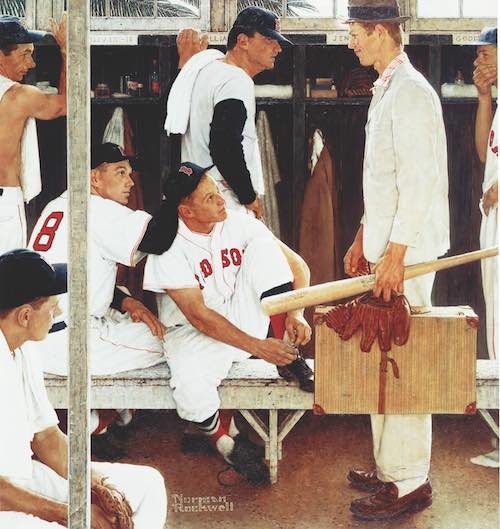
Norman Rockwell
March 2, 1957
When Sherman “Scotty” Safford walked into the Pittsfield High School cafeteria in 1956, he spotted a mysterious man sitting at a nearby table.
“He had a Bing Crosby-type pipe, very wavy hair, and a receding chin,” recalls Scotty, now 75. “I knew he was somebody special, because nobody smoked in that place.”
The mystery man was Norman Rockwell, and he came to Pitts eld High in search of a model. “I was a tall, gangly string bean of a kid,” says Scotty. “At 6-foot-4, I towered over everybody, and obviously this caught his eye.”
Rockwell met Scotty, shared his idea for an upcoming Post cover, and invited the athlete to pose as the talented “hayseed” who shows up on his first day in the major leagues with bat, glove, and suitcase in hand, convinced he’s there to save the team. “As a 17-year-old kid, I couldn’t have been more thrilled,” Scotty recalls.
By the time the issue hit newsstands in March 1957, Scotty was in the Army and stationed at Fort Dix. His mother called with the news, telling him to run to the post exchange and buy as many copies as he could carry.
“I went AWOL,” says Scotty, who wasn’t allowed out of the barracks without a pass. “When I came back, my company commander was there; the executive officer was there; the first sergeant was there. My sergeant was standing at the top of the stairs in front of the door and growled, ‘This better be good, mister!’ I had an armload of magazines and I handed him one and said, ‘I’m on the cover of the Post this week.’ And I walked right by him and went upstairs.”
Only later did the impact of his actions sink in. “The next morning at zero-dark-thirty, we’re standing there, and it’s pitch dark,” Scotty says. “The company commander comes up with the magazine and says, ‘Private Safford, would you sign this for me?’”
Scotty never saw Rockwell again, but The Rookie became an instant classic. “It means so much to me,” Scotty says. “probably more so as time goes on because I realize how special it was.”
-Diana Denny
Remembering Adam West as Batman
We were saddened by the news this weekend of Adam West’s passing. Best known for playing Batman, West got his start on a TV variety show and had parts in such movies as The Young Philadelphians and Mara of the Wilderness. He also played the lead in The Detectives TV series.
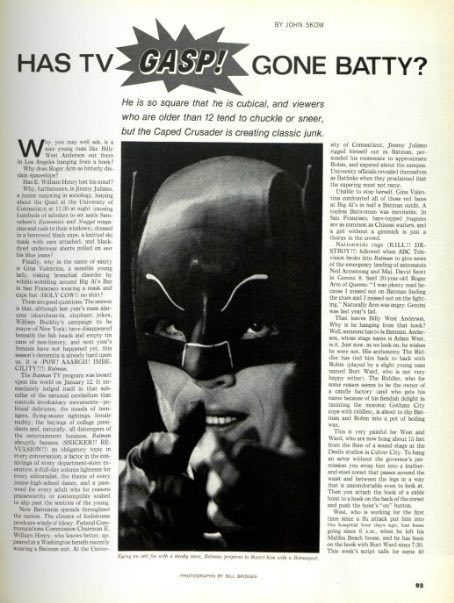
But Batman was his big break, even if he didn’t know it at the time. In 1966, John Skow wrote an article for the Saturday Evening Post where he explored the phenomenon of Batman, which ABC had launched in January in a bid to gain ratings.
Skow writes of a conversation with West:
What was your reaction when you heard about Batman? I asked West at lunch. “My reaction was Ecch!” he said. But Batman had turned out to be fun. “You have to take it seriously,” he said. “I want to do it well enough that Batman buffs will watch reruns in a few years and say, ‘Watch the bit he does here, isn’t that great?”
Executives feared the show would be too silly for adults, but their fears were unfounded. According to the article, sales for Batman merchandise were expected to reach $75-$80 million, 50 percent more than the best year for James Bond.
What no one could know at the time is that Batman would spawn an empire of comic books, TV remakes, and blockbuster movies. But it all started with the dead-serious camp of Adam West.
The Saturday Evening Post How-To Video: Looking Natural in Front of a Camera
What do you do if someone points a video camera at YOU? TJ Walker shows you the secret to not being nervous, and how to look and sound your best when you find yourself in front of the camera.
See more videos from the Saturday Evening Post at saturdayeveningpost.com/video.
For more on media training, see our article in the July/August 2017 issue of the Post, “Pundit School: How Talking Heads Learn to ‘TV’” by Cable Neuhaus.
News of the Week: New Apple Products, Noir Alley, and National Black Cow Day
Here’s the HomePod
This week Apple unveiled their new tech toys in front of a crowd of screaming fans. I don’t know if they announced anything that will blow away the casual user of Apple products, but they made some interesting updates and announcements that will please regular users, including new additions to their line of desktops and laptops, iOS 11, a bigger iPad, and their product to compete with Amazon’s Echo and Google’s Home, the HomePod. All that stuff is fun and much needed and I’m sure I’ll be buying one of the new laptops and an iPad at some point. I don’t know if it will be before they announced their next new lineup of new things, but I’ll be buying them.
They also announced a lot of things that only developers or hardcore pro users will care about, including a new SDK called MusicKit and a new iMac Pro that has 8-, 10-, or 18-core Xeon processors, dual FMAs, 2x wider AVX instructions, and 22 teraflops. If you know what any of that means, you’re either a computer expert or a robot from the future.
I think teraflop refers to the new Baywatch movie.
Noir Alley
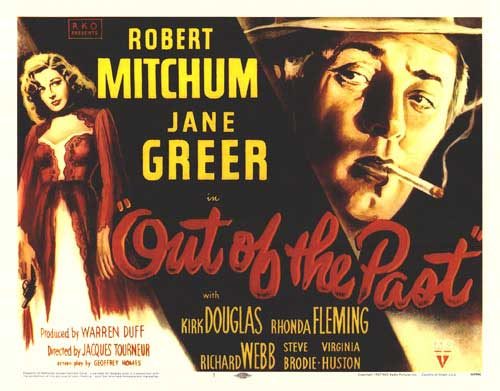
Have you been watching Turner Classic Movies’ new weekly show, Noir Alley? It’s been on for a couple of months and it has quickly become one of my favorite shows. TCM often airs film noir, but it’s good to have a weekly show where we’re guaranteed to see two hours of dolls, fedoras, guns, and shadowy city streets.
The show is hosted by film noir expert and Film Noir Foundation founder Eddie Muller. He introduces each movie with behind-the-scenes info and trivia and often has a guest, too. (Last weekend, he had Robert Mitchum’s son Chris on to talk about Out of the Past.) This week’s movie is Phantom Lady from 1944, starring Franchot Tone and Ella Raines, about a secretary who tries to prove her boss didn’t kill his wife.
Noir Alley airs every Sunday at 10 a.m. Eastern. Grab a cup of Joe and plant yourself in front of the tube, pal.
RIP Jimmy Piersall, Bill Walsh, Roger Smith, Elena Verdugo, Peter Sallis, and Wendell Burton
I never saw Boston Red Sox outfielder Jimmy Piersall play, but I feel like I did because the movie Fear Strikes Out made such an impression on me. It starred Anthony Perkins as Piersall and depicted his battles with mental illness and pressure from his father. He was a good ball player too. Piersall died Saturday at the age of 87.
Bill Walsh was copy editor at The Washington Post for 20 years and probably best known for three fantastic books on grammar and usage, Lapsing Into a Comma, The Elephants of Style, and Yes, I Could Care Less. If you write or you’re just a grammar geek, they’re must-reads. I didn’t realize that Walsh died back in March but I wanted to mention it. He was 55.
Roger Smith was an actor, writer, and producer who starred on 77 Sunset Strip, Mister Roberts, and many other shows and movies. He was also married to Ann-Margret. He passed away Sunday at the age of 84.
Elena Verdugo received an Emmy nomination for her role as Nurse Consuelo Lopez on Marcus Welby, M.D. She also appeared on radio and TV in Meet Millie and appeared in movies like House of Frankenstein and Little Giant. She died last week at the age of 92.
Peter Sallis was an actor who provided the voice of Wallace in the Wallace and Gromit movies and appeared in the long-running British sitcom Last of the Summer Wine. He died last Friday at the age of 96.
Actor Wendell Burton appeared with Liza Minnelli in The Sterile Cuckoo and played Charlie Brown in the 1973 live-action TV movie You’re a Good Man, Charlie Brown. He died last week at the age of 69.
In happier obit news, if there is such a thing, a new documentary premiered on HBO this week, If You’re Not in the Obit, Eat Breakfast. It’s about people who are in their 90s but continue to work, including Carl Reiner, Dick Van Dyke, Betty White, Norman Lear, Mel Brooks, Tony Bennett, and others. Jerry Seinfeld isn’t over 90 yet but he’s in it, too.
The title comes from Reiner, who says that every morning he reads the obituary section of the newspaper. If he’s not in it, he has breakfast. Here’s the trailer:
<iframe width=”560″ height=”315″ src=”https://www.youtube.com/embed/yr85aIIrDHU” frameborder=”0″ allowfullscreen></iframe>
Hey Moe
George Clooney and his wife Amal welcomed twins this week. They named the boy Alexander and the girl Ella. I think we can all agree that whatever else happens to the kids, they are going to be two freakishly good-looking human beings.
Those are fairly basic names, right? Unlike other celebrity couples, they didn’t name the kids North (Kanye West and Kim Kardashian), Apple (Gwyneth Paltrow and Chris Martin), or Blanket (Michael Jackson). But there are other rather interesting names that aren’t being used by anyone. This new list from Nameberry shows the names that nobody got in the entire year of 2016. The list includes Bluebell, Jericho, Moe, Frostine, Kermit, Osgood, Fenno, Lucasta, Falconer, and Land. Nobody is using Humphrey either. It’s funny how that name was (and still is) associated with one of the coolest actors in the world but just isn’t popular any longer.
I’d love to see more Moes. A couple could make a plan with other couples to name their kids Moe, Larry, and Curly. Maybe throw in a Shemp too. They could all hang out with each other and get into trouble and have pie fights.
Who Will Replace Scott Pelley?
You’ve probably heard that CBS made the decision to replace Scott Pelley on The CBS Evening News. They announced it while he was on assignment overseas, and it took many by surprise. But Pelley is back on the show this week. His last airdate will be June 16, when Anthony Mason will take over as temporary host until the network chooses a replacement. Pelley will continue his work as a correspondent, now full-time, on 60 Minutes.
So who will replace him? It wasn’t Pelley’s fault that his show was in third place. The show has been in third place for many years. There’s a common wisdom that with cable news and the internet, people don’t watch the nightly network news shows anymore. I still do. I’d rather watch a daily summary of the news than the crazy, exhausting, pundit-filled coverage you get on cable. And 6 to 8 million other people agree with me every night, so the shows are still important.
I loved when Bob Schiffer did the show, but that’s not going to happen again, and it won’t be Anderson Cooper or Katie Couric again either. Charlie Rose? He fills in sometimes, but he has two other shows to do. Could Anthony Mason take over permanently, or will weekend anchor Elaine Quijano take over? We’ll find out in the next couple of months.
This Week in History
D-Day (June 6, 1944)
Here’s Post Archive Director Jeff Nilsson on what happened that day in Normandy, France, and why it was the century’s best-kept secret.
Dean Martin Born (June 7, 1917)
This would have been Dino’s 100th birthday. He was a great singer, able to bring a casual charm to everything he sang. Since today is Cole Porter’s birthday, here’s Martin singing one of Porter’s songs, “True Love”:
This Week in Saturday Evening Post History: Watering Father (June 4, 1955)
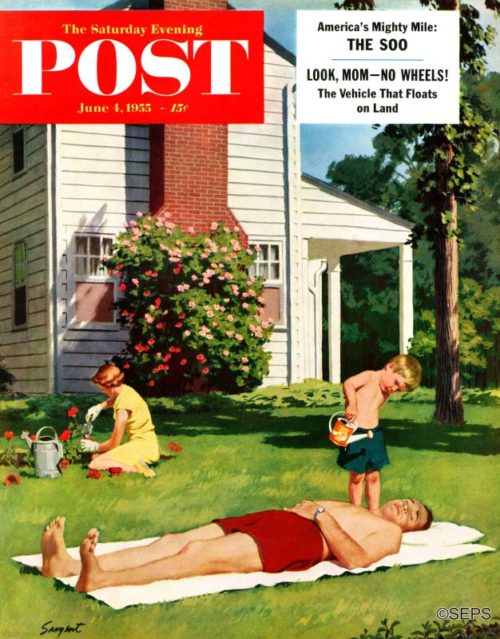
Richard Sargent
June 4, 1955
It’s been unseasonably cool so far this June, mostly in the 60s, with the past couple of days being even cooler and rainy. I don’t want that to stop, but I know the horrible, uncomfortable heat and humidity is just days away. Like the guy in this cover by Richard Sargent, I’d want to be regularly watered by someone on days like that. But you’ll never find me sitting out on the lawn with the sun broiling me, so I’ll never need someone to do that anyway.
National Black Cow Day
There are several soda fountain “cow” drinks. There’s a Brown Cow, which is made with cola, and a White Cow, which is made with vanilla ice cream and vanilla syrup. But tomorrow is National Black Cow Day, so let’s concentrate on that.
Here’s how you make it, from Drink Studio. It’s basically a root beer float (vanilla ice cream, root beer, whipped cream if you want) only with the addition of chocolate syrup.
By the way, I haven’t been to a soda fountain in almost 40 years but I’d love to visit one again. Country Living has a great list of some classic places.
Next Week’s Holidays and Events
French Open Finals (June 10 and 11)
The women’s final is tomorrow at 9 a.m. Eastern on NBC, while the men’s final is on Sunday at the same time and place.
Flag Day (June 14)
Jeff Nilsson has a great feature on Flag Day and why our flag is more than just a flag.
Recluse
Hattie Wilson came to the end of her patience with her brother Brown one week before Christmas. Hattie had been patient, long-suffering in her silence. Brown lived a recluse in his own bedroom for four years and 71 days, self-sequestered and completely healthy, able to leave his room whenever he chose. Hattie had not seen him in all those long months, but now, she decided to prod him.
Brown had always been a recluse, but until his 33rd birthday he participated in private Wilson home life. He sat in the parlor most evenings, and he read and discussed books. Wilson children inherited an interest in books, if not biologically, then because Mama insisted. Marguerite Wilson had earned a degree in literature from the state university. No other woman on the ridge had even gone away to university.
Brown spent one hour each afternoon and another in the evening sitting next to Mama in her three final, bedfast years, reading the Bible, reading Charles Dickens, reading Nathaniel Hawthorne.
After Mama died, Brown sat with Hattie, discussing literature and recalling Mama. A month after the funeral, Brown and Hattie read an exceptionally puritanical Hawthorne story, and Brown announced he, too, was in need of a walk. Hattie, exhausted from her day, chose not to walk with him.
He walked late, too late for Hattie to hear him return. At breakfast, she noticed a limp, stark whiteness in his face. “I had a scare in the woods,” he said.
It must have been scary, Hattie thought; his face was so pale as to be riveting, impossible to turn away from. “What scared you?” she asked.
“The devil,” he replied, a high nervous tremor in his voice.
She thought Brown was trying to be funny.
But that night, Brown went into his bedroom and locked his door in a house where doors had never been locked.
She didn’t understand at first. The next night, after Hattie had locked up the chickens and finished the chores she held back for the dusky hours, she went as usual into the parlor. Brown didn’t join her.
She knocked at his door, and he said he didn’t feel up to Hawthorne tonight and to please excuse him. The scare and chill of the night before still affected him; she heard tremor and tiredness in his voice. She excused him, having no idea that she would not see her brother again for over four years. The next night, he asked to be excused again, and the evening after, and then came a night when Hattie didn’t ask. She hoped if she ignored him, Brown would come out on his own. He didn’t.
Hattie came to realize that, no matter what had really happened in the woods, Brown thought he had seen Lucifer.
The few who knew assumed Hattie must be cooperating with his asceticism. She could not see how. True, she left food for him; their culture demanded that women feed men. And Brown had been excused from every area of domestic responsibility by Mama, who doted upon him, believing him delicate, thereby making him so. Hattie worked alongside Papa, as hard as any son, smarter than any son. She became Papa’s favorite, just as Brown was Mama’s.
But now, as October’s harvest had given way to November’s feast, Hattie grew weary of caring for her brother, sharing her house but not sharing life. She decided to drive him from his lair.
She enlisted Anna Domby’s help. Anna feared spinsterhood. Hattie’s closest friend since childhood, Anna looked at Hattie’s lack of a husband and did not desire such a life for herself. Brown had been the husband she dreamt of, and she assumed that Mama Wilson had blocked her every advance on him.
“I want you to stand outside Brown’s window in your nightgown,” Hattie told her. “Make noise enough that he’ll look out.”
“In my nightgown? Are you going crazy, too?” Anna responded. “Papa would kill me if the cold doesn’t.”
“It’s not that cold,” Hattie said. “And your papa won’t know.”
“I can’t stand in front of Brown that way!”
“I declare, Anna, I don’t know why not. You’ve been mooning and moping for him for as long as I can remember. If you ever catch him, he’ll see your drawers.” Hattie had always been earthier than Anna; Anna kept kitchen at home — Hattie tended livestock.
The favor of calm, warm night air graced their efforts when Anna visited Hattie under the pretense of working together on a quilt. At 1 a.m., Anna paraded outside Brown’s window in her nightgown, calling out to him in her notion of a seductive voice. To Hattie, it sounded about as sexy as a guinea hen’s croak. Anna’s head-to-toe mustard yellow nightgown nauseated Hattie, and as she watched Anna’s back-and-forth strolls and listened to her calls, Hattie knew Brown wasn’t coming out of his room for that.
Anna clutched her sides and ran back into the parlor, where Hattie stood in front of the fireplace guffawing. “I did what you said,” she whined.
She also said Brown’s curtain flicked once, but Hattie thought she made it up. She imagined how Anna would react to her newest idea: that she now go outside without the nightgown, or anything else.
Hattie walked with Anna back to the Domby farm. “What if you made so much noise he couldn’t sleep?” Anna asked. “Babies get their days and nights mixed up; his must be by now.” Anna’s mama, Bertie, suggested taking the door off the hinges. Anna liked the idea: “Papa would do it!” she said, her voice rising with excitement.
“I’ve thought about it,” Hattie replied. “And I don’t need Paul to do it. I could take it right off by myself. But Brown’d just hole up somewhere else. He needs to want to join up with life again. Don’t you understand?”
On Saturday, Hattie banged every pot and pan and kettle, she scraped the floor with every chair, she dropped things outside Brown’s door, she called to him as she passed by his door. But I don’t even know if he’s trying to sleep, she thought.
“Mama’d get him out of that room!” Hattie muttered 10 days before Christmas, as she searched for the book she read every December, just as Mama had. Mr. Charles Dickens, A Christmas Carol. She began it last night and reached Jacob Marley’s chain-rattling before falling asleep. This morning, it lay on the floor; she picked it up, smoothed a bent page, and carried it into the kitchen, thinking to read more at breakfast, but yowling barn cats fighting on the back porch distracted her. She left the book next to the flour bin.
But now the book wasn’t there. Not on the safe, not on the table. Books don’t walk away by themselves, she thought and then considered a new idea.
Night-time prowlers might carry them away. Into their own rooms.
Mama read Mr. Charles Dickens to both of her students at Christmastime.
Hattie remembered how Brown loved the story, both drawn to and scared by the Christmas ghosts.
Did Brown believe in ghosts?
Maybe. He believed he saw the devil in the woods.
The right ghost would not fail at getting Brown out of that bedroom. But Hattie, who knew how to castrate calves and build sheds, did not know how to summon a ghost.
The only sure way to make Brown want out of that bedroom would be to light the house afire, she thought as she sobbed herself to sleep in the warm parlor.
Then, Mama shook her knee. “Yes, Mama?” Hattie said. She didn’t open her eyes, but she could see Mama.
“Wake up, Harr-r-r-riet,” Mama said. “I don’t have a lot of time, and I need to speak my peace to someone who’s listening.”
Hattie jerked upright, eyes now opened wide. “Mama, you’re —”
“Yes, I’m dead. Do you think I could forget that?” Mama pulled a kitchen chair into the parlor, so close to Hattie that their knees were almost touching.
“No’m,” Hattie answered. “But that means I must be dreamin’ this.”
Mama scowled and said. “Pinch yourself.” Hattie did. “Harder,” Mama said. Hattie pinched like she was trying to pull a brooder hen’s head off its neck. It hurt.
“You sure you’re awake now?”
Hattie nodded.
“You think I’m real?”
Hattie didn’t nod — didn’t move a muscle.
“Jiminy, girl,” Mama said. “You’ve been prayin’ and frettin’ over Brown Billy for four years and wantin’ to figure out how to get him out of that room and back into life. Did you think no one was listening?”
“Well, Mama, no, I knew God was listening, but sending a ghost …”
Mama slapped Harriet. Not real hard, just stinging hard. “I’m not a ghost. I’m your mama. No witch of Endor sent me!”
Hattie rubbed the sting away with the back of her hand. “You didn’t have to slap me,” she said.
“Then stop being a mule,” Mama said. “Now what’s your plan?”
“My plan?”
“To get Brown out of his bedroom,” Mama said, exasperation evident in her tone.
“I don’t have one! None of my plans work, anyway,” Hattie said. “I’ve been thinking to ask Bertie Domby if she’d dress up in some of your old clothes and pretend to be you. I banged on every pot and pan in the house. I even asked —” but she broke off there. She doubted Mama would want to think about Brown ogling Anna.
“Even asked what?”
Hattie spoke slowly, finding a lie Mama wouldn’t question. “I even asked Bertie and Anna for their ideas. They said I should take the door off its hinges.”
“Dummy Dombys,” Mama snorted. “That’d be their solution, all right. Break something.” Mama said. “The door does not need to come down, Hattie.”
“I don’t know what you mean, Mama,” Hattie said.
So Mama leaned in close to Hattie, as if afraid someone would overhear her. “Give him what he wants ’til he doesn’t want it anymore. Give him Poe.”
Hattie rubbed her eyes open and looked around the parlor. Something didn’t look right — a kitchen chair sat next to her. Her forearm hurt, and when she looked at it, there was an angry, red bruise. Like she had been pinched. Pinched hard.
She remembered.
Mama.
Give him Poe.
Had it been real? The pinch had been; the bruise proved it.
But had Mama really come back to advise her?
Hattie sat and considered the practicals and the theology of it. They didn’t matter. Whether Mama had come back or not, Hattie had a plan.
If Brown wanted to stay in that damn bedroom, he could. She’d give him Mr. Edgar Allan Poe.
And so, bright and early on December 18, Hattie left for town after breakfast. But first, she called through Brown’s door. “I’m tired of this, brother. You’d best come out today,” and under her breath, she added, “while you can.”
At the sawmill, she charged 10 eight-foot two-by-sixes. She needed cash for the brick, so she stopped at the bank. Today, when she wanted to get her supplies and leave town with no one even knowing she had been there, Ellsie Wood met her in the bank’s parking lot. He wanted to know about Brown.
He spat on the sidewalk and demanded, “Brown still holed up in his room?”
“He is,” Hattie answered. “I’m starting to think he just might never come out.”
“Crazier’n a bedbug on a griddle,” Ellsie said. “You must get lonely up there all by yourself.”
“Not so much,” Hattie said. “Too much work to do.” She added, because she knew Ellsie wouldn’t understand it, “I read a lot.”
“You ’n’ me ought to step out,” he said, scratching a scab on his chin. “You like to square dance?”
“I’m a Methodist,” she said.
“They don’t dance?”
“No, we don’t dance.” Hattie tried to step around Ellsie.
“We could just sit in your parlor. Maybe smooch a little. Methodists smooch, don’t they?” he said, grinning.
“They do. And we could,” Hattie said, “but we’re not going to.” She pushed him aside and opened the truck.
“Hell, Hat,” Ellsie said, “you’re just as closed up in that house as Brown is. Who’s the bigger hermit?” He spat again and walked back to his own vehicle.
After feeding and the other chores that had to be done, Hattie fried chicken, wanting Brown to smell his favorite dinner. She took her time over two pieces, thinking sorely about Ellsie Wood and about how sometimes idiots had the clearest vision. She put her dirty dishes into the sink and headed to the smokehouse for tools.
Then she pulled the truck around the house, right in the yard, and parked outside Brown’s bedroom window. Hattie wanted Brown to hear her.
She took the first of her two-by-sixes, a mouthful of nails and her hammer, and she nailed the board right into the side of the house, right down the center of the window, watching carefully to see if Brown pulled back the blind to look out. He didn’t, so she nailed a second board right up next to the first, as closely butted together as she could get them. After she had the window completely boarded shut, she took the last two-by-sixes and nailed them crossways to the others, one at the top and one at the bottom. He still had the door.
It took her awhile to get ready for the inside work, what with packing the brick into the house and mixing the mortar, but by 9 p.m., she started, intending to be knee-high or better by bedtime. She was.
She rose at rooster-crow and got to mixing and carrying. She would see Brown out of that room today — or never again.
She slapped the mortar and clapped the next layer of brick to her new wall with fervor; and before she had added a half-dozen to the wall, Brown wrenched the door open. Wild-eyed and haggard, pale and unshaved, he cried, “Hattie! What are you doing?”
“What Mama told me to do,” Hattie replied, reaching for another brick. “Giving you more of what you want.”
“I don’t want to be tombed up in my room!” Brown said, reaching his bony hands to his scalp and pulling his hair.
“You already are! I’m tired of living with you shut up like the dead. But if it’s what you want, if you like it, stay in there. If it isn’t, you’d best come out now.”
“I saw the devil in the woods!”
“You’re not going to need worry about anything in the woods ever again if you don’t come out of that room, Brown.”
“For the love of God, Hattie!” Brown screamed, and Hattie smiled. Mama had raised scholars.
“Yes, for the love of God.”
After another layer of brick, Brown understood Hattie meant what she was doing to be permanent, so he hiked up his long legs and climbed out over the half-wall with high, spidery steps. He walked through two doors: out of his reclusion, through the kitchen, into the crisp December air. He didn’t bother to find a coat, but Hattie didn’t care. She didn’t follow him; she finished the wall.
Hattie regretted the books lost inside the room, but she never exhumed them.
Whatever Brown had found inside that room, he left there.
That evening, all work done, muscles aching, heart satisfied, Hattie sat alone with the classics again, surprisingly satisfied by a world that could still be changed by the words of the greats.
The Nude Look Takes Over: 50 Years Ago
 American media struggled throughout the 1960s to keep up with changing fashions, entertainment, and morals. Magazines worked especially hard to appear hip and trendy.
In 1963, the Post came up with a hot idea with perennial appeal. Why not do a cover story on women’s swimsuits? The idea was so good that the next year Sports Illustrated borrowed it and made it an annual event. (You’re welcome, SI).
In 1967, the Post returned to the swimsuit theme. Its June 3 issue featured a photo of a leggy model in a brightly colored suit with large, geometric cut-outs, next to a headline that declared, “The Nude Look.”
How could it miss?
The Nude Look, with or without capitals, had been introduced in Paris the previous year. Yves Saint Laurent showed sheer, revealing dresses that gave strong hints about the figure inside. The dresses made many women uncomfortable, but Women’s Wear Daily reported that they were wearing them anyway out of fear of being thought unfashionable.
The Nude Look might not have worked for women, but it worked for magazine circulation. This issue, with its attention-grabbing cover, sold 20,000 copies more than the issue before it.
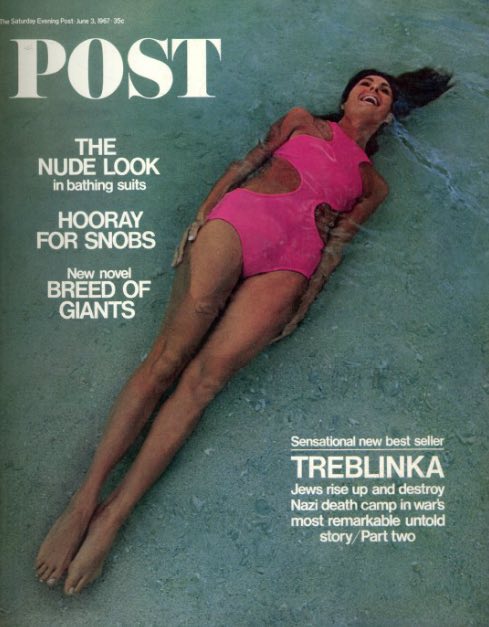
Featured image: Photo by Ron Harris for the pictorial, “The Nude Look Takes Over: Exposed ’67,” from the June 3, 1967, issue of the Post.
Blood on the Ice: The Violence of Hockey
As the Stanley Cup playoffs head into their final games, we take a look back at the state of professional ice hockey as described in the article “Blood on the Ice,” from the December 31, 1938, issue of the Post.
Any modern article about injuries in sports — particularly injuries related to player-on-player violence — would be presented with sober statistics and grim warnings. But this was 1938, and this was ice hockey, where helmets were optional and sticks (and fists) flew. A modern reader might expect the paragraphs of gleefully recounted fights to be broken up with the occasional finger wagging, but no. Instead, the writers spin from one breathless account of a stick in the ribs to another of how many stitches were required before the player skated back on the ice. Just in case the title didn’t give it away, the article relishes the rough and tumble of the game.
Eventually, even ice hockey came around (somewhat begrudgingly) to implementing safety measures. Helmets started to appear after the Bailey-Shore incident that the authors recount in this article, but perceptions didn’t really change until after Minnesota North Stars player Bill Masterson died after a hard hit in a 1968 NHL game. Helmets didn’t become mandatory for players until 1979, and that applied just to the new guys. Players who signed their contract before June 1979 weren’t obligated to wear one. The last holdout was Craig MacTavish, who retired from playing hockey in 1997.
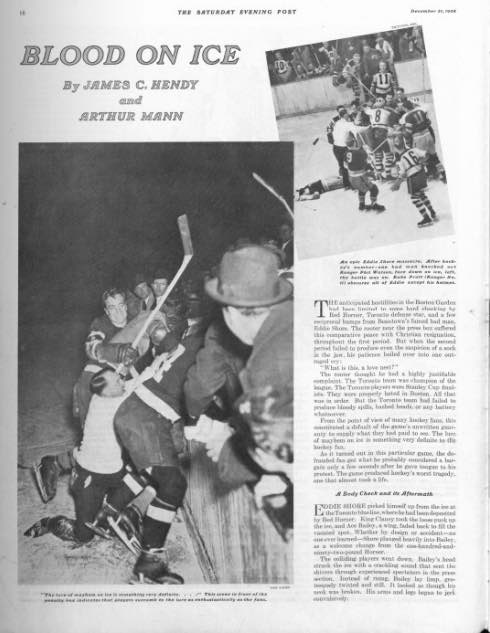
Cover Gallery: Congrats, Graduates!
As you can see from these covers dating back to 1900, America has always celebrated educational milestones with great pride. We’ve always known that our grads would go on to do amazing things!
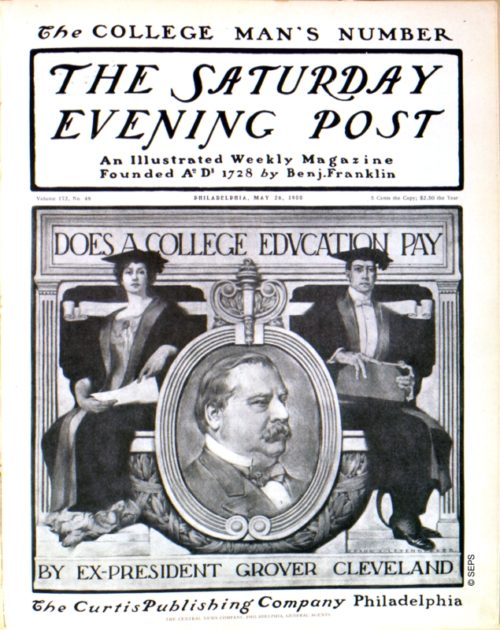
Frank X. Leyendecker
May 26, 1900
This cover of President Cleveland and two college graduates was Frank X. Leyendecker’s first cover for the Saturday Evening Post.
Harrison Fisher
June 21, 1902
The most important work of the early Post period was made up of the elegant paintings of Harrison Fisher. He frequently painted covers that simply presented a lovely woman. Occasionally a prop, like the diploma in this 1902 cover, implied a narrative, but the essential subject remained the woman herself.
Harrison Fisher
November 14, 1903
This later Harrison Fisher cover shows a couple reading together. Couples doing something romantic was another common theme in Fisher’s covers. Since painting women was his specialty, the woman graduate still remains the focus of this cover.
Norman Rockwell
June 14, 1919
This Rockwell cover shows a young student trying to remember his graduation speech. By the look on his face, he doesn’t hear the helpful hints or laughter coming from behind him.
J.C. Leyendecker
June 5, 1920
This J.C. Leyendecker cover shows a college graduate ready to take on the world. Strong male figures were a trademark of many of Leyendecker’s Post covers.
E.M. Jackson
June 3, 1922
This is one of more than 30 covers E.M. Jackson created in the 1920s. While Jackson was mostly known for his paintings of romantic women, he occasionally created a cover focused on a man, like this graduate dressed as a Roman, giving his commencement speech.

Edmund Davenport
June 13, 1925
This is Edmund Davenport’s third and final cover for the Saturday Evening Post. The clouds behind this graduate make this cover unique and complex compared to Davenport’s other two covers, which have more simple backgrounds.
Norman Rockwell
June 26, 1926
In this Rockwell cover a professor hands a young boy his diploma and praises his hard work. It’s assumed that he’s the first in his class based on the large stack of diplomas behind him and the medals on his jacket.
Ellen Pyle
June 11, 1927
This cover was done by one of the Post’s most prolific female artists, Ellen Pyle. Her early Post covers were simple portraits of women. Later on, her work became more detailed and many of her covers have the subject in front of a large, colored circle in the background, just like these graduates on her 1927 cover.
McClelland Barclay
June 7, 1930
This McClelland Barclay cover of a military school graduate and his girl is similar to nearly every other Barclay Post cover. Barclay became well known for his ability to paint strikingly beautiful women in a rather simple setting using bold colors. Barclay painted a total of five Saturday Evening Post covers, and all but one depicts a vibrant couple with an empty background.
Stevan Dohanos
June 5, 1948
Steve Dohanos’ two sons, Peter and Paul, were in an Eastern boys’ school when he took the family car up to help them move home. A passenger car, he learned, is no proper vehicle for such a job. The artist made his sketches on the Yale campus, but rearranged things to suit his purposes. The boy is George Ritter, of Westport, Connecticut, no Yale man. The artist didn’t use a Yale man, on the remarkable theory that none would like to cut class.
Amos Sewell
June 14, 1952
Once, years ago, a young scholar arose at commencement time to deliver an oration on the Panama Canal, found he had forgotten his entire speech, and started ad-libbing out of the general mass of data he had acquired in the classroom. Everybody vowed it was a grand speech, except his elocution teacher, who nearly had a stroke trying to locate him on her prompting manuscript.
Richard Sargent
June 19, 1954
Now that this young man is going forth from the halls of learning, maybe he is lying there thinking about how his generation soon will he the guardians of civilization, and of what a glorious challenge this is to the youth of today. Or maybe he is asleep. For as Dick Sargent muses with his brush: any guy who manages to finish commencement certainly has forty thousand winks coming.
George Hughes
June 7, 1958
Symbolic of a host of graduating Americans, they have an air of quiet confidence, suggesting that as they help mold the future of this cantankerous old world they may be able to make it behave a little better than in the past. Artist George Hughes worked on this cover at Williams College, where everybody did everything possible to make his stay agreeable—well, short of giving him a degree.
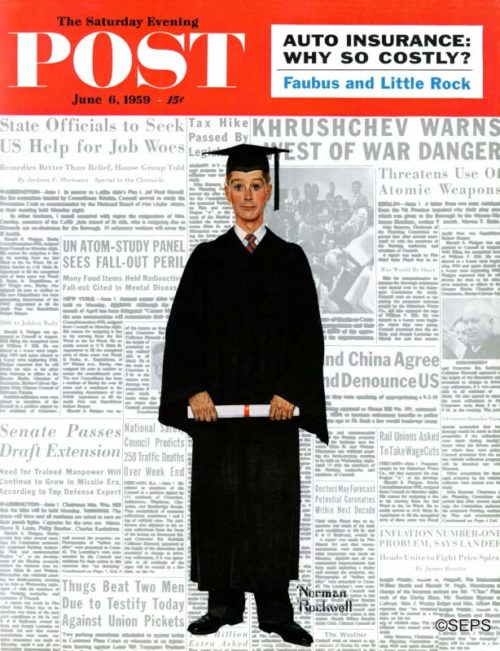
Norman Rockwell
June 6, 1959
Artist Norman Rockwell sketched a couple of undaunted graduates (see below); but then, reflecting on the awfulness of today’s newspaper headlines, he created the bewildered chap on the cover. This one is musing. Boy. aren’t things really screwed up? What to do, I wouldn’t know. But one thing you can bet on: I’ll give it the old college try. Rockwell says, “I like his feet. They look as if he’s standing on eggs.”
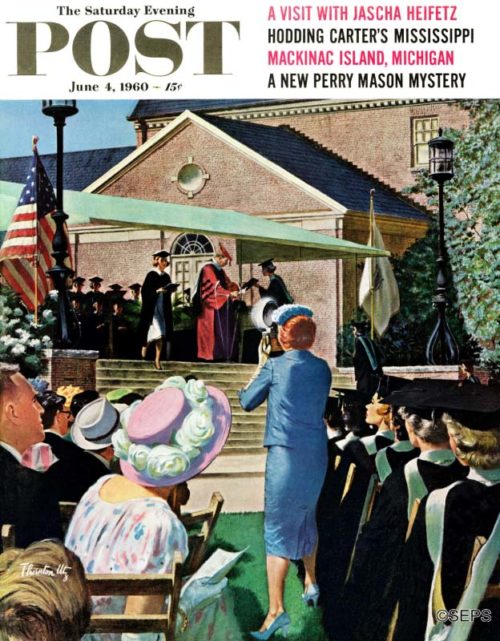
Thornton Utz
June 4, 1960
Artist Thornton Utz’s scene is Smith College, in Northampton, Massachusetts, where in 1960, Congressman Chester Bowles delivered the commencement address. The congressman’s daughter Sarah was among the 500 young ladies receiving bachelor degrees.
7 New Etiquette Rules for Modern Weddings
Emily Post literally wrote the book on etiquette in 1922, and her guide, Etiquette in Society, in Business, in Politics, and at Home, details the makings of an ideal wedding. A 1937 Post profile of the New York author (“Dear Mrs. Post”) described the various etiquette inquiries she received in the mail: “‘My intended has a lovely voice,’ wrote one, ‘Would it be alright for him to sing at our wedding, and if so, when and what?'”
Eighty years later, the “intended” might be more inclined to stage an elaborate song-and-dance proposal that will go viral on YouTube. The modern wedding is quite an affair.
The Knot’s Ivy Jacobson had some advice for adapting to new wedding norms, from social media manners to gift-giving.
Enjoy the Engagement Party
The gathering to announce an engagement is an old custom that has evolved from ancient Greece to Victorian England to modern times. You can likely expect cocktails and barbecue moreso than a discussion of the groom’s dowry these days. Jacobson said gifts are welcome — but not necessary — for this occasion.
Bring Cash
“Wedding registries aren’t going anywhere,” said Jacobson, “However, a lot of couples now live together before they are married, and they don’t necessarily need a new blender or a set of china.” Many are now creating “cash registries” that designate a honeymoon, down payment, or other such expense that monetary gifts will pay for. Giving cold, hard cash is totally acceptable — and more practical than a seventh salad spinner.
Stow the Phone
No one wants professional wedding photographs of a sea of smartphones — and certainly not tablets. The “unplugged ceremony” is the answer to this conundrum, and it’s getting more popular, according to Jacobson. At an unplugged wedding, guests will be asked to leave their phones in their purses or pockets for the duration of the ceremony. Shock and bewilderment can occur with the most diehard phone addicts, but the goal is for everyone to enjoy the special day without screens.
This rule is usually out the window for the reception, however, where guests are typically encouraged to engage on social media using a contrived pun of a hashtag designated by the wedding party. This makes it so the wedded pair can view the posts and pictures of their special day in one place.
R.S.V.P. on Time for a Destination Wedding
If the stress of a lifelong commitment isn’t enough, why shouldn’t the betrothed combine it with international travel? A destination wedding offers the appeal of a ceremony in paradise as well as a vacation with your in-laws. Clearly, there is much to be considered before deciding to get hitched in Hawai’i, but who wouldn’t want to say “I do” on an island? Jacobson said save the date announcements will be sent out about eight months in advance for a destination wedding or sooner if the location is out of the country. While your R.S.V.P. should always be timely, it is paramount to give prompt notice for a destination wedding.
Same-Sex Weddings Call for … the Exact Same Etiquette
Since the Supreme Court’s 2015 ruling, same-sex couples have enjoyed legal marriage all over the country. Of course, attending a gay or lesbian wedding might require extra mindfulness from guests who are unaccustomed, but Jacobson said, “the couple has invited you because they know you love and support them.” Besides a few twists, the ceremony will be indistinguishable from any other wedding. If it’s a wedding between two men, you might even get to wear that white dress you love.
Tip Your Bartender
One unwavering rule of wedding receptions seems to be the presence of an open bar. Even in 1922 “a fashionable wedding without plenty of [Champagne] was unheard of,” according to Emily Post’s book. “We always stress the importance of an open bar,” Jacobson said. The tip isn’t always built into the cost, though. If you see a tip jar, make sure to fill it up while you’re slinging back free Merlot. It might even help your vodka to cranberry ratio.
Adults-Only Means Adults-Only
It may seem cold to ask guests to leave their little ones at home, but an adult-only wedding can be practical. A child could cost as much as an adult in a wedding head count. If most of the couple’s friends and family have children it could virtually double the guest list. Jacobson said, “It’s totally acceptable etiquette to have an adult-only wedding as long as people know ahead of time.” The couple is likely facing some backlash for their decision, so you should respect their wishes and enjoy an evening without the kids.
North Country Girl: Chapter 3 — The Charms of South Dakota
For more about Gay Haubner’s life in the North Country, read the other chapters in her serialized memoir. The Post will publish a new segment each week.
While we spent every Sunday in with my dad’s parents, we saw my mother’s parents in Aberdeen once a year, over a long summer visit. We traveled by train, my sister and I in matching navy blue coats and white gloves, first south to Minneapolis and then switching train stations, onto another train heading west. We arrived in Aberdeen in the middle of the night; my grandpa Bill would meet the train and carry us sleeping girls to his car. When I woke up the next morning and saw the faded rose trellis wallpaper I knew I was up in the tower room of my grandparents’ Victorian house. My grandmother Nana loved babies, cats, and wallpaper: the dining room featured huge tropical leaves, like a Rousseau painting and a small downstairs bedroom had a meticulously detailed Old West landscape that encouraged daydreaming about cowboys and Indians.
Nana had a large garden plot across the street, where she grew vegetables; her huge side yard was dedicated to flowers, my Uncle Dale’s white box beehives, and my Uncle David’s pigeon coop. I was a bit frightened of those beady-eyed birds and my mother thought the pigeons were filthy and disgusting and forbid me to go near the coop, one rule that I happily obeyed.
Uncle David, a weird old bachelor, who had once been a noted small town athlete (too oddball for team sports, he was a champion ice skater, runner, and singles tennis player), lived with my grandparents. My Uncle Dale and Aunt Joan lived across the street, and produced a baby a year, to my grandmother’s delight; she adored lap babies, happy to spend hours rocking them and soothing them with an almost tuneless lullaby. I’m sure all of us cousins are disturbed by early memories of being ousted from that warm and cozy nest in favor of a smaller and cuter kid. Eventually even the youngest grandchild got dumped out of Nana’s lap, to be replaced by a cat.
Those visits to Aberdeen were my first chance to really wander and explore outside the confines of a yard, by myself or with a cousin or two trailing behind. Kids were let out of the house after breakfast, expected home at noon for “dinner,” eaten with my grandpa and uncles and any workers from their house painting business who happened to be around; and then sent off again to play until dark.

Aberdeen was a flat plains town, with a looming water tower that was visible from everywhere and marked the way back home. Unlike Duluth, a city that was all up and down hill, Aberdeen was perfect for bike riding. It was a lot hotter than Duluth and no one cared if we cousins turned the hose on each other, creating mud pits on the lawn. There was also that height of civilization, a municipal pool, just down the street, entry 50 cents. (Duluth, proud of its lakeside status and crisscrossed with rivers and creeks, scorned pools.) A short bike ride away was a playground whose main attractions were a snack bar and a rusty, creaky merry-go-round; we older cousins forced the littler ones to push us while we lay on our backs, heads hanging off the sides to better swirl our brains, until one of us was flung off or a pusher lost her grip and went tumbling under the spinning metal wheel. We had gravel from falls embedded in our knees all summer long. I was given a dime to spend at the snack bar there, where I was always torn with indecision.
Should I get a Dr. Pepper or a pink Creamsicle (vanilla ice cream coated with raspberry sherbet)? Neither was available in Duluth, though sometimes I could find a misshapen and ice-encrusted orange Creamsicle at the bottom of a store’s ice cream freezer. The Dr. Pepper, icy cold and mysteriously delicious, came with a challenge: I had to lean into that coffin-like cooler, holding the lid up with one hand, the other navigating the bottle through a metal maze until it was finally freed at the end, without smashing my fingers. I would have to drink the entire thing right there, as the empties had to be deposited in a wire rack next to the cooler. An already melting Creamsicle I could take with me, some of the pink and white mess dropping off to sizzle on the sidewalk, some creating a sticky mess on my rubber bike handle grips.
Nana kept her hair eggplant red, and wore her rouge high on her cheeks like a kewpie doll. She had to start every morning with dry toast and coffee lightened with evaporated milk. She had grown up next to her father’s cheese factory in Wisconsin inhaling the fumes from solidifying milk, and the scent of most dairy products made her sick. She was happiest hoeing in her garden or rocking a baby or collecting a new cat; the best-smelling stews on the stove were reserved “for my kitties.” My grandpa Spellman was a kind quiet man, a dead ringer for Cab Calloway, and the only adult I knew who read the funnies in the newspaper; I would hop in bed with him on Sunday mornings so we could page through the colored comics section together, admiring all of them: Ella Cinders, Steve Canyon, Beetle Bailey, Dagwood, Dondi, even Mary Worth, a soap opera in pictures.
Aberdeen had a very minor league baseball stadium, where no one in my family ever went, and a downtown lined with two-story, red brick, glass-fronted shops. On Saturday nights, we brought blankets to the park, where the adults sat around the band shell, listening to the town brass band, out of tune but spiffy in their dark blue uniforms, while the kids ran amok. Afterwards we went to Lacey’s Dairy for ice cream; I always got a cone of White House, vanilla with candied cherries and walnuts.
Another Aberdeen-only treat was my Uncle Dale’s homemade root beer, sweetened with honey from his hives. He brewed up a dark mixture with squares of root beer flavoring, yeast, tap water, and honey, poured it into glass pop bottles saved throughout the year, sealed them shut with a fascinating bottle cap press, and stored them in his basement to ferment. We kids were always warned not to open the bottles until Uncle Dale said. I could never wait that long—certainly the root beer had to be ready by now!—and at least once a summer I snuck down to the basement with a bottle opener, took a mouthful of warm, sweet, flat liquid, poured the rest down the sink, and sneakily hid the empty bottle.
“The Spanish Suit” by Warren Miller
Well, and how do you like Spain?” the driver said, turning round to him at the stoplight, presenting his gray face with its wrinkles and scaly skin. Generations of hungry ancestors were involved in the production of that face; it had taken centuries to form.
“Spain? I like it very much,” Simmons replied.
“And so you should,” the driver said, “for after all, it is of your making.”
Simmons made no attempt to understand this. He merely said, “It is true,” one of many Spanish phrases he had learned from a book for tourists, part of his quick refresher course.
Simmons relaxed. Trying to understand a foreign language was such a strain; after a week in Madrid, even his muscles felt sore. The taxi, he thought, rode with remarkable smoothness. Like most Spanish taxis, it seemed to have been constructed out of several other cars, and bore not the mark of any known maker but only of some welder’s craft. They’re really very good at this sort of thing, Simmons thought. He didn’t know why, but he found something sordid in this kind of construction. There was a cunning in it.
Inwardly, Simmons practiced a tolerant laugh. He wanted very much not to be the kind of American tourist all his friends had returned to tell him about. At the same time, he did not consider himself an American ambassador abroad, but simply a civilized man.
Besides, he had worked too long and too hard, for more than 15 years — for 15 solid years, as he put it — to play any role other than that of a man out to enjoy and indulge himself. God knows I’ve earned it, he said, looking out of the taxi window at the shops and cafés, and, disapprovingly, at the rather too large sky which was like a silver dome specially designed and constructed for Madrid. He did not think this provincial capital deserved such a sky; it was too grand for such a poor, depleted place.
This thought was one which Simmons, in any case, would not have lingered on, but it was almost immediately driven from his mind by the sight of a group of young women. The girls of Madrid had surprised him; so many were blonde and wore copies of Chanel suits. Even now after a week, it still came as a surprise to him. He had imagined that all Spanish women looked like those he had seen as a boy on the insides of cigar-box lids: dark, voluptuous, somnolent. Well, well, he said to himself, tolerant of his own mistakes.
He was on his way now to the tailor, for the final fitting of his suit. This was to be his first tailor-made suit, and he found that it was, in its own way, quite thrilling: the fact that this suit was made for him, was his alone, and could never, not possibly, fit anyone else the way it fit him.
He had already rehearsed several stories which began, magically, with the words: “My tailor.” Or better still: “My tailor in Madrid.” He took this suit as a sign of his having arrived, of having made it in the world. He saw it as the guarantee of final success; and he thought it interesting that, after his first visit to the tailor, the whole trip had taken on a new aspect: It had come to give him a foretaste of retirement, of those years when he’d have all the insurance paid up, money in the bank, dividends rolling in, and not a worry in the world.
Simmons was happy with his wife, and their marriage, though childless, had been a satisfactory one; he had no doubt it would continue so. He was forty-five and in good health, but he found that he was looking forward to old age, to retirement, to being, as he put it, on the beach.
This trip had given him the time to think in a much more composed way about the prospect of retirement. Simmons liked to plan ahead. Now he saw them — the years ahead — no longer as a completely vacant expanse. The notion came to him with startling clarity and suddenness: He would spend his retirement visiting the tailor, having suits made.
The vision was repugnant. Where do these thoughts come from?, he asked himself, appalled; and he applied himself once again to the seeing of sights from the taxi window. Well, well, he said. He thought it must have something to do with the change of water.
It was the water, yes; and the change of air; and the general shock of foreignness. It had begun, he remembered, the very night of the day that he and his wife, Roberta, had arrived in Spain. He had spent the afternoon in the hotel room, resting from the flight, writing letters and cards to friends back home. When he and Roberta went out for dinner that night — all the guidebooks had warned about the late dinner hour in Spain, and so they did not leave the hotel until after nine — he took the letters to the desk clerk and bought airmail stamps. There were three stamps for each letter and two for the cards, and while he was paying for them the clerk hit the bell and cried, “Botones!”
The bellboy appeared at Simmons’s side; he wore a pale blue uniform with two rows of buttons on his short jacket. Simmons thought at first that he was a midget, but after a moment saw he was indeed a boy, perhaps 12 years old. Simmons was outraged that a child so young should be working, and worse, that he should be kept up so late.
When Simmons picked up the first stamp and was about to begin stamping his letters, the clerk said, “That’s all right, sir. Buttons will lick them for you.” Simmons was shocked, but it suddenly occurred to him that if he stamped the letters himself, the boy would get no tip.
“Yes, of course,” he said, without looking at the clerk or the boy. He gave the child 10 pesetas and walked away, warmed for a moment by the sense of his own generosity. Ten pesetas was 17 cents. Seventeen cents must seem an enormous sum to that boy. When he got outside, he remembered that he had figured this out according to the official rate of exchange, but he had not bought his pesetas at the official rate, and he realized that after all he had given the boy only a dime. Still, he thought, even a dime to that child is quite a nice sum; and it was at that moment he had his first ugly vision.
He saw himself filling a bowl, a rather good-sized bowl, with mucilage, and presenting it to the boy to eat. He poured the mucilage out of a bottle he had not seen since childhood. It was LePage’s mucilage, and he saw, with absolute clarity, the bright red and black and yellow of the label, the florid lettering. It was a disgusting vision, and he got rid of it as quickly as he could, and fortunately was able to do so by the time they got to a well-recommended restaurant. Late as it was, they were still the first to have appeared, but Roberta said, “Never mind, dear,” and the headwaiter seemed genuinely pleased to see them. The food was excellent, and Roberta, he noticed after a while, looked exceptionally pretty. He had forgotten what nice shoulders she had. The low-cut dress she wore was really quite revealing, and he caught himself staring at her breasts. When he looked up, Roberta had on her face that expression he had come to know so well. She seemed always to be waiting for something.
When they returned to the hotel at midnight — they were tired from the flight, and the food and wine had made them very sleepy — the bellboy was still on duty. He smiled, and it seemed to Simmons, lightheaded as he was, that the boy was saying, “I shall never forget you, sir.” Simmons nodded, very pleased, and returned the smile.
The night manager, who spoke English very well, came out of his office and, on behalf of the entire night staff, welcomed Simmons and his wife to the hotel, and put himself, personally, at their disposal. Simmons said, “Actually, you probably could be of help to me. I want to have a suit made. I’ve been given the name of a tailor, Santander Brothers, and I wonder if you could — ”
“Of course,” the night manager said. “Yes, they have an excellent reputation and are well-esteemed; but here in Madrid we are famous for our tailors. There are many good ones, and many who are, though less well-known, as good as the Brothers Santander and not so expensive.”
“Is that so?” Simmons said.
The night manager, with fantastic dexterity, produced a card from his vest pocket, and with the desk clerk’s pen wrote down the name and address of a highly esteemed tailor for Simmons. “I could even make the appointment for you, sir,” the manager said.
In this way it had all been arranged; and it pleased Simmons very much, because now he had a tailor of his own, one he had himself discovered and who was not even mentioned in the guidebooks.
“Well, here we are,” the driver said, offering Simmons another view of his relic of a face, “and it has really been a pleasure to carry you.”
Simmons leaned forward to read the meter, reached into his pocket, and calculated the tip. He got out of the cab, looking up at the now familiar building where his tailor was, perhaps even at this moment, sewing the last stitch on his first handmade suit. Simmons thought, How odd; I have advanced to what my grandfather took for granted. And he suddenly saw history, the march of generations, as a crazy geometry, an elliptic and eccentric spiral, impossible to read, without sense. It left him with a feeling of vertigo.
The cold handle of the bronze-and-glass door restored him; the marble floor and walls of the lobby reassured him. Near the ceiling there were carved borders of roses and angels. He stopped to marvel at the profligacy of it, not of materials only but of time itself. How had they found so much of it? How had they managed? He thought that time was a product peculiar to the nineteenth century, a natural resource which had begun to run thin and never survived into his century.
There was an elevator, but his tailor was on the second floor and Simmons took the stairs; he had read that such exercise, in moderation, was good for the heart. Having a President who had suffered a heart attack had made Simmons and his friends very sensitive to such things. Heart specialists on television and in newspapers made them aware they all had that tough and fragile thing inside them; sometimes Simmons thought he was merely a protective shell designed, and assigned, to protect this tricky mechanism. Occasionally he even put his hand to his chest, to assure himself that it was still running.
He took deep breaths as he climbed the stairs, consciously giving exercise and oxygen to the masterful thing whose captive he was.
At the top of the stairs, on the second floor, Simmons paused and allowed his breathing to regulate itself. Here the walls were of ordinary plaster and the floor of wood. Time, apparently, ran out when the builders got up here. But the corridor was twice as wide as those in modern buildings, which showed how hard it was to break the habit: They still thought they had a little time left over and had converted it into space. No more carved roses, true, but expansiveness was itself a decoration.
His tailor, Mr. Nuñez, was a young man, perhaps thirty, with a seamed face and a small moustache. This moustache lived a life of its own: Even when Nuñez’s face was in complete control of itself, the moustache twitched and fluttered, as if eager to be off or itching to grow larger. Nuñez’s eyes indicated that he was not unaware of this phenomenon, and he often looked at Simmons apologetically, as if to say, “I would let it grow bigger, believe me I would, but I can’t afford to.”
The shop was small, and only a little light, cloudy and uncertain, leaked through the window; in amount it was equal to that given off by the bare bulb which hung dead center from the ceiling, trembling with each footfall, depending from a desiccated electric cord which had begun to curl up, as if from shame. There was more light produced by the reflecting surfaces of mirror and pressing iron, and the glass covering the large photograph of Nuñez’s father. Along one wall were metal shelves which provided more than enough space for the few bolts of cloth which represented Nuñez’s meager stock. Among this very limited selection Simmons had found exactly what he was looking for: a very English Glen plaid which was, nevertheless, a product of a textile mill north of Barcelona.
As soon as Nuñez closed the door behind his American client, he leaped onto his worktable, crossed his rickety legs, and, in the same movement snatched up the jacket of Simmons’ suit and took it to his mouth, as if he were going to eat it. Simmons almost cried out in alarm, but Nuñez merely bit the thread, said, “Finished!” and with a magician’s flourish, held up the coat, slid down from the table, an approached the suit’s new owner.
He helped Simmons out of his old suit and into the new one. When the moment came, when finally Simmons slipped his arms into the sleeves of the new coat, it was not a fitting but an investiture. He smiled at his image in the mirror, at his marvelous newness, at the sensation of fulfillment which this suit gave him. It was a construction; it was armor; it was his alone. The lapels were wider than those he was accustomed to, and the shoulders were rather heavily padded in the Latin way. He moved his torso within the shell of the jacket, and his smile widened. He liked, really liked, the way this suit proclaimed its foreignness. There’d be no need to tell anyone anything. This suit was a fact. Even strangers would know him for what he was: a man who had arrived.
“You like it, sir?”
“Very good,” Simmons answered, “very, very good.” He put his hand into the trouser pocket and was momentarily alarmed to find no money there. He picked up his old suit and transferred the contents of the pockets.
Nuñez was delighted that his craft had produced such results. He clapped his hands and said, “All is precisely as I had wished it to be.”
With a few words and gestures Simmons conveyed to his tailor that he would like the old suit wrapped. He counted out pesetas to the value of 45 dollars, and his tailor wrote out the receipt. Copperplate, Simmons thought, watching it roll off the point with magical fluency and exactitude, as if the writing had been contained in the barrel of the pen and was now not so much written on the paper as released onto it. Nuñez took three tax stamps from a box and affixed them to the receipt. Everything but sealing wax, Simmons thought.
He turned away and looked at himself once again in the mirror. He saw a cardboard box materialize on the table behind him, and then the tailor carefully folded and packed the old suit. Simmons prepared a sentence in Spanish; his few hours of brushing up in this language had suddenly begun to pay off; phrases long ago forgotten now amazingly returned, and the sentence formed itself with fantastic ease.
“The women of Madrid astonish me,” he said. “So beautiful and well dressed.”
“Well dressed, yes.” Nuñez said. “But their stomachs . . .” And here he made with the four fingers and thumb of his right hand a beak, the fingers stiff and hard, and he rapidly opened and closed the beak of this bird which had suddenly grown from his wrist.
“Surely not.” Simmons said. “But there is such an air of prosperity.” Once again, and this time without preparation, the words rolled from his tongue, as they had come from the barrel of Nuñez’s pen.
The tailor said nothing. He tied the last knot on the box.
Simmons rolled his shoulders, trying to accustom himself to the padding of the jacket. I feel like an all-American halfback, he said to himself, lightly. Nuñez now had lighted a candle and was heating the end of a brown stick of t wax which had appeared in his hand. He dripped wax onto the knot; it puddled and formed itself into a ragged circle. Nuñez touched the end of the stick of wax, testing it for coolness; and then with a stubby metal bit he pressed the wax four times, leaving the die’s mark on the seal.
Too perfect, Simmons thought; no one will believe it. He put the receipt in his wallet and picked up the box, careful to keep his sleeve clear of the wax. He shook hands with Nuñez and said, “Thank you very much. It has been a great pleasure, and I hope to return, and I will certainly send my friends.”
Nuñez smiled and held the door open for him. Simmons took the elevator down. In the taxi he studied the wax seal, trying to read the tailor’s mark, but it was very small. He was not sure, but he thought it must be a bird of some sort; something winged, surely, perhaps a swan.
When he got back to the hotel, he saw Roberta in the lobby, having tea. Only when he stood by her table did she recognize him. “Good heavens,” she said. “I thought you were a Spanish gentleman on the make.”
He laughed, delighted. “Do you like it?”
“Marvelous,” she said. “But it may take me a little while to get used to those shoulders. You taper like a lifeguard.”
He laughed, sat down beside her on a velvet love seat, and turned sideways to the table; he crossed his legs carefully and sat forward so the jacket would hang right. Whenever anyone entered the lobby he looked up to see if he had been noticed. He was very pleased. Later, when he and Roberta returned to the hotel from dinner, the night manager spread his arms as if about to embrace Simmons and said, “Ahhhh, perfect!”
Simmons and his wife left next day for Paris, and a week later were in London. His delight in the new suit did not diminish; he found that whether he wore it on the plane or packed it in a suitcase it remained unwrinkled; it maintained itself in armorial perfection. Simmons noticed, or believed he noticed, that on the days he wore his old American suits, waiters and doormen did not move for him with the same respectful haste as they did when he wore his Spanish suit. The suit gave him something, he had no doubt; it marked him, he was certain, as someone out of the ordinary, someone very special.
It had been a quite perfect trip; even before it was over Simmons was seeing it in retrospect, had begun to reminisce several days before they boarded the boat at Southampton. In Paris, he had bought Roberta a long string of pearls, and in London he bought her antique silver objects. She wore the pearls wrapped around her neck so that they formed a high collar, a nacreous shell around the tower of her throat. It was obvious she liked them very much, and the silver too; but it was just as obvious to Simmons that he had not yet found that one thing which she wanted above all, because she still greeted him every morning with the same expression on her face, what Simmons had long ago begun to call her “waiting look.” Sometimes he thought her sadness was the result of childlessness. Years back, when it was still a problem to be talked about, the doctor had advised her to face reality. Simmons had no trouble at all in doing so; and he had thought Roberta had none either, but he could be wrong about that, he told himself.
Still, even so, he had to say that the trip had been an unqualified success; when he got back home he would have nothing but good to report. It is true that in Paris several packs of cigarettes had been stolen from his hotel room, but this was a small matter. It bothered him a little because they were not American cigarettes; he knew how Europeans were about American cigarettes, and he could well understand some chambermaid or porter taking a pack or two of Luckies. But Simmons smoked the cigarettes of the country he was in; it was always possible to find a filter tip with blond tobacco. Even in Spain he had no trouble about this and smoked a brand called Bisonte. It had been, in fact, two leftover packs of these cigarettes which were stolen.
Small matter. He did not bother mentioning it to the management.
Also, he had been told that in the great hotels of Europe one could still find the kind of service a Victorian traveler would have taken for granted, the kind of service men of Simmons’s generation had really never known. He had had visions of men in little aprons polishing door handles and brass plates, chambermaids in starched uniforms with armfuls of linen, a housekeeper with a large ring of keys on her belt. And it is true that in his hotels in Paris and London he did see these things, occasionally; but it was perfectly clear that the standards had gone down. They almost never bothered to empty his ashtrays; and oddly enough, in both hotels he had noticed orange peels under his bed.
But such things were merely cause for raised eyebrows, and he would surely have forgotten all about them by the time he got home if the same thing had not happened on the boat. They returned on one of the great English liners, and, on coming back to his cabin one night, he discovered that his last pack of cigarettes had been stolen. He rang for the steward. No, he said to Roberta, no, it wasn’t the lousy 20 cents or whatever, he just damn well wanted a smoke and there wasn’t any.
“But this just doesn’t happen in first class, sir,” the steward said, genuinely shocked.
“It has happened now,” Simmons said.
The steward held a small silver tray against his leg; the vibration of the ship’s engines was reflected there, a subtle agitation. “I shall have to inform the purser, sir,” the steward said, but obviously he was reluctant to do so.
“Never mind,” Simmons said, reminding himself that he was after all a civilized man. “Just see if you can get me a pack of cigarettes, won’t you?” He was sorry he wasn’t wearing his Spanish suit; he was certain his words would have carried more weight.
The steward smiled gratefully. “Have mine, sir, if you don’t mind English cigarettes.”
He handed Simmons a rumpled pack of Ovals. Simmons thanked him and said he would take only two, one for now and one for the morning.
“No trouble at all, sir. Keep the pack. I can always get another from one of my mates.”
“Thank you very much then, steward.”
He closed the door and began to undress; he lit a cigarette and noticed the ashtray was full of butts again. He shook his head.
“I think you handled the whole thing very well, dear,” Roberta said.
Later he was glad he had taken the whole pack, for he woke in the middle of the night and could not fall back to sleep. A noise had wakened him, he supposed; through the porthole he watched the moonlight tilt and shift. When the ship lunged to starboard, the closet door swung open and struck the bulkhead, making a soft, hollow sound. He could see his Spanish suit twisting on its hanger, as if it were anguished by captivity and longing to be free. Now, rocked by the ship, touched by moonlight, he permitted entry to unfamiliar notions and wondered what he was taking back with him, what presence hid in his new suit and waited to be smuggled through customs to the promised land, a furtive stowaway leaving a trail of orange peels and stolen cigarette ends.
Except for the orange peels and the ashtrays, it was a pleasant and uneventful crossing. On the last day he woke early and came out on deck in time to see Coney Island slide smoothly by, mysterious and faintly sinister in the mist of morning. Surreptitiously, although he was alone on deck, he slipped his hand under the slightly too wide lapel of his new suit, and let it rest for a moment on his heart. It seemed fine, in good order. He would walk around the deck once before breakfast, for exercise, and to stimulate his appetite.
Four hours later they were in their apartment. Simmons was on the telephone to his office, and Roberta was removing dust sheets from the furniture; they were speckled with the city’s dirt, the greasy soot that seemed to penetrate the glass of the windows; no way to keep it out. By early afternoon the refrigerator was producing ice cubes again and was full of fruit and meat delivered by the Puerto Rican grocery boy; the suitcases were unpacked; and Simmons decided he would, after all, go down to his office and just have a look-see at his mail. It was too hot in New York for the new suit, but he was determined to wear it on his first day back. Then he would have it cleaned and put away until fall, he told himself.
His secretary greeted him with nervous joy; her white teeth flashed messages of welcome. She always made him feel like a hero just returned from a dangerous mission, even though most of the time he was only coming back from lunch. “Love your suit,” she said.
He told her all about the tailor he had discovered. It was his first telling of it, and Miss Newcomb enjoyed it immensely. He wanted very much to lean back in his chair, elegant and relaxed, and tell her all that he had seen and thought; and it was only with a great effort of will that he was able to recall himself to duty and, with Miss Newcomb’s aid, go through the months’ mail.
At four o’clock he stopped work and took Miss Newcomb in a taxi to her apartment, where he often stopped for a drink on his way home. Once outside the air conditioned office building, the suit seemed immediately to absorb the heat of the day, as if it were storing it up against the hard winter sure to come. There’s your Old World wisdom for you, he said to himself, smiling at the idea.
In the taxi, Miss Newcomb laid her hand on his. “Glad you’re back?”
“Oh, yes,” he said.
Miss Newcomb smiled and touched his padded shoulder with her forehead. “It’s a marvelous suit,” she said. “I adore it. I can’t make up my mind, though, whether you look like something absolutely wonderful left over from the ‘Thirties
He laughed and said, “Or . . . ?”
“ — Or an English colonel in mufti. But either way,” she said, “it’s great, great, great.”
“I’m very glad you like it.”
“Perfecto,” she said. It was one of her favorite words.
Simmons was amused by her language; it was part of her youthfulness, what made her so attractive. With Miss Newcomb beside him, her hand on his arm, and his own city presenting itself to his view, he felt a marvelous sense of certainty and power, here in this taxi which was one car and not a crazy amalgam, and driven by a man whose face was safely anonymous, not memorable and haunting, not a relic, not a souvenir of ugly history. Simmons banished the memory of the Spanish driver’s face; he touched the magical iron cloth of his suit; the thrill of it charged him with a feeling of boyish vigor and reminded him of a time when he was certain he would never die. He circled Miss Newcomb’s wrist with his thumb and forefinger. When they arrived at her apartment, the first thing he did was call Roberta and tell her he’d be late. He was always very good about this.
Simmons sent his suit to the cleaners, and when it came back he left it in its plastic bag to protect it from the soot. Every morning he saw it hanging in the closet. After a while, it seemed to him that he was really checking to see if it was still there. This notion amused him; he admitted to himself that the suit had taken on a kind of talismanic quality. And why not?, he asked himself, always tolerant of his own superstitions. It has brought me nothing but good luck, he said to himself; there hasn’t been a bad day since I bought it. Business was better than ever and his private life a joy. Even Roberta seemed happy.
He had noticed this within a week of their return: Her waiting look had turned to something more like fulfillment. It reminded him of their honeymoon. There was about her now that same air of surprise, gratitude, and shyness. He could tell by the way she touched him; it was her way of thanking him for something. He did not know what it could be. Perhaps she has faced reality at last and discovered an inner peace, he told himself; and he found this a satisfactory answer.
Breakfasts, however, were a bad time. She sat across the table from him, smiling, smiling as if there were some marvelous secret they shared. Perhaps, he thought, she is coming early to that time of her life. It would account for the odd way she smiled at him, and for the rather stunning nightgowns she had suddenly taken to wearing. and the pink silk robe she now wrapped herself in to drink coffee with him at eight in the morning.
“Kept ladies always wear pink silk robes,” she said, her smile full of secrets. “That is why I bought it.”
“It’s very pretty,” he said, after clearing his throat. He had hardly trusted himself to speak.
“Oh, you!” she said, and looked down shyly.
Also, some nights. before going to her room, she would come in to his, where he was working at some contract or estimate, and not kiss him good night in the ordinary way but would take off his reading glasses and kiss his temples and eyelids, and with her hand caressing the back of his head. It was a manner altogether new, and he was too astonished to be made anything but thoughtful by these attentions.
Then too, at these times, she would say disturbing things, such as, “My secret lover.” Or, “You, my dearest, my midnight visitor.” And, “Oh, you wild man, you.” Then she would put his glasses back on and, always, as she went through the door, would look back over her shoulder, coquettishly.
Clearly, a doctor’s advice was called for; but Simmons delayed, hoping this — what should it be called? — this seizure would work itself out and disappear as suddenly as it had come.
Apparently, in spite of her smiles and air of well-being. Roberta was having a hard time of it too; for whenever he awoke in the night he heard her rustling and pottering through the apartment. Several mornings each week she slept late. and when this happened he always found the evidence of her night prowling: an overflowing ashtray, a demitasse cup, and the thin, cylindrical espresso coffeepot she had bought in Madrid. And often, in the kitchen, he would find dirty dishes and crumbs on the plastic work surface, the mayonnaise jar with the lid off, and the scraps of a piece of meat which had been left over from dinner.
It was alarming, but he had Miss Newcomb for comfort and, after a while, found that she preferred him in the role of worried husband. She became very wifely.
Still, after a few months of this, he had to admit that Roberta seemed to be thriving, had put on weight — was beginning to look rather like the Spanish lady on the lid of the cigar box — and seemed to be very happy indeed. Once or twice he had even wakened in the night to hear her laughing in her sleep.
And it was precisely when he thought the situation well in hand, all cause for worry past, that he went to put on his Spanish suit one morning and discovered it was missing. “Oh, God!” he said, and had a vision of Roberta, scissors in hand, quite mad, cutting his suit to ribbons. With something close to frenzy he pushed his suits along the closet bar, one at a time, hoping he had simply overlooked it. But it was not there, it was not there. He sat down. I must be calm, he told himself. He was perspiring; he unbuttoned his shirt, one part of his mind thinking: I will have to shower again. He reached for a cigarette; the box on his desk was empty. He swore and went into the living room and found two still left in the alabaster box on the coffee table. There was the usual demitasse cup and ashtray heaped with ends, and now — and for some reason he took this as the final insulting blow — a dish with some bread crusts and tomato seeds floating in oil.
“One might as well be living with an Italian peasant!” he said — almost aloud, so fierce was his anger.
Then he sat down, and after a few puffs at his cigarette he felt calmer and thought perhaps Roberta had sent his suit to the cleaner. It was unlikely, but this was the only reasonable explanation he could come up with. Another thought then came to him, less reasonable but of such compelling urgency that he found himself on his feet and moving toward her room before the thought was even fully formed.
The door was ajar; he pushed it open slowly, not making a sound, and what he saw froze him into an even deeper stillness. Her nightgown, leaf green, lay on the floor at her bedside, insubstantial and shifting in the light breeze that blew through the window. Roberta, her face slightly swollen with sleep, was only half covered by the sheet. He had never seen her so desirable nor ever thought her capable of such an attitude of abandonment. Desire stirred within him, but he remembered his anger and opened her closet doors. His suit was on the first hanger, and, furious now, not caring how much noise he made, he savagely pulled it out from among her dresses. Roberta did not waken. He closed the bedroom door behind him. “Shameful!” he said, and shook his head.
Even the shower did not calm him; still angry, he punished himself with the towel. He said, “Yes, healthy appetite; getting fat, of course, but inside she is very sick!” He took this as a personal affront, as if by getting sick she had betrayed him. And how shall I get her to a doctor? he asked himself. Her doctor was a friend, Ted Myers. Simmons left a note for Roberta:
Haven’t seen the Myerses for long time. Why not invite them dinner Fri. night?
Roberta invited the Myerses and they, happily, were able to come. In his taxi on the East River Drive next morning — a time of day he had come to set aside for personal, as opposed to business, thoughts — he decided not to telephone Ted Myers but to let him come unaware that anything was going on. Doctors were like that, Simmons knew: If they were told to look for something, they were more than likely to find something. What he’d do, simply, was this: The day after the party he’d call Myers and ask him. Just spring it on him and get an educated reaction. Simmons wished that the psychiatrists would put out dream books like those he had read when he was a boy; then, he could simply look under the various headings — Suit, Closet, Wife — and get a line on the whole thing. He shrugged. Oh, they’re working in the dark, too, he told himself, recalling that Ted Myers had once said, “There are still some things at which we just have to throw up our hands.”
He leaned his head on the back of the seat and closed his eyes. He was tired; he had not slept well. In the beginning, Roberta’s night prowlings were as nearly silent as she could make them; lately, however, she had become quite brazen, and he was often wakened by the noise of clattering dishes and what sounded like books being dropped. He wondered if she was trying to let him know that she was disturbed. He groaned. The only comforting thought, really, was that the psychiatrists did not know very much either.
In fact, as it turned out, they knew even less than he thought; for, after an altogether unremarkable and even charming dinner party, Ted Myers said, as he was leaving, “Simmons, you’re a lucky man,” and he punched him lightly on the arm to show he meant that Simmons deserved his luck. And when the door was closed and Simmons turned and looked at his wife, he knew what Myers meant: She was beautiful. Or not beautiful, perhaps, but something even better: a beauty. She smiled at him then, in her altogether new style, and patted the sofa, inviting him to join her. He did so, transfixed, hypnotized almost, by this sudden new vision of her.
When he was halfway to her, she turned off the lamp; for a moment, before the light of the sky made itself felt, the room was completely dark, and he stopped, then continued toward her. Her arms were open for him; he saw the light on her bare shoulders, smelled the odor of her perfume, then felt her warmth.
“So glad they’ve gone,” she said. “I’ve been waiting all night to get my hands on you.”
His heart, that delicate member, responded in an alarming way. Roberta was so new to him; Miss Newcomb was now the familiar, the comforter. He felt a pang at the thought of her; it was betrayal, but he was sure she’d understand. Roberta was importunate, not to be put off; the intensity of her demand frightened him. “Mi vida,” she said. “Mi cielo.” To Simmons she seemed now as foreign as the words she was uttering. What had come over her? Was it Europe? It was said to have terrible effects on a certain kind of American.
Afterward, he sensed her disappointment, even though her voice was very gentle and what she said was clearly meant to be soothing. “You must be very tired, dearest.”
He agreed that this was so. “It’s been a rough week,” he said. “And I haven’t been sleeping well lately.”
“How awful. If I had known I would have spoken to Ted. He could have prescribed something for you. Why didn’t you tell me?”
“And have you,” he asked, and paused to clear his throat, “have you been sleeping well?”
He saw her shy smile. “Never better,” she whispered.
He moved away from her, to a chair, and lighted a cigarette; and realized then that he might as well have left the room. His presence seemed to be of no interest to her any longer. She was wholly engaged in looking at her body, silvery in that light. There was a fantastic pride in her face as she looked at herself. It seemed to Simmons she was taking joy in her own flesh; there was more than merely satisfaction in the way she raised each leg into the light and gazed at it. But she had not forgotten him; she turned on her side and held her hand out to him. “Give me a puff, dearest,” she said. When he leaned toward her he saw her eyes and the adoration that was all for him. She did not immediately take the cigarette, but first reached up and touched his face with her fingertips. He wondered at her ways.
She drew up her legs and locked her arms around them, hugging herself. “Go to bed, love,” she said, “and sleep well, and sleep late.”
He stood up at once. “You’ll catch cold there, Roberta.”
She stretched her legs again. “No, I’ll go to bed soon; I just want to enjoy this a little longer.”
Simmons slept very well that night. He woke toward morning. Not moving, he listened to the sounds: footsteps, dish drawn across table top, click of cup on saucer. Familiar now. Even reassuring. He thought of getting up, of going out of his room to confront this person. No, better not, he decided. Really, everything was quite perfect; it was a lovely arrangement. Simmons faced reality; he had always prided himself on his ability to do that. We complement each other, he told himself. We have our arrangement, Simmons said to himself; we’ve made our little deal. A great happiness surged through him. He had to stretch his body to contain it all. This was what he had worked for during those 15 solid years. “How good life is,” he said, and fell into a sleep as deep as death.
When Roberta came into his room it was almost noon. It had been years since he had slept so late. Not quite yet awake, trying to read his watch — could it be so late? — Roberta’s presence in the room — what was she carrying? — confused him and he felt angry and betrayed. This passed at once when he saw she was carrying a tray. She lowered it to his bedside table, then sat down beside him and poured the coffee. She unfolded a napkin for him, and while he sipped the coffee she tore off pieces of the buttered toast and fed him.
“You need your rest,” she said, “and you need nourishment, and you deserve the very best.”
He smiled.
She refilled his cup and, offering it to him, looked up shyly and said, “What fantastic strength you have, and what powers of recovery! Really, dearest, you astonished me.” Wide-eyed, she shook her head in mock censure and said, “You are such a boy!”
He tried to laugh.
“You really are,” she said.
He stared at her, unable to speak. She turned away and lowered her head, misunderstanding his penetrating look. “Oh, surely not!” she cried, laughing.
He laughed too and said, “No, no, I’m going to bathe now.”
She insisted on running the tub for him; and as if it were a long journey, she bent down and kissed him before leaving. Her pink robe fell open and she did not pull it together until she had stood up, and even then took her time about it.
Simmons listened to the water running in his tub, looked at the tray beside his bed. “Oh, yes,” he said, “this way is not bad at all.” He drew the blanket up to his chin, savoring the last minutes before rising. He lay there in his narrow, elegant bed, hands folded on his chest, eyes closed with the bliss of being alive.
Israel’s Six-Day War: How The Post Saw It 50 Years ago
The world was stunned when Israel defeated three armies in just six days.
Until June of 1967, many people had worried that Israel would eventually be crushed by the hostile nations surrounding it.
The Jewish state had long been threatened by its neighbors Jordan and Syria. In May of 1967, president of the United Arab Republic (now Egypt) Gamal Nasser stepped up the pressure. He succeeded in getting the United Nations to remove the Emergency Force guarding Egypt’s border with Israel. Four days later he blocked all shipping in the Gulf of Aqaba heading to Israel’s southern port. Within eight days, King Hussein of Jordan signed a mutual defense pact with Egypt.
Seeing signs of an impending attack on three fronts, Israel took preemptive action on June 5. It launched air attacks that destroyed the air forces of Egypt and Syria. Without air support, both nations’ forces were left vulnerable to the Israeli army. In the following days, Israel captured the Gaza strip and all of the Sinai Peninsula to the eastern bank of the Suez Canal.

Also on June 5, Israel launched a counterattack on the Jordanian forces shelling West Jerusalem. They drove the Jordanians out of East Jerusalem and most of the West Bank.
By June 7, Israel and Jordan were ready to accept a UN-brokered cease-fire. Egypt joined the cease-fire the next day.
But Syria continued to fire on villages in northern Israel. Israel attacked the Syrians on June 9 and captured the Golan Heights after heavy fighting. Syria accepted the cease-fire on June 10.
Americans who sympathized with Israel and wanted to see the Jewish state survive were delighted with the news. And the victory pleased Americans who love a story of the underdog beating the oversized bully.
But there were some in the U.S. who weren’t quite as jubilant. Legendary correspondent Stewart Alsop accurately predicted a future mid-East stalemate, as he wrote in this 1967 editorial:
The Jam We Are In
By Stewart Alsop
July 29, 1967There is an erosion of confidence that you can almost smell, these days, in Washington’s hot, humid air. The Washington mood is a bit like that expressed in the sad little ditty unhappy children used to recite: “Nobody loves me, everybody hates me, goin’ out in the garden and eat worms. . . ,”
Our side won the Middle Eastern war, and for a few days after the brilliant Israeli victory there was a brief euphoria in official Washington. Since then, the fact has become increasingly clear that Israel’s victory was by no means necessarily a victory for the United States. For it has also become increasingly clear that there has never been a time since the last world war ended when the United States has been more nearly alone in the world.
Hardly anybody loves us, and a great many people hate us. Even the Israelis by no means love us. As several correspondents have reported from the scene, the Israelis have little admiration for this country and no sense of gratitude, and regard U.S. policy as feeble and vacillating.
The Arabs, of course, hate us. This hatred is generally dismissed in this country as mere hysteria, fanned by vicious propaganda. It is that, but it is more than that. In order to make their amazing little state viable in 1948, the Israelis forced hundreds of thousands of Arabs out of Arab cities like Jaffa and Haifa, and off the land they had tilled for centuries. Now it seems likely that the Arab refugees of 1948 will be joined in their filthy camps by tens of thousands of new refugees from Old Jerusalem and the land west of the Jordan. Is it really very surprising that the Arabs hate the Israelis? And is it any wonder that the Arabs hate the United States, as the sponsor and protector of Israel, almost more than they hate Israel itself?
In the aftermath of the six-day war, there was some hope in official Washington that the Soviets would work “in parallel” with the United States to damp down the Middle-Eastern hatreds and achieve a lasting settlement. President Johnson and Premier Kosygin did not come to blows at Holly Bush, but they came to no agreement either, and since then the hope has been dying. It seems much more probable that Soviet policy was accurately predicted by an unnamed Soviet official (probably the Russian ambassador in Paris) who was quoted as follows in the French weekly, Le Nouvel Observateur:
“The diplomatic and political battle we are going to wage at the side of the Arabs . . . will be very hard. We will blackmail the Americans with respect to their oil interests and their shipping in the Suez Canal . . . We will lead an incessant propaganda campaign among the young generations [of Arabs| against the cowards, the opportunists and the collaborators of the Anglo-Americans. . . .”
In this battle, Arab hatred will be a most useful weapon. And the stakes are high. The Israelis are brave fighters, but the Arabs outnumber them by more than 15 to 1. and they are sitting on the world’s greatest proved reserves of oil in what is historically one of the world’s greatest strategic land areas.
Moreover, in their “diplomatic and political battle” against the “Anglo-Americans,” it is now clear, the Soviets will have an enthusiastic ally in Charles de Gaulle’s France. Official Washington was hardly surprised when de Gaulle refused to join the consortium to assert the right of peaceful passage in the Gulf of Aqaba, or when he cut off the supply of arms to France’s former ally, Israel.
But there was surprise—and a good deal of rage—when it was learned that two French oil companies, with official encouragement, had attempted to move in on the Anglo-American oil interests in the oil-producing Arab countries. “If de Gaulle really does that,” said one normally unemotional American official, “we ought to break diplomatic relations with Paris.”
It has taken a long time, but the conclusion is at last being forced upon the American Government that de Gaulle really does regard the United States not only as an enemy but as the enemy. The final rupture by de Gaulle of the French-American alliance has undermined the whole American system of alliances.
NATO may be a long time a-dying. but it is dying surely, killed by de Gaulle. The German-American alliance, once rock-firm, is seriously enfeebled. The Germans, and the Japanese and the Italians as well, may join with the French in the assault on the Anglo-American oil interests
in the Middle East. The British, alone among our major allies, supported the project to assert the right of passage in the Gulf of Aqaba.
If, as a consequence of joining this country in that attempt, the British lose their oil holdings in the Arab countries, it will be a near-total economic catastrophe for them. They may be so enfeebled that they will have no choice but to crawl into the Common Market on hands and knees, on de Gaulle’s terms. De Gaulle’s basic condition, of course, is the death and public burial of the Anglo-American alliance. If that alliance dies, the United States will indeed be alone in the world, and this is one reason for the erosion of confidence you can smell in Washington’s air. The other, of course, is Vietnam.
“In a way,” one high official has remarked privately, “we were as wrong about Vietnam as about the Bay of Pigs.” He did not mean that this country was necessarily wrong to intervene in Vietnam. He did mean that the cost of intervention, in casualties, in expenditures, in military-force levels, and above all in the time required to achieve a settlement, was vastly underestimated. The awful thought that an acceptable settlement may be unachievable, and the war unwinnable, is beginning to occur, even to former official optimists.
In short, this country is in a jam all over the world. The jam we are in could be worse. It would be worse if Nasser were presiding in triumph over Tel Aviv, or Ho Chi Minh over Saigon, for example. But it is a very bad jam all the same, and we won’t get out of it by going out in the garden and eating worms. The jam we are in requires facing up to some hard questions. For example, if de Gaulle is determined to treat us as an enemy, should we not treat him likewise? What price will we pay to keep Britain out of the Common Market, and thus preserve the only alliance we have that is worth preserving? And is more of the same really all we can do in Vietnam?
The trouble is that to the people who should be asking such questions, the asking itself is a confession of failure. Many of these people are brilliantly able. But perhaps new men are needed to do the new thinking which now so clearly needs to be done.