Voter fraud — at least the potential of it — has been getting a lot of media coverage during this 2016 election. Illegal voting is nothing new, but 144 years ago, it had completely different ramifications. Back then, the media was focused on an incident that took place in Rochester, New York, on election day, November 5, 1872.
The Post reported on the incident in its November 11 issue:
November 11, 1872—There is a great deal of conflicting practice as to the admission and denial of the claim of women to vote. Thus far their efforts toward exercising the elective franchise in [Philadelphia] have been fruitless. The attempt made by a number of ladies in Washington, a year or two ago, to have their names placed on the voting list, also failed. Just prior to the recent election, a number of other ladies tried it in Brooklyn without success. … In the face of all these failures and adverse decisions, it is announced from Rochester, New York, that 16 ladies, headed by Miss Susan B. Anthony, did actually vote on Tuesday last in that city.
But, unfortunately for the “cause,” not more than one woman in a hundred cares anything about voting.
On November 18, authorities arrested Anthony along with 14 other women who had cast ballots in Rochester. The women were released pending the outcome of Anthony’s trial, which was scheduled to take place six months later.
The Post’s editors at the time didn’t take the case — or the cause of women’s suffrage — seriously. Shortly after Anthony’s arraignment, the Post ran this item:
April 5, 1873—The indictment against Miss Susan B. Anthony, for voting, charges that “She was a person of the female sex, contrary to the laws of the United States, in such cases made and provided.” This may have a tendency to discourage persons being born females, contrary to the laws of the United States. Persons of the female sex should always read the Constitution before being born, and then such mistakes would not occur.
This was relatively lighthearted teasing. Usually the Post covered the topic of women’s rights in general, and of Susan B. Anthony in particular, with a tone of ridicule. For example:
March 30, 1872—An obscure Alabama paper wants to know if Susan B. Anthony is the wife of Mark Anthony. No — happily for Mark.
August 12, 1876—This cruel report is current: It is rumored that Susan B. Anthony will now try the stage, as Desdemona, with Dr. Mary Walker as Othello.
[Dr. Mary Walker was the first female U.S. Army surgeon and, as of 2016, the only woman to receive the Congressional Medal of Honor.]
November 19, 1881—Susan B. Anthony wants the name of the Pullman cars changed to either Pull-man-and-woman or Pull-irrespective-of-sex cars.
Worried that a trial would give publicity to the women’s rights advocates, the district attorney had the case moved to a federal court. Not only would Anthony be prevented from testifying in a federal court, but the trial would be held without a jury.
On the third day of the trial, the judge asked Anthony if she had anything to say. She did, and she began to defend her actions and denounce the trial, despite the judge repeatedly ordering her to sit down and be quiet.
When the judge handed down his decision shortly afterward, the Post reported:
July 12, 1873—Susan B. Anthony has been convicted at Canandaigua, New York, for illegal voting and fined $100 and costs. She is determined to appeal, which she has a right to do, but will have her labor and the payment of heavy costs for her pains. The inspectors of the election poll, who received her vote, were fined $25 each and costs.
Anthony refused to pay the fine. Ordinarily, the court would have ordered her jailed in response. But such a move would have allowed Anthony to appeal the decision to the Supreme Court, giving her even greater publicity. So the court simply failed to pursue the matter.
In the late 1800s, the Post was written primarily for a female audience. Yet the editors assumed, as revealed in the first excerpt above, that women by and large cared nothing for voting. American women would have little to complain of, the editors believed, if people like Susan B. Anthony didn’t stir them up:
February 26, 1870—[Anthony] has waged war in behalf of her unhappy sisters against the conjugal tyranny of which she, a celibate, had never felt the yoke. … Miss Anthony attacked an abuse from which she had never suffered — and from which, so long as it shall take two to make a bargain, she can never suffer — and awakened the attention of the wives of America to wrongs which they knew not, until she told them, that they endured.
It is curious to see the difference in how The Saturday Evening Post and Country Gentleman — both eventually purchased by Cyrus Curtis — presented Susan B. Anthony. You might expect the editors of Country Gentleman, written for farmers and their wives, would have little sympathy for Anthony, but their coverage was more thoughtful and sympathetic:
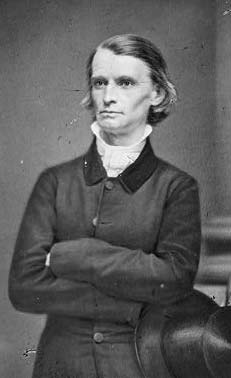
Susan B. Anthony Library of Congress
September 17, 1891—The longer I live and the more I observe, the more I am impressed by the wonderful accomplishments of women during the past 25 years, and by the still greater possibilities for progress that the future promises. I can easily remember the time when the only avenues of employment open to a woman were sewing, teaching, or drudging in her sister’s family until some man should offer to marry her — not because he cared for her society, but because of her ability to drudge. Now, women are to be found in almost every vocation of life, and wherever they have been employed, they have proved apt, industrious, and trustworthy.
I am not one of those women who clamor for the right of suffrage, although I see no reason why an intelligent woman who has property should not have as much voice in political affairs as an ignorant man who has no possessions to protect, but for the comfort of those of my sex who do desire the right to vote, I want to give my opinion. As woman is becoming so great a power in every avenue of life, I firmly believe that the time is not far distant when she will not only be allowed to vote but will be earnestly solicited to cast her ballot.
I am proud of my sex.
Take up our magazines today and compare them with those of 25 years ago. Notice their phenomenal excellence of growth and notice also the increase in the number of female contributors. Is there any significance in these two facts?
Woman is advancing so rapidly in intelligence and cultivation that it will soon be an unheard of event for her to sign a paper without having read it, or to make any of those blunders in business transactions that are now so frequently attributed to her. There never was a time when woman was so well fitted to become the companion of husband and children as the present; and the future has in store greater possibilities in that direction.
“The hand that rocks the cradle” has ruled the world in the past and will rule it yet more potently in the future.
Featured image: Susan B. Anthony (Library of Congress)
In the January 11, 1947, edition of the Post, Lt. Col. Max Myers (ret.) cites several acts of heroism and sacrifice by soldiers of the 77th Division during the Pacific campaign of World War II. One of the soldiers Myers mentions is Desmond Doss, a conscientious objector who served as a medic in the 77th. During the battle for Okinawa, Doss earned the Medal of Honor for rescuing wounded men from the battlefield, treating their injuries, and then lowering them down an escarpment to safety. The article claimed that Doss had saved at least 50 lives during the battle. The official count was closer to 75.
Myers’ account of Doss’ service takes up just one paragraph of the story — after all, the medic was just one of many men who had served with distinction. Myers’ article also tells how Pvt. George Benjamin, weighed down by a radio and carrying only a pistol, led an attack under fire on an enemy-held hill. And how Pfc. Richard Hammond and three other privates held back 200 enemy soldiers until they were relieved at dawn. And how Company E, surrounded by Japanese soldiers, held their ground for two days, losing all but 48 of their 204 men. Myers also reminded readers that the intense fighting on Okinawa claimed the life of famed war correspondent Ernie Pyle, who was accompanying the 77th.
Given the scale of sacrifice and courage shown by soldiers of the 77th, it’s not surprising the story of Corporal Doss received such a brief write-up. But now, his story is the subject of the motion picture Hacksaw Ridge. The film tells the remarkable story a man dedicated to serving his country and his comrades in battle while refusing to carry a weapon.
It would be difficult for any motion picture to do justice to Doss’ service. The citation for his Medal of Honor reads like a ridiculously implausible action movie:
Desmond Doss receiving the Congressional Medal of Honor from President Harry S. Truman. (Library of Congress)
Private First Class Doss was a company aid man when the 1st Battalion assaulted a jagged escarpment 400 feet high. As our troops gained the summit, a heavy concentration of artillery, mortar and machine gun fire crashed into them, inflicting approximately 75 casualties and driving the others back. Pfc. Doss refused to seek cover and remained in the fire-swept area with the many stricken, carrying all 75 casualties one-by-one to the edge of the escarpment and there lowering them on a rope-supported litter down the face of a cliff to friendly hands.
On May 2, he exposed himself to heavy rifle and mortar fire in rescuing a wounded man 200 yards forward of the lines on the same escarpment; and 2 days later he treated 4 men who had been cut down while assaulting a strongly defended cave, advancing through a shower of grenades to within eight yards of enemy forces in a cave’s mouth, where he dressed his comrades’ wounds before making 4 separate trips under fire to evacuate them to safety.
On May 5, he unhesitatingly braved enemy shelling and small arms fire to assist an artillery officer. He applied bandages, moved his patient to a spot that offered protection from small arms fire and, while artillery and mortar shells fell close by, painstakingly administered plasma. Later that day, when an American was severely wounded by fire from a cave, Pfc. Doss crawled to him where he had fallen 25 feet from the enemy position, rendered aid, and carried him 100 yards to safety while continually exposed to enemy fire.
On May 21, in a night attack on high ground near Shuri, he remained in exposed territory while the rest of his company took cover, fearlessly risking the chance that he would be mistaken for an infiltrating Japanese, and giving aid to the injured until he was himself seriously wounded in the legs by the explosion of a grenade. Rather than call another aid man from cover, he cared for his own injuries and waited 5 hours before litter bearers reached him and started carrying him to cover. The trio was caught in an enemy tank attack and Pfc. Doss, seeing a more critically wounded man nearby, crawled off the litter; and directed the bearers to give their first attention to the other man. Awaiting the litter bearers’ return, he was again struck, by a sniper bullet, while being carried off the field by a comrade, this time suffering a compound fracture of one arm. With magnificent fortitude he bound a rifle stock to his shattered arm as a splint and then crawled 300 yards over rough terrain to the aid station.
Through his outstanding bravery and unflinching determination in the face of desperately dangerous conditions Pfc. Doss saved the lives of many soldiers. His name became a symbol throughout the 77th Infantry Division for outstanding gallantry far above and beyond the call of duty.
To be fair to the other soldiers of the 77th, however, you should read Myers’ article, “Lookit Those Old Buzzards Go!” It will give you a sense of the incredible service given by the entire 77th Division.
Lookit Those Old Buzzards Go!
By Lt. Col. Max Myers
Originally published on January 11, 1947
You could get this story much better at the 77th Division Club in Manhattan. The 77th was a big-city outfit, and its heart is still in New York. There lawyers and clerks and taxi drivers who used to be its privates and captains and sergeants get together and talk. They talk about Guam and Leyte and Okinawa in the personal, sometimes unprintable language of men who were there. There may also be some mention of Baccarat and the Argonne Forest, but this comes from old grads of World War I’s 77th Infantry Division, in which Secretary of War Robert P. Patterson rose to major.
Even the World War II alumni are not very young. By normal standards, many of them were too old for infantry combat. But circumstances were not normal in March 1942, when the 77th Division was activated. The Army had to make fighting men, and quickly, out of whatever Selective Service turned up. For the 77th, it happened to turn up mostly older, settled men, averaging 32 years of age, with wives back in Brooklyn or Manhattan or Jersey City.
They came because they had been sent for, but nobody had to drag them. Those who survived are proud to have belonged to the 77th Division, although they hated almost every minute of it while they did belong. What these military ancients lacked in youthful zip they made up in perseverance and tenacity. In the Pacific, a beardless marine veteran early pinned a label on them which stuck. Watching them swarm onto the beaches at Guam, he exclaimed, approximately, “Lookit those old buzzards go!”
There were 13,000 of the “old buzzards” when the division began to form at Fort Jackson, South Carolina, three months after Pearl Harbor. Along with the New York area, the Pennsylvania coal region, among others, was well represented. There were a few volunteers, some of them more than 50, with memories of the AEF. Then there was a scattering of regulars, a handful of reserve officers, a few hundred half-trained Southern cadre sergeants. From this unprepossessing material Maj. Gen. Robert L. Eichelberger had orders to create a fighting division right away or sooner.
The critical question at this gloomy hour in the war, and one on which there were grave doubts in high quarters, was whether masses of American civilians could and would convert quickly into combat soldiers. The 77th and its littermates, the 82nd Airborne and 90th Motorized divisions, were test cases. Under extreme pressure, the officers and men of the 77th worked overlong and overhard, studied beyond their capacity to absorb, made hasty and sometimes erroneous decisions. They griped and they lost their tempers, but somehow they kept learning their trade.
After less than two months’ training, the 77th marched in a corps-strength review before Lord Louis Mountbatten and performed so well that he wrote to Brig. Gen. Roscoe B. Woodruff, then division commander: “I feel I must write and tell you once more that of all the many interesting and encouraging things I have come across during my visit to the United States, none has made me feel more certain of our victory than the efficiency which your division displayed at the end of only eight weeks’ training.”
Winston Churchill and Gen. George C. Marshall, United States Chief of Staff, expressed similar cheer. The 77th Division went on to Louisiana maneuvers in early 1943, then made ready to go overseas. Instead they found themselves in the desert at Hyder, Arizona, for six months of learning to get along on less of everything. Maj. Gen. A.D. Bruce, a rangy, aggressive Texan, and Brig. Gen. Edwin H. Randle, the command team that was to lead the division through combat, joined the 77th during this period.
These were not happy months. Many of the brothers at the 77th Division Club today will tell you that the desert training, with its heat and thirst and live-ammunition problems, was worse than combat. They lost some men at Hyder — a few actual casualties, and others who could not meet the physical strain. But the men could still laugh, with the wry humor soldiers have, directed mostly at themselves. In this spirit they conceived the Hyder Campaign Ribbon, a mock decoration consisting of a broken thermometer mounted on a strip of sandpaper, symbolizing the infernal heat and the quality of the desert terrain.
The division came away from the desert leaner, tougher, a little bitter, and ready to cause trouble for somebody, as the Japanese would learn. Their fighting edge stayed sharp through winter mountain training in West Virginia and raw, cold, amphibious landings in Chesapeake Bay. Furloughs scattered men with the Statue of Liberty shoulder patch along the East Coast. Then, early in 1944, they rolled west to San Francisco and boarded transports for Hawaii, their last stop before the shooting war.
Here there was jungle-fighting instruction on Army time, and special reconnaissance at Honolulu and Waikiki Beach on their own. But not for long. On July 21, 1944, in support of some veteran marine outfits, they hit the water off Guam. Guam presented a difficult terrain, a friendly Chamorro population, and some 20,000 decidedly hostile Japanese troops.
Fortunately, the untested Liberty Division was not required to undertake a costly assault landing or fight large battles its first time out. But the individual soldier was just as busy, just as miserable, and in just as much danger most of the time as he was to be later in more important campaigns. His troubles began at the reef 600 yards offshore, where he disembarked into water which was too shallow for boats, but too deep for walking. Encumbered with gear, he plunged, slid, stumbled, and swam to the beach. There he found no haven, but only confusion, debris and falling mortar shells.
The 77th went in immediately after Marine assault waves. The landings were not perfect — real ones never are. Part of the 77th’s lead regiment, the 305th, got ashore in daylight, but two battalions, delayed by snarled naval communications, lack of boats, and an air alarm, waded to the beach in darkness. The Marines were critical at the time, but soon they were to reverse their judgment on the 77th.
The old buzzards of the 77th expanded the small beachhead, supported a marine attack on the Orote Peninsula, and reconnoitered Southern Guam. Then, cutting loose from roads and supplies, they pushed across the island, turned north to capture supply routes, and pursued and eliminated the Japanese forces. It wasn’t easy. The Liberty Division men killed more than 2,700 Japanese, took 36 prisoners, and had 1,143 casualties themselves.
At Barrigada the division’s 307th Regiment, fighting for a vital water supply, struck a determined enemy defense, and during a long, costly day tried unsuccessfully to dislodge the hidden force. But the next morning the Japanese were gone; they had had enough. At Yigo the 306th and 307th regiments and the 706th Tank Battalion, with plenty of artillery support, tore apart the last Japanese positions and turned the campaign into a hunt.
But these organized fights were exceptions. Most of the time it was squad or platoon against a few enemy in dark jungle where you could step on a Jap before you saw him.
The division command post and the medical clearing station were almost on line with the infantry. No one was clean, comfortable, or safe. Col. Douglas McNair, likable and respected chief of staff of the division, was killed by a hidden Japanese while selecting a site for a command post.
At the 77th Division Club today, no conversation about Guam is likely to omit the rainy season at the hilly trail known as Harmon Canal. Even water buffalo bogged down at times, and all rations had to be backpacked by men for two or three miles. Men who had not made the acquaintance of diarrhea and dengue fever in combat soon did so here.
The 77th pulled out of Guam in November for New Caledonia, but never reached that promised rest area. On Thanksgiving Day, the Liberty Division was thrust into the stalemated, month-old battle for Leyte. Japanese General Yamashita was making Leyte, as he had promised, the decisive battleground of the Philippines. With help from mountains and mud, he had almost stopped the American divisions driving west, north, and south. He held all of Northwestern Leyte, including the fertile Ormoc Valley, Valencia airfield, and ports at Ormoc and Palompon. He had nearly as many troops as the Americans, and he was getting reinforcements at least as rapidly, though at a terrible cost.
General MacArthur and his shrewd, battle-wise 6th Army commander, Gen. Walter Krueger, decided to forward-pass the 77th Division to a landing in Ormoc behind the enemy. It was a typically bold undertaking which could break the stalemate or become a division-sized Dunkirk. The Liberty Division, which had spent its first days on Leyte in messy mopping-up and service operations, had practically no time to prepare for this amphibious jump. Back at Guam, however, General Bruce had looked thoughtfully at a map of Leyte and said, “That fight will probably be decided in the Ormoc Valley. Someone may have to land there, and it could be us. We’ll make an alternate plan for that.” Now the alternate plan came out of the files, and after three days of feverish preparation, the 77th Division assault forces went aboard a tin-can fleet for an overnight run.
They were to land in the early hours of December 7, the third anniversary of Pearl Harbor, behind the lines of an enemy force that would outnumber them at least three to one. The American convoy would remain only two hours, and there would be no supply or reinforcement for two days. There would be little or no American air support.
The old buzzards were old soldiers now. At General Bruce’s insistence, they jumped off onto the beaches about four miles south of Ormoc rather than into the defended streets of the town itself. It was a swift, smooth assault landing, hastened by the sight of planes with red spots on them. A few enemy service troops were caught entirely by surprise. Division headquarters was ashore 35 minutes after the first rifleman.
The American force was insufficient to man the beachhead and attack simultaneously. Yet they must attack before the Japanese recovered from surprise and concentrated their superior forces. So the 77th operated as a rolling beachhead. It attacked north toward Ormoc and abandoned ground behind. There were skirmishes all the way, and a desperate fight when Col. “Steamboat” Hamilton’s 307th Combat Team took an old military post at Camp Downes. By the 10th of December, backed by everything the division could bring into play, the 307th had fought its way house to house through the burning ruins of Ormoc. General Bruce sent a brief, characteristic message to the commanders of the 7th Division, fighting its way up from the south, and the 11th Airborne Division, struggling across the mountains from the east: “Have rolled two sevens in Ormoc. Come seven, come eleven. Bruce.”
When Maj. Gen. A. D. Bruce sent his classic message to the 7th Infantry and 11th Airborne divisions: “Have rolled two sevens in Ormoc. Come seven, come eleven. Bruce.” (Signal Corps photo)
Ormoc was only the beginning. The soldiers of the Japanese 12th Regiment dug in for a fight to the death at a large concrete building at Cogon, just north of the port city. Their graves are there. Col. Vincent J. Tanzola’s 305th Combat Team annihilated the defenders in a four-day assault of unsurpassed ferocity. At times the American soldiers called artillery air bursts to within 25 yards of their own front lines to stave off desperate Japanese charges. Most of the enemy were in covered foxholes, some with armored lids. It was necessary to blast the building almost to dust and then to dig out the individual enemy. An armored bulldozer aided mightily. As its blade uncovered foxholes, Capt. James F. Carruth, of the 302nd Engineer Battalion, leaned from the cab and shot the occupants.
Lt. Col. Edward Chalgren got part of his third battalion of the 305th onto a knife-edge ridge on the flank of this Cogon position. A reinforced Jap battalion was on the opposite side of the crest. Company K took five savage counterattacks in one afternoon. No one, Jap or American, could live on that ridge crest. Soldiers collapsed in the jungle heat, were carried back, splashed with cold water, rested a few minutes, and then hurried forward to join the grenade fights. Capt. Louis Hinson spotted Japs in a gully slightly to the rear and called down all the battalion’s fire; an enemy counterattack disintegrated into 350 torn dead.
While the 305th took Cogon and then drove north up a frantically defended road, the two other regiments of the 77th Division initiated spectacular movements. They had the alternative of striking to the east of the Ormoc-Valencia road, against mountains and ridges heavily manned by Japs, or to the west, through miles of low, swampy ricelands considered impassable for troops, and therefore virtually undefended. They preferred an “impassable” area to a pitched battle any day. Patrols went out to find routes through the swamps, and did.
So the 306th Infantry in the center and the 307th on the left set out in wide enveloping movements. The plan called for the 306th to cut the main road some miles north of Ormoc, and for the 307th to take Valencia and cut the road even farther north. The 305th was to drive up the road and make contact with the two other regiments.
In two slashing days the steady oldsters of the 77th made the difficult two-pronged envelopment, and came back together holding the road from Ormoc to Valencia and the Valencia airfield. The Japs could have staved off a frontal attack for many days. The American cost in sweat and fatigue was terrific, but in blood it was negligible, except at Cogon.
The division pushed north from Valencia, with the 306th and 307th regiments driving to take the Libongao road junction and to effect a juncture with other American forces coming south. The way was barred by part of the Japs’ 1st Division and by their 5th Combat Team, just arrived from Luzon. These were elite troops, the best the 77th came up against anywhere during the war. There were about 4,500 of them, and they died there. The Liberty Division’s 307th Regiment, with General Randle and Colonel Hamilton unintentionally serving as a pistol-packing spearhead, seized the junction; Col. Aubrey Smith led his 306th Regiment in taking the Tagbong River bridge, and also linked up with southbound troops of the 1st Cavalry Division. The Ormoc Valley was opened.
On a nameless hill just across the Tagbong River, Pvt. George Benjamin, a radio operator of Company A, 306th Infantry, won the first of the division’s seven Congressional Medals of Honor. In an attack on this hill, a rifle platoon supporting a light tank hesitated. Benjamin ran across open, bullet-whipped terrain to the tank, waving and shouting for the platoon to follow. Burdened with his radio and armed only with a pistol, he advanced to the enemy positions, killed one Jap in a foxhole, moved on to wipe out a machine-gun crew, and went on over the hill. His followers captured it. Fatally wounded, Benjamin insisted, before he died, on reporting to the battalion operations officer the enemy positions he had seen.
The 77th pushed on. An improvised armored column of tank destroyers, tanks, and miscellaneous vehicles, originally intended to force the mountain trail to Palompon, was converted into an amphibious force. The reinforced 1st Battalion of the 305th Regiment, under Lt. Col. James E. Landrum, undertook a daring 44-mile voyage around the corner of the island to Palompon. Their transports were amtracs, normally used only for short trips to the beach. Their naval fire support consisted of two PT boats, and their air cover was one Cub plane carrying a pilot and General Bruce.
It was another successful forward pass. On Christmas morning, the force went ashore near Palompon and wheeled to take the village. Another battalion was sent around by landing craft. Under attack from both east and west, the Japs defending the Palompon road soon gave way.
Now, according to GHQ, the Leyte campaign was officially over. But the GHQ announcement failed to impress several thousand remaining enemy. The 77th kept busy in Northwestern Leyte into February. At insignificant villages like Villaba and Abijao, and on out-of-the-way mountain ridges, forces up to battalion strength ran into many a stiff fight. Then there were thousands of Filipino civilians to be rescued from remote prison villages. There were continuing contacts with the woods-wise loyal guerrillas of the 96th Filipino Infantry. Enemy munition dumps were found daily. Capt. George C. Sarauw and his 92nd Bomb Disposal Squad noisily disposed of the explosives in 200-ton daily “blowings.”
Both American and Japanese observers have called the Ormoc Valley campaign a “divisional epic.” Certainly it was the decisive blow in Leyte, which, in turn, was the decisive operation in the Philippines. The 77th Division in this one slashing advance killed 19,456 enemy, took 124 prisoners, and destroyed immense amounts of supplies, at a cost of 543 killed and 1,469 wounded.
Even before the full results of their Leyte drive were apparent, the 77th was preparing to move on. There was another big job to be done at a place called Okinawa, and the military oldsters of the 77th Division — now liberally salted with replacements of every age — were to have another lonely, risky assignment.
Their mission was to hit the Okinawa area a week ahead of the main invasion to clean up some outlying islands and to establish an advance naval base. G-2 warned that there would be numerous enemy air bases within range and hundreds of suicide pilots.
On the Kerama Retto — a cluster of wooded, rocky islets about seventeen miles west of Okinawa — several squadrons of tiny Jap suicide boats had been carefully rehearsed for an attack against an American fleet off Okinawa. But the unpredictable 77th hit the Kerama Retto first, and the boats were captured or destroyed on shore. All together, the Liberty Division struck in six separate amphibious assault landings and followed up with nine more to capture the islets and secure the protected anchorage.
There were about a thousand Jap troops to be fought and killed on the Kerama Retto. A few of the men at the 77th Division Club today can tell of a hand-to-hand night action on Zamami in which one machine-gun post changed hands six times, but, on the whole, it was a well-executed, easy campaign. However, hundreds of the simple village folks, believing what the Jap soldiers had told them about the brutality of Americans, killed their children and themselves rather than be captured.
For two weeks, while other divisions invaded Okinawa, the 77th floated around and attempted to dodge Kamikazes. Several ships were hit, and on one died almost the entire headquarters of the 305th Regiment, including its popular commander, Col. Vincent J. Tanzola.
There was little time for regret. Ie Shima, a nearby island, had to be taken for its air base as soon as the tide was right. Lt. Col. J.B. Coolidge and a new staff took over the 305th. The artillerymen sneaked their guns ashore on tiny Minna Shima, two miles from flat-topped Ie. The Navy brought up shooting ships and carriers for the bombardment.
Ie Shima had some deceptively easy beaches immediately in front of Ie town, and one towering hill called Iegusugu Yama. The 77th characteristically chose to land instead on difficult approaches at the other end. Two-thirds of the island, including the air base, fell at once with little resistance. However, there were enemy on the island. The division spent seven terrible days digging them out of the town and the steep peak, both honeycombed with fortifications. Almost 5,000 Japanese were killed and 140 prisoners were taken. Japanese soldiers and civilians, men and women, fought to the end. There was no practical method of telling them apart during the many desperate night banzai attacks and raids. One night charge on Company G, of the 307th, ended with 280 dead Japanese inside the company position. Another time Lt. Col. Elbert Tuttle, commander of the 304th Field Artillery, awoke in his slit trench to find two Japs beating at him with bamboo poles. These weapons proved inferior to his American pistol. Maj. John Kriegsman, division air officer, was attacked in daylight by two stone-throwing enemy.
During the final push on Iegusugu Yama, there were skillfully coordinated attacks, like one made by the 307th Regiment, which could be backed only by mortars because the infantrymen were at too close quarters for regular artillery support. Lt. Col. Claude Barton’s first battalion, 306th Regiment, was singled out for a unit citation because its assault was notably courageous even for brave and seasoned infantrymen. A War Department observer commented, “Why, I saw troops go through enemy mortar concentrations and machine-gun fire that should have pinned them down. But instead they poured across the field and took the mountain against really tough opposition without even slowing down.”
Communiques written elsewhere described the fighting as moderate. Actually it cost the division more than 1,100 men killed or wounded. Among those killed was a quiet little man, a writer who wanted no higher title than that of infantryman. The 77th put up an inscription at the place of his death: “On this spot the 77th Division lost a buddy, Ernie Pyle.”
Only three days after Ie was captured, the men of the 307th Combat Team moved to Okinawa proper to relieve the 96th Division on the center of the front. Subsequently the 306th took up positions on the left of the 307th. The 307th was assaulting an almost vertical ridge which never had any name but The Escarpment. It called for scaling ladders and cargo nets, flame throwers and burning gasoline. Colonel Hamilton’s veterans were driven off the narrow plateau several times before they held, and then needed bloody days to clear the reverse slope. From mazes of tunnels and shafts, time after time, there poured desperate charges of several hundred Japanese.
At The Escarpment, Pfc. Desmond T. Doss, a conscientious objector who went to war as a medical-aid man, won the Congressional Medal of Honor he had many times earned. Three times his company was driven off the top, but he stayed alone to rescue, treat, and lower to safety the wounded. On this one occasion he saved at least 50 lives.
Just as the 307th finished clearing out The Escarpment, the Japanese launched a grand counteroffensive intended to push the Americans into the sea. Supported by the greatest Japanese artillery concentrations of the Pacific war, it achieved tactical surprise along the three-division front. The main blow struck and stopped at the 77th Division’s 306th Regiment position in the center of the line. The enemy tried and died by the thousands, but the American forces held.
Many small units of the Liberty Division had to beat back the attacks of superior forces. Five men from the intelligence section of the 306th’s third battalion volunteered to spend a night in an observation post high on a hill between American units. The team’s mission was only to locate and report Japanese gun flashes, but at four o’clock in the morning Pfc. Richard Hammond ordered his little group to open fire on an enemy company that he spotted advancing into American territory.
The odds were about 40 to 1. Hammond and the four other privates were dug in at the base of an outjutting ledge of rock. In the first screaming enemy rush, Pfc. Joseph Zanfini was killed. In the second, the four survivors were all wounded. Then Japs from atop the ledge began to drop grenades into the position. The Americans kept tossing them back. When one grenade could not be reached in time, Pfc. John P. Kenny swung his legs over it and took the full explosion, blowing one of his legs to shreds. With a pistol in each hand, Pfc. Raymond Higginbotham climbed out and blasted the offending Japs off the ledge. Hammond, Kenny, Higginbotham, and Dunmire held their little fort until dawn. They were still there shooting when a second-battalion patrol came to the hill. There were more than 100 dead enemy around the position.
Okinawa was dirty work all the way. The 77th Division’s zone of advance was roughly half a mile wide and two miles long, extending south to the hill town of Shuri, key to the entire Japanese defense. It took the Liberty Division men 32 days to get there, and en route they killed about 14,000 Japanese. But 4,000 men of the 77th gave their lives or blood in exchange. Meanwhile the other American divisions were inching ahead in the same fashion.
During this costly push, the 77th initiated night advances which attained almost complete surprise, because the enemy firmly believed that Americans never attacked at night. The morning after such an advance, bewildered Japs would emerge from caves in which they had spent the night to find themselves in the midst of efficient American killing units.
On one of these night advances Company E, of the 307th, seized a portion of a key ridge in the Shuri defenses. At daybreak, as surprised Japs came out from holes and tunnels in the company position, Lt. Theodore S. Bell and his 204 men — including a platoon from Company C — mowed them down with bayonets and grenades. But the unit was surrounded by enemy on higher ground. Japanese fire swept the area from all directions. Medical supplies ran out. Both of their light machine guns and five of their six radios were destroyed. At night, the decimated platoons were assembled for a final stand.
The second day brought the radioed order to hold on at all costs. Although the division could not reach its isolated company with men, it laid around it an almost continuous curtain of explosives. The second night a litter-bearing party got through to take out the wounded and leave a little water. During the second and third days, the surrounded men played hide-and-seek with the Jap mortar shells. Sooner or later, men lost in this game. The only hope of the few surviving Americans lay in the knowledge that supporting units were definitely coming up. The relief did come. Company E’s mission had been accomplished, but there were only 48 men to go back.
Every outfit on the Okinawa front experienced fights as bitter, although not so isolated and prolonged, as that of E Company. At the end, when the Jap remnants fell back to Southern Okinawa, there lay across this green island a five-mile red-clay scar on which no living thing grew.
The big objective of Shuri fell, now a worthless mass of rubble, and the fight moved south beyond the 77th Division’s zone. One last position of three fortified hills was reduced late in June by Col. Gordon Kimbrell and his 305th Combat Team. This was the final Liberty Division chore before Japan.
While resting and refitting under the palm trees at Cebu for the assault on Kyushu, the 77th learned of the end of the war. There was no riotous celebration. These battle veterans took the news quietly. They were thankful, and more than a little dazed. They were assigned to accept the surrender of some 5,400 armed Japanese from the hills of Central Cebu. Detachments from the 306th Infantry gathered them in without incident, except for restraining the Filipinos’ understandable inclination to throw things at their once-proud conquerors.
In October, the Liberty Division went to occupy Hokkaido in Japan. It went combat-loaded, just in case. It took over the island’s 3,000,000 people and 100,000 Jap troops smoothly. There were no lootings, no major black markets, no American-soldier protest meetings in Hokkaido. Most of the combat veterans went home before Christmas. Their places were taken by younger men from all over the nation. Occupation duties went on. The Americans made the best of the cold winter in a strange land.
In March 1946, four years old and half a world from home, the 77th Infantry Division was inactivated. Recently it was reactivated as a reserve division. During almost a year of combat, it killed about 44,000 Japanese and took 488 prisoners. More than 2,000 of the division’s men would never get home. Another 7,000 had received battle wounds.
Now, back at the 77th’s own club in Manhattan, the surviving old buzzards do not argue about whether their division or some other was “best.” They learned that in war it is futile to pass judgment on men or units. It is enough that theirs was an outfit that did its work well. They talk freely of themselves and their own platoons, in the way wives and parents never hear. But now and again a small group grows momentarily silent, as someone mentions a name that hasn’t been used recently — not since Cogon or The Escarpment.
In the wake of the Chicago Cubs’ victory, which has been awaited for 108 years, we thought we’d offer an article that makes the championship win even sweeter.
“The Decline and Fall of the Cubs,” by Stanley Frank appeared in the September 11, 1943, issue of The Saturday Evening Post, as the Cubs were finishing a grim 74-79 season. In the preceding three years, Chicago fans had doggedly cheered on a team that finished 68-86, 70-84, and 75-79.
Frank placed the blame on P.K. Wrigley, the Cubs’ owner of that time. Wrigley had inherited his father’s chewing gum business and baseball team when Wrigley senior passed away in 1932.
The decline began, Frank claimed, with the death of the Cubs’ president William L. Veeck. Under his direction, the Cubs had won the pennant in 1929 and 1932, but his passing suddenly left the team without knowledgeable leadership. Wrigley, Jr. stepped in to make several hunch-based changes, which accelerated the team’s decline.
Frank might have forgiven Wrigley all his errors in judgment. What he doesn’t seem willing to forgive was the fact, which Wrigley admitted, that “he knew little about baseball and cared less for it.”
There would’ve been little motivation to spend money to improve a team that attracted an army of fans regardless of how badly the Cubs played.
Two years after the appearance of this article, the Cubs capped a 98-56 season by advancing to the World Series, where they lost to the Detroit Tigers in the seventh game.
According to legend, the Cubs’ long drought of championships was extended during game four of this 1945 series. William Sianis, owner of Chicago’s Billy Goat Tavern, brought his pet goat to the game. But the goat was turned away at the gate. Sianis left the animal outside and went in to watch the game. According to his family, he sent a telegram to Wrigley, telling him the Cubs would never win the World Series because of the way his goat had been treated.
This might explain the last 71 seasons without a championship, but how do you explain the previous 37 seasons? One theory—and baseball is a sport rich with theories—is that the gods of baseball were angered that the Cubs won the 1908 pennant through an error by a New York Giants’ rookie, Fred Merkle.
In the bottom of the ninth inning, with the game tied 1-1, Merkle hit a single, which drove in a home run to win the game for the Giants. Seeing Merkle’s hit and a Giants runner coming home from third base, the fans assumed the game was over. They started streaming onto the field. Merkle, also assuming a victory, turned back before crossing second base. A quick-witted Chicago player picked up the ball from among the milling fans and tagged second base. Merkle was, therefore, forced out at second. The rules stated that this invalidated the tie-breaking run.
Whether it was goats or gods, the long wait for a championship ended this year, thanks to an outstanding team, the backing of owner Thomas S. Ricketts, and president of baseball operations Theo Epstein, who performed a similar curse lifting for Boston in 2004.
In her time, Tammy Grimes was known as a vivacious, talented actress and singer. With her energetic performances on Broadway and her uniquely raspy, low voice—its accent shaped by finishing schools and not, as many assumed, by a British upbringing—Ms. Grimes made a memorable impression on audiences. She passed away on October 30th and is survived by her daughter, actress Amanda Plummer.
Ms. Grimes won a Tony award in 1960 for “The Unsinkable Molly Brown,” in which she played an ambitious saloon singer in a Colorado mining town who eventually became a hero after the sinking of the Titanic.
In a 1964 profile in the Saturday Evening Post, Ms. Grimes offered advice on how to comport oneself at the end of a Broadway tour:
Don’t smile at all. Carry a Colt .44 and shoot at anyone. Buy 10 bikinis; arrange for blood transfusions, oxygen tanks, wigs, fast cars to make fast getaways, a leading man who can charter planes and fly in blizzards. Assume Garbo-type privacy. Look worn out but brave. Think seriously of becoming the last of the big-time spenders.
She hoped to translate her talents to television, but made a legendarily regrettable choice. Offered the role of Samantha in the television comedy, “Bewitched,” she turned it down, preferring to star in her own sitcom, “The Tammy Grimes Show.” Bewitched became a hit series, running for eight years. “The Tammy Grimes Show” was judged so bad that the network cancelled it after just one month. It was an unprecedented move in an era when even awful programs were allowed to finish their season.
But all that still lay ahead of Ms. Grimes when this article appeared in 1964, and she was still a rising star, enjoying a sense of great promise and the admiration of critics.
Last summer, my husband and I went to Italy for a second honeymoon with stops in Verona, Florence, and Venice, but thanks to modern technology, our dream vacation turned into something of a nightmare.
The al fresco operas held in a 2,000-year-old arena in Verona are impressive with massive sets, orchestras, and choruses. As the sky darkened on the evening we went, the overture began, the singers poured onto the stage. That is also when the people directly in front of us lifted up their iGadgets and began recording the performance. Occasionally they would lower their arms for a short rest between arias, but most of the time I was forced to watch the opera through the tiny screens of their smartphones. I felt like I was watching television with the picture within a picture feature on, except the smaller image was from the same show and corrupted the fuller picture with its intrusion.
Standing in front of Michelangelo’s David, I could only see slivers of him through the forest of arms holding up cameras.
From Verona we trained to Florence where there is more art than you could shake a selfie-stick at, so we rushed over to the Galleria dell’Academia to get started with Michelangelo’s masterpiece, David.
David, at 17 feet tall, towers above the crowds in magnificent milky marble splendor. However, standing in front of the sculpture I could only see slivers of him through the forest of arms holding up smartphone and tablet cameras that our fellow tourists brandished above their heads.
Being away from the noise and frenzy of modern civilization was all I could think about as our train carried us away from frenetic Florence. I was instantly captivated by Venice’s picture-postcard views of gondolas, canals, and colorful low-slung homes. On our first night there, the disappointments of Verona and Florence drained away as we sipped Prosecco in a charming café. I could almost hear the music of Vivaldi, Venice’s native son, ringing through the damp air. But what I thought was the opening to The Four Seasons violin concerti turned out to be a text notification on the smartphone of someone at the table next to me. For the following four days, until the end of our vacation, I heard cellphone alerts in some of Venice’s finest churches, galleries, and restaurants.
I am grateful for the technology that allows me to access email, driving directions, and answers to questions I have long since forgotten like “In what year was the film Sunset Boulevard made?” at the touch of a button or two. But while we can now see or hear any masterpiece of art, performance, architecture, or postcard-worthy nature vista on any smart gadget wherever in the world we are, I would prefer to view these things the old-fashioned way — standing right in front of them, absorbed by the atmosphere that transports me to a different time and place.
Dream job: In 1973, Joseph Csatari was named art director for Boys’ Life magazine. In 1977, he replaced Rockwell as the official artist of the Boy Scouts of America. Roger Morgan/Boy Scouts of America
As a boy, I loved to sit in my father’s studio listening to the scratch, scratch, scratch of his paintbrush on the stretched canvas on his easel and see the strokes of color gradually grow into pictures. He whistled while he worked — mostly Sinatra tunes, Beethoven, some Willie Nelson. And he sang Roger Miller: “Two hours of pushin’ broom buys an 8-by-12 four-bit room. I’m a man of means by no means, King of the Road.”
Dad is one of the happiest people I’ve ever met. I mean, how could you whistle for 10 hours a day and not be happy? I’m sure it’s because, even at age 87, he’s doing exactly what he has loved to do since, as a child, he began doodling pictures of the Lone Ranger, sitting in a dress factory cloth bin next to his Hungarian mother, Emma, while she sewed.
Joseph Csatari tells stories in pencil and oil paint. He is a workman illustrator and meticulous draftsman in the tradition of The Saturday Evening Post artists Norman Rockwell, Stevan Dohanos, and Al Parker, who were his friends. In a career spanning 68 years, he has made thousands of paintings, portraits, and illustrations for magazines, books, advertisements, and collectibles. His work has appeared in Boys’ Life, Reader’s Digest, McCall’s, Field & Stream, Outdoor Life, and Time, among others. His cover illustrations have sold books for Simon & Schuster, Dell, Bantam, and Pocket Books. Csatari’s ability to depict the humor and wholesome ideal of American life made him a go-to illustrator in the 1980s and ’90s for advertising and corporate branding campaigns for the Coca-Cola Company, Coleman, Nabisco, Hardee’s, Taft Broadcasting, Stern’s Miracle-Gro, Chef Boyardee, Mutual of Omaha, and, of course, the Boy Scouts of America — where his professional career began in 1953 as a “layout man” in the advertising department.
After more than eight years as art director to Norman Rockwell for his annual Brown & Bigelow Scout calendar paintings, Csatari became the second “official artist of the Boy Scouts of America” after Rockwell’s retirement in 1977. In a letter to the Boy Scouts in 1976, Rockwell wrote: “In a sense there is a strange parallel between this young man and myself. Joe Csatari, until only recently, has been Art Director of Boys’ Life. In my own youth I worked for Boy Scouts in the same capacity.”
Csatari sits in the morning light in the studio of his home in South River, New Jersey, paging through volume one of Norman Rockwell: A Definitive Catalogue. On his easel is a nearly finished watercolor painting.
“I like watercolor; it’s fast and loose,” Csatari says. “As you can see, I’ve been painting a lot of ducks and horses lately. But what I really love is painting people.”
He stops flipping pages at Thanksgiving Day Blues, Rockwell’s November 28, 1942, cover for The Saturday Evening Post, showing an exhausted army chef having a smoke after preparing a 34-item meal for a brigade at Ft. Ethan Allen, Vermont.
“I remember copying this one when I was a boy,” he says. “Look at the detail in those hands. Amazing! Norman was a master of the human form.”
Csatari was 12 years old when he started copying Rockwell’s Post covers in a sketchbook. Each week, Csatari’s older brother Johnny, an aspiring artist himself, would bring home the magazine, and the two of them would practice copying the covers of Dohanos, John Falter, Rockwell, and other illustrators in pencil and oil paint.
“As long as I can remember, I wanted to paint like Rockwell,” Csatari says.
In elementary school, Csatari’s teachers recognized his proficiency early on and encouraged him. In fifth grade, he was selected to lead a crew of students to paint a 25-foot mural on the school’s walls titled I Will Prepare Myself Today, for Someday My Chance Will Come.
In high school, Csatari enrolled in the Famous Artists School, a correspondence course started by Albert Dorne and other members of the Society of Illustrators, because Rockwell was one the featured illustrators. Later, when Csatari attended the Newark Academy of Art, he took an after-hours job sweeping floors in the school’s museum so he could study the original paintings in the collection. One night, with his nose inches from a Rockwell painting, he noticed a loose paintbrush bristle stuck in a heavy stroke of paint. He plucked it, wrapped it in chewing gum foil, and put it in his wallet. He still had that purloined paintbrush bristle in his wallet in 1968, when he visited Rockwell’s carriage house studio in Stockbridge, Massachusetts, for the first time.
“Because of Rockwell’s tremendous workload, Csatari was chosen to assist him in coming up with ideas for future Scout paintings,” says Dr. Donald Stoltz, a Rockwell historian and author of several books on Rockwell. Stoltz and his brother Marshall owned the Philadelphia Norman Rockwell Museum, across the street from Independence Hall in the Curtis Building, where The Saturday Evening Post was published for many years.
Norman Rockwell and Joseph Csatari, circa 1971 Courtesy Joseph Csatari
Csatari’s task was to make preliminary rough sketches for Rockwell. When they were approved, his job intensified; he’d select models, gather props, and transport crew and equipment to the Stockbridge studio where he and Rockwell would direct photo shoots.
“They worked so closely together that they began thinking along the same lines,” Stoltz says. “Eventually, when Norman’s age started catching up with him, Norman asked the young artist to paint in some details. He really appreciated having Csatari’s help, and, of course, sitting in his mentor’s chair, using his brushes, was a huge thrill for Joe.”
On one of Csatari’s early visits to Stockbridge, he walked to The Old Corner House museum while Rockwell took his midday nap. Long before the current Norman Rockwell Museum was built, The Old Corner House displayed many of his paintings, including The Four Freedoms, large canvases illustrating the four fundamental freedoms Franklin Roosevelt outlined in his 1941 State of the Union address. “I remember feeling as if I had entered church,” Csatari says. “But then the reverence was broken when I noticed men painting the ceiling, and I worried they would spatter those glorious paintings below. I hurried to tell Norman. He just took a thoughtful puff of his pipe, smiled, and said, ‘Gee, Joe, maybe they’ll improve ’em.’ That’s how Norman was — very modest and always focused on what was the next job.”
“In a sense there is a strange parallel between this young man and myself.”
—Norman Rockwell
Csatari recognized Rockwell’s enormous talent and the value of his artwork perhaps even more than Rockwell himself, and certainly more than the critics did, during the late ’60s and ’70s. He recalls being asked in the late 1960s to transport four Rockwell paintings from a museum in central New Jersey to New York City, where Rockwell was to appear on NBC’s Today show. He placed them in his station wagon under blankets. “My teeth chattered the entire way, there and back,” Csatari says.
Upon taking over the Scout calendar commission from Rockwell in 1977, Csatari resigned as a BSA employee and began freelancing full time. He converted his garage into a studio, installing floor-to-ceiling windows to capture the northern light. Through contacts at the Society of Illustrators in New York and an agent, Csatari’s commissions grew, but slowly. With a young family to support, he supplemented his illustration income with portrait work.
Csatari’s talent for capturing a person’s image and personality on canvas became apparent in art school. While attending the Newark Academy of Art, Csatari worked from a photograph to paint a portrait of then-president Dwight D. Eisenhower. The school’s dean was so impressed with the work that he arranged for Csatari to present the portrait to the president at the White House.
“Eisenhower emerged from a meeting looking very tired when I met him, but he flashed that famous grin when he saw his portrait,” Csatari recalls. “He liked to paint, too. And he asked me if I used raw umber for the underpainting. He was right.”
Csatari recently learned the whereabouts of that portrait. When he left office, Ike gifted the portrait to his valet and family friend of 27 years, Johnny Moaney. Today, it remains with the Moaney family.
Csatari has painted the likenesses of Thomas Watson, Norman R. Augustine, Sanford N. McDonnell, Stephen Bechtel Jr., first lady Betty Ford, Archbishop Theodore E. McCarrick, musicians from Bing Crosby to Frank Zappa, and actors Leonard Nimoy and James Whitmore.
Portrait work filled in the gaps between illustration assignments, generally paid better than illustration did, and allowed him more liberal deadlines. “There was always something new to paint, even now, but I’m 87 and a lot slower with the brush,” Csatari laughs. Often, he had to create an illustration in just a few days — a deadline of a week or two was a luxury. For example, an art director for Time magazine once asked him to create a scene showing Jimmy Carter’s press aid and chief of staff, Jody Powell and Hamilton Jordan, dressed as Tom Sawyer and Huck Finn and whitewashing the White House fence. Csatari quickly recruited his niece’s husband to play Jordan while he himself posed as Powell. Both wore overalls and straw hats. My mother, Susan, took the photos of them in dad’s studio. The painting was finished in two days but ultimately wasn’t used due to a changing news cycle.
“As an illustrator, you had to move fast to keep up with the work when it came,” Csatari says. “And sometimes you were disappointed and had to settle for a kill fee, if you got anything at all.”
As art directors recognized his work, Csatari’s career became busier. In the late 1970s and early ’80s, longtime Post cover illustrator and fellow Hungarian Stevan Dohanos arranged for Csatari to create two U.S. postage stamps, Seeing for Me, honoring Seeing Eye dogs, and The Gift of Self, commemorating the American Red Cross. Through the 1980s and ’90s, Csatari illustrated hundreds of stories and articles for popular magazines. During this period, Csatari became a prolific illustrator of book covers, creating illustrations in oil for novels and nonfiction books by Bill Bryson, Julie Nixon Eisenhower, and Anne Baxter and for books for young readers by Paula Danziger and even Thomas Rockwell, one of Norman Rockwell’s two sons.
“I would read each manuscript and search for a high point of emotion or humor to illustrate,” Csatari says.
A book called Daddy shows a new father from behind holding his screaming child over his shoulder. Toys, rattles, and diapers are strewn on the floor, and in the father’s other hand is a book opened to the chapter “Baby Care and Feeding.”
“The problem was our baby model was so sweet and happy,” recalls Csatari, who felt he needed a wailing baby for the portrait. “She wouldn’t cry during the photo shoot. No matter what I did, she just laughed and smiled. Then the mom said, ‘Oh, wait a second,’ and she stuck her fingers in some water and flicked it in her face. Oh, geez, did that baby give me the cry I was looking for.”
Each piece of Csatari’s artwork reflects not just an image, but an impression, a story that needs to be told,” says Gail Mayfield, collections manager for the National Scouting Museum in Irving, Texas, which houses 50 of Csatari’s Scout paintings alongside those of Rockwell. Mayfield believes that while Csatari’s work is reminiscent of Rockwell’s, Csatari “developed his own personal style that reflects both the fun and service sides of Scouting with vivid color and emotion that draws viewers into his world.”
While probably best known for his Scouting illustrations, Csatari’s portraits, fine art watercolors, and cover illustrations have appeared in exhibits at the James A. Michener Art Museum, the Zimmerli Art Museum at Rutgers University, the National Museum of American Illustration in Newport, Rhode Island, and the College Football Hall of Fame. A few galleries specializing in illustration art sell his paintings, but he has never actively sought out galleries to promote his work.
The right stuff: Character Counts (1994) is one of more than 150 Scout-themed paintings and drawings Csatari has created during his 60-year career with the Boy Scouts of America. Courtesy Boy Scouts of America
Currently, my father is working on his 55th or 60th — he has lost count — painting for the Boy Scouts of America. It’s a piece showing Scouts trading patches at jamboree. I’m there, modeling as a Scoutmaster. My daughter Lydia is wearing the uniform of a Venturer, the BSA’s co-ed program for teens. We’re with a couple of older Scouts watching two young guys haggling over a trade. The Scouts are in colorful printed T-shirts and high-tech khaki shorts, very different from the immaculate starched uniforms emblazoned with insignia that Rockwell painted. Dad coaxed enthusiastic faces and “big eyes” from us at the shoot. (He, like Rockwell, works from photographs.) Maybe we look a little goofy, but it’s clear we’re having fun, and that’s his goal — to make Scouting look like a lot of fun.
For Stoltz, who authored Norman Rockwell and The Saturday Evening Post, that’s what makes Csatari’s artwork reminiscent of Rockwell’s. “His characters are filled with wholesome enthusiasm,” Stoltz says. “When my wife, Phyllis, and I lecture on Mr. Rockwell’s work around the country, the most asked question from our audience is, ‘Who paints most like Norman Rockwell today?’ And the answer I give every time is ‘Joseph Csatari.’”
Though flattered, my father has always struggled with such comparisons. “Norman was in another realm with the likes of Leyendecker, Dean Cornwell, and N.C. Wyeth,” he says. “I was certainly influenced by Norman and, like him, I love to paint people.”
“Why?” I ask.
“Well, because we are all made in God’s image, and there’s something spiritual about painting people that I find so very rewarding.”
— To learn what it was like to model for Norman Rockwell, read “A Lofty Assignment” by Jeff Csatari.
I brooded by our third-floor hotel window. On the Dublin street below a man passed, his face to the lamplight. “Him,” I muttered. “Two days ago —”
Two days ago as I was walking along, someone had “hissed” me from the hotel alley. “Sir, it’s important! Sir!”
I turned into the shadow. This little man in the direst tones said, “I’ve a job in Belfast if I just had a pound for the train fare!”
I hesitated.
“A most important job!” he went on swiftly. “Pays well! I’ll mail you back the loan! Just give me your name and hotel—”
He knew me for a tourist. But it was too late; his promise to pay had moved me. The pound note crackled in my hand, being worked free from several others.
The man’s eye skimmed like a shadowing hawk. “If I had two pounds, I could eat on the way—”
I uncrumpled two bills.
“And three pounds would bring the wife—”
I unleafed a third.
“Ah, hell!” cried the man. “Five, just five poor pounds, would find us a hotel in that brutal city and let me get to the job, for sure!”
What a dancing fighter he was, light on his toes, weaving, tapping with his hands, flicking with his eyes, smiling with his mouth, jabbing with his tongue.
“Lord thank you, bless you, sir!”
He ran, my five pounds with him. I was half in the hotel before I realized that, for all his vows, he had not recorded my name.
To read the entire article, pick up the September/October 2016 issue of The Saturday Evening Post on newsstands or …
Purchase the digital edition for your iPad, Nook, or Android tablet:
To purchase a subscription to the print edition of The Saturday Evening Post:
I was 10 years old when Dad made me jump into the station wagon with a bunch of Boy Scouts for a five-hour trip from New Jersey to Norman Rockwell’s studio in Stockbridge, Massachusetts.
I didn’t want to go.
When we arrived, there was half an inch of snow on the ground. So I looked for pigeon-toed footprints in the snow leading to the red carriage house studio — having heard the story of the artist’s famously awkward feet — and found them.
Inside, I marveled at the African masks and spears on the walls and the replica of Ben Franklin’s printing press. On his easel sat a large horizontal painting of Abraham Lincoln having his photograph taken. On a low shelf, I saw a skull wearing a German spiked helmet. Springs attached to the jaw made it snap shut when you spread it.
Dad told me to stop touching stuff.
Rockwell and photographer Louie Lamone arranged the Scouts and Scoutmaster, my uncle Byron, in a line as if marching in a parade. My cousin Byron, in Scout uniform, carried a drum. An older boy held an American flag on a pole.
“It needs to fly,” Rockwell said as he tied a string to the top corner of the flag and turned to me. “Jeff, take this and climb up to the loft,” he said, sounding as if he had marbles in his mouth. I obeyed. It was hot up there. The flag rose in the simulated wind and the shot was snapped.
Rockwell gave me a check for $25 for the job. I cashed it when I got home and bought a Joe Namath football. The football’s long gone, but Dad was wise to make a copy of the check, which I now have framed, proof of the tiny role I played in Norman Rockwell’s last Boy Scout painting.
It began as an ambitious plan to boost tourism in South Dakota in 1926. When it was completed 15 years later, it became an American landmark and a symbol of the nation’s determination and skill. In between 400 workers did the grueling work of blasting and drilling 410,000 tons of granite from the side of the mountain under the supervision of a gifted sculptor named Gutzon Borglum.
But Borglum’s gifts weren’t limited to pulling heroic images out of mountains. He also showed considerable talent in promotion, both for the project and for himself. As the governor of South Dakota during Mount Rushmore’s construction, William J. Bulow was well acquainted with this side of the artist. His article “My Days with Gutzon Borglum,” which appeared in the December 1, 1947 issue of the Post, outlines Borglum’s fickle and often maddening ongoing requests and demands, as well as his genius.
Securing the necessary funds for the project proved as difficult as carving the gigantic granite heads. The federal government approved the project in 1926, but most of the work was performed during the Great Depression, when money was particularly hard to come by. Ultimately, the memorial was a scaled-back version of Borglum’s original design. He had intended to sculpt the presidents down to their waists, but time and money were too limited.
Time was even more limited for Borglum himself. He died in March of 1941, leaving his son, Lincoln Borglum, to complete the project. Later that year, funding ran out: The government was focused on rebuilding national defense (the Pearl Harbor attack was just weeks away.) So Mount Rushmore was declared completed on October 31, 1941.
Though it wasn’t as grand as had been originally intended, Borglum left an enduring tribute to four presidents who represented the founding of the nation (Washington), its expansion (Louisiana Purchaser Jefferson), its development as a global power (Roosevelt), and the preservation of the union in the Civil War (Lincoln). Today, this national memorial is maintained by the U.S. National Park Service.
But Mount Rushmore is also a tribute to the artist, who emerges as a larger-than-life figure in Bulow’s article.
My Days with Gutzon Borglum
By William J. Bulow
Originally published on January 11, 1947
Ever hear about the time when the famous sculptor walked up Mount Rushmore in the rain and got his white pants dirty? The governor of South Dakota heard plenty about it — and other unfortunate incidents.
In the spring of the first year I was governor of South Dakota, the annual convention of the Young Citizens League was held at Pierre. This was a new state-wide organization of school children below the high-school grades, and I was much interested in its welfare and success. At one of the convention sessions, Doane Robinson, the state historian, submitted a proposition that the Young Citizens League take charge of raising funds for the Rushmore Memorial. Until that moment, I had never heard of the Rushmore Memorial.
I listened to the proposal and then asked for permission to appear before the league in opposition, contending that the children in the grade schools ought not to be burdened with a proposition of this kind. The league turned the proposal down.
Not so long after that, however, Doane Robinson, in company with Gutzon Borglum, came to me and with a good deal of enthusiasm discussed what they had in mind. It sounded all right, but at that time I was not much excited. Their plan was to raise the necessary funds by public donation and subscription. Funds for a starter had already been subscribed.
Borglum, who was a born promoter, then worked up a great advertising stunt by having President Coolidge, while he was visiting the state, dedicate the mountain. The services drew a tremendous crowd of people. In addition to the President’s address, the event gave Borglum a chance to make a speech and tell what he intended to do. He actually had the fortitude to “authorize” President Coolidge to prepare a short history of the United States, of a few hundred words, which he, Borglum, would then carve on the mountain peak opposite the gigantic statues of Washington, Jefferson, Lincoln, and Theodore Roosevelt, which he planned to hew out of the granite. President Coolidge accepted the job, but he didn’t know what he was getting into. When the manuscript was completed and submitted several years later, about the time Mr. Coolidge’s term expired, the sculptor decided it was wholly unsatisfactory and turned it down flat.
Gutzon Borglum and supt. inspecting work on face of Washington, Mt. Rushmore, S.D. (Library of Congress)
Next, Borglum got the Hearst newspapers interested in a Mt. Rushmore promotion scheme and staged a widely publicized contest, offering a first prize of $10,000 for the best short history of the United States. More than 10,000 persons, from all sections of the country, submitted manuscripts. A general committee was named to select the five best, and the five thus chosen were submitted to a special committee of five United States senators for the final choice. By that time I was a member of the United States Senate and was one of the committee of five.
In my judgment, all five manuscripts were excellent; any one of them was worth carving on the mountainside. The committee made its choice, and Borglum promptly turned it down. Moreover, he took a look at the four others and threw them away. He said that someone would have to produce a better history than had yet been written or he would write one himself. Borglum had, however, accomplished one of the things next to his heart — the advertisement of Gutzon Borglum and Mt. Rushmore. A million dollars could not have purchased the advertising that the Hearst papers gave Gutzon, Mt. Rushmore, and the state of South Dakota in publicizing the contest.
The original Mt. Rushmore committee was a group of local citizens that Doane Robinson had gathered together and interested in the proposal. This committee was succeeded by a larger and very prominent group of wealthy and philanthropic citizens scattered all over the United States. Considerable sums of money were thus raised in the earlier stages of the work. In order to give more permanency to the project, Congress created the national Mt. Rushmore Commission, the members of that commission to be appointed by the President. Since the death of the sculptor several years ago, the Rushmore Memorial has been placed under the supervision of our national-park system. From the time Congress created the Mt. Rushmore Commission, the work has been financed by federal appropriations from year to year.
One of my headaches during my 12 years in the Senate was the obtaining of necessary appropriations to keep the work going. Gutzon Borglum was not an easy man to work with, but he was, I am convinced, a really great sculptor. I doubt that any other artist living had the vision and the ability to carve those magnificent heads in the living granite of a mountainside. But as a financier and diplomat, Gutzon stood down on the bottom round of the ladder. To obtain the necessary appropriations for the first few years under the national commission was comparatively easy, but the job became harder each year, until toward the last it was nearly impossible.
Borglum always insisted that he himself should appear before the appropriations committee in behalf of his requested budget. His memory was not very good and he had difficulty in remembering his statements from one meeting to another. Some of the committee members, on the other hand, were hard-boiled and had good memories. Gutzon would nearly always end his plea to the committee with the promise that this would be the last appropriation he would ever ask; this would wind up the job. The next year he would be back asking for a substantial increase because he had thought of a lot of new things that he was going to add to the memorial.
At one point he decided that there ought to be a Hall of Fame. This was to be housed in a large cave excavated in the solid granite of the mountain and would include an archives room where the national records could be stored and sealed — to be opened in 10,000 years. In due course of time he had talked a number of prominent people into letting him make marble busts of them, to be placed in the archives room. And then he thought he ought to carve a stairway from the bottom of the mountain up to the doorway of the Hall of Fame and to the room of archives.
I remember particularly the bitter dispute between Mr. Borglum and Senator Norbeck about the stairway. This was in the New Deal leaf-raking days, the days when the government was hiring people to carry stones from one pile to another and then back again. Senator Norbeck had arranged for a government works project to build this stairway with idle labor in that vicinity. It would be paid for from relief funds and not from Mt. Rushmore funds.
Gutzon blew up when he heard this proposal, and he and the senator got into quite a row. Borglum was no financier, but he knew that he was getting a very liberal percentage commission for every dollar that he spent on the memorial; if the stairway was built with relief labor, he would get no commission on that part of the project. This would be bad, and he would not stand for it. The plan to build the stairway with relief funds was dropped. In fact, the stairway has never been built.
Work was started on the Hall of Fame and the archives room, but never finished. Over the years I urged Borglum in every way that I could to devote all his time to completing the carving of the figures. That was work that he, and only he, could do. If he should die before their completion, the job would never be finished. Any miner, I told him, could blast out the cave in the mountain for the archives room, but there was no one else who could carve the face of Lincoln on the mountain.
Borglum did not expect to die when he did and leave the job uncompleted. The last talk I had with him was just a few weeks before his death. I was begging him to complete the figures, as I had begged him many times before. He said that I need not be disturbed about that. He had just gone through a clinic and had had a complete physical checkup; he was in perfect health, he said, and would live for many years.
I know from personal experience that no one could get along with Mr. Borglum for any length of time without losing his temper — unless one was a saint, and there are few human saints. I never had so many rows with any other person as I had with him — sometimes over important things, but more often over little, insignificant things. We were probably equally to blame. Borglum never carried a grudge.
Early in our acquaintanceship, we often parted in the evening with Borglum vowing he never would speak to me again. But the next morning would be a brand-new day, and Borglum would extend a hearty handshake and a cordial good morning. That cordiality would hold good if we did not visit too long. If we talked too much and discussed too many subjects, it would become necessary for us to part again in anger. Most of my first year as governor, Gutzon constantly made life miserable for me. His chief peeve at that time was that there was no road to Mt. Rushmore. There was just a trail that could be traveled only on foot or by horseback.
When President Coolidge dedicated the mountain he rode horseback up the mountain trail and wore a ten-gallon cowboy hat. There were a few other horseback riders, including Senator Fess, of Ohio. Senator Fess was not a good bronco rider and he was lagging a little behind. The President said, “Senator, ride up here by my side — it won’t hurt you any.” There were not broncos enough to go around, so I walked, as did several thousand other people who climbed the mountain trail that day.
To Borglum, Mt. Rushmore was the most important thing on Earth — the center of the universe. Everything else was of secondary importance. But Mt. Rushmore had no highway leading to it. It must have a highway. The State Highway Commission must build this road at once. The governor was chairman of the highway commission, so Mr. Borglum took all matters up with me. Almost every day he would demand that the road be built, and after each demand he expected that the job be completed before breakfast next morning.
I especially recall one telegram that he sent me. I recall it because it was the longest telegram I ever received and contained the most expressive language. There were more than 300 words in that telegram, and Gutzon didn’t repeat himself. Every word meant something. It was a masterpiece. I wish now that I had kept it to insert here. I remember, among other things, he said that he had just returned from the mountain. That it had rained. That he had worn white shoes and a new pair of white dress pants. That he had driven his car as far as he could and then walked. That he had ruined his shoes and new white pants. I wired him suggesting that the next time he went to the mountain in the rain he ought to put on a pair of overalls and go barefooted. This advice held him down for several days, but in a short time he was lambasting again.
We got the road built as soon as we could. First a good graveled highway and later a hard-surfaced road. After that first dedication, people could travel to the mountain by automobile. Borglum had a habit of dedicating the mountain about once every year. I attended a number of these dedications. The last one I attended was when he had President Franklin D. Roosevelt come out and dedicate it. There was a tremendous crowd attending on that occasion. I thought then that now at last the mountain was properly dedicated, and that it would not be necessary for me to attend any further ceremonies of this sort. I never did. But I have visited Mt. Rushmore upon many occasions since then and always enjoyed the visit.
On one occasion when Mr. Borglum was in Washington urging the necessary appropriation to continue the work, he arranged with President Roosevelt for a meeting in the executive office, to which he invited all senators representing states carved from the Northwest Territory. Most of the senators attended. Borglum was the orator to make the speech to the president. He was a good orator. He was then stressing the importance of carving a short history of the United States on the mountainside. He said he intended to carve this history in four languages, English, Latin, Greek, and Sanskrit.
Senator Tom Connally, of Texas, thought it was time for a question. He blurted out, “What in the world do you want to cut it in Sanskrit for? Nobody reads that.”
Borglum turned on Tom with a withering look of scorn. Striking a dramatic pose, he said, as nearly as I can now recall: “Sir, Mount Rushmore is eternal. It will stand there until the end of time. This age will pass away and all its records will be destroyed; 10,000 years from now all our civilization will have passed without leaving a trace. A new race of people will come to inhabit the earth. They will come to Mount Rushmore and read there the record that we have made. If that record is written on that immortal mountain in four languages, those people will not have the difficulty in reading our record that we had in figuring out the hieroglyphics of Egypt.”
Gutzon Borglum never lived to carve that history on the mountainside, but he had the vision. No other man has ever had the perspective to carve such gigantic figures and make them look natural to the human eye from any spot below. Several times I climbed into the basket and rode up the cable to the mountaintop and inspected the carvings at close-up view. The close-up view is disappointing. You cannot see the face of Lincoln when you stand on his lower eyelid; you cannot see Washington while walking back and forth on his lower lip. It takes a genius to figure out the proper perspective so that the carvings will look right from the point from which the human eye beholds them. Gutzon Borglum was that genius.
On one occasion I was visiting him at his studio at the foot of the mountain. We were out on the porch looking up at the mountaintop, where a number of men were working on the carvings. He said Washington wasn’t right. His head did not sit right. He was going to turn the head around a little. I asked him how in Sam Hill he was going to turn Washington’s head around in the solid granite of the mountain. He took me into his studio and showed me his model, pointing out how he would chisel off a little here and a little there. I could not see his point at all. But a few months after that, I was up there again, and Gutzon Borglum had turned the head of Washington around.
Those of you who have visited our National Capitol and looked at the bust of Abraham Lincoln have seen a marvelous reproduction. Gutzon Borglum’s Lincoln is, I think, by far the best. Many times have I stood and gazed upon that marble bust and marveled at its beauty. No other artist in all the world could take a piece of cold and expressionless marble and reflect there so well the likeness of the face of America’s best beloved — the most beautiful face in all American history.
Upon one occasion Mr. Borglum and I were visiting in the Rotunda together. We stood before the bust of Lincoln. I complimented the sculptor, as best I could, on his work, and he told me that the Lincoln bust was the work of a lifetime. Before undertaking the task he had spent years in studying the life of Lincoln; he had read every book that had been written about Lincoln; he knew Lincoln and had his likeness emblazoned upon his own memory before he undertook to produce the likeness in marble. Those of you who have made a pilgrimage to Gettysburg have seen the memorial there erected by the citizens of North Carolina in honor of their heroic dead. That monument is a group of soldiers cast in bronze — and it was created by Gutzon Borglum. Everyone who has ever looked at that monument returns for a second look, and then for a third. It is by all odds the most attractive memorial on that historic field.
The best view of Mt. Rushmore, I feel, is the one seen as you look through the tunnel, as you drive up the paved highway toward the mountain. As you approach the entrance of the tunnel, looking through it, you see the four heroic figures as if they were encased in a picture frame. As one looks at Mt. Rushmore from any angle, it is awe-inspiring. I have never talked with anyone who has not admitted that his heart beat faster with patriotic pride as he gazed upon that heroic shrine.
People who claim to know tell me that Mt. Rushmore is not subject to erosion; that its granite is everlasting; that a thousand years of winter snows and winter storms, and a thousand years of summer rains and summer suns will leave no mark upon it. Generations hence, when we who had our troubles with Mr. Borglum are forgotten, the name of the man who carved those noble figures in the granite will be remembered. Gutzon could be a little difficult at times, but there was greatness in him.
Featured image: Borglum with his model of Mr. Rushmore (Library of Congress)
Mallory turned the key in the lock and stepped inside. She sighed, exhaling the stress of the past few hours, and glanced up at a handwritten sign on the elevator. Out of Service.
She whined. She groaned. But she had to take the stairs, so she slipped off her heels and did so.
Six awful, stupid, poorly designed, dumb, exhausting flights of stairs later, she unlocked the door to her apartment and, not bothering to change out of her dress, flopped onto the bed.
What an awful first date …
*
She woke to three taps on her bedroom window. She turned — yawning — and gasped.
“Egh!” Then “Oh.” She scowled. “It’s you.”
It scraped the window in an upward motion and stared at her with big moon-yellow eyes.
“No,” Mallory said.
The creature half-slithered, half-crawled onto the window ledge. “Please,” it said in a voice that sounded as if it came from an old radio. “It’s a wonderful play, and you’re one of the main characters!”
“I don’t care,” Mallory said. Her fingernails dug into a pillow.
The creature scraped the window again.
Mallory thought maybe she would lift the window, if only to give him a solid punch in the face, but decided against it. He was tricky. He would get in. And then she’d be awake for hours searching for him in the apartment, trying to get him out.
He tapped the window again. She smirked. Relaxing her fingers, Mallory put a hand up to her face and bit one of her fingernails off. The creature’s long claw (what he’d tap-tap-tapped on the window with) broke off. He howled and descended down the brick, down and away from her apartment.
Mallory wagged her finger around in pain. Blood was all over the bed sheets.
Half of her nail had been ripped off.
“Damn it,” she said.
*
Mallory tossed another piece of popcorn into her mouth and sipped her wine. On TV, an evening-television self-help program (one of those hosted by a Dr. Something who wasn’t, actually, a doctor) featured a middle-aged woman who had been recently widowed. “You have to confront it,” the doctor said. “Meet it in the flesh and acknowledge it, let it be your friend rather than your enemy. Fear can consume you, will consume you, if you let it.”
“But it’s just — that — voice, it’s so logical, I know the next morning I’m going to wake up and he’ll be there. But then he’s not,” the middle-aged woman said.
“Yes,” the doctor said, nodding. “Fear’s language is rational and logical, isn’t it? And worse yet, the voice always sounds suspiciously like your own. It’s a parasite. It feeds on pain.”
The middle-aged woman began to sob. “What can I do?”
Mallory blinked and shut one eye. She blinked again. Her contact lens was dry. She glanced up, dragged the lens down to the white of her eye and pinched it. She put the lens in her mouth, swished it around as if it were mouthwash, and put it back in her eye.
“… if you don’t, it’ll still be there, biding its time until it can combust. Because it will one way or another.”
The studio audience clapped, and the program went to a commercial. She muted it.
At her window, a little earlier than usual, she spotted Mr. Gravespeare. He had the Laughing Face on. She turned away from him. “Hmph.” His Laughing Face twisted into a Weeping Face, and both of his moon-yellow eyes darkened a shade.
“You won’t get any sympathy from me,” Mallory said. “Those are just masks.”
“I wrote an entirely new scene to the play,” Mr. Gravespeare said with a flourish of his claws. “Would you like to hear it?”
“No.”
“It’s an epilogue. And everyone loves epilogues!” Features warping, twisting simultaneously, the Weeping Face became the Laughing Face again. “It’s a Saturday, and the girl, Mallory, woe-stricken, heartbroken, and oh-so-sad, cancels the date she had scheduled that night. Oh, the misery!” he cried. “Oh, the pain!” he wailed. “Guess what she does instead?”
“Go away!”
“She gorges herself with wine, butters her popcorn with tears, turns on the programs that remind her most of the noble Benjamin, our beloved hero in this story, and lets the people in the television feel the loneliness so she doesn’t have to —”
Mallory got up and stormed out of the bedroom. It was time to get curtains for that window.
“Wait!” Mr. Gravespeare shouted after her. “You’re going to miss the best part!”
*
Under the store’s fluorescents, in wine-stained pajamas, and her hair in a bun, Mallory picked up and flung down every plastic-wrapped package of curtains on the shelf. She hated the selection. Everything was terrible and stupid. And her contact lens was getting dry again. She made herself take a breath, inhaling long and slow, exhaling slower and longer. She glanced up, dragged the contact lens to the white of her eye, pinched it, pulled it out, and put it in her mouth. She swished it around for a few seconds.
“Still doing that, huh?”
Mallory turned with her tongue out and her fingers poised to take the contact. Her vision was half-blurred, but she recognized Benjamin’s voice.
She chuckled, no humor in it, and put the contact back in her eye. He’d gotten a haircut. And his shirt was ironed. And that was a new watch — wasn’t it?
She became hyper-aware of the wine stain on her pajamas (as well as the pajamas themselves) and grabbed the first package of curtains she touched.
You have a motorcycle jacket on, steel-toed boots, and you look hot as hell, she told herself. “Hey. What’re you doing here?”
“Getting curtains, actually,” he said.
“Yeah? How come?”
“Sun’s waking us up in the morning.”
Us? “It’ll do that.”
“You?”
“Hm?”
“Sun waking you up in the morning too?”
“Oh. No. There’s this creepy, undead monster-thing that crawls up the side of my apartment at night and taps on my window. He’s always begging me to let him in so he can show me this play he wrote? … So, anyway, my battle-plan is curtains.”
Benjamin’s mouth dropped. Neither of them said anything for a moment. And then he cracked up.
“Wow,” he said, wiping his eyes. “All right. Well, um, good luck with that.” There was another silence. “It’s great to see you. You look — um —” Mallory raised an eyebrow. “Like you’re having a relaxing evening.”
Mallory nodded. She glared. She didn’t blink.
“They messed up the sides again,” she said, referring to his haircut. Curtains in hand, she power-walked to the nearest checkout lane. She still didn’t bother to read the packaging on the curtains as the cashier scanned them. They were ruby red, quite long, and very wide.
*
Mr. Gravespeare skittered spiderlike up the brick exterior of Mallory’s apartment and peered around the building at the entrance. One big moon-yellow eye studied her as she stumbled up the stoop. His face shifted from Laughing to Weeping and then to Laughing again. She didn’t remember to lock the door.
Gravespeare skittered farther up the building to Mallory’s window. Like a mechanic, he unscrewed one of his moon-yellow eyeballs from its socket and set the eye on the window ledge, facing the bedroom.
Mallory stepped into her apartment, shut the door, and then slid down to the floor with her face in her hands. Gravespeare nearly giggled with joy; what juicy, theatrical images she was giving him! Furthermore, in her despair (it could’ve only been a result of bumping into Benjamin — how much more perfect could this get?), she forgot to lock that door too.
Gravespeare snatched his eye from the window ledge and spun it back into its socket. He skittered down the building, claws clicking against the brick.
He paused for a minute to let passersby clear the area. Then he scuttled, slithered, and stretched his way to the front of the apartment and up the stoop, and in one fluid movement, Gravespeare turned the doorknob. He squeezed through the crack in the door, and continued into the foyer.
Gravespeare came to the elevator and read the sign (Laughing — Weeping — Laughing again). Out of Service. He hopped three feet up in the air, yanked the elevator door open, held it there, and dropped feet-first into the elevator shaft.
With one claw he grabbed hold of a steel column, hung from it for a second, swinging, and then scuttled up the elevator shaft — up-up-up.
At the sixth floor he pried open the elevator doors and vaulted himself into the carpeted hallway. He was so jittery with excitement (he would be performing soon!) he didn’t notice the young boy come out of an apartment just ahead, dragging a trash bag. The boy stared at him.
“What’re you doing here?”
Gravespeare put on the Weeping Face. “I’m about to debut a new play,” he said, his voice in several octaves at once.
“I hope it’s better than the last one,” the boy said.
Gravespeare might’ve scowled, if he could — that comment was certainly unjustified, if not also rude.
*
Mallory washed her face and changed into different clothes. She wasn’t going out again — and changing hadn’t exactly made her feel better. Actually, changing had made her feel worse. It was too late, now, to pretend she was having anything more than “a relaxing evening.”
From the bathroom, Mallory heard the rip of plastic being torn. “You didn’t get a curtain rod?” a voice said — a familiar, haunting voice. “Oh, well. The show must go on!”
Mallory pulled and twisted at the bathroom-door doorknob. It was stuck — no, it wasn’t stuck. It was being held.
She gripped the doorknob and turned it with all her strength. It wouldn’t budge.
“Hold on, now,” Gravespeare said. “I have to get everything set up.”
Gravespeare made his stage by dividing the sitting room from the kitchen. One arm stretched far and long to hold the bathroom door shut as the other fastened the curtains to the wall with claws he’d unscrewed from his toes. The sitting room would be where Mallory could sit during the play if she didn’t make a fuss. The kitchen, with the curtains drawn, would be his performance space.
“Let me out!” Mallory screamed.
“So you can destroy my stage?” Gravespeare said. “I don’t think so.”
“This is my apartment!”
“And you lending it to me is kind, given the circumstances.”
“Please, this is the worst time to do this.” Her heart thumped in her chest.
“What happened, dear? Tell me while I make the finishing touches.” Mallory began to cry. “No, no, no! Wait for the show, wait for the play! Don’t shed all your tears just yet. They’ll come soon enough!”
“I don’t want — I don’t want — ”
“You don’t want what, dear?”
He finished fastening the curtains and then drew them aside one at a time, pinning the midsections to the wall with two kitchen knives. He was out of toenail-claws.
“I don’t want to think about him!”
“Who? Benjamin?” The curtains set, he let that arm contract. “But dear, this play is all about Benjamin. And you, of course! You’ll just have to think about him!”
“No,” Mallory cried. “Please.”
Gravespeare stretched his neck until it was as thin as a rubber band, reaching his head toward the bathroom door. “After the play, I’ll go,” he whispered, head beside the door. “If I let you out, will you promise to be as sweet as I know you are and let me do the play for you, no fuss?”
“I’ll kill you if you let me out!” she said, and pulled and twisted and tugged at the doorknob.
“Tsk, tsk, tsk,” he said. “Fine.” The rest of Gravespeare’s body inched, like a centipede, toward his head.
Gravespeare put a claw in front of the bathroom door and scratched an X in the air. The door disappeared.
Mallory’s first instinct was freedom. She hurled herself forward, struck something, and stumbled backwards. She stared at the space where the door had been — when she set her hand there, she could feel the wood. He’d made the door transparent.
Crouched, with skin like volcanic rock and dull, jagged spikes at the shoulders, elbows, and knees — a face at Laughing, and two big moon-yellow eyes — Gravespeare cocked his head to one side, staring at her.
Mallory lifted her hand to her face and barred her teeth. His face changed to Weeping. Heart thumping wilder and wilder, she bit down on a fingernail and ripped half of the nail off. Gravespeare howled in pain and cradled his hand against his ribs. Blood dripped onto the tiles in the bathroom, and Mallory lifted her other hand to her face.
“No, no, no!” Gravespeare said. “Is emotional pain so much worse than physical pain? Come, now, don’t do this!”
She bit the fingernail, and this time, since she was already in pain, tore the whole fingernail off. Blood leaked steadily onto the tiles like a low faucet drip, and Gravespeare howled and howled and howled. His hold on the doorknob loosened. Suddenly his head began to spin. Mallory readied the next nail, grinning in the ecstasy at the pain, when the spinning ceased, and instead of Gravespeare’s head, it was Benjamin’s.
“Like you’re having a relaxing evening,” it said in Benjamin’s voice.
Mallory’s hand fell to her side.
“Still doing that, huh?”
Her breathing came slower and slower, her heart thumping at wider and wider intervals.
“Sun’s waking us up in the morning.”
They’d only dated for five months. Why had she fallen in love with him, why had she let him in? With steel-plated lies he’d built a bridge to her heart, and even though the bridge had been burned, she was still treasuring the ruin.
“Well, good luck with that.”
Her lips parted. She remembered the night — it was so many years ago, the memory had been buried for a while — after her dad had left. She’d met Gravespeare that night. She remembered thinking then that he was rather an amusing, if not also awful, actor.
Gravespeare’s head started spinning again. It paused on the Weeping Face.
“I’m not an awful actor,” he said.
Her eyes puffy and pink, her upper lip dotted with dark blood, and eyeliner smeared across her cheeks, Mallory smiled.
He changed to the Laughing Face.
“Will you listen to my play?”
Mallory inhaled. She exhaled.
*
Mr. Gravespeare, a top hat on his head tilted over one eye, struck a grandiose pose.
“The Tragedy of Mallory and Benjamin,” he started. “The players — myself. The characters — the heroic, handsome, slightly hard-of-hearing Benjamin.” (Mallory giggled.) “And the self-deprecating, somewhat bow-legged, pooper-of-parties, Mallory Winters. The play begins outside a noisy Manhattan bar, where Benjamin is outside smoking a cigarette, his hair coiffed and trimmed neat on the sides …”
He truly was an awful actor. But there was a charming quality to that. After the play, he bowed, and she gave him a standing ovation. As he left (once he’d unfastened the curtains, folded them up the way they’d been in the packaging, and put the kitchen knives back in the drawer), Mallory thanked him.
“I hope there won’t be any — well, um, any futureperformances anytime soon.”
The Laughing Face became the Weeping Face and then changed back to the Laughing Face again. Upside-down, hanging from the ceiling in the hallway, he said, “I am but a humble actor, not a fortune teller. But I am sure there will be future performances. Not of this play, of course. This play, my dear Mallory, is finished.”
Gravespeare scuttled across the ceiling to the elevator, popped it half-open, dropped into the shaft, and paused midair at the first floor. He wrenched the elevator ajar and flew like dark-gray smoke out the front door into the night. He fled like this because he had somewhere to be — and soon. There was a new play, he was sure, just a few blocks down.
I don’t know how the Peanuts gang ended up as the spokespeople (spokescharacters?) for an insurance company 30 years ago, but it’s going to be sad to see them go. MetLife has decided to end their relationship with Charles Schulz’s popular creations, for which they pay over $10 million a year to license. The company is going to be rebranding itself as it spins off its individual life insurance plans in the U.S. in 2017.
In related news, rebranding is one of my least favorite words ever.
Thanks, Francisco Lindor!
Even though the World Series is currently tied at one game apiece, there are already winners, and they are us. Because Cleveland Indians shortstop Francisco Lindor stole a base in game one on Tuesday night (sorry, Cubs fans), everyone gets a free taco at Taco Bell next Wednesday, November 2, between 2 and 6 p.m.
This promotion was based on stealing just one base in the entire World Series? Taco Bell must really love to give away tacos.
Is Coupon Pronounced “Koopon” or “Q-pon”?
It’s “koopon.” Hey, that was easy!
Well, okay, there’s more to the story. Over at Slate they’re debating whether coupon should be pronounced “koopon” or “Q-pon” (they write it out as “cyoopon,” but that’s just confusing). I hadn’t even heard of the second pronunciation until a friend of mine who travels the country selling coupons told me that he encounters many people who pronounce it “Q-pon” and it drives him crazy. I thought that it might be a regional thing, different areas of the country saying it a different way like we do many other words, but I don’t think that explains it. Coupons.com did a poll five years ago, and 57% of the people said they pronounce it “Q-pon.” I don’t know any of those people.
The writer of the Slate piece says “Q-pon.” His wife says “koopon.” Wars have started over disagreements like this.
I’m So Glad We’re Gonna Spend More Time Together
Carol Burnett as featured on the Post’s September 1976 cover.
One of my favorite childhood memories is watching the Saturday-night lineup on CBS in the ’70s. It’s hard to convince younger people today, when Saturday-night network television is for repeats and movies and maybe some news shows, that the night used to be worth staying in for. All in the Family, The Bob Newhart Show, The Mary Tyler Moore Show, and The Carol Burnett Show all aired on one night and on one channel. Pre-VCR, who would want to go out and miss that lineup?
Burnett, who was interviewed for our upcoming January/February issue, is coming back to television. She’ll star in a new ABC sitcom produced by Amy Poehler. It’s about a family who gets to buy a great house really cheap, but on one condition: They have to live with the woman (Carol Burnett) who currently owns the house.
Click Your Heels Together Three Times …
Chris Evans / Wikimedia Commons
What happens when an iconic movie prop is decaying and you don’t have the money to repair it? You start a Kickstarter.
That’s what the Smithsonian did. They wanted to restore Dorothy’s ruby slippers from The Wizard of Oz, so they started a crowdsourcing campaign. They ended up raising more than $300,000! They’re also raising money to restore Ray Bolger’s Scarecrow costume from the movie.
They actually made as many as 10 pairs of ruby slippers for the movie. One pair was stolen, and another pair was sold at auction. These Smithsonian shoes are the ones Judy Garland used the most in the movie, especially in the dance sequences.
RIP Kevin Meaney, Bobby Vee, Kevin Curran, Kathryn Adams, and Pete Burns
I can still remember, vividly, Kevin Meaney’s HBO standup special in the ’80s. It was one of the first things I ever watched on cable, and some of his lines really stick in my mind: “That’s not night!” and “We’re big-pants people!” (There’s another line from the special that’s also really memorable, but I can’t repeat it on a family website.)
Meaney passed away last Friday at the age of 60. Many comics have penned tributes to the influential comedian, including Louis C.K.
Bobby Vee, who passed away Monday at 73 will be remembered for the song “Take Good Care of My Baby,” but he had another tie to history. In 1959, at the young age of 15, he filled in at a concert in Moorhead, Minnesota, after Buddy Holly, J.P. “The Big Bopper” Richardson, and Ritchie Valens were killed in a plane crash.
Kevin Curran was a producer and writer for The Simpsons from 1998 to 2015. He was also a producer/writer for Married…with Children, Unhappily Ever After, and The Good Life, and for many years was a writer on Late Night with David Letterman. In fact, he wrote Letterman’s very first Top 10 List, “10 Things That Almost Rhyme with Peas.” He won three Emmys for The Simpsons and three for Late Night.
Kathryn Adams appeared in such movies as The Hunchback of Notre Dame, Saboteur, If I Had My Way, and The Invisible Woman, but she quit show business in 1946 to focus on her family and her husband, Leave It to Beaver’s Hugh Beaumont. She passed away this week at the age of 96.
You might not remember the name Pete Burns or his band Dead or Alive, but their most famous song has had amazing lasting popularity since its release in 1985. It was even used recently in a commercial for a Candy Crush game.
This Week in History: Black Thursday (October 24, 1929)
The Wall Street Crash of 1929 is usually referred to as “Black Tuesday,” but the events that led to the stock market disaster and the Great Depression actually started on Thursday of the week before. To make things even more confusing, Monday of that week is called “Black Monday.”
This Week in History: Statue of Liberty Dedicated (October 28, 1886)
I live in New England, born and raised, but I’ve never heard of New England Spider Cake. But apparently it’s a thing, and here’s the recipe. It’s a creamy cornbread you top with maple syrup.
Note: It has nothing to do with spiders.
Next Week’s Holidays and Events
Halloween (October 31)
Here are some of the great Halloween covers we’ve done over the years. (My favorite is the November 1, 1958, cover by John Falter.)
National Alzheimer’s Awareness Month starts (November 1)
Money in your own back yard is the stuff dreams are made of, but George A. Campbell proved to his neighbors of Bigtimber, Montana, that such dreams can come true with a gratifying bang. For years, a small plant with tiny yellow flowers had been springing up in abundant patches in their gardens, fields, sheep corrals, and over the mountainsides. It came to be known as “that cussed poisonous weed,” for it was so fatal to chickens and turkeys that ranchers had to destroy every trace of it that appeared near their poultry houses.
Then George Campbell began to wonder if there mightn’t be some use for this weed. The ranchers pooh-poohed the idea; nevertheless, he took a bouquet of the dirty yellow flowers to a chemist.
“That’s henbane,” the chemist told him. “Find much of it? It’s worth a pretty penny on the market — a dollar and a quarter a pound, dried.”
Henbane, it turned out, is much in demand today for medicinal purposes. More properly called Hyoscyamusniger, it is the source of several poisonous drugs, including tincture of hyoscyamus and hyoscine, that are useful in the treatment of a number of ills.
Campbell hurried home and worked day and night in the henbane patch on the mountainside. The ranchers thought he was crazy, especially when he hired every available man, woman, and child in the community to pick henbane for him at eight cents a pound. On top of this, he hired another man during the season — June, July, and August — to help put up drying racks, and he gave 320 days’ work to women who averaged from three to seven dollars a day stripping leaves and flowers for drying. In all, he spent a pretty penny himself — something between $4000 and $5000 for labor, lumber, and transportation. But he sold 43,000 pounds of henbane at $1.25 a pound. So the profit was pretty too.
That was in 1943, and since then Bigtimber has enjoyed a new prosperity. School kids make enough in one season to send themselves through college or help stock a ranch. Enough henbane has gone to seed each year so that, thus far, the supply has been good. Apparently the plant does not lend itself to cultivation, but grows profusely in old sheep corrals, waste grounds, cemeteries, and in the mountains. No two reference books agree about the states where it may be found; evidently the full extent of its growth has not yet been determined. You may even have a few thousand dollars’ worth of it spreading itself around your own neighborhood.
It feels like a hundred and three!
And we’re both just as parched as can be.
We’re panting and moaning,
Perspiring and groaning…
So why are we drinking hot tea?
Congratulations to Guy Pietrobono of Washingtonville, New York! For his outstanding limerick, he wins $25 and our gratitude for this funny and entertaining poem describing Billboard Painters (above) by Stevan Dohanos. You can enter the Limerick Laughs Contest for our next issue of The Saturday Evening Post through our online entry form.
Guy’s limerick wasn’t the only one we liked. In nor particular order, here are some of our other favorite contest entries:
When the heat is uncompromising
And the work is ever-perspiring.
With the drink that you pour,
It is hard to ignore
That there’s truth in some advertising.
—S. Pavelich, Grand Blanc, Michigan
Two painters named Willy and Fred,
Rode up in a truck that was red.
Old Fred should have learnt
That his head would get burnt
If his hat was not up on his head.
—Tom Glatting, Chillicothe, Ohio
“Imagine us both in the shade
Sipping GALLONS of pink lemonade …”
“Imagine instead
That we’re working here, Fred,
‘Cause on Friday I’d like to get paid!”
—Guy Pietrobono, Washingtonville, New York
I’m thinkin’ that drinkin’ this potion
Might make me go weak with emotion.
Up here on this deck,
It’s hotter than heck.
A refill? You’ll have my devotion.
—Rebekah Hoeft, Redford, Michigan
The sign was for selling AC.
One painter explained it to me:
AC really cools
By transferring joules.
And a jewel of a painter was he.
—Phillip T. Ross, Indianapolis, Indiana
Think back, now, to winter’s big chill,
And the snowball you rolled down the hill.
This heat wave won’t last,
It soon will be past,
And then you’ll miss summer, you will!
—Grace Bates, Ft. Wayne, Indiana
It’s hotter than what it reads there,
And that big fan ain’t blowin’ cool air.
It sure would be nice
To sit on the ice
And pretend to be Big Papa Bear!
—Dolores M. Sahelian, Mission Viejo, California
Of all the unfortunate luck,
Hot weather had actually struck.
Poor Robert and Casey!
If only the AC
Was working inside their own truck.
—Neal Levin, Bloomfield Hills, Michigan
Outdoor work that is done in the sun
Isn’t close to a job you’d call fun.
When the heat is so cruel,
Try to keep yourself cool
So not you, but the sign, is well done.
Americans were shocked when, during the third presidential debate on October 19, 2016, GOP presidential nominee Donald Trump refused to say that he would accept the results of the presidential election, which he had long claimed would be rigged. Belief in the sanctity of popular elections and acceptance of their outcome are core principles of democracy. We have faith in the electoral process, even if we don’t like who gets elected.
But Americans haven’t always been willing to accept election results. In the 1860s, weeks before any votes were cast, some people were ready to disavow an election: Southern politicians planned to take their states out of the Union if a Republican were elected. As soon as the news arrived of Lincoln’s victory in 1860, the South Carolina Assembly passed a resolution “To Call the Election of Abraham Lincoln as U.S. President a Hostile Act” and declared it was leaving the union. Ten more states followed its example.
But 1860 wasn’t the first time Americans prepared to defy the national will.
Four years earlier, the 1856 election was a three-way contest between Republican John C. Fremont, Democrat James Buchanan, and Millard Fillmore, candidate of the Native American/Know-Nothing Party. Emotions ran high during the campaigning; in Baltimore, for example, the election had prompted “continued and violent rioting during the afternoon and evening,” according to the Post.
A fierce engagement took place between the Democrats of the Eighth Ward and the [Native]Americans of the sixth. Each party was provided with muskets and cannons, and the fight was kept up for over two hours. Some fifty persons were wounded, including a large number seriously. In the Second Ward, the Democrats drove off the Americans. The Fourth Ward Americans came to the rescue, and after a prolonged and fierce fight, retook the polls and drove the Democrats off. The fight lasted over an hour. One man was killed and thirty wounded, several fatally. [November 8, 1856]
The newly formed Republican party opposed the expansion of slavery into the western territories. It promoted the idea of a “Free Society” without slavery or control by an aristocratic class. This policy won Fremont broad support in the North, but the hatred of many in the South, where political leaders assumed Fremont’s election would doom slavery and the southern economy. Through their newspapers, Southerners vilified the North and its ideas of a Free Society without slavery or a planter aristocracy.
In October, just one month before the election, the Post ran an article titled, “The Union: Shall It Be Preserved?” It alerted readers to the secessionist movement in the South, which was stirring bitter resentments against the North and the federal government.
We allude to those Disunion doctrines now openly avowed and advocated by the Secession press in the slaveholding States! These Secession editors evidently are striving with all their might to reconcile the Southern mind to the idea of practical Disunion. They are doing all in their power to stir up bitter feelings against the Free States as Free States. Not content with warring against a particular party, they are warring against the structure of Free Society itself.
Do our Southern readers ask for the proof of this? — let them read the following. The Muscogee (Ala.) Herald says:
“Free Society! we sicken at the name. What is it but a conglomeration of GREASY MECHANICS, FILTHY OPERATIVES, SMALL FISTED FARMERS, and moon-struck THEORISTS! All the Northern, and especially New England States are devoid of society fitted for well-bred gentlemen.”
The Virginia South Side Democrat — Democrat, indeed! — says: —
“We have got to hating everything with the prefix FREE, from free negroes down, and up the whole catalogue — FREE farms, FREE labor, FREE SOCIETY, FREE will, FREE thinking, FREE children, and FREE schools, all belong to the same brood of damnable ‘isms.’ But the worst of all these abominations is the modern system of FREE SCHOOLS. The New England system of free schools has been the cause and prolific source of the infidelities and treason that have turned her cities into Sodoms and Gomorrahs, and her land into the common resting-place of howling Bedlamites. We abominate the system because the SCHOOLS ARE FREE.”
The Richmond Examiner (Va.) says:
“Repeatedly have we asked the North, ‘Has not the experiment of universal liberty FAILED? Are not the evils of FREE SOCIETY INSUFFERABLE? and do not most thinking men propose to subvert and reconstruct it! … free society in the long run is an impractical form of society; it is everywhere starving, demoralized, and insurrectionary … If free society be unnatural, immoral, unchristian, it must fall, and give way to a slave society — a social system old as the world, universal as man.”
The Post’s editors wanted to alert Northern readers to the South’s plans to defy the government if they disagreed with the results of the election. They cited this 1856 comment from the Baltimore Patriot:
Carolina fire eaters have pointed out in magniloquent sentences, the admirable capabilities of the South for carrying on a defensive war. They have shown how batteries placed in this pass and rifles bristling on that hill side, could work destruction on an advancing foe. Col. [Preston] Brooks has, moreover, advised, in the event of Fremont’s election, that a gallant army of Southerners, equipped with Bowie knife and revolver, shall march in grim procession to Washington, and there seize upon the Government archives and treasury.
Virginia Governor Henry Wise was willing to accept the election results. If he agreed with them. (Library of Congress)
Governor Henry A. Wise of Virginia hosted a secret convention of Southern governors in Raleigh, North Carolina in the early fall of 1856. Shortly afterward, the Post ran this item in its October 4 issue.
Preparing for War — The Norfolk (Virginia) Argus states that Gov. Wise has issued through the Adjutant General orders to the commandants throughout the State to thoroughly organize the militia, that it may be qualified “to render effective service whenever Virginia may call for it.”
Fremont lost the election to James Buchanan, but his 1.3 million votes were sizeable enough to keep supporters of slavery worried at the growing support for antislavery candidates.
Four years later, a Republican candidate won the presidency. Southern states promptly withdrew from the Union, and Post readers learned what Governor Wise had been up to in the final weeks before the election:
At a late Union meeting in Knoxville, Tenn., Judge Bailet, formerly of Georgia, stated that “during the last Presidential contest, Gov. Wise had addressed letters to all the Southern Governors — and that the one to the Governor of Florida had been shown to him — in which Gov. Wise said that he had an army in readiness to prevent Fremont from taking his seat, if elected, and asking to co-operation of those to whom he wrote.
—Editorial, February 18, 1860
Featured image: Waiting for the Election Returns in 1856 (Library of Congress)
“For a few years in the early 20th century, billions of postcards flowed through the mail, and billions more were bought and put into albums and boxes,” writes Daniel Gifford, author of American Holiday Postcards 1905–1915. “And amid that prodigious output, holiday postcards were one of the most popular types, with Christmas reigning supreme.” Below, Gifford shares a small sampling from his personal collection of early 20th-century holiday postcards.
Click any image to enlarge.
Read more about the “Golden Age of Postcards” by Daniel Gifford in our November/December 2016 issue.
By the time of his passing in 2005, he was a legend of the late-night talk show, paving the way for countless other household names of today including David Letterman, Jay Leno, and Joan Rivers. If nothing else, he’s remembered as being the wry, casual antidote to the glitz and glamour that otherwise characterized the scene. Back in 1962, though, he was just three months in as captain of The Tonight Show. Today we look back on the early career of a man who needs no introduction, but who warrants one anyway out of habit: Here’s Johnny.
When Johnny Carson first heard he was the leading candidate to succeed Jack Paar as ringmaster of the highly publicized Tonight show, that late-hour NBC marathon of ad-lib humor, adjustable entertainment and adult (and sometimes addled) talk, his initial reaction was, “What do I need that for?”
He was, he explains, just beginning the fifth — and final — year of a daily half-hour ABC quiz program, Who Do You Trust?, and the prospect of tackling one hour and 45 minutes every weekday night was almost too much to contemplate.
His manager prodded him gently for two weeks by pointing out that he owed himself the chance to reach the mass nighttime audience. “I had been offered situation comedies dealing with everything from a bank clerk to a boy disc jockey,” Johnny says, “but the more I thought about it the more I became convinced that Tonight was the only network show where I could do the nutty, experimental, low-key thing I like best.”
Carson has always been a square, low-pressure peg in the round, dog-eat-dog world of show business. He himself likes to point out that he comes not from the Lower East Side of New York but from a Middle West, middle-class background, a situation that not only deprives him of all those “We were so poor that …” jokes but makes him a curiosity among comedians. Nor is he a small, fat or homely waif, searching for love and acceptance in a hostile and dangerous world. He is tall and slim and, at the age of 37, boyishly good looking. Viewing him on a television screen, it is hard to escape the feeling that if Peter Pan had grown old enough to become a naval ensign he would have looked exactly like Johnny Carson.
Since Carson is essentially a comedian who reacts to events around him, his innocent appearance has the added virtue of permitting him to make irreverent and sex-loaded comments without looking as if he really meant them. When Mr. Universe, an awesome tower of muscle, was on Tonight, he proved to have a missionary zeal for converting Carson to the good and healthful life. “Remember, Johnny,” he said earnestly, “your body is the only home you will ever have.”
“Yes, my home is pretty messy,” Johnny replied, looking suitably ashamed of himself. “But I have a woman come in once a week to clean it out.”
By the inflationary standards of show business, the Tonight job doesn’t pay much, something just over $100,000. But once it was announced that Carson had been tapped, all kinds of big money offers poured in on him, including the inevitable jackpot deal from a Las Vegas nightclub. Johnny couldn’t have been less interested: “Everybody kept saying, ‘Take a package out there and make some money.’ I am making money. If I get two weeks off, I’d much rather take my kids to Colorado. I’m not one of the people who has to be in front of an audience constantly.”
Because Carson’s contract with ABC still had six months to run after Jack Paar picked up his seat cushion and strolled into the night, there developed the longest stage wait in history. In the 26 weeks between Paar and Carson, when a grab bag of entertainers ranging from Robert Cummings to Joey Bishop pinch- hit, sponsor participation fell from 95 percent to 40 percent, a drop in revenue of more than $1,000,000. NBC drew comfort through this dry period from the knowledge that Carson himself was sold out for his first 13-week period, long before he went on. In his first week — when interest was admittedly at its height — Carson’s Nielsen rating was 40.9 (that is, he had 40.9 percent of the viewing audience), which translates into 7,760,000 people. Paar himself topped that only with his peak of 48.2 percent the week of his celebrated return from Hong Kong. During Johnny’s first month, the mail poured in at the rate of 12,000 letters a week, surpassing anything in the network’s history.
When Does Tuesday Bathe?
From the beginning, Carson was well aware that he was going to be judged against Jack Paar. “I knew it and I didn’t give a damn,” he says. “I expected that many critics would write ‘He’s up to Paar,’ or ‘He’s not up to Paar.’ Sidney Skolsky wrote that I wasn’t Jack Paar — which I could have told him before the show. Skolsky — he spends his time in a drugstore asking Tuesday Weld when she took her last bath. I felt like wiring him that he wasn’t H. L. Mencken either.”
Paar himself admits that he has tuned in for only five minutes during Carson’s first month. “I go to bed early,” he says. “But what little I saw, I liked. Carson is an original wit; he’ll do well. I recommended him personally to the network.”
Carson expresses a somewhat more guarded admiration of Paar. “He took this show when it was dead and built it up single-handedly. Nobody can take that away from him. But I don’t compete with Paar. I compete against myself. Paar works emotionally. I work intellectually. Controversy is easy. I could make every front page in the country tomorrow by knocking Kennedy or coming out in favor of birth control.”
When He Ignored Liz Taylor
The difference in their approach, as Carson suggests, is the natural result of their completely different personalities. What Paar brought to the program was tension. What Carson brings is a well-bred air of good nature. When Eddie Fisher, one of his early guests, talked at length about having renewed his singing career after “I had given it up for a while,” Carson deliberately refrained from mentioning the name of Liz Taylor, which hung in the air like Egyptian perfume. “I have no intention of being Mike Wallace,” he says. “If Eddie had brought up her name himself, fine. But I wouldn’t embarrass him by asking him about his divorce any more than I’d want him to ask me how come I was legally separated from my wife.”
His own production staff disagrees with him. “He’s been holding back,” one member says, “and he knows it. He knows he should be zinging them more and cutting off the guests who have nothing to say. But Johnny has a horror of appearing rude.”
In the field of humor he can, in his casual way, draw blood. During a rather tedious conversation with Shelly Berman on the subject of “overnight stars,” Berman noted: “I was an overnight star.”
“Sure, Shelly,” Johnny replied. “But . . . not . . . tonight.”
In other ways the amiable manner has been a great asset. To give the show a shot of glamour, the producers were very eager to get Joan Crawford, who had never appeared on television and was frightened to death of it. Johnny visited her in her apartment and, in his gentle, easy way, overcame her misgivings. On the show Miss Crawford came off so nicely that she is now ready to take on a panel show of her own.
The tremendous appeal of the program, from Steve Allen to Jack Paar to Johnny Carson, would seem to indicate that Americans admire a man who is able to shoot from the hip. Carson has a reputation among his fellow comedians as one of the fastest draws in town, and yet he goes out of his way to explain that it isn’t really very difficult.
“Ad-libbing doesn’t necessarily mean creating new lines,” he says. “More often it’s the use of a given line at a given time. For instance, we had a showgirl from the Latin Quarter. She came walking across the stage in a tight-fitting dress, with her hair done up in some exotic style, and I said, ‘I suppose you’re on your way to a 4-H Club meeting.’ That’s the humor of the ludicrous, of contrast. But I’ve used that line before many times under the same kind of situation, and I have no doubt I’ll be using it again.”
Benny’s Stare – Hurt, Prissy
As Groucho Marx — one of Carson’s first admirers — points out, the humor that separates Johnny from the rest of the quick-guys-with-a-line stems from his attitude. Carson’s view is that the human condition is so ridiculous we might as well laugh at ourselves. Johnny himself is willing to concede that he is at his best when he has to react to some disaster: when he’s left standing in the middle of the stage with a child’s bat in his hand because a ball which is supposed to pop up at him doesn’t pop, or when a card trick goes all wrong or an oddball guest becomes completely unintelligible. His best comedic device is to simply stare, somewhat forlornly, into the camera. The comedy stare, as he is characteristically quick to point out, is hardly his invention. Oliver Hardy — whom Johnny idolized as a boy — originated it, and Jack Benny made it famous. But Benny’s stare is hurt and prissy, and Hardy’s was a stare of complete defeat. Carson’s not-quite-so-vacant stare says, “Now, this is ridiculous and I could cope with it if I wanted to. But should I really go to all that trouble when something equally ridiculous is bound to come along in a few minutes?”
This ability to smell out the ridiculous is something that has always been with him. Back in his early days in radio when he was an all-purpose disc jockey, announcer and newscaster at station WOW in Omaha, Nebraska, he broadcast the story that the USS Missouri, our only battle- ship in active service, had run aground at Hampton Roads, Virginia. To Johnny, who had been an ensign during the war, there was nothing quite so ludicrous as a battleship on a mud flat, so he announced that he was holding a contest to decide how to get it off. When his listeners’ solutions turned out to be more ingenious than practical, he announced that the only way the country could escape with honor was to paint the battleship white and leave it there as a national monument.
Moments after he had handed down this verdict, he received a message which said that the Secretary of the Navy, Francis P. Matthews, was waiting to see him, a natural enough gag to pull since Matthews came from Omaha and was, indeed, a stockholder in the station. “Good,” Johnny shouted back. “Tell him to get that boat out of the mud and report back here in twenty minutes.”
The program over, Johnny strolled out to the office and, sure enough, there was Matthews waiting to tell him how much he had enjoyed his little joke.
Johnny Carson was born in Corning, Iowa, on October 23, 1925. His father, Homer Carson, was a lineman for the electric company, a job which kept the family hopping from town to town until he had worked his way up to operations manager and settled in Norfolk, Nebraska.
Johnny, the second of three children, stumbled upon his career at the age of 12 or 13 when he clipped a coupon out of a magazine and sent away for a book of magic. “The advertisement said I could learn how to Mystify and Amaze my friends,” Johnny remembers, “and I couldn’t see how there could possibly be anything more glamorous than to stand on a stage in a tall hat and tails and Mystify and Amaze an audience.” By the time he was in high school, he had added ventriloquism to his act, and was playing all the Rotary clubs, P.T.A. meetings, church benefits and street carnivals within a 100-mile radius.
He started his radio career in Lincoln, Nebraska, and subsequently went on to Omaha. His first real reputation was made in Los Angeles, with a 15-minute local TV chatter show, Carson’s Cellar. The show, budgeted at $25, made such a splash that he soon found such Hollywood comedians as Fred Allen, Groucho Marx, Jack Benny, Red Skelton and Jerry Lewis dropping in. The big break came in August, 1954, when he was called in, on two hours’ notice, to substitute for CBS’s Red Skelton, who had attempted to run through a breakaway door that didn’t break. Johnny wrote his opening monologue during the 60-mile drive to the studio, delivered a humorous lecture on the economics of TV and got such great reviews that CBS gave him a full-hour network show in prime time.
When the Ratings Slumped
The Johnny Carson Show was well received critically too, but when the ratings didn’t come up to expectations, the network people and the agency people moved in on him. The topical comments and low-key skits that had won him the show were thrown out, and the chorus girls and guest stars were brought in. “They told me we had to make the show important,” Johnny says, “and they made it important by making it the Jackie Gleason show without Gleason. The chorus girls would scream, ‘And here’s the star of the show, Johnny Carson!’ and I’d come bouncing in through a curtain of balloons. I don’t know if we ever became important, but we could match anybody in pretentiousness.”
The show ran out its 39 weeks in 1955, to diminishing enthusiasm, and then sank without a trace.
Johnny’s kid brother, Dick Carson, was in Hollywood during that period. “Johnny’s real trouble,” says Dick, who is now the director of the Tonight show, “is that he isn’t the type of person who can fight back. He’s not aggressive. Even with the confidence he has today, Johnny can’t throw his weight around. He wants people to like him.”
The producer of The Johnny CarsonShow, Ben Brady, is now vice president in charge of programming for ABC’s Western Division. Brady, as might be expected, sees it otherwise. “Carson was trying to be a major comedian in prime time, and he didn’t have the power,” Brady says. “It wasn’t that he didn’t have the experience; he is generically not a strong, stand-up comedian like Hope, Skelton or Benny. He wasn’t then, he isn’t now and he never can be. I don’t mean that to be derogatory, any more than if I said that Bing Crosby can’t sing opera. Johnny is bright, intelligent, very inventive and very funny. But he’s low key. He’s a humorist not a comic.”
Oddly enough, it was not Carson’s wit that recommended him to the network so much as his solid background in radio and TV. “Allen, Paar and Carson have one thing in common,” says Mort Werner, the NBC executive vice president who hired them all. “They have all done everything that can be done in broadcasting. They don’t need prepared material or rehearsals. This program is different from anything else in television. The Tonight show is the open forum of the entertainment world, which makes it tough to control, and it also has a unique and complicated business construction. The man who is running it has to know, first and foremost, how to drive the train. He has to know when to stop for the commercials, where to go when he starts up again, and how to keep the train on the track. To tell you the truth, anybody who has all the talents needed for the job could make a lot more money doing something else. And with a lot less effort. All we ask of him is that he devote his whole life to the program.”
Inventing a Kennedy Joke
The program does take up Carson’s whole day. He wakes up around 11 o’clock, possibly after an all-night poker game, and the first thing he does is to go through all the New York papers in search of some item that might have comic possibilities. One morning recently, as an example, he clipped an item announcing that President Kennedy was putting his plane up for sale. For the rest of the day he played around with ideas. Just before air time, he came up with, “The Republicans are thinking of buying it. Not to fly it but to pull the wings off,” a joke with a surrealistic bite.
By three o’clock he is at his office in Rockefeller Center, on the same floor as the studio from which he will tape the show. From time to time he holds meetings with the producer, writer, director and the three talent coordinators who are responsible for getting the guests. The coordinators tell him what the guests want to talk about and provide a list of questions, to which he seldom refers. The full crew holds a final meeting an hour before the taping to go over every detail of the show, right down to instructions on which guest will be moved to which chair during which commercial.
Despite all this preplanning, nobody expects the show to go according to schedule. On every commercial break the producer, announcer and floor manager rush up to Carson’s desk to discuss the next segment, suggesting new ideas but leaving all final decisions to Johnny’s own sense of fitness and pace.
The show has, of course, changed Carson’s life completely. Always a collector of fan mail, which he finds amusing, he is now becoming an unwitting collector of fan reaction, which he finds annoying. Under Paar, Tonight earned itself such a reputation as a discoverer of new talent that Johnny has found himself in a state of siege. “My first great discovery,” he says, “was that everybody has a niece who plays the harmonica or tap dances in hip boots.”
A couple of days after Johnny was announced as Paar’s replacement, the waiter at his favorite restaurant told him he could forget the tip from here on in. Then leaning over confidentially, he said, “I’ve been here for forty years, and I’ve got a million stories, all funny.” A cab driver pulled over to the curb, while driving Johnny home, to let him know that he had a cousin coming over from Italy who could sing opera and juggle at the same time.
As he walked out of a restaurant shortly after he took over the show, a hand reached out from the alley, grasped him by the shoulder and turned him completely around. A dowdy woman at the other end of the arm shoved forward a teen-ager and rasped, “I want you to hear my son sing. Sing, Albert.”
Fortunately Johnny is without temperament. His status as a “star” embarrassed him even before he got the Tonight show. “He’d come off the stage after something had gone wrong,” says Art Stark, the producer of Who Do You Trust?, “and he’d hit his fist against the wall and say, ‘Damn it, why? Why? Why? Why did that happen?’ And then you could see that in his mind he was suddenly seeing the picture of himself acting like a star, and he’d grin sheepishly and come over to say he was sorry.”
He is also without temper. In the five years they have worked together, Ed McMahon, his announcer, has seen him blow his top only once. He bawled out a crew member for talking during the show. “It was long overdue,” McMahon says. “The guy had been chattering away for a week.”
Always awkward with strangers, Johnny has reacted to the demands being made upon him by withdrawing even more. Part of this reticence may be due to his sensitivity about the breakup of his marriage. “My wife and I are legally separated,” he will say, in reply to all questions. “The children live with her in Harrison, New York. That’s all I care to say.” He spends his weekends, his only free time, with his three sons — Chris, 12; Ricky, 10; and Corey, 9 — taking them to a movie, a hockey game or, less frequently these days, out on his 22-foot inboard sea skiff, Deductible, “which,” he adds wryly, “it ain’t.”
The boat seems to be his only real luxury. Since his separation he has been living in a four-room apartment by the East River, in one of those apartment buildings built on top of a string of neighborhood stores. “Johnny is unique in the business,” says Carson’s manager Al Bruno, “in that he isn’t interested in the cashmere coats and the flashy suits and the fancy cars. He’s a level-headed young man.”
He is also a rather studious young man. Currently he is studying astronomy, a subject which has interested him since the Navy days. He bought his own telescope, subscribed to the professional publication put out by the Harvard Observatory, and on clear nights he will spend hours on the roof of his apartment house studying the stars.
His eating habits defy description. He gets through the morning on a homemade cup of coffee, which is so bad his best friends won’t tell him. It is his unshakable belief that it is foolish to eat unless you are hungry, and he never seems to be hungry at what are considered the normal eating times. For the most part, he subsists on apple juice, to which he apparently ascribes some magic quality, and — when the mood hits him — a hamburger or sandwich. “Food,” he says, in something of an understatement, “has never been of interest to me.”
Business and Friendship Mix
His best friends are the people he has been associated with professionally: Bruno, Stark and McMahon, plus Bill Brennan, a West Coast advertising man who got him his first radio job in Los Angeles. Among entertainers, he is closest to Rudy Vallee, another old friend from the California days, who was the first guest on his opening show.
A good amateur drummer, Johnny used to get his kicks by dropping into some small club and sitting in with the combo, a pleasure which his new prominence has forced him to forgo.
Like so many men who are observers of others, he finds it difficult to look with amused detachment upon his own ridiculously exalted status and, more to the point, upon the reaction of others to that exalted status — a reaction that is even more ridiculous. “Sometimes you can observe it with humor,” he says, “but there are times when you resent it. Just the other night Ed McMahon and I went to a nightclub, and some big two hundred-pounder, with about four belts in him, came over to our table, took me by the elbow and marched me over to sit with twenty of his friends. Then he yelled for the band to be quiet so I could entertain them.
“I said, ‘Please, I’m very busy, I have to get up early,’ and he picked me up, and said, ‘Come on, I promised my friends.’
“’I’m very sorry,’ I said, ‘But I have to leave.’
“’There’s nothing else open,’ he said.
“’My house is,’ I said, and I walked away with the guy still grabbing at my arm. You can’t win. If you go along, they drive you nuts, and if you don’t they say, ‘Oh, getting stuck up, huh?”’
Carson shrugged, then went on. “In show business that word ‘conceit’ is always popping up. But frequently it’s not that at all. It’s aloofness or shyness. Lots of entertainers are shy — although their manner may change on stage. It’s supposed to be difficult to know yourself. I think I do know myself, though. I’m not a complicated person. It may sound strange, but let’s face it: Like many other entertainers, I’m the kind of guy who is just shy and self-conscious with large groups of people.”
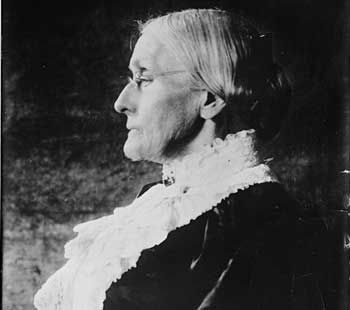
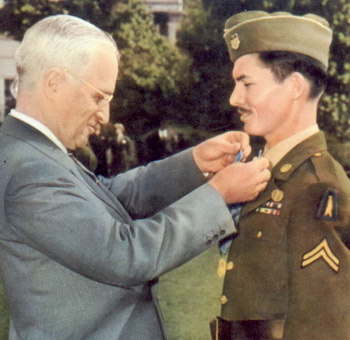
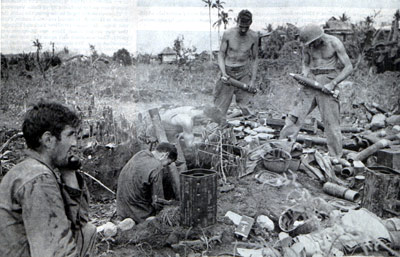
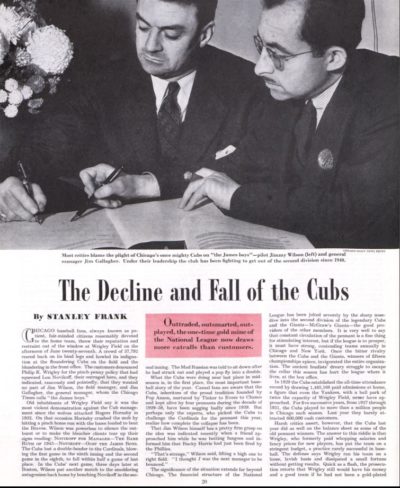
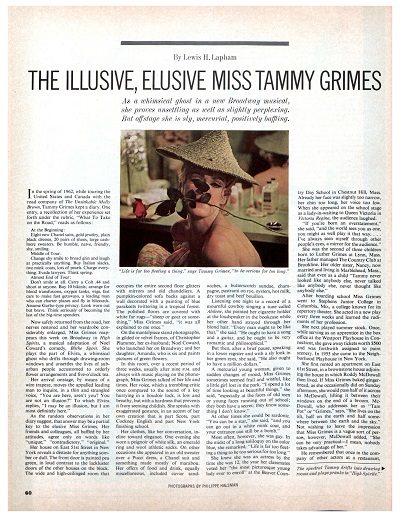
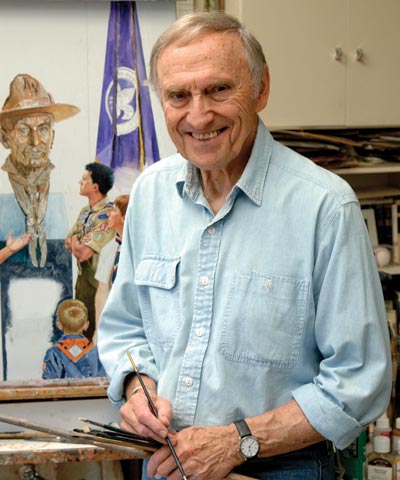
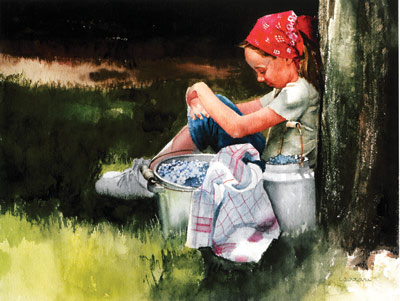
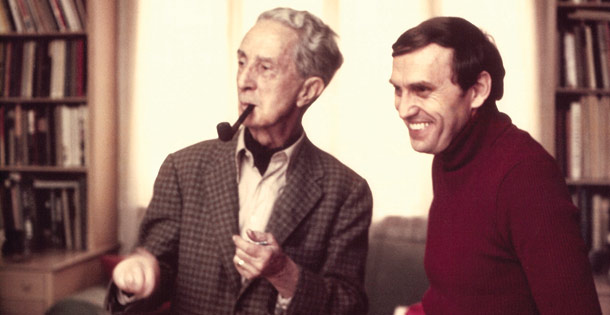
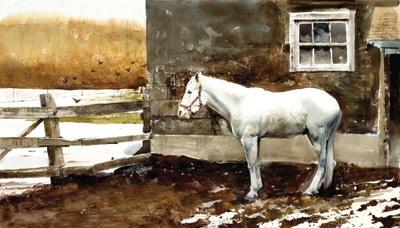
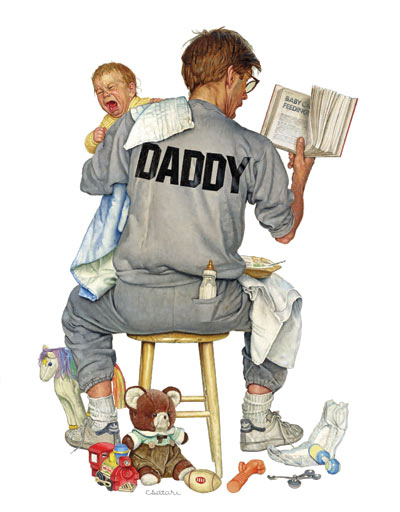
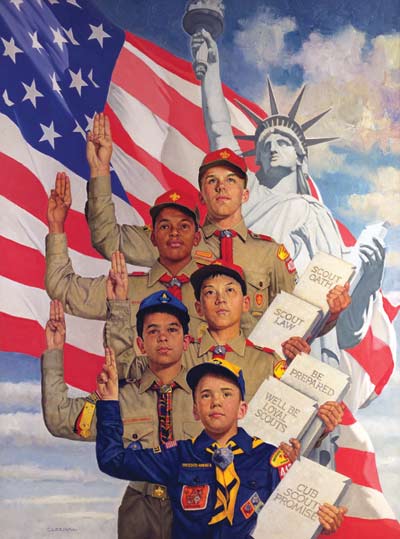


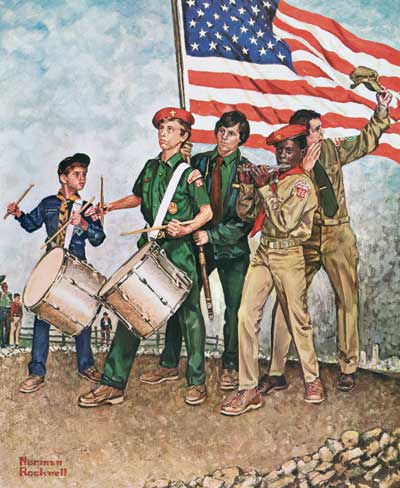
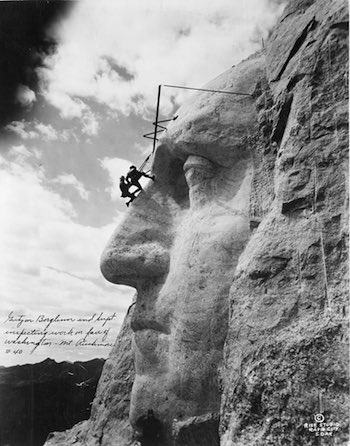

 Originally published on July 7, 1945