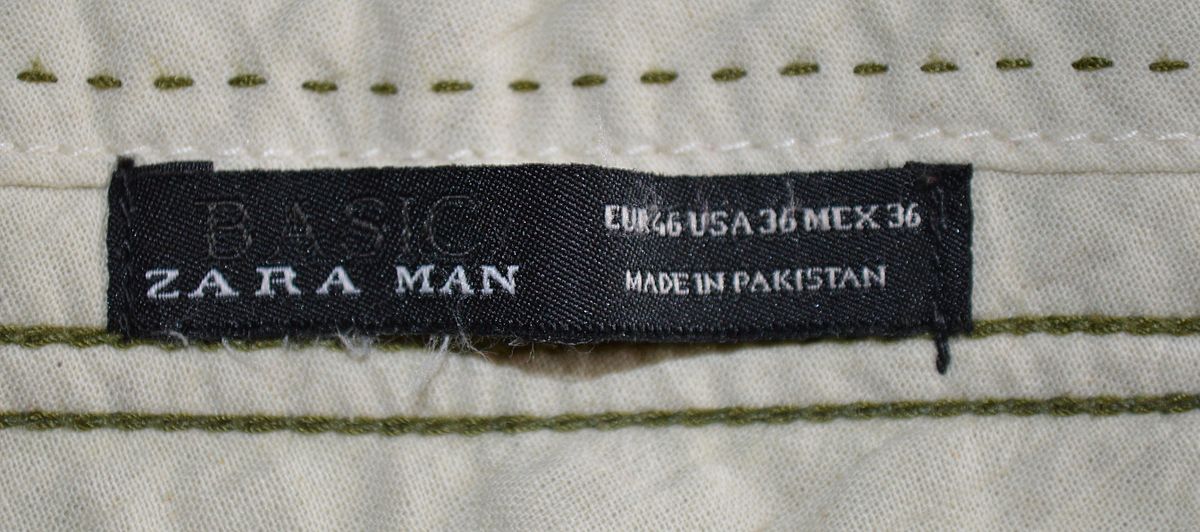
In the era of fast fashion, it is easy to be unaware of how our clothes are made. Most of us don’t bother to read the labels on our garments; we don’t know where our clothes come from, what materials they contain, how they need to be washed, and more importantly, who made them.
While clothing labels may seem insignificant to many, they have long served an important role in the industry. Whether by justifying paying extra dollars for a designer or by indicating the origins of the garment, labels communicate valuable information for consumers.
Labels have also played a political role. Although much smaller than a protest sign, unions have used labels to alert consumers to their plight for better wages and working conditions, encouraging them to make an ethical decision when buying clothes. By informing consumers on how their clothes were made, these union labels transform the act of shopping into a political act of solidarity.
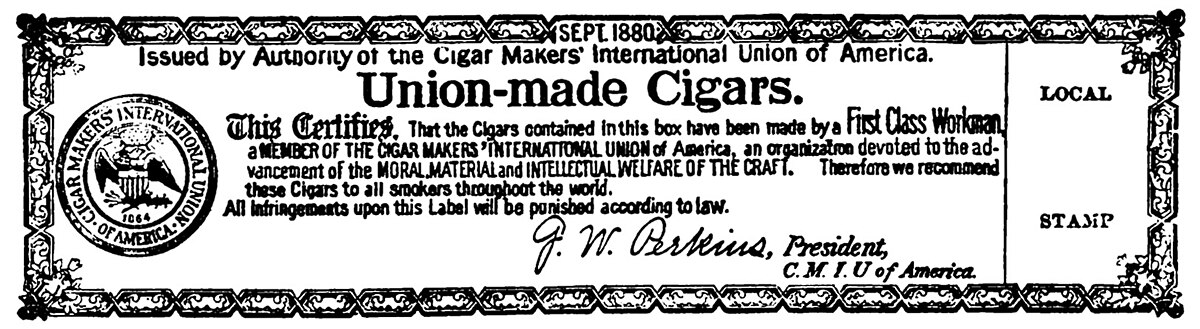
Union labels began to appear on clothing goods in the late 19th and early 20th centuries, following cigar manufacturers and other companies of consumer goods. Shortly after its founding in 1900, the International Ladies’ Garment Workers’ Union (ILGWU), issued their own label to mark products made in unionized shops, although this was done sporadically and on the local level.
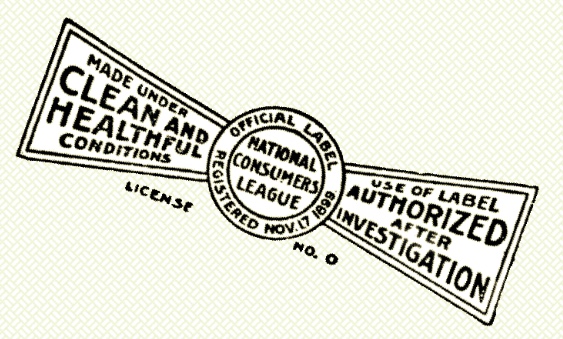
Workers’ efforts to educate consumers regarding how their clothes were made received a boost in the early 20th century from the National Consumers League (NCL), and its “white label” campaign. This women-led reform organization called on middle-class women to use their buying power to bring an end to the exploitive and hazardous conditions in the garment industry. “Consumers . . . can, if they will, enforce a claim to have all that they buy free from the taint of cruelty,” Florence Kelley, the head of the NCL, argued in 1914. Kelley sought to build solidarity not only across class lines, but also by gender, appealing mainly to women, who as the main consumers and producers of clothes, could use collaboration with each other to promote their rights.
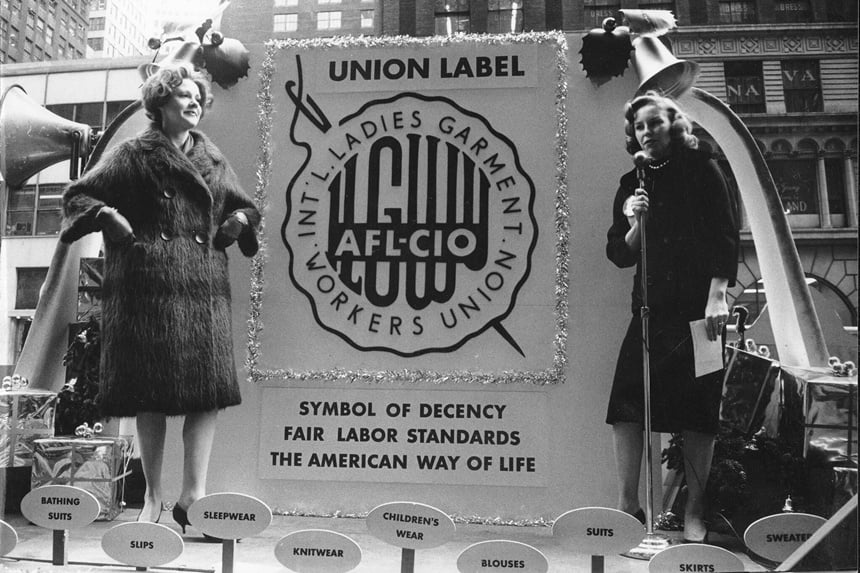
By the mid-20th century, as clothing was increasingly imported from overseas and the domestic industry shifted factories to the anti-union Southern states, the ILGWU once again sought to mobilize the middle class in the service of the labor movement. It instigated a new label campaign to educate consumers for the benefit of organized work.
Launched in 1959, the “Look for the Union Label” campaign was an industry-wide effort that sought to build support for the ILGWU and appeal to patriotic sentiments. The label — designed by the newly established Union Label Department — contained a unique design with numbers and letters that was intended to provide a system for record keeping and easy identification of the employers involved. It was, the union proclaimed, a “symbol of decency, fair labor standards, and the American way of life.”

To publicize the effort, the ILGWU sponsored media events with wives of prominent politicians, from Eleanor Roosevelt to Mary Rockefeller, the wife of New York governor Nelson Rockefeller. The ILGWU also printed advertisements in prominent magazines, encouraging women to “look for the union label” when they went out shopping. Like in the beginning of the 20th century, the campaign sought to create solidarity between women who comprised both the majority of ILGWU workers and of shoppers of clothing goods.

By 1975, with the growing popularity of television, the ILGWU took the campaign also to the small screen. The various versions of the commercial, which ran during the 1970s and early 1980s, all featured a worker talking about the importance of the union in their lives followed by a group of workers singing.
An ad from the ILGWU reminding consumers to “Look for the union label” (Uploaded to YouTube by robatsea2009)
The tune, “Look for the Union Label,” was written by Malcolm Dodds, the ILGWU’s chorus director, to the lyrics of Paula Green, the ad woman in charge of the campaign. The commercial presented a racially diverse, majority-female group of workers, showcasing the diversity of the union membership in the 1970s. The lyrics also reflected a woman’s point of view, singing, “Our wages going to feed the kids and run the house/We work hard, but who’s complaining? Thanks to the ILG we’re making our way.”
The catchy tune quickly became one of the more famous ILGWU’s anthems, joining other classics like “Solidarity Forever” and “Bread and Roses.” It spoke not only to the power of solidarity and the pride of honest living but also reminded people what American values stood for at the age of globalization.
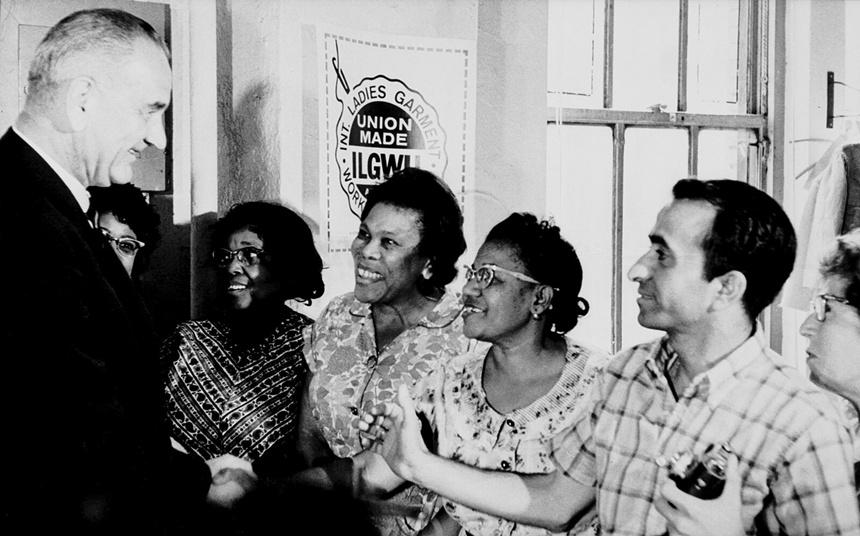
While union labels continued to appear on American-made clothing well into the 1990s, as the industry kept moving to other locations, mainly in Asia and Latin America, union jobs in the garment trades became scarcer. The largest two garment unions — ILGWU and the Amalgamated Clothing and Textile Workers Union — merged to form the Union of Needletrades, Industrial, and Textile Employees, or UNITE!, reflecting the loss of jobs in the industry. While Hillary Clinton, as First Lady, happily participated in promoting the union label campaign of the new union, the effort was a pale version of the days when Eleanor Roosevelt showed her sewing skills. From manufacturing almost 95 percent of Americans’ wardrobe in the 1960s, U.S. factories today are producing around 2 percent.
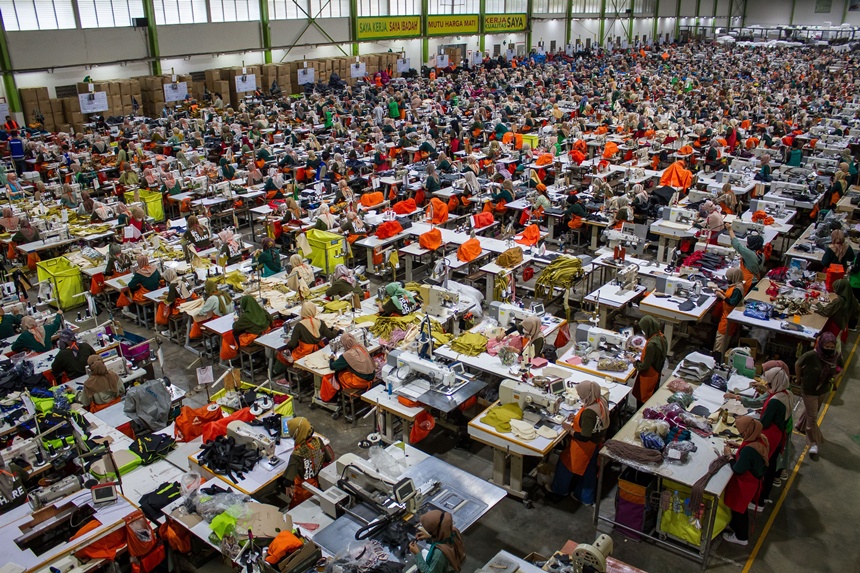
Yet, if we have become distant from the people who make our clothes, the fight for better wages, safe working conditions, and secure employment still continues, and unions are at the forefront of it. UNITE HERE proudly represents many of the country’s unionized garment shops, which produce a variety of men’s and women’s clothing, shoes, hats, and linens. In 2022, Senator Kirsten Gillibrand (D-NY) introduced the Fashioning Accountability and Building Real Institutional Change (FABRIC) Act, which proposed major incentives to encourage domestic apparel manufacturing and workplace protections that could revitalize the industry. Next time you go shopping, look at the label. It might even be a union one.
Become a Saturday Evening Post member and enjoy unlimited access. Subscribe now


Comments
Great feature Einav. It shines a new light on an important topic. It’s very hard to find anything made in the USA from decades of outsourcing on seemingly nearly everything. This history, going back 125 years, is something we should know as Americans as part of our educational understanding of its importance, then and now.
The last paragraph seems to offer hope in tipping the scales back to ‘Made in the USA’ once again. This should be a bipartisan goal of both political parties for the common good. The new Administration seems to really want to have businesses and industries that were here (but then outsourced) back here once again.
Some letters to the President (referencing this article), certainly couldn’t hurt! New commercials in the tradition of the 1978 classic ad would help. They’d have to be shorter, and tailored for the various current platforms, but I think it’s doable and would be successful again if done out right.