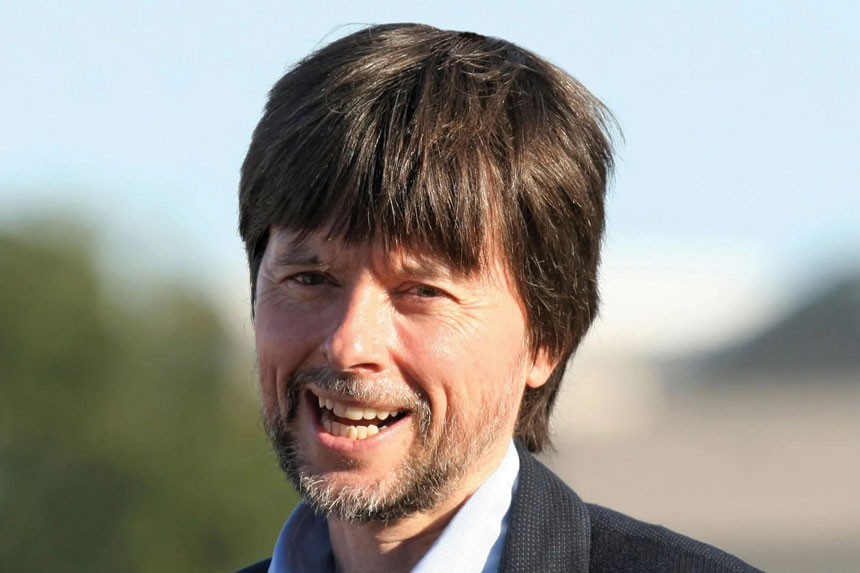
Documentarian Ken Burns’s latest effort goes deep into another war in The American Revolution, a powerful and groundbreaking PBS series that reexamines one of the most pivotal events in our nation’s history. This ambitious, thought-provoking, 12-hour journey sheds new light on the complexities, struggles, and ultimate triumph of the birth of our nation and goes to the very heart of the roots of democracy and freedom.
The documentary took nearly a decade to complete, and Burns had no idea when he began how relevant it would be today. “I think this series is as important as any I’ve done,” he told me, “because understanding the war that brought about the founding our of country will help us get through the difficult times we find ourselves in now.”
Jeanne Wolf: We think we know the story, but you present a lot that is going to surprise us.
Ken Burns: I think the American Revolution has been encrusted with barnacles of sentimentality and nostalgia. We’re presenting facts in a way you’ve never heard before. There’s no made-up stuff; there’s only our attempt to tell the real story. So, you will not hear the name Betsy Ross because we don’t really know who made the first flag. You will find out a lot about George Washington, but you won’t hear about him cutting down a cherry tree. You’ll see how flawed he was, the bad military decisions that he made, but you’ll also understand that without him we wouldn’t have had the United States of America because he was totally indispensable to making it happen.
When Thomas Jefferson wrote [that] “all men are created equal,” he meant all white men of property. But that meaning has changed a lot since.
JW: So much of our political discourse now seems to be coming from social media in ways that don’t seem to encourage meaningful dialogue. The Founding Fathers hoped for a lot more, didn’t they?
KB: The problem with social media is that it is unmediated, and we have no way of knowing what’s true and false. There are unfortunately too many people who are getting that every day and that’s all they know. There is something incredibly toxic about social media. Listening to the insanity that echoes back and forth only incites people. Our founders were really hoping that we’d understand the great reward of citizenship, participating, taking responsibility. So, if we can go back and understand the complicated dynamics of our origin story and reinvest in the notion of citizenship, then no tyrant will ever hold sway over us.
Remember, in the pursuit of happiness, the key word is not happiness, but pursuit. We’re a process. Democracy is not a thing, not a noun, but a verb. And in order to be active, to do this for a more perfect union, we’re still a nation in the process of becoming. Out of that understanding can come an immense optimism, an immense will to make things better, and an immense will to communicate.
JW: How much is the loss of funding for public television and the threat to its future existence affecting you?
KB: I’ve got a series coming up on LBJ and the Great Society along with several future films that have lost millions. But it’s not just me. This is going to have huge effects on our rural areas where the only source of news is from a PBS station. They’ll be in a news desert.
None of the 40 films I’ve made that have been broadcast on PBS could have been made any other place because they gave me freedom and all the time — years really — to complete most of them. When you know your past, you are armed in a way that other people who think they can ignore their past are not. It gives you an understanding of not only where we’ve been but where we are now and gives us the energy to dream the dreams of the future. That’s the great gift of history.
There’s a wonderful quote from Benjamin Rush, an amazing physician who was a signer of the Declaration of Independence. He said, “The American war is over, but the American Revolution is still going on.”
This article is featured in the November/December 2025 issue of The Saturday Evening Post. Subscribe to the magazine for more art, inspiring stories, fiction, humor, and features from our archives.
Become a Saturday Evening Post member and enjoy unlimited access. Subscribe now
Comments
The full interview link in the paper edition is dead. The full interview appears neither there nor apparently accessible online. Interesting, the concerns about social media lead us to a non-working link online. Any chance we can get the full interview? Thank you.