I’m not a Pittsburgher, let’s get that straight. I make that distinction because I know, through experience, that people raised in the ‘Burgh bear an innate suspicion of writers who parachute into town and try to capture the essence of the place in a single travel piece.
But, hey, I married a Pittsburgher, and that’s got to count for something. And in our many trips to the place where the Allegheny and Monongahela Rivers converge to form the Ohio, I’ve managed to piece together an insider’s itinerary for one terrific weekend.
Friday Evening
Arrival
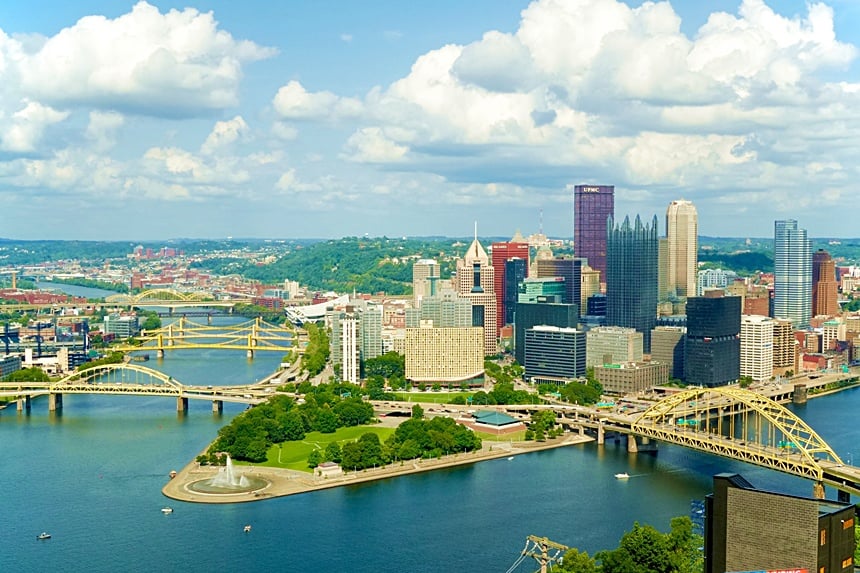
There’s no U.S. city that introduces itself to the visitor with more spectacle than Pittsburgh. Whether visitors arrive by car or air, there ought to be a law that they must approach downtown (“dan-tan” in the local vernacular) by way of the Fort Pitt Tunnel, which bores through Mount Washington, empties onto the Fort Pitt Bridge — and explodes with a vista of the center city: a riot of rivers, towers, and sky. The only U.S. tunnel that exceeds this one in revelatory thrill is Wawona Tunnel, which spills motorists into Yosemite Valley. But that one doesn’t have The Steelers at one end.
Bridge Walk

As the sun dips behind Mount Washington to the west and the city’s lights blink on, dusk is the best time to soak in the glories of Pittsburgh’s waterfront. The Three Rivers Heritage Trail traces 35 miles of river bank — we’re just going to concentrate on the length that follows the north shore of the Allegheny River, directly across from the towers of downtown. Ten bridges cross the river along this stretch, and nearly all of them welcome walkers to weave a meandering path between downtown and Pittsburgh’s Northside. Besides lots of dramatic views and public art, the path also leads you past Pittsburgh’s Holy of Holies, Acrisure Stadium, home of the beyond-beloved Pittsburgh Steelers (but locals will, now and forever, refer to the arena by its long-time name, Heinz Field).

Saturday
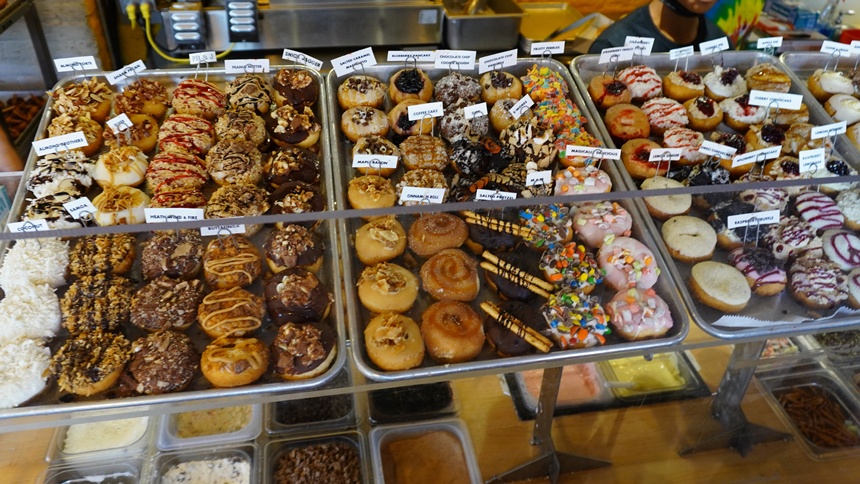
Breakfast has to be in the Strip District, a former warehouse, factory, and manufacturing center. More than a century ago, the district sprouted shops, restaurants, and grocery stores to serve shift workers at all hours of the day. The heavy industry is gone, but the businesses remain, catering to not only visitors but also the many Pittsburghers who now live in the district’s converted warehouse lofts. DeLuca’s Diner has been serving up “The Best Breakfast in Town” since 1950. Locals swear by DeLuca’s Steel City Breakfast of Champions: pancakes, eggs, bacon, sausage, home fries, and toast, often accompanied by a fresh cut T-bone steak. But I’m partial to a little place called Peace, Love and Little Donuts, where a dedicated staff will take a just-fried donut and, before your wonder-filled eyes, dip it in every kind of icing and topping you can imagine (like Lucky Charms and Raspberry Truffle) — plus some that are beyond your wildest dreams (Maple Bacon, anyone?). Someone, somewhere voted these the best donuts in America, and I’m not going to argue with that.
The Andy Warhol Museum

Not only was the most influential American artist of the 20th century born in Pittsburgh; he also studied commercial art right here at Carnegie Institute of Technology before heading off for immortality in New York. A short walk across the river from downtown, The Andy Warhol Museum houses the world’s largest collection of Warhol art and archives. Rotating exhibitions feature works by both Warhol and artists influenced by him (but don’t worry: You’ll always find Campbell’s soup cans and Marilyn Monroe).
Other memorable, Pittsburgh-only museums within easy walking distance include the Kamin Science Center, the Fort Pitt Museum, the Heinz History Center (featuring the original Mr. Rogers’ Neighborhood set, created by Pittsburgh’s favorite son, Fred Rogers) and the Western Pennsylvania Sports Museum (Nirvana for Steelers, Pirates, and Penguins fans). Admission to the Heinz, Sports, and Fort Pitt museums are free for kids 17 and under.
Lunch: Primanti Brothers

Walk back across the Allegheny River to the Strip District for a true Pittsburgh original: the signature sandwich at Primanti Brothers, here since 1933. Whether you order the Reuben, burger, or pastrami and cheese, your sandwich will bristle with French fries, generously loaded atop the sandwich innards. At first glance, the thing appears impossible to get your mouth around, but you’ll manage. Oh, yes, you will.
Monongahela Incline and Mount Washington
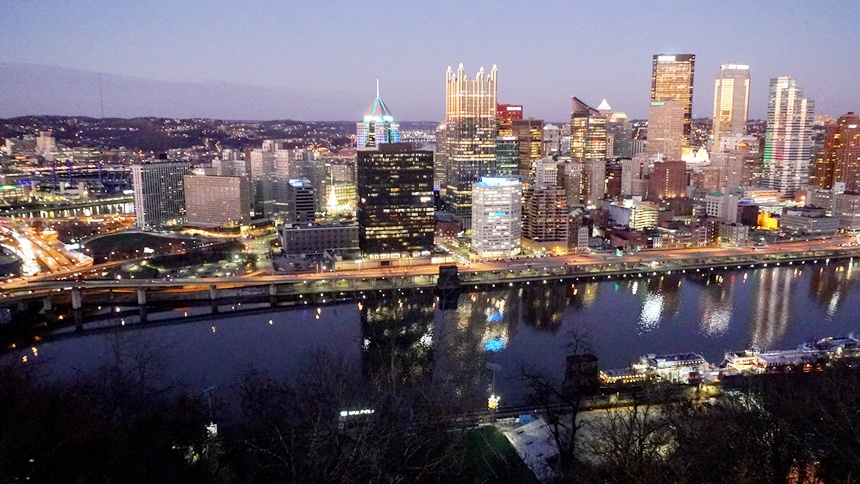
Offering one of the loveliest urban backdrops in the country, Mount Washington rises 1,243 feet above the Monongahela River, topped by homes, restaurants, and scenic lookouts that provide bird’s-eye views of the city below.
The best way to reach the top is to park at the Station Square complex, then cross the street to board the Monongahela Incline — one of two surviving inclines built in the 19th century to shuttle people and products up and down the mountainside (at one time there were nearly two dozen of them). After clickety-clacking your way up, set aside an hour or so to wander among the shops (DiFiore’s Ice Cream on Shiloh Street is a favorite) or just follow the walkway that traces the mountain’s precipice.

Should you choose to stay up here for dinner, The Grandview Saloon, Altius and LeMont offer panoramic city views from your table. Or you might head back down the incline for dinner at Station Square, where the 1901 Grand Concourse train station, magnificently restored, is now an upscale restaurant.

Evening River Cruise

A city with three rivers has got to be seen from the water, and Pittsburgh’s leading boat tour operator, Gateway Clipper, offers experiences ranging from hour-long sightseeing cruises to full-evening dinner trips (Gateway also offers occasional nighttime “Haunted Pittsburgh” boat tours).
Rivers of Steel, an educational foundation, hosts periodic educational cruises that trace the history of steelmaking in Steel City. For those more physically inclined, the nonprofit group Venture Outdoors offers paddling on the rivers.
Sunday
St. Stanislaus Kostka Church
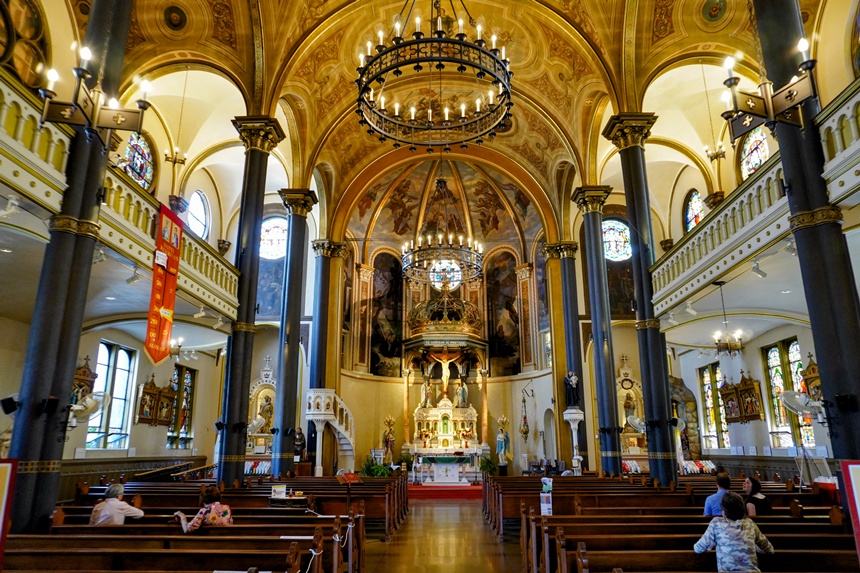
Pittsburgh is a city of churches, but there’s none with a richer history than St. Stanislaus Kostka Church, which has stood at one end of the Strip District since 1891. Designed in the style of Polish cathedrals, the Roman Catholic church was built as a spiritual home to Pittsburgh’s then-mushrooming Eastern European population.
University of Pittsburgh Cathedral of Learning
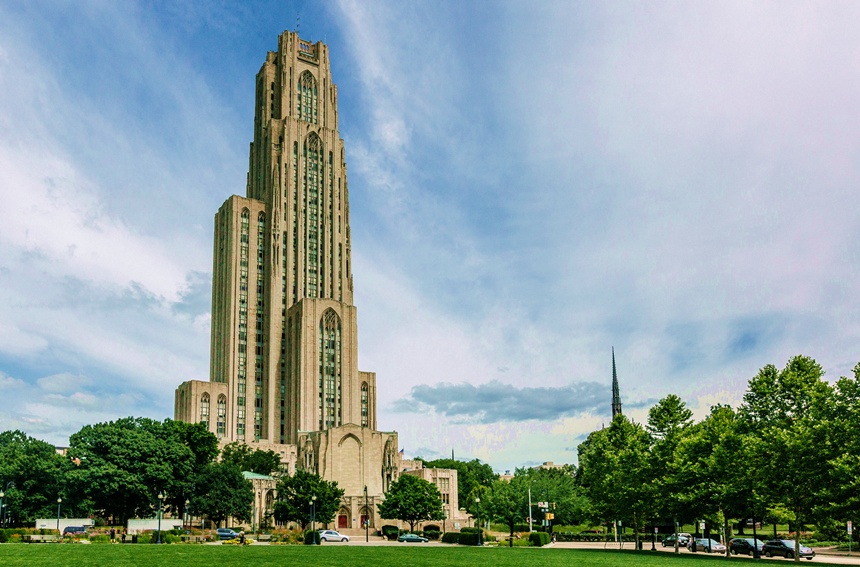
Technically, Oakland, just east of Pittsburgh, is another ‘burgh altogether, but it’s home to the city’s namesake university, and is an easy drive of just a few minutes.
What’s more, a visit to the university’s 42-story, Gothic-style Cathedral of Learning is something of a trip around the world: The lower floors are home to Pitt’s 31 Nationality Rooms — classrooms that are lavishly designed in the style of global nations and cultures.
In the Russian Room (dating from 1938), carved wooden chairs bear images of reindeer and Volga River sturgeon. The Swedish Room (1938) is painted floor-to-ceiling with murals by artist Olle Nordmark. The Syria-Lebanon Room (1941) is actually a 1792 library, moved here from the Middle East.
The Nationality Rooms are open to the public on a rotating basis; you can find out what’s accessible at an information desk in the Cathedral of Learning’s monumental Commons Room, an arched, shadowy space that seems to have been transported directly from Hogwarts.

If you have time, after leaving the Cathedral of Learning, take a stroll across the expansive courtyard to Heinz Memorial Chapel, an exquisitely rendered gothic space with stained glass windows that rival any you’ll find in Europe.
Evening at Kennywood Amusement Park
Only two amusement parks have been designated National Historic Landmarks, and one of them is a half-hour drive from the Pitt campus: Kennywood, opened in 1898 to draw customers to the end of a trolley line.

If you’re just spending a late afternoon/evening at Kennywood, you can’t go wrong sampling the park’s oldest rides, which have been urging riders to keep their arms and legs inside the car for more than a century. The Old Mill, originally a traditional Tunnel of Love ride, first set sail in 1901. A haunted house element has been added over the years, but it’s not hard to settle down in one of these narrow wooden boats, close your eyes and imagine the couple behind you singing 1901’s biggest hit, “When You Were Sweet Sixteen.”
Three bonafide antique wooden rollercoasters rattle riders’ bones at Kennywood: The Jack Rabbit (1920, the third oldest coaster in the world), Thunderbolt (1924, rated the world’s best by the New York Times in 1974), and Racer (1927, a double racing rollercoaster). You can stand in line for the towering steel, looping coasters that give Kennywood its profile, but you’ll never beat the thrill of a wooden coaster groaning under the weight of a full car.
Monday Morning
Breakfast at Eat’n Park

Don’t leave town without stopping at one of the many Eat’n Park diners that have dotted the Pittsburgh area — and occupied an outsized space in the Pittsburgh psyche — since the 1940s. If you don’t want breakfast, at least pick up a package of Eat’n Park’s trademark smiley cookies. They are the reason the chain calls itself “The Place for Smiles.”
Become a Saturday Evening Post member and enjoy unlimited access. Subscribe now
Comments
Allegheny Cemetery