
In 1919, the United States Army awarded Grace Banker a Distinguished Service Medal. According to the medal citation, Grace “served with exceptional ability as chief operator in the Signal Corps exchange at General Headquarters, American Expeditionary Forces, and later in a similar capacity at 1st Army Headquarters. By untiring devotion to her exacting duties under trying conditions she did much to assure the success of the telephone service during the operations of the 1st Army…”
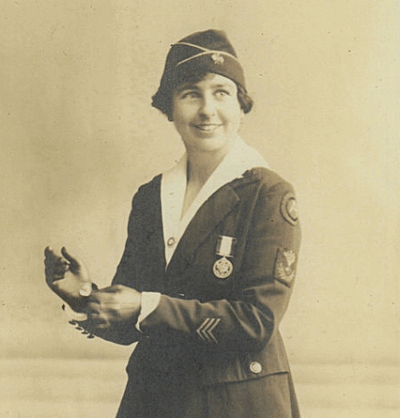
Grace Banker was one of 18 “Hello Girls” who received the Distinguished Service Medal for her work from 1917 to 1920. Despite this honor, neither the United States government nor the Army considered Banker a veteran of World War I. The same was true for the other 232 “Hello Girls,” the bilingual telephone operators supporting the American Expeditionary Forces in France. Instead, they were “civilian contractors,” meaning that none of them were eligible for veteran benefits when they returned home.

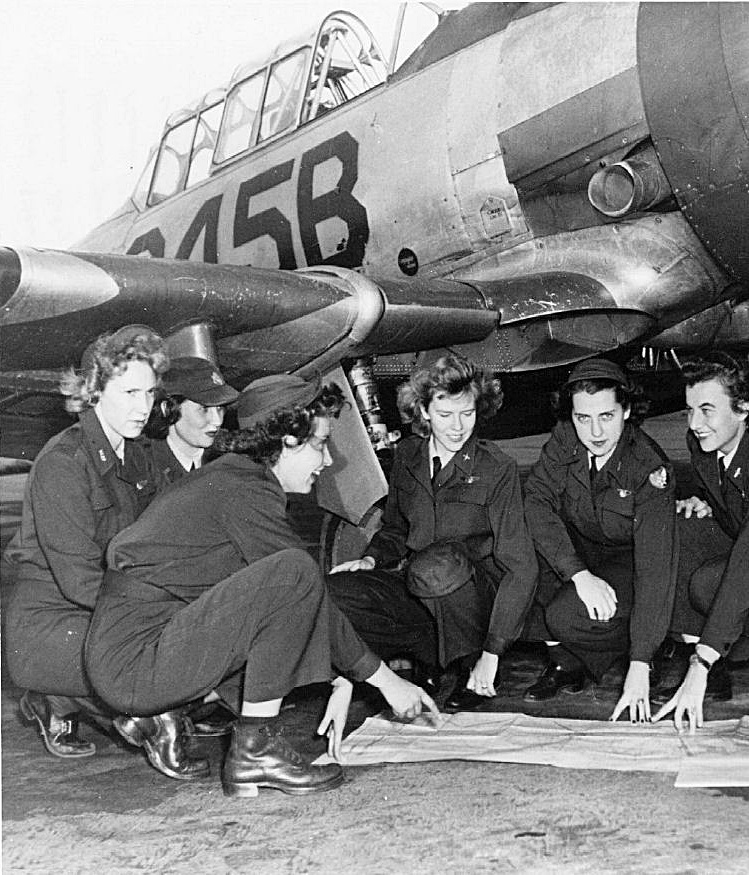
Banker wasn’t the only woman denied veteran status. During World War II, Hazel Ying Lee was one of two Chinese American pilots selected to join the Women Airforce Service Pilots (WASP). According to historian Sarah Parry Myers, more than 1,100 women pilots joined the WASP during the war, ferrying planes to military installations across the country. These included planes that had been recently repaired, and those that were en route to be repaired. Other WASP duties included towing targets for male cadets to practice shooting. Lee was selected as one of just 134 WASPs to attend Pursuit School training, which made it possible for her to fly some of the most powerful fighter planes the United States had in their air fleet.
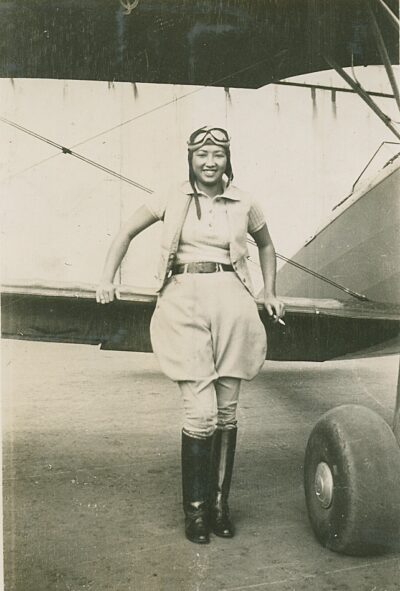
On November 23, 1944, Lee was flying one of those fighter planes, the Bell P-63 Kingcobra fighter, to Great Falls, Montana. As she was arriving, confusion over a series of landing aircraft led to a collision between her plane and another. Lee died from the injuries she sustained in the crash. But as a WASP, Lee was a civilian pilot, not a soldier. There were no military benefits for her burial or to pay to ship her body home to her parents. Her family bore the costs, then fought the local cemetery when it refused to allow her burial there because she was of Chinese descent. The Lee family finally gained permission to bury Hazel there, as well as her brother, who died just days after his sister while serving in France.
Grace Banker and Hazel Ying Lee represent just two of the thousands of American women who served their country without ever being recognized as servicemembers or veterans in their lifetime.
During the 20th century, the question of who was a veteran and what that status meant became increasingly important for two key reasons: The armed forces grew larger than ever, and the government began providing broader support to veterans.
Today, being recognized as a veteran is about more than honor: It carries tangible benefits that affect daily life. According to the Veterans Administration website, veterans are eligible for healthcare and many more benefits, including educational assistance, home loan programs, preferential hiring for government jobs, and healthcare. Such benefits acknowledge the sacrifices veterans made during service, but they also illustrate why recognition matters. Without the formal status of “veteran,” individuals who served their country can be excluded from the support they have earned.
For many women who served, it took years and sometimes decades to begin to access such support. In 1977, the G.I. Bill Improvement Act took the first step in recognizing Grace Banker, Hazel Ying Lee, their colleagues, and many others as veterans.
Under this law, WASPs and Hello Girls became eligible for veteran benefits. By the time the law passed, just 18 Hello Girls remained. For those who had survived, along with the WASPs and WAACs (Women’s Army Auxiliary Corps), there were still important steps to take to receive veteran benefits. Sarah Parry Myers explains that the women had to individually request a proof of military service form, “so that they could apply for benefits, employment, retirement, or membership in veterans’ organizations.” Even after securing this document, roadblocks to some benefits remained. According to Myers, In 2002, the family of WASP Irene Englund was initially refused the request for her remains to be placed at Arlington National Cemetery. Myers, notes that several other families also encountered such denials, and in 2015, the Army stopped allowing WASP burials at Arlington altogether. It took legislation from Congress in 2016 to ensure WASP burials at Arlington could resume.
In 1980, the United States Census asked both men and — for the first time — women if they had ever served in the military. Before then, census forms had only ever directed the question to male respondents. About a million women responded that yes, they had once served in the United States military. The number surprised members of Congress and the Veterans Administration, because it was much larger than the number of women using VA services, such as healthcare. By 1982, Senator Daniel Inouye, himself a World War II veteran, asked for a study about women veterans’ access to VA benefits. The study found that women were not accessing VA benefits equally with men, VA facilities were not providing gynecological care for women veterans, and women veterans lacked knowledge about what benefits were available to them.
While policymakers were only beginning to understand the scope of women’s military service, the public was starting to think about how to honor veterans more broadly. A month and a half after the study’s results were issued, veterans from across the country gathered in Washington, D.C. for the dedication of the Vietnam Veterans Memorial. At its dedication, the wall contained the names of 57,939 servicemembers who lost their lives in the war. Eight of those names belonged to nurses.
Attention to women’s military service and status as veterans continued to expand in the years that followed. In 1989, 60 Minutes ran a 15-minute segment interviewing several Vietnam nurses who were beginning efforts to create a memorial to women’s service in the war. Morley Safer, anchoring the segment, pointed out to viewers that “No man in Vietnam saw combat every day. The women saw it, or the results of it, every day.” The Vietnam Women’s Memorial was unveiled on November 11, 1993. As its website notes, “It is the nation’s first — and still its only — memorial to military women on the National Mall,” sitting just steps from the Vietnam Veterans Memorial.

In 1997, the Military Women’s Memorial opened at the entrance to Arlington National Cemetery, honoring all women who have served the United States across its history. In 2004, the World War II memorial on the National Mall opened, including at its entrance these lines from Colonel Oveta Culp Hobby, Director of the Women’s Army Corps: “Women who stepped up were measured as citizens of the nation, not as women….This was a people’s war, and everyone was in it.”
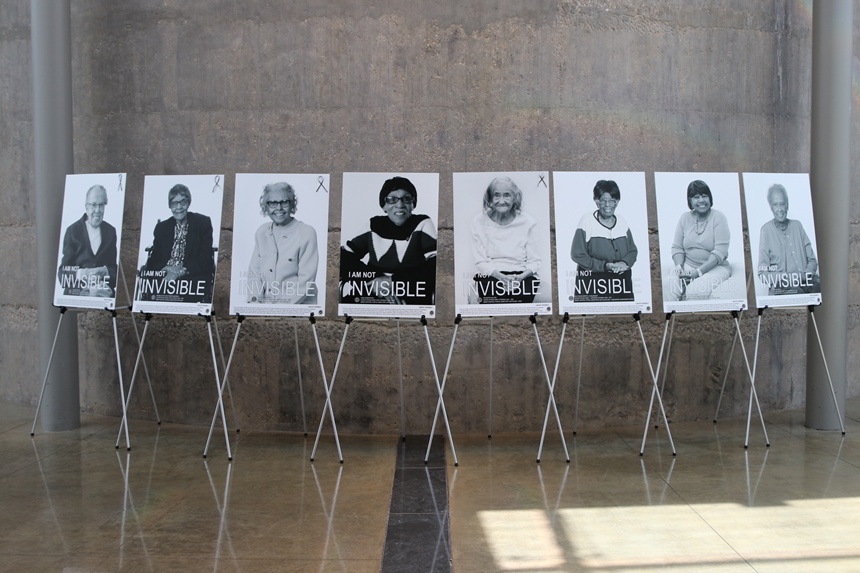
These memorials and monuments offer tangible recognition of women’s service to the United States. They create spaces where women veterans can connect with one another and with loved ones, sharing their history and building a proud tradition of service across generations.
Today, women’s military service spans every generation since World War II. In 2011, a Pew Research study found that more than half of all women veterans can trace their service to the period before 9/11: “Of these women, 27 percent served between the end of the Vietnam conflict and July 1990, and 26 percent served between August 1990 and 9/11.” And, according to the VA, women are “the fastest growing group of veterans.”
Each Veterans Day, Americans gather to recognize our armed forces. From the Hello Girls of World War I to today’s soldiers, sailors, and pilots, generations of American women have shown what it means to serve their country. This November, their stories remind us that honoring veterans means continuing to see — and name — all who have served.
Become a Saturday Evening Post member and enjoy unlimited access. Subscribe now



Comments
Thanks for this special Veterans Day report honoring so many women veterans not only for their service, but the hard won battle for recognition AS veterans, and all of the benefits they deserved, and had not received until fairly recent decades.
I found the 1989 60 Minutes interviews of several Vietnam nurses to be profound and moving. A time when this news magazine was the gold standard; sadly no more. I can’t imagine them doing such a wonderful segment like this anymore. These women/nurses were crucial in their jobs and service. Forced in having to ‘play God’ in whom could be saved, and making those in their last moments of life, comfortable.
Like so many of their male counterparts, they too were treated badly upon their returns back home to this country. Fortunately, that’s largely changed for the better. Ironically maybe one of the few areas of non-division in this very divided nation otherwise, in no small part because of the media.