
Wednesday, January 14, 1976, Americans across the nation tuned in to the midseason premiere of a new television show featuring a character many had grown to love and mourn, Jaime Sommers. Viewers first met Jaime Sommers the prior spring on The Six-Million Dollar Man on ABC, where she appeared as Colonel Steve Austin’s childhood sweetheart. After a skydiving accident left her critically injured, she was rebuilt with the same experimental bionic technology that had transformed him. The two-episode arc ended with Sommers’ apparent death.
Audiences, however, were unwilling to let her disappear. Responding to the unexpected outpouring of interest, ABC revived the character in the original series before launching The Bionic Woman as a midseason spinoff. It was a gamble that paid off: The series climbed in the ratings quickly, finishing the 1975-1976 season as the fifth most-watched show on television.
The title sequence to The Bionic Woman (Uploaded to YouTube by Ken Eagleton)
The timing mattered. Going into the 1975-1976 season, ABC ranked a distant third behind CBS and NBC, a position that made the network willing to experiment. In the mid-1970s, that openness led to multiple programs centered on women, as network television execs cautiously tested how far they might follow the cultural currents reshaping American life. In 1976 alone, ABC invested in three more woman-centric shows. These included Laverne & Shirley (a Happy Days spinoff that debuted on January 27), a series of late spring Wonder Woman episodes that grew out of a 1975 television movie, and Charlie’s Angels, which premiered that fall.
Given what was happening across the nation, the decision to create shows anchored by women stars made sense. The prior year, 1975, had been designated International Women’s Year by the United Nations. The Equal Rights Amendment (ERA), which had passed both houses of Congress in 1972, was still moving through the state ratification process, drawing both widespread support and organized opposition. American women had spent the previous decade mobilizing publicly, from events like the 1970 Women’s Strike for Equality to the emergence of early Take Back the Night marches focused on safety and autonomy.
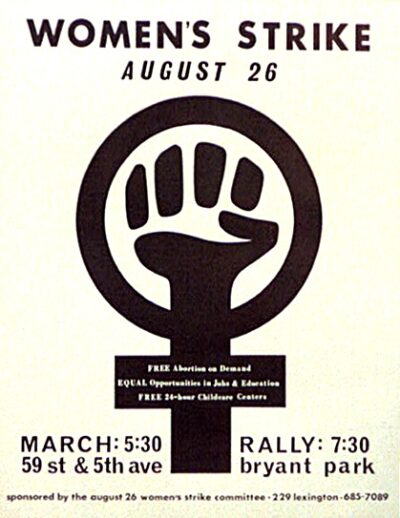
That activism remained visible in 1976. Just days before the first season finale of The Bionic Woman aired, 16,000 women marched in Springfield, Illinois, in support of ERA ratification, while that summer, more than 350 women enrolled at West Point, the Naval Academy, and the Air Force Academy for the first time in history. The cultural conversation about women’s capabilities was playing out both in real life and on screen. American women were making it clear that traditional barriers to education and careers could no longer stand. As Americans negotiated women’s expanding presence in public life, network television, however cautiously, began exploring what new roles for women might look like. Amid these societal shifts, Jaime Sommers was quietly testing new possibilities for women on primetime television.
In the realm of sci-fi television, The Bionic Woman marked a turning point, reflecting the broader cultural shifts already underway in society. Women had appeared in the genre before, sometimes prominently, but rarely as the unquestioned center of the narrative. In the 1960s, Star Trek included just one woman in the main cast — Nichelle Nichols as Nyota Uhura — alongside a handful of recurring female characters, while series such as Lost in Space or Britain’s long-running Doctor Who focused on women within ensemble casts. These earlier shows set the stage, but The Bionic Woman would take the genre a step further: Network television was prepared to test whether audiences could accept a woman not only as part of a speculative world, but as its primary agent of action.
Science fiction, or more broadly, speculative fiction, which can include elements of fantasy, offered a particularly revealing space for that experiment. By projecting social tensions into imagined futures shaped by technology, the genre allowed television to explore women’s expanded power without directly confronting contemporary politics. Questions about authority and autonomy could be approached as problems of science, not politics. In this way, The Bionic Woman did more than reflect the women’s movement of the 1970s. It used the language of science fiction to negotiate what women’s changing roles might look like and to define where their limits would be drawn.
The show established these limits from the outset. Jaime Sommers possessed extraordinary power but did not control how it would be used. In the series’ first episode, when Jaime expresses a desire to build a life for herself while also supporting the government office responsible for her bionic transformation, her boss Oscar initially shuts her down, then vaguely suggests they contact her when needed. Jaime returns to her childhood home in Ojai, California, and finds work as a teacher, abandoning her former career as a professional tennis player now that her physical abilities far exceed those of any potential competitors. Both her backstory as a tennis athlete and her new role as a teacher reflected familiar, socially acceptable paths for women. Tennis had long been considered an appropriate women’s sport, and teaching was a profession dominated by women. Jaime Sommers might be extraordinary, but the show imagined her desiring a life that was resolutely ordinary.
A scene from The Bionic Woman showing Jaime Sommers as a school teacher (Uploaded to YouTube by NMMC4ever)
This distinction mattered. Unlike the Bionic Man, Steve Austin, Jaime Sommers was not defined primarily by her bionic identity or by full-time service to the state. Steve Austin’s life revolved around his missions: His power was permanent, visible, and central to his sense of self. Jaime’s power, in contrast, was conditional. She had to wait to be called on for missions, and while she could sometimes influence her supervisors, she lacked their authority. Her extraordinary abilities could be temporarily activated when necessary, then set aside so she could return to everyday life. By structuring the show in this way, The Bionic Woman reassured audiences that although women might have greater capabilities than ever before, they posed no threat to the usual order of authority.
The influence of The Bionic Woman outlasted its three-season run, helping shape how women were portrayed in speculative fiction for decades. Women increasingly appeared as heroes, but with limited authority. They rarely created the conflicts, instead solving crises put before them, protecting other people, and, in some cases, exhibiting extraordinary capabilities. From ensemble series like Star Trek: The Next Generation (1987-1994), firmly set in science fiction, to The X-Files (1993-2002) and the fantasy-horror series Buffy the Vampire Slayer (1997-2003), which blended science fiction and fantasy, female characters were allowed to carry the narrative weight of action and insight, even when their stories cast them as reactive fixers instead of instigators.
Buffy saves the day in this scene from season 2, episode 14 of Buffy the Vampire Slayer (Uploaded to YouTube by BloodyHellXx)
The Bionic Woman created an influential template: The hero’s power is undeniable, but there are limits, usually grounded in social norms and other people’s expectations. This pattern allowed writers and audiences alike to explore expanded roles for women while preserving familiar hierarchies, a delicate balance that continues to shape women’s roles in speculative fiction.
Today, the legacy of The Bionic Woman is clear: The show opened a space to imagine women’s extraordinary capacities while negotiating society’s limits. It set a precedent for female heroes who could be both powerful and “ordinary,” capable yet constrained. Contemporary series like Stranger Things continue this lineage: Women lead, act decisively, and solve problems, while their stories still wrestle with the tension between autonomy and expectation. Set in the 1980s, the powerful women of Stranger Things stand out precisely because their actions, while ordinary by today’s standards, would have been unexpected in that era, making even the most everyday female characters extraordinary in their circumstances. In this way, the bionic blueprint of 1976 is still visible, as speculative fiction continues to allow writers and audiences to explore both the possibilities and limits of women’s roles in public life. From Jaime Sommers to today’s heroes, speculative fiction remains a space where society’s expectations are tested and women’s power reimagined.
Become a Saturday Evening Post member and enjoy unlimited access. Subscribe now



Comments
This article brought back memories of my childhood. I was in sixth grade when this show was released. Thanks to Lindsay Wagoner and ABC for a great show! All of us teenage boys had a crush on the Bionic Woman. We all dreamed of marrying her!
Thanks for this feature, Tanya. ‘The Bionic Woman’ was a favorite at the time, and remains so to this day. For all the groundbreaking aspects it possessed, it was a very likeable show first and foremost because of Lindsay Wagner specifically, that cannot be duplicated, anymore than the time period when it was produced.
I’ve had the pleasure of meeting her a few times at some ‘Hollywood Shows’ (Burbank & L.A.) and is as lovely and gracious as you’d think. One was in 2009, 2 years after the disastrous brief “new” version came and went almost immediately, she told me the producers invited her to be on it. Knowing ahead of time it was going to be a “kick-butt woman” freak show, she politely declined; rolling her eyes as she told me, being very relieved it was quickly cancelled.