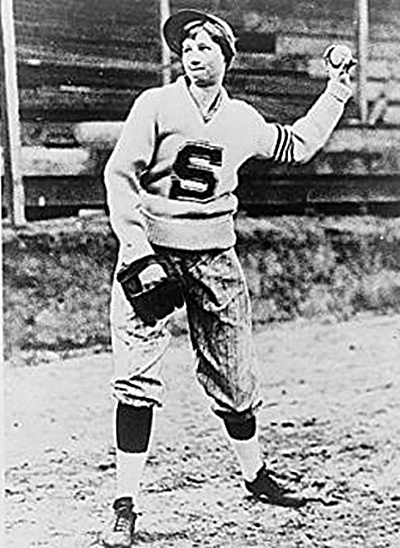
On April 2, 1931, the New York Yankees played an exhibition game against the minor league Chattanooga Lookouts. The game might have passed without much notice, except that it marked the debut of 17-year-old Jackie Mitchell at the mound. In the first inning, Mitchell faced two of the best-known hitters of their time: Babe Ruth and Lou Gehrig. She struck out both of them. “Ruth and Gehrig Struck Out by Girl Pitcher,” the New York Times proclaimed the next day. At the same time, the Washington, D.C., Evening Star suggested the accomplishment was staged “because of the possibility that Messrs. Ruth and Gehrig yesterday at Chattanooga were, after all, only gallant gentlemen who wanted to give a nice girl a boost.”
People still question whether the strikeouts were staged, although no one seems to question other times when Ruth or Gehrig were struck out. During the same game, Ruth struggled at the plate, managing only one hit in five at-bats; Gehrig hit the ball only two of the four times he was at the plate. By the time Ruth retired in 1935, he had more strikeouts in his career — 1,330 — than any other player. Yet his strikeout against Mitchell remained the one many refused to accept.
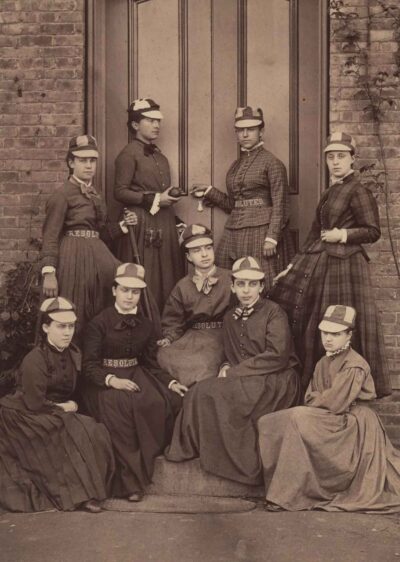
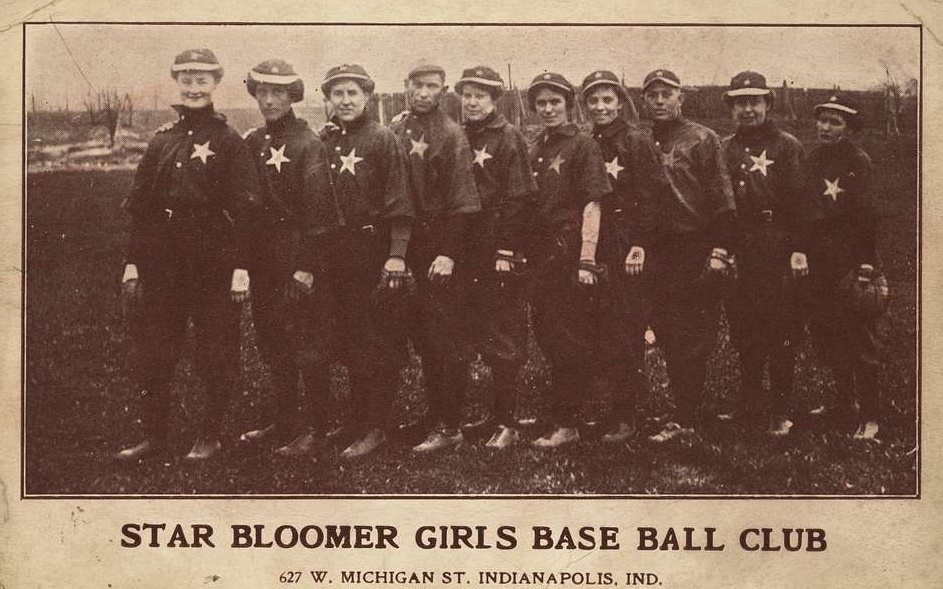
Mitchell did not come out of nowhere. Women had been playing baseball since at least 1866, when students at Vassar College created a baseball team; in 1875, the first professional women’s game took place between the Blondes and the Brunettes in Springfield, Illinois, and in the decades that followed, women played on barnstorming teams across the country.
Mitchell had demonstrated that women could compete at baseball’s highest levels. Organized baseball’s response was to make sure that neither she nor any other woman would have that chance again: The Monday after Mitchell struck out Ruth and Gehrig, a small article in The Washington Times noted that she “has been officially given the gate.” Her minor league career was over, because the baseball commissioner Kenesaw Mountain Landis reportedly believed that baseball was too “strenuous” for women. Mitchell continued barnstorming for several years before leaving baseball in 1937.
After Jackie Mitchell’s strikeouts in 1931 and Landis’s subsequent ban of women, it began to seem as if organized baseball had made itself exclusively a men’s game. As a final blow, when Little League began in 1939, it created formal spaces for boys to develop their baseball skills, while girls, no matter their talent, were excluded.
In 1950, Kathryn “Kay” Johnston was 13 years old when she cut her hair, dressed like her brother, and joined their local Little League team under the alias “Tubby.” After she began playing, she told her coach she was a girl but received his support, along with support from her teammates and the community. When the season ended, however, Little League administrators made it clear that girls were not welcome on the team. Johnston’s father reported that they had said “no girls, under any circumstances, will be playing Little League baseball.”
Kay Johnston Massar remembers being the first girl to play Little League baseball | StoryCorps (Uploaded to YouTube by StoryCorps)
Johnston wasn’t the only young woman in America who wanted to play baseball in 1950. That season, the All-American Girls Professional Baseball League (AAGPBL) played an exhibition game at Yankee stadium. By 1950, the AAGPBL had been offering women the chance to play baseball for seven years. The league, perhaps best known from the 1992 film A League of Their Own, included at least 600 players and up to ten teams between 1943 and 1954, when it closed.
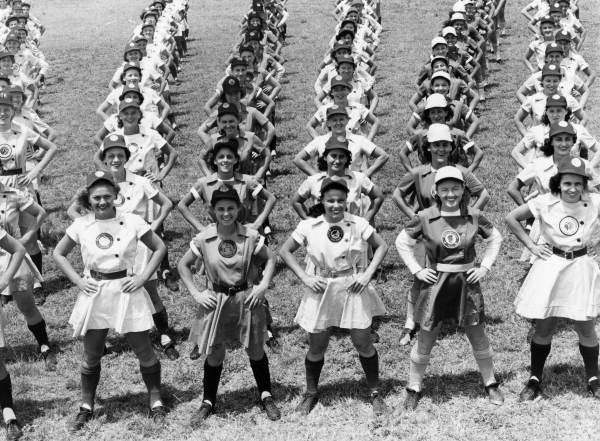
For a little more than a decade, the AAGPBL showed the possibility that women could play baseball — or at least, that Americans would tolerate women on baseball teams of their own. As America’s male baseball players headed off to war in the early 1940s, league founder Philip K. Wrigley thought that the AAGPBL would be a good way to fill the gap, a wartime exception to the no-women-in-baseball trend that began in the 1930s. When the men came back from the war, however, the AAGPBL closed and women were once again excluded.
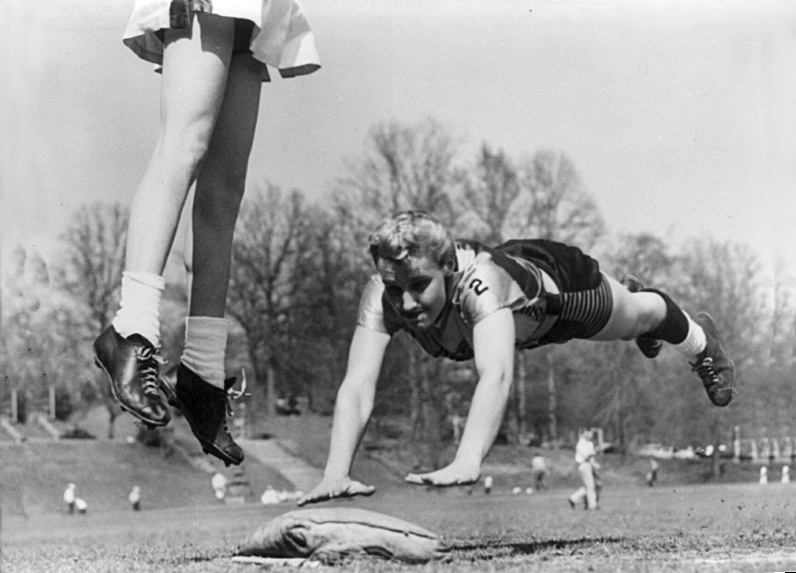
Meanwhile, softball had been quietly developing as the space where women could play ball. The sport had its roots as a sort of indoor baseball game, created and played by men. It got its name in 1926, and the Amateur Softball Association formed in 1934. By that time, women had been playing “indoor baseball,” and some schools offered it as an intramural sport. Chicago, for example, saw an expansion of women’s high school playing opportunities in the 1920s.These games moved outside in the 1930s, and softball became part of physical education classes in some schools. Unlike baseball, softball required women to run and throw shorter distances, and throwing the ball underhanded seemed less challenging for those who believed baseball was too much for women.
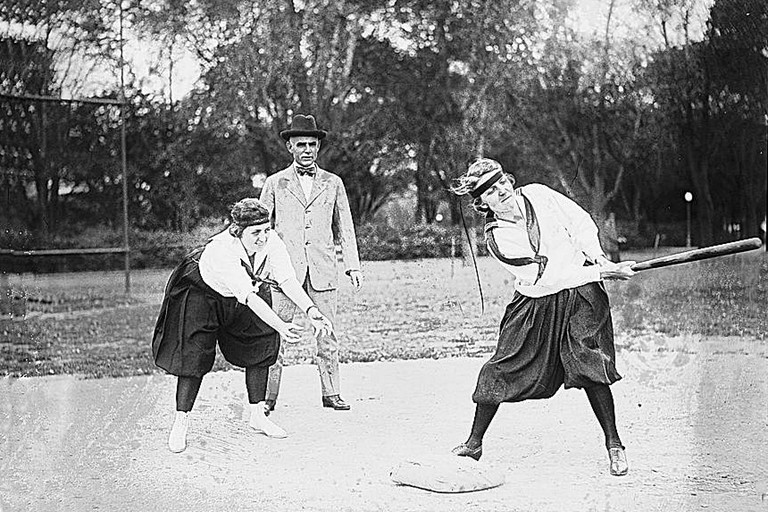
But when it came to baseball, women continued to be thwarted. In June 1952, Eleanor Engle was offered a contract with the Harrisburg Senators, a minor league team in Pennsylvania. The president of the league, George Trautman, however, called women players “travesties” and ordered that “signing of women players by National Association clubs will not be tolerated and clubs signing or attempting to sign women players, will be subject to severe penalties.” With the end of the AAGPBL and the ban by National Association clubs, every formal path for girls and women in baseball had been eliminated.
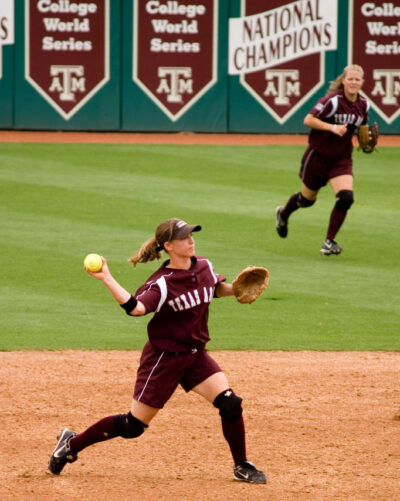
By 1972, when Title IX mandated that schools and colleges provide equal athletic opportunity for women, schools found a natural home for women’s athletics in softball; it was a sport women had been playing for four decades and had made their own. Little League opened its doors to girls in 1974, but with money now moving toward softball at the high school and college level, few girls had reason to fight upstream toward baseball. The cultural connection between women and softball, built quietly since the 1930s, had become its own kind of infrastructure.
In 2026, the Women’s Professional Baseball League will launch its first season, playing in Springfield, Illinois. The location is intentional: Springfield is the same city where, in 1875, the Blondes and the Brunettes played the first professional women’s baseball game. More than 150 years later, women ball players will finally be able to play the game that Jackie Mitchell never could.
Women’s Pro Baseball League set to make history this summer (Uploaded to YouTube by NBC News)
Become a Saturday Evening Post member and enjoy unlimited access. Subscribe now


Comments
Mrs. Roth you penned yet another exciting historical article on women and baseball. I enjoyed the photos and video clips that tied the narration into one cohesive article. I have always loved baseball and your writing taught me a few things that I did not know. Thanks for the history lesson on women who played softball and baseball.
Great stuff, Tanya! Japanese American women also played baseball throughout the 1920 and 30s, as I discussed in the First Inning of my new podcast season:
https://americanstudier.podbean.com/e/the-first-inning-japanese-americans-baseball-the-american-story/
And continued doing so in incarceration camps, as I discussed in the Fourth Inning:
https://americanstudier.podbean.com/e/the-fourth-inning-building-populating-the-diamond-in-the-rough-the-social-significance-of-sports/
Ben