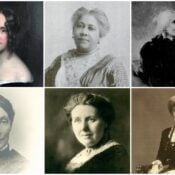
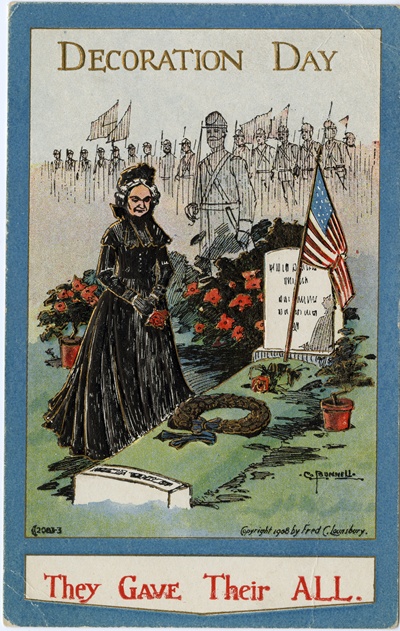
At the end of May, many Americans will lay flowers on the graves of the nation’s fallen heroes. This tradition of decorating soldiers’ graves, once known as Decoration Day, was largely organized and maintained by women in the years after the Civil War, long before it became the national holiday now known as Memorial Day.
Nearly a half-century after the Civil War, President Woodrow Wilson established a new holiday in May. On May 9, 1914, Proclamation 1268 created Mother’s Day. Instead of the more familiar greeting cards and bouquets we know today, the Proclamation focused on patriotic recognition of mothers: “I…direct the government officials to display the United States flag on all government buildings and do invite the people of the United States to display the flag at their homes or other suitable places…as a public expression of our love and reverence for the mothers of our country.”
Just three years later, the idea of recognizing American mothers’ patriotism took on new significance. In April 1917, the United States entered World War I. The following month, Mother’s Day and Memorial Day were both observed during wartime for the first time. On a scale never seen before, Americans began to confront the reality that their loved ones who went into battle might never return home.
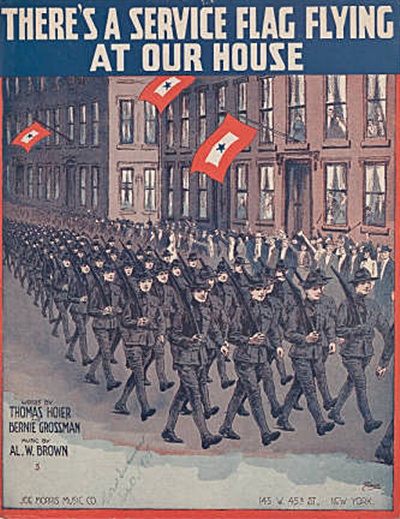
Of the nearly five million Americans who served in World War I, more than 116,000 died in service in Europe. As they went off to fight, families at home began to place in their windows service flags with a blue star indicating each family member serving in the war. By 1918, the practice of commemorating service deaths with gold stars had begun. An article in the June 14, 1918 Ocala Evening Star described the gold star as an emblem of “honor and glory” reflecting “the pride of the family…rather than the sense of personal loss.”
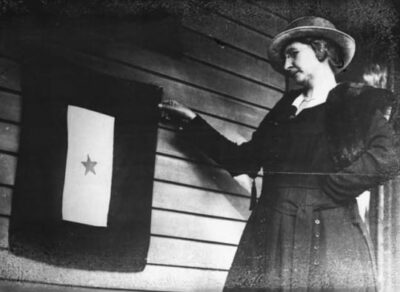
A month earlier, President Wilson had given his support to a similar practice, “that a three-inch black band should be worn, upon which a gilt star may be placed for each member of the family whose life is lost in the service.” This was a change from Victorian mourning practices, which had required very specific clothing customs for prescribed lengths of time.
On Memorial Day 1919, a nationally-syndicated interview with Mrs. Alice Gresham Dodd, the “first gold star mother,” reflected on the experiences she and thousands of other American mothers had encountered from the war. In November 1917, her son James Bethel Gresham was one of the first Americans killed in combat. In the aftermath, according to the 1919 article, “it was this gold star war mother who refused to wear black when her son was slain in battle because she didn’t want to depress the hearts of other war mothers whose sons had gone to serve their country, and of still others whose sons awaited the call to arms.”
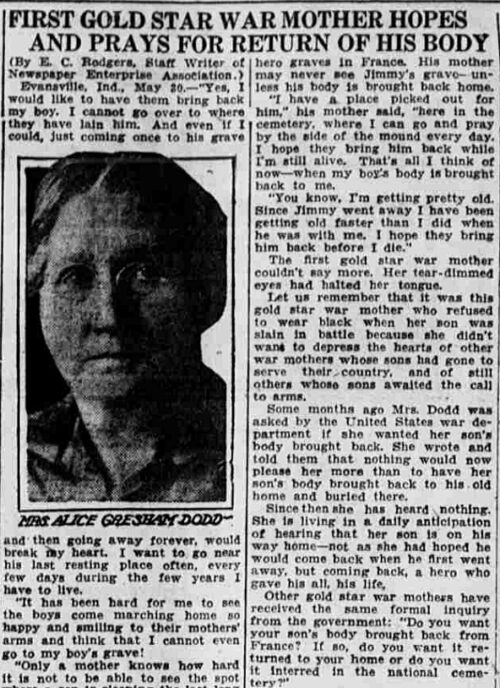
Six months after the war had ended, Corporal Gresham’s remains still lay in France. “It has been hard for me to see the boys come marching home so happy and smiling to their mothers’ arms and think that I cannot even go to my boy’s grave!” Mrs. Dodd said. It would be four more years before her son was finally laid to rest near her home in Evansville, Indiana.
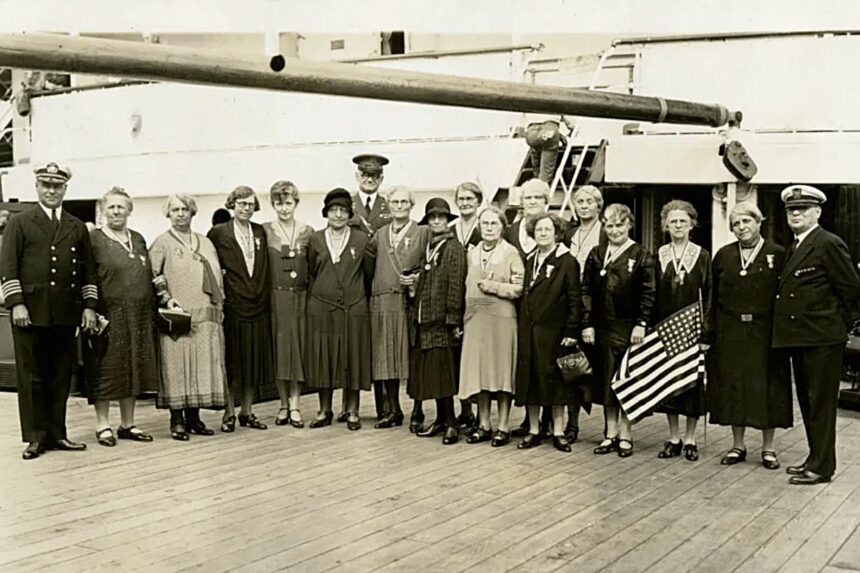
Not all mothers would be so fortunate. Thousands of American sons remained buried overseas, their graves beyond the reach of families who couldn’t afford the journey. Some Americans were able to cross the ocean: In the 1920s, Gold Star mothers and widows began to journey to Europe to visit their loved ones’ final resting places. But in 1925, one trip organized for this purpose cost more than $225, or a little more than $4,300 in today’s money. Over the next few years, members of Congress took up the question of whether Gold Star mothers deserved something more. On March 2, 1929, President Coolidge signed legislation that gave more than $5 million in funds to finance pilgrimages for Gold Star mothers and widows.
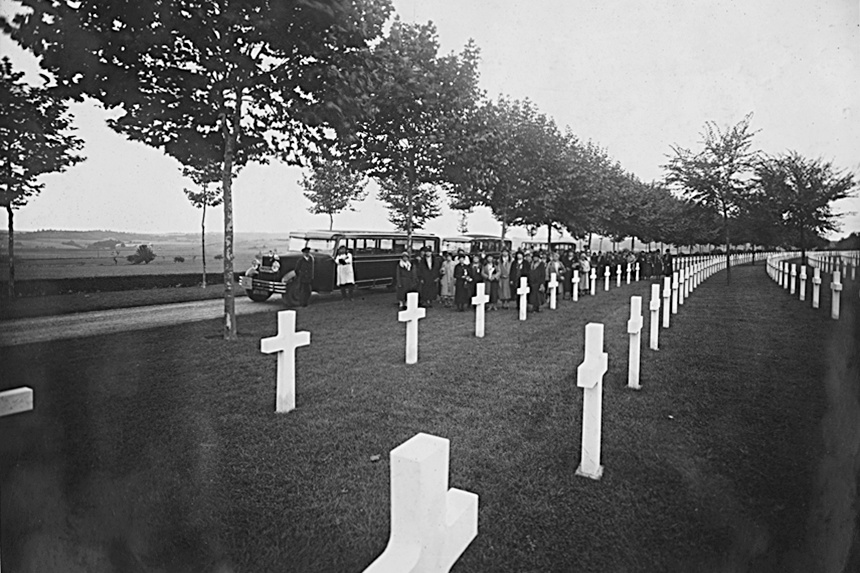
As 1929 drew to a close, government officials compiled a list of more than 11,000 eligible American women, approximately half of whom expressed interest in making the journey to Europe. Between 1930 and 1933, chartered American ships crisscrossed the Atlantic, bringing grieving mothers and widows together to honor their family members. When the pilgrimages ended in 1933, more than 6,600 women had participated. Their two-week trips took them not only to the cemeteries where they could mourn their sons and husbands, but also to Paris and tourist sites, giving the women a chance to see the places their loved ones fought to defend. According to the American Battle Monuments Commission, the caretaker of overseas military graves, “Cemetery staff decorated the graves with the flags of the U.S. and the host country. They provided a chair for the pilgrim to sit next to the headstone and reflect. Each…received a photograph of herself at the tombstone, where she also laid a memorial wreath.”
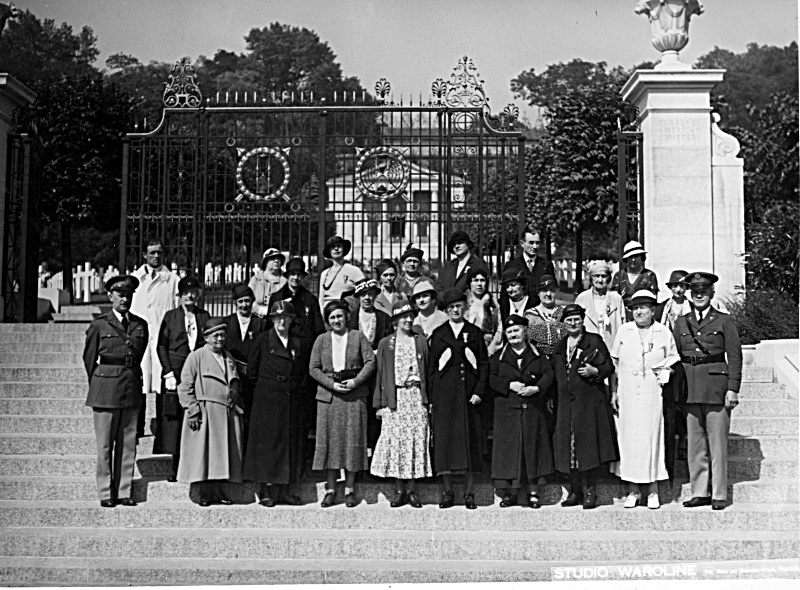
While every pilgrimage had the same intent, not all mothers were treated equally. The 168 Black pilgrims were just a small proportion of the 1,500 African American women who experienced loss in World War I. While white pilgrims traveled on luxury ships, African American pilgrims traveled separately on a freighter. They were segregated while in Europe and prior to departure in New York City. More than 50 women signed a petition to President Hoover, protesting the segregated trips and requesting a change in policy: “Twelve years after the Armistice, the high principles of 1918 seem to have been forgotten. We who gave and who are colored are insulted by the implication that we are not fit persons to travel with other bereaved ones.”
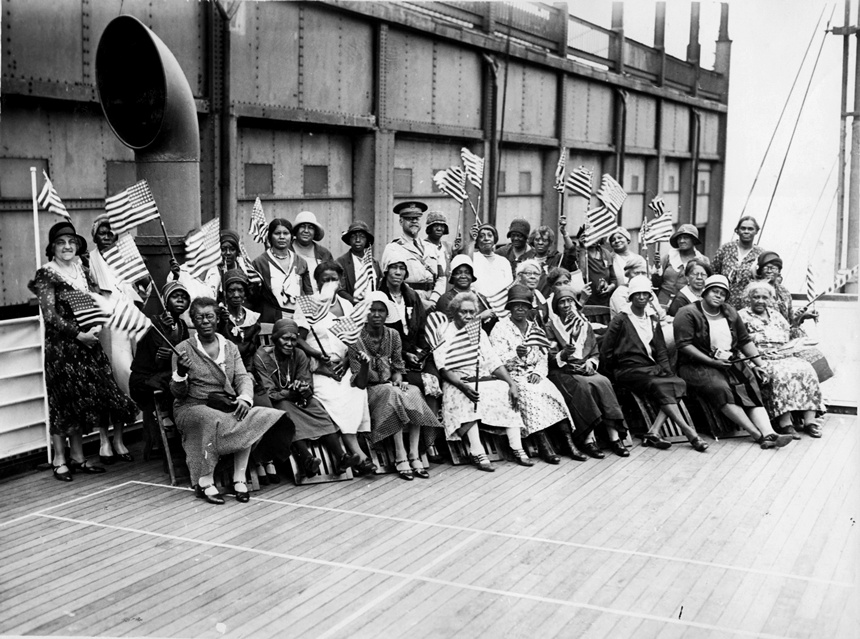
The War Department denied their request. Mrs. Louise Kimbro was one of the women who made the trip despite segregation and lesser accommodations. In a letter to the War Department after her journey, she wrote, “I never will get through talking about the grand time we had…How can anyone forget such a trip…we never can.”
The pilgrimages ended in 1933, their missions fulfilled even as the nation sank deeper into the Great Depression. A decade later, in the midst of World War II, the U.S. government sought new ways to honor its fallen heroes, now focused on repatriating Americans’ remains whenever possible. By the early 1950s, almost 300,000 Americans had been returned stateside or interred in U.S. cemeteries around the world, all at government cost.
Today, American Gold Star Mothers, Inc., continues its mission of supporting veterans and servicemembers, all as part of continuing to honor their sons and daughters who have died in uniform. For these mothers, the second Sunday in May has never been only a celebration. It is also, quietly, a day of mourning: an expression of the same grief that Memorial Day asks the rest of the nation to share at May’s end.
Become a Saturday Evening Post member and enjoy unlimited access. Subscribe now