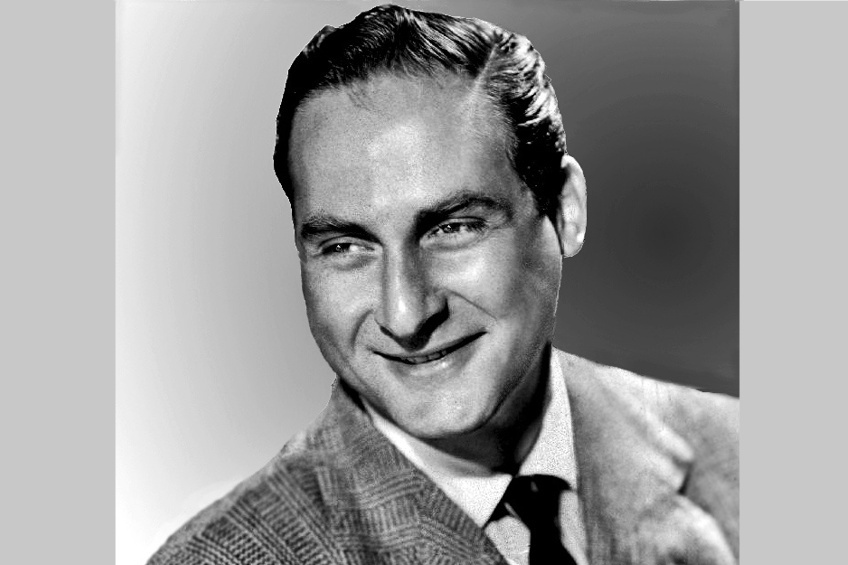
The founding father of TV sketch comedy is the topic of a new book, and the author admits he knew next to nothing about Sid Caesar when he started writing about him.
“I grew up in the TV generation, but I’m not a representative member of it,” declares veteran journalist and author David Margolick. “My father was very hostile to television. He assumed everything on it was junk, so we had to kind of watch behind his back.”

As a result, Margolick — whose extensive sizzle reel includes four Pulitzer Prize nominations; 15 years as a metro and legal affairs correspondent/columnist for The New York Times; 15 years as a contributing editor at Vanity Fair; and eight previous books — came to his latest subject with fresh eyes.
His subject is a much-anticipated biography of Sid Caesar, whose trailblazing Your Show of Shows and Caesar’s Hour set the gold standard for virtually every other comedy-variety series that followed, most notably Saturday Night Live, along with helping to launch the careers of Mel Brooks, Carl Reiner, Neil Simon, and Woody Allen.
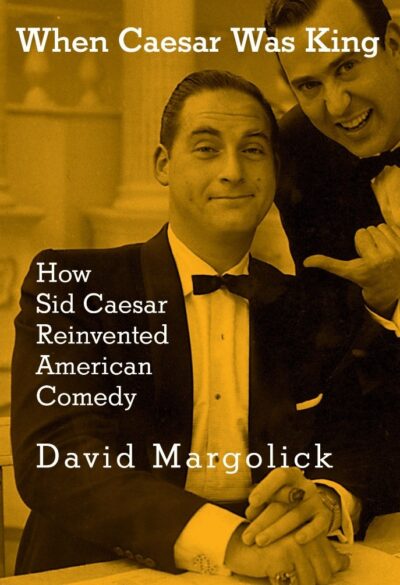
When Caesar Was King: How Sid Caesar Reinvented Comedy is also the first comprehensive study of Caesar, who died in 2014 at age 91 and had already penned two memoirs, the self-lacerating and unreliable Where Have I Been? in 1983, and the far more reflective Caesar’s Hours, co-written with pop culture scholar Eddy Friedfeld in 2003. Although Margolick paints a mostly affectionate portrait of who Caesar was and why he mattered, he doesn’t pull any punches when it comes to the comedian’s mercurial personality, his decades-long addiction to alcohol and pills, and how by equal turns, he became TV’s first true comic sensation, as well as its first casualty.
At 73, Margolick was born two years after Your Show of Shows premiered on NBC in February 1950. His first encounter with Caesar occurred unwittingly half a century later in late 2000 when the author attended a testimonial dinner for Caesar emceed by comedian Alan King. However, it wasn’t until 2008 that he inked a deal to do a book originally conceived for a series called Jewish Encounters, which eventually became the 400-page When Caesar Was King, published Nov. 11 by Schoken/Penguin-Random House.
Now that it’s finally out, The Saturday Evening Post chatted with Margolick about the book at his eclectic, memorabilia-filled apartment on New York’s Upper West Side.
Tripp Whetsell: How this all started is as interesting as the book itself. What do you remember about the testimonial dinner for Sid with Alan King?
David Margolick: I don’t really remember how I wound up there. But I’ve always been curious about Jewish culture, and here was a chance to spend an evening in that world and learn a little bit more about Sid Caesar. I don’t think I carried away a lot of thoughts about him from that night except for wondering why everyone held him in such high regard — in other words, why all the fuss about him?
That, and the image of this old and fragile man making his way to the stage, with Mel Brooks helping him. It seemed to me that Mel was much more of an attraction than Sid that night. It never occurred to me to record the program, though I’m very thankful that the organizers of the event did, and I’ve watched the tape many, many times.
TW: From there, how did the actual book emerge about eight years later?
DM: What happened is that Jonathan Rosen, who was the editor of the Nextbook series at Schocken, was doing a new series of short biographies on important Jewish cultural figures. When he asked me if I wanted to write a book, my first inclination was to choose someone from the legal profession because that was my background. But then I thought there aren’t many great laughs in Jewish history, and why not have some fun with the book? Groucho Marx was already taken, and that’s when Jonathan suggested Sid. He turned out to be the best of all subjects for a biography, someone who was once incredibly famous (so there’d be lots on him out there), but who had been largely forgotten (so there’d be a dramatic story to tell).
TW: Even with your track record, did you have any trouble getting Sid to agree to participate? By then, he was very old, and he’d already done two memoirs.
DM: Not at all. He was eager to do it, and former collaborators Carl Reiner and Mel Brooks were eager to help. Sid brought out that impulse in his old associates. Woody Allen was another. They talked to me because they wanted to build him up and restore him to the position he deserved.
TW: Tell me about the meetings. I know you had two extended interviews with him in 2008 at his home in Beverley Hills.
DM: At that point, he was mostly bedridden, but the meetings were unexpectedly fruitful. I began by playing for him two of his classic sketches from Your Show of Shows, the spoof of “This is Your Life” and the sketch of the German general and his valet. I mean, there he was looking at it for the umpteenth time. It was really fascinating to watch him watch himself as a younger man, and it was touching because he enjoyed it. As many times as he had seen himself, in some ways it was as if he hadn’t seen himself before, and he was reminded of how good he was and how good the show was.
TW: Looking back, what would you have asked him if you could do it all over again?
DM: I would have asked him about race, having Black performers on the show and the kind of restrictions they were under. I would have asked him more about his dealings with NBC executives and pressed him more about why Your Show of Shows ended. I also would have asked him more about his down and out years and how he felt about his various disciples not giving him work.
Sid was hard guy to write about. He wasn’t terribly forthcoming. There aren’t any Caesar letters or journals. He remained a cipher even to the people who worked with him for years.
TW: Speaking of which, that was going to be my next question. Tell me about your encounters with Carl, Mel, and Woody.
DM: Woody was over the phone, but Carl and Mel were in person. As I said, the best thing about those interviews was how generous they were. Many celebrities just go through the motions, but when it came to Sid, these guys wanted to talk. They all felt this great debt to him and were pained by the great historical injustice that had been done to him and wanted to help restore him to the position they felt he deserved.
Woody and Mel told me stories that they haven’t used in their books or elsewhere. I felt as if I got something really original and moving and important from both of them. Like Sid imploring Mel to explain to him what accounted for his spectacular fall while they were filming History of the World, Part I in 1980.
TW: What about Carl?
DM: Carl was very friendly and obliging and gracious. But Carl was also Carl. Carl was always careful and diplomatic. I’d have loved another crack at him because he knew all the secrets. Lots of Sid’s secrets died with him.
Sid Caesar – “This is Your Story” with Carl Reiner and Howard Morris (Full Sketch) (Uploaded to YouTube by Kovacs Corner)
TW: And Mel? He’s often known for embellishing things, particularly that well-worn yarn of him being dangled by Sid outside of a window at the Drake Hotel in Chicago.
DM: Well, yeah. That story has gone through several different permutations, growing more outrageous with every telling. In each successive version, Sid was hanging him out from a higher floor and holding onto him more tenuously.
TW: One of the most interesting parts of the book to me was Sid’s relationship with Imogene Coca. On screen, they had a very kinetic chemistry, but in real life they were like night and day.

DM: Superficially, they were very close. They were also very similar in some ways. Both were extremely shy and awkward with other people and superstitious. On screen, there was this incredible connection between them, but off it they remained complete strangers. When they performed at Dwight Eisenhower’s first inauguration, they didn’t exchange a single word during the eight-hour train ride from New York to Washington.
TW: The sad part about that too is that she’s also become a largely forgotten footnote in the early history of television who never got the proper credit for her achievements the way that Lucille Ball and Carol Burnett did.
DM: You’re really onto something there. I think in the end she was the victim of Sid Caeser’s descent into obscurity. When Sid fell, so did she. Because they were forever linked in the public mind, they performed together frequently in their later years always by popular demand and brilliantly, but with no greater understanding of one another than before.
TW: Another thing I really enjoyed about the book is that it’s not just about Sid’s life — you incorporate historical elements of post-World War II America and the birth of television. How were you able to do this without getting too lost in the weeds?
DM: It’s a delicate balancing act, and sometimes writers who lack confidence in their material take undue digressions. You know they’re worthwhile because they concern things you don’t know about yourself and that you’re surprised and delighted to learn. And your readers will probably feel similarly.
One such thing is the advent of television. It’s just so interesting to learn about how it appeared on the scene, how people reacted to it, and how it integrated itself into American life and society. The material is so good that a little goes a long way, and it’s absolutely a detour worth taking.
TW: The book took you 17 years to write. As a fellow author myself, I’m dying to know what took you so long.
DM: It makes me sound awfully slow and sometimes I am, but in fairness to myself I did three other books in that time.
TW: When Caesar Was King has been described as a “definitive” biography, which is a high watermark by any standards. Do you think any book can live up to such lofty expectations no matter how good the writer is?
DM: Sure. Some biographies — like Robert Caro’s series on Lyndon Johnson and Richard Ellmann’s book on James Joyce, which was written over 60 years ago — are classic examples of that. I don’t pretend that I’m in their company, but given Sid Caesar’s scant paper trail and the actuarial tables, I doubt anyone will ever do better on him than me.
TW: What are you hoping readers will take away from it?
DM: That sometimes the unlikeliest people shape the way we live and see the world most dramatically. Also, it’s simply a compelling story.
TW: Up next on your plate is a biography of Jonas Salk, the man who invented the first successful polio vaccine. Are there any similarities between him and Sid Caesar?
DM: More than you would think beyond just their both being Jews born in and around New York within a few years of one another. Most fundamentally, both peaked early and spectacularly, with all the challenges and perils that posed over the rest of their lives.
Become a Saturday Evening Post member and enjoy unlimited access. Subscribe now


Comments
At age 23 in 1952, I was working in Chicago and living at the Y on the near north side. There, in the common room on Sat. nights folks gathered to watch “Your Show of Shows.”
It was the highlight of the week for me and I adored Sid Caesar. Now I can hardly wait to read the book, just ordered. Thank you for the great article.
Thank you Tripp, for this interview of David Margolick on his new ‘When Caesar Was King’ book. I can see how the book would have been time consuming to write, and a challenge.
My parents (before they ever met) looked forward to ‘Your Show of Shows’ each week, and loved the chemistry between Sid and Imogene. I was somewhat surprised how different their dynamic was on and off screen, but not entirely. Lucille Ball was much more reserved and serious off-screen. She was equally a powerful businesswoman as much as an entertainer otherwise.
Sid really had great people working with him in those early years. I could picture Joan Rivers and Totie Fields on his crazy train of comedy, but do believe they were a bit too young back then.