News of the Week: Snowstorms, Smart Cows, and Something Hot for Breakfast
Fern
I’m still recovering from last weekend’s snowstorm. Twenty-seven inches in my town, a new record for such a short time period. Lots of shoveling was done, a lot of rock salt was distributed, and several curses were heard.
As of this writing there might be another big storm coming this weekend. It’s name is Gianna. Yes, they (and by “they” I mean The Weather Channel) give names to winter storms now. Last weekend’s storm was named Fern.
If they really want to go all the way with this, they should also give names to good weather. Hurricanes and snowstorms are always seen as negative, disruptive things, so why not celebrate something people actually like?
Sunny Day Jimmy will be making it’s way up the east coast this weekend. It’s too early to tell, but depending on how things go, the eastern seaboard from North Carolina to Maine could see sun and possibly even light breezes, with nothing else happening at all. Temperatures should be in the high 60s, though some areas could see 70. Residents are advised to buy the usual amount of groceries they always buy. Please download our weather app to keep track of this non-storm.
Can You Actually “Read” an Audiobook?
I’ve never listened to an audiobook, but I’ve heard rumblings that there is some disagreement on whether or not listening to an audiobook means that you’ve actually “read” the book. And to this I say rubbish! And also: fiddlesticks!
Of course listening to an audiobook is reading. You mean to tell me that people who have vision problems and can’t see a book aren’t “reading” when they listen to an audiobook?
Having said that, there are two exceptions. And they’re important exceptions.
- The book has to be unabridged. If you’re listening to an abridged audiobook, then you’re not really reading the book (see also: CliffsNotes). You’re just getting a summary and missing out on a lot. Luckily, this isn’t really a problem anymore because I don’t think most books are abridged now.
- You can’t be doing anything else. You can’t be driving, organizing your closet, or doing other work (I don’t even think you can do it in the shower). Reading is not something where you can multi-task. I know a couple of people who, believe it or not, listen to audiobooks while they’re on their computer working at their job, typing, sending emails, corresponding with coworkers and clients. Sorry, that’s not “reading,” that’s “consuming content.”
Try this: the next time you’re driving or in the shower or working at your job, hold a regular book in your hand and try to read. Then come back here and let me know how successful you were.
The only way to “read” an audiobook is to sit in a chair or lie down on a couch and really listen to it, without any other distractions or tasks. Just like you would with a print book or something on a Kindle. (Opposing views will be considered but then quickly disregarded.)
Holy Cow
So many people are talking about how “cute” this video is, but to me it just means that soon the cows will rule us all.
Uploaded to YouTube by CBS Sunday Mornings
Headline of the Week
RIP Bruce Bilson, Floyd Vivino, William Foege, Pete Napolitano, Yvonne Lime, Guy Hovis, and Eddie Doyle
Bruce Bilson directed such classic TV shows as Get Smart, Hogan’s Heroes, The Doris Day Show, Barney Miller, and The Odd Couple, and was assistant director for several episodes of The Andy Griffith Show and Route 66. He died last week at the age of 97.
Floyd Vivino – also known as Uncle Floyd – was a beloved New Jersey comedian and TV show host. He died last week at the age of 74.
William Foege is one of the people we have to thank for the eradication of smallpox. He died Saturday at the age of 89.
Pete Napolitano – also known as Produce Pete – was a cook and TV personality on WNBC for over 30 years, advising people on how to buy food. He died Monday at the age of 80.
Yvonne Lime starred in the cult classic horror film I Was a Teenage Werewolf. She also appeared on many TV shows, including several episodes of Father Knows Best as Betty’s friend Dottie, and co-founded a children’s charity. She died last week at the age of 90.
Guy Hovis – with his wife Ralna English – was a singer on The Lawrence Welk Show for many years. He died last week at the age of 84.
Eddie Doyle was the iconic Boston bartender who inspired Cheers and the character of Sam Malone. He died last week at the age of 85.
This Week in History
Michael Jackson’s Hair Catches Fire (January 27, 1984)
The footage from the set of the Pepsi commercial Jackson was filming might be a little hard to watch, but it’s a fascinating piece of 1980s pop culture.
FDR Born (January 30, 1882)
Here’s Jonathan Darman on the making of our only four-term president (well, three full terms and a couple of months of a fourth term).
This Week in Saturday Evening Post History: Armour Sausage Breakfasts (January 29, 1949)

You know what? Meat really does make breakfast better!
February Is National Hot Breakfast Month
They say that breakfast is the most important meal of the day, and this time I don’t mean “they” as in the Weather Channel. I mean some nutritionists and the makers of TV commercials.
I don’t usually eat breakfast. In the morning I don’t want to take the time, so I usually just have a couple of cups of tea. Though every single time I do make or go out for breakfast, which is rare, I think to myself, why don’t I do this every day? And with this winter being the way it has been, a hot breakfast sounds good right about now.
Tasting Table has a recipe for a Meat Lover’s Omelette, while Curtis Stone has an Easy Asparagus Omelet (the world really needs to come to a decision on how to spell omelette/omelet). The Pioneer Woman has The Best Scrambled Eggs Ever. Taste of Home has Chocolate French Toast, Flora & Vino has Blueberry Pie Oatmeal, and Serious Eats has Waffle Iron Hash Browns.
By the way, since National Hot Breakfast Month is for February and there’s still a few days left in January, you can’t eat breakfast until Monday. Unless it’s a cold breakfast.
Next Week’s Holidays and Events
Backward Day (January 31)
?day the celebrate to going you are How
Groundhog Day (February 2)
Have you joined the official Punxsutawney Groundhog Club?
Winter Olympic Games (February 6)
After the storm I don’t really want to see any more snow this season, but if you don’t mind it, here’s a complete guide.
Dad’s Three Laws
It’s the first time I descend the steps as an adult, but my feet remember the way. My hand reaches into the dark, finding the rocker switch on the first try, and three flame-tipped bulbs awaken below the ceiling fan, all of them dim. I cross my arms and stare into the gloom of Dad’s office, tracing the contours of his slumbering laptop, the picture frames angled to face him while he worked, the dark spaces between the shelves of his books. All memories he couldn’t take with him.
“You’re making the face already.” Chloe slips past me, snapping on a stand lamp near the door. She’s careful not to brush against me, but I feel the breeze as she goes by. I smell her shampoo, strawberries and coconut, same as Mom used.
“Only face I’ve got,” I say, and clench my jaw as if to stifle the words already spoken. We’re not here to fight. Chloe just makes it so easy.
“You saw the upstairs,” she says. “I couldn’t keep up the whole house, but the rooms Dad’s been using are fine.” Chloe keeps moving as she speaks, walking a practiced circuit to wake another stand lamp by the shelves, one in the far corner next to the suit of armor, a fourth with its shade positioned above the picture frames. “Ceiling light’s been like that for years. Doesn’t matter what bulbs you use, so it must be something with the wiring. Dad wouldn’t let me call anybody — cheaper to add more lights.”
Now that I can see the office better, I’m less eager to step inside. In the far corner, webs cocoon the helmet of Dad’s prized antique suit of armor, stretching onto the pauldrons and the top of the cuirass. The Knight, as we knew him growing up, is six feet tall and empty except for spiders. I forget to keep the edge out of my voice. “I thought you were taking care of him.”
Chloe is frenetic, powering up Dad’s computer, tightening a dim bulb overhead, stooping to pull a soda from the minifridge under the desk. She tilts the can toward me and I shake my head. “He hasn’t been down here in a while.” She types in his password before cracking open the soda and taking a drink. “And he stayed fussy about me coming down here without him. Not that I had time for sneaking around, with Jake and the kids needing me all the time on top of Dad’s … issues.”
Eagerness to avoid the subject of Chloe’s perfect family gets me across the threshold. She’s stared pointedly at my left ring finger several times since I got back, and I don’t intend to get into arguments over sex or love or the value of a warm hug. I point to the first thing I spot, the dreamcatcher above one bookshelf. Like everything else down here, the wooden ring is rough, the strings, beads, and feathers worn.
Chloe chooses to take the bait; she doesn’t want a fight any more than I do. “He always swore it was real. The Iroquois lady at the flea market convinced him it really worked.”
I smile, a slight curve of the lips that doesn’t reach the edges.
The pause drags out too long for Chloe. She thrusts her palms at the laptop, an explorer warming her hands over a campfire. “All right. You check his computer for any messages he left us. I’m going to pack some extra things from the bedroom and make sure I haven’t overlooked anything up there.”
We pass at the corner of the desk. She faces me with her arms extended, not asking for an embrace but not not asking at the same time. I eye the computer, thinking about how casually she entered Dad’s password, and my hip bumps the edge of his chair. The last time I sat here, I think I was ten years old.
Chloe lingers in the doorway. Her voice is soft, reluctant. “I didn’t like tricking him.”
“We didn’t want a fight,” I say. “Not today.”
“You let him think you were me.”
“I didn’t say anything about it, either way.”
“You asked him if he wanted to go for a ride through our woods, Miranda. That’s what he always said to me when I was little, to get me excited for daycare, or getting groceries, or the long ride to Grandma’s. It was our phrase.”
I sit. Dad was a foot taller than me, so the monitor provides shelter. “I didn’t lie. I don’t lie.”
The warning in my voice gives Chloe pause. I sense her resisting the urge to retreat upstairs.
“Miranda?”
I lean to one side, leveling my sternest big-sister gaze.
She straightens her shoulders, mustering courage. “What did Dad say to you before we left?”
Staring was a mistake, because now I can’t look at her. Tears well in the corners of my eyes, and I duck away before she notices, pulling open the minifridge where there is nothing I want. Chloe dislikes silence. Seconds later, the steps creak beneath her feet.
* * *
The shine had gone out of Dad’s eyes before we left the development where Chloe and I grew up. Asking him about a ride through the woods had gotten him into the car, but by the time Chloe tried to capitalize on it, asking if he could see the creek through the trees or whether anyone lived up the old dirt road with no street sign — the way he used to when she was little and I rode the bus — Dad had retreated into his congested, misfiring mind. He came back to us once, as we passed the dilapidated barn on the edge of the forest, but that had only made things worse.
I banish the memory of our ride to Dad’s new home at Sunrise Gardens, focusing on the clutter of his desktop. The image behind said clutter shows the four of us at Edge Mountain Hawk Sanctuary. Chloe straddles Mom and Dad’s laps. I stand next to Mom, one arm around her shoulders, painted smile convincing everybody this was a shared moment of joy. I remember Dad thanking the lady who took the picture for us, overdoing it as if she’d saved one of us from falling off the mountain. I was maybe fourteen, around the age Dad and I really started fighting. If there’s another family picture out there, I’m not sure when it was taken.
“What’s this?” I ask the room and double click a folder titled MY THREE LAWS. I imagine Chloe telling me not to snoop. No one wants to see what their father has hidden away on his laptop; no one wants to be reminded how the man who raised them was, after all, a man. My mission is simple: look for a final directive, find any last goodbyes, and wipe the rest before I find the stuff no one wants to know about. The thought of Chloe telling me to slow down gives me the will to keep going. She was always the favorite, and some part of me wants to find proof, even if it hurts. Especially considering what Dad said before we left.
Dad’s Laws.
The thought makes me smile. Dad was never the family lawmaker. He tried to enforce Mom’s laws, and Chloe and I fought him every step of the way, like sharks scenting blood in the water. Then Mom was gone, and Dad decided to leave growing up to us kids.
Inside the folder are a document and — my eyes widen — over seven thousand video and sound files. I scan the column farthest to the right as I scroll. The sizes range from a couple of hundred megabytes to videos weighing in at a few gigabytes.
Don’t do this, I think, and this time it’s my own voice warning me. Odds are, these files contain the ramblings of a man losing himself, recording his slow descent into hell. If there’s anything worse than finding your father’s stash of downloaded porn, it must be listening to a time lapse of his unraveling.
The way Chloe did.
My mind conjures an image of my little sister finishing dinner with Jake and the boys before driving to this house to make sure Dad remembered to eat. Finishing her family’s laundry before washing a load of his. Eventually spending several nights a week here, taking on the role of nurse, and not just in function. Dad came to believe she was his nurse. He bragged about Chloe to Chloe, and sometimes shared his regrets. When she told me, I was horrified. We both know I couldn’t have survived half of what she’s lived through.
“Wait.” I’ve spent most of my life talking myself through tough situations. Right now is little different. The office bulges with so much of what Dad left behind that it’s like talking to him without the complication of having him here. I sort the files by date. Some are over thirty years old, long before Dad’s symptoms began. My mouth goes dry as my calculations lead to a staggering fact. A wave of heat roils behind my eyes, traversing my scalp all the way to the base of my skull. It’s a palpable sensation, so strong the room wavers.
Mom could be in these.
Without direction from my brain, my hand selects a random file from among the larger ones. I pick at my cuticles while the video loads. It’s a habit I got from Mom. Indulging it helped me withstand the grief of losing her.
The window opens, and it’s her. She’s sitting at her computer, so young it reminds me that I’m older than she ever was. Tears flood my eyes. My chest locks up, and I crush myself under crossed forearms, savagely swiping my cheeks. Mom is in front of me but too blurry to make out. It doesn’t matter that I could replay the file; seeing her is a primal need. It will not be denied or even delayed.
“It’s like you don’t realize this is my office,” Mom says, and I cannot breathe. “I’m working. It’s like you don’t respect me enough to let me do my job.”
I gasp a lungful of dusty air. From the angle of the camera, Dad is looking up from the floor near her office door, upstairs. For a moment he looks down, then up again, and I realize what I’m seeing. Daddy’s Camera Glasses. Different companies keep trying to sell glasses with built-in cameras, but they always fail for the same reason: they’re skeevy. And yet, for a short while, my dad owned a pair.
Dad’s voice rises from a throat not yet plagued by the rigor of seventy harsh winters. I struggle to accept that the guy who raised me ever had a voice so smooth. “I was thinking of us as coworkers. If we were in an office again, those are the conversations we’d be having.” He looks away. “But I hated the people who interrupted my work like that.”
When Mom speaks, the words come slowly, a careful construction erected one syllable at a time. “But you have to realize I’m working—at my job—and I’m having all those conversations with my team. You wouldn’t call me at the office to talk to me about this.”
Dad’s voice shrinks further. “I was thinking this was our office, but I see what you mean. I hadn’t thought of it — of them.” A long pause. “You’re right.”
I realize a caption hovers across the bottom of the window. I glance away from Mom’s face long enough to read: FIRST LAW: DOCUMENT WHAT INTERESTS YOU.
First law? I think, but Mom speaks again.
She grasps her coffee mug in both hands. A stranger might mistake the way she holds it for warming them, but I know better. If those Irish hands start to move, the temper breaks loose. She’s fighting it hard. Watching her hands shake reminds me of that old movie, The Big Lebowski, when the Chief of Police of Malibu throws his coffee mug at the Dude’s head.
“Even that first night,” she says, her voice strained beneath the weight of her words. “I was sitting there, looking out over the waves. The sky went on forever, and there were so many constellations. … It was beautiful. You asked what I was thinking, and all those thoughts that had been forming just … went away. I lost all of them.”
Mom’s office jerks at such a sharp angle that, for a moment, I think she threw the mug.
I hear Dad breathing, deep and barely restrained. “That was the night I fell in love with you.” He sounds far away beneath the glasses. “It was one of my fondest memories.”
“I know,” Mom says.
I blink and notice the caption has changed. Now it reads: SECOND LAW: NEVER SPEAK OF WHAT YOU DOCUMENT.
“I think you’re trying to feel a connection,” Mom says. “And maybe it’s just me, but when you do that, it completely shuts me down. And you do it over … and over … and over.”
She isn’t loud, but the repetition and emphasis shake Dad’s head. The glasses had built-in motion stabilizers, but his grief overwhelms them. For a moment I think she’s going to keep saying it, over and over … but she stops.
Dad waits. Mom grows with each passing second, filling the screen and the whole world.
“I think it’s the same for Miranda, too,” she says. “A lot of the fights you guys get into are because she needs her downtime to process everything going on around her. Between school and field hockey and boys. If you try to start up a conversation with her first thing in the morning — ”
My mouth hangs open, but I can’t speak. Can’t breathe. She’s not wrong, but why is she saying this?
“I say good morning.” Dad’s interrupted her, but it’s a whisper. He’s thinking out loud. Mom could have spoken over him, but she’s so intent on delivering her message without breaking him that even such a tiny sound makes her stop.
I wonder about the maximum file size for these glasses, but excruciating conversations have a way of stretching time.
“But it always leads to more,” she says. “And she uses that time to prepare for the day.”
Mom moves down and up as Dad nods, and I pause the video. My tears don’t come easily most days — unlike Chloe, who spent her childhood winning consolation prizes with ragged sobs — and I intend to keep them at bay. I hear a sharp intake of breath and raise my eyes to find Chloe staring back. White shows all around her irises.
“Was that Mom?”
* * *
“Do you want to say hi to the animals, Chloe?” Dad asked, the way he did when he drove her past the old barn as a toddler. He had convinced Little Chloe the barn was full of cats, who watched them drive past each morning. She would meow to them, and they — Dad — meowed back.
Adult Chloe’s breath caught, but she worked through her surprise to give her best housecat impression.
Instead of responding in kind, Dad fell silent. His head began to shake in a series of taut jerks. He snapped, “That was Chloe’s chance to talk to the animals. Maybe her last chance!”
He turned to the window, eyes glistening, refusing to look at her for the remainder of the drive. I turned on the radio to stifle the sounds of her tears.
I had told myself his voice in the video was different from the one I heard in the car this morning. Smoother, unimpeded by vocal cords desiccated by years of black coffee breakfasts, lunches, and dinners — and midnight snacks. But the desperation, that was the same.
As Chloe comes around the desk, I ask, “Do you remember Dad ever making … laws?”
She scrunches up her face. “He used to yell at me when I wouldn’t go to bed.”
“Me, too.” Dad used to go straight to red. Hands waving, vein throbbing on his forehead. When I was young, it frightened me. Then one of my friends said it sounded like a dick vein, and it was so funny I had to force myself not to laugh every time he threw a tantrum. The old man who asked Chloe to say hi to the animals for the last time has changed so much that it’s like remembering another person.
Chloe stands by my side, reading the caption across the bottom of the screen. “Laws for who?”
My thoughts are too far away to respond. How old was I when we stopped fighting because I withdrew completely? The smiling faces peeking around the open folder on Dad’s desktop offer a clue. High school, then. Ninth grade? Not tenth.
Chloe reaches past me and clicks the mouse. I almost grab her hand, but Mom moves. A faint moan escapes my sister’s throat. Or maybe it comes from mine.
“I have to get back to work,” Mom says, and Chloe’s hands tremble against quivering lips.
The camera angle shifts to peer down on Mom as Dad stands. I want him to leave, to take his lesson and go, but this is my father, a man who never recognized the end of a conversation before it became an argument. “Thank you for talking with me,” he says. “I know you’re busy, and I know I was interrupting. But I could tell you were mad about something, and I didn’t want it to get worse.”
Mom stares into my eyes. “Can I give you a hug?”
“You never have to ask.”
I’m not imagining the emphasis on you, and in that instant he justifies all our years of estrangement. Over Mom’s shoulder, Dad whispers, “I’m so sorry I did that to you all those years ago.”
“I didn’t want to tell you.”
A few seconds later, Dad hunches over the bathroom sink, soaking a washcloth to wipe his tears. I glimpse him in the mirror before the recording ends: round, scruffy, wearing a horror tee from a con he’d attended. At some point the caption has changed again: THIRD LAW: THEY WILL SHARE WHAT INTERESTS THEM.
Chloe exhales a shuddering breath. I feel her eyes on me, seeking comfort, but I hug as well as I cry. Sometimes I think we were one kid, divided into halves, separated by half a dozen years. When she can wait no longer, she hustles upstairs, leaving me to shrink into Dad’s chair, guilt-ridden, as always.
I scroll to the Word document; I’d almost forgotten. The old computer works to open the massive file, and after the first paragraph I know that a porn collection — even one built around fetishes and kink — would have been better.
* * *
Single-spaced, eight-point, Times New Roman.
There’s a new Deep Blue Sea movie coming next summer. You’ve always loved shark movies. Maybe we could go see it?
I glance at the bottom left. Page 1 of 846.
I scroll, spinning the wheel into the abyss. It’s not just pages, it’s years.
There will be a new release for Coraline! I still remember going to the two-dollar theater with you to see it the first time.
I try to whisper something, probably Jesus, but my throat won’t work. I cough instead, breaking the paralysis.
The statements continue, all pertaining to something Mom or I would have loved, but which we didn’t have the energy to endure on top of everything else happening in our lives. There’s nothing here directed at Chloe, of course. She received the firehose of Dad’s attention without flinching, and returned it in kind.
I scroll a few dozen pages but don’t reach the end of my high school years. Sitting there, surrounded by the ephemera of an old man’s life, I stare at nothing. My brain turns over my final question, which I’m sure I don’t want answered but can’t live the rest of my life asking.
I sort the folder by size and stare at thousands of tiny audio files. Recordings measured in seconds.
Get it over with.
The mouse click is a whipcrack. Dad’s voice, somewhere in his fifties by the weathering and weariness: “Good night, Miranda. I love you.”
That’s it. The entire file.
I click on another. A different day. A different year.
“Good night, Miranda. Sweet dreams.”
“What the hell?” Bile rises at the back of my throat. I sort the files by date and scroll to the top, seeking the video file I’d found earlier. The first audio clip is timestamped two minutes to midnight the same evening. I lean forward, applying bodyweight to a numb finger incapable of clicking.
“I love you, Sweetheart. Good night.”
A frenzy overtakes me. I click again and again, opening dozens of sound files, none longer than four seconds, all delivering a version of the same message. Each recorded around midnight, day after day, year after year. It hadn’t made a difference — the divide between us only got worse as I grew older — but he kept wishing me good night, pleasant dreams, a great tomorrow.
A cramp works its way into the back of my hand. I stop, staring at the open files, listening to my own breathing, and I realize Chloe has been watching. Tears shine in her eyes, but not from sorrow.
“It’s not fair.”
At first I don’t understand. I taste salt and my cheeks are wet, but I don’t know why I would be crying.
“Chloe.”
“You can keep those. You can hear him say good night to you every night for the rest of your life. But you won’t. You won’t.”
I glare at the rows of audio files and one bloated Word document. Is there even one mention of my little sister? Dad’s favorite? His life was replete with her. They shared every day. Her triumphs and defeats. Her perfect family, and all the imperfections I never heard about.
She stares at me, shaking, and I want her to leave. Run upstairs the way she did when we were kids. She would scratch me, and I would kick her, and she would run, sobbing. She would grab something I held, and I would shove her, and she would run, screaming. But today, the adult version of that kid stands before me, refusing to engage. Waiting me out.
And it works.
“Chloe, I didn’t know.”
“Obviously.”
“I don’t know what else I can say.” The anger surges in my chest, and we’re kids again. She won’t stop pestering, and it’s not fair that I should feel guilty about something I didn’t do.
“Just tell me, Miranda.”
The flame of my rage gutters as quickly as it kindled, because I know, but I ask anyway. Just in case. “What?”
“Tell me what he said.”
I’m back at the door to Dad’s room at Sunrise Gardens. Chloe is down the hall, talking to the nurses, and Dad is resting in his new chair. I think he might try to take my hand, but some part of him remembers that I don’t like to be touched. That’s what I’m thinking as I look down and find his faded blue-gray eyes peering back. Seeing me. And he says, “Sweetheart, why are you the one who always has to say goodbye?”
Wiping away tears — I seem to be drowning in them today — I shake my head. “We’ll visit him. Tomorrow. We’ll get him to say good night to you, I love you—”
I meant, Get him to say, “I love you,” and Chloe knows it, but hearing me speak those three words causes her to stiffen. I don’t know why it’s so hard for me to say. She knows damn well I do love her. She’s all the family I’ve got. Of course I do.
She shakes her head. “He thinks I’m his nurse.”
I force myself to meet her eyes. “And he thinks I’m you. He’ll say it, to you, and you’ll hear it.”
It takes her a minute to process what I’m saying. “You mean it? You’ll do it?”
I nod, and she knows it’s a fact.
Chloe hugs me. It’s a long hug, and I suppose a good one, because when it’s over she leaves, padding upstairs to rifle through the closet and dresser. I exhale and slump into Dad’s chair, staring at the glowing screen. I click on the folder dedicated to my father’s laws. My finger hovers over the Delete key, waiting for the desire to press it.
In a Word: A Pair of Parasites
Senior managing editor and logophile Andy Hollandbeck reveals the sometimes surprising roots of common English words and phrases. Remember: Etymology tells us where a word comes from, but not what it means today.
Parasites aren’t something we normally like to think about, unless you’re a parasitologist or a fan of Bong Joon Ho movies. So I’ll keep this exploration of parasite brief.
A lot of English words use the Greek prefix para-, which can mean “beside” (as in parable and paraphernalia) or “against or outside of” (as in paradox and parachute). In the case of parasite, it’s the former.
The second half of the word comes from the Greek sitos “grain, bread, food.” That isn’t a root we see much of in English. There are late-19th-century references to sitology as the branch of science concerned with the regulation of the diet, but today’s sitologists are more likely to be called nutritionists or dietitians.
Oddly, etymologists have been unable to trace sitos back any further than ancient Greek, so we don’t know why grain was called sitos.
I had believed — and perhaps you did too — that calling a person who takes more than they give a parasite was a metaphorical use of the sense “an organism that uses a host to grow or multiply in a way that harms the host.” But it’s really the other way around: A Greek parasitos was one who lived at the expense of another, literally someone who ate from the table of another, hence “beside + food.”
And that’s basically the sense we see of the word parasite when it is first recorded in English in the 16th century: a moocher or sponger or toady. The biological sense appeared about 100 years later.
Review: H Is for Hawk — Movies for the Rest of Us with Bill Newcott
H Is for Hawk
⭐️ ⭐️ ⭐️ ⭐️
Rating: PG-13
Run Time: 1 hour 59 minutes
Stars: Claire Foy, Brendan Gleeson
Writers: Emma Donoghue, Philippa Lowthorpe
Director: Philippa Lowthorpe
This based-on-a-true story film about a woman who takes on the herculean task of training a goshawk as a way of coping with the death of her father — a fiercely attentive bird lover — could have been a straight-up, soaring tale of happiness born of heartbreak.
Or, it could have been what we get here: a scorched-earth study of self-destructive obsession; a cautionary tale of what happens when we allow our lives to feed on sorrows that are already consuming us.
Call me crazy, but I’ll take Door Number Two, thank you. H Is for Hawk, ultimately a story of hard-earned triumph over adversities external and within, challenges the viewer in ways few films of its type would dare to.
Claire Foy (young Queen Elizabeth on TV’s The Crown) is Helen, a Cambridge University graduate student who, even in the best of times, is uneasy in the company of fellow humans. She was raised in the fields of England, tromping up hills with her doting father (the always-imposing Brendan Gleeson), catching glimpses of wigeons and harriers and golden eagles and chatting endlessly about what winged wonder might be around the next bend.
Then, like a warbler falling from its roost, Helen’s dad suddenly dies. Crushed by the loss, she understandably decides to buy a bird. Less reasonably, she procures a wild goshawk — known by birders to be the most unruly, strong-willed thing on wings — intent on training it.
Enlisting the help of an old friend who has long experience training recalcitrant hawks (such people, it appears, actually exist), Helen spends long days in open fields training the bird — named, of all things, Mabel — to fly aloft and return to roost on her leather-clad arm. It’s a hit-and-miss process: Sometimes Mabel just takes off in a straight line with seemingly zilch intent to ever return, and Helen has no choice but to lope off in pursuit (prepare yourself for glimpses of Mabel chowing down on freshly killed bunny rabbits).
It is in these extended scenes that director Philippa Lowthorpe (The Crown, Call the Midwife) gives H Is for Hawk its wings, her camera racing across fields and over ridges with Mabel as she flexes her hunting skills. (In one breath-stealing sequence, Mabel pulls her wings tight to her body as she shoots, bullet-like, between impossibly close tree branches.)
Slowly, incrementally, Helen earns Mabel’s trust — and consequently, Mabel convinces Helen she’s here to stay.
“Here,” incidentally, is the living room of Helen’s university apartment, where Mabel spends nights sitting on her improbable perch, a leather hood over her eyes lest she lurch into the air chasing a wayward shadow or blown sheet of paper. As the bond between bird and birder strengthens, however, Helen slips her bonds with the rest of humanity. Her plan to ease the loss of her dad through bird training has, it turns out, had the opposite effect: The more time she spends with Mabel, the more bitterly she misses the man who inspired her love of birds.
There’s a quiet, yet harrowing tragedy to Foy’s portrayal of Helen’s descent into depression. She shuffles about the apartment, hollow-eyed and wild-haired, taking no real joy in her avian obsession yet possessed by it. Her concerned mother (radiant Lindsay Duncan) and now-disconnected friend (Denise Gough) come knocking with increasing alarm, but Helen hides in the shadows…and even shelters in a large cardboard box, leaving herself a view only of Mabel, silhouetted in a window, her head tilting curiously as the house is filled with the sound of tapping on the glass behind her.
H is for Hawk is based on a memoir, which leaves co-writer/director Lowthorpe little leeway when it comes to helping Helen resolve her depression. Indeed, there is no moment of revelation; no epiphany of parting emotional clouds. Instead, Helen emerges from her depression in the most realistic — and non-cinematic — way imaginable: through long reflection, re-connection with others, and re-evaluation of just what sort of relationship a child should maintain with a departed parent.
H Is for Hawk is, in the end, a lot like Mabel sitting on her living room perch: A little scary, undeniably beautiful, and quietly wise.
5-Minute Fitness: Knee Strengthener
Seated Leg Lift
1 Sit on the edge of a chair, feet flat on floor.
2 Extend one leg out in front of you.
3 Pause, then lower leg to starting position.
4 Repeat with other leg.
Do 2 sets of 10 repetitions, twice weekly.
Standing Hamstring Curl
1 Stand with feet hip-width apart, hands on chair.
2 Bend right knee, bringing heel toward glutes.
3 Hold for 5 seconds.
4 Repeat on other side.
Do 2 sets of 10 repetitions, twice weekly.
This article is featured in the January/February 2026 issue of The Saturday Evening Post. Subscribe to the magazine for more art, inspiring stories, fiction, humor, and features from our archives.
The National Film Registry Announces Its Latest Inductees
What do a silent film with an all-Black cast, the musical White Christmas, and The Karate Kid have in common? Each is now officially deemed “culturally, historically, or aesthetically significant” by the Library of Congress, earning induction into the National Film Registry.
Every December since 1989, the Library of Congress has selected 25 films for inclusion in the registry, a growing canon reflecting the breadth and depth of America’s rich film heritage. Films must be at least 10 years old before they are eligible. The oldest film on this year’s list dates back to 1896 — The Tramp and the Dog, the first commercial film made in Chicago and the first known as “pants humor” where a comic character loses their pants — while the newest is Wes Anderson’s The Grand Budapest Hotel. You can find the list of all 935 films here.
“When we preserve films, we preserve American culture for generations to come,” Acting Librarian of Congress Robert R. Newlen said in a statement. “These selections for the National Film Registry show us that films are instrumental in capturing important parts of our nation’s story.”
The National Film Registry was an outgrowth of the National Film Preservation Act, which passed in 1988. This legislation was created in part to raise awareness of the urgent need for film preservation and is dedicated to preserving the world’s most popular art form and one of America’s most important cultural legacies.
In 2013, the Library of Congress released a study that reported only 14 percent of feature films produced and distributed domestically between 1912 and 1929 exist in their original format. Even films produced in the last half a century are in danger of being lost due to film stock deterioration, improper storage, or studio neglect.
Actress Alfre Woodard, a member of the National Film Preservation Board, compared the registry’s importance to that of the National Portrait Gallery in Washington, D.C., calling it “a testament to who we are,” in an interview with Vanity Fair in 2022. “You really know a people by their art and the stories they tell,” she said. “Whether it is established filmmakers, young filmmakers, orphaned films we’re finding, student films — they tell us who we are. It is our history of using film to express ourselves.”
Registry inductees are typically revealed in December, but the government shutdown pushed the announcement to January 28. The list for 2025 includes six silent films, including The Maid of McMillan (1916), known to be the first student film on record, and Ten Nights in a Barroom (1926), featuring an all-Black cast and the earliest of only two surviving films made by Colored Players Film Corporation of Philadelphia.
Ten Nights in a Barroom, 1926 (Uploaded to YouTube by Black Excellence)
Four documentaries were also selected, including Ken Burns’ first film Brooklyn Bridge (1981), Nancy Buirski’s The Loving Story (2011) about the couple whose forbidden interracial marriage led to a landmark Supreme Court decision, George Nierenberg’s celebration of gospel music Say Amen, Somebody (1982), and Danny Tedesco’s The Wrecking Crew (2008) about the legendary session musicians behind countless hit records for the Beach Boys, the Monkees, and others.
The Wrecking Crew Trailer (Uploaded to YouTube by Rotten Tomatoes Indie)
Two vintage musicals starring Bing Crosby also made the list, the holiday perennial White Christmas (1954) and High Society (1956), a remake of The Philadelphia Story costarring Frank Sinatra and featuring songs by Cole Porter.
Hight Society Trailer (Uploaded to YouTube by Rotten Tomatoes Classic Trailers)
The 1980s are well represented with John Carpenter’s The Thing (1982), his initially underappreciated remake of the classic 1951 thriller that has seen a critical and cult resurgence in recent years, Lawrence Kasdan’s Baby Boomer classic The Big Chill (1983), and John Avildsen’s blockbuster The Karate Kid (1984).
The Karate Kid Trailer (Uploaded to YouTube by Sony Pictures Entertainment)
Denzel Washington costars in two Oscar-winning films inducted into the registry, Edward Zwick’s Civil War drama Glory (1989) and Jonathan Demme’s Philadelphia (1993), the first Hollywood studio film to deal with HIV/AIDS.
Philadelphia Trailer (Uploaded to YouTube by Rotten Tomatoes Classic Trailers)
The remaining films chosen for inclusion to the registry are testament to its breadth and depth: Richard Linklater’s richly romantic Before Sunrise (1995), Amy Heckerling’s Jane Austen-inspired Clueless (1995), Peter Weir’s prescient The Truman Show (1998), Julie Taymor’s Oscar-nominated biopic Frida (2002), Stephen Daldry’s Oscar-winning The Hours, Brad Bird’s animated classic The Incredibles (2004), and Christopher Nolan’s mind-bending Inception (2010).
Inception Trailer (Uploaded to YouTube by Rotten Tomatoes Classic Trailers)
Each year, the 25 films are ultimately selected by the Librarian of Congress, who considers thousands of titles nominated by the public as well as recommendations by the National Film Preservation Board and other industry artisans and film curators. This year, the public submitted 7,559 titles.
Do you have a cherished film you’d like to nominate for the registry? You can do so at loc.gov/film.
Missing in History: Letters of a Woman Homesteader
“To me, homesteading is the solution of all poverty’s problems.”
– Elinore Pruitt Stewart, Letters of a Woman Homesteader
After years of working for others, Elinore Pruitt Stewart longed to “Just knock about foot-loose and free to see life as a gypsy sees it,” according to her collected letters. That seems to explain why she left Colorado for Wyoming to file a claim as a homesteader.
Elinore Pruitt was born on June 3, 1876, on White Bead Hill, a settlement in Chickasaw Nation, Indian Territory (in what would later become Garvin County, Oklahoma). Her father died shortly after her birth, and her mother married her late husband’s brother. By 1894, Stewart’s mother and stepfather had died, leaving the 18-year old-responsible for raising five younger stepsiblings.
In 1902, Stewart, 26, married 48-year-old Harry Cramer Rupert, who later died in a railroad accident, leaving her pregnant with her daughter Mary Jerrine. After moving to Denver, Stewart became a nurse and housekeeper for Juliet Coney, a widowed schoolteacher from Boston. After reading an ad in the Denver Post from widower Henry Clyde Stewart for a housekeeper at his homestead near Burntfork, Wyoming, she became excited about the idea of “the mountains, the pines and the clean fresh air.” She applied for the job, and by March 1909, she and her daughter were traveling to Stewart’s remote homestead. “I was twenty-four hours on the train and two days on the stage, and oh, those two days!” she wrote Coney. “The snow was just beginning to melt and the mud was about the worst I ever heard of.”
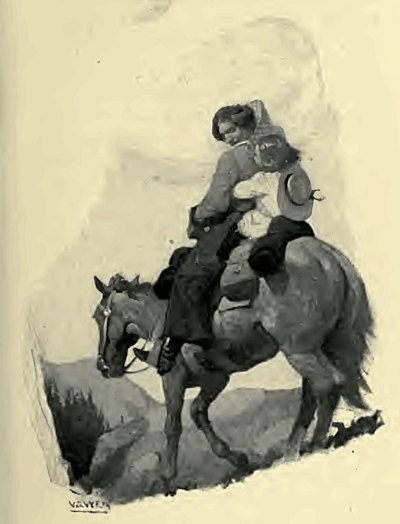
Shortly after her arrival, she wrote her former employer that “everything is just lovely for me. I have a very, very comfortable situation and Mr. Stewart is absolutely no trouble, for as soon as he has his meals he retires to his room and plays on his bagpipe, only he calls it his ‘bugpeep.’” He played the song “The Campbells are Coming” so often, Pruitt joked, that “I wish they would make haste and get here.”
Determined to have land of her own, Elinore filed a claim for 160 acres adjacent to Henry’s homestead and wrote Coney she was “now a bloated landowner.”
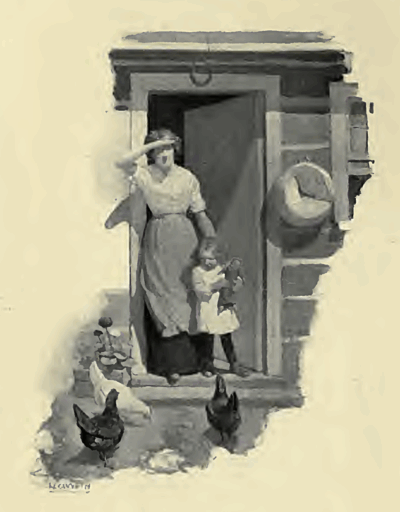
“I have a grove of twelve swamp pines on my place, and am going to build my house there…I have all the nice snow-water I want; a small stream runs through the center of my land and I am quite near wood,” she wrote. She also built a 12×16-foot addition to Henry’s house as her own cabin. Curiously, in her letter she omitted mentioning that on May 5th she and Henry had wed. Years later she excused the lapse on having to “chink in the wedding” in the midst of “planting oats” and other spring farm work. In reality, she claimed her lot before she wed in an effort to be independent. However, since the Homestead Act demanded married women own government land only under their husband’s name, Stewart finally signed over her property to her mother-in-law in 1912 rather than risk losing it.
Between 1909 and 1914, Elinore Stewart wrote many letters to Coney praising Wyoming’s pristine beauty. Among them were vivid descriptions of the natural world. “There was a tang of sage and of pine in the air, and our horse was midside deep in rabbit-brush, a shrub just covered with flowers that look and smell like goldenrod,” she wrote the summer of 1909. In another letter she described how the shadows of the quaking aspens “dimpled and twinkled over the grass like happy children. The sound of the dashing, roaring water kept inviting me to cast for trout…”
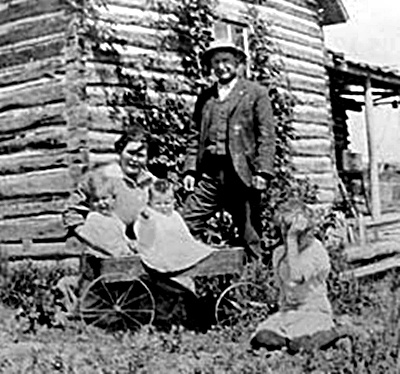

Her letters also revealed the coy way she treated Henry. In September 1909, when local women invited her on a wagon trip to Utah to gather fruit, she asked his permission. When he refused, she deliberately “continued to look abused lest he gets it into his head that he can boss me.” Once he was reduced “to the proper plane of humility… and begged my pardon,” and told her to do what she wanted, she forgave him.
Other letters described how she and her friends helped those in need. On Christmas morning 1909 they planned to deliver food to a dozen men who tended sheep in twelve camps that were scattered across the mountains. After packing home-cooked roasts, sausages, jellies, bread, and desserts in sleds that were hitched to horses, they careened across the snow to the sheep herders’ camps. ‘It would have done your heart good to see the sheep-men,” she wrote. “They were all delighted, and when you consider that they live solely on canned corn and tomatoes, beans, salt pork, and coffee, you can fancy what they thought of their treat.”
Another letter told how an elderly set of grandparents who had raised their granddaughter from infancy now suffered so much from rheumatism and other ailments that they bought expensive remedies — “horrid patent stuff!” — which drained their savings. To help the teenaged granddaughter, Stewart and her friends donated fabric, sewed dresses, and bought shoes for the barefoot girl. When presented, with the gifts, the girl was so overcome that she began to cry in disbelief: “They ain’t for me. I know they ain’t.”
In addition to Jerrine, Stewart had five children with Henry, three of them sons who survived. As the pregnant Stewart wrote Coney in December 1912, “ You must think of me as one who is truly happy. It is true, I want a great many things I haven’t got, but I don’t want them enough to be discontented and not enjoy the many blessings that are mine. I have my home among the blue mountains, my healthy, well-formed children, my clean, honest husband, my kind gentle milk cows, my garden … the best kindest neighbors, my dear absent friends.”

Coney, meanwhile, was so fascinated by Stewart’s letters that while visiting Boston she showed them to her friend Ellery Sedgwick, editor of The Atlantic Monthly magazine. After reading them, he published them in the magazine as a series between October 1913 and April 1914. Houghton Mifflin collected them in the 1914 book Letters of a Woman Homesteader, with illustrations by N.C. Wyeth.
The work was so popular that Sedgwick commissioned a second series of letters about Stewart’s subsequent experiences, which Houghton Mifflin re-published a year later as Letters on an Elk Hunt. In contrast to the first letters written so ingenuously to Coney, the second collection, according to Stewart’s biographer Susanne K. George, were intentionally “written for publication,” for “she was known to have ‘never let the facts get in the way of a good story.’”
By the early 1920s, Stewart was nationally known as the “Woman Homesteader.” She died October 8, 1933, at age 57 in Rock Spring, Wyoming after a gall bladder operation.
The significance of Letters of a Woman Homesteader according to Gretel Ehrlich’s foreword to the 1998 republication of the book is not the “breathtaking difficulties of solitude and struggle but about the way in which we might find plenitude in paucity. No other account of frontier life so demonstrates the meaning of neighborliness and community, of true unstinting charity, of tenaciousness charged not by dour stoicism but by simple joy.”
The Elinore Pruitt Stewart Homestead has been preserved and is listed on the National Register of Historic Places.
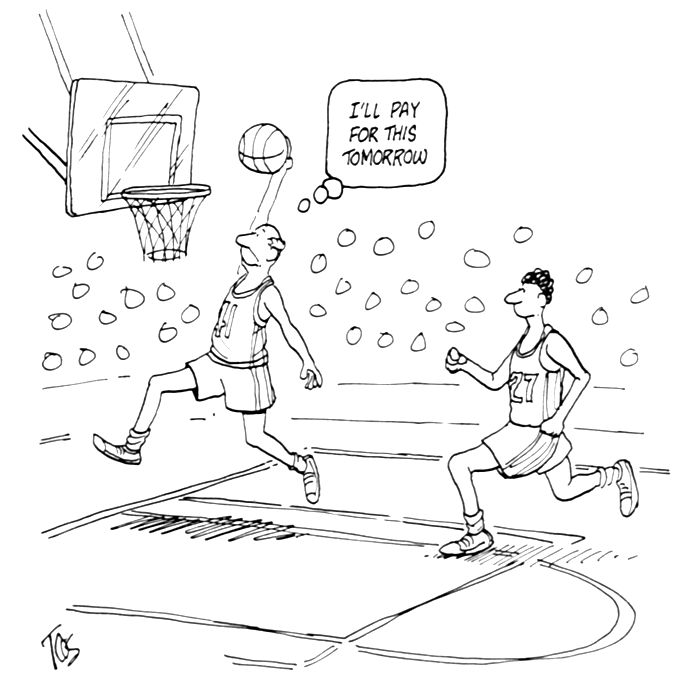
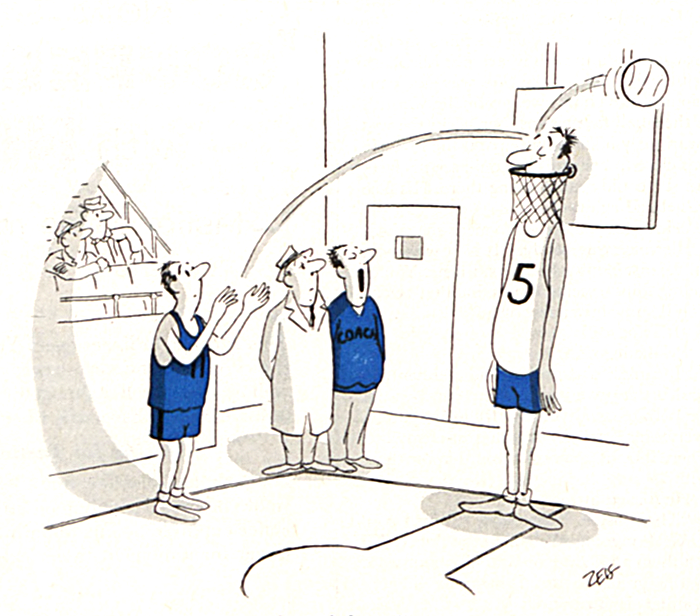
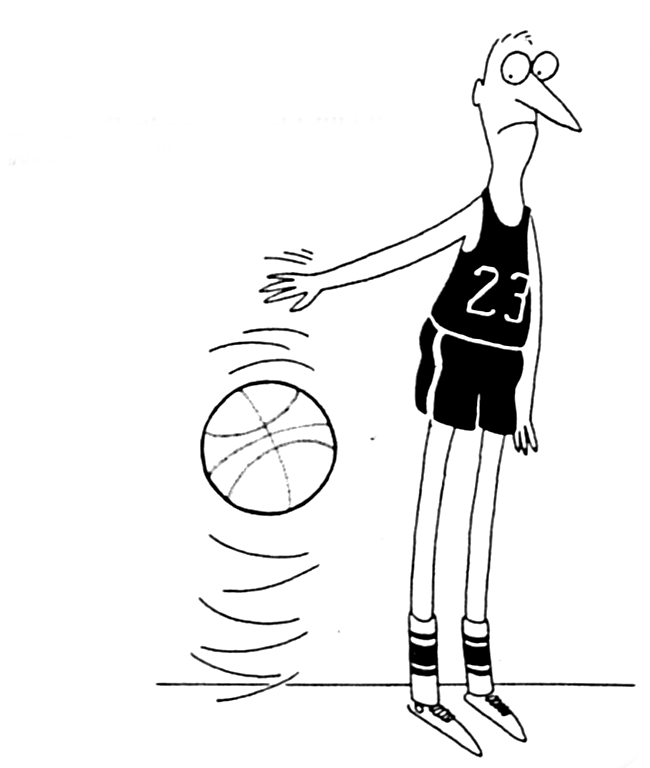
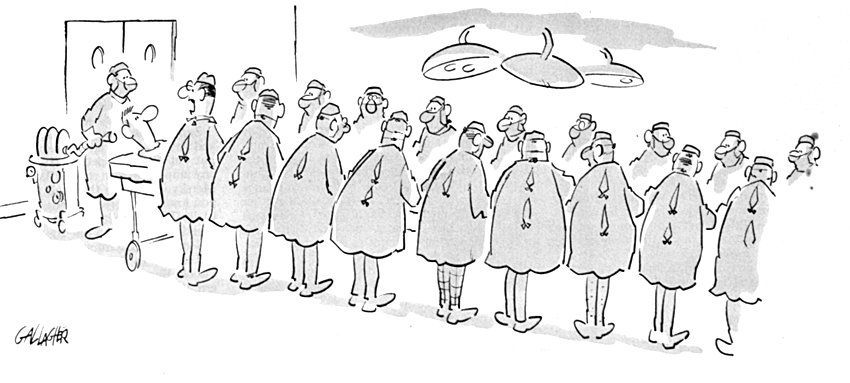
Cartoons: Hoop Humor
Want even more laughs? Subscribe to the magazine for cartoons, art, inspiring stories, fiction, humor, and features from our archives.
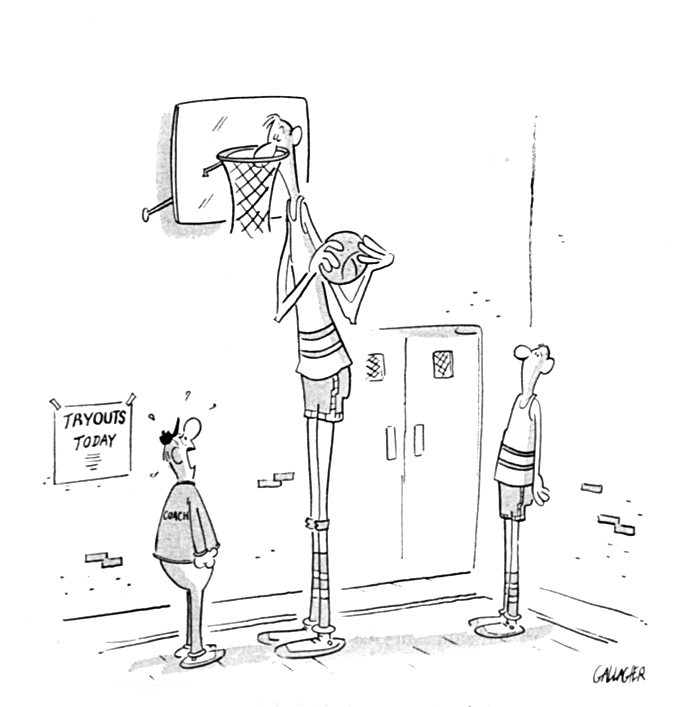
John Gallagher
March 25, 1967
March 1, 1997
Joseph Zeis
February 25, 1956
Charles Barsotti
February 10, 1968
John Gallagher
January 13, 1968
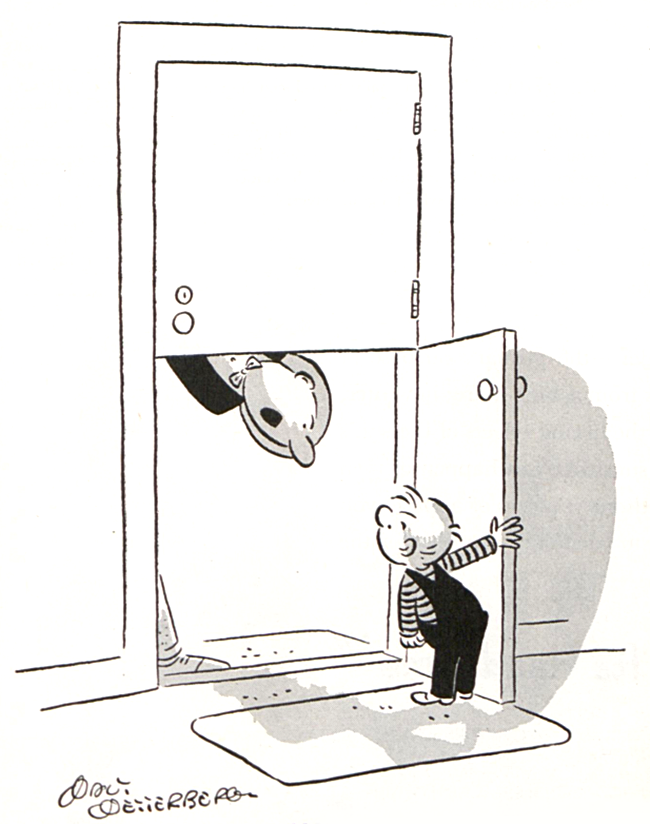
Walt Wetterberg
September 13, 1952
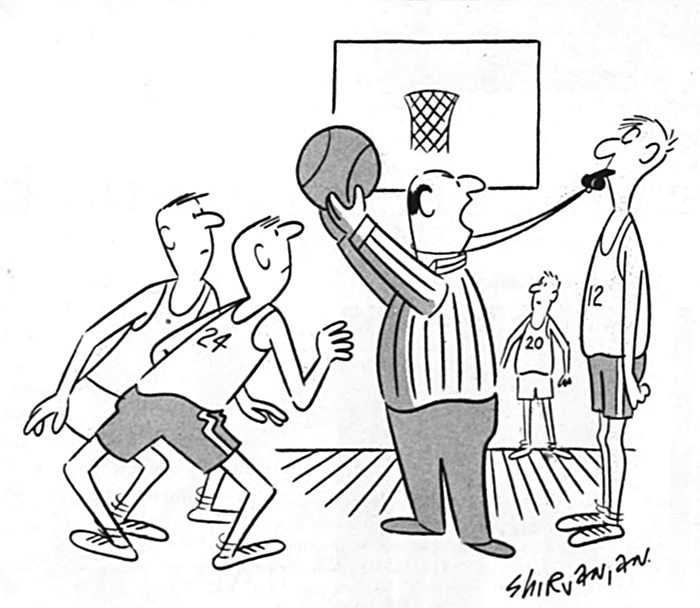
Vahan Shirvanian
March 2, 1957
Want even more laughs? Subscribe to the magazine for cartoons, art, inspiring stories, fiction, humor, and features from our archives.
Vintage Ads: Mid-Century Winter Travel
In the middle of the 20th century, The Saturday Evening Post was filled with ads for travel, whether by bus, train, or car. The winter months in particular offered ads depicting full-color fantasies of escaping to a livlier scene.

January 20, 1940
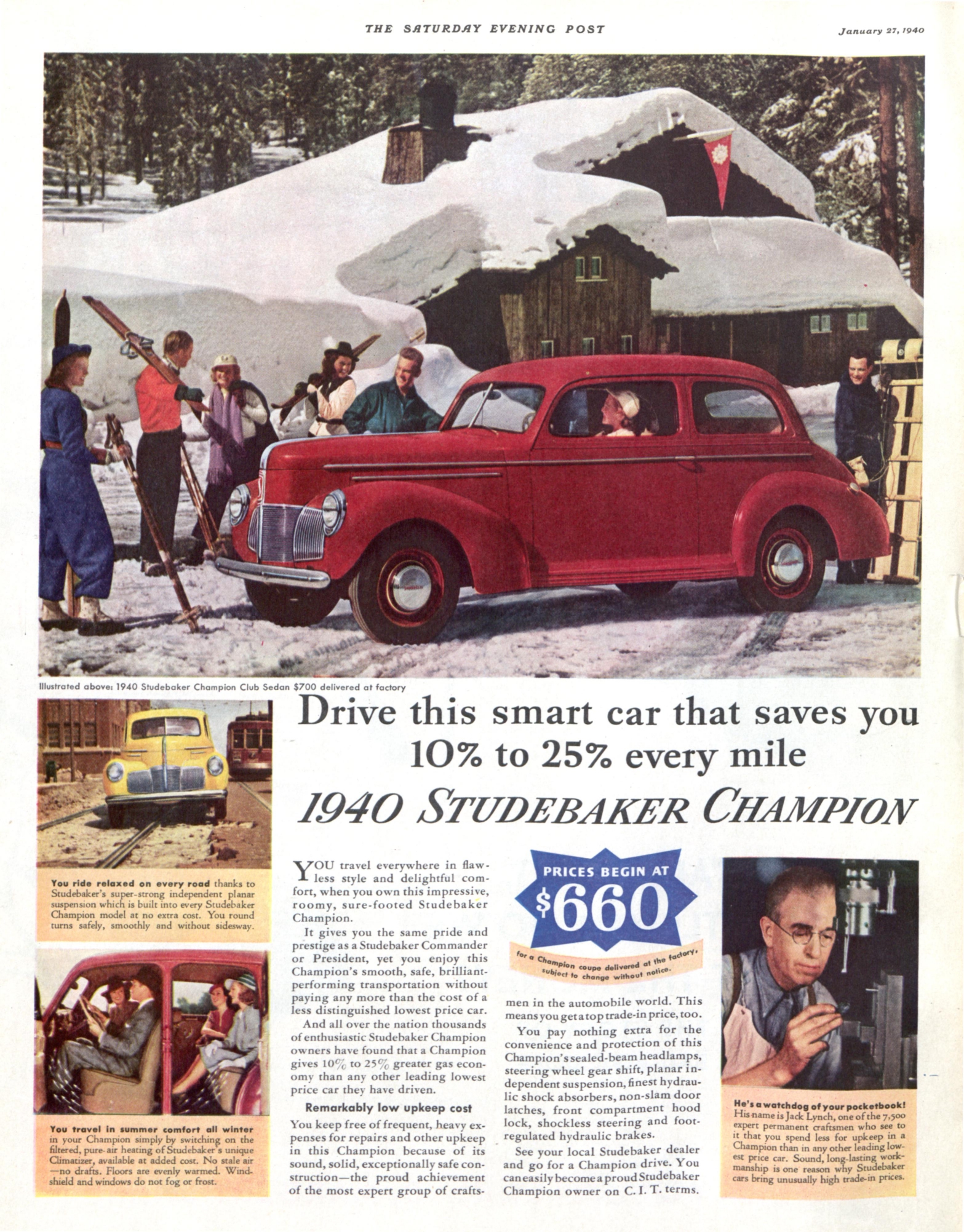
January 27, 1940

March 2, 1940

December 21, 1940
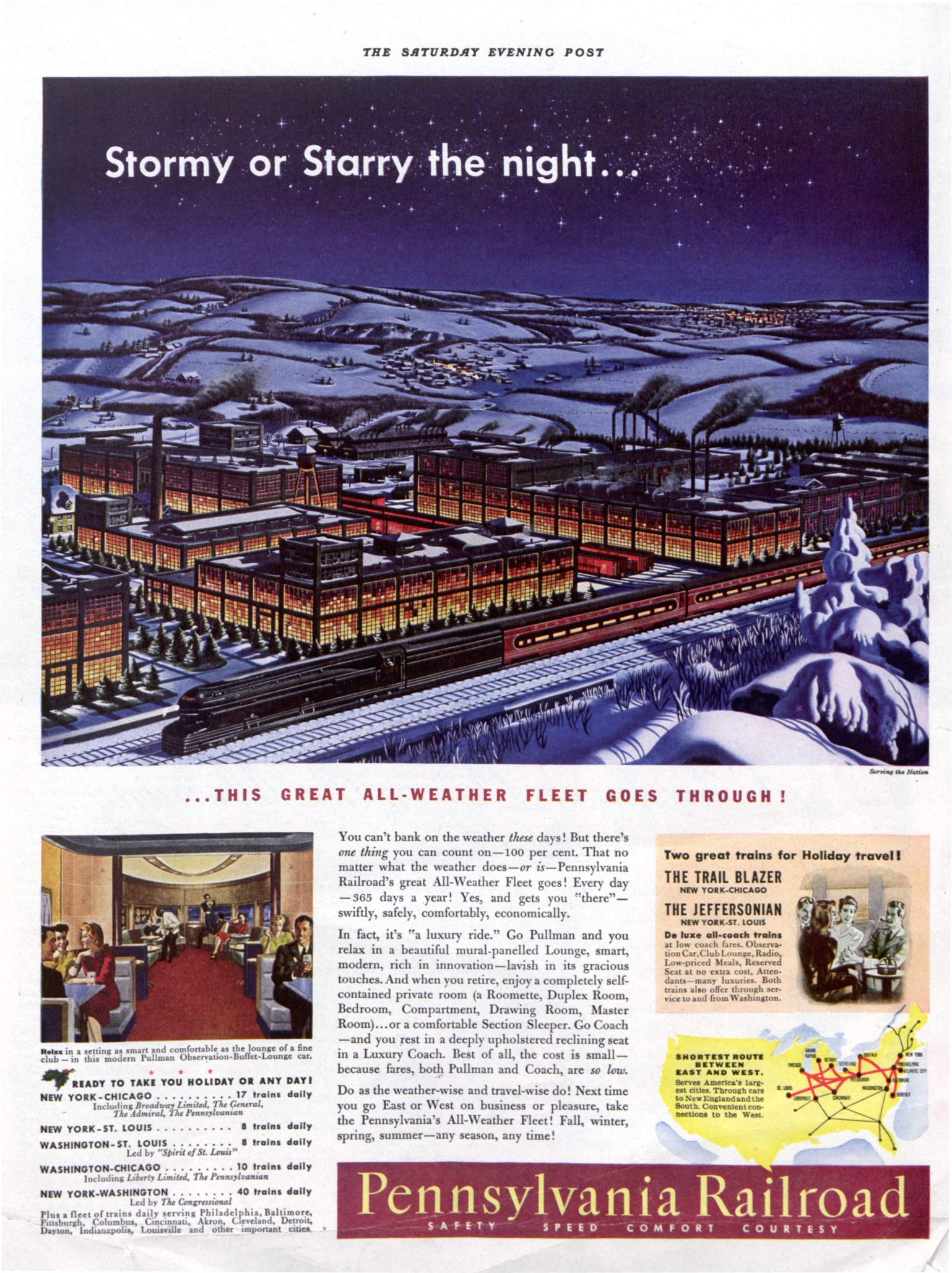
December 20, 1941

March 20, 1943

January 17, 1948

November 13, 1948

December 4, 1948
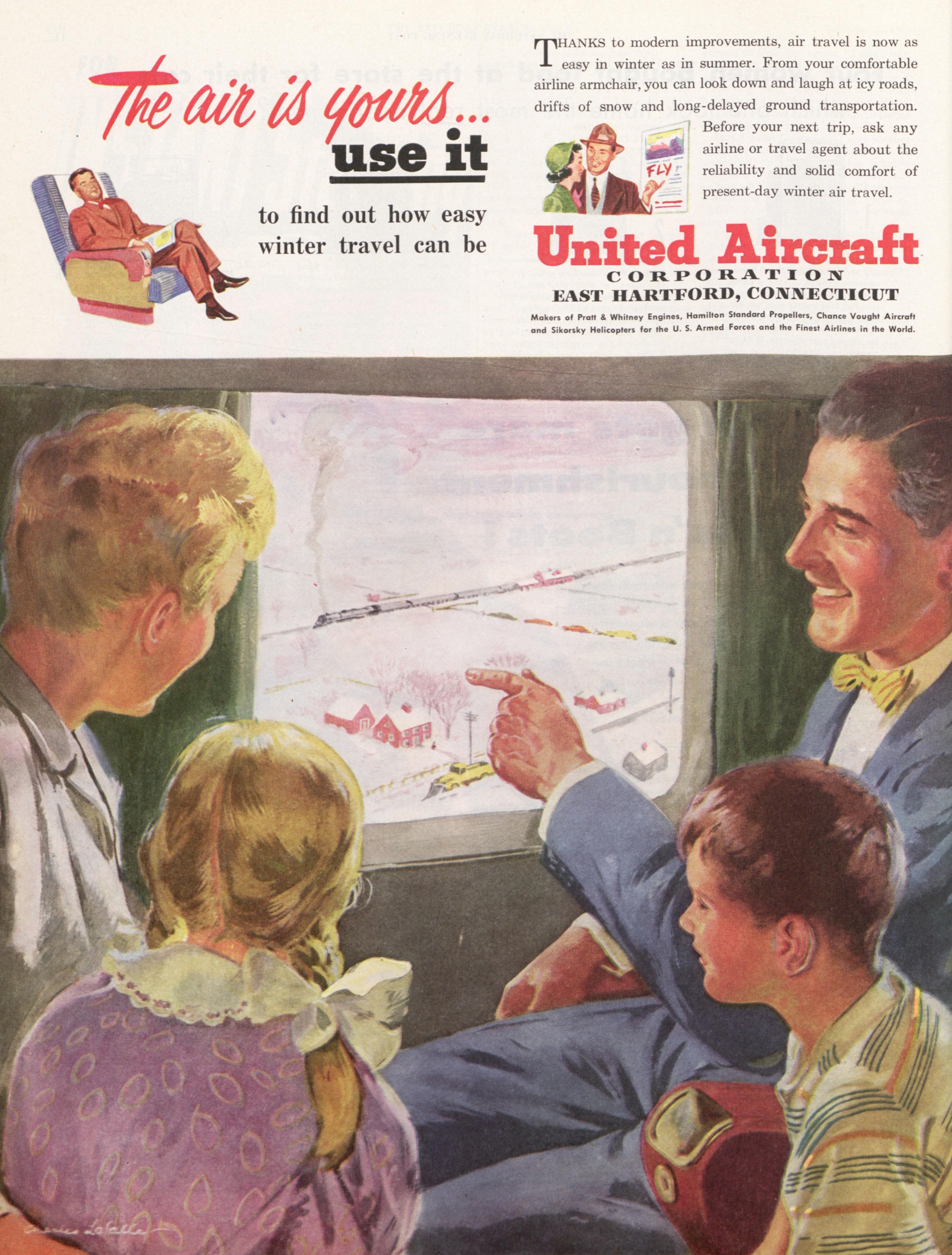
February 25, 1950

November 17, 1951
Stepping Into History at Colonial Williamsburg
As the United States celebrates its 250th anniversary in 2026, many Americans will travel to Boston, Philadelphia, Valley Forge, and other destinations that played a role in our nation’s founding. While these places invite visitors to stand where history unfolded, only Colonial Williamsburg — marking its own 100th anniversary this year — lets them step into the past.
Walk cobblestone streets just like the Founding Fathers did; listen to costumed historical interpreters share stories of colonial life; learn how tradespeople, like wigmakers, crafted their products; and even sample ginger cakes over a pint at Raleigh Tavern.
But there’s more to Colonial Williamsburg than the illusion of time-traveling back to the Revolutionary War era. Spanning 301 acres and featuring more than 300 restored and reconstructed buildings, the world’s largest living history museum continues to excavate, research, and restore. What researchers are finding adds to the historic narrative and gives us a more inclusive story of the birth or our nation and what it means to be an American.
Williamsburg became the capital of Virginia in 1699 after a fire destroyed the colony’s first capital, Jamestowne. At the time, tobacco fueled the local economy, and people of color made up slightly more than half of Williamsburg’s population. The African Baptist Meeting House was one of the nation’s first Black congregations, while the Williamsburg Bray School was one of the earliest institutions dedicated to Black education in North America.
Because Williamsburg was the capital of the largest and richest colony in North America, most Founding Fathers had a connection to the city. Thomas Jefferson and George Washington served in the House of Burgesses, the colony’s legislature. Benjamin Franklin visited to receive an honorary degree from the College of William & Mary in 1756, and Patrick Henry of “give me liberty or give me death” fame served as the state’s first governor from 1776 to 1779.
The city also rebelled against British authority. On April 21, 1775, before residents heard of the battles at Lexington and Concord two days earlier, fighting almost broke out in Williamsburg when the governor, Lord Dunmore, tried to confiscate the gunpowder stored in the city’s Powder Magazine. Locals called up the militia to try to stop the British sailors, but Peyton Randolph – speaker of the House of Burgesses and the first President of the Continental Congress — and other calmer heads convinced the crowd to back down. If they hadn’t, Williamsburg might have become the site of an early battle in the war.
However, as the war continued, the Revolution’s leaders grew concerned that they couldn’t effectively defend Williamsburg against a British attack and decided to move the state capital to Richmond in 1780. People who worked in government followed; those who remained continued as they always had. Williamsburg froze in time.
Ron Hurst, Chief Mission Officer at Colonial Williamsburg, explains that unlike Boston, Philadelphia, and other major cities that played a role in the Revolutionary War, Williamsburg didn’t have a waterway. It didn’t continue to grow once the government moved to Richmond, so many of the colonial buildings remained untouched for more than 100 years.
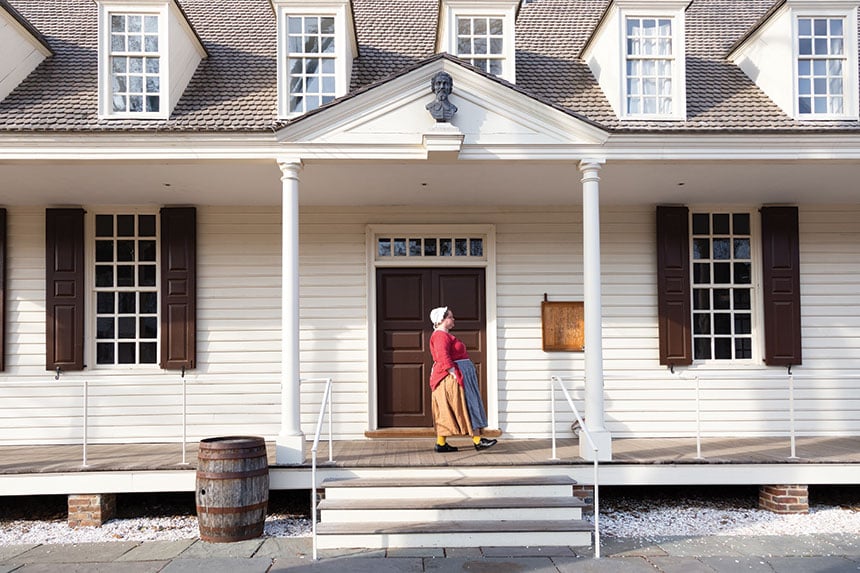
By the early 1900s, residents knew Williamsburg, with its unusually high concentration of historic colonial buildings, was unique. However, restoring those buildings took money they didn’t have. Then, in 1916, circumstances spurred them to action.
That year, DuPont opened a munitions plant nearby to supply weapons for World War I, and workers with money to spend started moving to Williamsburg. For the first time, colonial buildings were at risk of being torn down to make way for new houses, gas stations, and businesses. Reverend Dr. W.A.R. Goodwin — who’d had some success raising money to restore Bruton Parish Church, an Episcopal church in the historic area attended by Thomas Jefferson, George Washington, Patrick Henry, and others — took it upon himself to save Williamsburg.
Goodwin reached out to John D. Rockefeller Jr., and after visiting Williamsburg with his family in 1924, Rockefeller told Goodwin to draw up plans to restore the area and authorized him to start buying property. Restoration officially began two years later in 1926. Hurst says their goal was initially preservation, not education.
But the educational component was inevitable, especially since the first building to open to the public, the Raleigh Tavern, played such an important role in the American Revolution as the site where the Founding Fathers met after Lord Dunmore dissolved the House of Burgesses. Two years after the tavern reopened in 1932, hostesses there became the first staff to appear in period clothing.
With the passing of the torch from Rockefeller to his son, John D. Rockefeller III, the emphasis on education became even more pronounced. The foundation that now managed Colonial Williamsburg added a historic trades team in the 1930s to demonstrate cabinetmaking, blacksmithing, wig making, candle making, and other important crafts of the era.
In the 1970s, the educational aspect expanded yet again with the addition of historical interpreters who could tell the story of life in 18th-century Williamsburg. Initially, Hurst admits, interpreters shared stories of mostly wealthy white men, such as the Founding Fathers. Today, interpreters tell the stories of all people, including those from all classes, races, and genders.

Continued preservation and research has led to Colonial Williamsburg’s evolving narrative, according to Hurst. One hundred years ago, when preservation began, segregation still cast a shadow over the country, and history buried the voices of women and other minorities. That’s changed to an extent today. Technological advances, too, help us to better understand the past. For example, technology can help researchers identify the original materials used to build a historic structure, and as newer and better technologies emerge, we may learn even more, which is why it’s so important to keep researching. When we stop researching, says Hurst, we end the flow of new information, and if that happens, it will be tragic.
“As a society, we need to understand where we come from to understand who we are and where we’re going,” Hurst says.
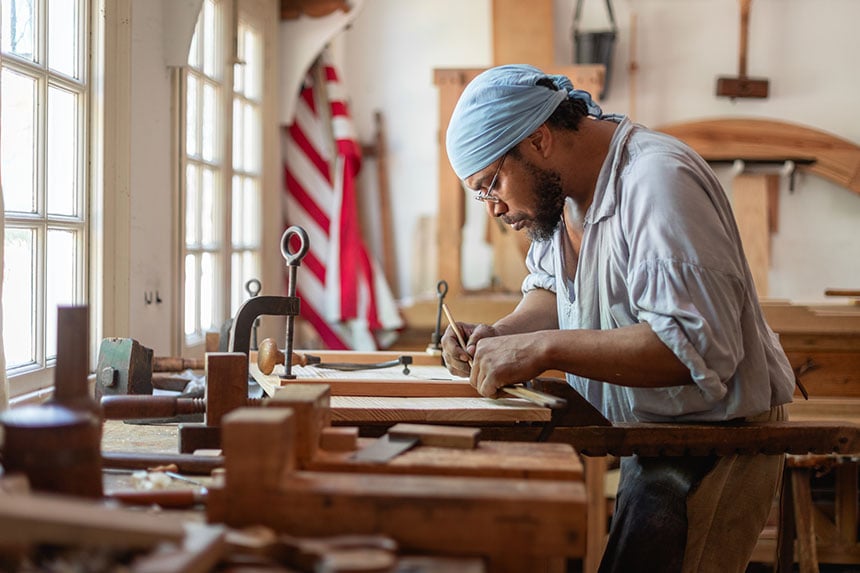
Based on his observations, people come to Colonial Williamsburg knowing less and less about the American Revolution and colonial times every year; what they see and do here is sometimes their first exposure to America’s origin story. Hurst says Colonial Williamsburg provides people with information about those times, and then it’s up to them to decide what to think about what they’ve learned.
Often, that takes time. Robert Weathers, a Nation Builder actor who portrays George Wythe, believes visitors need to process what they learn while touring Colonial Williamsburg, especially when it comes to stories they may not have heard before.
“People don’t change their mind in front of you,” he explains to other interpreters when they first start at Colonial Williamsburg. However, on more than one occasion, people have sought him on a return visit to tell him that they went home, thought about what he said when they visited before, and now they think differently.
Ultimately, Weathers wants people to know what it means to be a member of a republican form of government and that our nation can’t succeed without their contribution and participation.
“Citizenship is an active role,” he says. “It has to be.”
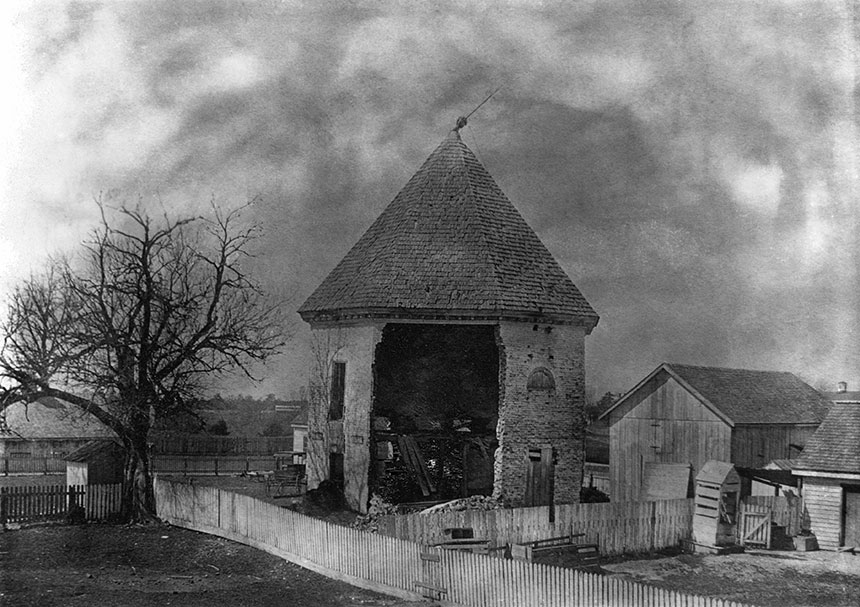

One of the biggest challenges Colonial Williamsburg faces moving into its next century is shorter stays. Initially, people spent three or four days exploring the buildings, according to Hurst. Now, they allocate just a day to cram as much into their visit as possible. Which is even more unfortunate considering, as Hurst points out, that the Colonial Williamsburg Foundation is currently renovating and restoring more buildings than at any time since the 1960s. In June 2025, the Williamsburg Bray School for free and enslaved Black children opened to the public, and archaeologists are currently working to restore the African Baptist Meeting House, the oldest surviving Black church building in the nation.
Additionally, archaeologists have unearthed muskets, tobacco pipes, and even the bodies of four Confederate soldiers while recently excavating the Powder Magazine. These and other discoveries have led to reinterpreting the building’s role over the years as well as what it might have looked like during the American Revolution. As a result, Colonial Williamsburg has lowered the perimeter wall and is working to restore its casement windows.
Other significant projects include restoring the Peyton Randolph House stables, improving the historic gardens at the Governor’s Palace, and completing the new Colin G. and Nancy N. Campbell Archaeology Center. The center — scheduled to open in 2026 — will feature artifacts from Colonial Williamsburg’s archaeological collection of more than 60 million items, and will invite guests to interact with archaeologists while participating in hands-on activities.
These renovations and additions complement the Art Museums of Colonial Williamsburg — two distinct museums under one roof. At the Abby Aldrich Rockefeller Folk Art Museum, visitors can view colorful paintings, whimsical toys, carved weathervanes, and other items depicting Americana. Adjoining it, the DeWitt Wallace Decorative Arts Museum showcases a diverse array of artifacts — clocks, furniture, firearms, pottery, and textiles — that are as beautiful as they are functional.
Karen Clancy, a master weaver at Colonial Williamsburg, says the new archaeology center and learning how tradespeople produced everyday items like those contained in the art museums adds another layer to the story of our nation’s birth. For the most part, the Founding Fathers were rich landowners and merchants, so when we talk about their lives, we’re only getting a snapshot of colonial life.
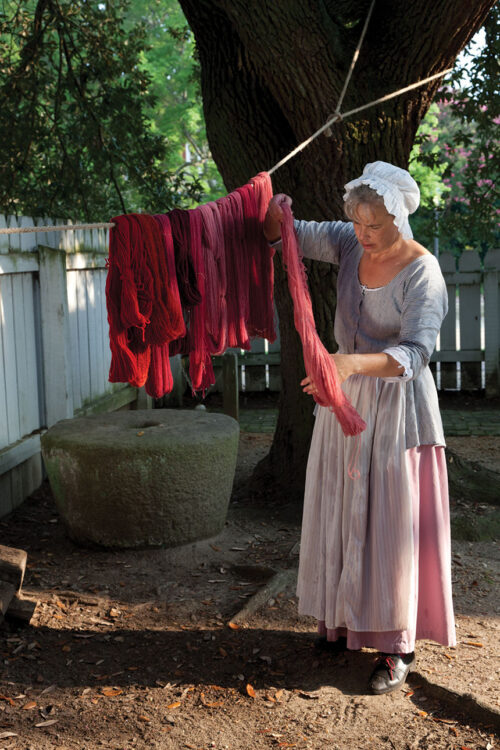
A good number of people during colonial times worked in the trades — fashioning clothes, producing candles, making horseshoes, and performing other essential tasks — and had a substantial impact on the Revolution. For example, Clancy points out that England wasn’t growing its own tea when the colonists dumped it into Boston Harbor, so that act didn’t make a significant financial impact on England. However, England produced much of the world’s fabric. When the colonists began making their own fabrics, England felt the blow. Clancy says that when you interact with tradespeople, you learn these little details that you wouldn’t otherwise. A wigmaker, for example, will explain how wigs are made, why a man might wear one, and why women didn’t.
While visiting in person, even for just one day, is the best way to experience Colonial Williamsburg, the foundation hopes to bring its lessons to a new generation of Americans. One way is through History.org, an online resource that allows private and public teachers to access primary sources and digital assets. Initially, the collection will focus on information related to the American Revolution, but eventually, it will span all of the nation’s history.
On its campus, Colonial Williamsburg will continue to welcome teachers to the Bob and Marion Wilson Teacher Institute of Colonial Williamsburg, where they can learn more about the American Revolution. Online classes offered through the institute reach even more teachers. Additionally, Colonial Williamsburg is working with Google Arts & Culture to make more historical documents and images available to the public online.
For now, the predominant focus is the 250th anniversary of our nation and the 100th anniversary of the destination itself. Colonial Williamsburg plans to celebrate both throughout the year, starting with the publication of the book 100 Years of Colonial Williamsburg. Tailored presentations and programs will discuss the birth of our nation throughout the year, but activities ramp up in May, with Virginia riflemen military reenactments, concerts by Colonial Williamsburg Fifes and Drums, and reliving the 250th anniversary of the Virginia Revolutionary Convention’s motion for independence. The following month features more concerts, the adoption of Virginia’s Declaration of Rights, and Juneteenth celebrations. Then, on the Fourth of July, visitors will hear a dramatic reading of the Declaration of Independence and watch a fireworks display over the Governor’s Palace. Patriotic musical performances continue through July and August.
Mostly, though, Weathers anticipates portraying Wythe this year as he normally does — based on what happened on that day in Williamsburg history. But he does expect to be busier and to interact with more visitors.
“This next year is quite a year,” he says. “I tell people that if you see me in 2026, give me a Gatorade because I’ll need it.”

For more information about Colonial Williamsburg, visit the historic area’s website at colonialwilliamsburg.org. There you’ll find a page dedicated to planning a trip to celebrate the nation’s 250th anniversary.
Teresa Bitler is a freelance travel writer whose work has appeared in National Geographic Traveler, Wine Enthusiast, TripSavvy.com, ShermansTravel.com, AAA publications, and others.
This article is featured in the January/February 2026 issue of The Saturday Evening Post. Subscribe to the magazine for more art, inspiring stories, fiction, humor, and features from our archives.
Maui Is Open, But Should I Go? What Travelers Need to Know Post-Wildfires
In August 2023, fast-moving wildfires devastated Lāhainā, a historic town just minutes from Maui’s beloved Kāʻanapali Beach. Before the fires, the surrounding resort community welcomed more than three million visitors annually. While flames came dangerously close to Kāʻanapali’s resort corridor, the beachfront area itself was untouched. The emotional and economic impact, however, was immediate. Images of destruction spread rapidly across news outlets and social media, prompting travelers to cancel trips and, in many cases, to write Maui off altogether.
For thousands of Maui residents, tourism is more than an industry; it is a livelihood. The sudden drop in visitors, layered on top of the trauma of the fires, proved deeply disruptive. Even as much of the island remained safe and open, uncertainty lingered. Would visiting be appropriate? Would it help — or hinder — recovery?
Yes, Maui Is Open
More than two years later, Maui is not unchanged, but it is resilient, vibrant, and ready to welcome visitors. No, everything is not “back to normal,” and it may never be in precisely the same way. Still, Maui is open, and the Aloha Spirit is alive and well. Travelers who arrive with care, awareness, and a willingness to support an island in recovery will find more than postcard-perfect beaches and sunsets, though those enduring hallmarks remain. They will also encounter a community actively shaping its future.
What It Is Like to Visit Maui Right Now (And Why You Should)
My October 2025 trip was my first visit to Maui, so I lack a firsthand “before and after” comparison. I passed through areas impacted by the fires and saw rebuilding underway, but the Kāʻanapali Beach area, where I stayed, shows no outward sign of damage. On the surface, Maui still delivers what travelers expect: clear blue water, gentle waves, lush greenery, excellent snorkeling, and seafood pulled straight from the ocean.

But nearly everyone has a story about the fires. Resort employees, local business owners, and repeat visitors (Maui has long enjoyed a loyal following of frequent flyers) speak openly about loss, recovery, and resilience. The impact of the fires isn’t always visible, but it is present in quieter ways. When visitors take time to listen, they begin to understand how deeply the hospitality community has rallied to support neighbors and preserve livelihoods. That collective effort has become part of Maui’s story and what makes the island feel meaningful right now.
Recovery Initiatives and How Visitors Can Help
Tourism remains the single most powerful way travelers can support Maui’s recovery. Beyond that, several initiatives are quietly making a difference.
Treecovery
If you have never experienced loss from a fire firsthand, you’ve probably never thought, “What happens to the trees that burned?” Treecovery Hawaii is a nonprofit focused on preserving trees in Maui’s fire zones and providing new ones to residents who lost homes and businesses. While Kāʻanapali resorts were not in the fire zone, Sheraton Maui Resort & Spa is partnering with Treecovery by housing and nurturing young potted trees on its grounds. Guests strolling through the gardens will notice signage identifying these temporary tree residents. One day, the trees will be replanted in communities rebuilding from loss.
The Branches at Royal Lahaina Resort
After the fires damaged many of Lāhainā ’s live music venues, local musicians and artisans lost more than stages and storefronts; they lost access to audiences. Royal Lahaina Resort has helped restore that connection. Beneath The Branches, a sweeping ficus tree behind the resort, a monthly artists’ night showcases Maui talent through live music and pop-up shops featuring handmade jewelry, art, and clothing. Held on the third Friday of each month, the gathering creates a tangible bridge between impacted creators and new audiences.

There’s live music at The Branches every night, so even if you miss the monthly featured artists night, you can enjoy the vibes and the ambiance.
Pop-Up Shopping + “Meet the Artist” Events
Launched in January 2025, Sheraton Maui Resort & Spa’s Discover More of Maui campaign supports local artists following the loss of Lāhainā ’s Front Street, once one of the highest-grossing art districts in the United States. Its weekly Meet the Artist series brings a rotating roster of Maui-based creators to the property, offering artists consistent exposure while inviting travelers to engage directly with the island’s contemporary creative community.
Travelers looking to make a direct financial contribution can contact the Hawai‘i Community Foundation, which manages the Maui Strong Fund. The fund provides both immediate and long-term resources to people and places affected by the fires.
Best Things to Do in Maui Right Now
Maui is still Maui. Here’s how to enjoy this beautiful island.
Explore Kāʻanapali Beach


Fourteen resorts line this stretch of public beach, connected by a boardwalk dotted with shops, restaurants, and tour outfitters. Parking can be limited for non-guests, but the rewards are considerable: gentle waves near shore, excellent snorkeling at Black Rock (Puʻu Kekaʻa), and frequent sea turtle sightings. Snorkel gear rentals and beach essentials are readily available nearby.
In addition to swimming and snorkeling, there’s just about every kind of ocean-adjacent pursuit you can think of, from parasailing to outrigger canoe tours.
Watch the Cliff Dive Ritual at Black Rock
Each evening at sunset, a torchlighting and cliff-diving ceremony unfolds atop the lava outcrop fronting Sheraton Maui Resort & Spa. The resort’s lanai offers prime viewing, with rocking chairs overlooking the spectacle. Arrive early for a seat.

Take a Sailing Adventure with Teralani
Teralani Sailing Adventure’s catamaran excursions range from sunset cocktail sails to snorkeling and wildlife-watching trips. Dolphin and whale sightings are common, depending on the season. Humpback whales migrate through Maui waters from mid-December through May. Dolphins like the warmer months, and you’re more likely to see them May through November. You can also book other things to do in Maui with Teralani, such as surf lessons, ziplining, and guided hikes around the island.
Tour of the Stars

The connection between Maui and astronomy dates back to the early Polynesian explorers, who were guided to Hawai‘i by reading the night sky. The Tour of the Stars is a program at the Hyatt Regency Maui Resort & Spa that offers guests a view of the stars from the hotel’s rooftop via an HD telescope. The resort has a NASA Solar System Ambassador on staff who guides visitors through the program; reservations are required.
Where to Stay
The OUTRIGGER Kāʻanapali Beach Resort

Formerly the Kāʻanapali Beach Hotel, this property emphasizes cultural immersion, offering complimentary activities such as lei making, ukulele lessons, and Hawaiian storytelling. Guests participate in a Kukui nut lei ceremony, with returning visitors receiving a white nut to add to their lei, a moving testament to the resort’s loyal following.

Wailea Beach Resort – Marriott Maui
Wailea’s atmosphere contrasts sharply with Kāʻanapali’s energy. Resorts are more spread out, quieter, and oriented toward relaxation. Wailea Beach Resort offers extensive amenities, including an adults-only pool, a family-friendly water area, and Maui’s longest waterslide.
Hyatt Regency Maui
Situated at the edge of Kāʻanapali Beach, this well-appointed resort balances high-end amenities with easy access to the lively boardwalk shopping and dining. Unexpectedly, the lobby also houses a penguin habitat, complete with a daily educational session, which is not something most people would expect to find on Maui.
Hesitating Because of the Fires? Don’t.
Visiting Maui doesn’t hinder recovery; it helps sustain it. The island relies on tourism, and the 2023 fires, which arrived on the heels of the pandemic, deepened existing economic and social challenges for residents. While rebuilding will continue into the new year and beyond, Maui remains fully open to visitors willing to make the journey from the mainland. What you’ll find, if you pay attention, is a community marked by resilience and resolve. Seeing that firsthand doesn’t just enrich the trip — it gives it purpose and makes your time there count just a little bit more.
Con Watch: How Fake Debt Collectors Scam Consumers and How to Fight Back
Steve Weisman is a lawyer, college professor, author, and one of the country’s leading experts in cybersecurity, identity theft, and scams. See Steve’s other Con Watch articles.
Receiving a telephone call from a debt collector is never a pleasant experience. But being hounded by someone attempting to collect a debt you do not even owe is even worse. It’s called phantom debt and it constitutes fraud.
These phantom debt collectors use false claims and threats to compel people to pay debts that are largely non-existent, that are beyond the statute of limitations for collection, or that the collectors have no authority to collect. They also violate the law by illegally failing to provide proper notices and disclaimers.
Subject to strict federal laws, legitimate debt collectors are permitted to call debtors; however, the law prohibits them from threatening imprisonment for the failure to pay a debt or attempting to collect a debt that the debt collector knows is bogus. The law also prohibits debt collectors from communicating information about a debt to the consumer’s employer, although they can contact the employer to obtain contact information about the employee.
Debt collection is one of the most complained about consumer issues in America. In 2024, consumers filed 66,796 complaints with the Consumer Financial Protection Bureau (CFPB) against phantom debt collectors for attempting to collect debts not owed.
The FTC has brought legal actions against a number of phantom debt collectors. Since 2010, the FTC has obtained judgments permanently banning 201 phantom debt collectors from working in the debt collection industry.
In 2020, the FTC, along with more than 50 states and federal law enforcement, formed a nationwide outreach initiative called “Operation Corrupt Collector” to protect consumers from phantom debt collection and abusive and threatening debt collection practices.
In 2025, the FTC brought a civil action against Blackstone Legal and its owners in which the FTC alleged that Blackstone Legal deceived and harassed consumers to collect debts the consumers did not owe. According to Christopher Mufarrige, Director of the FTC’s Bureau of Consumer Protection, “This operation collected on false debt and harassed consumers with fake threats of lawsuits and damaged credit if they refused to pay.” A settlement was reached banning Blackstone from ever participating in the debt collection industry and requiring them to turn over substantially all their assets.
It can be difficult to know when someone calls attempting to collect a debt if they are legitimate or not. If you are contacted by a debt collector, do not discuss the debt with the person calling. Demand that they send you a written “validation notice” by mail, which describes the debt they allege you owe and includes a listing of your rights under the Federal Fair Debt Collection Practices Act. This Act requires that within 5 days of first contact, a debt collector must send a validation notice that specifies the amount of the claimed debt and the name of the creditor, and notifies you of your right to dispute the debt with instructions on how to do so. If a consumer disputes a debt, all collection activity must cease until verification of the debt is provided.
Never give personal information over the phone to anyone who calls you attempting to collect a debt. If you receive the validation notice and it appears to be legitimate, you may be better off contacting your creditor directly because the person who called you may not be representing the creditor but may merely have information about the debt.
Some red flags for recognizing a phantom debt collector include:
- Threatening arrest and a prison sentence
- Threatening an immediate civil lawsuit
- Demanding payments by gift card (always the hallmark of a scam), wired funds, or cryptocurrencies
- Claiming to be a government agency collecting the debt
- Calling before 8:00 a.m. or after 9:00 p.m., which is not allowed by law
- Calling more than seven times in seven days, which is not allowed by law
Not only can you not be arrested for failing to pay a debt, even threatening to arrest a consumer for failure to pay a debt is a violation of the Federal Fair Debt Collection Practices Act.
Anyone contacted by a phantom debt collector should report the collector to the FTC, the CFPB, and your state attorney general.
The Future Is a Longed-for Past
Even still, her mother’s voice looped, a dream of a memory. Ruth could hear her saying, “We must always be in service to others.” It repeated like a song, her sentence. She hadn’t seen or spoken with her mother since she was thirteen. She didn’t feel the same call of altruism, and she grew ashamed of her desires. She wanted now, more than anything, to belong somewhere. It felt impossible, an ever-present longing.
They had moved often, wherever her father found modest jobs, wherever someone put them up in their basements or garages. Their “work” was to serve God, and so the worldly wonders of living were kept apart from her daily concerns. It created in her a sense of being untethered, of a life spent in a waiting room; the boredom crept in, and she turned to her imagination.
The longest she ever lived one place was in a trailer in Montana. They rented it from a rancher who gave work to her father and milk to her mother and her brother made friends. Ruth never knew how. Her mother, a nurse, offered her assistance to families who could not afford medical care. She delivered babies and eased the suffering of the elderly, of the dying, of anyone who needed it. Ruth’s best times, her favorite times, were when her mother took her with her on jobs. “Watch what I do, so you’ll learn how to do this yourself one day,” her mother said. And Ruth made a good student. She delighted in what most found frightening — the screams of labor, the blood of birth, the gore of farm injuries, the last moments before dying. When people felt pain, they really started to live. They were called from the waiting.
When she was thirteen and her little brother just turned eight, her mother stopped letting her go with her to help. “I need you to watch your little brother for me,” she said each morning, and each morning Ruth begged to go with her.
One day, when she and her brother walked near the river close to the farm, Ruth had an idea to go on the jobs again. The river was filthy with trash and run-off chemicals from the paper plant nearby. People threw things in the river like it was the city dump. It smelled of dead fish and mud. The water, so thick with muck, seemed to flow slower than a river should flow. It threatened even then to go underground leaving behind the soft remains of sand. “Do you want to go swimming?”
Her little brother’s eyes widened with possibility and excitement. He loved to swim. “Mom and dad said we can’t swim in there. It’s too dangerous.”
“I swim in the river all the time,” she said. “It isn’t dangerous at all. There’s a mermaid who lives in it, and if you swim far enough out, she’ll find you and carry you away.”
“There’s no such thing as mermaids,” he said. “And even if there were, they’d live in the ocean, not a dirty old river.”
“There are both kinds — sea and fresh water — like fish. The river isn’t dirty at all. It’s an illusion she creates to keep people out of her home.”
He thought about it long and hard and asked, “Will you go with me?”
“She won’t come if there’s two of us.”
Her little brother’s face, freckled and dirty, contemplated the possibility. He was such a smart boy, so logical, but in the end, he decided to go in.
She smiled and watched as her brother went to the river’s edge, a small turn where it could be a river again, deep and moving. He took off his tennis shoes with holes worn out by his big toes because they were too small. Hand-me-downs. “It’s slimy,” he said, ankle-deep in. He started back towards her.
“It won’t be once you’re in. I promise,” she said.
* * *
When she remembered it now, she thought she’d hesitated. She remembered regret. She hadn’t thought it through, only hoping at the time to solve her boredom. She called him back to her, didn’t she? She moved toward him to bring him back to ground, hadn’t she? But by then he was waist deep and caught in the current and then he was gone.
The rancher saw the whole thing, having come up behind them. He’d been looking for a goat that wandered out of the pasture. She didn’t hear him call out, but when he passed her running to the river and then jumping in, her heart vibrated. On the way out, dripping with water and holding her brother in his arms, the rancher gave her a look reserved for danger and said, “I saw you, girl.” But what could he have seen?
Her brother spent a day in the hospital, nearly drowned and scraped up from the rocks and debris, but he was otherwise safe. She waited at home, and when her parents returned, she felt like a ghost. Her father carried her brother inside without saying a word to her, and he never did again. She thought about it now. What was the final thing he’d said? That morning, in the before, he’d asked for his boots. Was that it? Or maybe he’d told his joke about the blind barber. The memories collapsed time, and she could no longer remember sequences, only circles.
She never tried to explain to her parents. She wasn’t sure what to explain. There was an impenetrable air of suspicion, and even her mother grew ever more distant. One night, she went to check on her brother and turned the knob to his room, but it was locked. A few moments later, her mother came out and gave her the same look the rancher had. Her mother was afraid of her. Ruth sat outside alone until after midnight and then tiptoed back in. For a time after that, her world became silent.
The rancher asked them to leave his property, a question of insurance. He’d known Ruth’s father from when they’d served in Afghanistan, a life her father had lived before he was her father. The rancher said he knew he was a good man, but he couldn’t be responsible for what might happen. He had suspicions about Ruth’s soul.
Ruth stayed outside most of the time. The last night they lived together as a family, her mother walked outside in a white linen nightgown and sat beside Ruth under a tree. She’d been crying. She put her arm around her daughter. She said, “What you put in your heart stays there forever.” Her parents and brother moved to California the following week, and she was sent to live with an aunt in Mississippi, where she’d be under the influence of her aunt’s strict interpretation of Christian values. She attended church three times a week, volunteered at food kitchens, and cleaned houses for church members. Her aunt did not allow her to socialize outside of her watch, and she was made to wear plain clothes, no makeup, no color. No one said it was a punishment, but Ruth knew she was being kept away from love for fear she’d turn it dark.
Ruth stayed there until she was sixteen, when her aunt broke her hip and was no longer able to keep watch. Ruth’s parents decided she was old enough to be on her own. Her mother sent her an envelope with a card that had a scripture on the outside. There was a note inside the card that said, “This is all we could spare. I pray you will be good.” There was a small gold ring in the envelope that had a cross engraved on a flat circle. There was $500 in cash. She put the ring on and never took it off. She took the $500 and rented a room in town.
She kept going to church, finding odd jobs, until finally a family hired her as a live-in nanny for their three children, and that was the end of it. And that was the all of it.
* * *
It’d been ten years, somehow. Vera hired Ruth six months ago to help care for her elderly father. The fish were dying, and no one knew why. Vera bought the small bowl and two goldfish on impulse, filled it with tap water, placed it in the window to settle and added the fish a couple of hours later, “Like the guy at the pet store told me,” she said to Ruth. “But they keep dying.”
Vera wanted the bowl near her father’s bed so he could see them when he woke up or was going to sleep, which were the two things he did most. Ruth had never seen someone sleep so much, and she wondered if he dreamed of being young and fancy in his military uniform or if he dreamed of fire, or if he dreamed at all or if he lived always in a dream.
Vera liked Ruth, and Ruth liked the job. It paid well, and she didn’t have to be alone.
She lived by herself and had no friends. She’d had a roommate, Lily, for two months, a girl her age who seemed so much younger. Lily answered an ad she put up in the apartment complex lobby. They got along well enough for a while. Lily wasn’t very bright, and Ruth helped her fill out applications for jobs and organized her clothes according to color and type. She tried to help her. When Lily started dating a rough fellow with bad breath who sold pills, Ruth pushed her luck. She told Lily to stop seeing him. Lily left one day without telling Ruth. Ruth saw her a few months later in a pharmacy holding a newborn and buying cereal.
Ruth enjoyed being around people again. Vera asked her to get rid of the fish like she had expertise in getting rid of dead fish, but Ruth didn’t mind. “Make yourself useful,” her father said on days she sat lingering in the fields with a book.
Mr. Miller, Vera’s father, had for several years lived in an apartment within a larger retirement village that was secluded from the rest of the city, until he was no longer able to take care of himself. Vera was busy making calls and filling out forms, trying to get him in a full-care facility. Ruth filled in the gaps. Visiting families moved around the property holding tight to their youth and the living world. The entire building smelled of medicine and bad hygiene, and the residents took years to get from one end of the hall to the other end. The pace suited Ruth fine. She liked to watch people soothe their guilty feelings by visiting on Sunday afternoons and bringing fried chicken and pie so that the whole place smelled like medicine and bad hygiene and fried chicken and apple pie.
Vera spent as much time there as she could, but she was a psychologist with a busy schedule, and she took on most of the family’s responsibilities. In addition to her aging father, her husband was going through chemotherapy. Recently, Vera’s daughter asked to ship her grandson down to stay with her after he was kicked out of three schools and caught his math teacher’s pants on fire with lit matches during recess. The teacher was unharmed, but the matches were verboten on school premises, and violence generally frowned upon. Vera explained it to Ruth one evening. “I don’t think he meant to hurt him. He made a bad grade, and the teacher called his mom and told her he’d been causing problems in the class all year, and then Nathaniel called him a liar.”
“Liar, liar, pants on fire,” Ruth said. Vera nodded.
“He’s got more imagination than we know what to do with,” she said. “He’ll arrive early next week. He’ll be around here a lot. Will you be able to stay longer hours?”
Ruth hesitated. She wasn’t sure why. She thought about being sent to her aunt and stood still in the memory.
“You’ll be compensated, of course,” Vera said.
Vera used words like compensated and smelled like a rose. She brought the residents tomatoes from her garden and chocolates from Europe. Ruth admired her organized and careful approach to the details of life. Ruth held her shoulders up, imitating Vera’s posture. “Sure, I like to keep busy.” It sounded like something Vera would say.
Ruth walked to the window, picked up the tank, brought it to the bathroom, lifted the plastic lid, and dumped it in the toilet. She said, “Goodbye, fish,” before flushing. The bathroom, white and steel, smelled of bleach and urine. Always two opposing smells in this place, she thought.
Ruth returned to the living room and watched Vera brush her father’s hair and whisper something about Virginia in the fall. “The leaves have already begun to change,” she said. Vera, the youngest of a brood of children, seemed too young to have a father so old. She was pretty with her painted red nails and simple gold jewelry. She wore tailored clothes and silk blouses. One of Ruth’s errands was going to the dry cleaner once a week for Vera and her husband. She’d often peek inside the pressed wardrobe and admire the tasteful display of wealth and society.
Ruth couldn’t wear silk blouses for this job. She wore scrubs, hair pulled back, no makeup. It reminded her of living with her aunt, almost comforting in a job that asked her to appear plain. Still, she admired Vera’s confidence and beauty.
Vera looked up at Ruth and said, “Before you leave, would you set out his nighttime medicine?”
“Sure,” she said and so she did.
* * *
Mr. Miller looked too old to be alive and only awoke for brief spurts between long naps.
When she first started caring for him, he spent more hours awake. The first few weeks were a trial of patience. She hadn’t quite anticipated the difficulty of character she faced in changing adult diapers. Early in the job, he punched her in the face when she tried to shower him. It didn’t hurt, but it caused a struggle and tangled them together in a way that left him bruised. She worried the bruises would get her fired, so she told Vera that he slipped in the shower. “I’m sorry,” she’d said.
“It’s not your fault, dear,” Vera replied. Ruth liked being called dear. Vera bought a plastic chair made for such a thing and kept it in the shower. She had a handyman put in rails in the bathroom and place mats on the floor.
Ruth carried on. She went grocery shopping, cleaned the apartment, waxed and shaved, brushed and cut, whatever put Mr. Miller at ease, whatever helped him retain some dignity. She clipped his toenails and massaged his feet, her least favorite chore, somehow worse than changing diapers. His toenails were made from petrified wood and his feet from sand, she was sure. It took special clippers, and she spent four hours one day driving everywhere she could think of that might have clippers until she finally found a pair at a medical surplus store. The store itself was a thing of wonder, sterile and contained. Quiet. They didn’t normally sell to individuals, she was told. There was a guy around her age working, and he’d asked, “Why didn’t you just buy them online?” She shrugged. It hadn’t occurred to her. She liked to move in the world, walk into shops, get asked questions by cashiers. It made her feel a part of things. She never had enough money for a computer, and her phone was provided by Vera. She’d rarely even gone online.
She started to like Mr. Miller — he told her stories and laughed at things that weren’t funny. One evening, his mood swung from bliss to anguish and back around, and she couldn’t get him to rest. He asked, “Are you Martha?”
“No, Mr. Miller. I’m Ruth. I’m your …” but she wasn’t sure what to tell him or if he’d recognize her. “I’m your friend,” was all she came up with.
He said, “I want to see Martha.”
“I’m sorry, Mr. Miller.”
“Martha and I went to New Orleans one summer to get married. Her folks thought she was in school. She wore my army jacket, and I bought her beignets at that café — what’s it called …”
“Du Monde. Café du Monde.”
“We danced on the Riverwalk at midnight.”
Ruth wondered who Martha was, not his wife or Vera’s mother, but someone else from a time long past. There were always two pasts parallel to one another, one known, one private.
“I miss Martha.” He sang, “I go walking after midnight,” and looked at Ruth with a smile. She sang along. For the next two hours, she listened to stories about Martha.
The next week, Nathaniel arrived like a terror. Vera enrolled him in a private school, and Ruth picked him up and brought him to the apartment in the afternoons. On the first Friday, with the rush of weekend freedom, he walked in the apartment ahead of Ruth and flung his Spiderman backpack on the table, knocking over the bottles of pills she had meticulously set in order, some of the bottles were opened. She shot him a dark look but stayed calm and measured. She stood up from the table, picked up the backpack and put it on the couch beside him, where he’d already turned on the television.
She said, “I prefer Batman.”
“He’s not even really a superhero.” Nathaniel said this like she was the lamest person on earth. Nathaniel was nothing like her own little brother, but being around him made her miss him, and so she liked being around him. She thought always of her brother. She wondered where he lived, what his favorite subject was in school, if he had a talent. Missing was an echo of love.
Vera arrived with a single grocery bag. They didn’t need anything, but Vera seemed to be worried she’d forgotten something important. Ruth put the groceries away: a single sweet potato, a pint of vanilla ice cream, and garlic. Nathaniel’s parents were both professors and he did things like go sailing and visit museums, things she’d never done at twice his age, and yet he was the most unrefined thing she’d ever met.
“Why don’t you go read something to Papi,” Vera said. “You like to read.”
“I don’t have anything to read,” Nathaniel said.
“Well, your Papi has some books. Why don’t you go to the bookshelf?”
“I don’t want to read them.”
“Well, then why don’t you make up a story?”
“That’s boring,” he said.
“You could draw,” she said.
“I want to play on my iPad.”
“No devices.”
“Then I want a soda.”
“You can’t have a soda.”
“I want a soda,” he said.
And on and on this went until finally Vera said to Ruth, “Be a dear and take him down the hall to get a soda.”
Ruth took Nathaniel down the hall to the drink machine, and he found the one he wanted in D8, but the slot was jammed, so she said, “Get the one in D7.”
“I don’t want the one in D7. I want the one in D8. Eight is my favorite number.”
“They’re the same thing.”
“If you don’t get me the one in D8, I’ll tell granny you used corporation punishment on me.”
“Corporal.”
“What is corporal?”
“It’s the word you meant to say.”
“You’ll get in trouble.”
“Adults can’t get in trouble,” she said, but she knew it wasn’t true.
“Please? Please, please, please. Please! Please!” Each “please” went up a pitch and he wound up on the ground, a full-blown tantrum.
“Good grief. Where did you even come from?”
“Virginia.”
“Look, I can’t make the D8 slot work. I don’t have special powers or anything. What do you want me to do?” Then she remembered the soda machine downstairs. “We can try downstairs. I’m not sure if they have a D8 or if it’s even the same thing, but we can try.”
He ran down the hall to the elevator and waited for her, saying in an exasperated voice, “I’m waiting,” until she reached him, but she took her time.
This is how things went between them for weeks. Eventually, he wore her down, and she didn’t mind his company. At least he was interesting. Better than fish for the old apartment.
One evening, when Vera left Nathaniel in her care for an extra fifty dollars, he helped her change his great grandfather’s sheets. “Are you married?” he asked and pointed at the small, gold band on her hand.
“No,” she said.
“Then why do you wear a wedding ring.”
“It’s not a wedding ring. It’s my mother’s. She gave it to me when I was sixteen. She said it was to remind me to always be good.”
“Are you bad?”
“Sometimes.”
“I’m bad sometimes, too,” he said.
“Sometimes?”
“It’s not even a pretty ring. Grandma has lots of rings. I bet she’ll give you one, so you don’t have to wear that one anymore.”
“I like my ring. Anyways, I’m not your family, Nathaniel.”
“You sort of are family. You’re here more than anyone else in our family.”
She smiled kindly to Nathaniel, and he returned her warmth. It was a nice moment between them, but then he got bored again and held the matches up to the fire alarm while she was giving Mr. Miller a shower, and the entire building was evacuated. She dressed a wet Mr. Miller in a bathrobe and struggled to get him to understand why they had to leave the apartment. Nothing moves slower than the evacuation of a retirement home. “We would have all burned, if it’d been real,” she told him, and he laughed. “It’s not funny, Nathaniel. What is it with you and matches?”
“They make fire. What’s cooler than fire?”
* * *
As soon as she’d reach her limit, he would do something kind and surprising. They watched a game show in Mr. Miller’s room, and Nathaniel spotted a jumping spider on the quilt Mr. Miller kept over his legs on colder days. He pointed at it, and she shot up from the seat by the bed and swooshed it off with her hand. The spider jumped along the floor to the bathroom nearer Nathaniel than her. “Stomp it,” she said.
“No,” he said.
She mimicked stomping.
“I don’t want to kill it.”
“I’ll kill it then,” she said and moved toward it, lifting her foot when she was near enough.
“No, don’t kill it,” he said and grabbed her foot. “It’s not venomous.” They looked down at the spider frozen, trying not to be noticed.
“Okay, well. then get it out of here.”
He went into the kitchen, got a small glass from the cupboards and a postcard from the table, and very gently placed the glass above it and slipped the postcard under it. He walked slowly to the opened window. “Get the screen,” he ordered, and she removed the screen, spreading dust that made her cough. He put his hand out of the window and shook the glass. “There,” he said. “Don’t be such a baby. You can’t just kill things because you’re a baby,” he said and picked his nose.
“Go get a tissue,” she said.
He rolled his eyes and sighed and got up and got a tissue and blew his nose and sat back down.
* * *
Ruth and Nathaniel found a routine. Vera spent less time in the apartment and threw money at Ruth to compensate for sitting with two people instead of one. Vera bought another fish. This time a white goldfish called Angel. She shimmered in the light and her fins were like chiffon swaying in the water. Ruth thought it was heavy-handed on the metaphor to call the fish Angel, but it didn’t matter much, because from the time she shimmered to the time she died, Angel’s symbolism shifted into something funny. At least to everyone except Vera. Mr. Miller laughed a labored laugh that sounded more like a cough. He clapped his distorted hands, his eyes wide as he looked at the bowl.
“What am I doing wrong?” Vera asked her. Vera was wearing a white, tailored pants suit with a navy-blue polka dot shirt, red lipstick, and a gold necklace. To Ruth she looked to be the very image of classy. Ruth felt shy and small in her scrubs.
Ruth said, “It’s just a fish.”
Vera cried, ruining her perfect makeup.
“It could be the water or the food, maybe,” Ruth said. “I’ll go to the store tomorrow and ask.”
“No more fish. Do you hear me? No more fish,” Vera said loudly so everyone — even Mr. Miller in his slumber — could hear.
Vera was around less after Angel died, and Ruth was around more. Nathaniel and Ruth sat at the kitchen table playing Go Fish, Nathaniel’s idea of a joke, and he asked, “Why are you sad?”
“I cut my hair,” she said.
“Why did you cut your hair then?”
“I was sad.”
“You’re weird,” he said.
“You’re weird,” she said back.
“All of the adults are sad around here, and I have to be here with all of you and all the sad.”
“Sadness,” she corrected. “Do you have sevens?”
“Go fish,” he said. “My uncle is the only adult I know who isn’t sad. He rides motorcycles in Hawaii.”
“For a living?”
“He’s a construction worker. I want to live with him, but mom says he doesn’t have a lifestyle conductive for a child.”
“Conducive,” she corrected.
“I visit him sometimes in the summer, but not this year. He doesn’t have the internet or anything, so it’s kind of boring, but he takes me out looking for snakes. Last time he let me shoot a rifle. Don’t tell grandma. She hates guns. He lives in an RV. Do you know what that is?”
“Yes,” she said.
“He has a big dog called Russell. I like dogs. And he took me to see the wrestlers.”
“What wrestlers?”
“I don’t know. Just some wrestlers.”
“Do you like wrestling?”
“It was better than sitting around here all the time.”
“Maybe we can go to the movies tomorrow.”
“What’s playing?”
“I don’t know. Let’s check,” she said and pulled out his iPad.
“You don’t even know how to use it,” he said and took it back. “What’s your last name?”
It gave her pause to say it aloud, but at last she did. “Myers,” she said.
He typed something and shook his head. “You’re not on here,” he said.
Mr. Miller slept more and more and more until one day Vera said, “He was finally admitted into a full-time care facility. It’s funny how slow the whole process goes, and now the move is next week, and I’m not ready.” Vera looked out the large living room window. “I used to smoke. God, I miss it.”
Ruth was surprised to hear that.
“I want to ask you something. Would you ever consider? Well, you see, my husband, Gerald, is responding to chemo, and we’re hopeful for the first time in a long time. He needs me now. He told me so. He’s never asked me for anything, and so I know he means it.” She breathed in deeply. “He adores Nathaniel, that little terror, but it’s too much energy. It’s not a matter of love; it’s a matter of resources. Nathaniel will soon return to his mother. He’ll visit us in the summers, but he needs his mother, and my husband needs me.”
Mr. Miller laughed at something on the television. Ruth and Vera laughed at Mr. Miller’s laugh, contagious like a yawn.
“Well, I’ve talked to my daughter, and she’s got a guest room. She’d have to hire somebody, and we thought maybe, since you already know Nathaniel, and you get on so well …”
“Oh,” Ruth said, softly.
“It’s a big move for you.”
“Not the biggest,” she said.
“Virginia is beautiful. You could have a fresh start.”
Ruth teared up. She felt hope and guilt all at once. “There’s something I need to tell you. I should have told you when you hired me. I don’t know why I didn’t.”
“Ruth, do I look unprepared to you? Impulsive? Unthoughtful? Like I don’t do my homework?”
“No,” she said. Ruth’s fear seized her breath. She felt hot all over.
“I hired you after the Smiths, remember? They went to church with you and your aunt.” She smiled in a knowing sort of way. “Your aunt told them about the river, about your brother. I think as a warning. Anyway, you can tell me whatever you want, but it won’t change a thing.”
It was a strange thing to have kept a secret that was not a secret. “My family never forgave me.”
“Well, dear, it’s not up to them. Forgiveness belongs to God.”
“I don’t believe in God,” Ruth said.
“Oh, that’s fine, dear,” she said and laughed. “It’s an idea, you know? God can be whatever you’d like. The point is, you’re forgiven.” Vera lifted her index finger in the air and formed a cross. She said, “If you don’t want to move to Virginia, then I’ll help you find another job here, but golly, Ruth, you were a kid. Remember why Nathaniel was sent here? You know what I did when I was thirteen? I stole my father’s truck and a bottle of whiskey and drove ten miles on a highway before crashing into a loblolly and killing a fawn.”
“No, you didn’t. You’re just making that up,” Ruth said.
“I did. We all have a difficult past, Ruth,” Vera said with a smile. “Anyway, I don’t know your parents, but I know you. You’ve got to take whatever it is you put in your heart all those years ago and put a little life in its place.”
Ruth sighed, and they looked into one another’s eyes, as friends. Vera reached her hand across the table, across the medicines and grocery lists, across time itself, and held Ruth’s hand, an invitation accepted. Virginia is beautiful in the fall.
News of the Week: Paper Checks, Pairs of Socks, and Mr. Potato Head Is on the Move
Goodbye Paper Checks?
The other day I voted in the Post’s “Do you still write checks?” poll (for the record, I do) and I came across an interesting comment below the poll that mentioned how the Federal Reserve was trying to shift away from paper checks, in the same way the U.S. has shifted away from the penny.
I did some digging and it’s true.
The government has already stopped mailing paper checks to people, and I guess the next logical step is for them to stop paper checks in general. A lot of people have already stopped writing checks (especially younger people), opting instead to use credit cards, debit cards, direct deposit, digital autopayments, and even (gah) crypto.
Much like cash and my landline phone, I’m not going to stop using paper checks. I just won’t! Until I have to, of course. And I know many people feel the same way. I refuse to live in a world where every single transaction is digital and on a screen. I like the tradition and ritual of writing out checks and keeping a checkbook. And I think there’s something practical about it, even if it isn’t faster than the alternatives.
Talk to my landlord. He still requires a paper check.
Mr. Potato Head Is Moving to Boston
And it’s not just because Massachusetts was just named the best state to raise a family (though I hear Mrs. Potato Head wants to move there to be closer to relatives).
No, Potato is on the move because Hasbro is moving its headquarters from Pawtucket, Rhode Island to Boston. The move is rankling some, including lawmakers in Rhode Island who want to get rid of the Mr. Potato Head license plates that are currently given out to drivers.
Here’s a commercial for the original version. You had to use real potatoes! (Though mashed wouldn’t have worked.)
Uploaded to YouTube by VintageTVCommercials
The Man with 1,531 Pairs of Socks
Nobody knows this about me, but I collect socks. Well, not “collect,” as if I go out of my way to buy various socks to add to some formal “collection.” But I do like dress socks with different designs, and I’ve started to buy more of them. I’m trying to change from being the white-socks-all-the-time guy I’ve always been.
But I’ll never amass the collection of socks that retired Philadelphia news anchor Jim Donovan has. He has 1,531 pairs, a new official Guinness World Record.
If you do the math, that’s 3062 individual socks. My God, where does he keep them all?
Twinkie Update!
Ten years ago, in this very column, I told you about the world’s oldest Twinkie, which had just turned 40. I’m happy to report that the Twinkie still exists and this year turns 50!
It’s unwrapped and housed in a homemade box at a high school in Blue Hill, Maine. Why at a high school? Here’s the story.
RIP Valentino, Claudette Colvin, Leonard Jacoby, Mark Jones, Roger Allers, and Rebecca Kilgore
Valentino Garavani was a legendary fashion designer. He died this week at the age of 93.
Claudette Colvin refused to give her bus seat to a white woman in March of 1955, several months before Rosa Parks made her stand in the same city. She died last week at the age of 86.
Leonard Jacoby was half of the famous Jacoby and Meyers legal team. He died last week at the age of 83.
Mark Jones was the director and writer of the cult horror film Leprechaun and wrote episodes of Superboy, The A-Team, Riptide, and many animated shows. He died last week at the age of 72.
Roger Allers was the co-director The Lion King and worked on many other Disney films. He died Saturday at the age of 76.
Rebecca Kilgore was an acclaimed jazz singer. She died earlier this month at the age of 76.
This Week in History
First Appearance of Popeye (January 17, 1929)
He first appeared in E.C. Segar’s Thimble Theater comic strip.
Thomas “Stonewall” Jackson Born (January 21, 1824)
Do you know how the Confederate general got his name? Well, Jackson was his father’s last name.
Oh, you’re wondering about “Stonewall?” He was given that nickname by fellow Confederate General Barnard E. Bee, who compared him to a “stone wall” after fending off Union troops at the First Battle of Bull Run.
This Week in Saturday Evening Post History: “Missing the Dance” by Norman Rockwell (January 23, 1937)
There are a lot of people sick in bed these days.
January Is National Hot Tea Month
Tea is the official drink to have when you’re sick. And when I say “official,” I mean I just made it up. But it’s probably true, right?
I’m a big tea drinker. I add milk and sugar to my tea, and when you do that you need a hearty tea that can stand up to it. If you use a wimpy tea and add milk and sugar then you’re just tasting milk and sugar. I drink Twinings Irish Breakfast. I also like vanilla chai, and I find the best is by Big Train.
But if you want to make your own, here’s recipe for Homemade Vanilla Chai Mix from Real Housemoms. Here’s a recipe for Hot Spiced Tea from Allrecipes, here’s one for Hot Honey Apple Tea from Luzianne Tea, and Food.com has a guide to making the Perfect Cup of British-Style Tea.
I thought about highlighting Twinkie recipes but decided against it.
Next Week’s Holidays and Events
NFL Conference Championships (January 25)
The New England Patriots will play the Denver Broncos at 3 p.m. on CBS, followed by the Los Angeles Rams vs. the Seattle Seahawks at 6:30 p.m. on Fox.
National Puzzle Day (January 29)
Of all of the New York Times games, I think Connections is my favorite.
Review: The Testament of Ann Lee — Movies for the Rest of Us with Bill Newcott
The Testament of Ann Lee
⭐️ ⭐️ ⭐️
Rating: R
Run Time: 2 hours 17 minutes
Stars: Amanda Seyfried, Lewis Pullman, Thomasin McKenzie, Christopher Abbott
Writers: Brady Corbet, Mona Fastvold
Director: Mona Fastvold
Reviewed at the Toronto International Film Festival
A stately, historical fever dream blessed with a ferocious performance by Amanda Seyfried, The Testament of Ann Lee relates the origin story of a nearly extinct American religious sect with unblinking authenticity and Olympian artistry.
You have probably heard of the Shakers — the group who in the 18th century captivated America with their riotous worship services and strict communal living, and who in later years became renowned mostly for their simple, extraordinarily practical furniture. Less well known is the sect’s founder, Ann Lee, an uneducated Englishwoman who, emotionally traumatized by losing four babies in childbirth, nevertheless convinced thousands of followers that she was, in the flesh, the Second Coming of Jesus Christ.
Here, Ann is played by Seyfried with the intensity of a raging housefire. Eyes ablaze, infuriated by inequities both social (the subjugation of women) and inexplicable (the loss of her children), young Lee latches onto the exuberant services of England’s “Shaking” Quakers, whose moaning, screaming, bellowing, singing-at-the-top-of-their-lungs manner of worship caused more than a few stiff upper lips to quiver in Georgian England.
At one raucous house service, Ann meets handsome young Abraham Standerin (Christopher Abbott). The two wed, but their repeated attempts at becoming parents end tragically in stillbirths. The unspeakable losses drive Ann to the brink of madness.
Ann ratchets up her religious fervor to the point where local Church of England authorities, who consider the Quaker form of Christianity heretical, throw her into prison. And it is there, sick and starving and sleeping on a pile of hay, that Ann has her revelation: She is the Christ, the female Second Coming, proof of the notion that God, having created both males and females, is in fact the embodiment of both genders.
Few things in life are more empowering, it seems, than the realization that you are God. Emboldened, Ann gathers a handful of the faithful and sets sail for America, where she plans to establish a new spiritual order and the Earthly Kingdom. There are lots of rules, of course: hard work, frequent open worship, and, perhaps most significantly, no sex, not even between married people (a notion that becomes something of a problem for Ann’s husband). The only way Ann’s community of Shakers will ever grow, it turns out, will be through evangelism, a task at which her charismatic brother William (Lewis Pullman) is spectacularly adept.
Whatever miracles Ann perceives in her spiritual journey, the truly transcendent phenomenon here is Seyfried, who uncannily traces Ann’s exodus from a broken victim of circumstance to an iron-spined leader of men and women. Igniting those sapphire-blue eyes, Seyfried takes no prisoners as a woman who may not know exactly what she wants for herself, but who is fiercely aware of the way she wants the world to be.
The Testament of Ann Lee doesn’t bill itself as a musical, but it is very much one: Time and again the narrative comes to a standstill for a song drawn from the traditional Shaker hymnal. Composer Daniel Blumberg’s adaptation of the hymns — along with a handful of original songs — adds an ethereal layer to an already otherworldly film, asking the performers to not only sing, but also grunt and wail and bellow with the sort of abandon that made the Shakers outlandish outliers on the American frontier. Choreographer Celia Rowlson-Hall stages the worship scenes as borderline orgiastic tangles of movement that threaten to, at any moment, escalate into cataclysmic spiritual detonation.
Utilizing the rich, shimmering visuals of large-format photographic film, co-writer/director Mona Fastvold illuminates a story that is at once torturously intimate and historically epic (her co-writer, director Brady Corbet, likewise shunned digital cameras in favor of film for his sprawling Oscar-winner The Brutalist).
Impeccably performed by a fully committed cast and lushly offered by a visionary director, The Testimony of Ann Lee is a gorgeous, if often uncomfortable, reminder of the virtues and villainy of blind adherence to spiritual and social norms.
At its peak in the mid-1800s, the Shakers sect counted 5,000 members. The film ends with a note that there are presently two surviving Shakers, living in Maine. It’s worth noting that since the film’s completion, membership has increased by 50 percent.
Ask the Vet: Distempered
Question: Our dogs killed a raccoon that had distemper. Is raccoon distemper transmissible to dogs? What about humans?
Answer: Distemper is widespread in the raccoon population. The disease is caused by the canine distemper virus. CDV can spread from raccoons to dogs. Fortunately, the canine distemper vaccination is very effective, so your dogs are protected if their distemper vaccinations are current.
Humans do not get distemper. However, CDV is highly contagious to many carnivores, including dogs, ferrets, cats, raccoons, coyotes, and others. The virus impacts the entire body, so infected animals display a variety of clinical signs. The disease usually begins with lethargy, loss of appetite, fever, coughing, and discharge from the nose and eyes.
Infected dogs spread CDV through bodily fluids. Most virus is shed through the first two weeks after illness, though viral shedding can continue for up to three months. Fortunately, CDV is susceptible to many disinfectants.
Ask the Vet is written by veterinarian Lee Pickett, VMD. Send questions to [email protected] and read more at saturdayeveningpost.com/ask-the-vet.