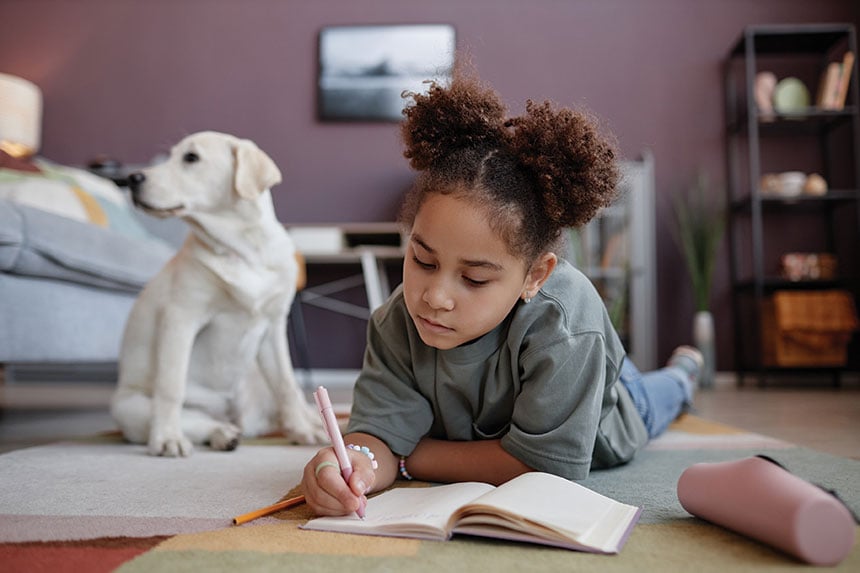
When I was 9 years old, my father bought me a diary, and not just any diary, but one with a lock and key.
I kept it locked, and wrote in it sporadically, mostly when I was upset or excited. When I got in a fight with my sister, I wrote about it. When we got a new puppy, I wrote some more. When a kid was mean to me on the bus? Yup, I turned to my diary.
I have kept a journal like this ever since, adding entries when I’m feeling some strong emotion, or when I am trying to figure something out. My journal is one of my lifelong companions and has brought me a great deal of pleasure throughout my life.
In my third book, a middle-grade novel called Birdy, the 11-year-old protagonist learns how to keep a diary, or journal. Just like me, she allows herself to express things there that she doesn’t feel ready to say out loud. Once she articulates those big feelings, Birdy is able to move on to more clear-headed thinking.
Adults should encourage the kids in their lives to keep a journal too. Why? Journaling has been proven to provide numerous benefits for children, including
- Building self-esteem and confidence
- Fostering self-expression
- Encouraging creative thinking and problem solving
- Reducing stress and anxiety
- Improving self-awareness and emotional regulation
- Enhancing communication and writing skills
- Understanding and verbalizing emotions
There are a few easy ways to encourage your child to journal:
Keep it low-pressure. There is no wrong way to keep a journal. Any way that works for them is fine.
Make it creative. Journaling doesn’t have to mean just writing words. It can include drawing, doodling, or pasting in ticket stubs.
Keep it fun. If they miss a day or two, that’s okay. Handwriting messy? That’s also okay.
Respect the writer’s privacy. With people being encouraged to share everything on social media, privacy can be a welcome relief for all of us. It can be nice for kids to have a low-stakes space for private musings, including big dreams and silly or even embarrassing thoughts.
If the writer asks to share a piece of their journal with you, consider it a big compliment. Do your best to thank them without judgment, advice, or corrections (unless they’ve asked for that). If you’re stuck about how to respond, try mirroring back what you’re seeing. Saying something like “Wow, that sounds very important to you” will allow them to feel heard without pressure. Other nonjudgmental responses might be “Oh, I didn’t know you felt so strongly about …”, or “I noticed you wrote a great deal about …”; or a simple “Thank you for sharing that with me” is often enough to make a writer feel great about sharing her work.
When we hand children a blank book and help them learn how to journal, we are saying, in essence, “Here is a safe place where you can be free.” My hope is that more kids will find, like Birdy, the fun and value of writing in their journals and building a writing practice of their own. If they’re lucky, it is a practice that will serve them for a lifetime.
N. West Moss has Master’s degrees in education and creative writing. She is the author of three books; her most recent, Birdy, is a middle-grade novel published by Christy Ottaviano Books at Little, Brown.
This article is featured in the March/April 2026 issue of The Saturday Evening Post. Subscribe to the magazine for more art, inspiring stories, fiction, humor, and features from our archives.
Become a Saturday Evening Post member and enjoy unlimited access. Subscribe now



Comments
All very positive reasons for journaling here. Another is that it’s physically written down by the child on that date and time. Not on a screen like nearly everything else that could could ‘poof’ and disappear, or writing a reaction to something fleeting. The physical writing by hand on paper makes it REAL, and that will stay with the child.