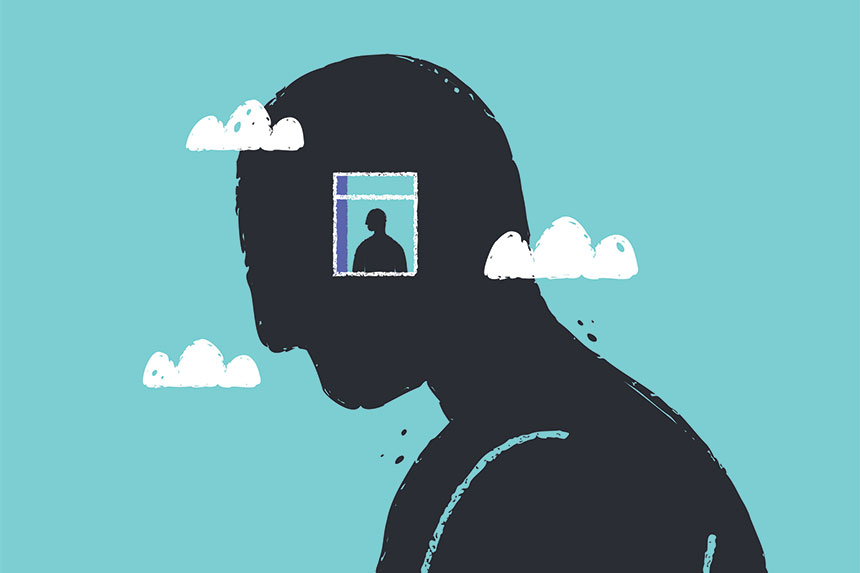
Imagine a reality where you live in complete isolation. Suppose that everything in your current life remains the same — your home, your job, your bed — but you have no social contact. You are the last human remaining on an Earth that keeps on spinning.
Each morning you awaken to a silent, deserted home. You take barren roads to work, with no traffic to contend with. Your car ride is entirely quiet, as there are no voices on the radio to listen to, nor is there any music to sing along with. Trains without passengers roll past you. You arrive at an empty workplace and sit at your desk, prepared for a day of working alone. Your lunch breaks are spent strolling the abandoned halls. In the evenings, you cook dinner for one. Weekends are just the same, filled with unaccompanied chores or lonely walks through the park.
Initially your loneliness might feel like boredom. Perhaps you would notice how dull and repetitive your thoughts are without input from others. Over time, you might gradually settle into a shadowy pit of solitude — not pleasant, but tolerable for now. But over the following months, those feelings would deepen until they became unignorable. The brittle floor of the pit would erode, exposing a deep crater of discomfort and delirium as you long for social connection. Under the pressure of isolation, your physical and mental health would progressively crumble.
How does this reality feel? My guess is it feels bad. I personally find it stressful; my chest tightens at the thought of such a lonely existence. However, this imaginary world isn’t so imaginary for some. Prisoners held in solitary confinement live it every day. For widowed seniors or ostracized students, this vision isn’t far from reality. That’s not just a terrible tragedy, but a serious public health concern.
Humans realized that isolation is agonizing a long time ago. All the way back in the 1700s, the controversial practice of solitary confinement was already being used to punish prisoners. It is one of the worst fates a human can experience and is deliberately intended to cause suffering. Some of the earliest American attempts produced horrible, gruesome results.
Why does solitary confinement have such terrible consequences? Perhaps it’s because we were evolutionarily wired to be together. Social connection, like sleep or nutrition, is a basic need of the human brain. Being held in isolation goes against our deepest and most primal instincts to be around others. It buries a seed of primordial distress within us, which may swell into madness if it’s allowed to grow and take root. We are exquisite creatures packed head to toe with impressive machinery — but unlike the many other organs within us, the brain gets lonely. It has needs that go beyond simple nutritional demands like oxygen and glucose. Unlike the rest of our organs, the squishy wrinkled mass that holds our every thought, feeling, and secret needs companionship. It craves the company of others. Without this, it fails.
Or, at least, it struggles. Social bonds are a vital ingredient for brain health, and what we may be missing is that brain health underlies essentially every bit of our experience. “Having a healthy brain” doesn’t just mean solving puzzles quickly or staying focused on tasks; it’s also about how well you manage your emotions, how sleepy you feel at work, how much exercise you can tolerate, how hungry you are, and so much more. It’s common to believe that the key to bolstering brain function is eating a special diet, taking a certain supplement, or doing crossword puzzles, but these elements are only part of the picture. To nurture our brains, we should begin by ensuring that we’re meeting their most basic needs, and social contact is among those.
Solitary confinement is probably the most extreme example of loneliness, but it reveals what many of us already know to be true: Being alone hurts. For the average person, isolation comes in spotty waves or short bouts: a day or two without a good conversation, or a few days in the house for those who live alone. These relatively brief periods aren’t nearly enough to drive someone to madness (though it can feel that way sometimes), but that doesn’t mean they’re negligible. Even at shorter lengths, solitude can seriously impact well-being.
Studies on the recovery of hospital patients offer a clear example of how short-term isolation can wear us down. When patients are secluded during their stay, they suffer worse depression and anxiety and are at a higher risk of experiencing adverse events. If the isolation continues afterward, things can get even worse. When patients are discharged from the hospital after a heart attack, those who live alone are more than twice as likely to die in the next three years. In contrast, those who receive the strongest social support after a stroke show the greatest recovery.
Despite the consequences of isolation, it seems we are failing to prioritize connection in modern life. While we fail to make change, the risks remain very real: Studies tracking millions of people show that isolation is associated with a 32 percent higher risk of death by any cause.
In 2015, Alzheimer’s and stroke researcher Dr. Joshua Crapser published a scientific paper about how isolation impacts brain health. The paper’s provocative title said it all: “One Is the Deadliest Number.”
While conducting research on brain aging, Dr. Crapser and his colleagues discovered something shocking. They were studying strokes, which happen when blood stops flowing to certain parts of the brain, causing neurons to be starved of oxygen and die off. The lab would artificially induce strokes in mice by temporarily blocking an artery that supplies blood to the brain. Their original goal was to figure out how the brain recovers from such a devastating event, but they got sidetracked when they noticed a surprising trend in their results. For some reason, mice that lived alone had much more severe strokes! Somehow, the exact same stroke was leaving behind more damage in their brains, and a larger area of starved, dead cells. What’s more, the isolated mice showed worse symptoms, took longer to recover, and were more likely to die.
This seemed farfetched. How could we be sure that their social conditions are truly to blame? Well, other studies have found that when mice are only partially isolated — separated by a clear barrier where they can see each other but can’t make physical contact — their strokes fall somewhere in the middle. They show more damage than mice living in groups, but less than those fully isolated.
This implies that socializing somehow protects neurons from suffocation. If two people suffered the exact same stroke, whoever has a less active social life would theoretically have more brain damage. How can this be? Because social isolation is in fact a form of stress, the body treats it as such.
The human body responds to stress in specific, predictable ways. When you’re stressed, a neurotransmitter and hormone called norepinephrine (aka noradrenaline) is released to drive that fight-or-flight response we all know so well. This wakes up a brain region called the hypothalamus, which is generally responsible for balancing the body and maintaining homeostasis; think of things like regulating body temperature and heart rate. When the hypothalamus notices these alarm bells ringing, it releases a hormone called corticotropin-releasing factor, which notifies the pituitary gland to discharge another hormone into the bloodstream called adrenocorticotropic hormone. Finally, this causes the adrenal glands to release glucocorticoids — hormones that act on many tissues in the body to initiate a stress response. In humans, the primary glucocorticoid goes by a familiar name: cortisol — often referred to as the “stress hormone.” Cortisol prepares the body to take on whatever threat is causing the stress. The body thinks a fight is coming, and it’s readying the troops. That means increasing the heart rate, suppressing nonessential bodily functions like digestion, and increasing blood sugar to feed the muscles and tissues. Importantly, one of the other things cortisol does is reduce inflammation. That’s because when you’re facing something stressful, inflammation does you no good.
Wait a minute … if cortisol is anti-inflammatory, wouldn’t stress be a good thing?
On paper, it may sound that way. But there’s a catch. When stress shifts from being short-term (often called acute stress) to long-term (chronic stress), bad things happen. Chronic stress causes cortisol levels to stay elevated for a long time, which can lead your body to become desensitized to it. Just like we can’t stay in fight-or-flight mode forever, we can’t expect our body’s tissues to remain in this stress-response state indefinitely. Eventually they stop responding to the cortisol, no longer letting it reduce their inflammation. As a result, when the body is under chronic stress, this hormone can lose its anti-inflammatory properties. This is a problem. With one of the main anti-inflammatory systems out of order, the body becomes vulnerable to chronic inflammation. And that, my friend, is a bane to health and wellness. Chronic inflammation can cause damage to healthy tissues in the body and is associated with conditions like heart disease, diabetes, and cancer.
This seems to be what’s happening in social isolation. Being that it’s a form of stress, isolated people show higher cortisol levels, and those with fewer close relationships have higher cortisol output. One study conducted at NASA’s Johnson Space Center in Houston had subjects isolate for 30 days inside a 650-square-foot enclosure. Just one week into the experiment, their cortisol levels had increased by 56 percent on average. The subjects’ cortisol levels remained high for the full 30 days, only recovering a few days after they returned to normal. Let me say that again. Cortisol levels rose during isolation and dropped after a return to socialization. Considering that just about everyone wants to protect their health and well-being, are we neglecting a hero in plain sight? Social contact is free, pleasant, and effective. Meanwhile, there are thousands of fad diets, supplements, and other expensive elixirs out there claiming to heal our cortisol levels. Perhaps we can simply turn to a more straightforward (and cheaper) solution: one another.
Another example of this comes not from the brain, but from the heart. Loneliness is associated with an increased risk of heart disease, and people who live alone are more likely to die after a heart attack. However, when mice are given oxytocin — that key neurotransmitter released during interactions — it appears to protect them from the negative effects of isolation on heart health. This is presumably because oxytocin doesn’t just drive social reward and bonding but also has anti-inflammatory properties. The significance of this cannot be overstated. It suggests that interactions don’t just make us feel good, they literally protect us against disease and death in many forms by battling dangerous inflammation within us. Recognizing this, we can start to appreciate the true grip that social connection has on our health.
Being deprived of anything you need is distressing, and social nourishment is no different. Humans are social animals; interaction is inherent to our brain function. If we weren’t socially inclined, isolation probably wouldn’t have these negative effects.
In early 2024, my mom suffered a devastating bout of depression as she coped with gradually losing her mother to Alzheimer’s disease. Her mood was dark for weeks, and as she slumped further into despair, she found herself losing the desire to socialize. It just didn’t seem worthwhile to leave the house or see friends; however, this self-isolation was quietly causing her depression to worsen. When a lifelong friend invited her to dinner, my mom declined. Luckily, her friend could see that my mom was depressed and needed friendship more than ever. “I don’t care, you have to come!” she told her. Not wanting to disappoint her friend, my mom decided to go. She couldn’t believe the way her body responded. That night she slept terrifically, and she woke up the next day with an all-new attitude. After just a few hours with friends, she found her mood uplifted. Had her friend not insisted on spending time together, who knows how this sustained isolation could have impacted my mom’s health.
Not only do we experience great pleasure and reward when we’re with others, but we experience distress and health consequences when we’re apart. It’s a powerful biological imperative, and one we should pay attention to. Even when we don’t feel up to socializing, our brains and bodies stand to benefit.
Being isolated can make socializing less enjoyable, which may make it difficult to escape a state of loneliness. Lonely people experience less social reward and show reduced activity in part of the brain’s reward circuitry — the ventral striatum — when they view positive social images. As a result, lonely people experience weaker boosts in mood after pleasant interactions and show lower oxytocin levels. This all carries an important lesson: When you’re feeling lonely and isolated, it may take a few interactions to get you out of your shell and settled back into your routine. My mom was lucky that a single night out impacted her so much, but the effects may not always be so immediate. If the first time visiting with friends or family doesn’t do the trick or you don’t feel like yourself, give it time. Your loneliness may literally be altering your brain function in ways that make it difficult for you to find meaningful connection.
The arc of life follows a predictable pattern, at least when you look at who we spend our time with. Research shows that we go through reliable social waves as we age, spending our time with different people at various points in life.
In childhood, we’re constantly surrounded by our parents and siblings. Through our late teens and early 20s, we undergo a major social shift characterized by a sharp decline in time spent with friends. Meanwhile, time spent with coworkers and partners rises dramatically, ushering in a new adult lifestyle. Kids come along next, and our time with them peaks in our 30s — another golden age. Life is good, because we’re in the frequent company of our partner and children.
In our 40s and 50s, things begin to change. As our kids grow up and move out, we spend less time with them and more time alone. Another major shift toward isolation comes in our mid-60s as we reach retirement, and time with coworkers bottoms out. In its absence, time spent alone continues to rise. By the time we reach our 70s, the average person is spending over seven hours a day alone. Our parents and even some of our friends may no longer be with us. Coworkers are a long-gone afterthought. Looking at the data, you can see that isolation comes on gradually. It starts in our 40s and progressively builds to a dangerous crest in our 80s.
This is a serious problem. In fact, I would argue that it may be the largest unspoken health crisis of our time. It’s an absolute tragedy that the greatest and most threatening peak of isolation coincides directly with old age — a time when we are already more susceptible to health complications like dementia, diabetes, and chronic obstructive pulmonary disease.
So what does this all mean? The way I see it, isolation in later life may be driving up cortisol and inflammation, thereby accelerating the health decline we typically face as we age. This cannot be ignored. The evidence speaks loudly and clearly — a declaration of the irreplaceable value of social connection.
It makes a powerful statement: that older people need connection, and moreover, that all people should prioritize socializing now — wherever we are in life — because building social habits and routines will pay off tremendously in the long term.
Ben Rein, Ph.D., is chief science officer of the Mind Science Foundation, adjunct lecturer at Stanford University, and clinical assistant professor at SUNY Buffalo. The neuroscientist has received awards from the National Academies of Sciences, Engineering, and Medicine; the Society for Neuroscience; and elsewhere.
From WHY BRAINS NEED FRIENDS: The Neuroscience of Social Connection by Ben Rein, Ph.D., published by Avery, an imprint of Penguin Publishing Group, a division of Penguin Random House, LLC. Copyright © 2025 by Ben Rein
This article is featured in the May/June 2026 issue of The Saturday Evening Post. Subscribe to the magazine for more art, inspiring stories, fiction, humor, and features from our archives.
Become a Saturday Evening Post member and enjoy unlimited access. Subscribe now



Comments
I agree wholeheartedly with this article for the most part. I believe it is important to surround yourself with many friends who are positive, can inspire you, and can engage with you in an intellectual manner. It is a bonus if they have many of the same interests and tastes as you have as well.
While some reading the article might relish the fact of being the the last person on Earth or working, living, or just being alone as a peaceful, unchallenging existance, it would also be uninspiring. One would perish quicker from loneliness than from being active and surrounded by a lot of friends. And another thing: What happens with your thought process when you are constantly by yourself 24 hours a day 7 days a week? I remember something my Mother drilled into my head some 40 years ago: “An idle mind is the devil’s workshop.” It still makes much sense to me.