This series by American studies professor Ben Railton explores the connections between America’s past and present.
The story of U.S. women athletes at the recently concluded Milan Cortina Winter Olympics ended with a frustrating and entirely unnecessary controversy: President Trump joked on a congratulatory phone call with the gold-medal-winning men’s hockey team (far too many of whom laughed in response) about needing to invite the equally successful women’s hockey team to the White House or risk impeachment, leading to a State of the Union address where many of the men were present and the women absent. But that moment shouldn’t overshadow the hugely impressive success of the U.S. women, who set all-time Winter Olympics records with six golds and 17 total medals.
The start of this year’s Women’s History Month is a perfect opportunity to celebrate such groundbreaking athletes and achievements, past as well as present. And no past U.S. women’s Olympic team had a more complex and compelling story than the athletes who took part in the 1932 Los Angeles Summer Olympics; a team led by one of the most successful athletes in American history, but tragically also one whose racism contributed to the exclusion of the first two Black women Olympians, whose stories are even more impressive and inspiring.
It was only with the 1928 Olympics that women began to be featured at the Games in larger numbers, and the 1932 U.S. women’s team was thus its most sizeable to date. The unquestioned leader and star of that team was Mildred “Babe” Didrikson (1911-1956), who set four track and field world records at the Games and remains to this day the only track and field athlete to win individual medals in separate running, throwing, and jumping events. And that’s only the tip of the iceberg when it comes to this truly unique athlete — Didrikson had been a three-time AAU All-American in basketball over the years leading up to the Olympics; would go on to become the most famous and successful woman golfer in American history (and one of the most prominent U.S. golfers, period); and also pitched in three Major League Baseball spring training games in 1934. Only Jim Thorpe can rival Didrikson in the breadth of her athletic achievements.
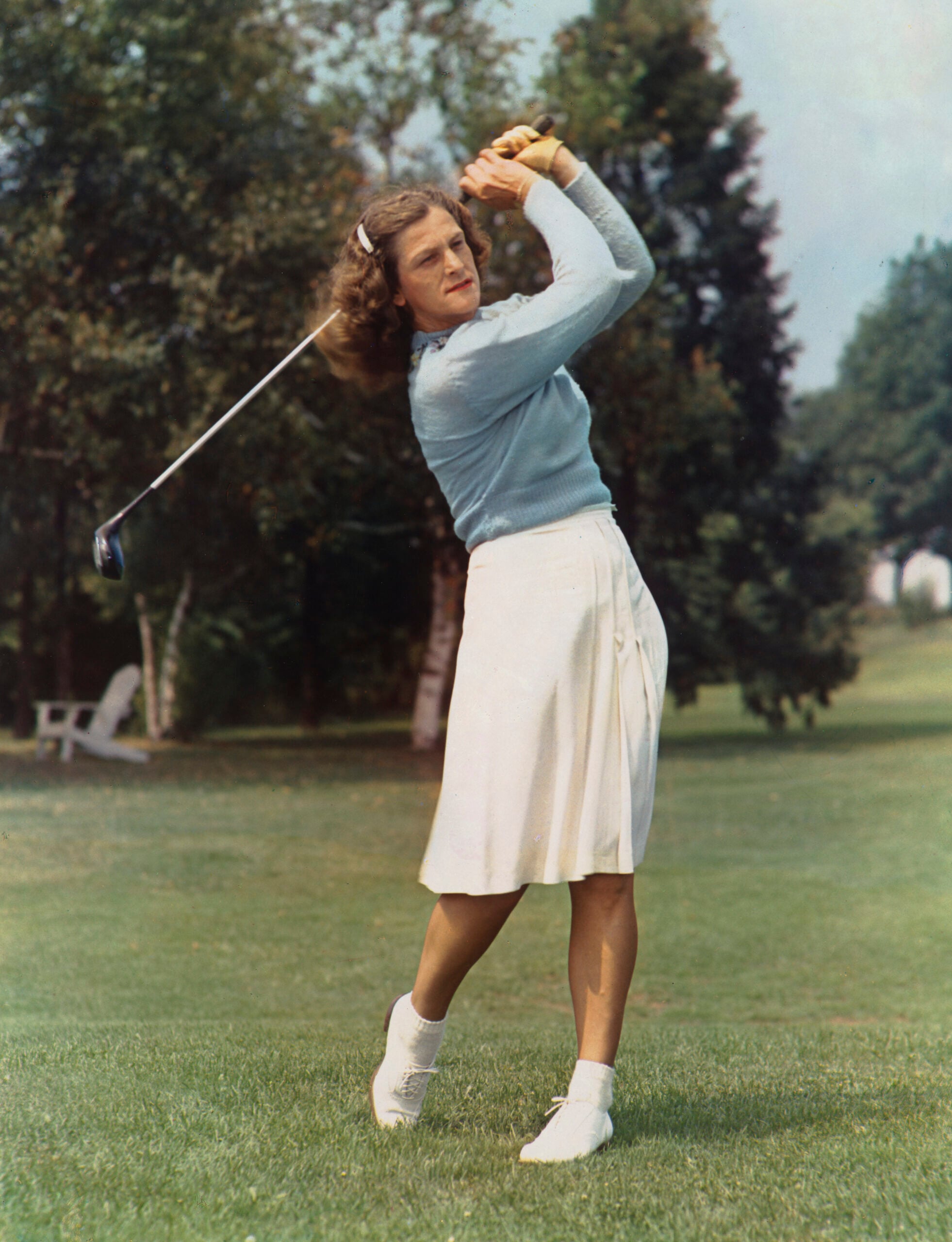
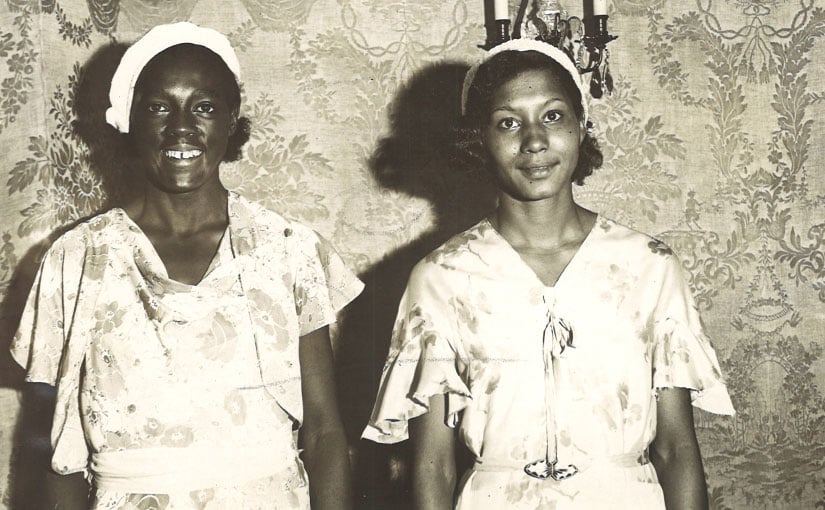
Didrikson achieved that groundbreaking success in the face of blatant sexism, as reflected by sportswriter Joe Williams’s New York World-Telegram piece arguing that “it would be much better if she and her ilk stayed at home, got themselves prettied up and waited for the phone to ring.” But unfortunately, Didrikson also expressed similarly prejudicial attitudes towards two of her fellow 1932 Olympians, Black teenage track and field phenoms Louise Stokes (1913-1978) and Tidye Pickett (1914-1986). Stokes and Pickett were the first two Black women Olympians, and they faced significant discrimination on numerous levels, including from their team leader Didrikson — she apparently did not want Black teammates, and expressed that bigoted perspective through such overt and hateful acts as dumping a pitcher of water on the pair while they were sleeping in their segregated compartment on the team train to Los Angeles.
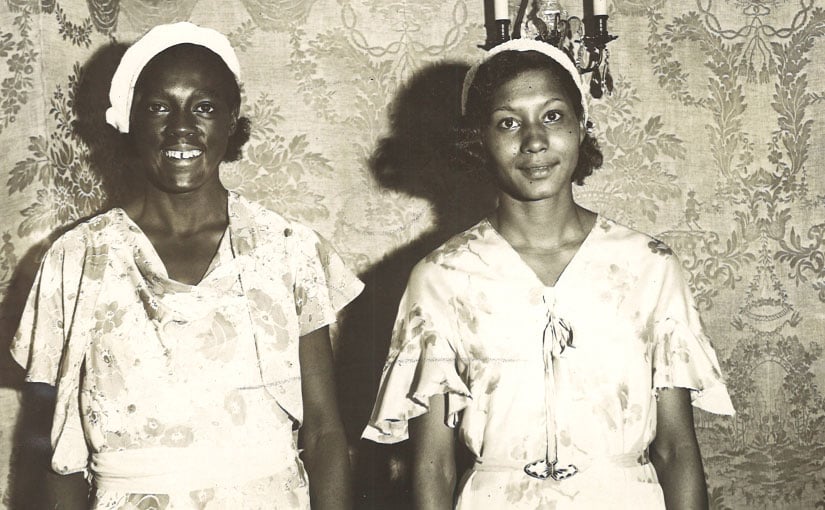
We can’t tell the stories of either Babe Didrikson or the groundbreaking 1932 U.S. Women’s Olympic Team without including that frustrating and tellingly American moment, but neither should we let it obscure the inspiring lives and athletic achievements of both Stokes and Pickett. Louise Mae Stokes was born in Malden, Massachusetts in October 1913, the oldest of six children, and excelled in both basketball and track at Malden High School, setting a New England record in the 100-meter dash. She qualified for the 1932 Olympics in both that race and the standing broad jump (in which she had tied the world record in December 1931), and at the 1936 U.S. Olympic Trials she once again qualified to be part of the 4X100 relay pool, with the town of Malden raising nearly $700 to help pay for her trip to the 1936 Berlin Summer Olympics. In 1941 she founded the groundbreaking Colored Women’s Bowling League in which she would be a professional bowler for many years, during which she also married cricketeer Wilfred Fraser and worked as a Massachusetts state clerk to help raise their family.
Tidye Pickett’s story parallels Stokes’s but was still very much her own. She was born in Chicago in November 1914, and excelled at sprinting from a young age, gaining the attention of standout University of Chicago long jumper (and future 1936 Olympian) John William Brooks, who became her coach. She qualified for the 1932 Olympics as part of the 4X100 relay pool alongside Stokes, and after those Games, while a student at Illinois State University, shifted her attention to the hurdles, qualifying for the 1936 Olympics in the 80-meter hurdles. After those Games she became first a teacher and then principal at East Chicago Heights’s Woodlawn Elementary School; when she retired in 1980 the school was renamed in her honor. She also earned both her BA from Pestalozzi Froebel Teachers College and her master’s in education from Northern Illinois University along the way, playing on barnstorming women’s basketball teams to help earn the money to complete both degrees.
Stokes and Pickett’s Olympic experiences featured all-too consistent discrimination, not only with the train incident with Didrikson and their segregated accommodations; but also more institutional discrimination, as when both were replaced for the 1932 4X100 relay final by slower white athletes, an exclusion due, Pickett would argue for the rest of her life, to “prejudice, not slowness.” In many ways the 1936 Berlin Olympics were even worse in all regards, as all 18 Black athletes on that U.S. team experienced the same kinds of prejudice both abroad and at home that I wrote about in this Considering History column on Jesse Owens. The documentary film Olympic Pride, American Prejudice (2016) tells the story of those 18 athletes and the Berlin Games and their aftermath, which included a White House reception to which the Black Olympians were not invited. As Stokes put it in a Boston Chronicle article, “I feel I have more to fear from my own countrymen than from Nazi officials.”

As we remember those painful exclusions, we should also lean into commemorations and celebrations of these groundbreaking Black women athletes. And we have an excellent model for such celebrations in the communal spirit of Louise Stokes’s hometown of Malden, which raised the funds to help send Stokes to the 1936 Olympics, welcomed her back with a ticker-tape parade witnessed by 6,000 spectators, and now features a statue of Stokes in the Malden High School courtyard, one built in the 1980s with the support of student fund-raising. May we all be just as inspired by Stokes and her teammate Pickett, two of the most groundbreaking Olympians American history.
Become a Saturday Evening Post member and enjoy unlimited access. Subscribe now
.jpg)
