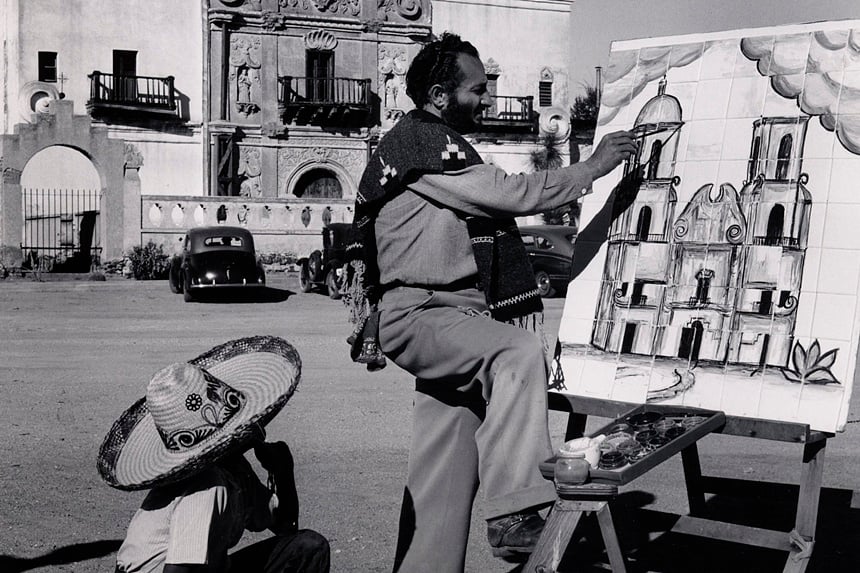
In May 1976, a year and a half before the land 40 miles east of Phoenix became Lost Dutchman State Park, artist Ettore “Ted” DeGrazia led a group of journalists, a film crew, and Yaqui and Apache friends into the Superstition Mountains. Pack horses accompanied them, carrying camping gear and the cameras necessary to record what DeGrazia planned to do. After all, he’d need proof.
They rode most of the day past Saguaro cactus and through canyons with walls stretching hundreds of feet high. When they arrived at Angel Springs, they made camp among the scrub and settled in for the night. The next morning, everyone took their places, giving DeGrazia plenty of space. He made a rock fire ring, fashioned a teepee-shaped frame, and began leaning his canvases against it.
By some accounts, he doused the structure with some of the Chivas Regal whisky he had in his back pocket, but even if he didn’t, the oil in his paintings would have ignited. He lit a rolled paper and leaned it against the frames, then added a second and placed it nearby.

It didn’t take long for the fire to roar, fueled by the unframed canvases he added. The flames swallowed paintings of cherub-like Native American children, ceremonial dances he’d witnessed, horses in their pastures, and other Southwestern scenes. As fire consumed the first batch, DeGrazia added more, then stepped back and sipped his whiskey from the bottle, tears in his eyes. In total, he burned about 100 paintings that day.
“It pained him to burn those paintings,” says Lance Laber, executive director of the DeGrazia Foundation in Tucson. In fact, Laber adds, he was so upset he couldn’t paint for several years after.
But DeGrazia felt he had to make a statement. As a successful artist, his family would be taxed half the market value of any unsold art he left behind at the time of his death, and they didn’t have the money to pay. DeGrazia didn’t want to burden them, so he decided to burn his art in protest instead.
Thirty years earlier, he seemed like the last person to find himself in such a predicament — he claimed no one would even steal his paintings back then.
Early Years in Morenci and Tucson
Born in 1909, DeGrazia spent the first 11 years of his life in Morenci, Arizona, where his Italian immigrant father worked in the Phelps Dodge copper mine. According his biography on the DeGrazia Gallery in the Sun Museum website, when the mine closed in 1920, the family of nine moved back to Italy, only to return to Morenci when the mine reopened five years later. DeGrazia enrolled in first grade to relearn English and graduated from Morenci High School when he was 23.
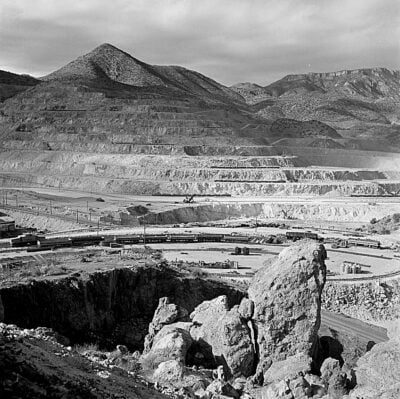
Early on, he knew he wanted to be an artist. “He saw his dad going down into the mines, and he didn’t want to go underground,” Laber explains. “He didn’t want that life.”
When the Great Depression hit, and the mines began to close again, DeGrazia left Morenci to study art and music at the University of Arizona in Tucson. To pay for classes and his expenses, he worked as a groundskeeper during the day and played his trumpet in a band at night.
In 1936, DeGrazia met and married his first wife, Alexandra Maria Diamos, and went to work for her father, managing his movie houses. All the while, he painted and even sold a few paintings, including one to Raymond Carlson, editor of Arizona Highways, who wrote about him in the magazine. Still, he struggled to find buyers.
Establishing His Career
His break came in 1942, or so he thought. That summer, he and Alexandra vacationed in Mexico where he met Diego Rivera, who agreed to hire him as an apprentice. The famous muralist and painter introduced him to his contemporary, José Clemente Orozco, and Laber says the artists were so impressed with DeGrazia that they sponsored a solo exhibition of his work at the Palacio de Bellas Artes in Mexico City.
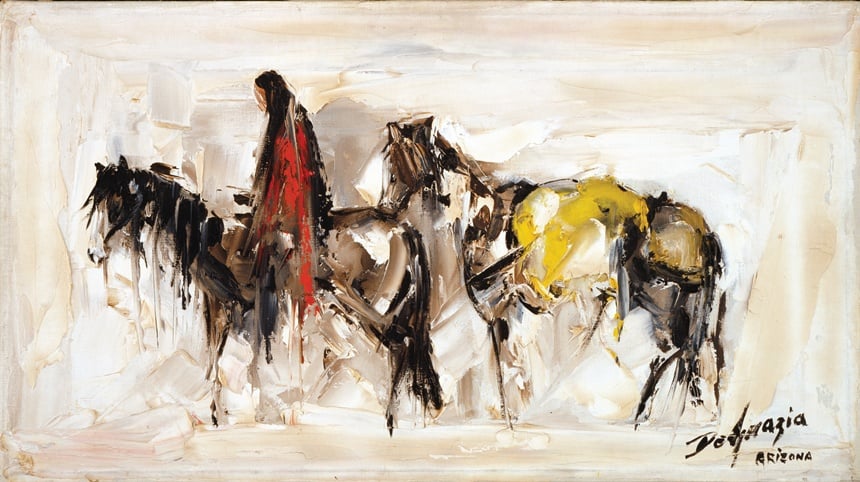
However, back in the United States, he couldn’t find a gallery willing to show his Mexican-inspired paintings, according to Laber. Undeterred, he paid $25 for an acre of land at Prince Road and Campbell Avenue and built his own studio. Even then, he couldn’t generate any interest.
“I propped my paintings up on a wide flat board that went from the gallery’s doorway to the curb,” DeGrazia states in a 1977 Arizona Daily Star article. “And sometimes I’d get drunk and forget to bring them in at night. The next morning, they’d all be there. People wouldn’t even steal them.”
DeGrazia struggled personally, too. In 1946, Alexandra divorced him, and he had to scrounge to pay her $100 per month for child support. But he also met New York sculptor Marion Sheret that year, and in 1947, he married her in the Mexican jungle.
Changing Course
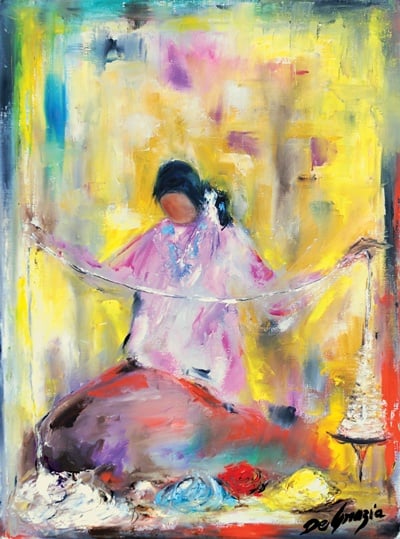
During the summer of 1949, DeGrazia traveled to the nearby Apache, Papago, and Yaqui reservations and felt inspired to paint them using lighter, pastel-leaning colors. He also traded his brush for a palette knife and hired a lithographer to make prints of his work, making them more affordable and introducing him to a wider audience. Those changes paid off, and soon, he had a growing following.
A master marketer, he capitalized on any attention he received. He appeared in the NBC newsreel Watch the World in the early 1950s, and National Geographic mentioned him in a 1953 article. But his popularity exploded when UNICEF chose his Los Niños painting for their 1960 holiday card. The card sold millions worldwide.
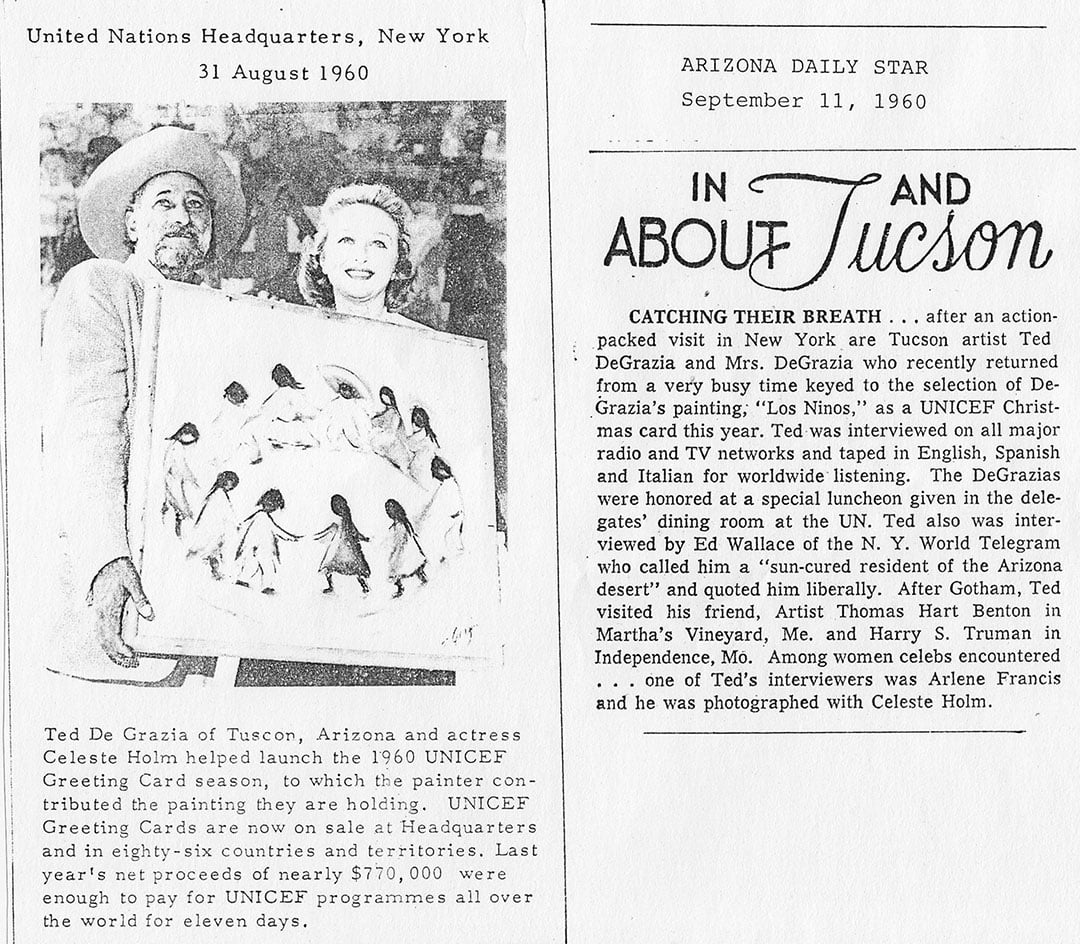
“That really put him on the map,” Laber says.
Before long, his paintings spread to other items, and by the 1970s, his art adorned everything in the Southwest from refrigerator magnets to serving platters.
“You want a deck of playing cards? A paperweight? A lap robe?” a 1977 Arizona Daily Star article asked, describing his gallery. “Or a jigsaw puzzle, dart board, T-shirt, wall plaque…Can’t decide? There’s a 56-page catalog to take with you (that costs $1).”
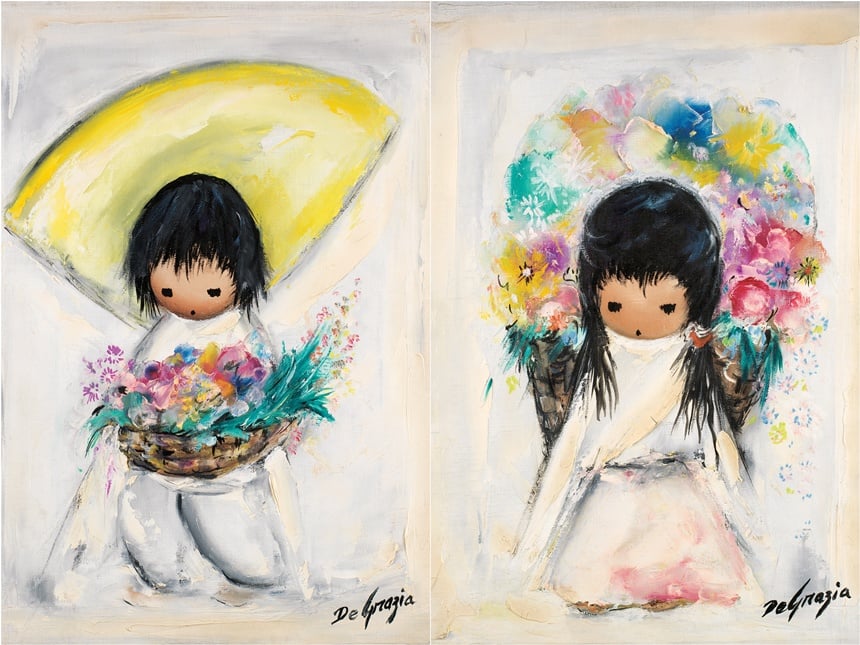
DeGrazia didn’t stop there. In addition to oil paintings, he worked in a variety of mediums, including glass, metal, beeswax, plaster, and clay. He made jewelry, wrote and illustrated children’s books, and created “ballet stories” for a dance troupe, according to an Arizona Alumni Magazine article. He even wrote an autobiography and a book about the Superstition Mountains.
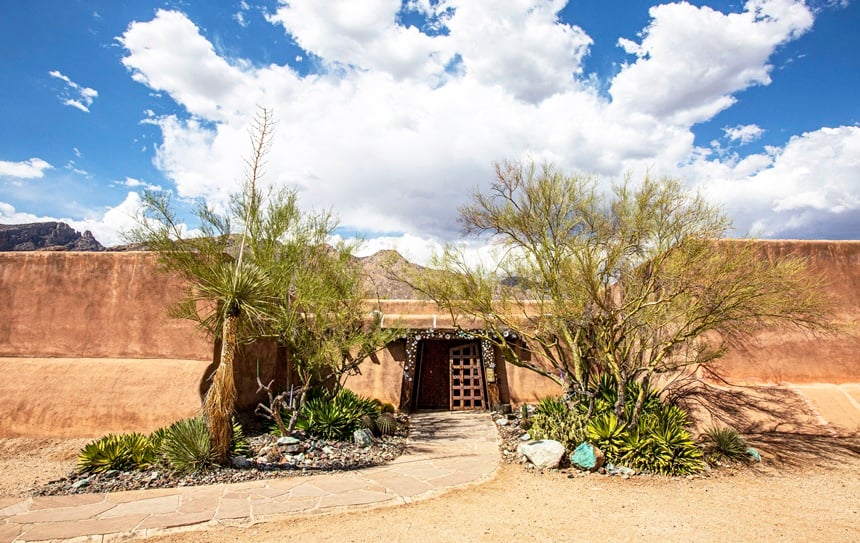
And he designed and built three other galleries, including Gallery in the Sun. Completed in 1965, the adobe structure sits on a 10-acre parcel in the Catalina Foothills and features a mine-like entrance that opens to the “treasure” of his art. Next to the gallery, the artist built a small home and a chapel from plans he drew.
A Financial Dilemma
By the mid-1970s, DeGrazia had amassed a small fortune, mostly based on the value of his unsold work. That presented a problem for DeGrazia and artists like him. Following the 1969 changes to inheritance tax laws, an artist’s heirs would have to pay taxes on the fair market value of any unsold art despite how much actual cash the estate had. Now in his late 60s, DeGrazia worried that his heirs couldn’t pay.
So he came up with a plan to protest inheritance taxes by burning 100 of his paintings in the Superstition Mountains. The IRS warned him that he would need proof that he actually destroyed the art, which is why the journalists and film crew accompanied him that day in May 1976.
While no one questions that DeGrazia went through with his act of defiance, some speculate just how much of a sacrifice he made. Laber says the artist set “millions of dollars of paintings” on fire, but he didn’t destroy his best work. He was very calculated about the paintings he chose, and he had (at least) 15,000 works stockpiled, making the act largely symbolic.
Although DeGrazia threatened to “destroy more and more of my work until perhaps there is no more to destroy,” he didn’t. Laber and others contend he may have set his artwork on fire just as much for publicity since the story made national headlines and introduced his work to even more people.
Hidden Art
According to some, including his youngest son, Domingo DeGrazia, the artist did more than just burn art in the Superstition Mountains — he hid it. Even DeGrazia himself told the Los Angeles Times and later an NBC film crew that he had hidden paintings around Angel Springs, where he staged his protest.
Domingo, an attorney, classical guitarist, and former state representative, says his father traveled at least twice into the Superstition Mountains with artwork that he left there. His mother, Carol Locust, told him that on the trip to burn the paintings, his father left camp with a small bag, and when he returned, it was empty. The second time, he supposedly left six to eight aluminum tubes, presumably filled with paintings, in the same area.
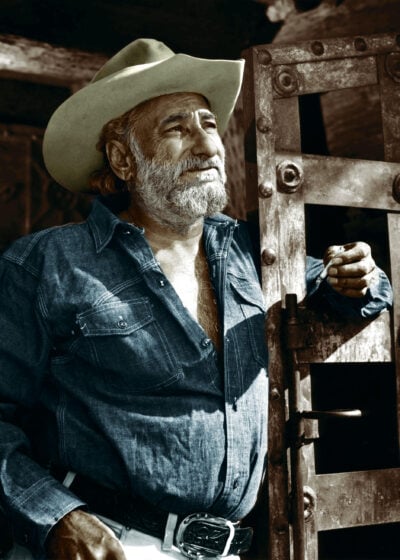
“There’s a very high probability that the artwork is still out there,” Domingo says.
He explains that the aluminum tubes would have protected the paintings from animals and the elements, and his father likely hid them in elevated spaces like caves and crevices. Not to mention, no one has made a legitimate claim to have found the valuable stash.
For many, the real question isn’t whether he hid artwork but why he did it. Domingo thinks he knows. As a boy, his father told him stories of the fabled Lost Dutchman’s goldmine, which is supposedly located in the Superstition Mountains. DeGrazia loved the legend, and leaving art hidden there was his way of becoming part of the lore.
“I believe that my dad would have been the type of person to hide artwork, if for no other reason than to mess with people or pull a prank,” Domingo says.
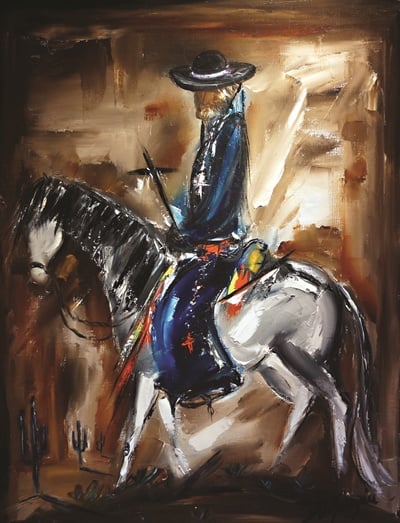
This spring, before the 50th anniversary of DeGrazia’s May 16 tax protest, Domingo plans to return to Angel Springs and search again for his father’s hidden art. His goal isn’t to find the paintings, though. He’ll use the time to reconnect with his father and relive the adventures they had together in the Superstition Mountains when he was a young boy.
The Gallery in the Sun
Laber says DeGrazia’s real treasure isn’t so hidden — it’s the Gallery in the Sun. Now a free museum in Tucson, the gallery is operated by the DeGrazia Foundation, which DeGrazia started in 1979 as a way to circumvent the inheritance tax laws he protested. By donating art to the foundation, he removed the art — and tax burden — from his estate.
Today, the foundation operates the Gallery in the Sun and showcases some of the artist’s best works.
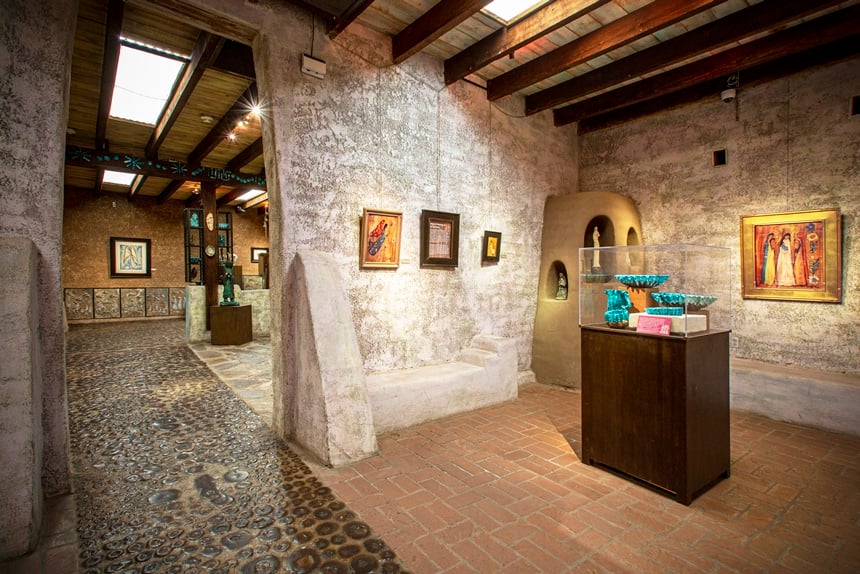
“He was an amazing artist,” Domingo says of his father. “He had a global impact of sharing Arizona with others, and he brought a lot of attention to the beauty of the landscape.”
Unfortunately, the inheritance tax laws still stand, and artists’ estates face the same tax burdens DeGrazia fought. However, DeGrazia may have gotten what he wanted all along — a great story to tell.
Become a Saturday Evening Post member and enjoy unlimited access. Subscribe now

Comments
It is so sad and such a loss of good art but I totally understand why he did. Inheritance & other taxes including those for owning property and making income are outrageous and should be outlawed and made unconstitutional in the US. This country has gone from being the land of opportunity to the land of deadbeats seeking handouts from the government from the taxes they incur on honest citizens just trying to eek out a living. I would have done the same thing had I been in his shoes at the time.
Wonderful feature on an incredible artist, following this shocking title! Another case of ‘love my country, hate my government’ with such destructive, cruel inheritance tax laws still on the books. Ted DeGrazia’s life story prior to 1976 is one of a lot of perseverance during the times his art was not appreciated or valued, as it should have been.
I’m very glad he established The Gallery in the Sun museum in 1979 as a way to circumvent the terrible tax laws he’d protested just a few years earlier. He’d gotten great advice, and in the course of doing so, created the perfect showplace for his art for many years now, and many more to come.
Hopefully his son Domingo’s search this spring in Angel Springs for his father’s hidden art is successful. If not, time still well spent for reflection and spiritual connection otherwise. I really love the painting featuring the two horses, and the other of the singular horse toward the bottom. Also the Navajo woman spinning. That one having a later career Peter Max (a favorite) look to it, like his Statue of Liberty.