The artist Harvey Dunn (1884-1952) was a big, brawny man, a muscular product of the South Dakota prairie. His parents were homesteaders who built a 7′ x 9′ wood frame shack along an old buffalo trail. There, Dunn was born and raised.
Dunn grew up working the farm, plowing the land, clearing rocks and hauling sacks of wheat. But all the while he loved to draw, and dreamed of someday becoming an artist. Harvey’s father, Thomas Dunn, pressured Harvey to remain a farmer and offered his son 640 acres of farmland if he’d stay. His mother, on the other hand, recognized her son’s secret dream and encouraged him to follow his heart and become an artist.
At age 19 Dunn quit the farm to train at the Art Institute of Chicago. After two years he moved to Pennsylvania to continue his studies at an art school run by the famous illustrator Howard Pyle. Dunn proved to be so talented that he began receiving commissions before he graduated. Some of his earliest assignments came from The Saturday Evening Post.
Dunn painted a wide variety of subjects for the Post, but he never lost his special affection for the prairie where he was raised. So it’s not surprising that the magazine found him to be the perfect artist to illustrate the Post’s many stories about the frontier. Dunn’s very first assignment, published on June 2, 1906, was about an Oklahoma gun fight over a woman.
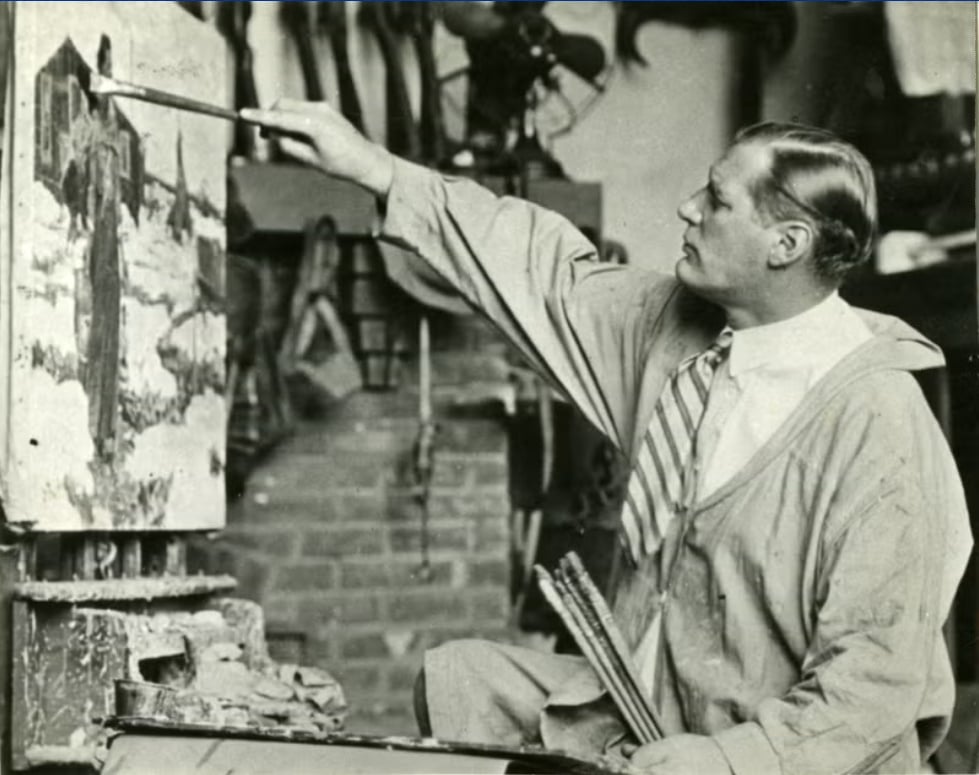
The editor-in-chief of the Post, George Lorimer, was a firm believer in strong, “self-made men,” and he admired those qualities in Dunn, with his granite features and determined jaw. Lorimer ordered the art editor of the Post to make sure that Dunn continued to receive a steady stream of assignments. So between 1906 and 1941, he illustrated around 300 stories for the Post.
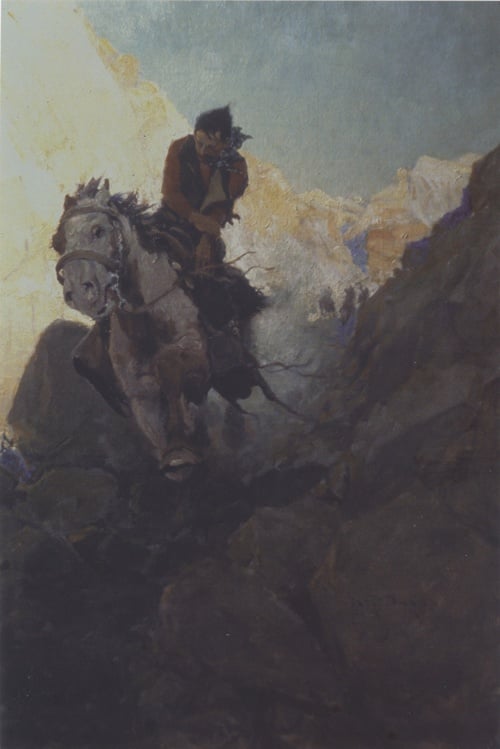
Dunn illustrated stories about gunslingers and tough guys, cowboys and ranchers, sea captains battling the elements, rugged miners facing challenges. The themes of these stories were sometimes so repetitive that the Post was able to recycle Dunn’s paintings, using the same picture to illustrate multiple stories.
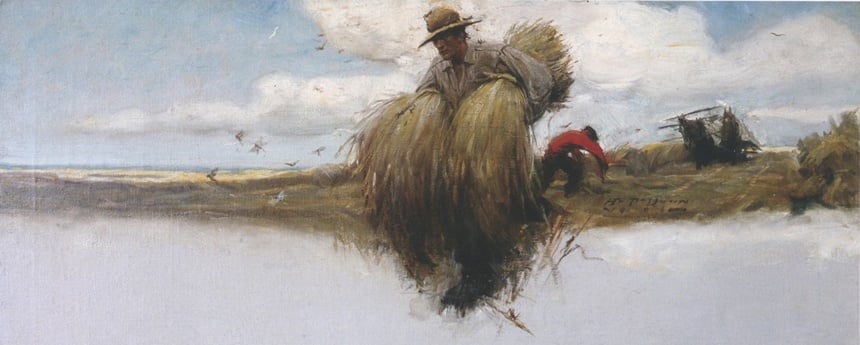
If the men in Dunn’s illustrations were often big, muscular and violent, the women characters often remained on the sidelines, little more than props to demonstrate the brutality of the menfolk.
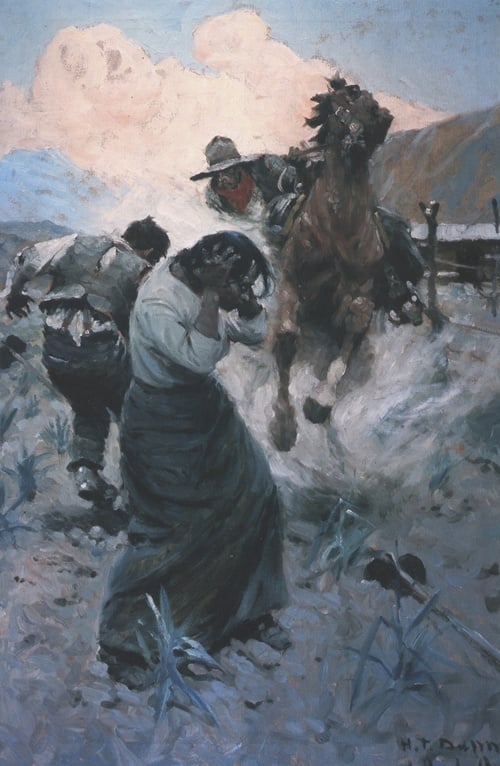
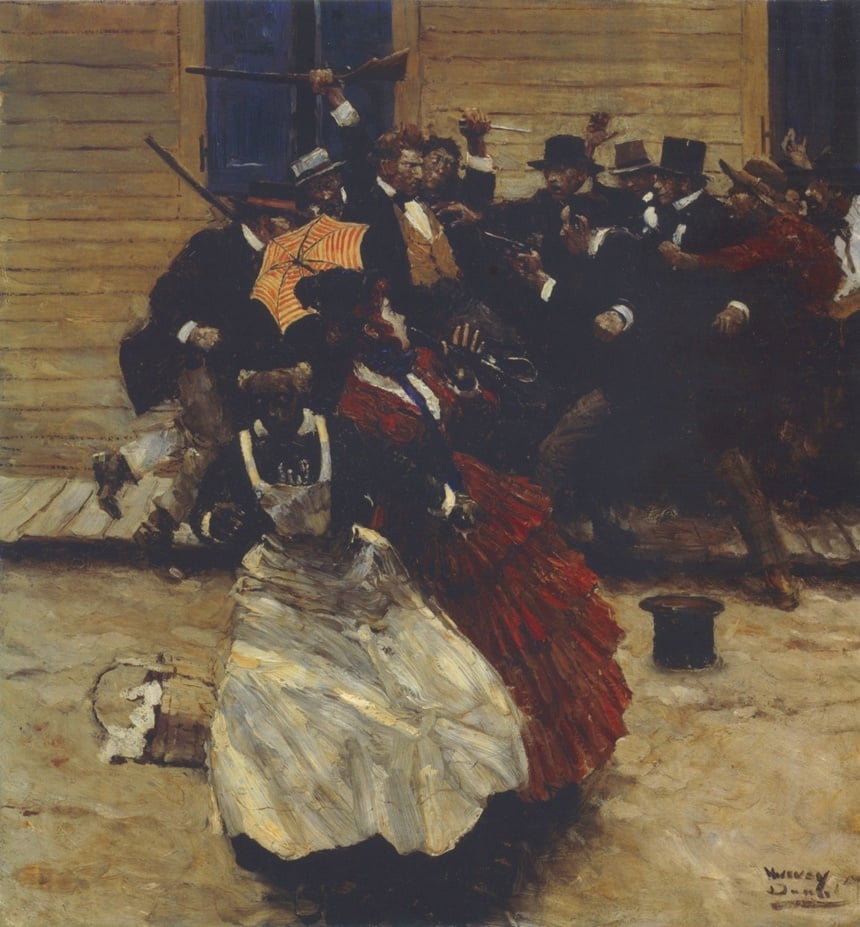
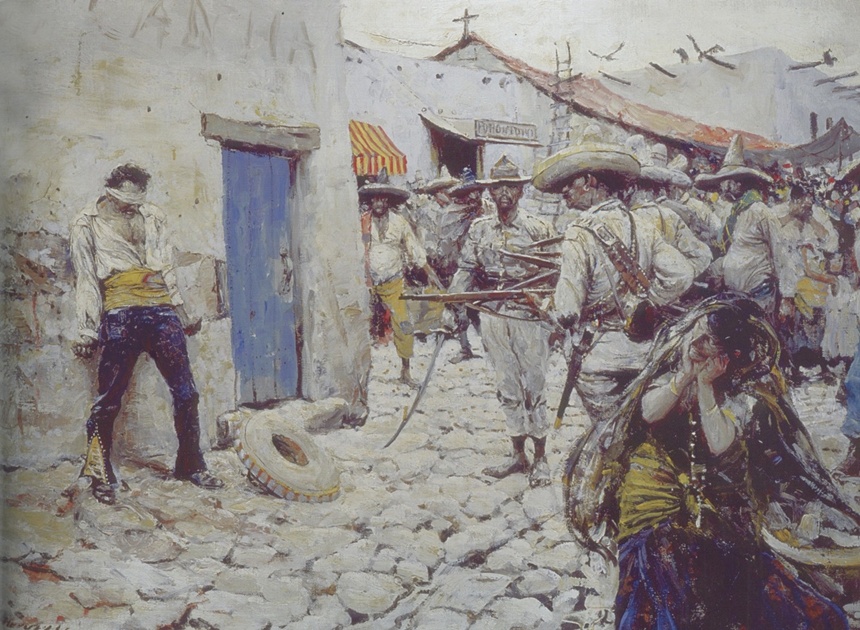
Sometimes women became the targets of unwanted affections from some wrangler or roughneck:
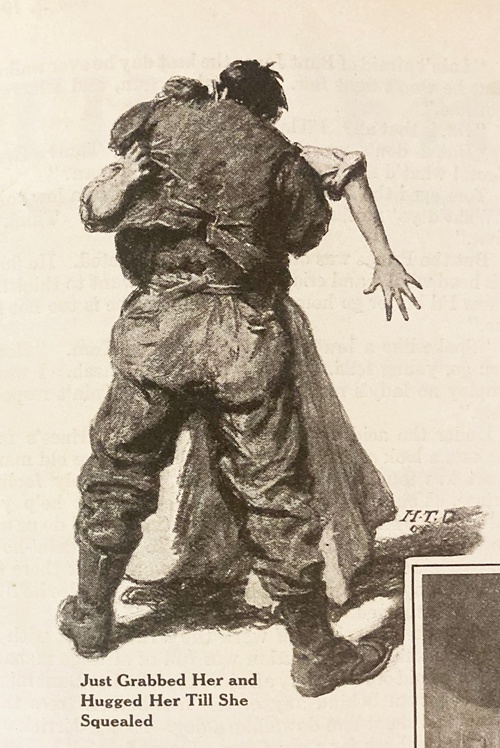
The frontier was a rugged world for everyone, especially for women.
But it turned out that Dunn had a sensitive side as well. Perhaps it came from watching his mother on the prairie and remembering how she cared for him and encouraged his art, but Dunn showed a surprising empathy for the women who struggled in this rough environment. He painted a lovely series of personal paintings showing the ladies of the frontier from a different perspective.
One of the best examples was this personal painting of a husband and wife in an ox cart returning home under the enormous night sky:
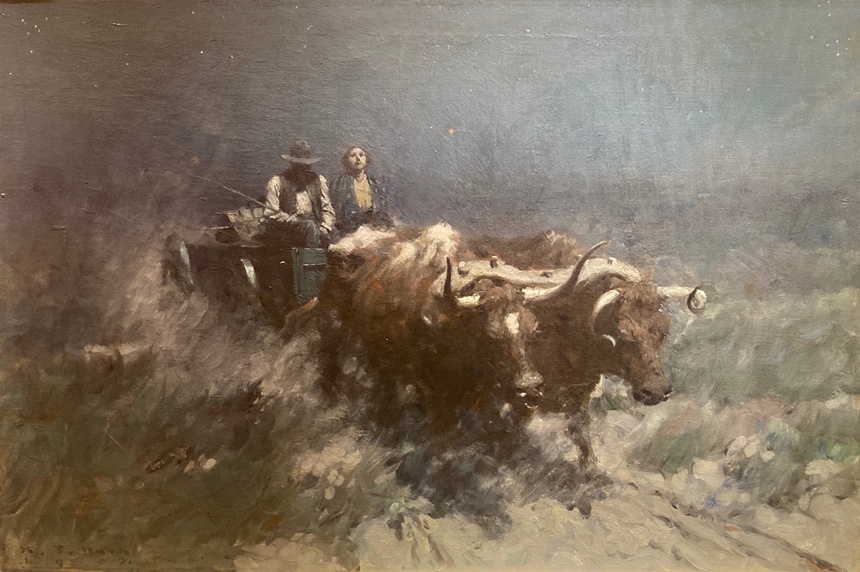
Notice how Dunn made hers the only human face in the painting:
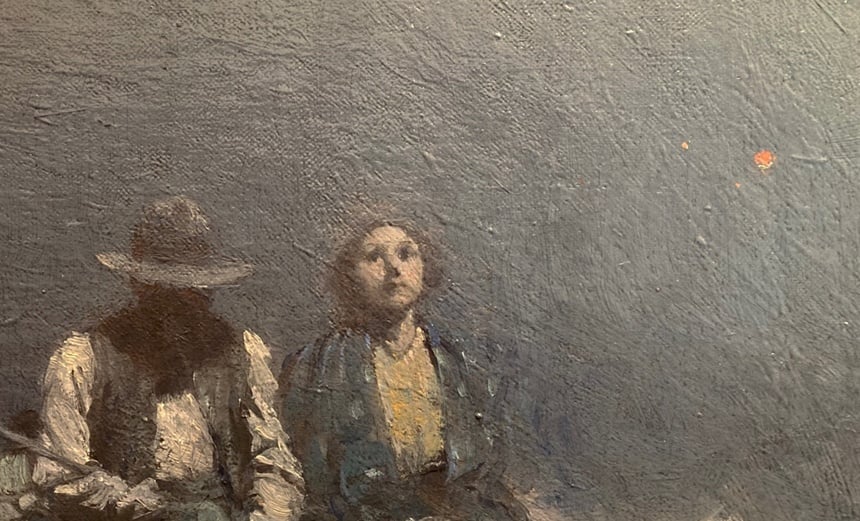
She was alone, and might as well have been the only person in the world. Her husband is faceless, silent and taciturn, probably thinking about tomorrow’s chores. She is looking up at the stars. What is going through her mind?
Notice too how Dunn has slipped a metaphor into his painting: the ox in front of her husband has horns that point directly forward, while the ox in front of her has horns that seem uncertain and circle around.
Here is a second private painting, this time of a farm wife facing an incoming storm. We can feel the wind whipping through her hair and around her skirt.
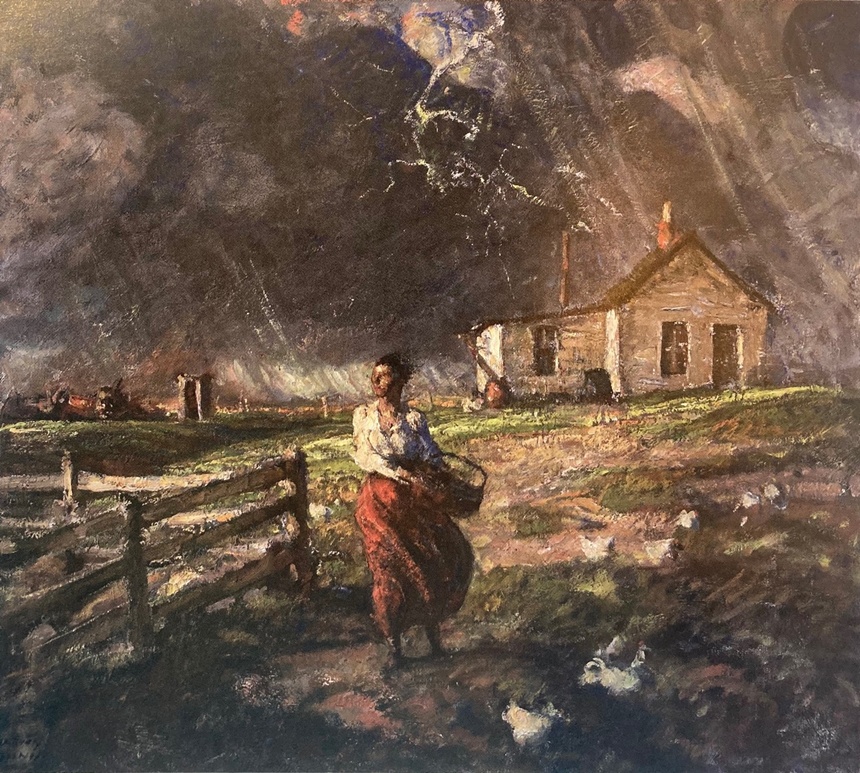
The following is another painting with a similar theme, a woman watching an oncoming tempest sweep across the prairie, this time painted for a 1915 series for the Post, “The Prairie Wife.” Unlike Dunn’s powerful men who traded punches or bullets, this woman is contemplating a much greater power.
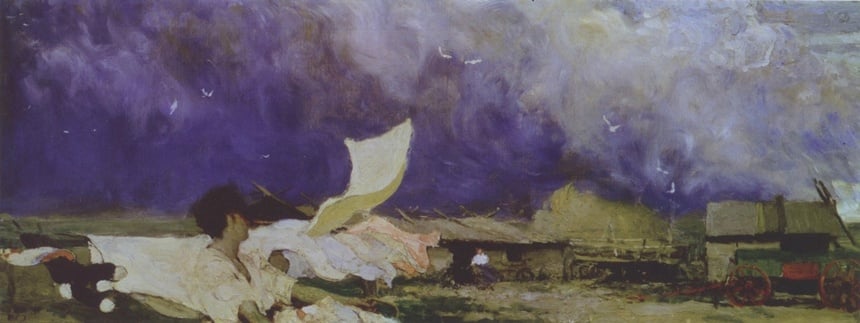
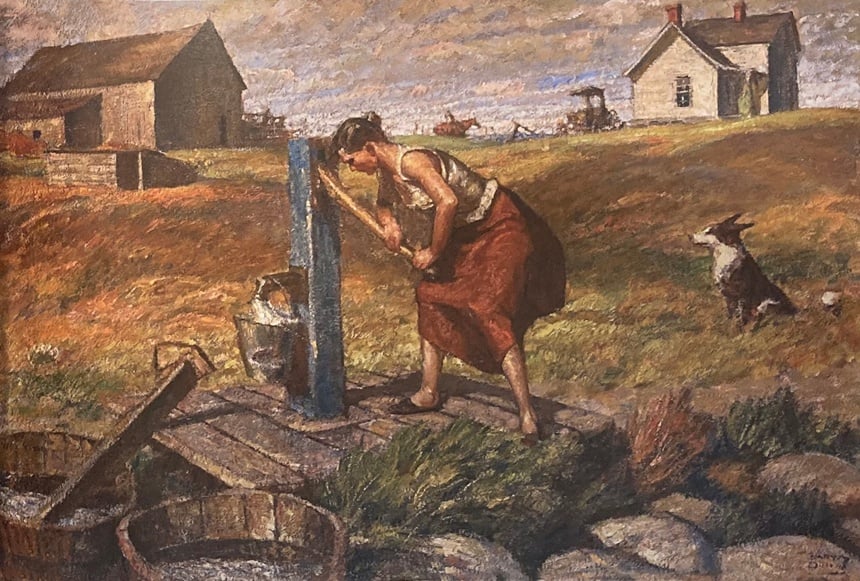
While many of Dunn’s private paintings of women were psychological portraits showing isolated lives and inner feelings, a number of them expressed admiration for the stalwart, hard working women who were full partners in taming the prairie.
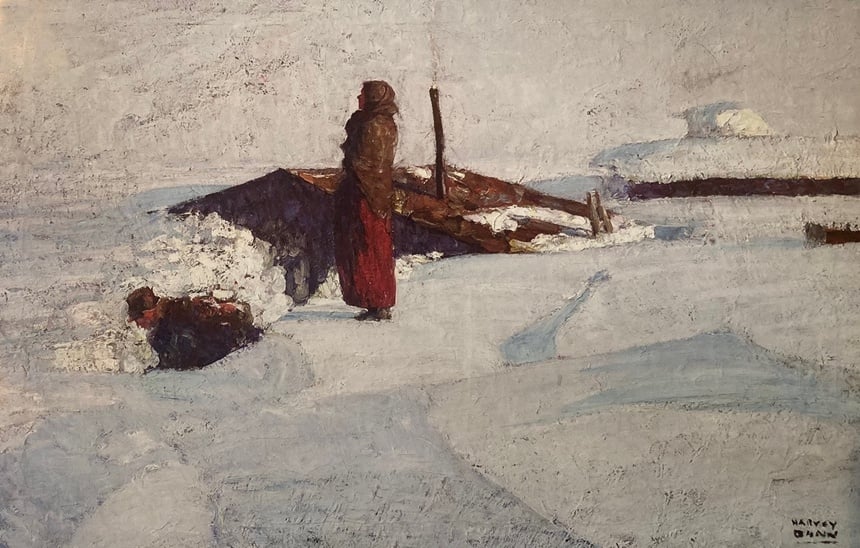
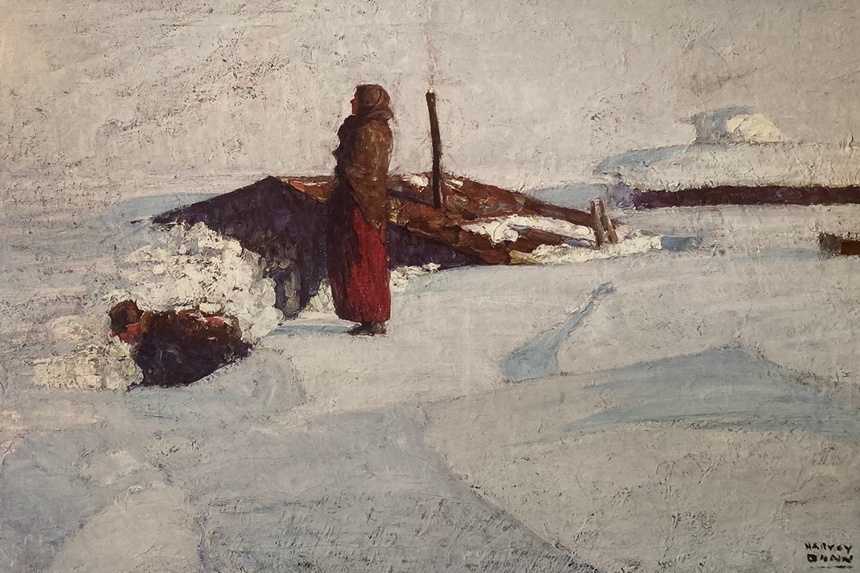
In this next example, while her husband is huffing and puffing, digging out the entrance of their cabin after a major blizzard, the woman stands back and looks at her transformed world.
Women played a lesser role in Dunn’s popular illustrations of fist fights and shootings, but it’s clear that when he was painting his private pictures that he had a great deal of respect for the women of the prairies. He often portrayed them as more thoughtful than the men, and with different kinds of power.
Become a Saturday Evening Post member and enjoy unlimited access. Subscribe now


Comments
Thank you for sharing these wonderful stories and paintings. I was absolutely astonished when I played the kinescope as well. Marvelous!