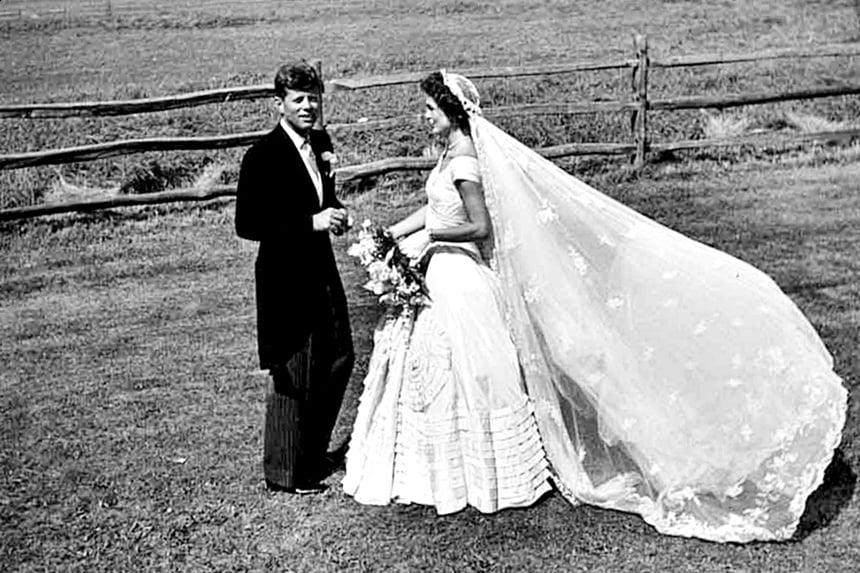
Wedding dresses comes in many shapes and forms: long and short ones, strapless and long-sleeved, lace and satin, with a mermaid or princess silhouette. But what they all generally have in common is their color. White dresses are so much associated with brides that it has been a well-known etiquette rule that you should not wear the color to someone else’s wedding.
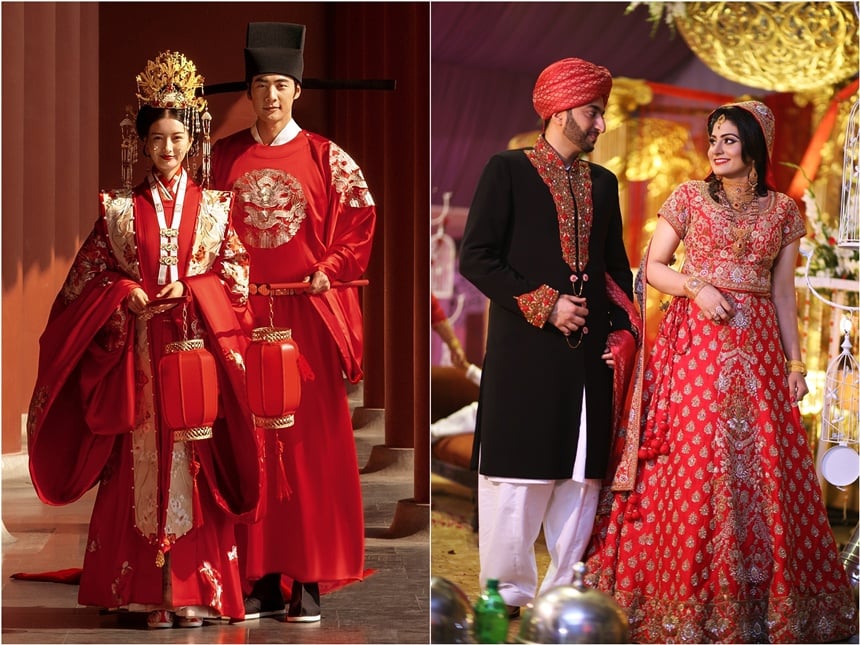
While white wedding dresses are commonplace in the West, other colors are more associated with weddings in many cultures around the world. In China and India for example, the custom for brides is to wear red on their wedding, as the color is associated with good luck, productivity, and joy — qualities deemed suitable for a happy marriage.
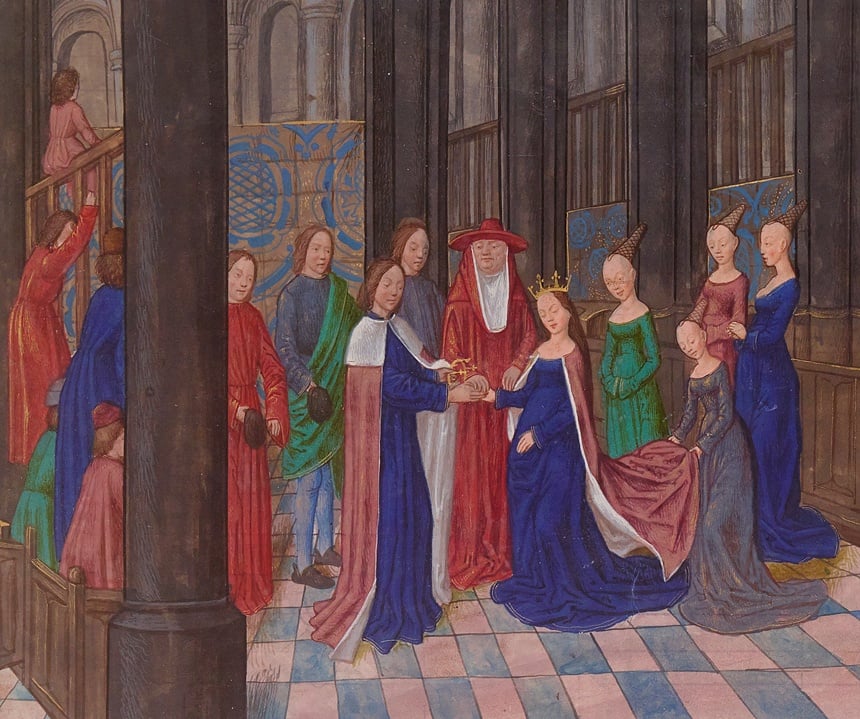
Yet, even in the Western world, the dominance of white for a woman’s wedding attire is a relatively modern phenomenon. Wedding dresses have long been elaborate outfits, made of intricate needlework and opulent fabrics, but only in the last century or so have they became white. During the Middle Ages, royal brides often wore crimson red and indigo blue clothing that conveyed their privileged status. As dyeing clothes in red and blue was an expensive and laborious endeavor, they quickly became a marker of luxury and wealth.
As every young bride knows, wedding dresses can indeed be expensive, with very little use beyond the single event. White is also not a practical color, as it shows stains more easily and is harder to clean. This made white dresses, especially in the past, when well-made clothing was not accessible to most people, a particularly bad investment.
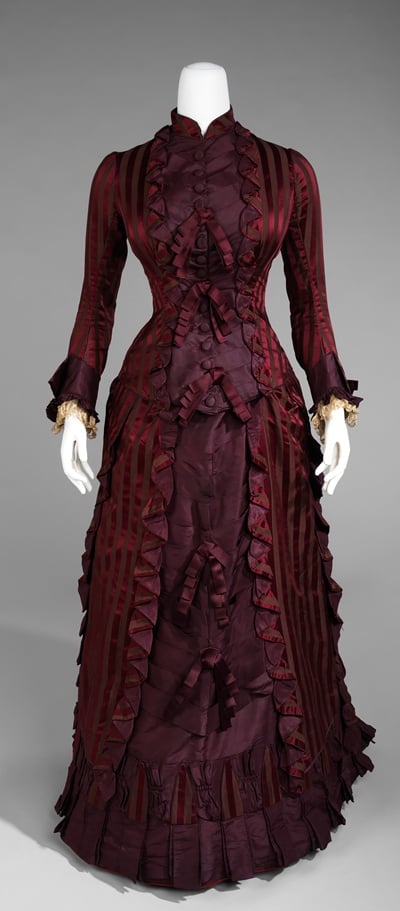
For many of these reasons, middle-class and even upper-class brides opted for a more colorful (and darker) palette when it came for their wedding dress well into the 19th century. As a 1878 wedding ensemble from the Metropolitan Museum of Art collection clearly shows, brides did not give up on elaborate designs with frills and bows, but they opted for more practical colors that they could reuse for different occasions beyond their wedding.
Recycling and repurposing clothes and fabrics were common practices in the 19th century, when fabrics themselves functioned as a form of capital. Most people owned only a few dresses in their lifetime, so investing in a good dress that could serve you for a long time was the norm.
Fashion, however, was never absent from wedding dress design. If most people could not afford the life of the royals and the nobility, they still served as an inspiration and a model to be imitated.
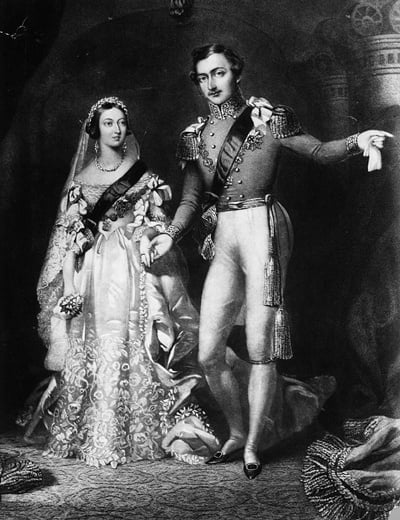
In fact, it was Queen Victoria, maybe the biggest fashion trendsetter of the 19th century, who was responsible for introducing the white dress into wedding culture. For her wedding to Prince Albert in 1840, she chose to wear a white silk and satin dress, making the color an overnight sensation.
Soon enough, the trend crossed the Atlantic as American etiquette books and advice columns promoted the color as the “proper hue,” connecting it to purity and virginity. The white color also fit well with the luxurious image that the elite wanted to convey, making the white dress a unique garment in a woman’s closet, only to be worn once — something that only the wealthy could afford.
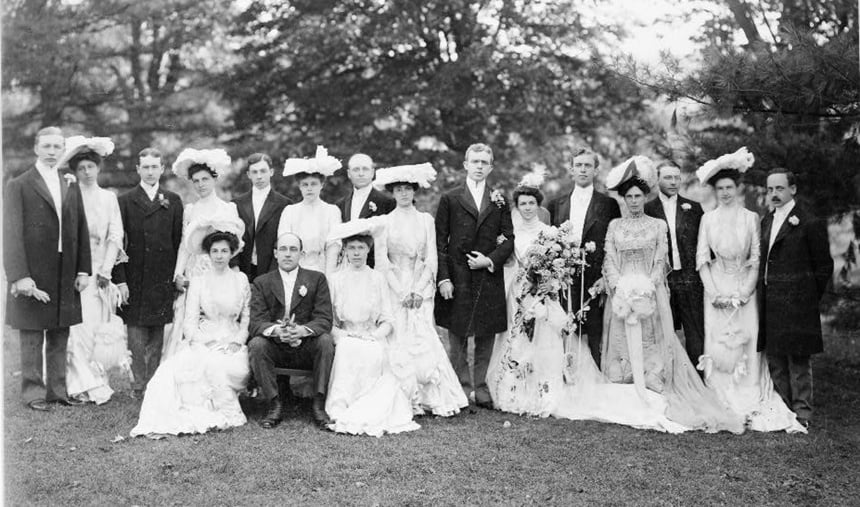
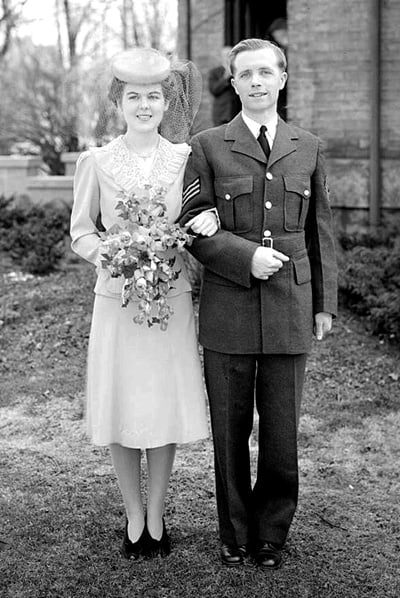
Even as the rich began wearing white to their weddings, it wasn’t until the mid-20th century that the custom reached the masses. Practicality was still the rule for most people, especially in times of war and economic depression, as brides preferred going into their closets rather than to their savings for their dream weddings.
In an effort to boost the industry, magazines and department stores began to popularize the idea that the wedding day should be a “once-in-a-lifetime” event that would merit an impractical white dress. Stores like Lord & Taylor targeted well-to-do brides with their “bridal consulting services,” which provided them and their bridesmaids appropriate dresses, as well as other custom-made services.
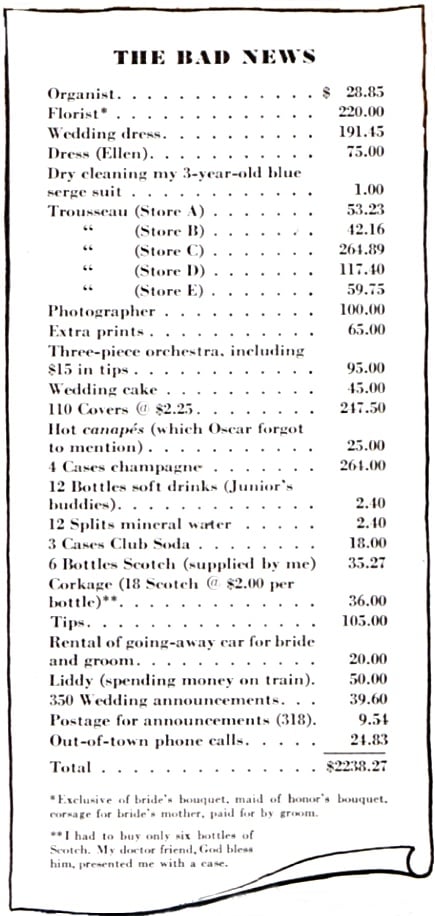
Economic affluence followed World War II, and the idea that every bride deserved to be a “princess for one day” was democratized. An article from 1945 in The Saturday Evening Post titled “Your Daughter Gets Married Only Once,” provided advice to fathers on how to financially survive the changing norms of procuring a white dress that was good for one night. By the 1950s, bridal salons became a booming national industry that specialized in white dresses for young brides.
During the 1960s, retailers and manufacturers teamed up with the Miss America pageant to promote the “dream wedding” campaign, solidifying the formal white dress as the proper wedding attire.
Yet, even as brides opted for a white wedding, not everyone adopted the white dress. Elizabeth Taylor famously wore colorful dresses for both of her weddings to Richard Burton (a yellow dress for the first and a rainbow one for the second), and other celebrities such as Marilyn Monroe, Audrey Hepburn, and Sarah Jessica Parker chose to wear brown, pink, and black respectively at their weddings.
While white still dominates the wedding scene, with a recent survey finding that 83 percent of brides opting for it, the colorful wedding dress is a growing trend. As more young people prefer not to spend money on extravagant weddings, or even not marry at all, the dominance of the white dress as the quintessential wedding attire may be fading. What is certain, though, is that the fashion industry continues trying to convince brides to invest in a special dress, no matter the color.
Become a Saturday Evening Post member and enjoy unlimited access. Subscribe now